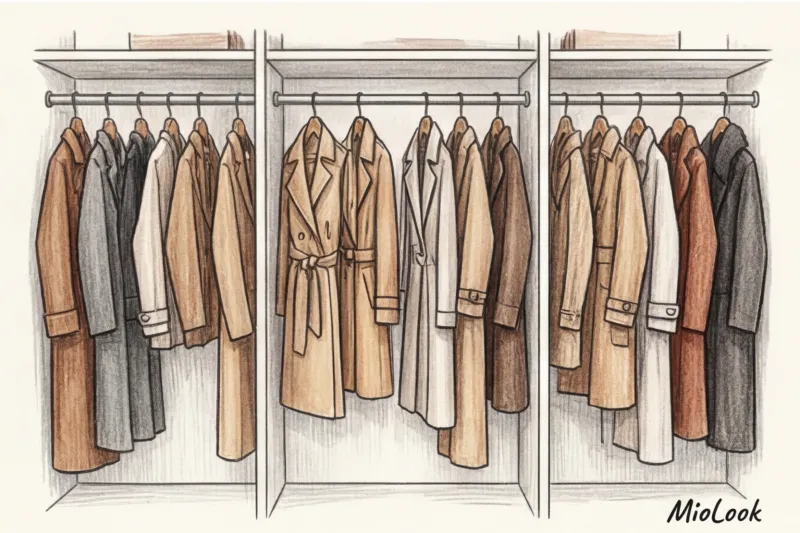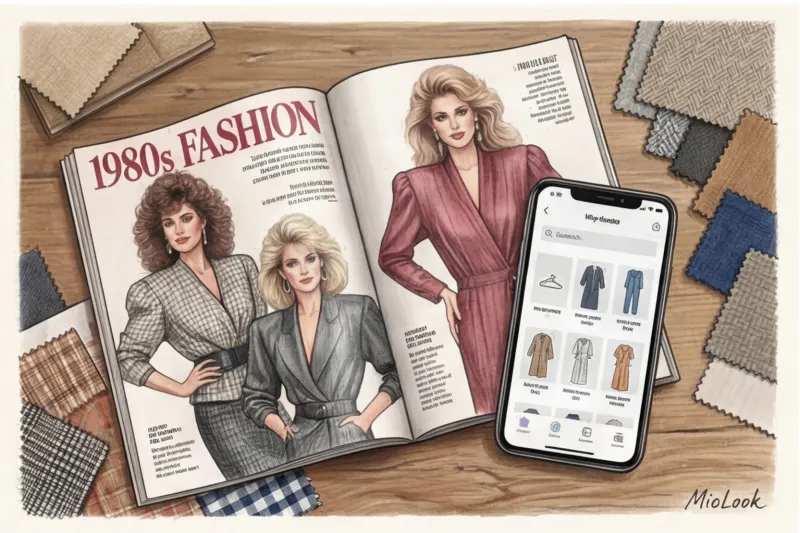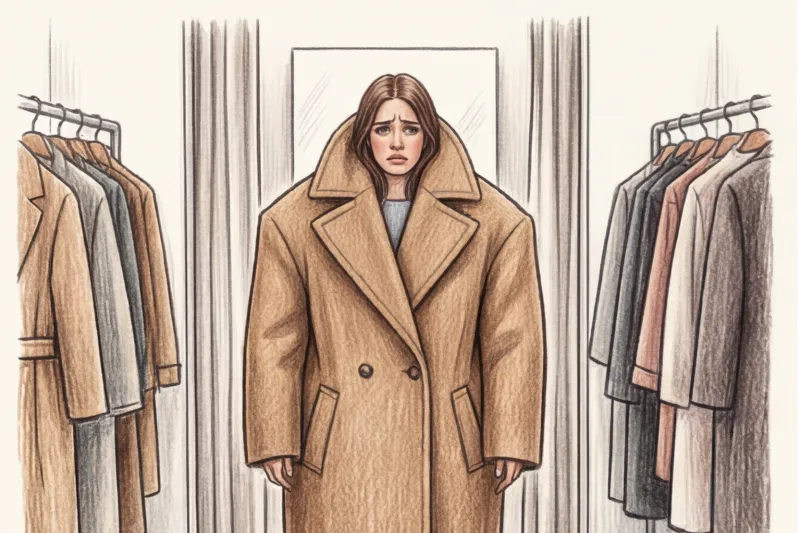
Do you know what item most often hangs in my clients' closets with the tag still attached, never worn? It's the iconic beige cocoon coat, bought under the influence of glossy magazines featuring "10 Essential Items for Every Woman." In reality, an investment of $2,000-$3,000 often turns a woman not into a style icon, but into a tired person wrapped in someone else's blanket. The statistics are merciless: about 70% of women buy ill-fitting outerwear simply because of the imposed oversized trend.
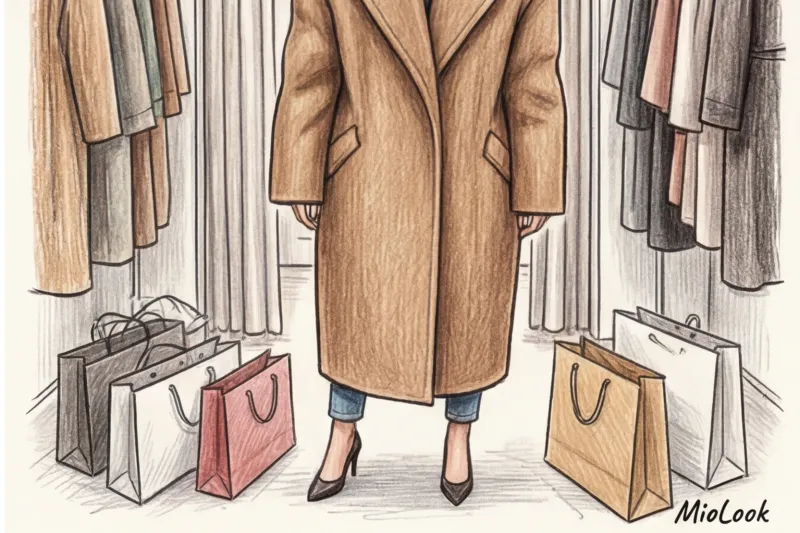
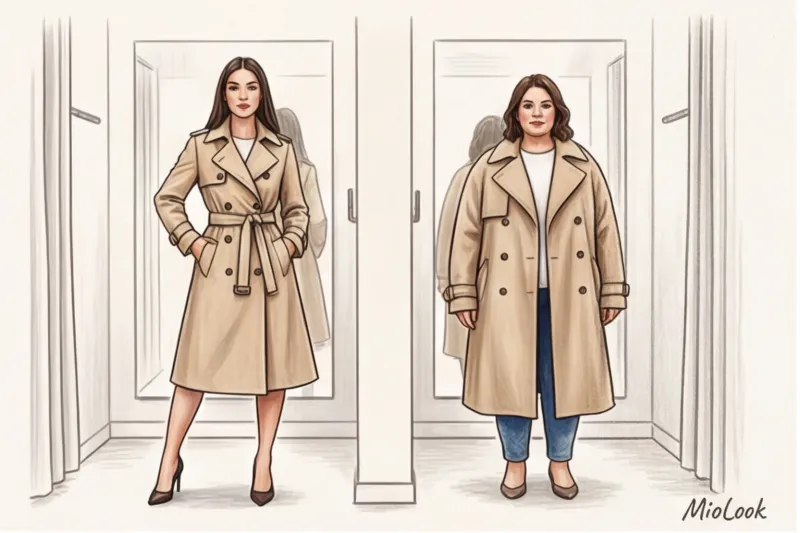
In 14 years of working as a stylist, I've learned one ironclad rule: there's no such thing as a universal foundation. What makes one woman look stately and sophisticated, another woman looks grounded and plump. The answer lies not in the proverbial "apples" and "pears," but in the architecture of your bone structure. When choosing kibbie coat , you stop fighting your own body and start finding the right, complementary frame for it. We discussed the basics of this system in more detail in our The Complete Guide to Kibbe's Style Types , and today we'll talk about the most expensive item of clothing - outerwear.
Why That Perfect Pinterest Coat Won't Fit You (And What Kibby Has to Do With It)
One day, a client named Marina, a classic Gamin, came to see me. Inspired by street style, she bought a luxurious double-breasted maxi coat with a dropped shoulder made of thick camel wool. In the fitting room, she thought it was stylish. But on the street, on the move, the coat took on a life of its own, and Marina inside looked like a schoolgirl secretly wearing her dad's jacket. We shortened the coat to mid-thigh, raised the shoulder seam, and she instantly "found" herself, adding height and fragility.
In his seminal book, Metamorphosis (1987), David Kibbee articulated a brilliant principle that today's fashion influencers tend to forget:
"Clothing can't change your natural curves. It can only echo them harmoniously or conflict with them destructively."
When choosing a coat, jacket, or raincoat, we must consider three physical parameters: the stiffness of the fabric, the cut geometry (angles or smoothness), and the scale of the details (from lapels to button size). If your bone structure is delicate and rounded, a rigid, architectural cut will simply crush you.
Dramatic and Soft Dramatic: How to Choose a Kibbe Coat for Expressive Architecture
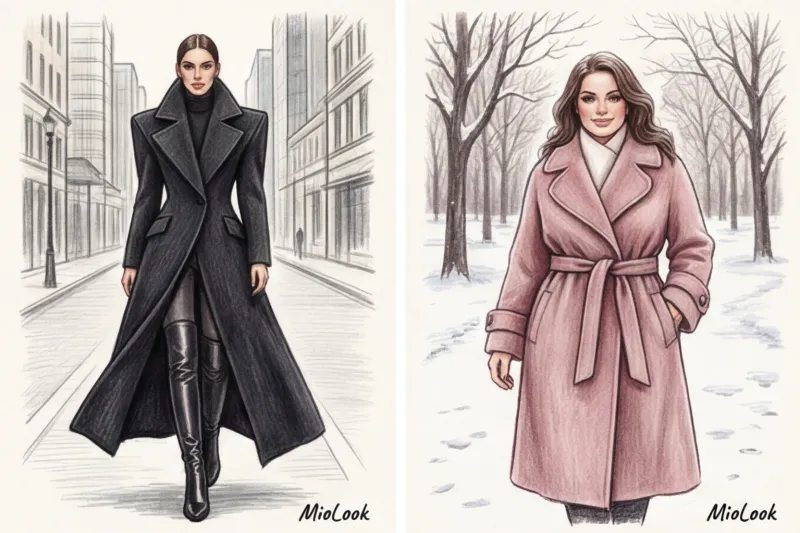
Pure Dramatics are a realm of verticality, sharp angles, and sculptural beauty. Their skeletal structure can withstand incredible visual weight. For this type, I always look for coat fabrics with the highest possible weight—from 600 to 800 g/m². The fabric must be stiff to perfectly hold the lapel angle and shoulder line. Ideal choices: greatcoats, double-breasted straight-cut maxi coats, and stiff trench coats. The longer, the better.
But with the Soft Dramatic, it's a different story. Here, the large frame is complemented by the softness of the body fabrics (the soft component). This body type requires the same T-shaped silhouette with accentuated shoulders and large details, but the fabric must drape.
For Soft Dramatic, I recommend cashmere or a wool-silk blend. The fabric should fall in heavy, yet fluid folds. A stiff drape will make Soft Dramatic look bulky. Avoid cropped jackets, short stand-up collars, and shapeless raglans—they will ruin your natural grandeur.
Your perfect look starts here
Join thousands of users who look flawless every day with MioLook. Upload your items and receive ready-made combinations every day.
Get access — €0.99 onceRomantic and Theatrical Romantic: outerwear that emphasizes softness
How many Romantics have come to me for consultations in shapeless, puffy down jackets, complaining that they look 10 kilograms heavier in winter! The Romantic type is all curves and soft lines. Any stiff, stiff fabric (like the membrane in sports jackets or thick drape) visually erases the waist and turns a luxurious, feminine figure into a boxy frame.
Your ideal kibbie coat is a wrap coat made from the softest, most enveloping fabrics (alpaca, fine cashmere, angora). The key: look for styles without rigid reinforcement (gluing) on the lapels and lapels. They should hang naturally.
- Details: Shawl (rounded) collars, soft belt made of the same fabric, emphasis on the waist and wrists.
- Length: Midi or knee-length. Avoid hemlines that are too long, as they add weight to the bottom.
- Theatrical Romantic: A touch of edge is allowed. Consider adding small but soft shoulder pads to contrast with a slim waist, and choose a fabric with a slight nap or sheen.
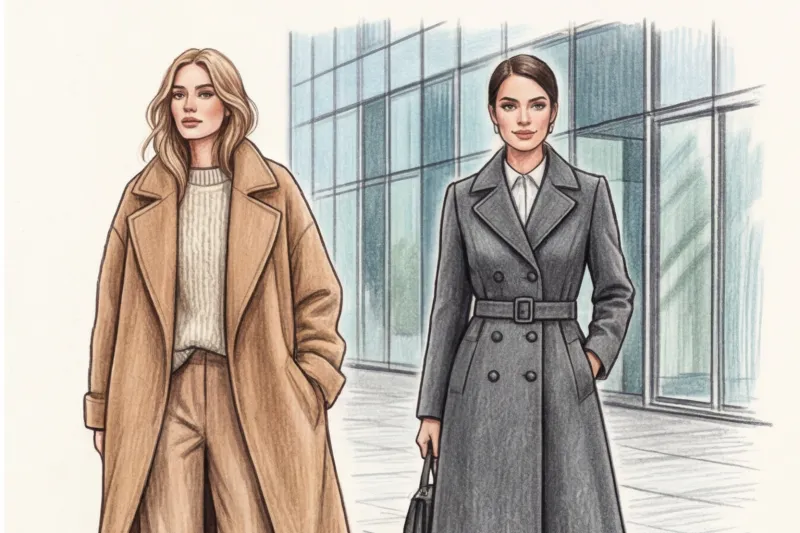
Natural, Soft Natural, and Bright Natural: the queens of relaxed silhouettes
And so we come to the body types for whom modern fashion, with its love of oversize, has become a real gift. Naturals' bone structure is blunt and wide, requiring freedom of movement. They feel physically uncomfortable in rigid structures.
There's a crucial counterintuitive insight here: a classic British gabardine trench coat on Natural looks like someone else's, borrowed uniform. It's both restrictive and forgiving. Swap it for a washed silk, flowing viscose, or soft suede raincoat, and the look instantly becomes expensive.
Bright Natural: You look great in the wildest volumes, long cocoon coats with no defined shoulder line, asymmetry, fringe, and rough textures like bouclé or textured shearling. The more casually the coat is worn, the better you look.
Soft Natural: A lighter fabric (like wool with viscose) and a slight waistline are recommended. However, don't cinch it with a stiff leather belt—use a soft belt tied in a loose knot.
Access to MioLook for €0.99 — one-time payment
A smart AI stylist will help you find the perfect look. Create your outerwear capsule without mistakes.
Get access — €0.99 onceClassic, Dramatic Classic and Soft Classic: a triumph of symmetry and impeccable tailoring
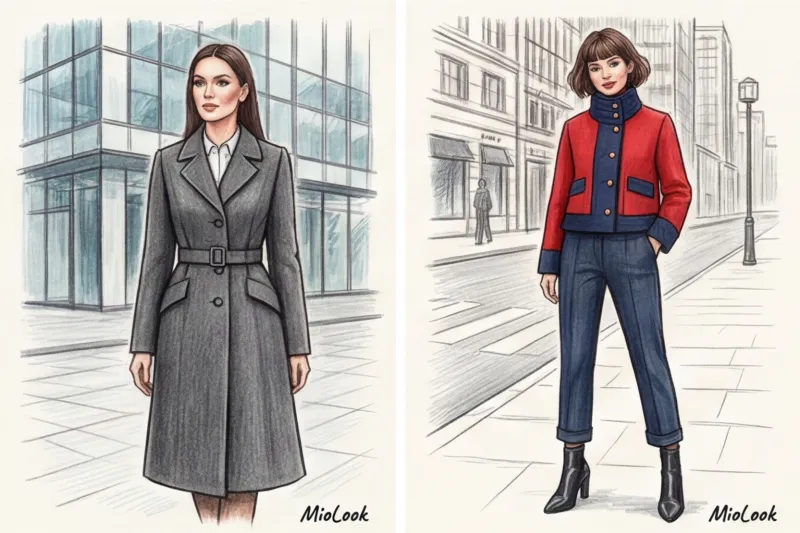
While the Natural is smitten by classics, it elevates the Classics to a pedestal. These are the only types on whom a basic, symmetrical, moderately fitted mid-length coat looks truly luxurious and classy. Put it on a Gamin and it'll be boring; put it on a Classic and it's old-money style incarnate.
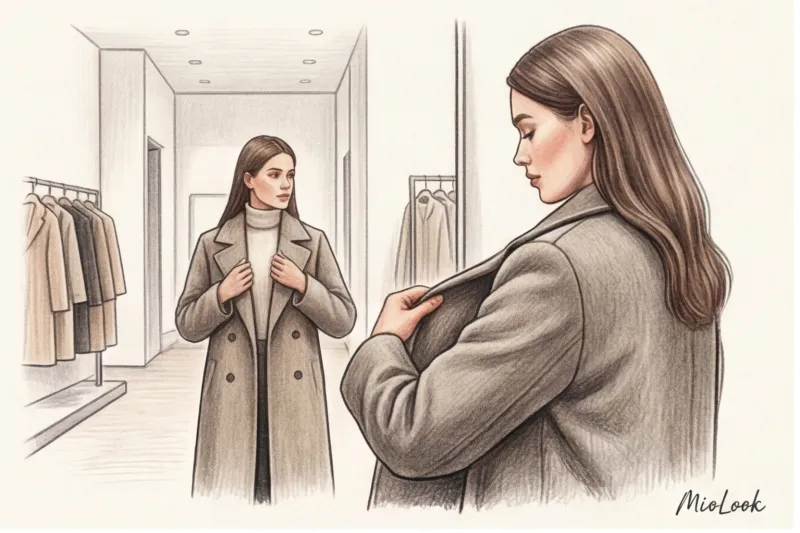
The key technical aspect for you is an anatomical fit. I always check the fit of a Classic coat using one marker: the shoulder seam (set-in sleeve) should lie exactly on the acromion process of the scapula (the bone at the tip of the shoulder). No drooping sleeves or oversized raglans—they'll make you look hunched and sloppy.
For Dramatic Classic Opt for slightly drier wools, peak lapels and V-necks. Soft Classic requires delicacy: the fabric should be a little softer (for example, cashmere with silk), the corners should be smoothed, but the overall symmetry and neatness of the cut are maintained impeccably.
The Gamin family: compactness, geometry and silhouette breakdown
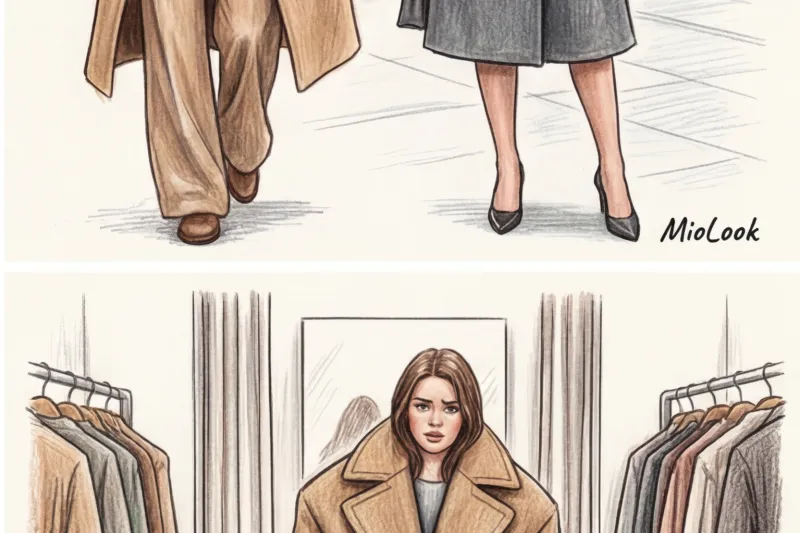
Gamines are a clash of yin and yang, petite stature and sharp (or slightly softened) geometry. The main mistake Gamines make when choosing outerwear is buying one-piece, floor-length coats. The voluminous, long fabric literally "eats" the Gamine, leaving only a frightened face visible.
Your main style trick is color blocking and compactness. The ideal coat length is mid-thigh or shorter. Pea coats, cropped biker jackets, blazer coats, and tailored bomber jackets look stunning on you.
If you really want to wear a long coat (for example, if winters are harsh), there's a solution. Wear it open and create a contrast inside: for example, a light sweater and dark trousers. This will break up the long line. Bright Gamin Withstands the most severe asymmetry, shoulder straps, contrasting collars and large geometric buttons. Soft Gaminu The same compact shapes are needed, but with an emphasis on the waist and slightly rounded details (for example, a Peter Pan collar or soft cuffs).
Ready to get started?
Try the MioLook free plan—no commitments required. Artificial intelligence will analyze your items and suggest fresh outfit ideas.
Get access — €0.99 onceStylist's Checklist: 3 Steps to Buying a Coat or Jacket
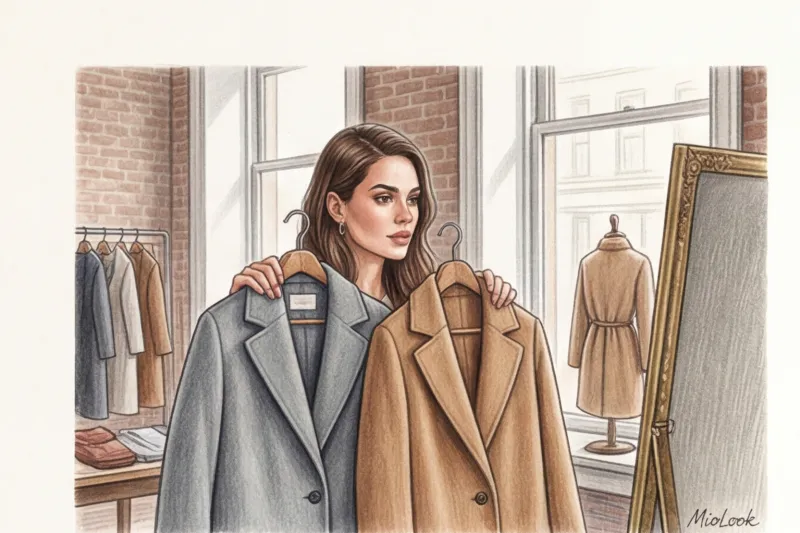
So, you're in the store. How do you know you're looking at not just a beautiful piece, but the perfect kibbeh coat, tailored to your style? Use my workflow:
- Fabric crush test. Crinkle the hem edge in your fist for a few seconds and release. If the fabric springs back and immediately returns to its rigid shape, it's a good choice for Dramatic and Classic styles. If it falls gently in flowing folds, it's a good choice for Romantics and Soft Naturals.
- Architectural test from 3 meters. Never make a decision standing close to the mirror in the fitting room. Take three steps back and look at the overall silhouette. If the coat seems separate from you, dominating your face, it's not your style.
- Proportion test. The scale of lapels, pockets, and buttons should match your frame and facial features. Enormous patch pockets on a petite Gamine look comical, and tiny buttons on a Bright Natural will simply get lost.
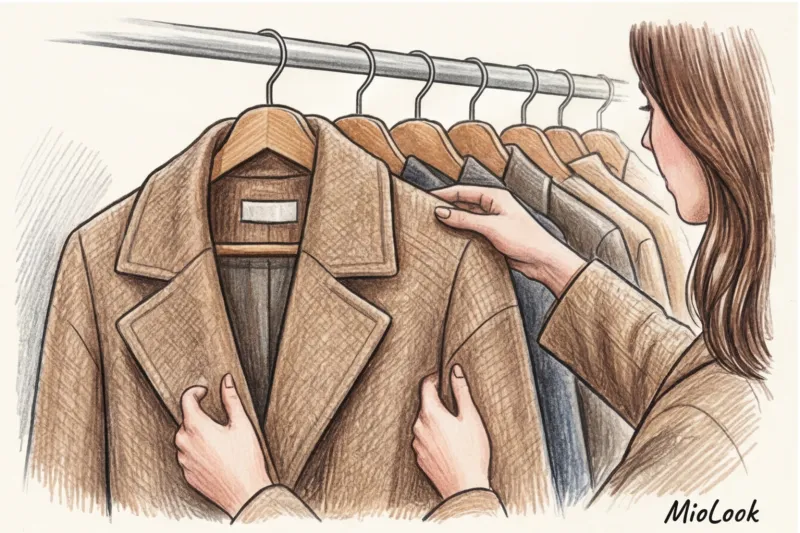
By the way, if you're unsure about your purchases, start digitizing your wardrobe. I often advise my clients to take photos of their fittings and upload them to MioLook This allows you to look at yourself objectively, from the outside, and evaluate how a new jacket will fit into your existing base.
Invest in your lines, not trends
Outerwear is the façade of your style. You can be wearing simple jeans and a white T-shirt, but if you throw on a perfectly tailored coat, your look will be seen as luxurious. Conversely, the most expensive designer coat will cheapen your look if it disrupts your natural curves.
My advice: take stock of your entryway today. Try on every jacket, coat, and trench coat. If it makes you slouch, makes you look boxy, or makes you feel out of place, get rid of it without regret. Every body is stunningly beautiful when framed correctly.