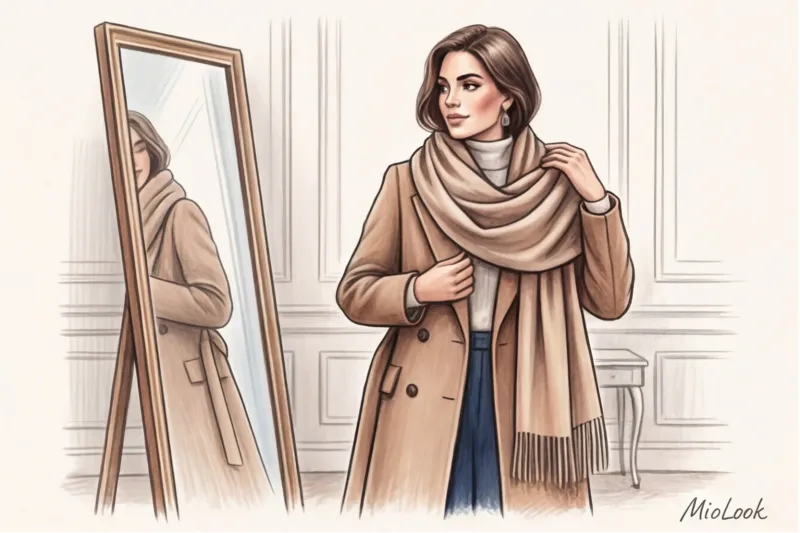
In 12 years of wardrobe review, I've seen this scenario hundreds of times: a woman opens her closet and finds 15 pairs of identical skinny jeans or shapeless jeggings hanging in tight rows. And out of all this variety, she wears... exactly one. The ones that "seem okay," even though they slip down at the waist.
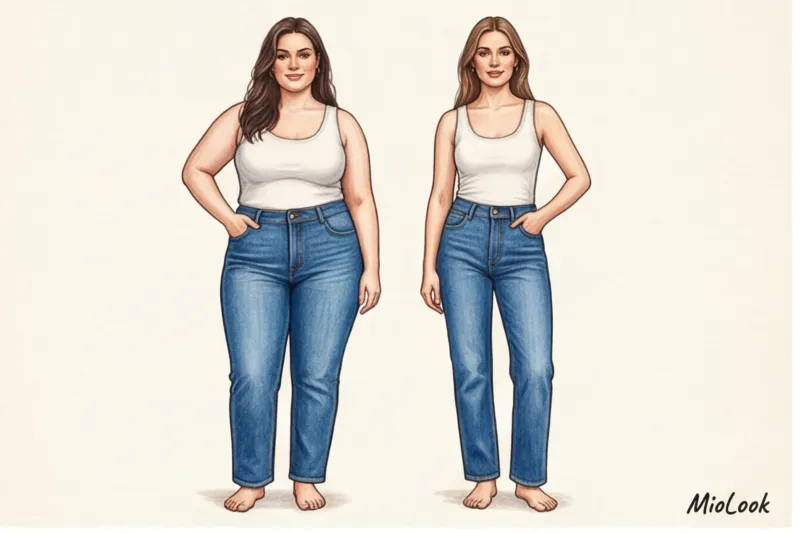
Let's be honest: traditional advice on How to choose jeans according to your body type , are hopelessly outdated. Glossy magazines have been teaching us for years to divide ourselves into "apples," "pears," and "inverted triangles." But the human body isn't a fruit basket. It's a complex system of biomechanics and geometry.
Instead of abstract labels, I offer you an engineering approach to denim. We'll analyze fabric density (ounces), yoke geometry, and the actual proportions of your torso. We've covered how this approach fits into a global style strategy in more detail in our The complete guide to creating a basic denim wardrobe Today we'll explore the mechanics of a perfect landing.
The Architecture of Denim: Why Fabric Density Matters More Than Fit
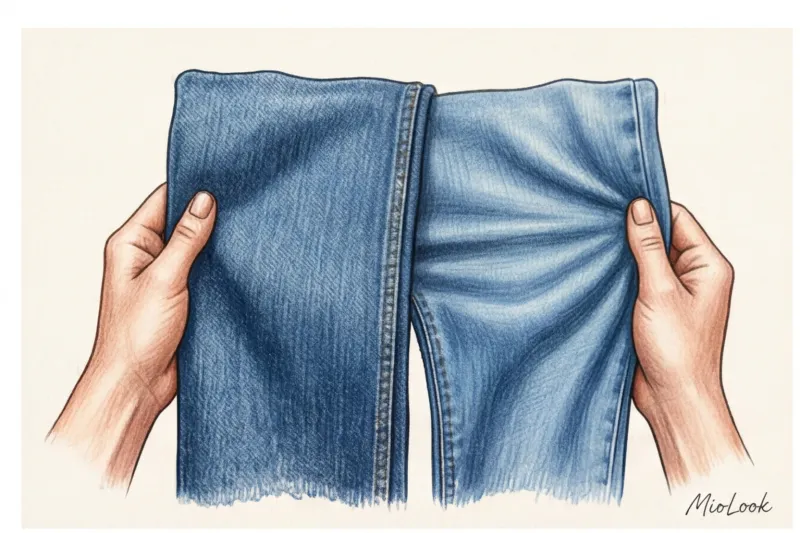
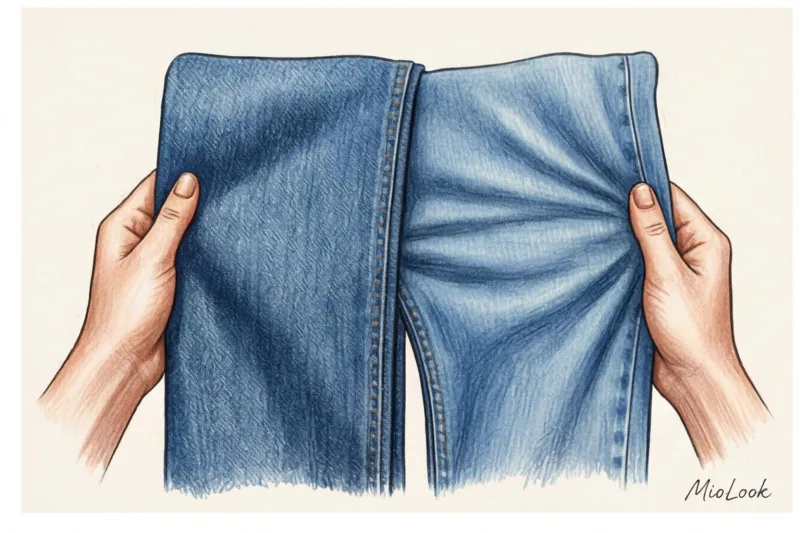
The main mistake I see in my clients is trying to shape their figure with thin, stretchy fabric like leggings. Remember the main rule: the right denim acts like a sculptural frame. It doesn't cling to your curves, obediently following every fold. collects figure, giving it new, clearer lines.
One of my clients couldn't figure out for a long time why she looked bigger in mass-market jeans (€30-€40). We swapped five pairs of thin jeggings for one pair of classic 100% cotton jeans. Thanks to the stiff fabric frame, she visually "dropped" 5 kilograms right in the fitting room.
The secret lies in ounces (oz)—the textile industry standard for measuring denim density. Look for jeans with a density of 12–14 oz. This is the "gold standard" that holds its shape for years.
- The Super Stretch Trap: The ideal composition of classic denim is 98% cotton and no more than 2% elastane. If the tag says 5% elastane or more, the lifespan of such jeans is reduced by a third. They will inevitably stretch out at the knees and sag in the back.
- Historical context: Studying Levi's archives of early 20th-century work pants cuts, you realize that denim was originally created as armor for gold miners. It was meant to protect, not stretch out in all directions during yoga classes.
Yes, stiff denim does have a downside (I'm always honest about this): it will feel wooden for the first 3-4 wears. It needs to be broken in to allow the fabric to conform to your body's shape. But this investment in comfort pays off with years of impeccable fit.
Access to MioLook for €0.99 — one-time payment
A smart AI stylist will analyze your proportions and select the perfect look for every day.
Get access — €0.99 onceForgetting the "fruit": Modern Jeans Fit Metrics
If you want to understand how to choose jeans for your body type, forget about pear-shaped jeans. Switch to tailor-speak: rise (rise) and inseam (inseam).
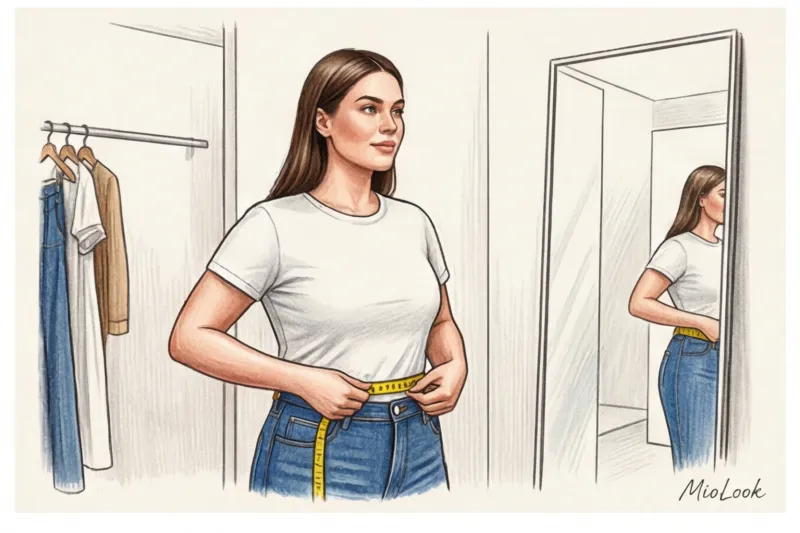
Based on analytics from our app's virtual fitting rooms MioLook (2024), 82% of women initially misjudge their torso proportions before uploading photos to the system. We blindly chase trends, ignoring our own anatomy.
"High-rise shoes make your legs look endless." This is the most damaging myth of modern styling.
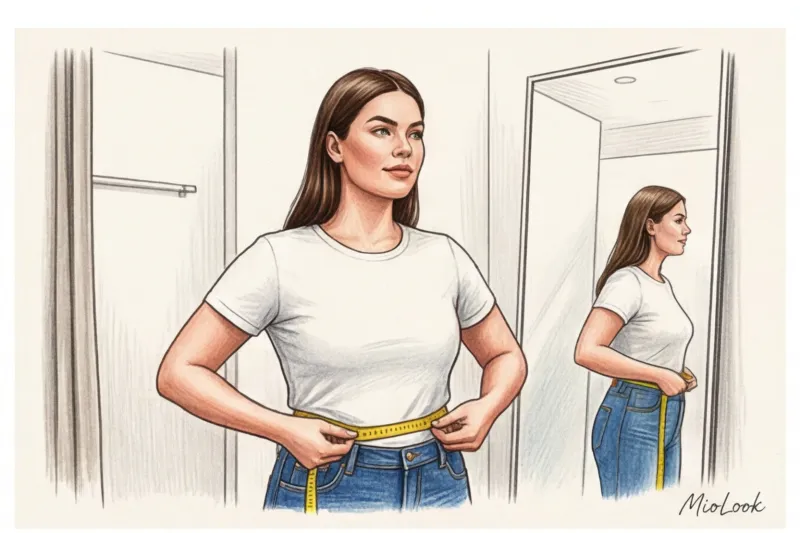
If you have a short torso (the distance from your bust to your belly button is less than the width of two hands), a high waist will visually make your figure appear boxy. It will "small" your torso, and your chest will appear to rest directly on the waistband of your jeans. In this case, a mid-rise is your best bet for elongating your silhouette.
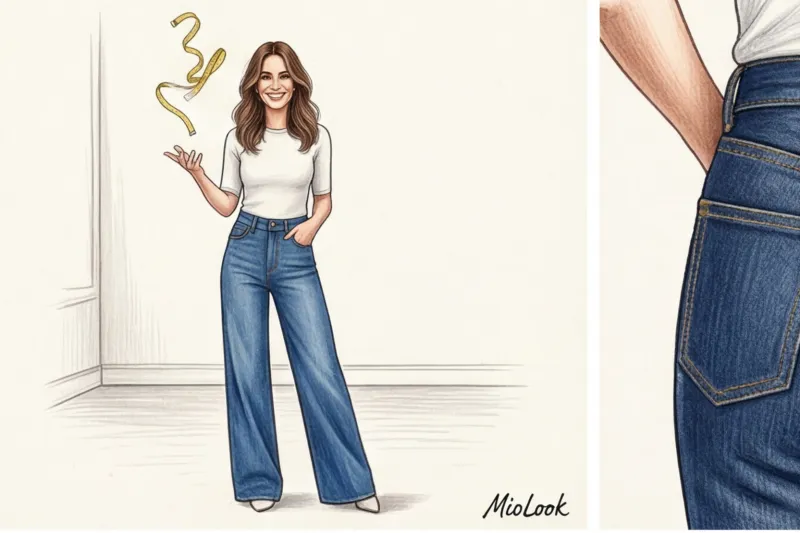
And one more thing: don't trust the numbers on the tag. The vanity sizing phenomenon (manufacturer flattery) has led to a size 28 at Zara, COS, and Massimo Dutti being three completely different measurements. Measure the jeans, not yourself.
Inseam and Break
The break point is where the hem of your jeans meets your shoe, creating a crease. This crease affects how tall you appear.
- No break (no crease): The jeans end just above the shoes. Perfect for cropped styles and loafers.
- Half break (half break): One small pleat in the front. A classic for straight jeans.
- Bottom Edge Width: The larger your shoe size (40 and up), the wider the bottom edge of your jeans should be (from 20 cm in half-girth), otherwise you will get a “ski” effect.
How to Choose Jeans for Your Body Type: An Engineering Approach to Proportions
The key factor when choosing pants is not the style name, but the thigh width (thigh measurement). I wrote about this principle in detail in the article How to Find Your Clothing Style: A Step-by-Step Guide Let's see how this works in practice.
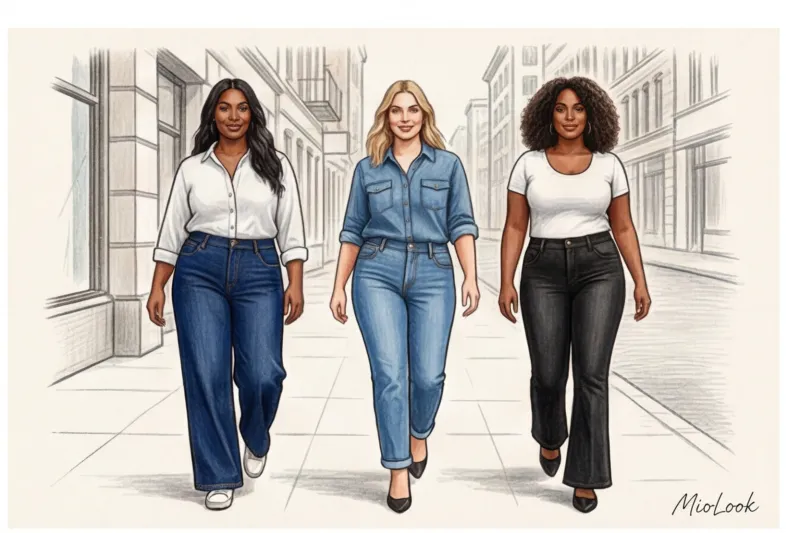
Wide hips (lower type)
Forget tapered styles. Wide-legs and a flattering bootcut are your choice. Flaring the leg from the knee down balances the hips, creating a straight, stable silhouette.
Narrow hips and a weak waist
Here we need to create artificial curves. Classic mom jeans (loose at the hips, tapered at the bottom) made of very dense, non-stretchy denim are suitable. The stiff fabric will create the illusion of volume where it is anatomically lacking.
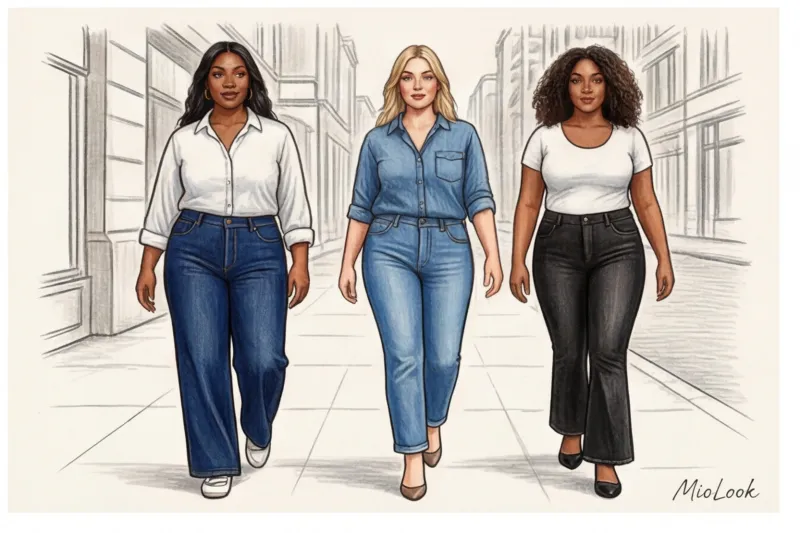
Abdominal area correction
The main rule: no elastane in the waistband! You want a skeletal fit—a rigid waistband that works like a corset. Soft jeans with elastic or a high percentage of elastane will simply dig into your stomach, splitting it in half.
Short legs
Work with monochrome and verticals. If you choose flare jeans, pay attention to where the flare begins. The taper should be directly above your kneecap, not below it—this will visually lengthen your calf.
Ready to get started?
Digitize your wardrobe and create stylish combinations in one click. Try the free plan—no commitment.
Get access — €0.99 onceBack Geometry: The Secret to the Yoke and the Right Pockets
Why do some jeans flatten your butt, while others work like expensive push-ups? Tailors know the secret, but mass-market brands often skimp on these details.
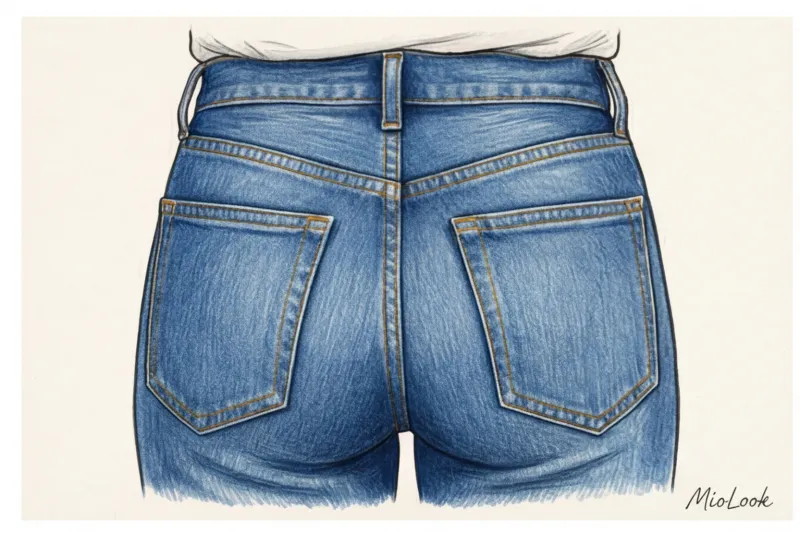
Yoke
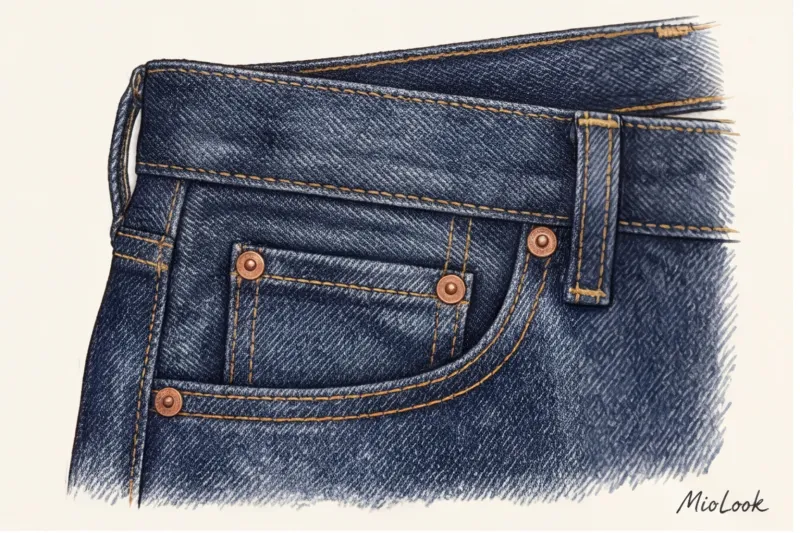
This is the seam between the waistband and pockets. A V-shaped yoke is your best friend. The ideal angle for the yoke seam is about 45 degrees. This visually rounds out the shape. A straight horizontal yoke will create a flatter, wider back.
Size and location of pockets
Small pockets over a large area visually make your buttocks appear even larger (an optical contrast effect). Pockets should be proportionate to your shape.
Critical error: Pockets located below the buttock crease. This immediately creates the effect of a sagging shape. The bottom edge of the pocket should always end where the curve of the buttock begins.
Stylist Checklist: 5 Steps to Take Before Shopping in the Fitting Room
I use this "5-minute fitting room" algorithm with all my clients. It saves them hundreds of euros on unsuccessful purchases that end up sitting in their closets.
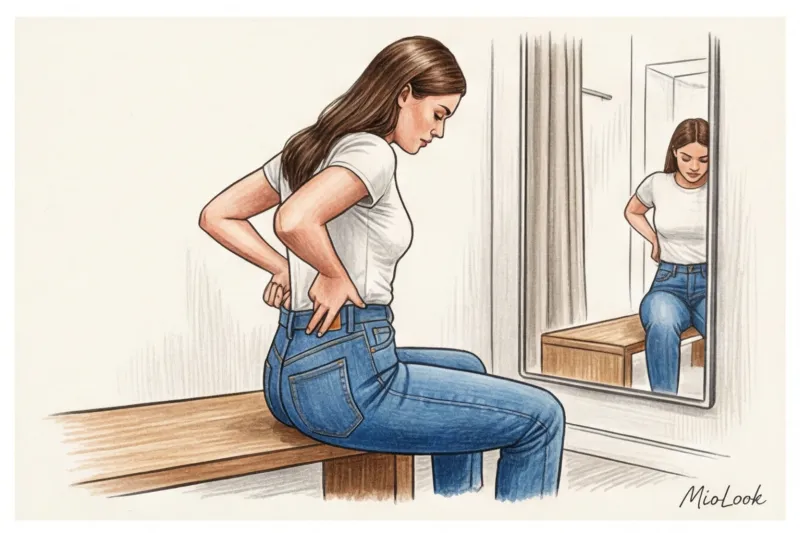
- The two-finger rule: Slide two fingers between the waistband and the small of your back. Do they fit easily? Great. Can you fit a whole fist? If you notice a dreaded gap (a protruding waistband), look for a different fit (like a curvy fit).
- Sit-down test: Do a deep squat right in the fitting room. Sit on a ottoman. The jeans shouldn't be so tight around the groin that it's hard to breathe.
- Smile test: Stand up straight. If horizontal creases form in the fly area, splaying outward like a mustache or a smile, your jeans are too tight in the groin.
- Seam rating (Leg twist): Check the side seam. If it's sagging forward, twisting at the shin, it's a sign of cheap, poorly cut denim. Return them to the shelf.
- Shoe plan: Ask yourself: "What shoes will I wear these with 80% of the time?" If you try on jeans barefoot in the fitting room and plan to wear them with 5cm heeled ankle boots, the length will be hopelessly ruined.
Denim in a Capsule Wardrobe: Building an Ecosystem
A smart wardrobe is an ecosystem where items complement each other. A stack of five identical blue skinny jeans isn't a capsule wardrobe; it's style stagnation.
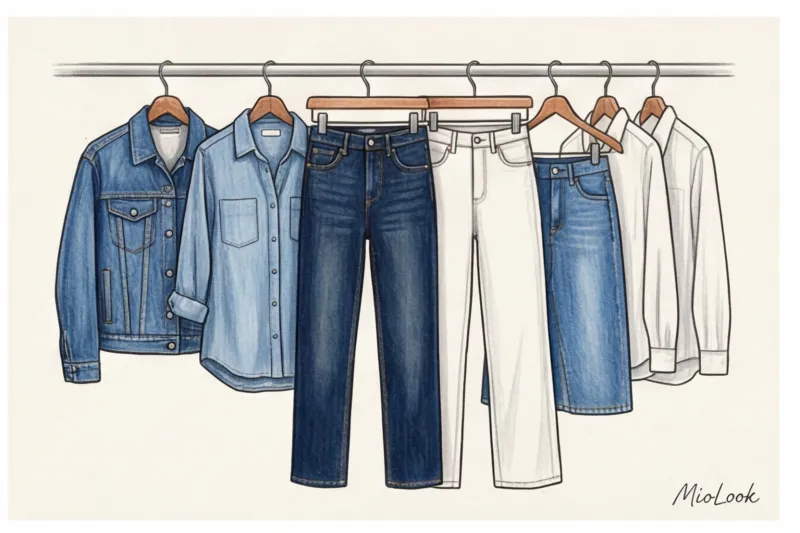
A minimal but functional denim set (budget €100 to €300 for all three pairs) should consist of different silhouettes:
- Warp: Classic straight jeans in dark blue with no fading. They're the perfect smart-casual pairing. Read our article to learn how to incorporate them into your work dress code. How to Completely Change Your Clothing Style Without Spending a Lot.
- Comfort: Relaxed, wide-leg, medium-weight pants for weekends and long walks.
- Mood: Accent jeans. These could be white for summer, graphite black, or an unusual cut (like barrel jeans).
Don't forget about the connection with other elements: a thick oversized denim jacket, the right denim midi skirt with a front slit (which is now replacing basic trousers) and a chambray shirt (thin denim).
Jeans aren't just casual attire we throw on without even looking. They're a complex, architectural wardrobe staple. If you learn to read the fabric thickness, measure the rise, and check the yoke angle, you'll never buy a pair that makes you feel insecure again. Choose heavyweight cotton, invest in the right fit, and let your denim work for you, not against you.