
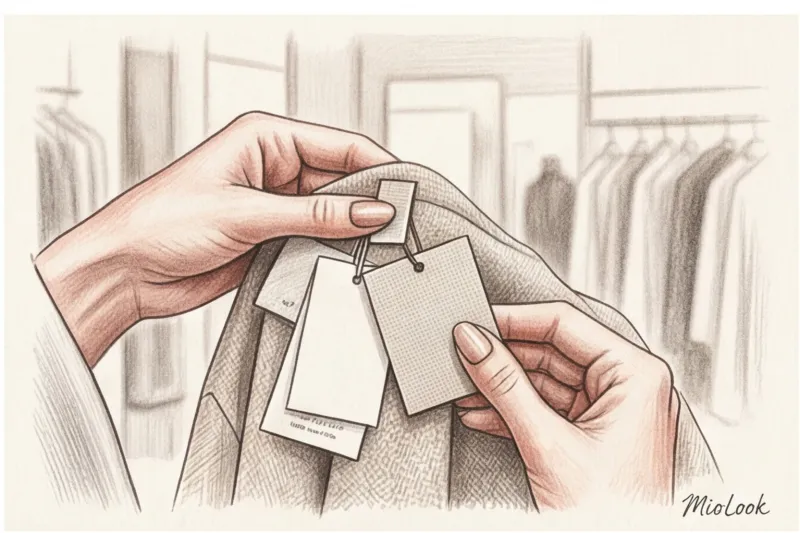
Last month, my client brought in a sweater for a wardrobe review. The tag read in big green letters: Eco-Friendly, 100% Bamboo She bought it for a pretty penny from a well-known mass-market brand, hoping to make an eco-friendly choice. The problem was that after the first wash, it stretched two sizes and became covered in stiff pilling. For comparison, we pulled out a vintage Italian cashmere jumper from her closet, which she's been wearing for twelve years—it looked impeccable.
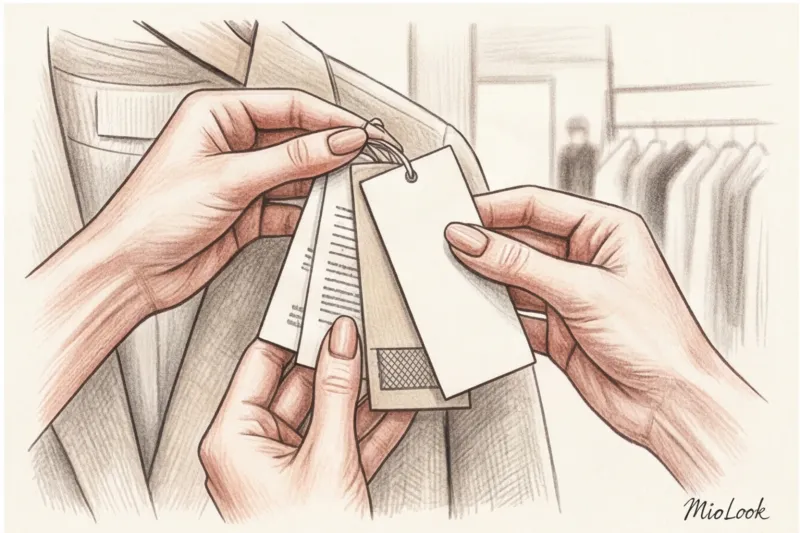
This contrast perfectly illustrates the main problem of modern industry. Choosing eco-friendly fabrics for clothing We often fall for marketers' tricks, buying chemical "dummy" products instead of quality ones. True premium eco-friendliness isn't a green label. It's durability, a refined texture, and safety for your skin.
We have already discussed in more detail the basic principles of creating such a cabinet in our The Complete Guide to Conscious Fashion: How to Build an Eco-Friendly Wardrobe Today, I suggest you take a look at your clothes through a stylist's lens and figure out which materials are truly worth paying for and which are best left on the store hanger.
Eco-friendly clothing fabrics: what's behind the pretty labels?
The fashion industry has mastered greenwashing—creating the illusion of eco-friendliness for the sake of sales. You see a rack in a store with the words "Conscious" or a craft paper tag with a leaf drawn on it, and you subconsciously trust the brand. But if you turn that leaf over, you often discover a cheap viscose-polyester blend.
According to a 2021 study by the Ellen MacArthur Foundation, global clothing production has doubled over the past 15 years, while the average number of times a garment is worn has decreased by 36%. We're buying more eco-friendly clothing, but we're throwing it away faster.
The cardinal rule of an investment wardrobe is this: a truly eco-friendly item is one you'll wear for years. No organic cotton will save the planet if the T-shirt is poorly sewn and ends up in the trash after a month. A prestigious wardrobe is built on materials that age gracefully and stand the test of time.
Natural Myths: Why Not All "Green" Materials Are Safe
Let's dispel a few myths that the mass market is actively implanting in our minds. Over 12 years of working with premium fabrics, I've learned to distinguish high-quality thread from a chemical counterfeit with my eyes closed. And what we're sold as innovation often turns out to be a step backwards.
The illusion of bamboo and viscose
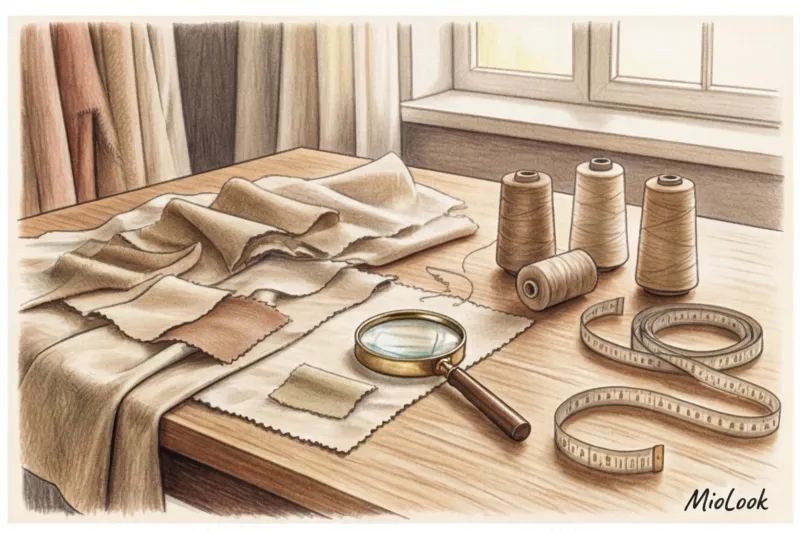
The words "100% bamboo" sound wonderful, evoking associations with nature. But have you ever wondered how the hard, woody bamboo stem is transformed into a flowing, soft fabric? It's not spun mechanically, like linen.
To produce bamboo fabric (which is essentially just bamboo viscose), the wood is dissolved in harsh chemicals, most often using toxic carbon disulfide and sodium hydroxide. This process destroys the natural structure of the fiber. The resulting fabric is truly soft to the touch, but it loses its shape drastically when wet. This is why your bamboo t-shirts warp at the seams after washing.
Your perfect look starts here
Join thousands of users who look flawless every day with MioLook. A smart assistant for your wardrobe.
Get access — €0.99 onceRecycled Polyester: Solution or Microplastics?
Another favorite of marketers is rPET, or recycled polyester made from plastic bottles. It seems logical: we're cleaning the planet of plastic and making clothes from it. But there's a critical nuance.
Researchers at the University of Plymouth calculated that every time a jacket or fleece sweater made from recycled polyester is washed, up to 1,900 plastic microfibers are released into wastewater. Wastewater treatment plants fail to capture them, and they end up in the oceans. Plastic bottles are better off remaining bottles or being recycled into solid objects.
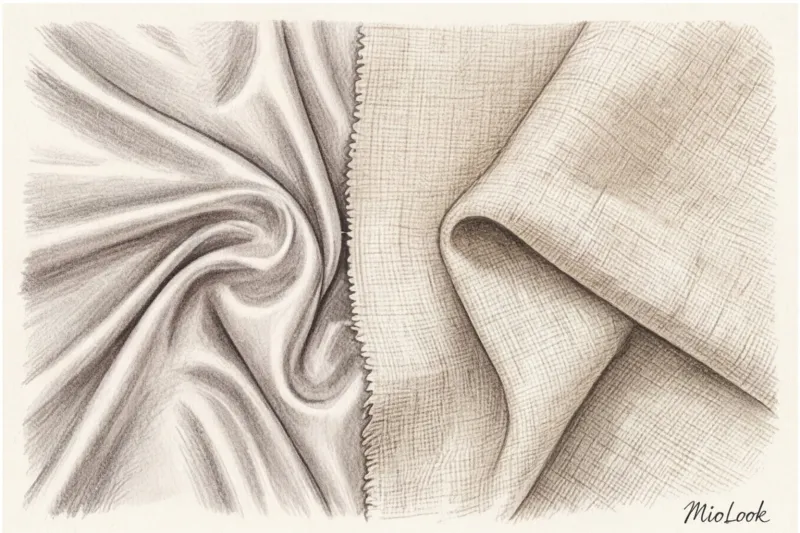
When it does NOT work: I always tell my clients to avoid recycled plastic in items that require frequent washing (T-shirts, underwear, summer dresses). rPET is only acceptable in outerwear (parkas, trench coats) or shoes, which we wash very rarely.
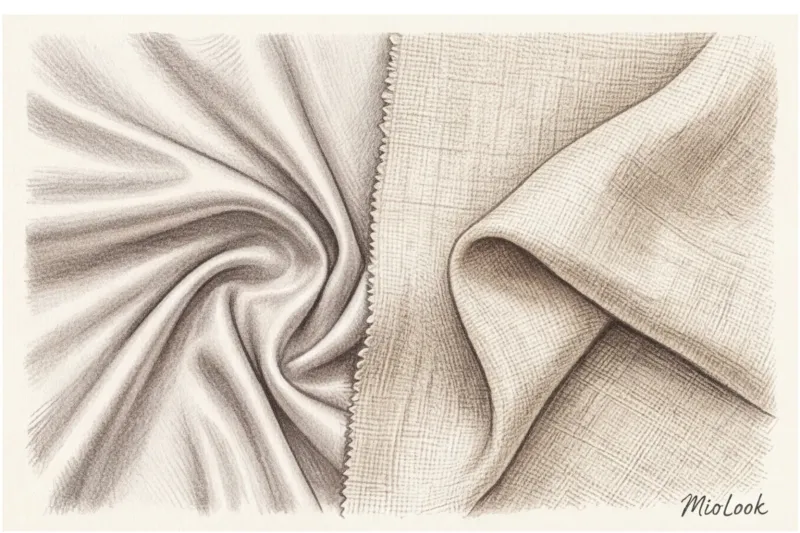
True eco-friendly fabrics: an investment in quality and health
If bamboo and recycled plastic are out of the question, what should you invest in? The luxury segment always relies on noble textures. Not only are they environmentally friendly when grown properly, but they also possess that visual heft that makes a piece look expensive.
Organic cotton and linen: the foundation of a premium wardrobe
The difference between conventional and organic cotton isn't just the absence of pesticides, according to the report. Textile Exchange (2023) Conventional cotton production requires colossal amounts of water—up to 2,700 liters per T-shirt. Organic farming uses rainwater and consumes 91% less water.
But for a prestigious wardrobe, density is also important. Look for organic cotton T-shirts with a minimum weight of 180-200 g/m². Only this fabric will hold its shape, be non-transparent, and create the perfect geometric silhouette.
Linen is the undisputed champion of eco-friendliness. It grows in poor soils and requires virtually no watering or fertilizer. Yes, it wrinkles. But the elegant wrinkle of dense, unbleached linen is a sign of relaxed luxury, an unspoken status symbol of summer looks in the "quiet luxury" style.
Wool, cashmere and silk: durability as the main eco-trend
Natural animal fibers are often criticized, but when produced ethically, they represent the pinnacle of conscious consumption. Why? Because of their longevity.
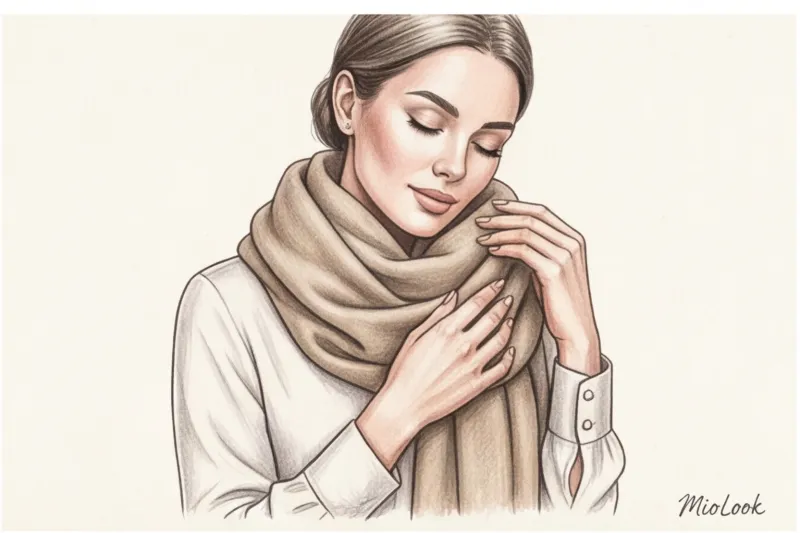
Heavyweight Mulberry silk (19 to 22 momme count) or premium Italian cashmere can be passed down through generations. Silk has natural thermoregulation, and wool is self-cleaning—it only needs to be aired rather than washed after each wear. This dramatically reduces the garment's environmental footprint during use.
Innovative materials: Tencel, Lyocell, and plant leather
If you love the flowing texture of viscose, choose a safe alternative—Tencel or Lyocell. This fabric is made from eucalyptus wood using closed-loop technology: 99% of the solvent is captured and reused. There are no toxic emissions.
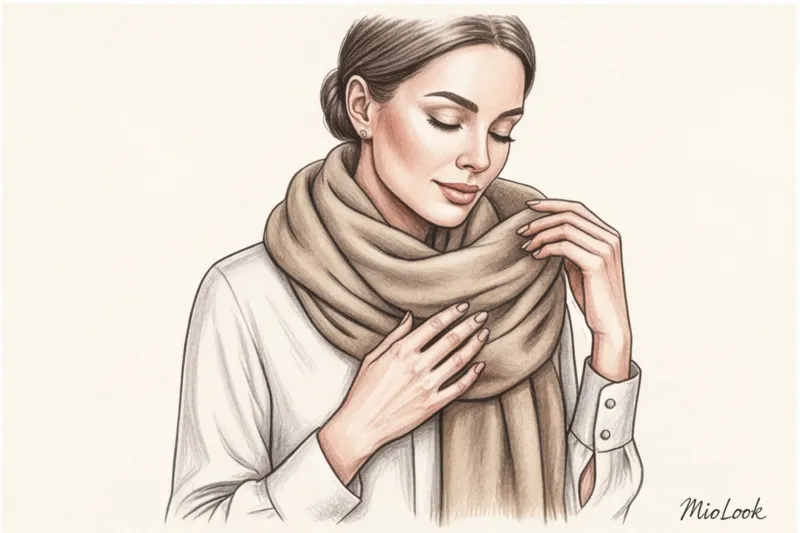
As for plant-based leather (Piñatex made from pineapple or Desserto made from cactus), it's an interesting trend, but it requires honesty. Most modern vegan alternatives still require the addition of polyurethane (PU) to bind the fibers, otherwise they will simply fall apart. Therefore, calling them 100% biodegradable is still premature.
Access to MioLook for €0.99 — one-time payment
Start creating perfect looks with artificial intelligence. Smart analysis of textures and combinations.
Get access — €0.99 onceHow to determine fabric quality in a store: a stylist's tactile test
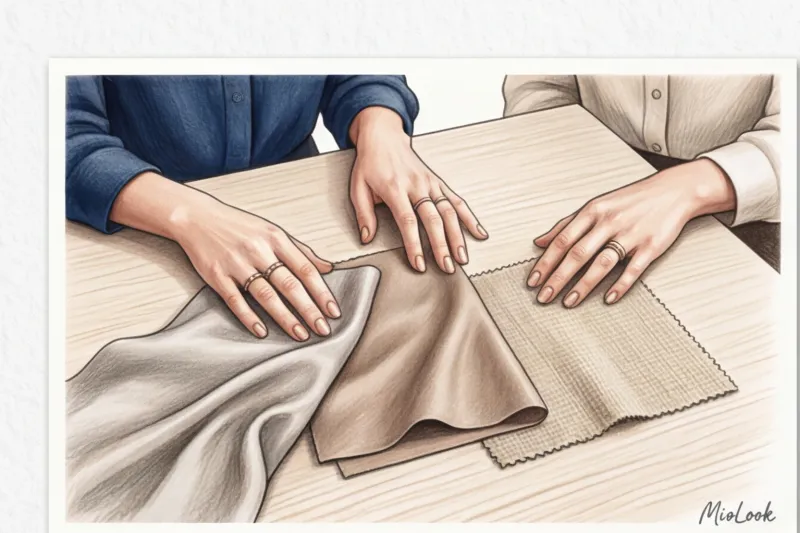
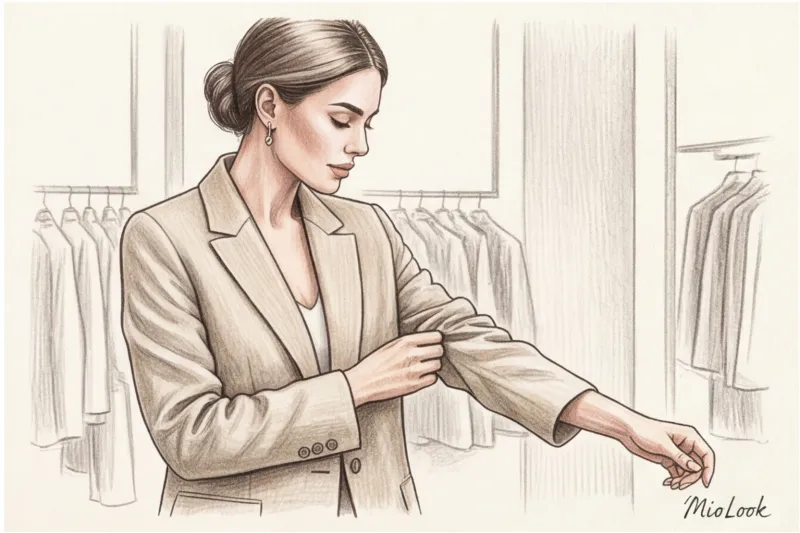
You don't have to be a sewing technologist to choose a good garment. In my practice, I use a simple three-step process that takes exactly 15 seconds right at the hanger.
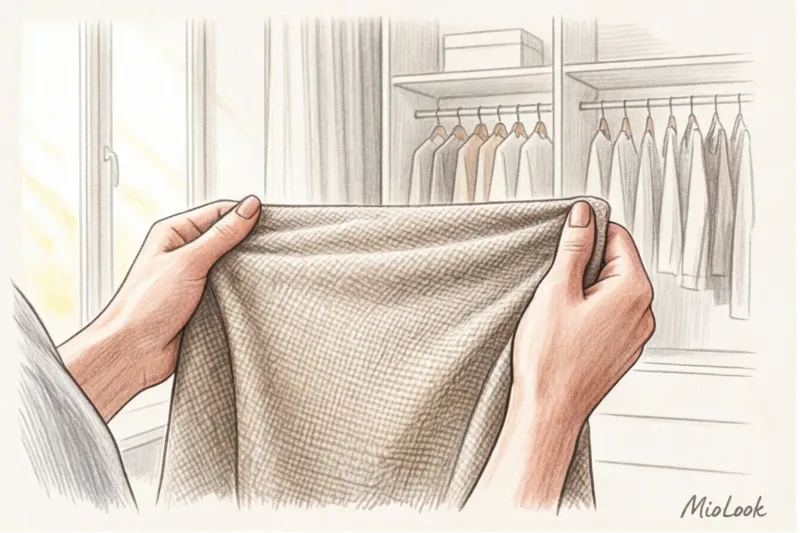
- The Squeeze Test. Take the edge of the sleeve of a linen jacket or wool sweater and squeeze it tightly in your fist for 5 seconds. Release. High-quality natural fabrics will either spring back and return to their shape (like tightly twisted wool) or leave soft, elegant creases (like linen). Cheap synthetics or low-quality viscose will remain wrinkled, like chewed paper.
- Density test (translucent). Hold the item up to a lamp in the store. If you see uneven weave, bald spots, or see-through fabric where it shouldn't, leave it. Loose fabric will become misshapen after the first wash.
- Feeling of weight. Good fabrics (even fine silk) have a distinctive heft. They feel pleasantly heavy on the hand, falling in beautiful, heavy folds. Cheap polyester always feels unnaturally light, glassy, and staticky.
Safety Certificates: How to Read Labels to Avoid Being Scammed
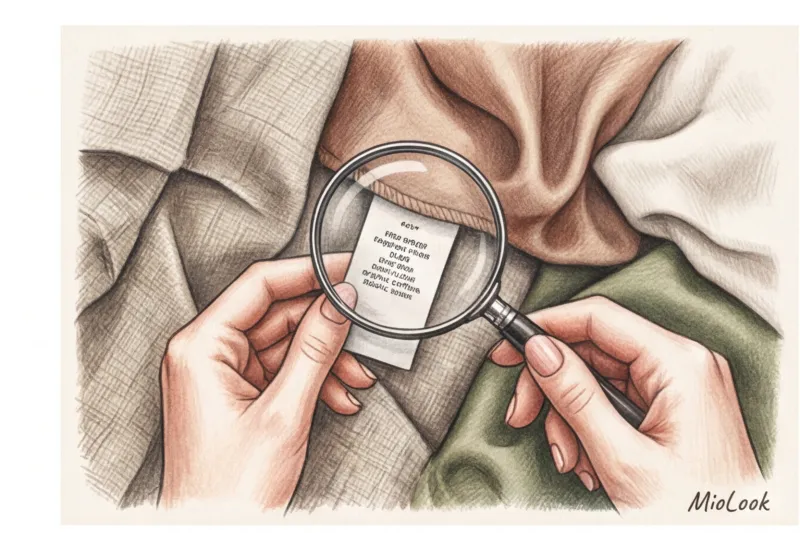
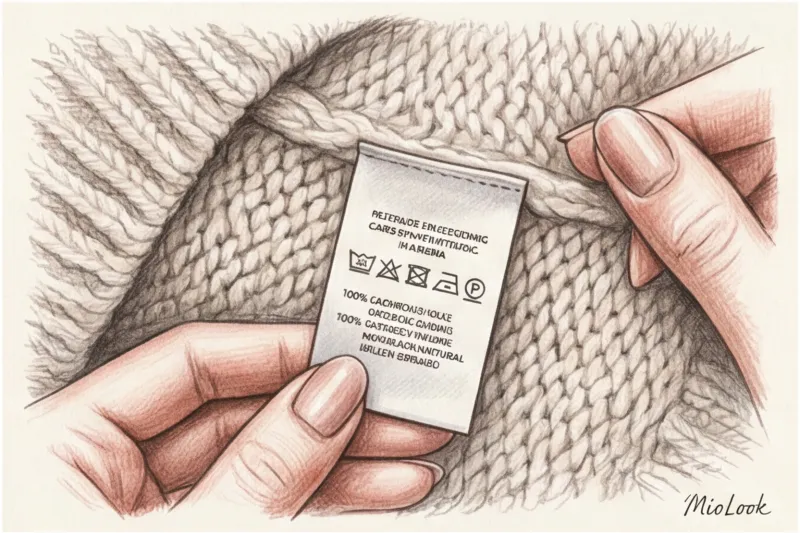
If your fingers say "yes," it's time to look at the inside tag. Not the cardboard tag with the pretty font, but that inconspicuous white strip sewn into the side seam. Look for two key international standards there:
- GOTS (Global Organic Textile Standard) Gold Standard. If you see this symbol, it means at least 70% of the fibers in the item are organic, and no toxic heavy metals, formaldehyde, or child labor were used in its production.
- OEKO-TEX Standard 100 This certificate doesn't guarantee that the fabric is organic, but it does guarantee 100% that the finished product is free of harmful chemicals. This is critical for underwear, T-shirts, and any garments that sit directly next to the body.
Checklist: How to gradually transition your wardrobe to eco-friendly fabrics
There's no need to rush home in a panic and throw out every polyester dress from Zara. That goes against the very idea of ecology. Every discarded item has already damaged the planet. Your goal is to wear what you have for as long as possible and make new purchases mindfully.
First, conduct an audit. In the appendix MioLook It's convenient to digitize your clothes and see what materials predominate in your closet. We often don't even notice that 80% of our blouses are made of flammable synthetics.
Apply the formula Cost-Per-Wear (cost per output) A $200 pure merino sweater that you'll wear 100 times over five years costs you $2 per wear. A $30 acrylic jumper that will pill after three washes costs you $10 per wear. Is this really a savings?
- T-shirts and shirts (close to the body): only organic cotton with a density of 180 g/m², linen or Tencel.
- Sweaters and cardigans: 100% wool, merino, or cashmere. Up to 10% elastane or polyamide is allowed for shape retention, but no more.
- Suit group (trousers, jackets): blended wool, thick cotton.
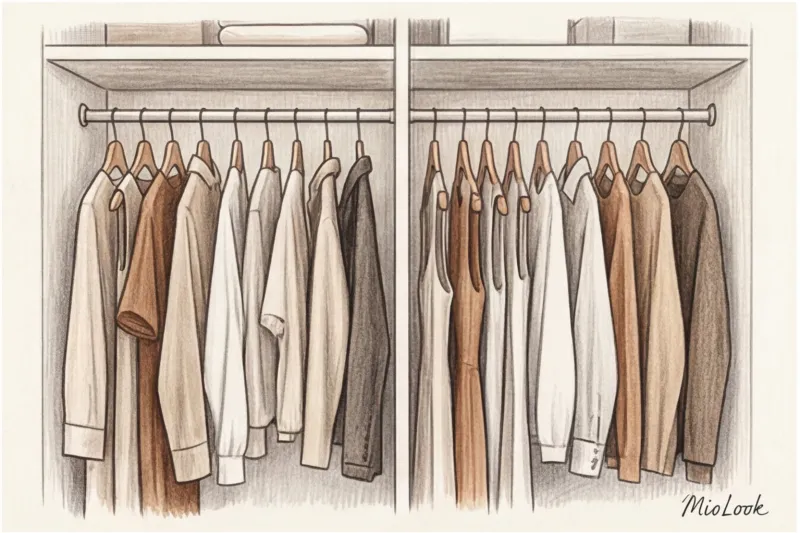
Style isn't about brand logos on your chest. It's the invisible quality of the threads that make up your look. By choosing the right fabrics, you're investing not only in saving the planet but also in your own comfort, status, and confidence. Start small: next time you're at the store, before you take an item to the checkout, simply close your eyes, squeeze the fabric in your hand, and look for the coveted certificate on the inside tag. It only takes 15 seconds, but it will change your wardrobe forever.