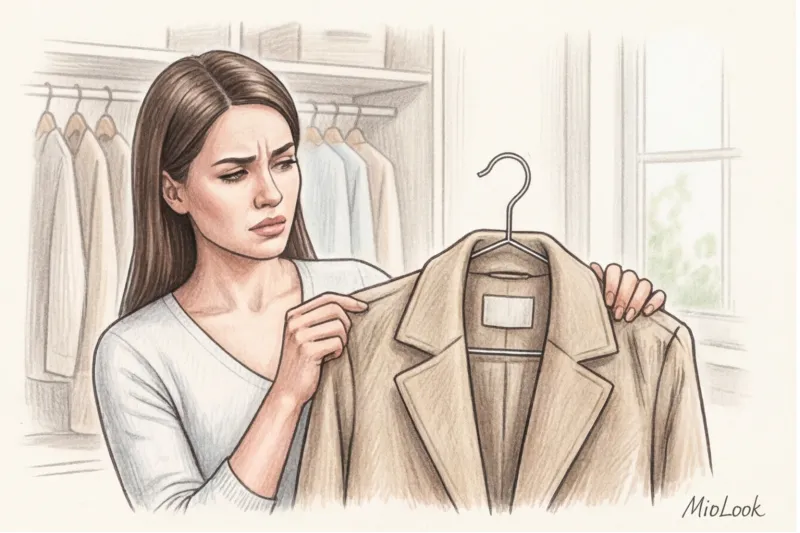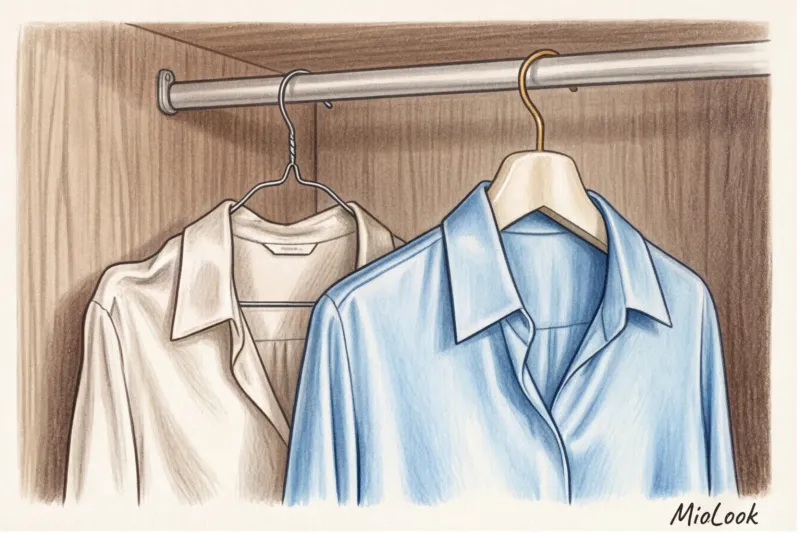
One day, while sorting through my client Anna's wardrobe, we discovered a true fashion tragedy. A stunning silk blouse from Max Mara, costing around €450, had been worn just once and fit her completely awkwardly. The shoulder seams had stretched into pointed ears, and the collar had sagged. The problem wasn't a flaw in the fabric, but rather a thin metal wire from the dry cleaner, on which the blouse had been hanging in the closet for a whole month.
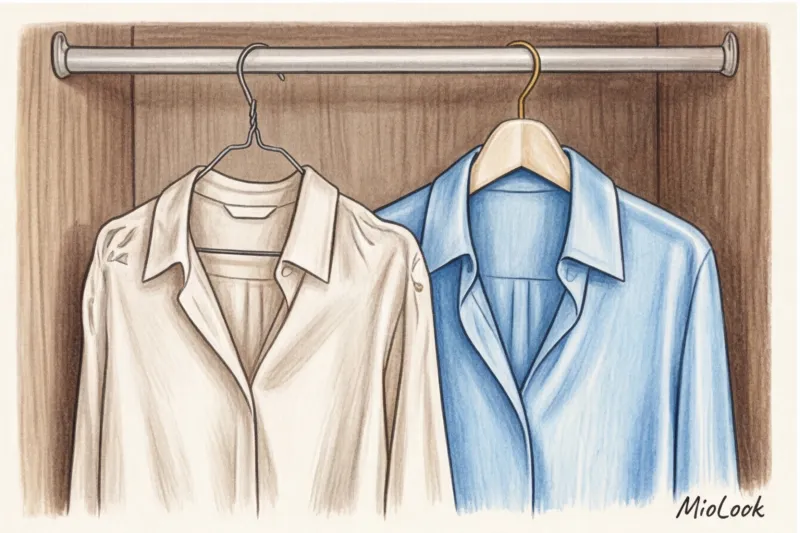
Girls at consultations regularly ask me, Which hangers are best for clothes? , hoping to get a link to a single, universal organizer. But the truth is, an engineering approach to a wardrobe is far more important than a pretty picture. I always repeat that caring for things doesn't start with the washing machine—we discussed this philosophy in more detail in our a complete guide to proper clothing care We meticulously study laundry labels, but completely ignore the laws of physics and gravity inside our own closets.
The Hidden Threat: Why What Things Hang On Matters More Than Their Cost
Buying a premium item is pointless if storing it ruins the cut. As a stylist with twelve years of experience, I can confidently say: the "wire hanger effect" ruins more good clothes than harsh laundry detergent. When you hang a heavy jacket on a narrow plastic hanger, gravity inexorably pulls the fibers downward. Within a few weeks, that designer shoulder seam, which took hours to construct, is irreversibly deformed.
The right hanger isn't just a space-saving tool. It's your personal mannequin, carefully maintaining your clothes while you sleep.
That's why my first rule for every client: when picking up dry cleaners, remove them immediately from the complimentary hangers. They are intended solely for transport from the pickup location to your home, not for long-term storage.
Which hangers are best for clothes: We analyze materials without marketing myths
To understand which hangers are best for clothes, we need to stop thinking in terms of "pretty/ugly" and start thinking about friction, weight, and load distribution. Let's take an honest look at the popular materials we encounter in stores.
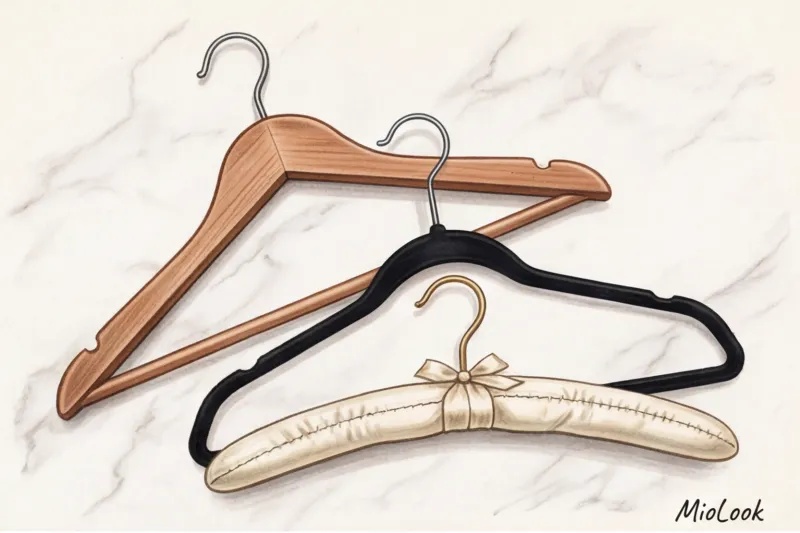
Wooden hangers: a status classic or extra weight?
Solid wooden hangers (especially those made of cedar, whose aroma naturally repels moths) look incredibly prestigious. They are smooth, if properly varnished, and provide the necessary rigidity.
Pros: They support the weight of heavy winter coats and structured suits without sagging. The wide brim perfectly follows the contours of the shoulder.
Cons: they "eat up" up to 3-4 cm of space on the bar each If you have a small apartment, wooden hangers can steal half the usable closet space.
Verdict: This is an ideal choice exclusively for outerwear and heavy jackets. Using them for summer T-shirts is a waste of space.
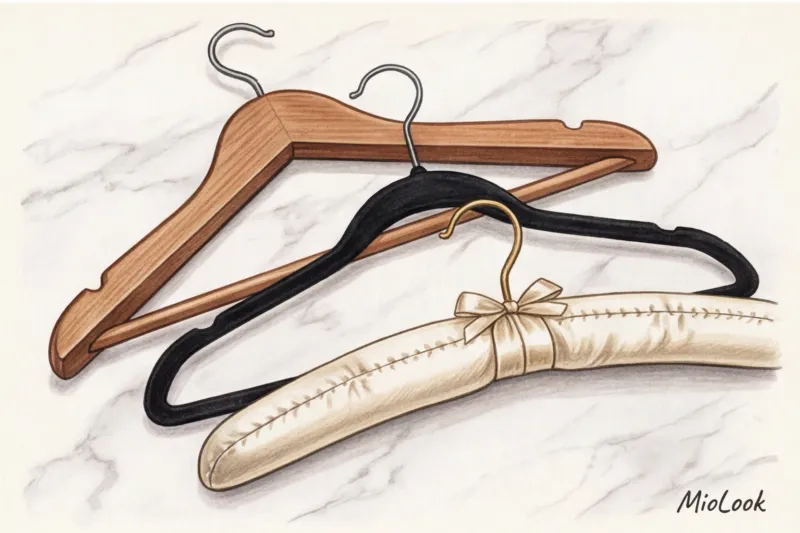
Velvet (flocked): Debunking the main Pinterest myth
We've all seen those immaculate, tightly packed closets in pictures, where only black or beige velvet hangers are used. They're beloved for their extreme space savings (they're only 0.5 cm thick) and for the fact that things don't slide off them. But herein lies the main pitfall.
A 2022 study by The Fabric Institute on the wear of delicate fabrics found that the high friction of flocked surfaces increases the incidence of micro-tears in silk by 40%. When you're late and yank a velvet blouse off a hanger, you literally stretch the collar. Furthermore, flock acts as a magnet for dust and lint in enclosed spaces.
Verdict: Use them sparingly. They're indispensable for dresses with wide boat necklines or off-the-shoulder ones that constantly tend to fall to the floor. But they're a disaster for basic T-shirts and silk.
Plastic and metal: when can you say a firm "yes" to them?
Not all plastic is evil. Wide, seamless molded plastic is an excellent, lightweight, and more affordable alternative to wood (a set will cost between €15 and €30). The key is to run your finger along the bottom edge: if there's a sharp factory seam there, it will cause snags in the lining.
As for metal, rubberized PVC-coated metal hangers are an absolute must-have for trousers, especially Z-shaped models (open at one end), which allow you to remove trousers in one motion. As we've already established, thin metal from the dry cleaner is immediately recycled.
Your perfect wardrobe without visual noise
Organize not only your shelves but also your phone. Upload your items to the smart app and let the AI stylist create new looks for you daily.
Get access — €0.99 onceThe Anatomy of the Perfect Wardrobe: Choosing the Right Hangers for Your Clothing Type
One of the key insights I share in my workshops is that there's no such thing as a one-size-fits-all hanger. This is a marketing myth. A standard women's hanger should be 38–41 cm wide. If you use men's hangers (usually 43 cm and wider) for women's shirts, the ends of the hanger will hit the sleeves, creating those unsightly "bubbles."
Jackets, coats, and trench coats: building the right framework
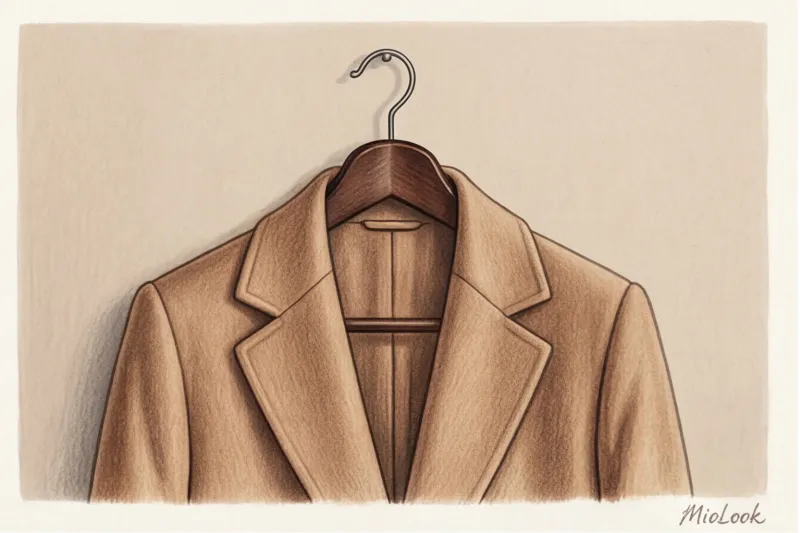
Jackets and coats have a complex internal structure: interlining, interlining, and shoulder pads. To prevent this architecture from collapsing, the hanger must function as a true framework.
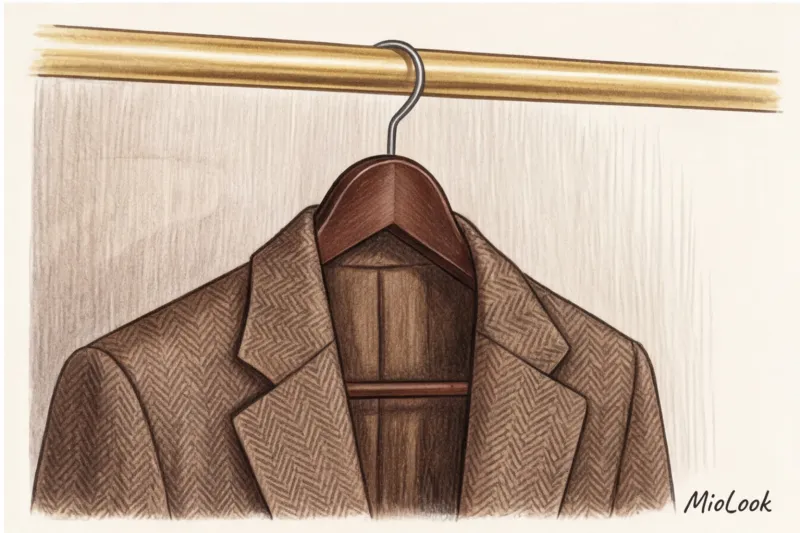
The key rule here is that the hanger must have "wings"—widening at the ends by 3-5 cm. The shape should follow the anatomical curve of a person's back and shoulder. If you travel frequently for work, I recommend checking out our A guide on how to properly pack a jacket in a suitcase , but at home the jacket should be returned to its rightful wooden or wide plastic frame.
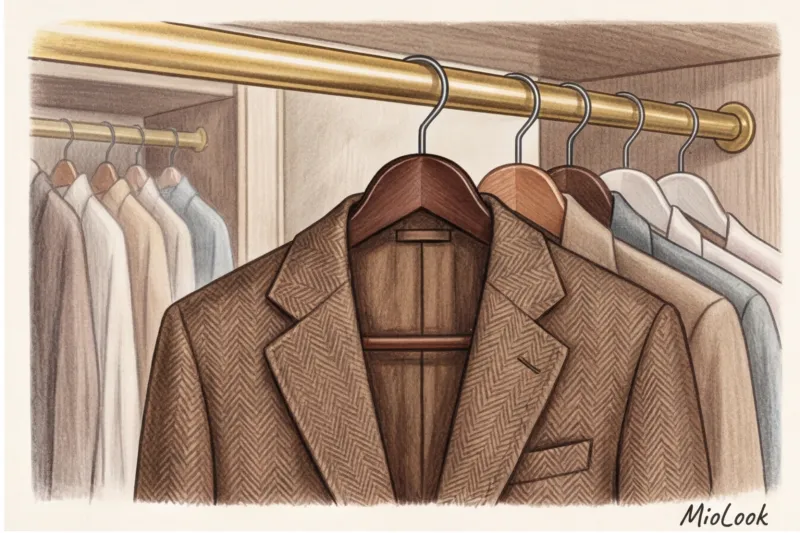
Silk, blouses and delicate fabrics
Smooth, thin hangers are ideal for basic shirts made of cotton or blended fabrics. Meanwhile, for vintage silk, chiffon, and fine viscose, the trend for satin hangers (soft, voluminous) is making a triumphant comeback. They may have once seemed like a relic from grandma's closet, but in terms of preserving delicate fibers, they are unrivaled—they completely eliminate any friction or sharp creases.
Skirts and trousers: clips, bars or tiers?
If you fold trousers in half and hang them over a classic thin wooden hanger, be prepared for a permanent crease to form at the knee. The ideal solution for trousers is hangers with clips at the bottom of the legs. The trousers hang full length and stretch under their own weight, often even replacing ironing. This is especially important if you're shaping a transformable capsule for every day , where things should always be ready to go.
The rule is even stricter for skirts: only clips with silicone pads (to avoid denting the fabric) are allowed on the waistband. I absolutely forbid using the internal loops sewn into skirts for hanging on hooks—the weight of the fabric inevitably stretches the side seams where these loops are sewn.
What You Should Never Hang (and How to Store It)
Even the best hangers in the world sometimes fail. There's a category of things for which gravity is a death sentence.
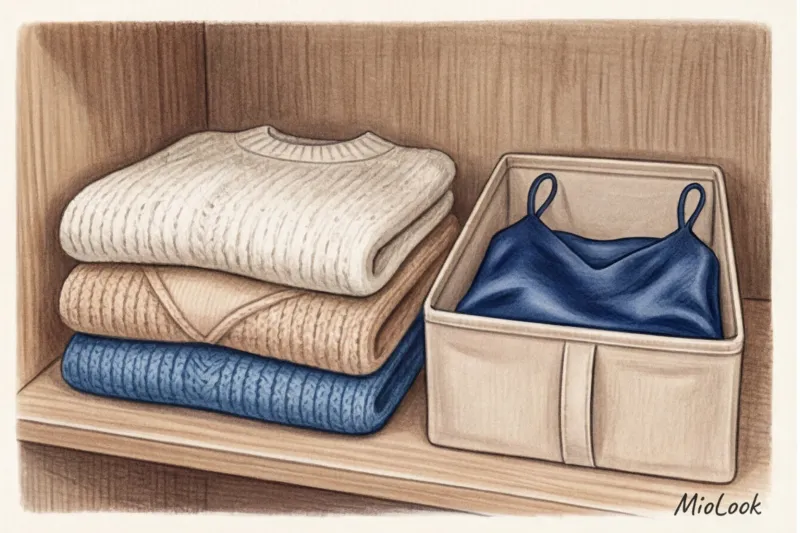
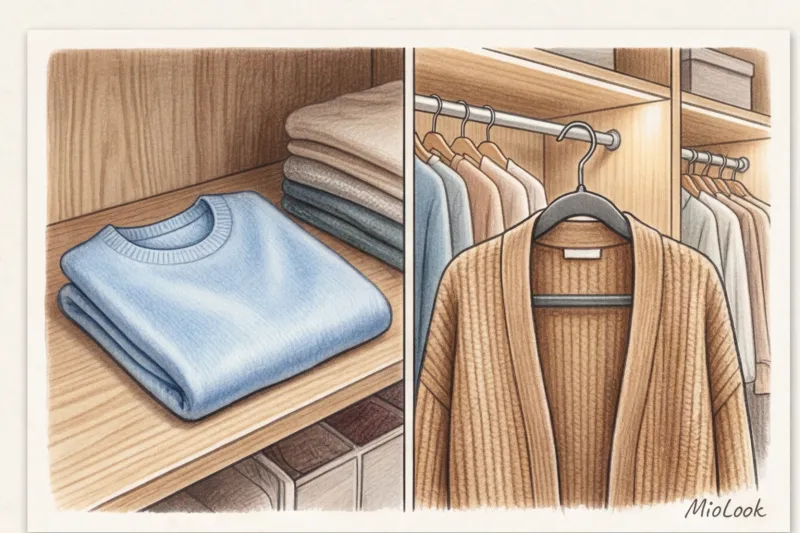
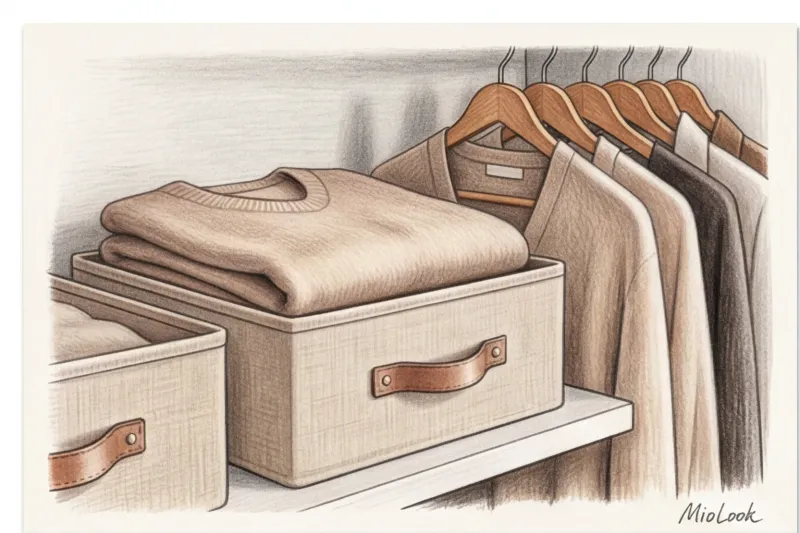
- Chunky knit, cashmere and heavy cotton. According to The Woolmark Company's official recommendations (2023), wool should not be stored hanging. The weight of the sweaters stretches the sleeves and causes the neckline to lose its elasticity. Sweaters should only be folded and stored on shelves.
- Bias-cut dresses. Those flowing, lingerie-style slip dresses that hug your figure so beautifully. Because of the cut at a 45-degree angle to the warp threads, these dresses will stretch out permanently on a hanger, losing their fit. Careful folding is recommended.
What to do if the shelves are empty?
For this situation, there's a brilliant life hack from the tailors of London's Savile Row (the Savile Row fold for knitwear). Fold the sweater in half lengthwise along the back (so the sleeves match). Place a crochet hanger in the armpit of the sweater. Drape the body of the sweater over one shoulder of the hanger, and the sleeves over the other. This way, the knitwear will lie flat on the hanger without putting tension on the shoulder seams.
Ready to rethink your style?
Discover a smarter approach to your wardrobe. Digitize your items and let MioLook's artificial intelligence create stylish combinations for every day.
Get access — €0.99 onceAesthetics and visual noise: how identical hangers change the way we think
According to research by merchandisers at premium boutiques, the correct distance between hangers (about 1.5–2 cm) not only ensures air circulation, preventing musty odors, but also directly affects our perception of clothing.
Mismatched hangers—different colors, different hook heights, a mix of wood, plastic, and metal—create visual chaos in your closet. Your brain interprets this noise as "clutter," and that's where the famous phrase "I have absolutely nothing to wear" comes from, even though your closet is bursting with clothes. Clothes are simply being hidden behind each other due to their different heights.
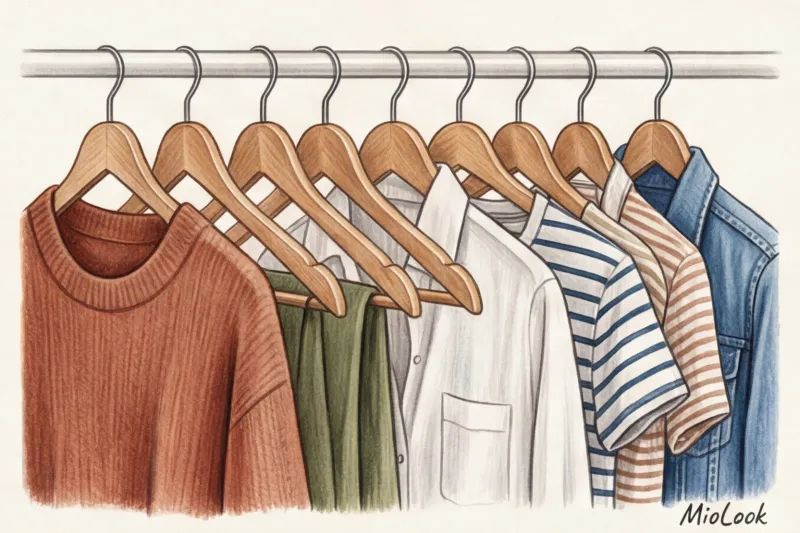
One of my clients, after we invested about €80 in identical thin hangers, admitted that she began wearing 30% more of her clothes basic capsule wardrobe Things are now visible. When your wardrobe is presented like in a boutique, putting together looks in the morning becomes much easier. Of course, today we can transfer this entire process to our smartphones using Smart wardrobe features in the MioLook app , but physical order in the closet is the basis without which the magic won't work.
Checklist: Audit Your Hangers in 15 Minutes
I'm not suggesting you throw out everything right now and spend hundreds of euros on new storage accessories. Start small. Do this 15-minute audit tonight:
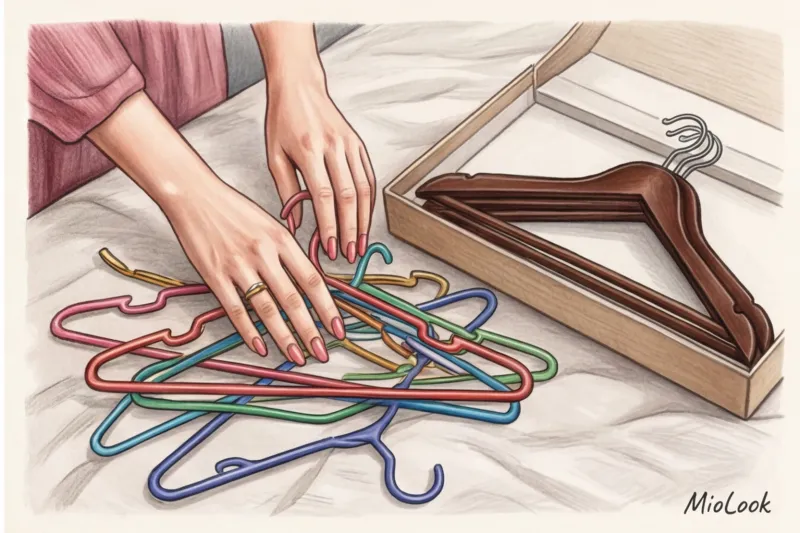
- Take everything out and throw away the wire ones. No regrets. Even if it's a hanger from an expensive dry cleaner.
- Check the size. Find items where the shoulder seam hangs off the hanger (you need wider hangers, from 42 cm) or the hanger digs into the sleeve (you need narrower hangers, 38-40 cm).
- Save knitwear. Remove all chunky knit sweaters and cardigans and place them on a shelf or use the tossing method described above.
- Invest in the right proportion. The basic set of a healthy wardrobe looks like this: 70% identical thin (but smooth!) hangers for tops, shirts, and dresses; 20% contoured wide hangers for jackets and outerwear; 10% open hangers or models with clips for bottoms.
Properly chosen hangers are an investment that pays off in the extended life of your favorite items. It's not just a matter of keeping things organized; it's a true expression of self-love and style. Replace them, and you'll be surprised how much your attitude toward your wardrobe changes every morning.
Your perfect look starts here
Join thousands of users who look flawless every day with MioLook, the AI stylist. Organize your wardrobe smarter.
Get access — €0.99 once