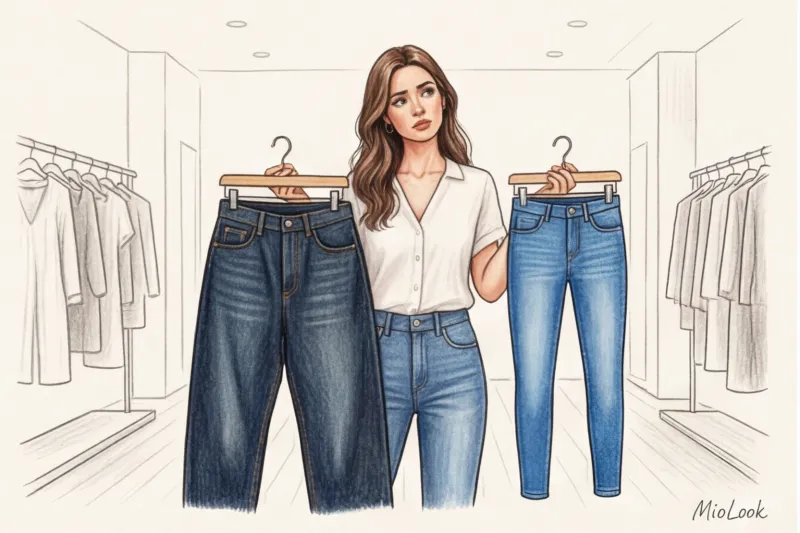
Open any article with a title like “10 Things Every Woman Should Have,” and at number one you’re guaranteed to find these— classic basic jeans Usually, you'll be told to buy a pair of straight-leg blue Levi's 501s and call it a day. But after 14 years as a personal stylist, I've learned one harsh truth: there's no such thing as a one-size-fits-all pair of jeans.
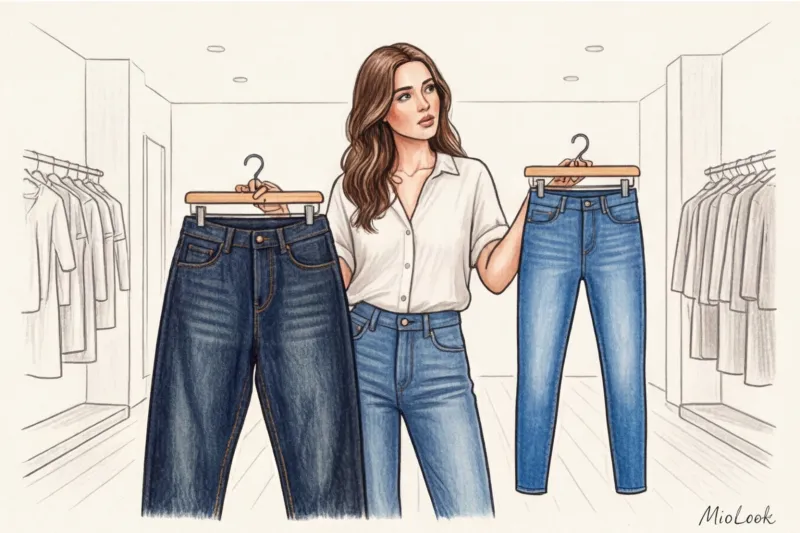
We discussed in detail in our blog post why average must-have lists are hopelessly outdated and don't work in real life. The Complete Guide to Wardrobe Investments Today, I want to teach you to look at denim as an engineer, not a marketing victim. We'll dissect jeans as an architectural structure, so you can find the perfect pair that will become an invisible yet incredibly reliable foundation for your figure and lifestyle.
The Basics Illusion: Why Versatile Classic Basic Jeans Are a Myth
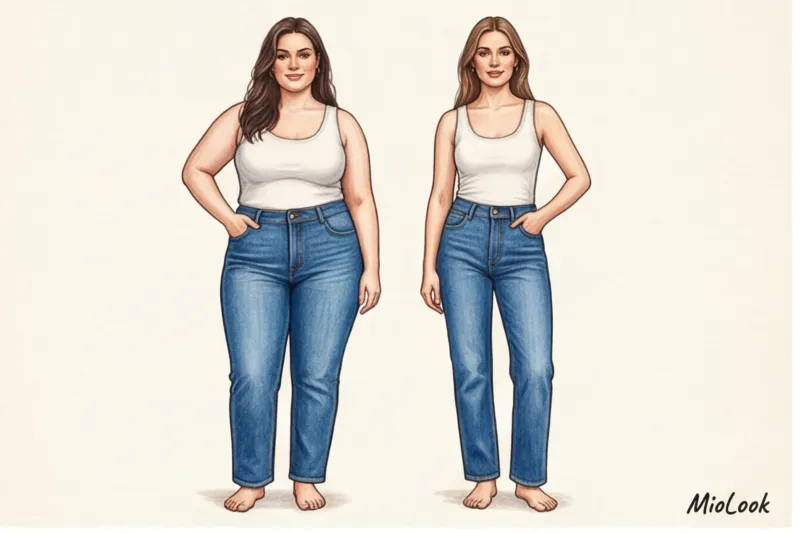
The biggest misconception in the styling world is that straight-leg, mid-rise jeans flatter everyone. This isn't true. What looks like casual French chic on a tall woman with narrow hips can add an extra 10 kilograms to a woman with a curvy figure.
Recently, a client, a top manager at an IT company, contacted me. She'd bought trendy slouchy and mom jeans from a premium brand because influencers were calling them "the new basics." When we tried them on, we saw a sad picture: the tight folds on her stomach and tapered hems had visually "eaten" her height and added two sizes to her hips. Truly "timeless" jeans aren't a specific cut from the runway. They're the perfect balance between your proportions, your daily schedule, and your preferred footwear.
Denim Architecture: 4 Technical Traits of Timeless Jeans
Trends come and go, but quality craftsmanship remains constant. Before you take a garment to the fitting room, pay attention to the hardware and fabric finish. True classics don't boast logos; they're evident in the details.
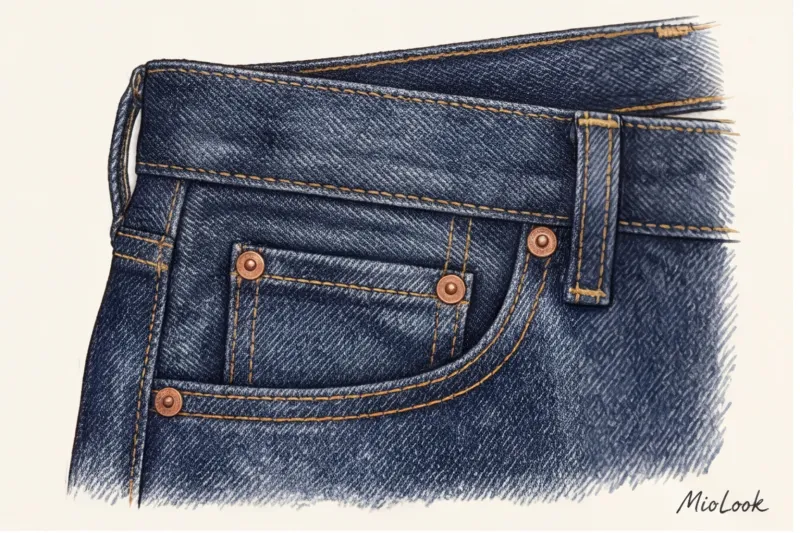
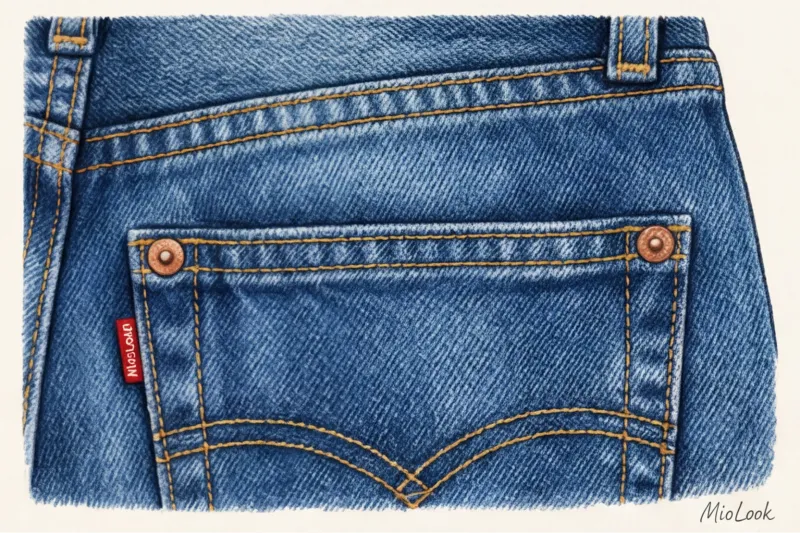
Firstly, copper rivets on pockets and thick contrasting golden-yellow stitching have remained the gold standard since the gold rush. Secondly, avoid any artificial distressing. Faded areas on the thighs or the notorious "mustache" (creases in the groin area) not only cheapen the garment but also act as a marker of a specific era (remember the fashion of the 2010s). High-status denim should age naturally, along with you.
Fabric Composition: Why 100% Cotton Isn't Right for Everyone
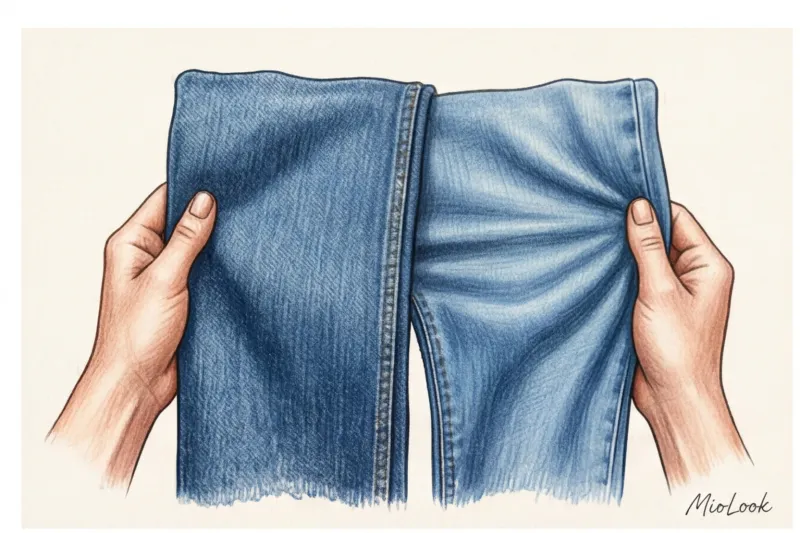
Fashion purists extol 100% raw denim as the only true choice. It's believed to be the only material that will mold beautifully over time. But let me share a counterintuitive observation from my own experience: for most modern women, it's an ergonomic nightmare.
If you spend eight hours a day in an office chair or behind the wheel, a stiff cotton shell can compress your abdomen and impair pelvic circulation. Adding 1-2% elastane isn't a compromise on style, but a basic necessity for your health. The addition of polyester (up to 10-15%) is only acceptable in budget-friendly jeans to prevent stretched knees on thin fabrics, but it's best avoided in premium, classic, basic jeans.
Density in ounces (oz): the secret to a proper fit
Have you ever noticed that some jeans highlight even the slightest unevenness in the skin and seams? The problem lies in the fabric weight, which is measured in ounces (oz). Many mass-market brands save money by making their collections from thin summer denim with a weight of 9-10 oz.
Remember this rule: good all-season jeans should have a density of 11-13 oz, while winter jeans should be 14 oz and above. Only this weight can create a rigid frame that "pulls" the figure together, flatters the silhouette, and conceals body contours, rather than clinging to them like leggings.
Yoke and pockets: the geometry of the ideal buttocks
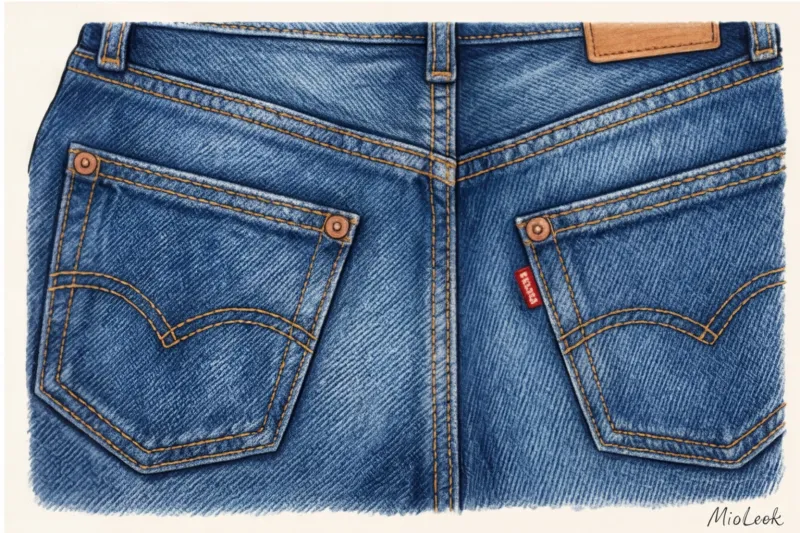
The back view is determined by the geometry of the yoke—the seam between the waistband and pockets. The classic V-shaped yoke visually lifts the buttocks, creating a beautiful curve. The deeper this "V" is, the rounder the shape appears.
Pay attention to the size and placement of your pockets. A huge mistake is buying jeans with pockets that are too small, too wide apart, or too low. If the bottom edge of the pocket falls on your hips (under the buttock crease), it will visually flatten and droop your figure.
Your perfect look starts here
Tired of spending hours choosing clothes? A smart AI stylist will analyze your body shape and wardrobe to create flawless outfits for every day.
Get access — €0.99 onceHow to find your silhouette: starting from proportions, not fashion
Blindly following trends is the enemy of a functional wardrobe. Instead, I suggest focusing on your personal architecture. If you haven't yet determined your proportions, I recommend reading this article about How to choose clothes for your body type without stereotypes.
As for rise, the safest and most long-term investment is a classic mid-rise, which sits just below the navel. An extremely high waist visually shortens the torso, while a low waist shortens the legs. A mid-rise maintains the body's natural proportions in balance.
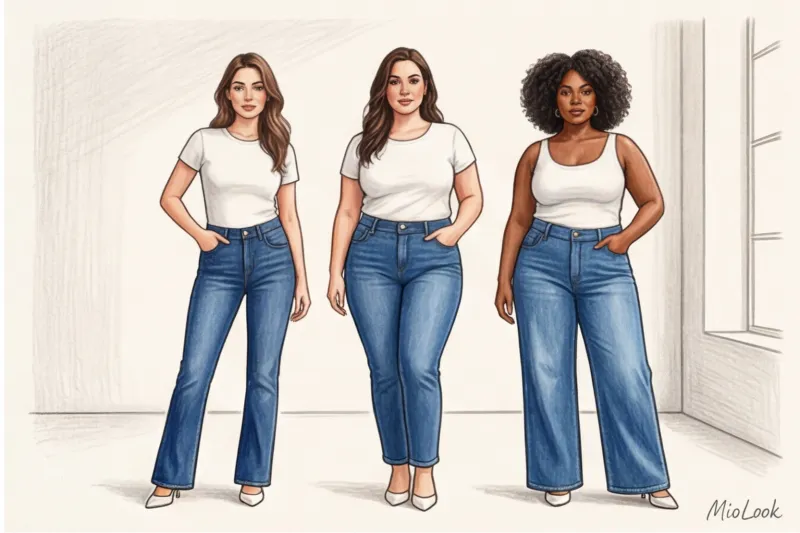
Straight: Who They Really Work For
The straight fit is the standard, but it has its limitations. It's ideal for rectangle or inverted triangle body shapes, where there's no sharp difference between the waist and hips. When choosing this style, pay attention to the flare: jeans can be straight from the hip (a looser fit) or straight from the knee (a more classic fit).
Wide-leg and bootcut: when volume is justified
My client Anna has a whopping 32 centimeters difference between her waist and hips. Straight-leg styles simply wouldn't fit her. Our salvation was the bootcut silhouette (flared from the knee). It's pure geometry: the flare at the bottom offsets the wide hips at the top, creating an hourglass silhouette.
Wide-leg jeans can also be basic, as long as you follow the main rule: they should be long enough, almost to the floor, to elongate your height, and not cut your leg in half, making your figure look massive.
Color and Cooking: Which Palette Will Outlast Any Trend?
Denim's color determines its status and versatility. In a mature woman's wardrobe, classic basic jeans should easily integrate even into business capsule collections.
A 2024 study by the analytical agency WGSN confirms that deep indigo (Rinse wash or Raw) has consistently remained among the top three best-selling shades in the premium segment for the past ten years. This color looks so elegant that, when paired with a jacket, it easily replaces tailored trousers. We discussed how to do this correctly in detail in the article. Can you wear jeans to the office? Rules and dress code.
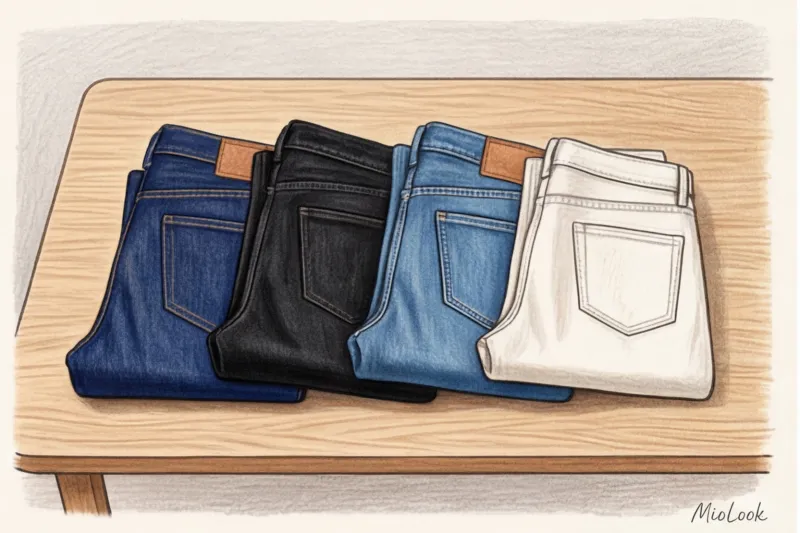
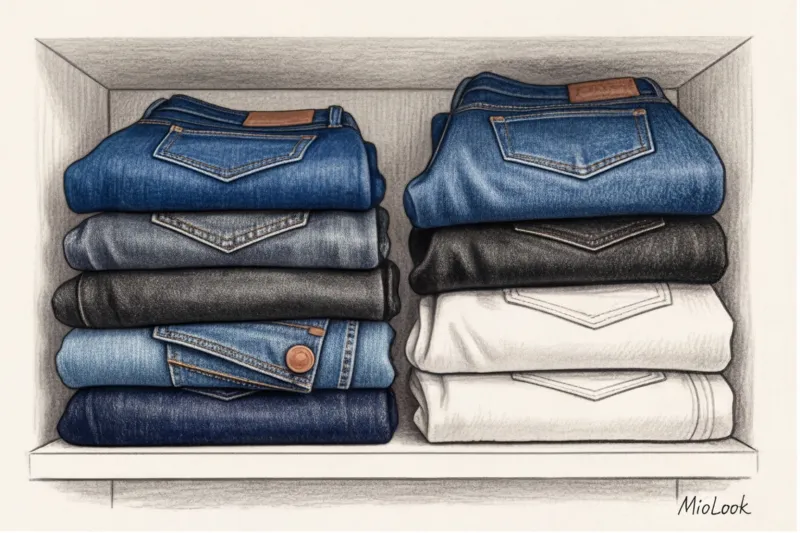
If you're looking for a mid-blue, avoid dirty yellow or greenish undertones. A proper vintage blue should be pure. To expand your capsule collection, be sure to consider graphite black for the colder seasons and elegant ecru (the color of undyed cotton) for the warmer ones—they work flawlessly.
Access to MioLook for €0.99 — one-time payment
Start creating your perfect look with artificial intelligence. Upload your jeans to the virtual wardrobe and discover dozens of styling options.
Get access — €0.99 onceLength and shoes: the main style rule that people forget
The main mistake I see on the streets every day is an untidy shoe gap (a gap between the edge of the trouser leg and the shoe) or, conversely, an accordion of fabric at the ankles.
The length of your jeans directly depends on your shoes. Straight-leg jeans should end exactly where the vamp of your loafers or sneakers begins, barely touching them. Wide-leg and bootcut jeans should be floor-length, with a 1-1.5-centimeter gap above the ground.
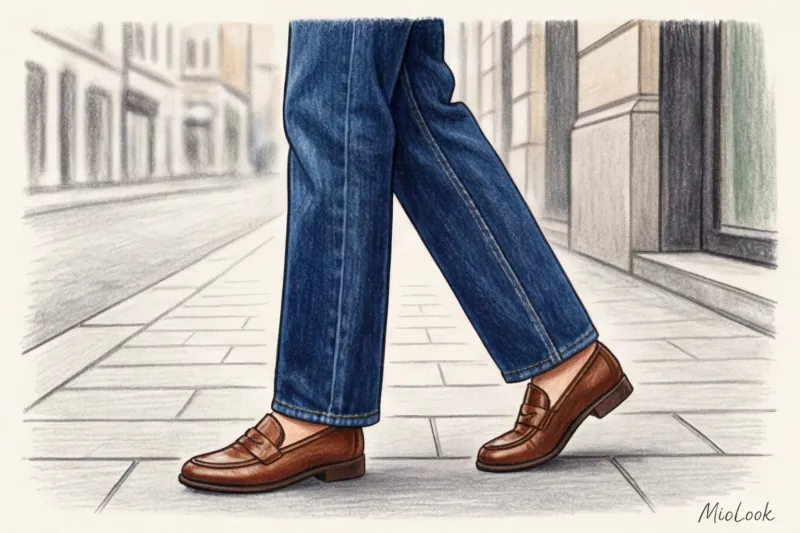
That's why I always insist: you should have at least two pairs of identical basic jeans if you wear shoes of different heights. One pair is tailored for flat feet, the other for heels. Always bring the shoes you plan to wear with a particular style when you try them on in the store—it'll save you a lot of hassle.
Stylist checklist: test drive jeans in the fitting room
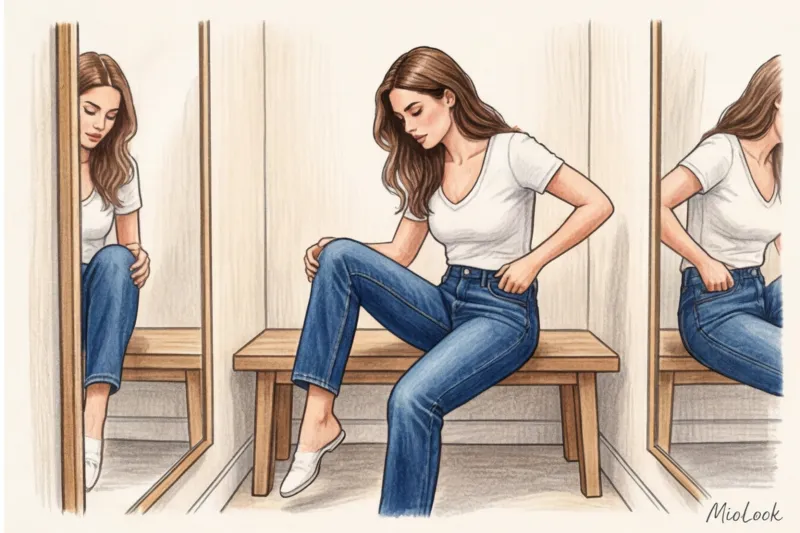
Never buy denim just by twirling it in front of a mirror. I always make my clients do a thorough test drive right in the fitting room.
- Bubble Test: Take a few wide steps. If the fabric bunches up in an unsightly bubble at the crotch, the balance between the front and back seams (rise) is off. This style should be left in the store.
- The "sit on a chair" test: Sit down on the ottoman in the fitting room. Your jeans shouldn't be tight, and the back of the waistband shouldn't fall to the middle of your buttocks.
- Waist gap: When you're sitting, place your hand behind your lower back. If your fist fits comfortably, the fit isn't right. A small gap of 1-2 centimeters can be adjusted at a tailor's (and this is perfectly normal for figures with a thin waist and wide hips), but if the gap is larger, look for a different brand.
Wardrobe Investment: Care That Will Keep Your Denim Looking Good for Decades
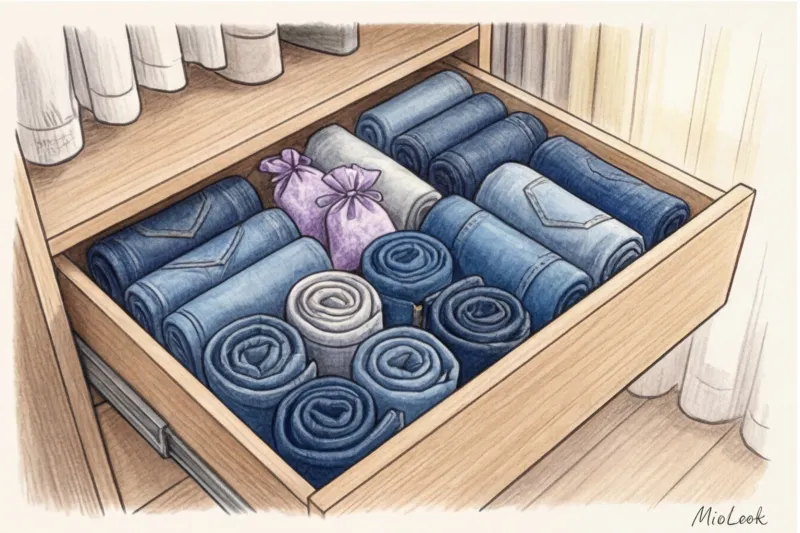
For years, a myth has been circulating online that jeans shouldn't be washed at all, but should only be frozen. This is untrue, invented by raw denim fans who are afraid of losing their distinctive creases. Washing jeans is necessary, but it must be done correctly.
Wash only in cold water (no hotter than 30 degrees Celsius), turning the garment inside out. But the most important rule, ignored by 90% of women: never use fabric softener. According to research by the Hohenstein Textile Institute (2023), elastane polymer fibers begin to irreversibly deteriorate when exposed to components found in household fabric softeners. Your favorite pair will simply stretch out and lose their shape forever.
Instead of frantically buying up the latest trends every season, take stock of your closet. Keep only the jeans that allow you to breathe freely, sit elegantly, and walk confidently. And approach choosing your next pair as you would a serious architectural investment—now you know exactly what to look for.