The Myth of the Universal Beige: Why Must-Have Lists Don't Work
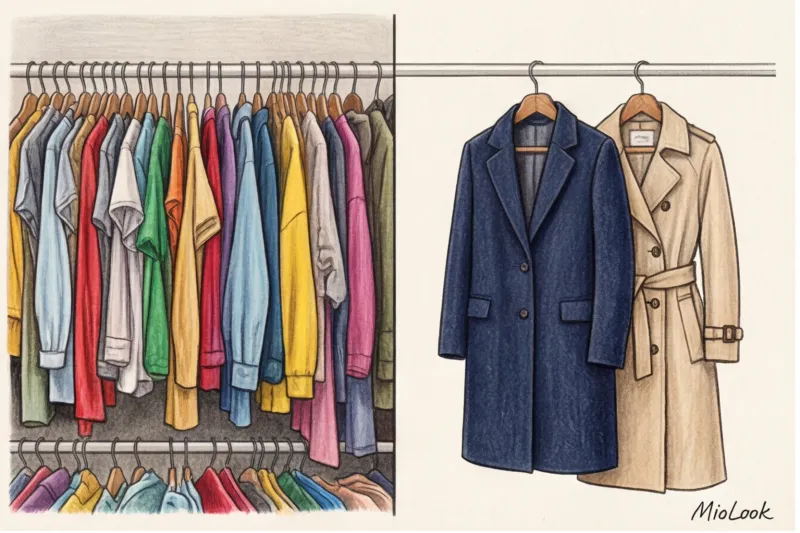
Open your closet. I bet somewhere in the back there's that "perfect" beige coat, bought under the influence of glossy magazines, which you wear maybe a couple of times a season. Why does this happen? When choosing classic women's coat , we often fall victim to outdated stereotypes that the camel shade suits absolutely everyone.
Let's be honest. After 12 years of working as a personal stylist and analyzing luxury wardrobes, I've learned one hard truth: classic warm beige makes 70% of women with Slavic and European skin types look tired. It blends with the skin's undertone, highlights under-eye circles, and blurs the contrast of the face. Outerwear is the façade of your personal style, and it should work for you, not against you. We've covered the architecture of a smart base in more detail in our article. the complete guide to timeless style.
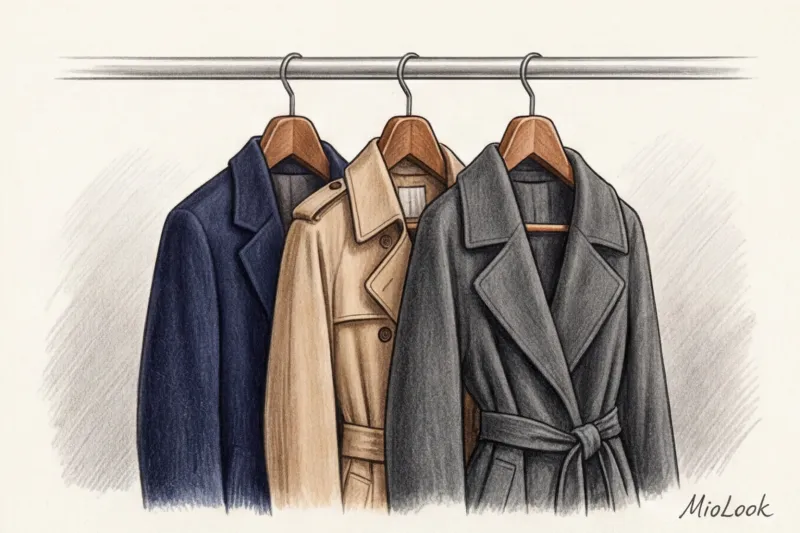
According to a large-scale study by the PANTONE Color Institute and WGSN analysts (2024), the concept of "new base" has long since shifted toward more complex and deeper shades. If you're looking to invest in something that will look expensive, consider cool taupe, deep navy, graphite, or refined dark chocolate.
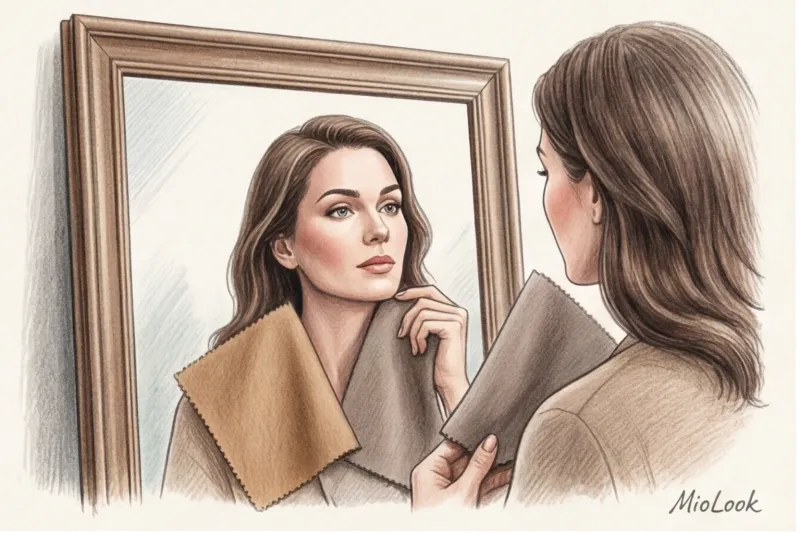
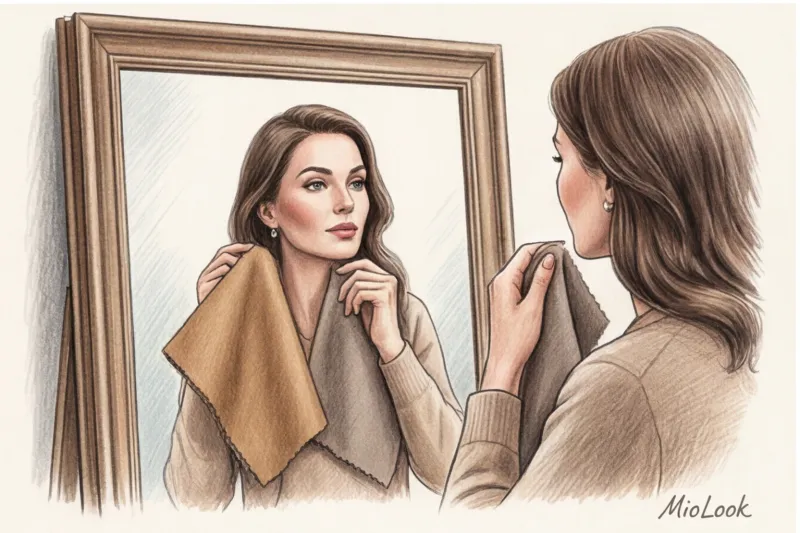
To find your perfect base color, hold the fabric to your face in natural daylight. If your skin begins to glow and your eyes appear brighter, it's your investment. If your face appears dull, feel free to return the item to the rack, even if it's a cult classic on sale for 50%.
Access to MioLook for €0.99 — one-time payment
A smart AI stylist will select the perfect look and help you determine your palette.
Get access — €0.99 onceA classic women's coat: the architecture and anatomy of an expensive garment
The difference between mass-market and premium isn't a gold logo on the collar. True luxury is subtle. It's hidden in the garment's inner construction. When I work with Italian tailors in Milan showrooms, the first thing they do when assessing quality is turn the garment inside out.
A cheap coat holds its shape thanks to a stiff, adhesive interlining that will bubble after the first dry cleaning. An expensive one classic women's coat A sweater is constructed with a proper interlining (an internal frame made of horsehair or cotton) that conforms to your body shape. Pay attention to the lining: luxury sweaters use breathable viscose or cupro, which glide over the sweater, rather than static-causing 100% polyester.
The double-face technology (two-sided fabric) deserves special attention. This involves weaving two layers of the finest wool together with invisible threads, and finishing the edges by hand. This coat is unlined and flows like a cardigan, yet still provides the warmth of a true winter garment.
Fabric Composition: Why 100% Cashmere Is a Bad Idea for Living
Now I'm going to bust the biggest myth of the investment wardrobe. Boutique consultants love to sell 100% cashmere coats, calling them "the ultimate luxury." Yes, they're incredibly soft. Yes, they're a status symbol. But for everyday wear, they're a disaster.
"Cashmere fiber is too delicate for the harsh urban environment. If you drive, carry a crossbody bag, or a heavy tote bag, 100% cashmere will pill and wear out on your shoulders and hips after just two months of heavy wear."
According to technologists at Italian factories Loro Piana and Colombo, the ideal formula for a durable coat is a blend. Look for a composition that consists of 70-80% high-quality sheep's wool (merino) or alpaca, 10-15% cashmere (which provides that premium softness and delicate sheen), and 10-15% polyamide. Yes, synthetics in premium items aren't always a cost-effective alternative. The right percentage of nylon or polyamide reinforces the wool thread, making the fabric wear-resistant and protecting it from deformation. The ideal fabric weight for the fall/winter season should be between 500 and 800 grams per square meter.

Silhouette and Shoulder: Set-in Sleeve vs. Raglan Sleeve
The shoulder design defines the character of your entire look. A set-in sleeve (where the seam follows the shoulder line) creates a strong, composed, and classy look. It's the perfect choice for formal attire, tailored suits, and sheath dresses.
But there's a fair limitation here: set-in sleeves are completely unsuitable if you like wearing bulky hoodies, oversized jackets, or chunky knit sweaters. The armholes will dig into your armpits, leaving you feeling like you're wearing a suit of armor.
If your style leans more casual, choose a raglan sleeve or drop-shoulder. They create a soft, relaxed line and allow for layering under a coat. A belted robe silhouette perfectly accentuates the waist of an hourglass figure, while a straight cut or a subtle cocoon style will masterfully conceal any hip imperfections.
The Timeless Trench Coat: From Military Uniform to Parisian Chic
A trench coat is more than just a raincoat; it's a historical artifact. In 1879, Thomas Burberry invented gabardine—a dense cotton twill fabric whose threads were treated with a water-repellent compound before being woven into linen. A true classic trench coat should still hold a drop of water.
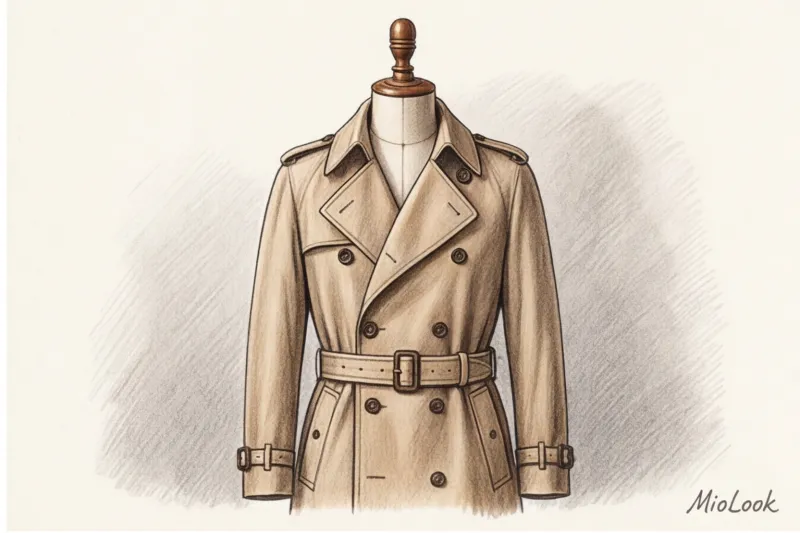
The trench coat's authenticity is revealed by details inherited from the military uniform: epaulettes on the shoulders (for attaching insignia), a rifle flap on the right chest (to soften the recoil of the rifle), a fly yoke on the back (to allow water to drain without wetting the back) and D-shaped metal rings on the waist.
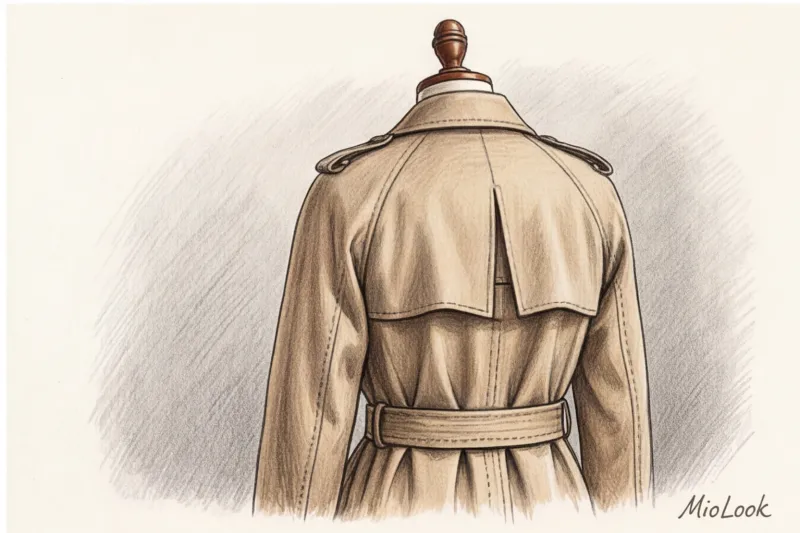
Let's be realistic, though. Heavyweight 100% cotton gabardine is a stiff fabric. I had a client, a top bank executive, who bought the iconic Burberry trench coat for $2,500, but a week later admitted she couldn't drive in it—the fabric was literally stiff and suffocating when she turned the steering wheel. We replaced it with a flowing lyocell (Tencel) with cotton blend. It retained all the classic details, but gained a softer, more beautiful drape, and made her feel comfortable behind the wheel.
Your perfect look starts here
Join thousands of users who look flawless every day with MioLook.
Get access — €0.99 onceThe Perfect Length Formula: How to Match It with Your Wardrobe
The most common mistake I see on the street is a lack of proportion. A knee-length coat is a counter-trend, visually cutting your figure in half and shortening your legs. Furthermore, midi skirts and dresses peek out from under such a hem, creating a "cabbage" effect.
A stylist's golden rule: outerwear should completely cover the length of your dress or skirt (no more than 3-5 cm of hem is allowed). That's why a midi length (to mid-calf or just below) is the safest and most versatile investment for any height.
Don't be afraid of maxi lengths, even if you're 160 cm tall. Contrary to popular belief, a long vertical line visually elongates the silhouette, especially when worn open. Paired with palazzo pants, a long coat creates a luxurious, flowing look, and paired with skinny jeans, it creates a contrasting volume. To check how a specific length works with your height, I recommend uploading a photo of yourself to MioLook — the app will clearly show you which proportions make you taller and slimmer.

Wardrobe Investing: The Math of Cost-Per-Wear
Let's talk about money. According to McKinsey (2024), conscious consumers are increasingly shifting from fast fashion to the concept of an investment wardrobe. This is where the cost-per-wear formula comes into play.
Let's compare: you buy a trendy, mass-market coat for $200 (80% polyester). You'll wear it 30 times a season, after which it will pill, lose its shape, and end up in a landfill. The cost per wear is $6.60.
Now let's take a premium wool coat for $1,500. You'll wear it at least 100 days a year for 7 years (700 wears). The cost per wear is $2.10. An expensive coat costs you a third of that in the long run.
Where can you save money? On trendy colors (fuchsia, neon), summer dusters, and statement pieces for one season. What should you invest in? A winter coat, a classic trench coat, and quality shoes. To ensure your investment is worthwhile, ensure proper care: brush your coat with a stiff natural bristle brush after each wearing, use wide wooden hangers (to avoid stretching your shoulders), and dry clean it no more than once a year.
Ready to get started?
Try MioLook's free plan—no commitments or card required.
Get access — €0.99 onceA stylist's checklist: how to choose a classic women's coat and trench coat in the fitting room
Never rush into outerwear shopping. Use this test-drive algorithm I go through with every client:
- The "two sweaters" rule. Always bring your bulkiest chunky knit sweater or heavy jacket to the fitting room. If the coat fits comfortably, it won't restrict your movement in winter.
- Freedom of movement test. Button up your coat. Now hug your shoulders. Then raise your arms as if you were holding onto a handrail on the subway. If the armholes are tight and horizontal creases form in the back, the garment is too small, even if the tag says your usual size.
- Crease test. Squeeze the edge of the fabric tightly in your fist for 10 seconds, then release. If the fabric remains crumpled, it will look the same on your elbows and buttocks after a taxi ride. High-quality wool with the correct twist will straighten out in seconds.
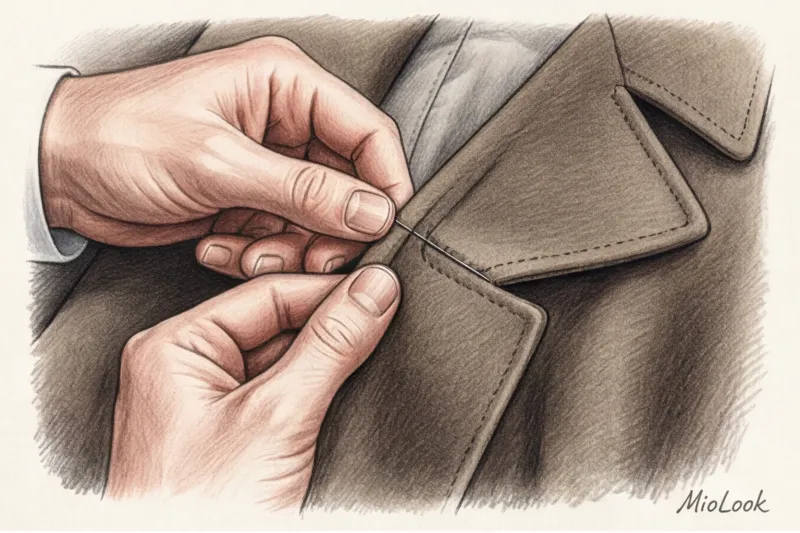
- Checking the fittings. Look at the buttons. Premium ones use natural horn or corozo (walnut). Cheap plastic that imitates horn will scratch the first time you dry clean it, cheapening the overall look of the product. Also, check the buttonholes—they should be tightly serged, with no loose threads.
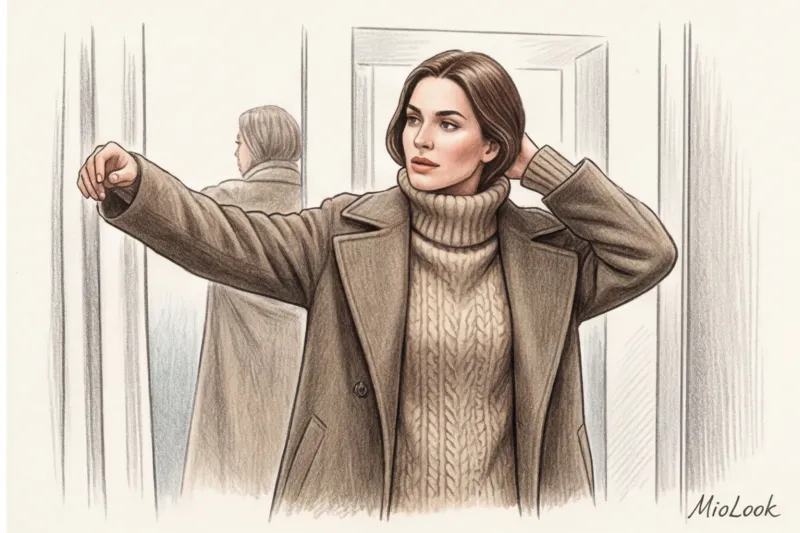
Creating a personal uniform means refusing to compromise. Your perfect classic coat or trench coat shouldn't just be "normal." It should give you a feeling of absolute confidence, security, and comfort, like a second skin tailored specifically for you. Invest in the architecture, not the label, and your outerwear will truly be timeless.