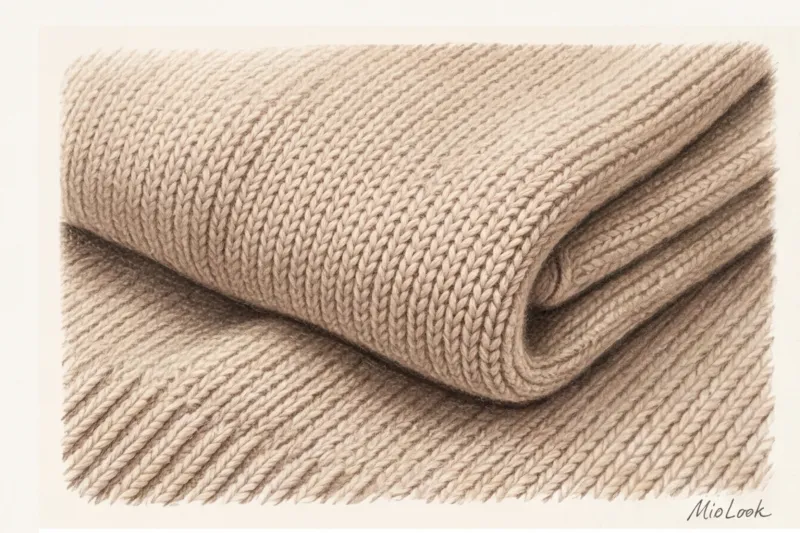
One day in Milan, a client and I walked into the Loro Piana flagship boutique. She touched a classic jumper for two thousand euros, frowned, and said, "Giulia, I don't understand. Yesterday, I touched a sweater for 150 euros at a high-street store, and it was much softer! What are we paying for here?" It was the perfect moment to shatter the biggest illusion of the modern fashion industry.
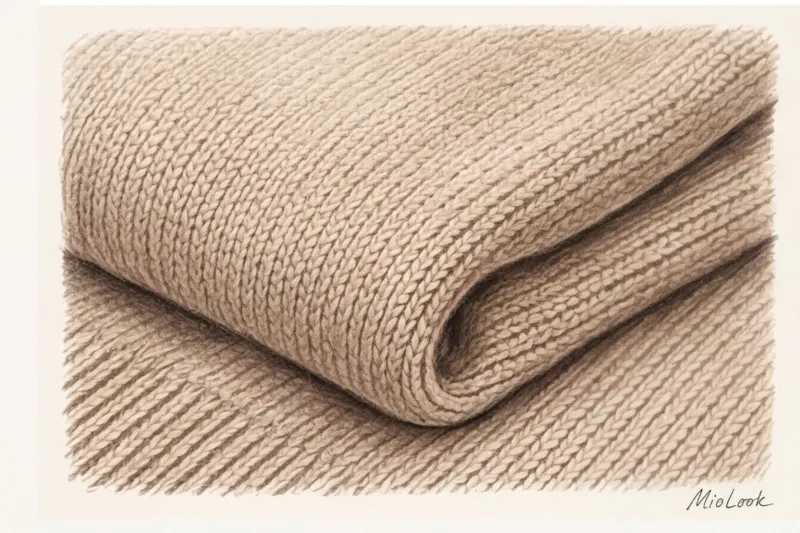
Most women believe that the softer and fluffier the cashmere on the store shelf, the better quality it is. In reality, it's quite the opposite. Over 12 years of sorting through wardrobes, I've seen the same picture hundreds of times: ten-year-old Scottish cashmere looks flawless, while an "incredibly soft" fast-fashion sweater becomes covered in pilling after just three wears. If you want to understand, How to choose a cashmere sweater , which will become your stylish armor for years, and not a disappointment for a month, we will have to forget everything that marketers promise.
Creating a smart, functional wardrobe requires no compromise on the quality of materials. We've covered more about how to create a basic wardrobe without visual clutter in our The Complete Guide to Wardrobe Investments Today, let's take a look at the anatomy of real cashmere.
The Anatomy of Quality: What Makes Cashmere Truly Premium?
True cashmere is more than just wool. It's the delicate undercoat of Capra hircus goats, which live in the harsh climates of Mongolia and Inner Mongolia. To survive temperatures down to -40°C, the animals grow a fine downy coat. In the spring, this down is not sheared but carefully combed by hand.
A single goat yields only about 150-200 grams of pure down per year. It takes the raw material of three to four goats to create a basic two-ply sweater. This math alone explains why genuine cashmere physically cannot be cheap. But the main difference between premium and counterfeit cashmere lies in the microscopic details.
"Cashmere quality is determined by two strict metrics: thickness and fiber length. Everything else is secondary"—a rule I repeat during every shopping trip.
According to the Cashmere and Camel Wool Institute (CCMI) standards, premium (Grade A) fiber is considered to be 14–15.5 microns thick and at least 34–36 millimeters long. For comparison, human hair is approximately 75 microns thick. Fiber length is your primary defense against pilling. Long strands are securely twisted together. Short fibers (Grades B and C), used by cheaper brands, quickly break out of the yarn due to friction, clumping into those unsightly balls.
Thread Count (Ply) and Gauge
On the labels of reputable brands, you'll often see the markings "2-ply" or "4-ply." Ply refers to the number of strands twisted into a single yarn before it's knitted into a product.
- 1-ply: A waste of money. This yarn is too fragile; it deforms and frays instantly. It's often used for translucent scarves, but for a sweater, it's a death sentence.
- 2-ply: The gold standard for basic all-season knitwear. Two twisted yarns balance each other's tension, preventing the fabric from warping.
- 4-ply and 8-ply: Luxurious, heavy and very warm winter items.
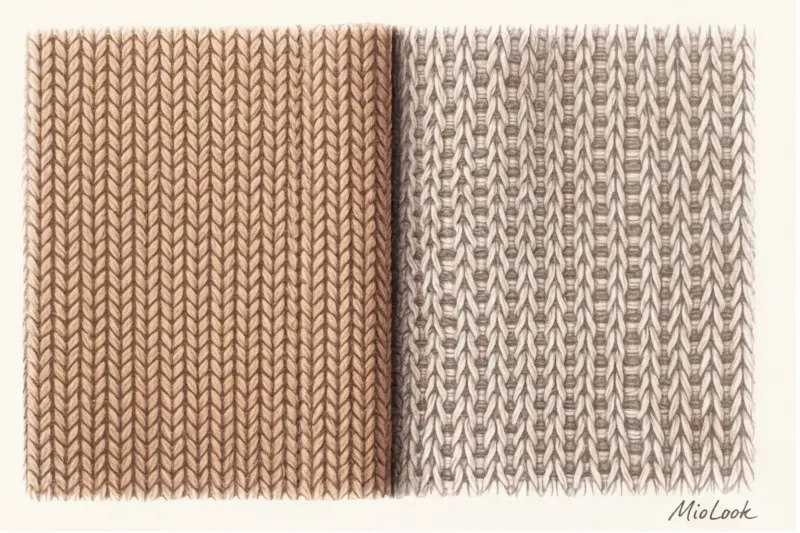
Gauge—the number of stitches per inch—is equally important. Mass-market manufacturers often save on expensive raw materials by creating a "loose" knit. A sweater may appear bulky, but it's actually very airy. After the first wash, such a garment will lose its shape and sag.
Your perfect look starts here
Join thousands of users who look flawless every day with MioLook. Digitize your knitwear and create dozens of new combinations.
Get access — €0.99 onceThe Main Myth of the Mass Market: The Illusion of Affordable Luxury
Buying a cashmere sweater for $100–$150 seems like a great deal. In reality, it's a financial trap. Fast fashion brands buy short fibers—essentially, leftovers (towel) from premium Italian or Scottish mills like Cariaggi or Todd & Duncan.
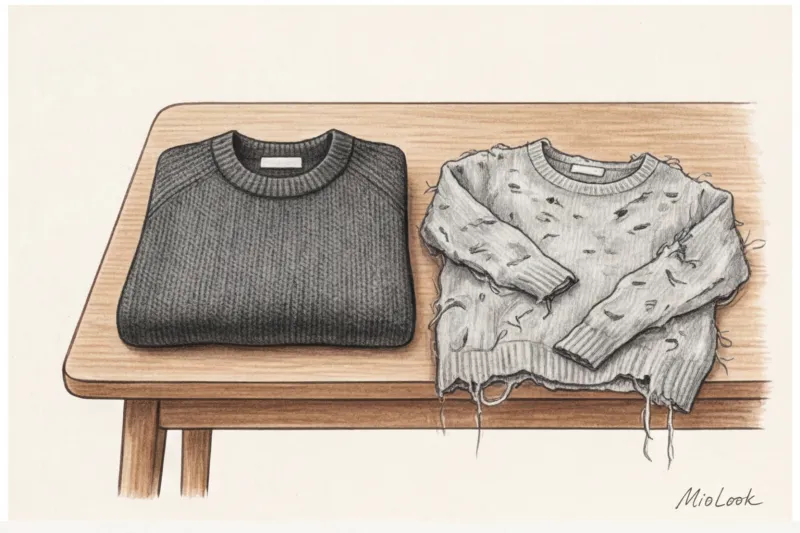
Let's calculate the true cost-per-wear. Let's say you bought a heavy Italian sweater for $600. You wear it four months a year, twice a week, for five years (about 160 times). The cost per wear would be $3.75 , and the sweater will still look expensive.
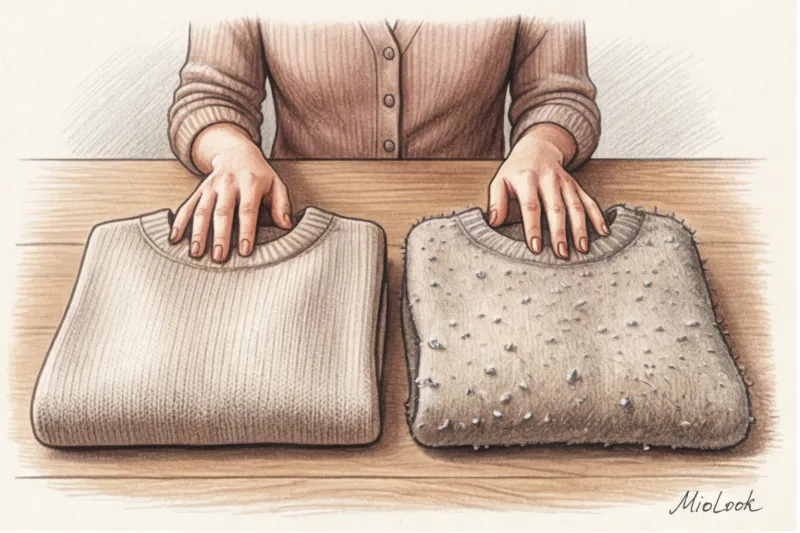
Now, take a $100 sweater from a mass-market store. It will pill on the sleeves and sides after just four or five wears. You'll spend hours cleaning it, it will lose its shape after the first wash, and it will soon become considered "cottage wear." The actual cost per wear will be $20-25 Cheap basic things are an anti-investment that only cheapens your image.
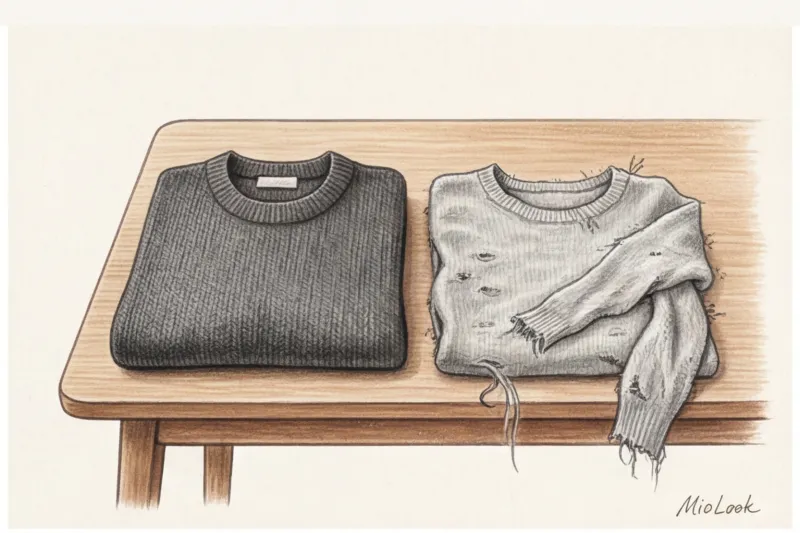
Test Drive in a Boutique: How to Choose a Cashmere Sweater and Not Regret It
To avoid falling victim to marketing scams, conduct a thorough product audit before going to the checkout. Here's a checklist I personally use when shopping with clients.
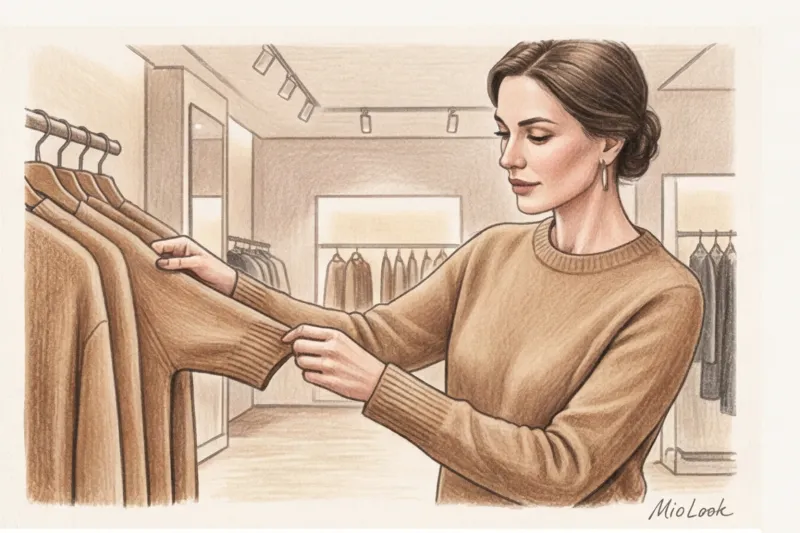
- Translucent test. Lift the sweater and look through it at a light source (a lamp or a window). You shouldn't see any visible gaps in a high-quality, tightly knit 2-ply cashmere. If the sweater glows like gauze, leave it in the store.
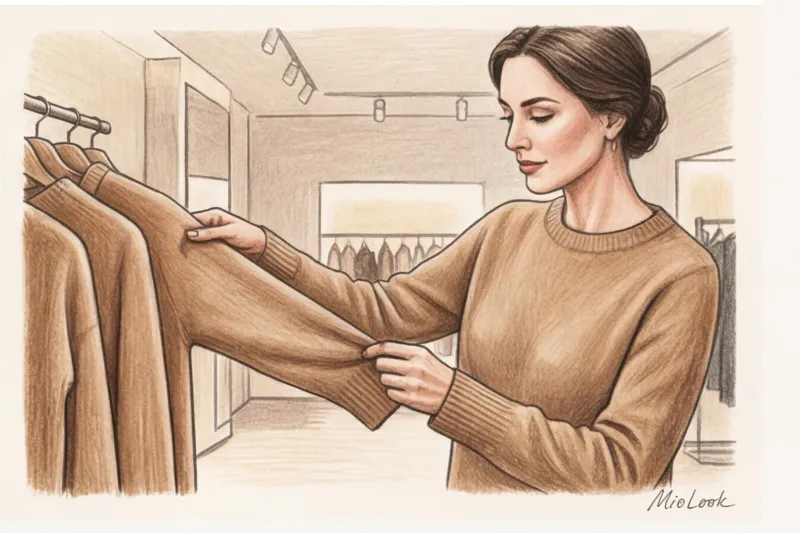
- Tension rule. Gently but firmly stretch the elastic at the cuff or hem, then release. Good knitwear works like a spring: it will instantly return to its original shape. If the edge remains wavy, the garment will lose its shape within a month.
- Checking the seams. Turn the sweater inside out. Premium brands use what's called a serger stitch—the pieces aren't simply sewn together by machine, but rather joined by hand, loop to loop. This ensures the seam is completely flat, preventing chafing and distortion. If you see a rough machine serger, you're looking at a fake.
The Softness Paradox: Why a Sweater That's Too Soft Is a Red Flag
We've reached the key insight that the sales assistants are keeping quiet about. Let's return to the story of my client in Milan. Why did Loro Piana feel less fluffy than Zara?
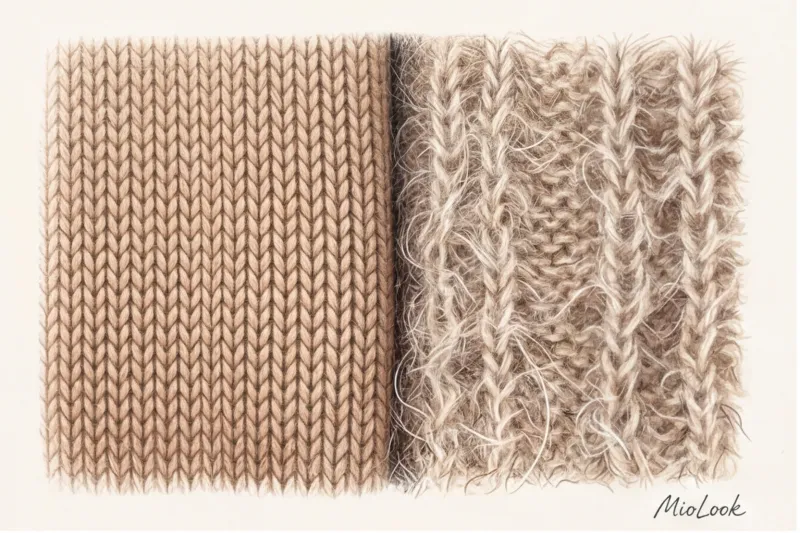
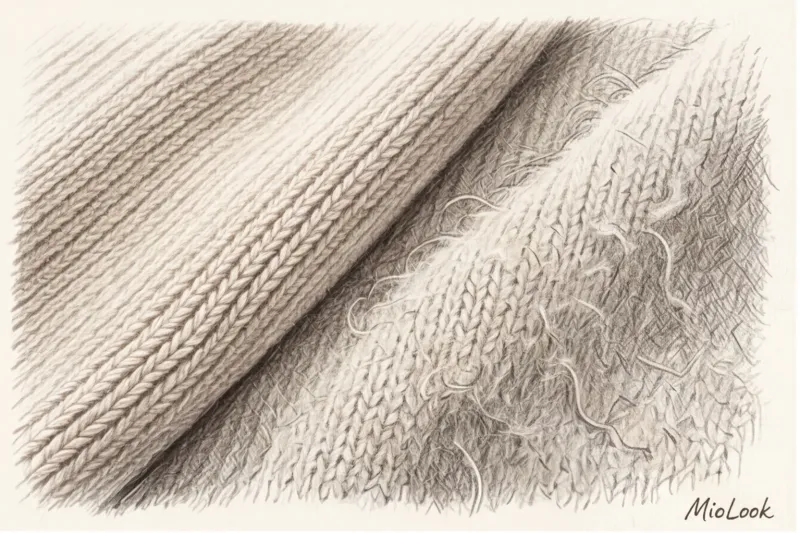
The thing is, high-quality cashmere is spun very tightly. When new, it should feel soft but have a light, almost smooth texture. It's like a closed flower bud. With each proper wash, the yarn will fluff up slightly, and the sweater will only reach its peak softness after a year or two of wear.
Mass-market products need to sell the emotion of "here and now." So they take short fibers, knit them loosely, and then mercilessly overwash them in the factory using industrial silicone softeners. The fibers are artificially torn apart, creating that fluffy cloud on display. You buy this "shock effect," but the structure of the yarn is already destroyed. This isn't softness—it's the death throes of the fabric.
Access to MioLook for €0.99 — one-time payment
A smart AI stylist will find the perfect look with your new cashmere sweater and show you unexpected combinations from your closet.
Get access — €0.99 onceRisk-Free Investment: The Right Silhouettes and Shades
When you spend a hefty sum on a piece, you want to wear it for decades. This means avoiding ultra-trendy details. No puffed sleeves, asymmetry, or excessive embellishments. Your choice should be a V-neck (which visually elongates the neck), a classic crewneck, or a turtleneck with the right amount of volume.
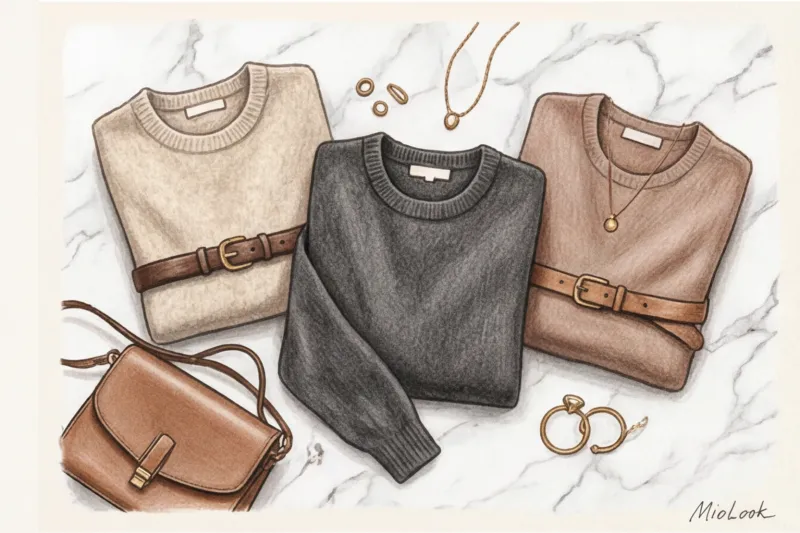
But the most interesting thing is the color. Did you know that the tactile properties of cashmere are directly dependent on the dye? Natural, undyed cashmere exists in only a few shades: milky white (oatmeal), various shades of beige and taupe, gray, and deep brown.
Undyed sweaters will always be the softest and most durable. The fiber hasn't been subjected to harsh chemical treatments. However, to achieve the perfect jet black or rich navy blue, the delicate down has to be boiled in harsh dyes. Chemicals inevitably make the hair slightly drier and rougher to the touch. If you're buying your first expensive sweater, I highly recommend choosing an oatmeal or light camel shade.
The Art of Care: How to Make Your Sweater Last for Decades
Have you ever heard the advice that "cashmere should only be dry cleaned"? Forget it. It's one of the most harmful myths in clothing care.
Remember that cashmere is a natural fiber. Toxic solvents (perchloroethylene) used in traditional dry cleaning leach the natural lanolin oils from the fiber. The sweater becomes dry, brittle, and dull. Experts from Scottish mills unanimously agree: cashmere loves water.
My care protocol, which is used by premium concierge services:
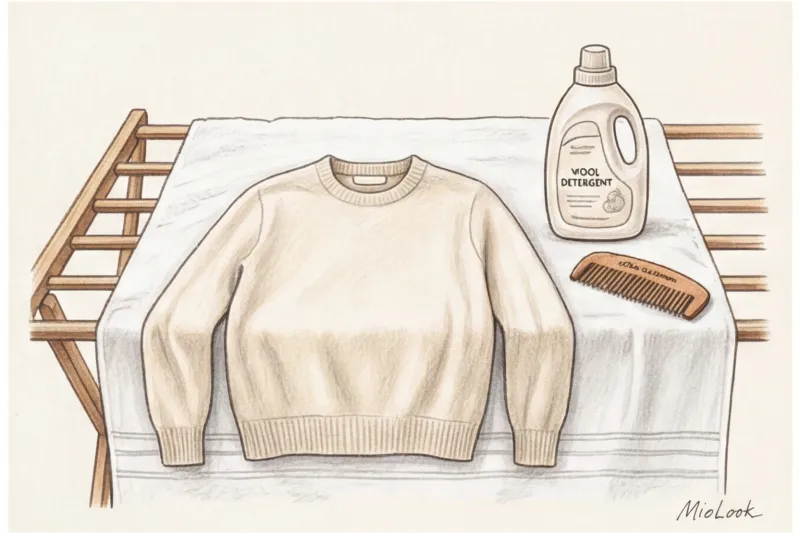
- Washing: Hand wash only in cool water (no hotter than 30°C). Use a special cashmere shampoo (never use enzyme-based detergents, as they can eat away at the wool's protein) or even regular mild baby shampoo.
- Spin: Do not wring! Gently squeeze the sweater into a ball to remove excess water, then lay it out on a clean terry towel, roll it into a roll, and press lightly to absorb the moisture.
- Drying: Store horizontally, away from radiators and direct sunlight. No hangers—the weight of the moisture will cause the item to stretch and lose its shape forever.
I'd like to say a special word about pilling. Even premium 2-ply cashmere can pill slightly in areas of high friction (underarms or wherever you wear it). leather business crossbody bag ). Never use electric razors! They don't just cut off the lint; they nick the healthy thread. Next time, a hole will appear in that spot. Use only a special wooden cashmere comb, carefully combing out excess lint in one direction.
Checklist: 5 Essential Steps Before Purchasing
Of course, all these rules don't make sense if you're looking for a statement piece for a couple of parties—then you can buy a blended fabric. But if we're talking about creating a smart, long-lasting base (which is so convenient to visualize in the app) MioLook ), take a screenshot of this checklist and keep it handy while shopping:
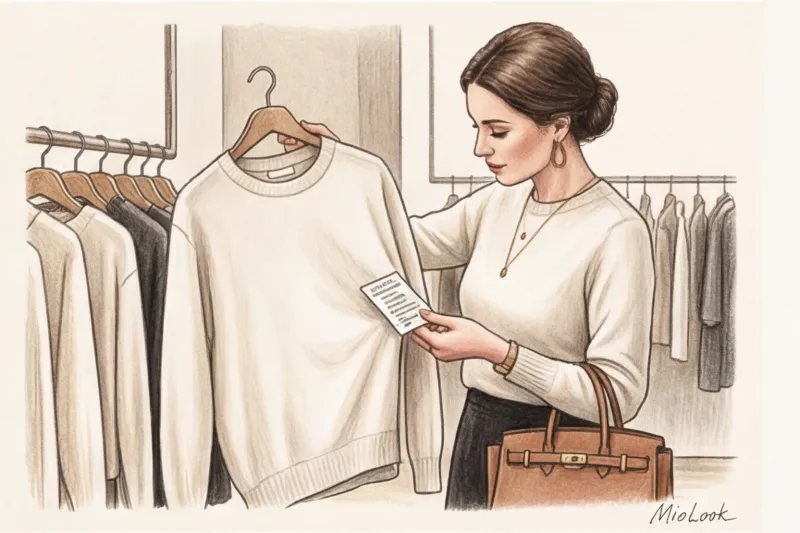
- Study the label. Look for the proud "100% Cashmere" label. Silk blends (cash-silk) are good for summer, but they're less warm. Wool blends (merino/cashmere) are a compromise for the sake of cost.
- Do a light test. Dense structure without holes or loose areas.
- Pull the cuff. The elastic band should quickly spring back.
- Rub the fabric between your fingers. If you feel an oily, slippery film, the item has been treated with silicones to hide poor quality.
- Estimate the weight. A good basic sweater cannot be weightless; it should be felt in your hands (the optimal weight is about 250-300 grams).
Investing in cashmere is a test of fashion maturity. It's about foregoing a momentary wow factor in favor of a piece that will gracefully age with you, adapting to your figure and revealing its true character only after several washes. Choose density over fluffiness, and this sweater will become the most reliable item in your wardrobe.