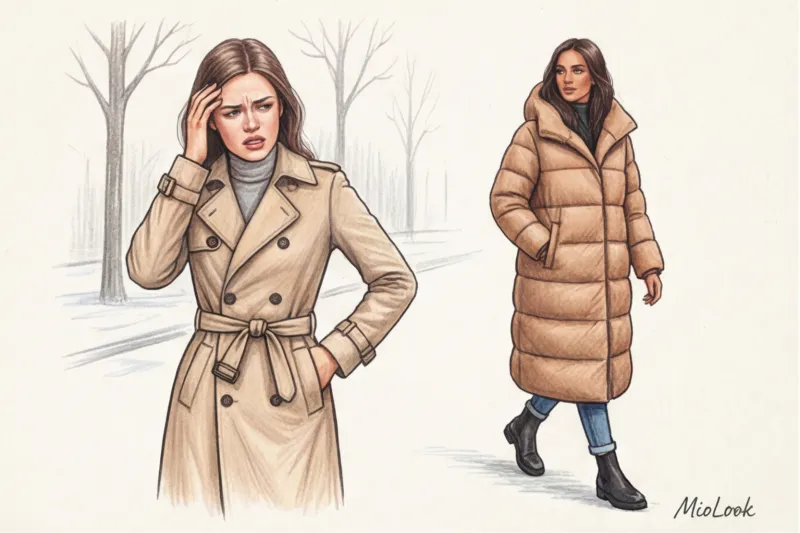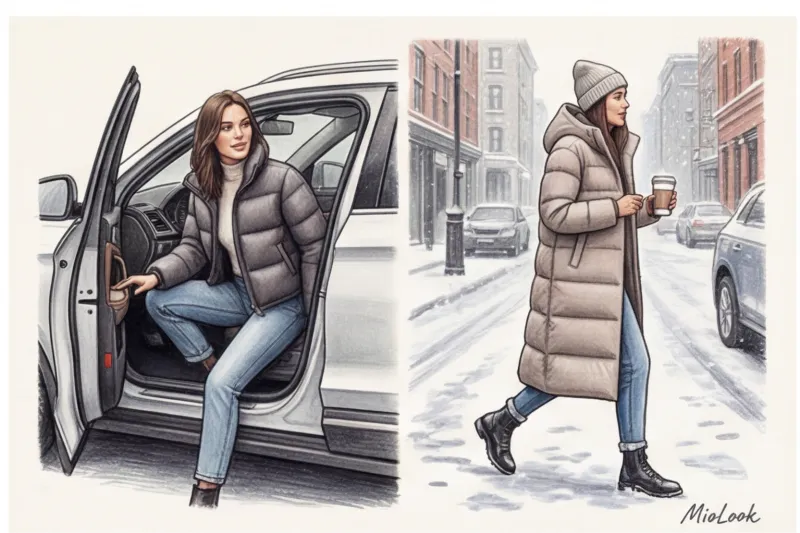
Every November, my direct messages explode with the same question. In 12 years of working as a personal stylist, I've noticed a frightening trend: 8 out of 10 women genuinely hate their winter jackets. Asking the question, How to choose a basic down jacket Most people, out of habit, look for a fitted, knee-length black model with dense horizontal stitching. And this is a major mistake that instantly ruins even the most well-thought-out winter look.
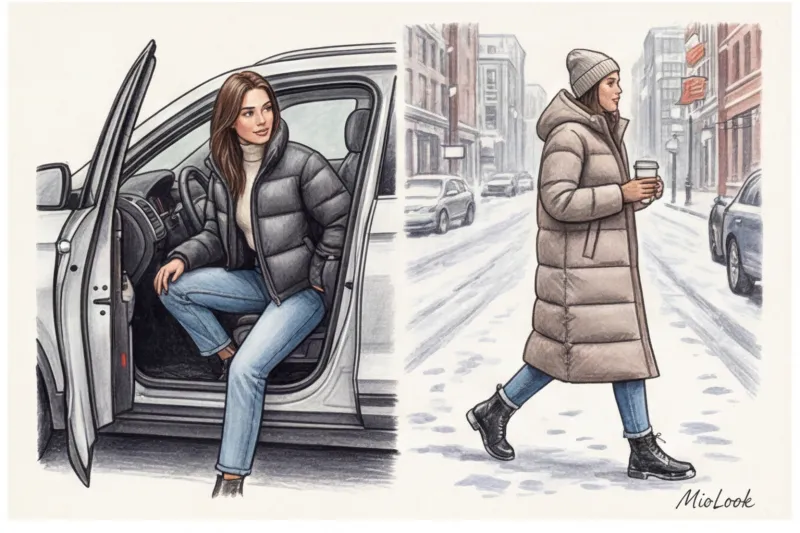
Let's be honest: there are no universal "must-have" lists for winter. What works perfectly for a stay-at-home mom will make life hell for an office worker. We've already discussed the architecture of a smart closet in more detail in our The complete guide to basic outerwear In this article, we'll go further and explore the physics of heat, quality metrics, and subtle cutting rules that will help you find that perfect jacket.
Why there are no "universal" down jackets: the efficiency formula for winter clothing
Before looking at the price tag or brand, I ask clients to calculate the potential efficiency of an item. My proprietary formula looks like this: Price ÷ (Number of wears per season × Daily comfort level).
One of my clients, top manager Anna, bought a luxurious down jacket-duvet from a premium brand for a hefty sum. The jacket was incredibly warm, rated for -30°C. The problem was that Anna exclusively travels by car, and her office is in a business center with heated parking. The result? The hem of the long jacket was hopelessly stained with reagents from the car's sills within a month, and it was unbearably hot behind the wheel. The efficiency of this purchase was close to zero.
The main question before going shopping is how exactly do you get around?
- Automobile: You need a cropped style (mid-thigh) with loose armholes that won't restrict your movement while driving. A smooth back is essential to prevent the fabric from rubbing against the seat.
- Public transport (metro/bus): The main enemy here is sudden temperature changes. You need a down jacket with a high-tech fill that wicks away moisture (to avoid sweating in the train and freezing outside) and a midi length that covers your knees.
- Long walks (with a stroller or dog): Maximum length, windproof membrane upper fabric and a high stand-up collar that replaces a scarf.
Access to MioLook for €0.99 — one-time payment
A smart AI stylist will select the perfect look based on your lifestyle and wardrobe.
Get access — €0.99 onceThe Anatomy of Warmth: How to Choose a Basic Down Jacket Based on Filling
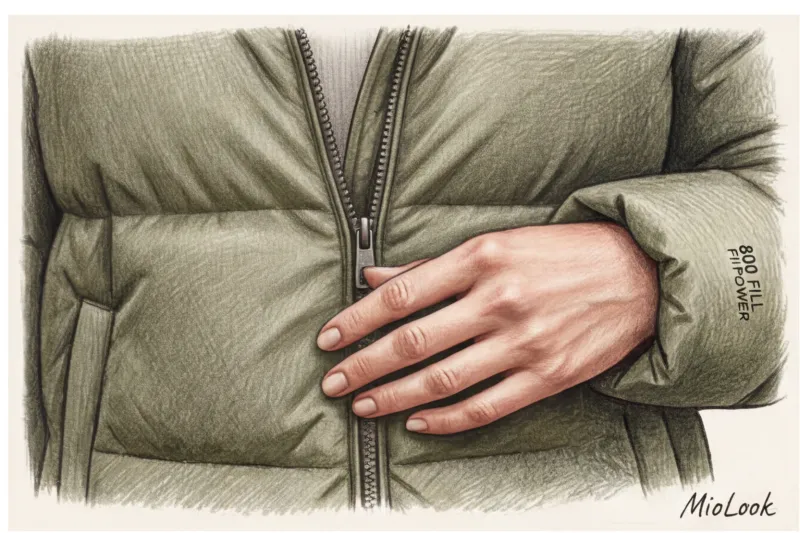
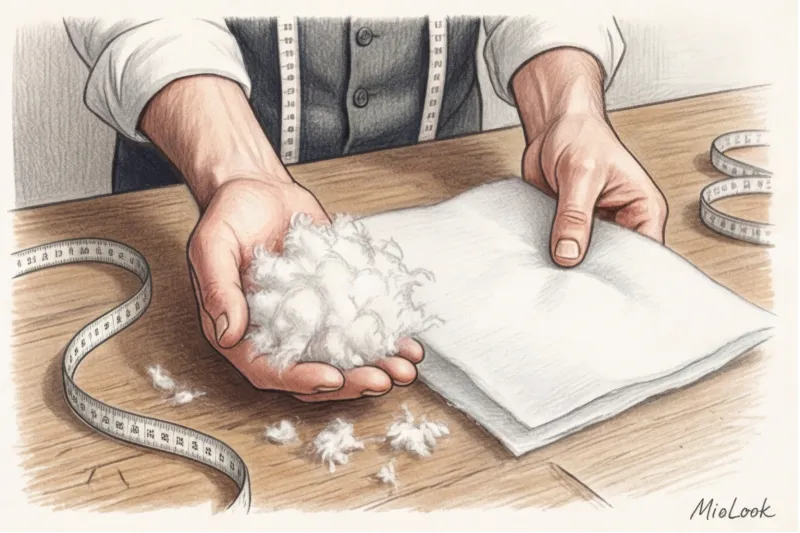
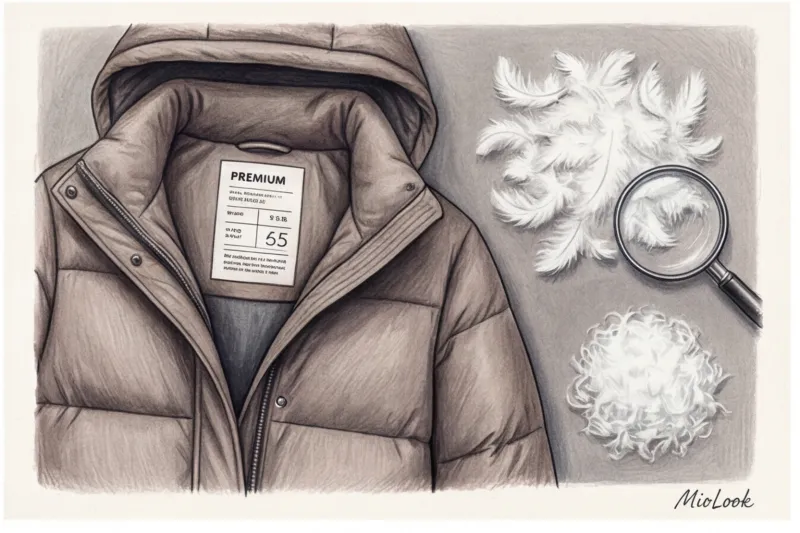
Forget the myth that "the thicker the jacket, the warmer it is." Thermal insulation works differently. It's not the down itself that warms us, but the air it traps between its fibers. And this is where the key number you should look for on the label comes in: Fill Power (FP).
According to IDFL (International Down and Feather Testing Laboratory) standards, this figure measures the ability of down to recover from compression. The higher the figure, the more air per ounce of down holds, and the warmer (and lighter!) the jacket will be.
- FP 400–500: Suitable only for mild Eurowinter (up to -5°C).
- FP 600–700: An excellent urban base for temperatures down to -15°C.
- FP 750–900+: Extreme insulation. This jacket is thin, almost weightless, but will keep you warm even at -25°C.
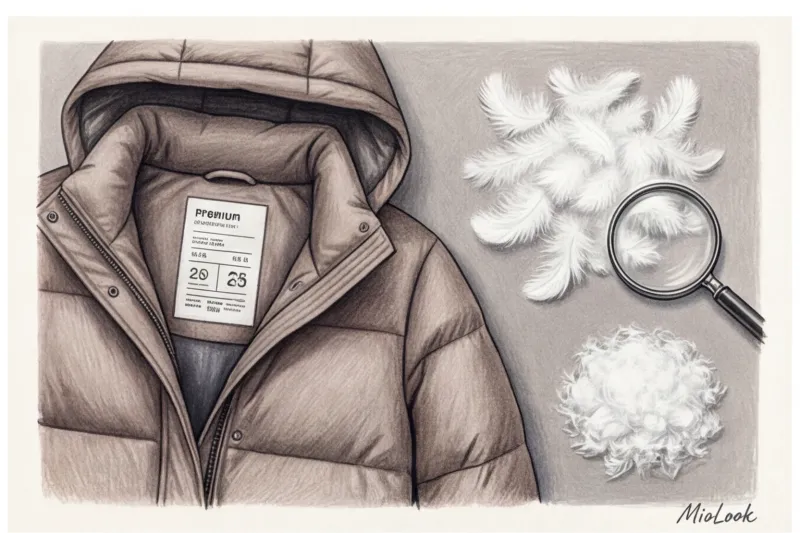
Another important indicator is the down-to-feather ratio. 100% down in mass-market products is a marketing myth. A small amount of down is necessary to prevent the down from clumping. The ideal ratio for a basic down jacket is 80/20 or 90/10.
Natural down versus high-tech synthetics
I often encounter snobbery regarding synthetic insulation. Many still believe that natural goose down is the only worthy option. But this rule breaks down if you live in a climate with wet winters, freezing rain, and sleet.
Personal experience: Several years ago, I tested two down jackets in a St. Petersburg winter. In high humidity, the natural down quickly absorbed water, clumped, and lost about 70% of its insulating properties. But the jacket, made with modern PrimaLoft insulation (originally developed for the US Army), remained warm even when wet.
"Modern alternatives like Thinsulate, PrimaLoft, and bio-down (Sorona) not only match natural down in terms of heat retention but are also easier to care for. They're machine washable, don't bunch up, and allow for slim, elegant silhouettes."
If your style leans toward smart-casual, high-tech synthetics will allow you to buy a down jacket that looks like a formal coat, not a sleeping bag.
Cut and silhouette: how to avoid becoming a caterpillar
The most common mistake when choosing winter basics is buying a jacket with dense, fine horizontal stitching. These lines visually cut the figure into dozens of segments, creating a "Michelin track" effect and adding at least 5 extra pounds.
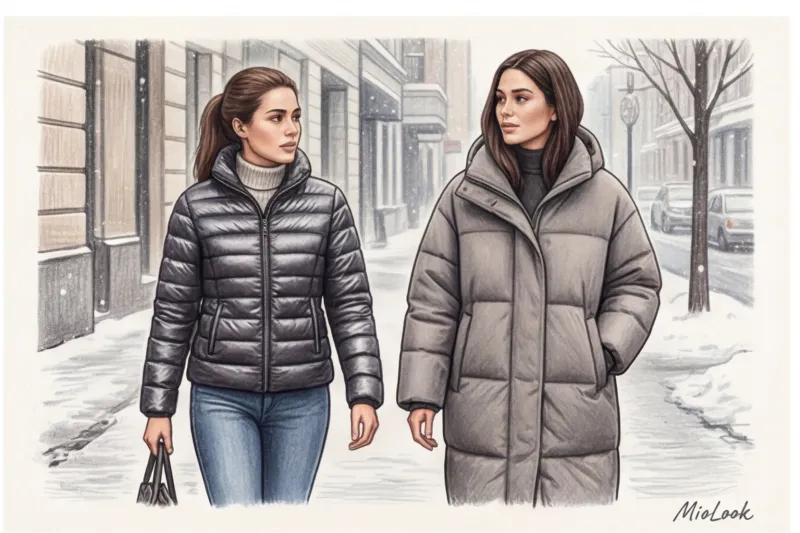
For a basic wardrobe, look for wide stitch (from 15 cm between seams) , diagonal diamond patterns, or completely smooth down coats with hidden internal seams. A smooth texture always looks more expensive and fits more easily into various styles.
The second ironclad rule is a loose fit. I always tell my clients: there should be a draft between your body and the jacket (within reason, of course). If the down jacket fits too tightly, you'll freeze, even if it's filled with eiderdown. The air layer is your main insulator. Buy winter outerwear one size larger than your usual size.
Your perfect look starts here
Join thousands of users who look flawless every day with MioLook. Upload your items and get ready-made looks.
Get access — €0.99 onceThe biggest myth among stylists: why a black down jacket is a bad base
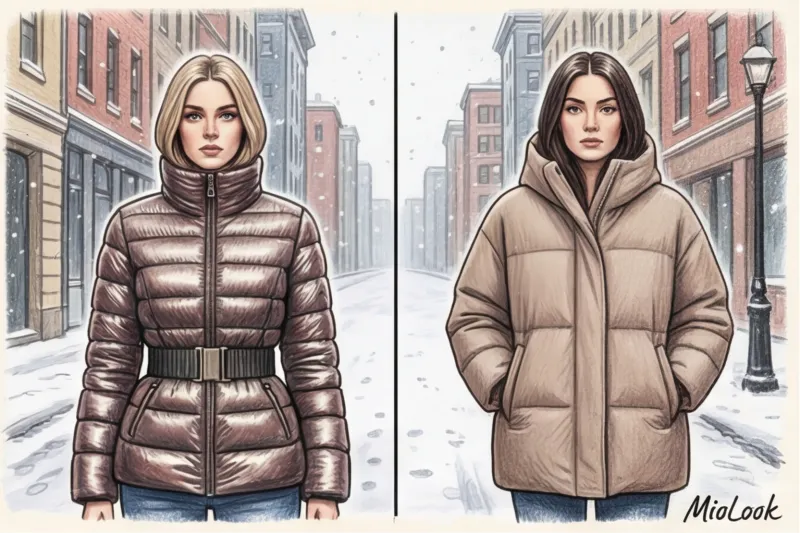
And now for a counterintuitive insight. I categorically advise my clients against buying black down jackets. Contrary to stereotypes about "practicality" and "versatility," black is the worst base color for winter.
Firstly, the statistics are stark: matte black fabric attracts and reveals 40% more dust, lint from scarves, and pet hair than darker shades. Secondly, against the gray winter landscape and lack of sun, the deep black casts shadows on the face, highlighting signs of fatigue and dark circles under the eyes. Thirdly, you simply get lost in a crowd of people in black jackets.
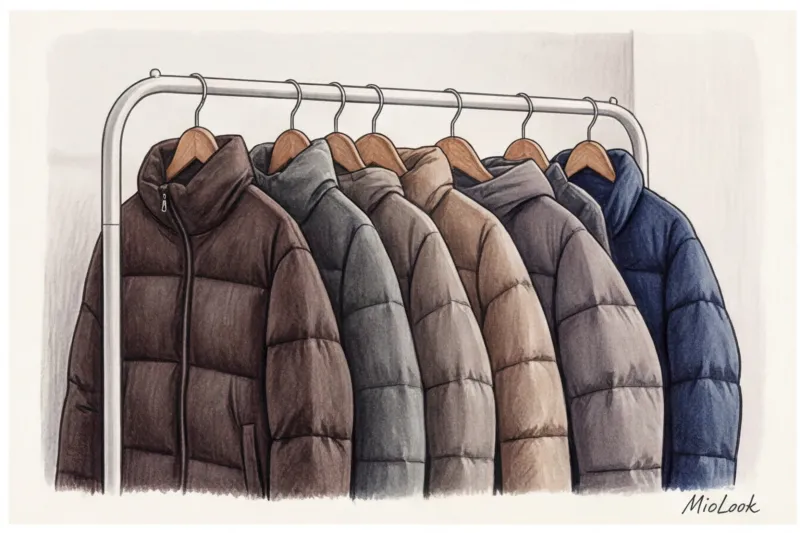
When my client and I swapped out her usual black puffer jacket for a dark chocolate one, the effect was stunning. The look instantly gained a more elevated look. According to Lyst's 2024 report, sophisticated brown and graphite shades dominate luxury outerwear searches.
Alternative dark bases:
- Dark chocolate (perfectly pairs with beige and milky accessories)
- Deep Graphite (softer than black, works great with bright scarves)
- Dark coniferous (looks luxurious with burgundy and mustard)
- Navy (deep dark blue - a classic business style)
Don't be afraid of a light base. Shades of taupe, ecru, and camel in modern water-repellent fabrics are easy to clean with a damp cloth and don't require weekly dry cleaning.
The devil is in the details: what gives away a cheap jacket
When I select things for capsules in MioLook app I look not only at the cut but also at the micro-details. They are what really reveal a garment's value (sometimes hopelessly cheapening even an expensive down jacket).
What screams low quality or outdated design:
- Shiny gold or silver hardware. Oversized metal zippers, rhinestone-embellished buttons, or logos take the edge off a basic look. Look for matte, zippers that match the fabric or jackets with a hidden magnetic placket.
- Glossy shine of the fabric. Fabric that looks like a trash bag is long out of fashion. A matte finish or a fabric with a subtle satin sheen (like thick cotton with a special coating) always looks more refined.
- Fur trim on the hood. This is a complete anti-trend. They make washing difficult, quickly lose their shape in wet snow, and cheapen the look. Choose deep, structured hoods without embellishments.
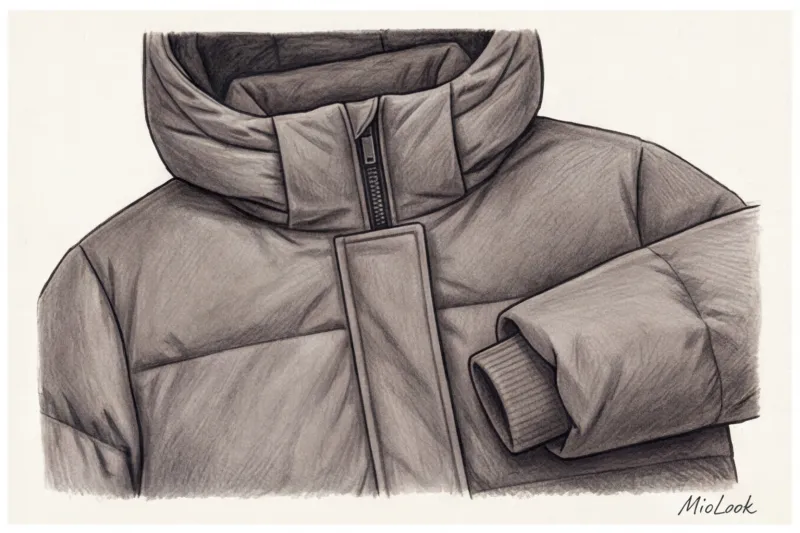
A sign of the manufacturer's care for you is the hidden knitted cuffs inside the sleeves (to protect from the wind) and the pockets insulated with fleece.
How to incorporate a basic down jacket into your business wardrobe
The biggest pain point for corporate employees is how to wear a down jacket over an office blazer without the jacket tails sticking out and the shoulders bulging at the seams. The ideal solution for a business dress code is a sleek down jacket-style coat with a straight or slightly A-line silhouette.
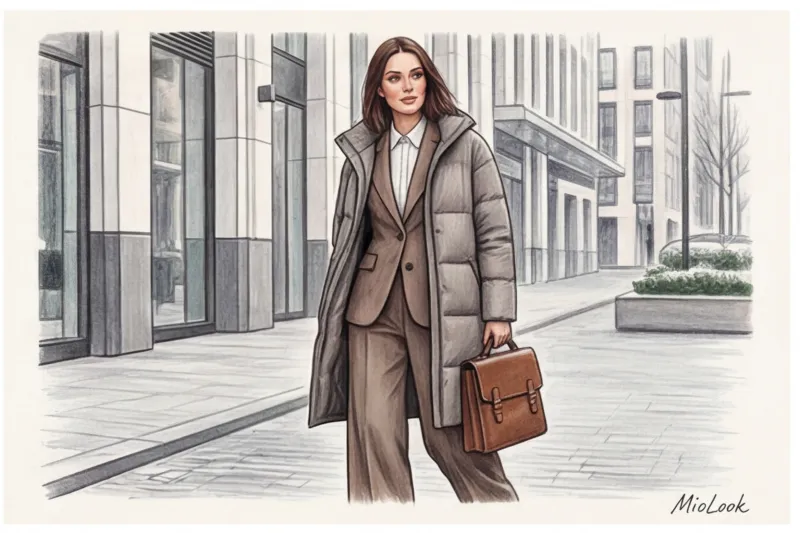
They're made from dense membrane fabrics (often with wool) and visually resemble a classic men's coat, but conceal a substantial layer of insulation underneath. To be fair, this advice only works for the city. Smooth down coats are absolutely unsuitable for long, active walks with children on a hill or trips out of town—technical sportswear is needed for those.
To keep the look put together, pair these down jackets with form-fitting shoes (such as tube boots or ankle boots with a sturdy heel) and rigid, structured bags. A soft hobo bag paired with a voluminous down jacket will make the look appear too relaxed and shapeless.
Pre-purchase checklist: test drive in the fitting room
When I'm reviewing my wardrobe, I often conduct what I call the "sweater test," and 80% of winter jackets bought online fail miserably. To avoid becoming one of these stats, wear (or bring) the bulkiest hoodie or thickest wool sweater in your closet when you go shopping.
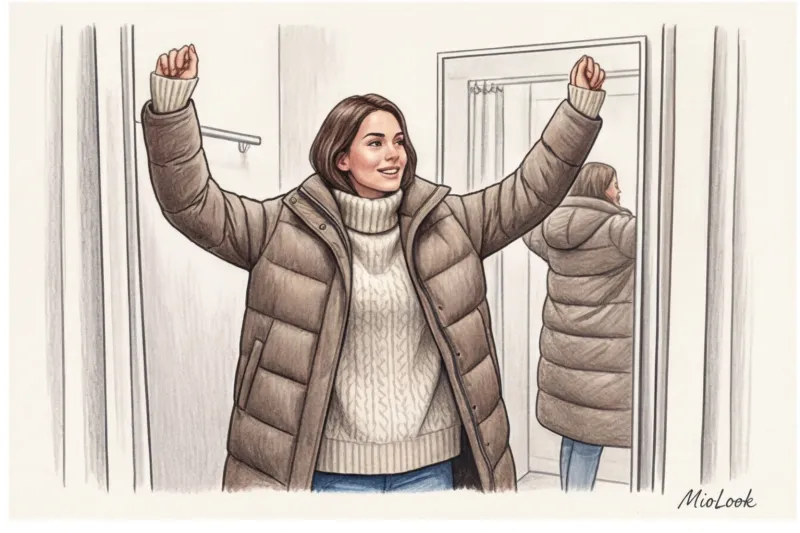
In the fitting room, follow these 3 steps:
- Mobility test: Place a down jacket over a bulky sweater, zip it up, and raise both arms up. Then, hug your shoulders. If the fabric at your back feels taut and the sleeves are pulled down to mid-forearm, you need a larger size.
- Landing test: Sit on a pouf in the fitting room. A long jacket should have a two-way zipper (opens from the bottom) or side vents with snaps, otherwise it will bunch up on your stomach when you sit.
- Hardware test: Try zipping and unzipping a zipper without removing your gloves. In winter, in temperatures as low as -15°C, you'll be grateful for the large, easy-to-find pull.
The perfect basic down jacket isn't just a black jacket that "goes with everything." It's a technologically advanced tool that protects you from the cold, seamlessly integrates into your lifestyle, and maintains your style even in the harshest temperatures. Opt for matte textures, sophisticated shades, and the right volume, and winter will no longer be a season of compromises between warmth and beauty.