Open any glossy magazine or blog from ten years ago, and you'll find the same blanket advice: "Every woman needs to invest in a beige 100% wool robe coat." As a practicing stylist and colorist, I declare: this advice is outdated, and for many, it was inherently harmful. In 12 years of working with wardrobes, I've seen dozens of expensive, luxurious items sitting on hangers as dead weight. Why? Because they didn't match the owner's actual complexion, stretched out at the elbows within a month, or didn't allow her to lift her arm on the subway.
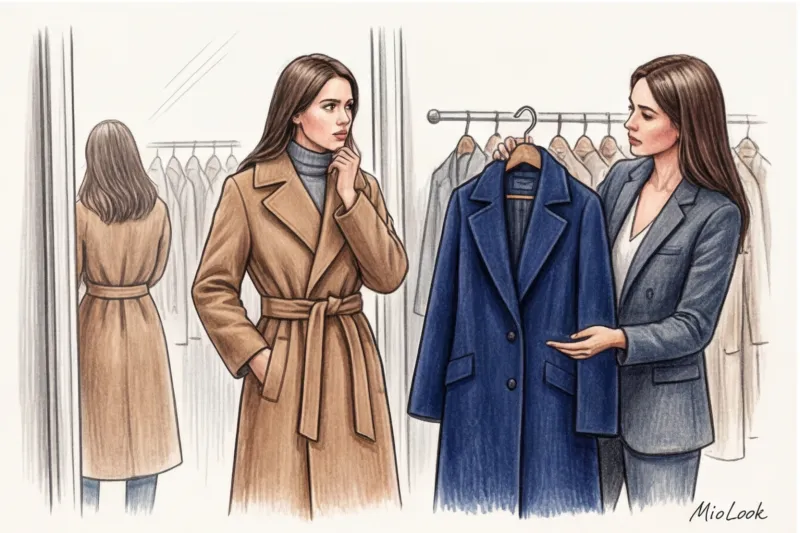
Before that How to choose a basic coat To truly get your money's worth, you need to forget about stereotypes. In this article, we'll explore the architecture of outerwear: from the thermoregulation of blended fabrics to the correct armhole geometry. For more information on how this item fits into your overall wardrobe, check out our guide. Basic Outerwear: Putting Together a Smart Capsule Now let's dissect the perfect coat.
The Myth of the Perfect Beige Coat: Why Must-Have Lists Lie
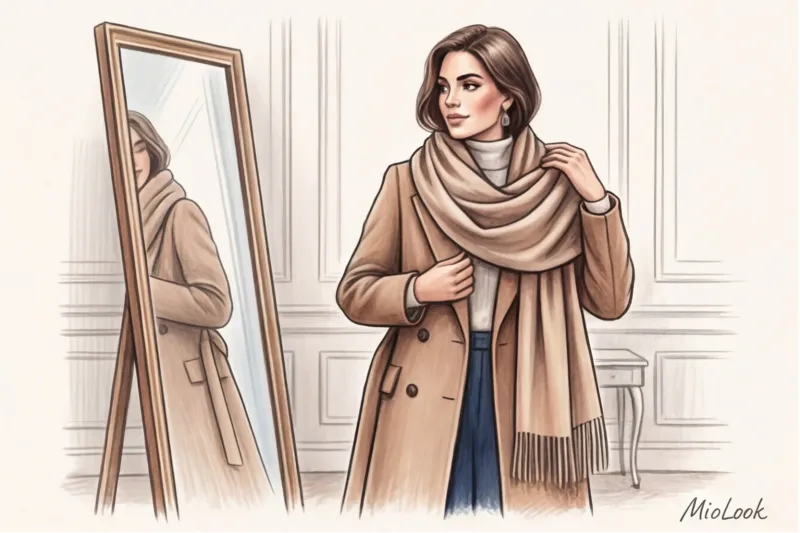
In my practice as a colorist, color camel (classic camel) is the main cause of disappointment after a high-end shopping spree. One of my clients, top manager Anna, bought an iconic Max Mara coat for a hefty sum. But every time she wore it, her colleagues would say, "Are you feeling unwell? You look tired."
The thing is, a warm, rich reddish-beige shade clashes mercilessly with cool-toned skin (which is the case with most Slavic skin types—Summer and Winter). It highlights even the slightest redness and rosacea, and visually deepens dark circles under the eyes. Beige isn't a universal base; it's a very demanding color.
Instead of blindly following trends, I suggest evaluating things by Coefficient of performance (COP) According to WGSN consumer behavior research for 2024, the average Cost Per Wear (CPE) for outerwear should be kept to a minimum. If you buy a €500 item and wear it only five times over the winter (because it gets dirty easily or your favorite sweater doesn't fit underneath), it's a poor investment with zero ROI.
The Anatomy of Heat: Reading Labels Like a Pro Buyer
Heat doesn't come from nowhere. It's produced by your body, and the coat's job is to retain that warmth and keep the cold wind out. And that's where things get interesting.
"The thickness of a fabric doesn't equal its heat capacity. A loose but thick coat is completely blown through, while thin but tightly felted wool acts as a reliable shield."
According to The Woolmark Company's quality standards, different types of fibre have different structures. Virgin wool (Virgin wool) holds its shape perfectly. Alpaca is 7 times warmer than sheep's wool and is water-repellent, making it ideal for wet snow. Cashmere offers unrivaled softness, but it absolutely cannot withstand the impact of a crossbody bag.
Why 100% wool isn't always a good choice
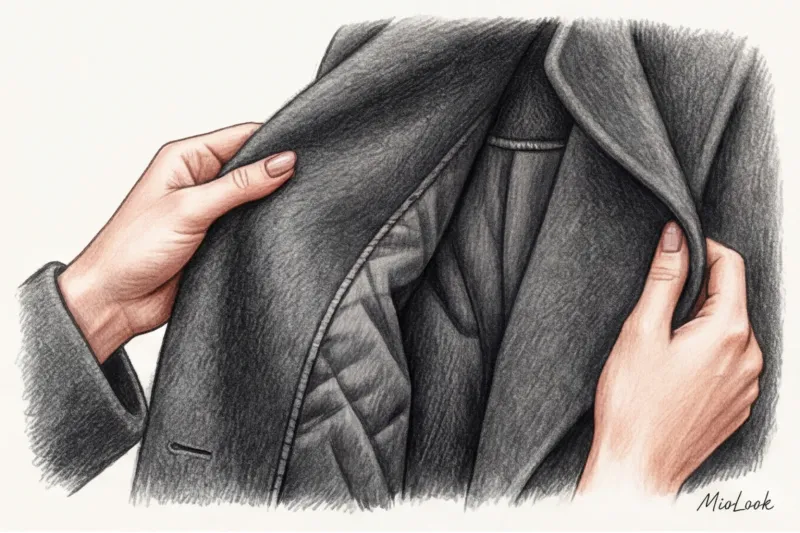
And now the main counterintuitive insight that often shocks my clients. For a basic everyday coat, 100% wool is a poor choice.
Pure wool, without additives, can be fickle when worn daily: it stretches at the elbows, becomes misshapen in the seat area (if you're driving), and quickly becomes covered in pilling. The ideal formula, developed by technologists for everyday wear: 70-80% wool and 20-30% polyamide (nylon).
In this case, synthetics act like reinforcement in concrete. They create a rigid framework that prevents the natural fibers from falling apart and losing their shape. But if you see acrylic on the label, run. Acrylic doesn't warm you; it creates a greenhouse effect: you'll sweat on the subway and instantly freeze when you step outside.
Your perfect look starts here
Join thousands of users who look flawless every day with MioLook. Our smart algorithm will help you create a capsule look tailored to your individual needs.
Get access — €0.99 onceLining: Hidden freezing factor
You can buy a garment with the perfect outer shell, but still find your teeth chattering from the cold. Take a look inside. The lining is a hidden saboteur of your comfort.
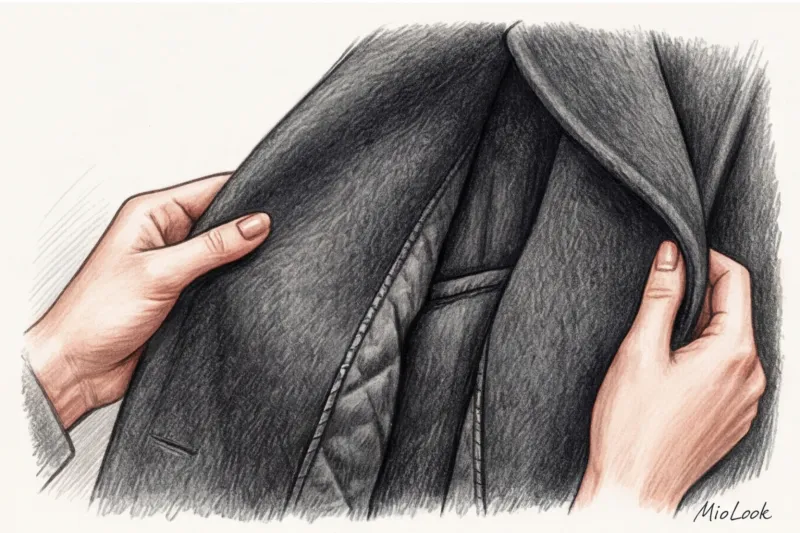
Cheap polyester doesn't breathe. Your body heat is reflected off it, condensing, causing you to sweat slightly, and the moisture begins to cool you down. Look for it in the lining. viscose, cupro or acetate These artificial fibers (made from natural cellulose) breathe, wick away moisture, and maintain the right microclimate.
Style and your lifestyle: how to choose a basic coat to suit your needs
I remember going through a wardrobe with a client who works in IT. She bought a luxurious fitted coat. The problem? Her uniform was a baggy, oversized hoodie and wide jeans. The hoodie simply didn't fit under the skinny coat, creating a bulge in her back, and the sleeves were bursting at the seams.

How to choose a base coat that works? Consider your mode of movement and the layer underneath.
- For female drivers: A mid-thigh length or cropped pea coat. Longer coats will get tangled in the pedals and quickly become unsightly from constant friction against the seat.
- For public transport: Midi length (just below the knee or mid-calf). It protects your legs from cold seats and allows you to wear dresses of any length without creating a "cabbage" effect.
- For long walks: maximum length and the ability to wear an ultra-light down vest underneath.
Wrap Coat vs. Straight Fit (Cocoon)
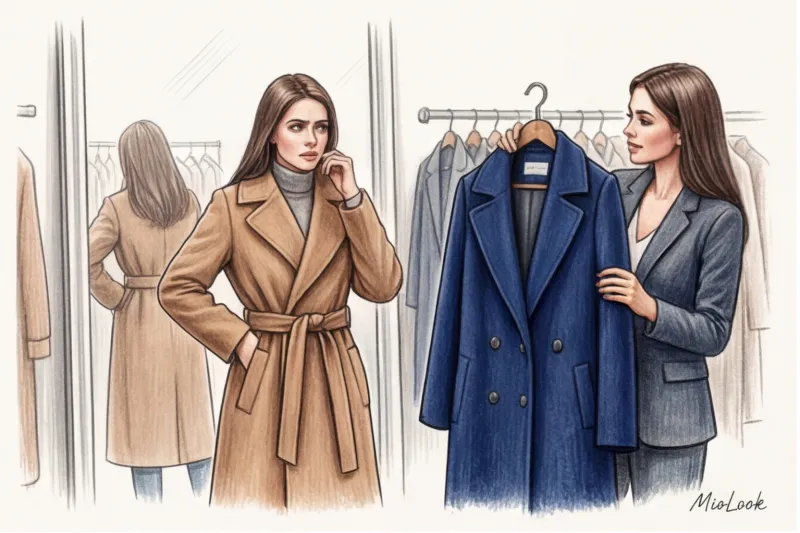
I promised to be honest, so here's an important caveat: a belted robe coat isn't flattering for everyone. If you have sloping shoulders, a full bust, or an inverted triangle body shape, a soft belt without a firm shoulder structure will make you look shapeless.
Also, in windy climates, a robe coat opens up when walking. My favorite for modern city life is cocoon or straight men's cut It holds its shape, adds a put-together look, and, crucially, allows for layering.
The secret of the armhole: why a sweater won't fit under a coat
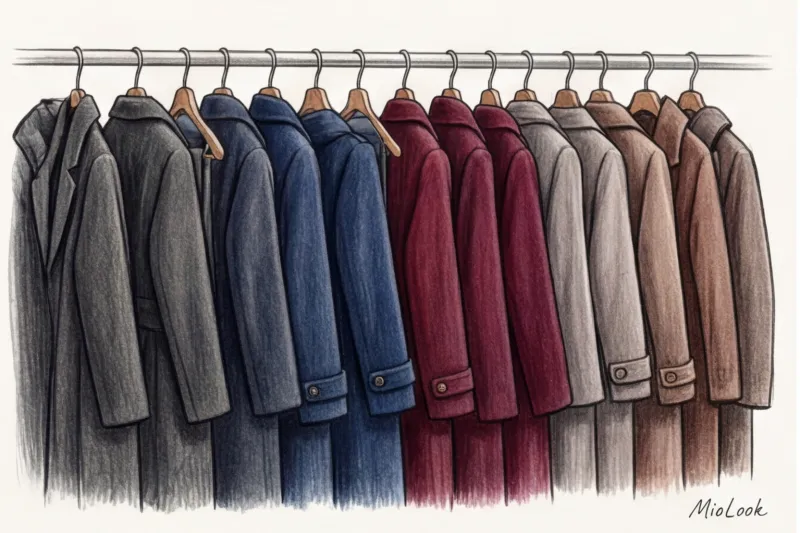
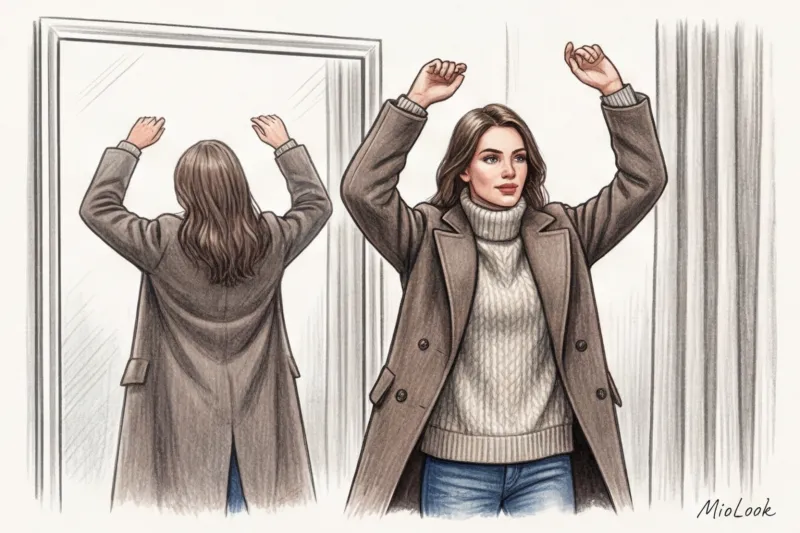
Have you ever noticed that with some clothes, you can't even raise your hand to grab the handrail on the bus? The entire structure seems to be pulled up behind your hand. This is a design flaw.
The design of the armhole (underarm opening) determines your comfort. A classic set-in sleeve looks formal and professional, but requires a precise fit with your shoulder line. If you like to wear chunky knit sweaters or jackets, choose styles with dropped shoulder or raglan sleeve A deep armhole gives you air and freedom of movement.
Intelligent Palette: A Colorist's Take on Primary Colors
Another myth I debunk at every consultation: "Black is a practical base." No, black on textured wool is a disaster.

First, black absorbs light. Black wool fabric often looks flat and cheap, losing its refined texture. Second, black acts as a magnet for lint, cat hair, and dust. You'll find yourself constantly carrying a lint roller in your pocket.
According to the Pantone Color Institute (Fall/Winter 2024/2025 reports), the focus has shifted from deep black to "tinted darks." These are shades with depth and undertones.
Expensive alternatives to black and beige
If you want your outerwear to look classy, consider a smart palette:
- For cool color types: Deep graphite, marengo (gray with a sparkle), and rich navy (dark blue) highlight the whites of the eyes and create a fresh complexion.
- New status base: Dark chocolate and ripe cherry (burgundy). These colors pair beautifully with basic jeans, white shirts, and a gray suit.
- Light alternative: If you want a lighter color, replace the red camel with taupe (gray-beige, the color of a champignon mushroom). It looks much more aristocratic and suits almost any skin tone.
Access to MioLook for €0.99 — one-time payment
A smart AI stylist will select the perfect look, analyze your palette, and help you create a capsule wardrobe that perfectly coordinates all your items.
Get access — €0.99 onceChecklist: 5 Fitting Room Tests Before Buying
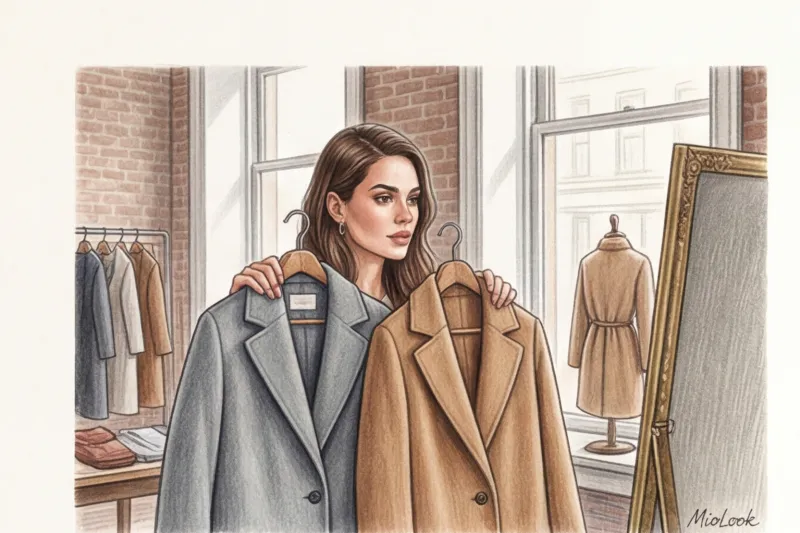
I make every client do these tests during my shopping tour. Never buy outerwear by simply looking at yourself in the mirror.
- The Hug Test: Put on your coat, button it up, and cross your arms over your chest, as if hugging yourself. If the fabric at the back is so tight that the seams are bursting, you need a larger size.
- Step test: Take quick, long strides through the store. Pay attention to the back vent. It shouldn't flare out, revealing your legs above the knee.
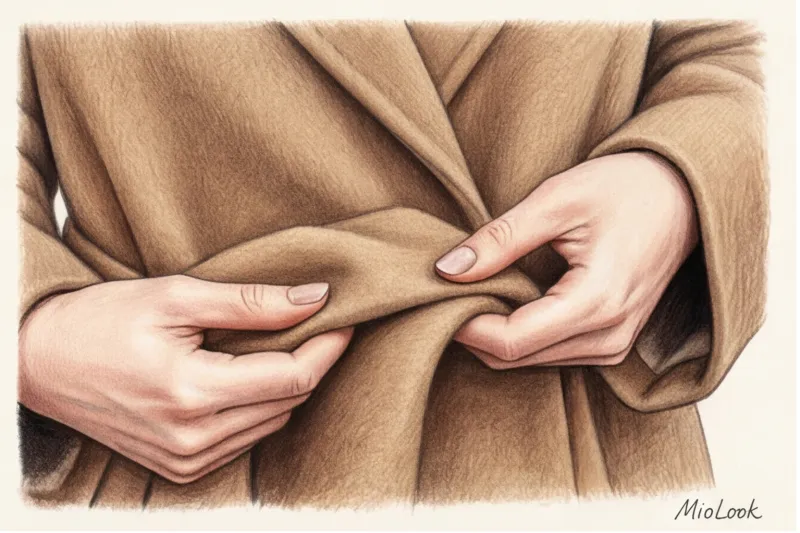
- Crease test: Firmly squeeze the edge of the hem in your fist and hold for 10-15 seconds. Release. If the fabric is still wrinkled, it will look the same after you sit in a taxi. High-quality wool blends straighten out quickly.
- Checking the fittings: Look at how the buttons are sewn on. A good button is sewn on a shank (made of thread) to allow the edge of thick fabric to fit comfortably underneath. Hidden snaps on a heavy wrapover is a sign of thoughtful design.
- Lint test: If you're wearing dark gloves (or have a dark cloth with you), lightly rub the light-colored coat. If a layer of lint remains on the glove, the color will mercilessly bleed onto your dark clothing.
Bottom Line: An Investment That Works for You
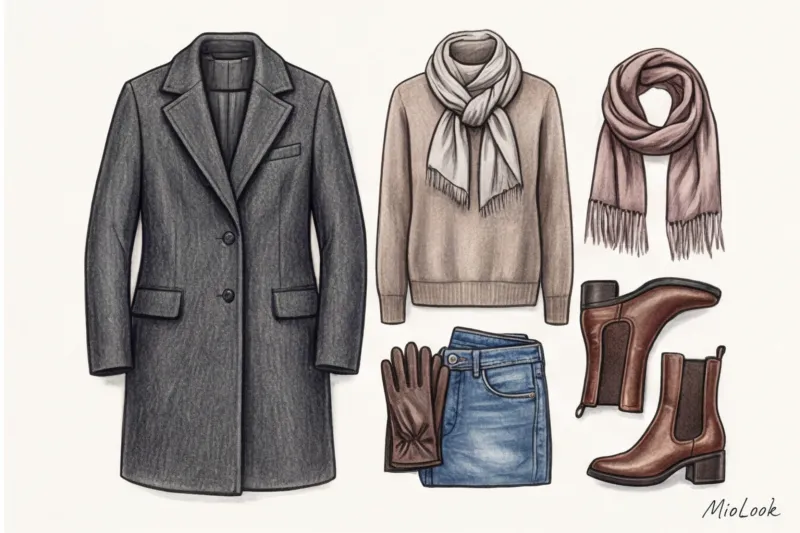
So, how do you choose a basic coat that will become your favorite item, not a waste of half your salary? The ideal formula is: a blended composition (approximately 80% wool + 20% polyamide), a breathable viscose lining, deep armholes for sweaters, and a complex, deep shade that complements your natural complexion.
Before heading to the store, take stock of your current outerwear. Remember what exactly irritated you about your old pieces: tight sleeves, easily soiled colors, the cold? To simplify this process and visualize your future looks, I recommend digitizing your wardrobe. By adding your items to MioLook , you will be able to clearly see what kind of cut and color your capsule is missing.
Remember: style should serve your comfort, protect you from the cold, and give you confidence. If a piece requires you to endure discomfort, it's a bad piece, no matter how much it costs.