Have you ever noticed how you feel confident and put-together in one jacket, but like you're clad in armor in another? It's impossible to lift your arm to fix your hair or comfortably reach the steering wheel. Usually, in this situation, we sigh and go looking for a bigger size. And that's the biggest mistake we make.
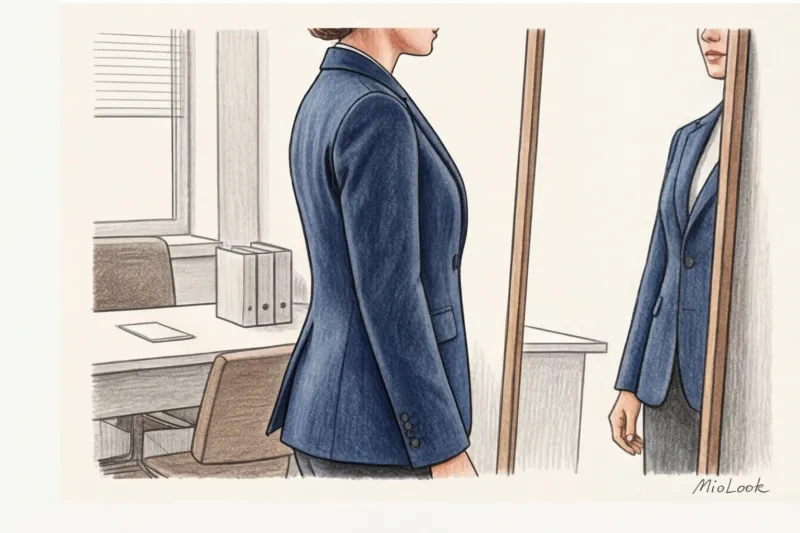
The problem with tightness isn't the size, but the cheapened pattern architecture. When people ask me how to choose a basic jacket, I always start not by searching for the "perfect beige shade," but by looking at the inside, the seams, and the fabric's dynamic behavior. There are simply no universal basic lists—we've covered this in more detail in our The Complete Wardrobe Investing Guide: How to Build the Perfect Essentials Your foundation should be built around your real life, not abstract advice from glossy magazines.
Hidden Architecture: How to Choose a Basic Jacket That Doesn't Restrict Movement
In my practice, eight out of ten clients complain that a formal suit is uncomfortable to drive or work on the computer in. To figure out why, look under the jacket's armpit and check the armhole.
Mass-market brands (from budget brands to mid-range ones like Massimo Dutti) often use low and wide armholes. Why? It's cost-effective. A low armhole allows a single pattern to fit a wide range of body shapes: those with full arms, a wide back, or sloping shoulders. But the price for this versatility is comfort. With a low armhole, the sleeve acts as a lever: as soon as you raise your arm to 45 degrees, this lever pulls the side seam, causing the entire jacket to rise, bunching up at the neck.
A well-tailored jacket has a high armhole—as close to the armpit as possible. While it may be a bit more awkward to put on, it allows you to gesticulate freely, and the garment itself will remain firmly in place.
"The architecture of the shoulder girdle is the foundation. The sleeve seam should lie directly on the natural acromion bone of your shoulder. If the seam hangs even a centimeter (and this is not an oversized model), the jacket will look like you're wearing it from your older brother."
Access to MioLook for €0.99 — one-time payment
A smart AI stylist will select the perfect look based on your figure and wardrobe.
Get access — €0.99 onceLength of the product and the golden ratio of the silhouette
The golden rule of classic basics is the "buttocks rule." A jacket should end where your leg begins (the crease line). If a jacket cuts across the widest part of your thigh, it visually adds a few extra pounds and shortens your legs. The only exception is cropped jackets, but they only work with very high-waisted trousers and can't claim to be a universal everyday staple.
The "Clean Composition" Myth: Textile Literacy When Choosing a Jacket
As an eco-stylist and a proponent of conscious consumption, I'd be expected to advocate exclusively for 100% natural ingredients. But I'm going to say something that many will disagree with: For a basic everyday jacket, 100% wool, cotton, or linen are poor choices..
Natural fibers don't have a "shape memory." If you buy a jacket made of pure, fine wool and wear it to the office three times a week, after exactly one month, stretched-out blisters will appear on the elbows, and the back will lose its original shape from constant sitting in a chair.
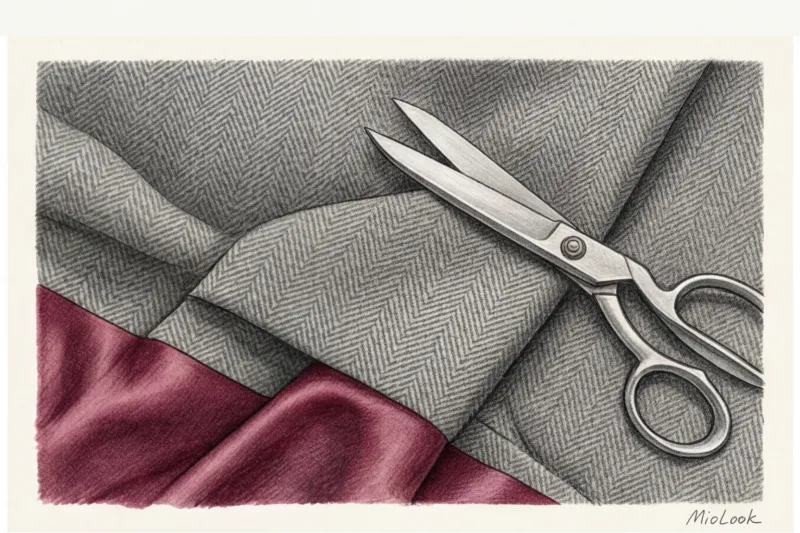
The formula for durability looks different. Look for worsted wool, which has added 2% to 5% elastane or polyamide These synthetic fibers act like springs, returning the fabric to its original state after you bend your arm. According to a 2023 report by Textile Exchange, adding just 3% elastane to wool yarn increases the lifespan of a suit by 40% without significantly compromising biodegradability.
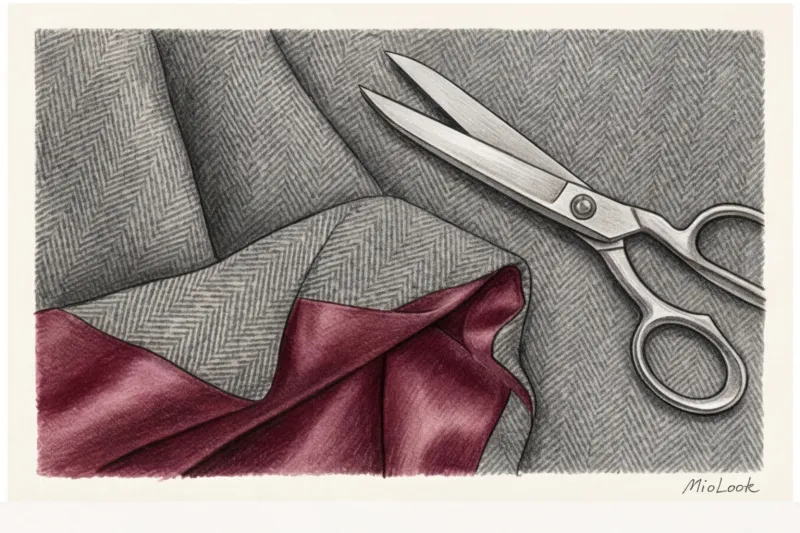
Fabric density is another critical factor. For an all-season jacket, look for a density of 250–300 g/m². A fabric of a lower density will be too lightweight and won't support the rigid interlining (internal frame), while a density of over 320 g/m² will turn the jacket into a coat.
In stores, I always use my "fist test." Squeeze the edge of the fabric into your fist, hold it for 10 seconds, and then release. If the fabric immediately straightens out with virtually no marks, you won't need to steam the jacket after every taxi ride. If a stiff, broken web of wrinkles remains, leave the item on a hanger.
Lining: a secret indicator of a status item
You can buy a jacket made of luxurious Italian wool, but if it's lined with cheap 100% polyester, you'll sweat in it even in a cool room. Polyester creates a greenhouse effect. Furthermore, if a brand skimped on the lining, you can be sure they used the cheapest fusible interlining inside the cuffs.
The correct lining is made from cupro (Bemberg), viscose or blended silk These materials are breathable, moisture-wicking, and allow the jacket to slide seamlessly over a shirt or wool turtleneck without creating static electricity.
Your perfect look starts here
Join thousands of users who look flawless every day with MioLook. Digitize your wardrobe in minutes.
Get access — €0.99 onceTest drive in the fitting room: 5 stylist moves to assess quality
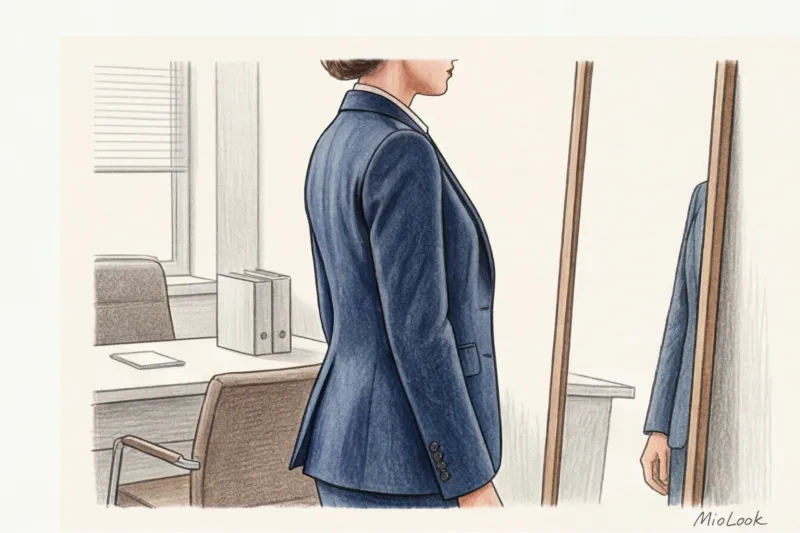
Never buy a jacket just by standing in front of a mirror. The garment should work dynamically. Here's the checklist I use when shopping:
- The Hug Test: Wrap your arms around your shoulders. The fabric at your back should be taut, but not bursting at the seams. If there are vents (slits) in the back, they shouldn't fan out when you stand up straight.
- Steering Wheel Test: Extend your arms forward, mimicking the grip of a steering wheel. The jacket should not dig into your biceps or pull tightly around the back of your neck.
- Lapel Roll Test: This is the pinnacle of tailoring, according to the standards of London's Savile Row. A quality jacket's lapel shouldn't be pressed flat all the way to the seam. It should have a soft, voluminous roll—a 3D curve where the collar meets the clasp. This is the hallmark of a high-quality inner lapel.
Oversized vs. Semi-fitted: What to Invest in for Years to Come
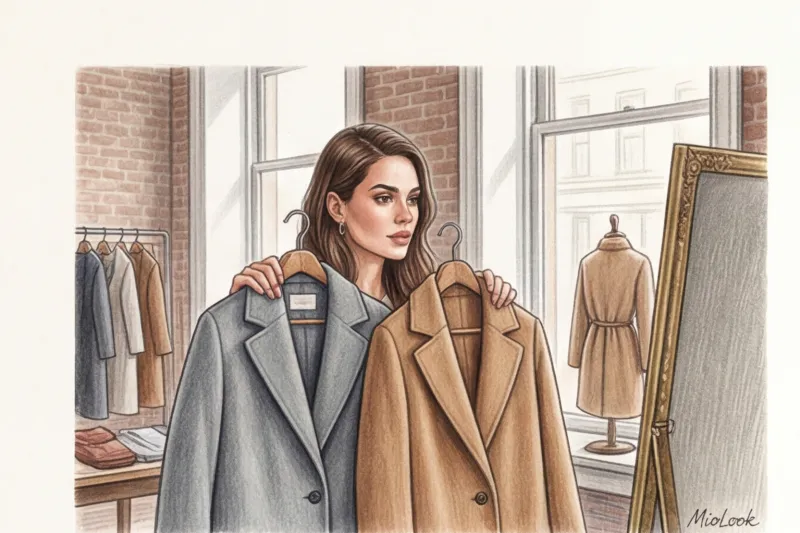
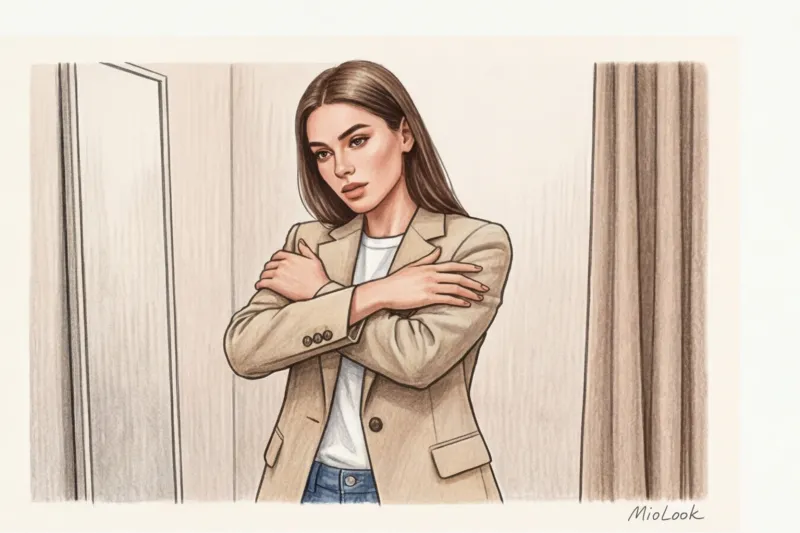
Many women, having seen enough street style, buy hyper-oversized jackets "off the rack," believing them to be the best basics. This is a mistake. Oversize is a stylistic device, a micro-trend, but not a foundation.

Why? Because an oversized jacket can't be worn under a standard classic coat or trench coat—the sleeves simply won't fit through the outerwear's armholes. You're condemning yourself to buying gigantic coats, distorting your figure's proportions during the cold season.
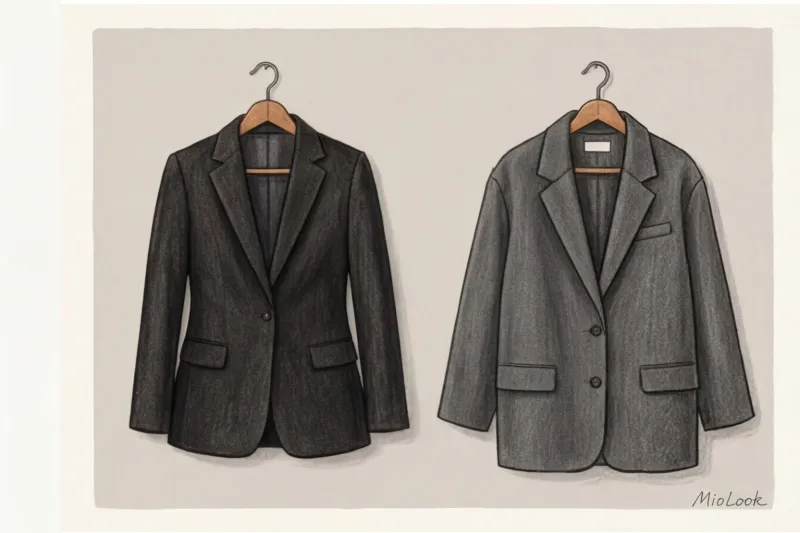
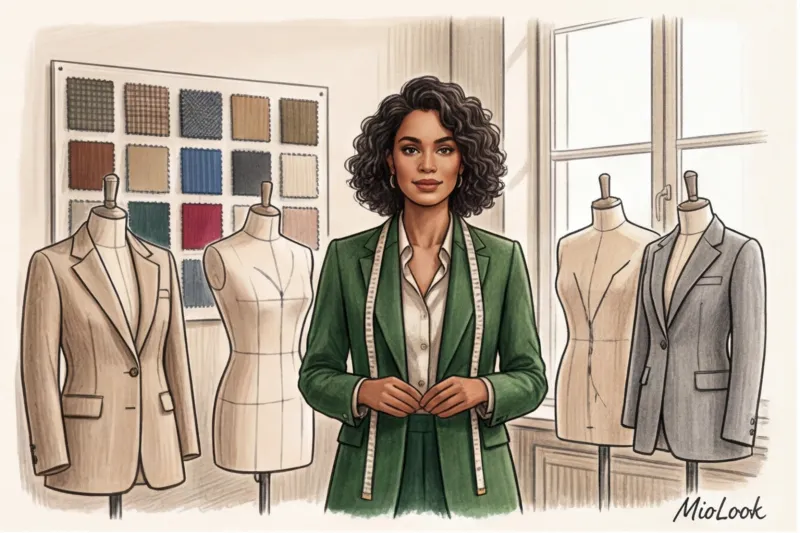
If you want to invest money in something that will last 5-7 years, choose Straight cut or soft semi-fit (Slim) This silhouette is phenomenally adaptable. By day, it works with a strict office dress code and pleated trousers, while in the evening, thrown over a silk top and paired with vintage denim, it creates the ultimate smart-casual look.
Not sure what to wear with your new jacket? See the app. MioLook The smart capsule selection feature will help you integrate one quality item into a dozen different looks, based on your expertise.
Caring for a Basic Jacket: An Eco-Friendly Approach to Durability
About five years ago, I ruined an expensive wool suit by taking it to the dry cleaner every month. The fabric became loose, and the lapels were covered in tiny bubbles. This is an important lesson: Frequent dry cleaning is the main enemy of a jacket's architecture.
Perchloroethylene and other solvents used in dry cleaning gradually destroy the adhesive that attaches the interlining to the main fabric. This results in deformation of the lining (those same bubbles in the fabric that are impossible to smooth out).
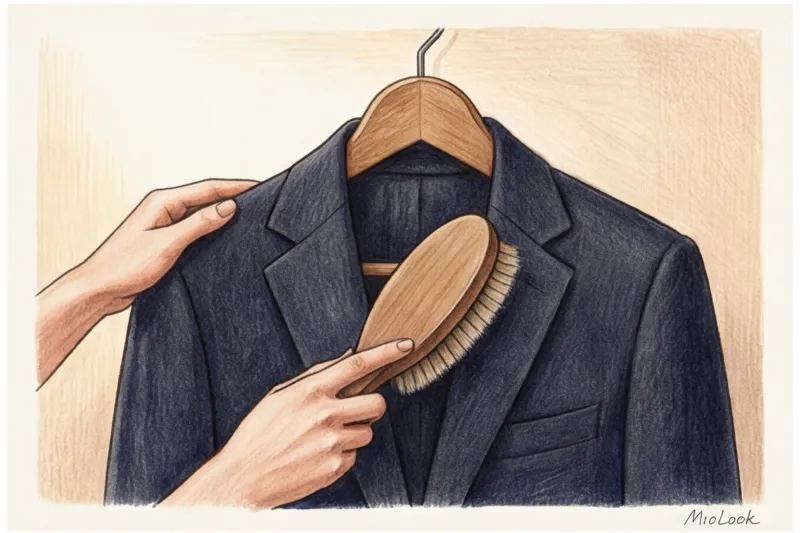
How to take care of it properly?
- Buy a brush made of natural bristles. Forget about sticky rollers—they leave a microscopic layer of glue on the fabric, which attracts even more dust. Daily dry brushing removes dust, lint, and lifts the wool fibers.
- Use a steamer, not an iron. Ironing leaves shiny marks on seams and flattens lapels. Steam refreshes the fabric and kills bacteria.
- Correct hangers. Don't hang your jacket on thin wire or plastic hangers. Buy wide, contoured wooden hangers (with flared ends) that mimic the shape of a human shoulder.
Ready to get started?
Try the MioLook plan for free—no commitment required. See how easy it is to combine items in your wardrobe.
Get access — €0.99 onceThe Final Checklist: 4 Signs This Jacket Is Worth the Money
Before you take an item to the checkout, check it against this short list. These details reveal the brand's approach to production:
- Pattern match. If you're choosing a checked or striped jacket, the lines should line up perfectly at the center back seam, side seams, and patch pockets. Misalignment is a sign of waste-free mass cutting.
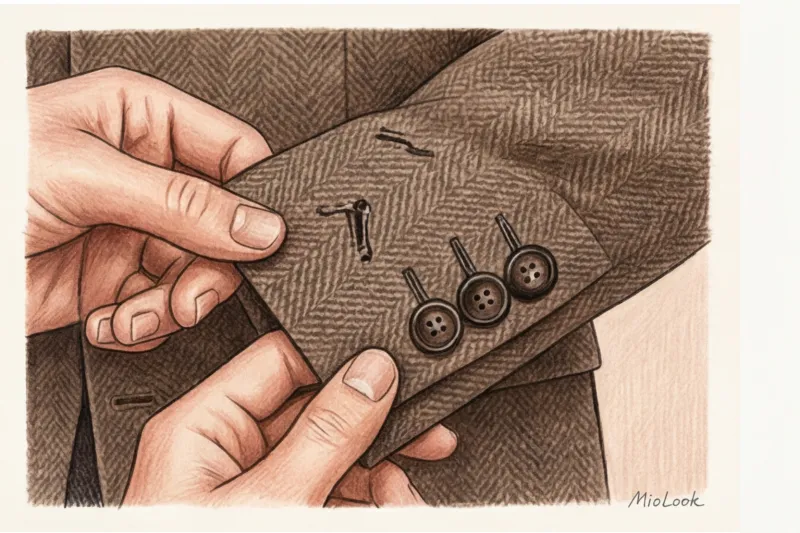
- Quality of fittings. Plastic buttons cheapen any fabric, even the most luxurious one. Look for buttons made of natural horn, corozo walnut, mother-of-pearl, or high-quality metal.
- Processing loops. In premium products, the loops on the cuffs are often made "working" (unfastened), and the edge of the loop itself is finished with a dense, even stitch without protruding threads.
- The presence of a "flash". Fluffing is a thin, barely noticeable decorative stitching along the edge of lapels and pocket flaps, mimicking hand-stitching. It not only adds beauty but also prevents the edges from becoming misshapen after cleaning.
Remember: a basic jacket isn't just about color and fabric. It's a complex engineering construct, an architecture that should serve your real life, not constrain it. Take the time to find the right armhole and composition, and this wardrobe staple will be worth every penny.