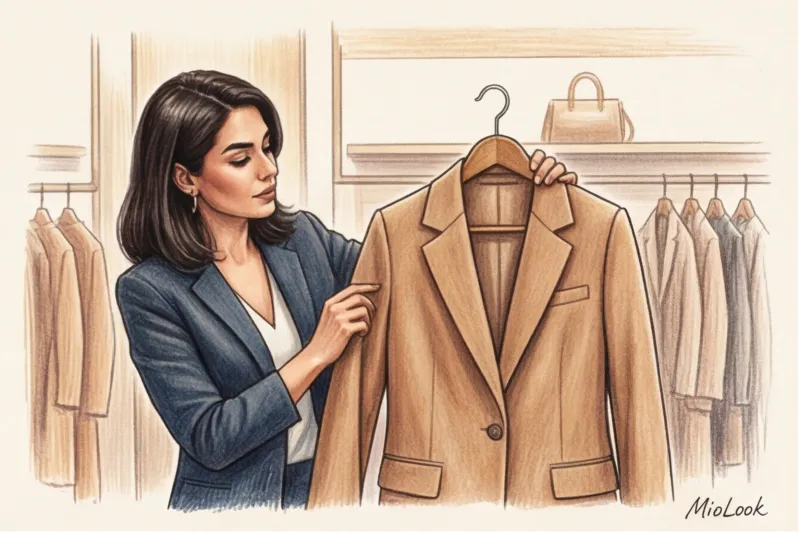
Two months ago, my client Anna bought a luxurious 100% silk blouse. She spent half her salary on it, sincerely believing she was investing in a life of its own. At the very first dry cleaning, the seams on the back betrayed her. Meanwhile, my own silk shirt with 5% elastane has served me faithfully for four years now, having survived dozens of flights and meetings.
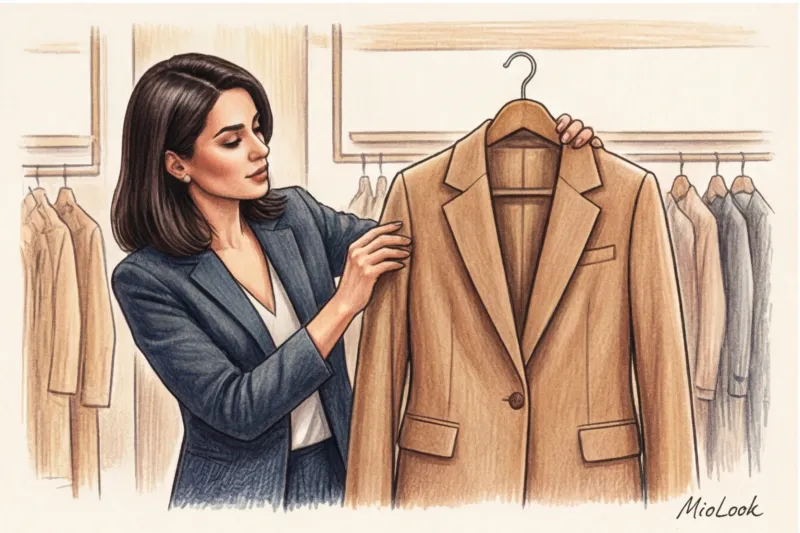
This incident proved to me once again: price tags and a big brand name no longer guarantee durability. Today, mass-market products have masterfully imitated premium items on the rack, while luxury brands sometimes skimp on hidden details. This raises a reasonable question: How to determine the quality of clothing before you even go to the checkout?
Over 12 years of working as a personal stylist, I've developed a kind of "X-ray vision." I don't need to look at the brand to understand how long a piece will last. We've already discussed the smart closet concept in more detail in our complete guide. Wardrobe Investment: How to Build the Perfect Essentials , and today I'll share with you some purely practical skills. We'll learn to read clothes like professional technologists.
The Anatomy of a Quality Item: What Stylists Look at in the First 10 Seconds
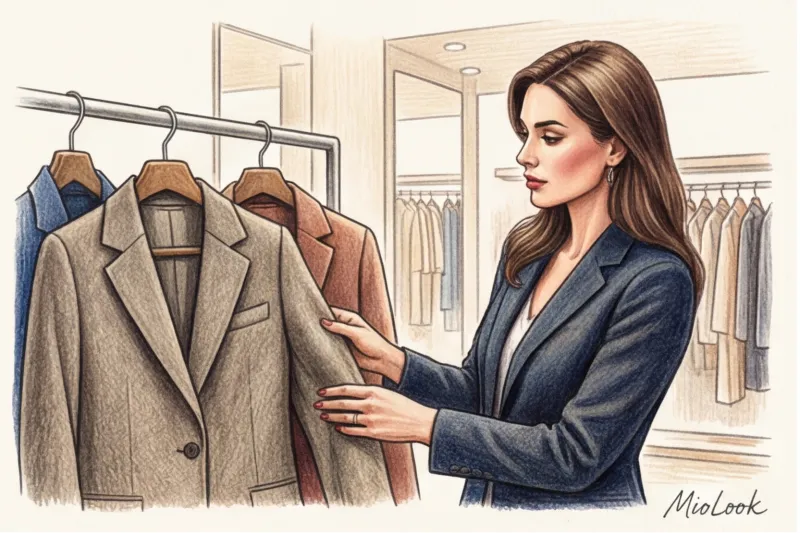
When I accompany clients shopping, I conduct a "60-second audit" of each item before allowing them to take it into the fitting room. The first test is visual weight and gravity.
I pick up the garment by the hanger, lift it to eye level, and shake it gently. The way the fabric falls is the main marker of nobility. High-quality material, be it thick cotton, fine wool, or heavy viscose, instantly returns to its original state, forming beautiful, plump folds. Cheap, loose fabric will fray, break, or hang like a lifeless rag.
"A quality garment has architecture. It doesn't need your body to hold its shape. If a jacket looks sad on the hanger, it won't work wonders on you."
Fabric and composition: why 100% naturalness isn't always a plus
Let's be honest: the advice to "buy only 100% natural fabrics" is hopelessly outdated. Yes, in an ideal world, we'd all wear pure cashmere and silk. But in the reality of the modern working woman, 100% linen turns into chewed-up paper by lunchtime, and 100% cotton trousers mercilessly stretch out at the knees.
A 2024 study by the WGSN Institute of Color and Textiles shows that the future lies in high-tech blended compositions. The addition of high-quality synthetics or artificial fibers (lyocell, tencel, cupro) is not a brand's attempt to save money, but a technological necessity for your comfort.
Your perfect look starts here
Join thousands of users who look flawless every day with MioLook. Digitize your wardrobe and create stylish capsule collections in one click.
Get access — €0.99 onceHow to Read Labels: Ideal Blended Fabric Formulas
Instead of demonizing polyester, look for the right proportions. Here are my tried-and-true formulas I use when collecting business capsule wardrobe:
- Wool coat: 70-80% wool + 20-30% polyamide or nylon. The synthetics here act like reinforcement in concrete, preventing the wool from pilling and making the fabric wind-resistant. 100% wool without any treatments will wear through the sleeves within one season.
- Business suit: Wool or heavy cotton + 2-5% elastane. This micro-percentage will prevent your pants from becoming misshapen after eight hours in an office chair.
- Summer base: 50% linen + 50% viscose/lyocell. Linen provides a refined texture and breathability, while viscose makes the fabric soft and prevents creases.
Tactile Test: How to Check Fabric Quality by Touch
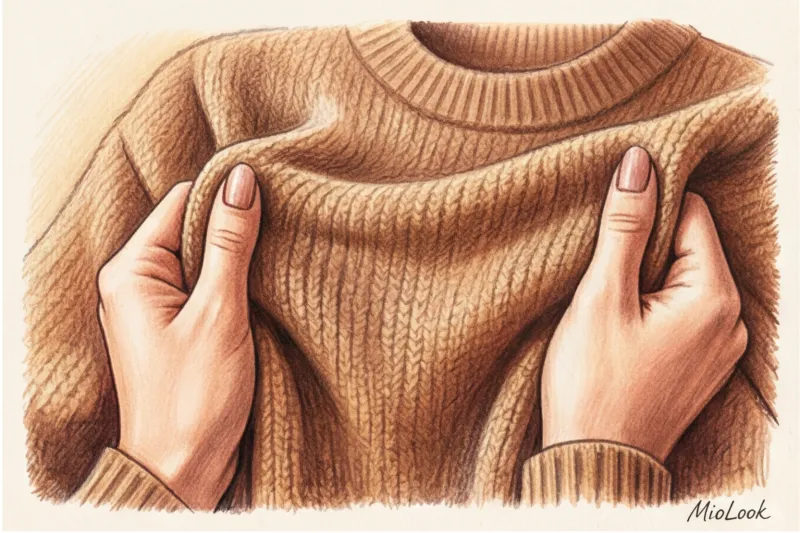
Labels can lie or be vague. That's why I trust my hands. Run three simple tests right in the store:
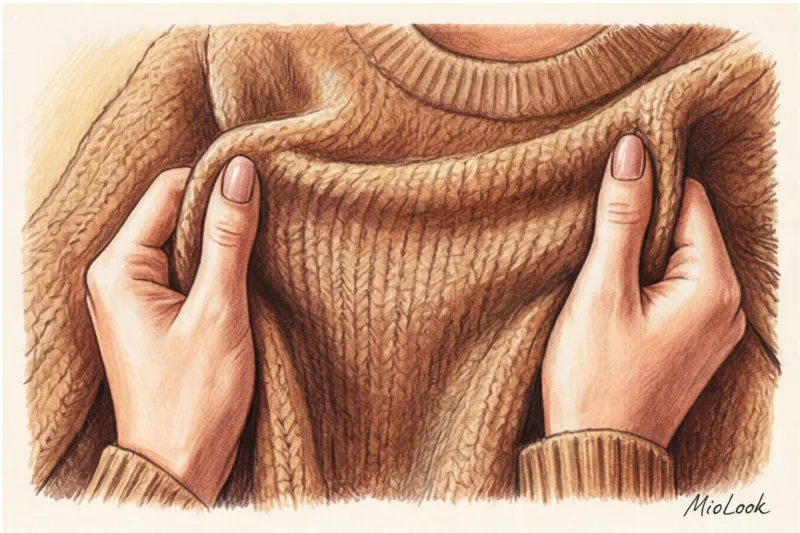
- Crease test. Squeeze the edge of the item in your fist, hold for 5 seconds, and then release quickly. If the fabric is still very wrinkled, imagine how it will look after a car ride.
- Translucent test. Hold the fabric up to a lamp in the store. This is crucial for white t-shirts. You shouldn't be able to see the outline of your fingers through the fabric. A good basic t-shirt should be at least 180 g/m².
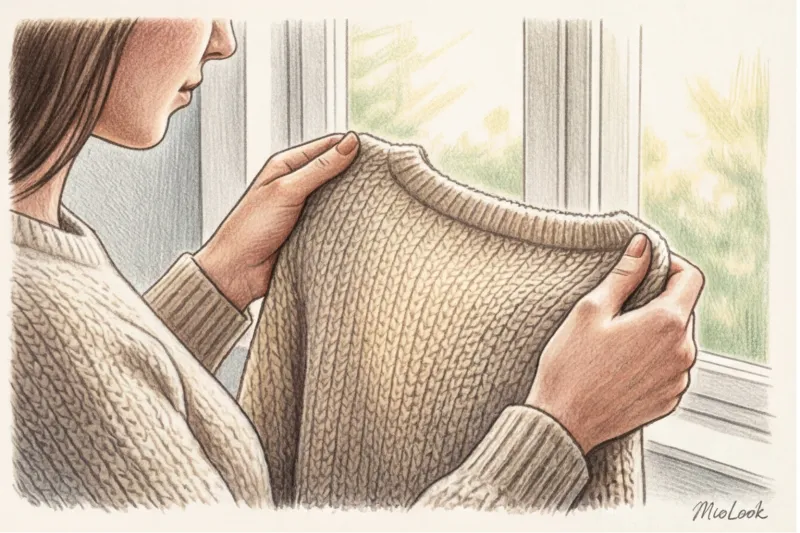
- Tensile test. Gently stretch a knit sweater widthwise and release. The fabric should immediately spring back. If a stretch mark remains, the item will stretch after the first wash.
Seams, stitching, and cut: hidden signs of expensive tailoring
One of the main secrets of that, How to look expensive , is hidden in millimeters. In tailoring, there is a quality standard called stitch density or SPI (Stitches Per Inch).
Mass-market brands have machines set to 6-8 stitches per inch (SPI)—this speeds up sewing. Premium brands use 10-12 stitches per inch (SPI). The smaller and denser the stitch, the stronger the seam and the neater the garment. If the stitching is looping, puckering, or has loose threads, discard the garment without regret.
Stylist's advice: Pay attention to the cutting direction. A quality garment is always cut along the grain. Have you ever noticed how the side seam on some jeans tends to "slide" forward over time, twisting the leg? This happens because the factory cut the pieces on the bias, trying to squeeze as much pattern as possible into a single bolt of fabric. This is pure savings for the manufacturer, at your expense.
A look inside: French seam and edging
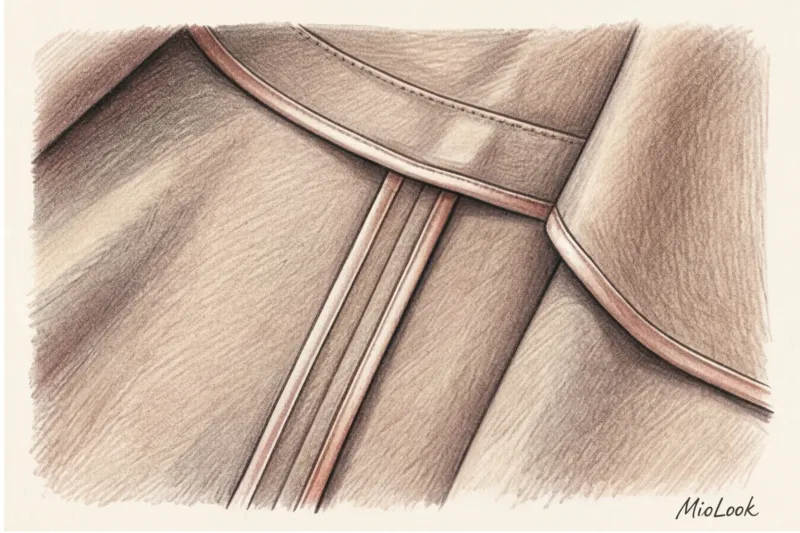
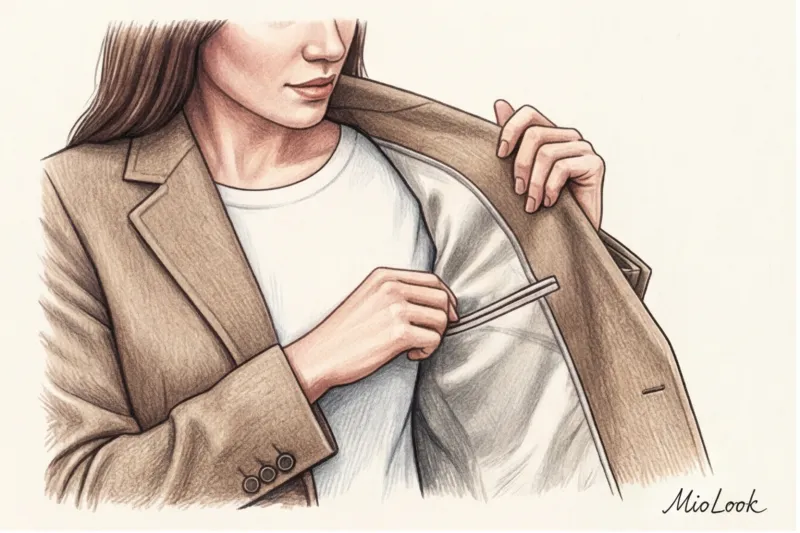
Turn the garment inside out. The back side never lies. If you see a rough, shaggy seam finished with a cheap overlocker (especially on delicate fabrics), you're looking at fast fashion in its purest form.
Signs of high-quality garments include a closed "French seam" (where the edges of the fabric are hidden inside the seam itself) or seams edged with bias binding. This type of finishing requires more time and skill, so it's only found in brands that respect their customers.
Print matching is the ultimate test of a brand's greed.
If you're buying a checked, striped, or intricate geometric pattern, immediately check the side seams, patch pockets, and lapels. A quality garment will have a perfectly aligned pattern where the pieces meet, creating a continuous line.
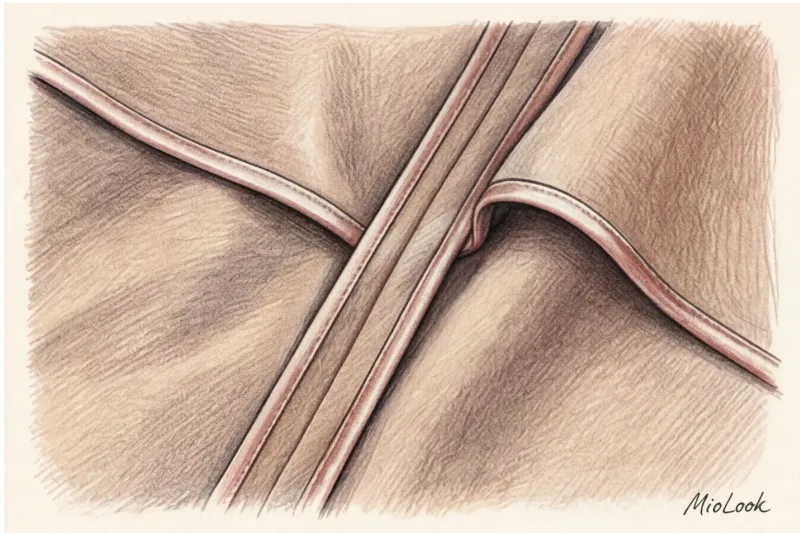
To match the print, the cutter has to use 15-20% more fabric, throwing away scraps. Budget brands will never do this. A mismatched check on the side of a jacket instantly reveals its cheapness.
Fittings and lining: what people save on first
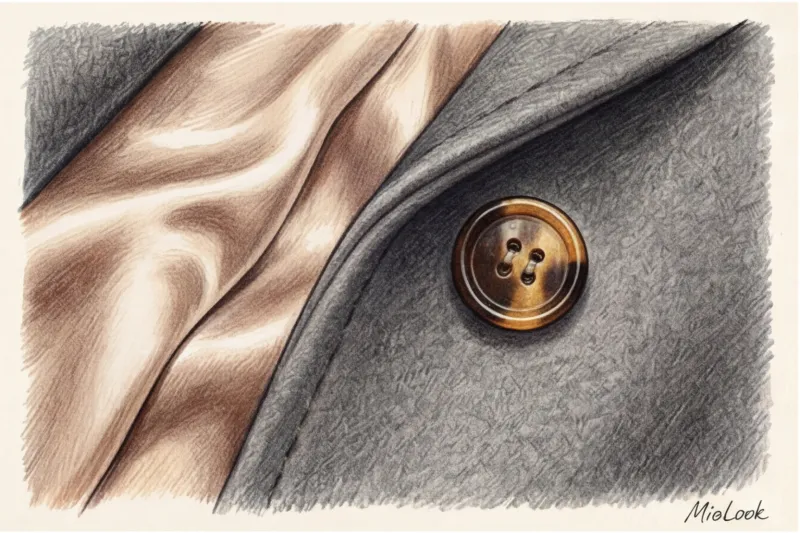
Brands know that customers look at fabric and color. Lining and buttons are where manufacturers secretly skimp.
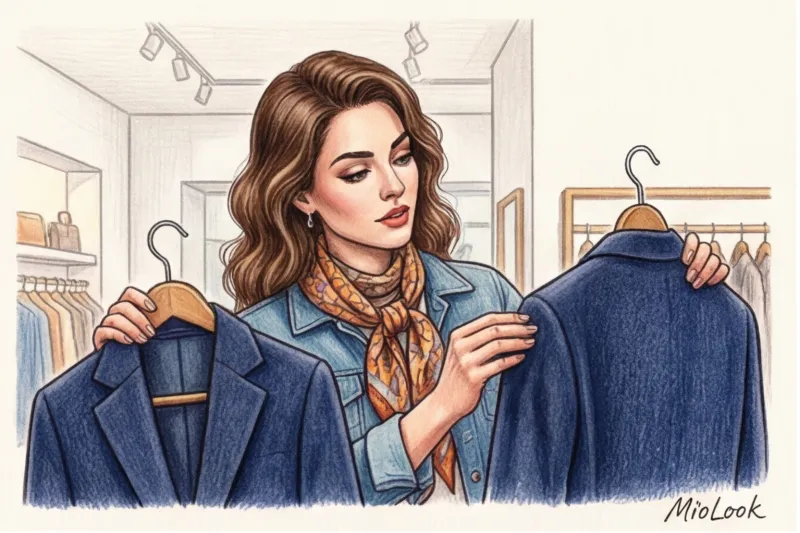
Cheap, jingly plastic buttons coated with a "gold" paint that will peel off within a month can ruin even the best tailoring. My favorite life hack I use with my clients is to buy a perfectly fitting jacket in the mid-price range (for example, from Massimo Dutti or COS) and take it to a tailor. There, we cut off the plastic and sew on hardware made of natural horn, metal, or mother-of-pearl. The garment instantly becomes a statement piece.
As for the lining, it's your second skin. Remember this rule: Never buy wool skirts, pants, or jackets with 100% polyester linings. Polyester doesn't breathe. It will create a greenhouse effect, causing you to sweat, and the expensive wool on top will absorb odors. Look for viscose, acetate, cupro, or a blend with a high cotton content in the lining.
Access to MioLook for €0.99 — one-time payment
A smart AI stylist will create the perfect look based on your wardrobe. Eliminate the "nothing to wear" problem once and for all.
Get access — €0.99 onceFitting Room Crash Test: 4 Steps to Take Before Checkout
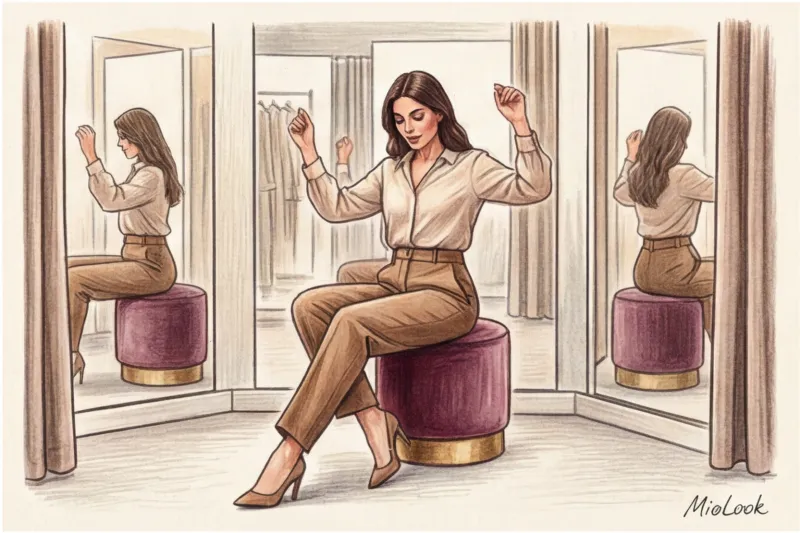
Clothes are made to be lived in, not to be worn standing at attention in front of a mirror. In the appendix MioLook We always emphasize: style is confidence. But how can you have confidence if your skirt treacherously rides up with every step? Be sure to run this dynamic test in the fitting room:
- Sit on a chair or ottoman. Check to see if your pants are pulling in the groin area. Is the waistband digging into your stomach? Is there an unsightly "bubble" forming at the zipper?
- Raise your hands up. If you're trying on a jacket or shirt and the garment slides up completely when you raise your arms, revealing your stomach, the armhole is cut incorrectly. A good jacket has a sleeve that moves independently of the main body (called a high armhole).
- Cross your arms over your chest as if you were hugging yourself. Feel the stretch in your back. The fabric shouldn't be stretching at the seams.
- Spin around in different lighting conditions. Step out of the fitting room and into the sales floor. The lighting in the booths is often adjusted to conceal imperfections. Check to see if the fabric's sheen is dull in bright light or if the lingerie is see-through.
Fair clarification: This crash test doesn't work for formal, architecturally cut evening gowns made of stiff taffeta. The main challenge there is standing gracefully with a glass, not reaching for a folder on the top shelf.
Checklist: How to Determine Clothing Quality When Shopping Online
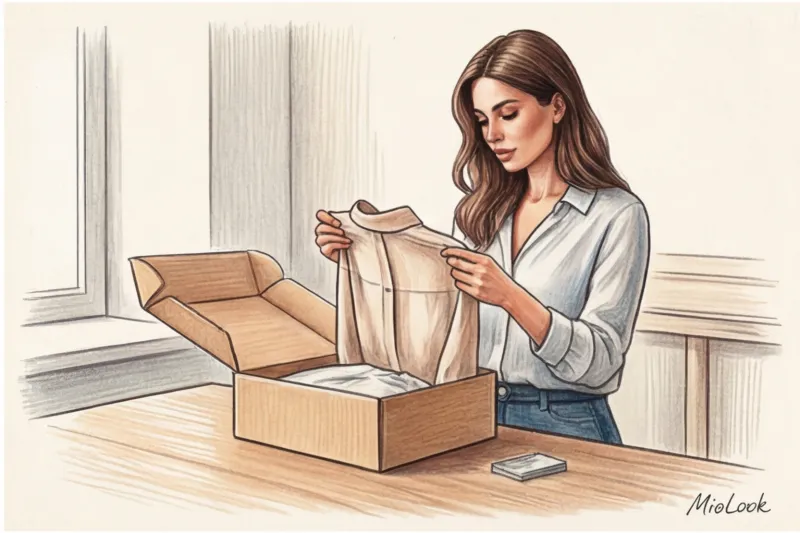
Online shopping deprives us of the opportunity to conduct a tactile test. But even here, you can protect yourself if you know where to look.
- Don't trust the names. Marketers write "Silk Blouse" or "Cashmere Sweater" when referring to the color, texture, or silhouette. Always scroll to the "Composition" section. If the "silk" blouse is 100% polyester, close the tab.
- Use maximum zoom. Zoom in on the photo as much as possible. Examine the seams on the shoulders, the seams between the prints, and the quality of the buttonhole stitching. A reputable brand (even a mass-market one like Arket or COS) takes macro shots of the fabric's texture. If there are no macro photos, and all the pictures are blurry or heavily retouched, the brand is hiding something.
- Watch the video. Photos are static. Only a video of a model walking can reveal the true density of the fabric, its drape, and how it moves.
Conclusion: Quality is more important than quantity
Buying one impeccably tailored, high-quality item is always more cost-effective than buying five mediocre items on sale in a fit of passion. A cheap item that loses its shape after the third wash is a waste of money and a cluttered closet.
Next time you're in a store, don't rush to look at the price tag. Shake the garment by the hangers, squeeze the fabric in your fist, look inside, and check the buttons. Your wardrobe is your frame, your nonverbal language. Choose clothes that respect you, your body, and your time.