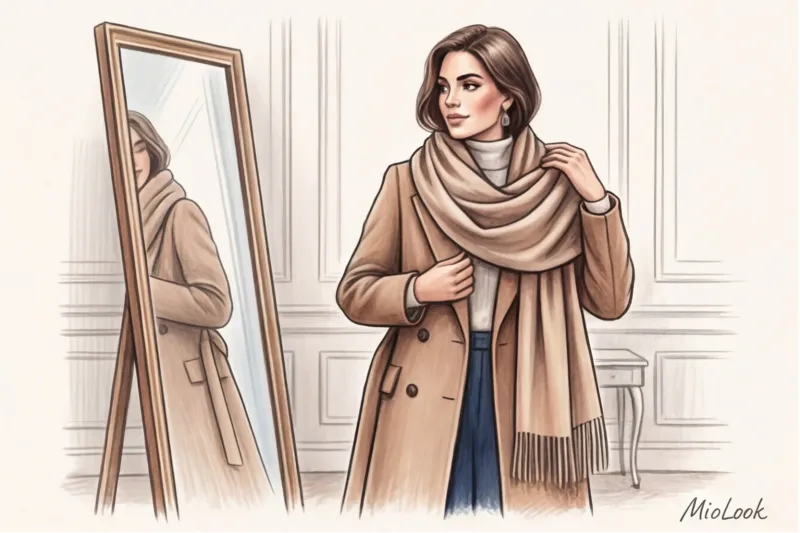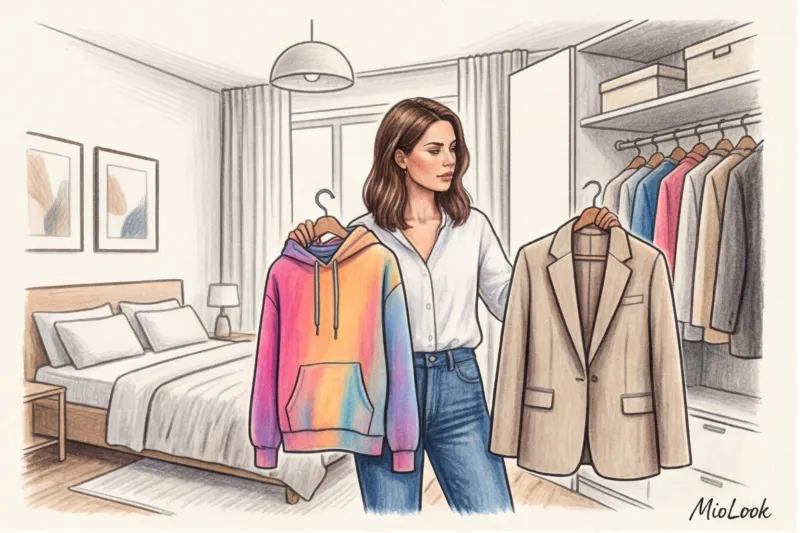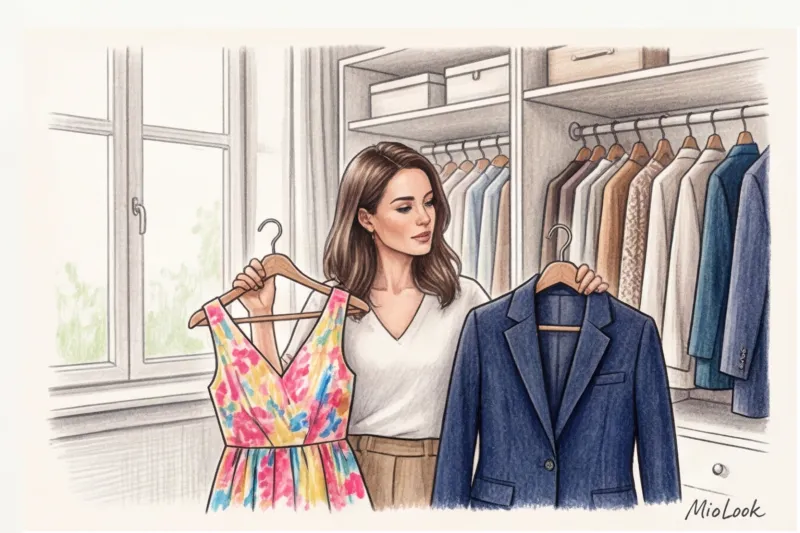
When one of my clients, a marketing director at an IT corporation, turned 30, she made a classic style mistake. In a mild panic over her new age, she dumped all her asymmetrical skirts, daring crop tops, and vintage leather jackets in a trash bag and instead bought the "perfect basic capsule" from Pinterest: a beige trench coat, a pencil skirt, a white shirt, and tailored loafers. A month later, she came to me for a consultation with the words, "Camilla, I look like my mom on PTA day."
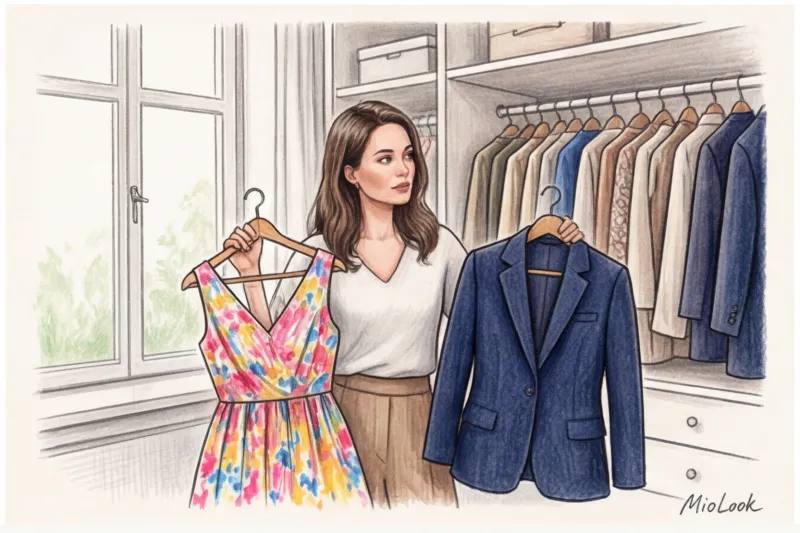
For years, mainstream fashion magazines have been telling us that turning 30 is a milestone to settle down and invest in boring classics. After 12 years of working as a stylist and attending fashion weeks from Paris to New York, I've come to believe otherwise. Observing fashion editors at Paris Fashion Week, I noticed an interesting pattern: 20-year-old influencers often wear straightforward, all-out brand looks, while women over 30 opt for complex deconstruction, avant-garde, and unconventional mixes of textures.
Thirty is no time to hide behind bland basics. This is the period when you finally gain the right to wear complex, architectural cuts, which on a young woman often look like something borrowed from someone else. We discussed the psychological pitfalls of growing up and your wardrobe in more detail in our the complete guide to finding your style.
Psychology of 30+: Why Your Old Wardrobe No Longer Works
Style is always a reflection of our inner state and social status. By the age of 30, most women undergo a significant transformation: their career positions, income level, social circle, and, most importantly, their self-perception change. The clothes bought for parties during their college years suddenly begin to seem inappropriate and downright cheap, and typical "adult" clothes feel intimidatingly formal.
According to a large-scale study of millennial consumer habits conducted by Business of Fashion (BoF) in 2024, purchasing triggers change dramatically after age 30. While in our 20s, the primary motivator is the desire to "be on trend" and belong to a certain social group, after 30, the need to "convey confidence and status" takes center stage. We're shifting from quantity to quality.
The problem is that old body typing formulas are useless here. You can know your color type perfectly, but if your clothes don't match your new role (for example, you've become a department manager but continue to wear childish daisy-print cardigans), severe cognitive dissonance arises. Others pick up on this uncertainty in a split second.
How to Change Your Dress Style in Your 30s: A Major Paradigm Shift
To understand how to change your clothing style in your 30s, you need to embrace one key shift in thinking: we're moving away from the paradigm of "appearing" to the paradigm of "being." In our 20s, clothes often serve as a mask—we try on different roles. In your 30s, clothes should become an extension of you.
- Give up disguise: Stop buying things whose sole purpose is to "hide your hips" or "make your waist smaller." Focus on highlighting your strengths and your character.
- Digitize reality: You can't manage what you can't measure. To find wardrobe dead spots, I recommend my clients use an app. MioLook By loading your clothes there, you'll clearly see what percentage of your clothes you actually wear and what's just taking up space on hangers.
Your ideal image
it begins Here
Join thousands of users who look flawless every day with MioLook.
Get access — €0.99 onceThe main myth: 30 years is the end of experiments and the beginning of the "base"
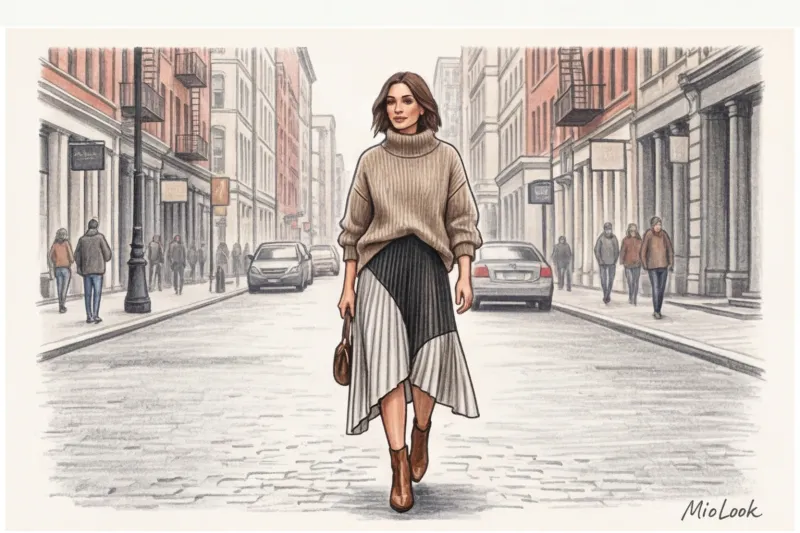
Let's once and for all dispel the stereotype that a beige trench coat, pencil skirt, and classic pumps are essential wardrobe essentials. The idea of a universal "essential" outfit is the biggest marketing myth of the last decades. Every woman has her own essential: for some, it's leather pants and an oversized sweater, while for others, it's a slip dress.
"A basic wardrobe, in its classic sense, often makes a mature woman invisible. Meanwhile, a complex cut, which at 20 seems out of place with a youthful complexion, begins to sound expensive and prestigious at 30."
The philosophy of brands like The Row (created by the Olsen sisters) or the old Celine of the Phoebe Philo era perfectly exemplifies this principle. They don't make tight sheath dresses. They offer deconstruction: asymmetrical hems, exaggeratedly long sleeves, palazzo pants with pleats. These are pieces that require a certain posture and life experience. It's after 30 that avant-garde elements cease to seem like an attempt to shock the public and become a sign of deep, intellectual taste.
The three pillars of the new style: texture, fit, and architecture
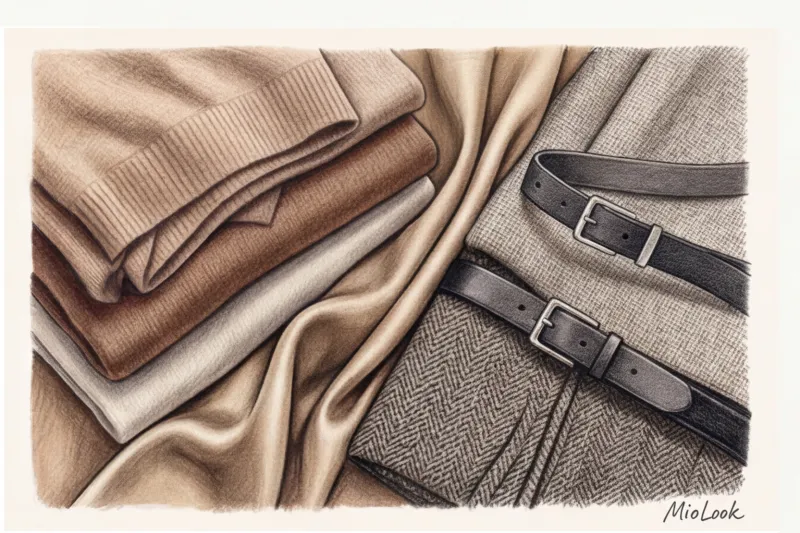
If you want to look expensive and modern, forget about obsessing over color. Three completely different parameters come to the fore.
1. Texture is more important than color. Black polyester and black cashmere are two different colors. Cheap, shiny viscose will ruin even the most ingenious design. Switch to dense silk, structured wool, cashmere, and cotton blends (at least 180 g/m²). Stylist's advice: Always do a wrinkle test in the store. Squeeze the fabric in your fist for 10 seconds. If it's still wrinkled like a Shar Pei, leave the item on the rail, no matter how beautifully it hangs.
2. Landing as a status marker. I never tire of telling my clients: a €50 Zara jacket that you take to a tailor and have it tailored to your body (shorten the sleeves, take in the waist) will look more luxurious than a €500 designer jacket that's hanging loosely where it shouldn't. Invest in a good tailor—it's your best style investment.
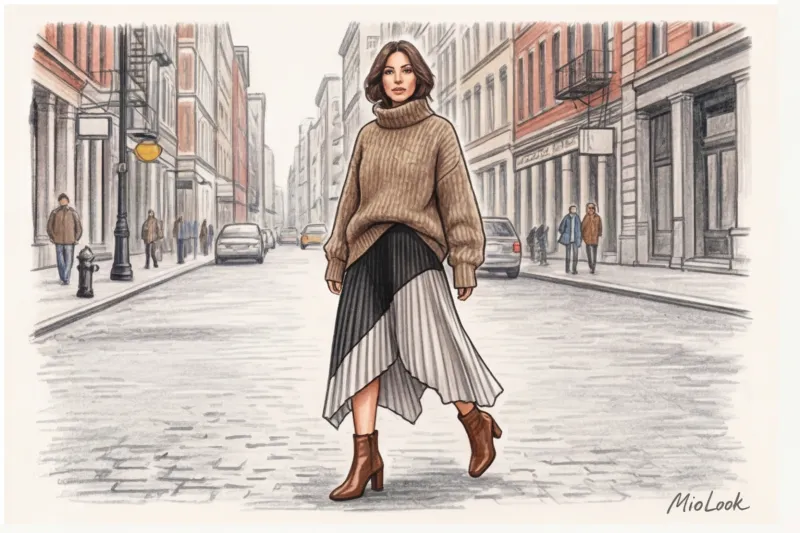
3. Silhouette architecture. We're moving away from total body-hugging. The modern silhouette is built on a semi-fit or a carefully considered oversize fit. If you choose a voluminous jacket with a sharp shoulder line, balance it with a slim hem or show off your slender ankles and wrists.
Access to MioLook for €0.99 — one-time payment
A smart AI stylist will select the perfect look based on your proportions and texture.
Get access — €0.99 onceWardrobe Inventory: What to Leave Behind
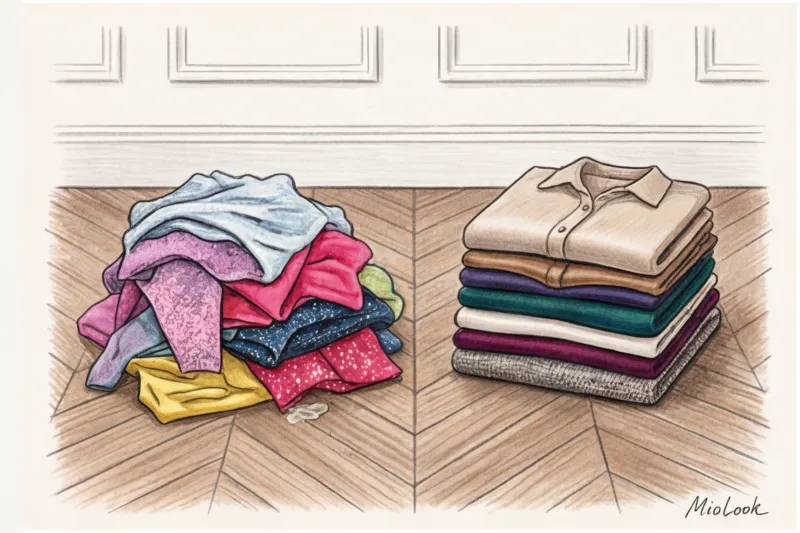
According to statistics supported by the Pareto principle, most women wear only 20% of their clothes 80% of the time. The remaining 80% of your wardrobe is visual noise that drains your energy in the morning and makes you utter the proverbial "I have nothing to wear" cry.
What needs to leave your closet immediately?
- Flimsy knitwear: Turtlenecks that show through and cardigans that lose their shape after the first wash.
- Micro-trends and logomania: T-shirts with huge brand logos betray insecurity. True luxury whispers, not shouts.
- "Deferred Life Syndrome": Dresses that are waiting for you to lose 5 kilograms. You live today, and your wardrobe should accommodate your body as it is.
When deciding to buy or get rid of something, use the rule Cost Per Wear (CPW) — the price per appearance. Divide the cost of the item by the expected number of appearances. A high-quality wool coat for €300, which you'll wear 150 times over three seasons, costs €2 per appearance. A trendy sequin top for €40, worn once to a corporate event, costs €40 per appearance. Let me clarify right away: this rule does NOT apply to black tie dress codes and wedding dresses; different investment laws apply there.
Building a New Vector: A Step-by-Step Transformation Plan
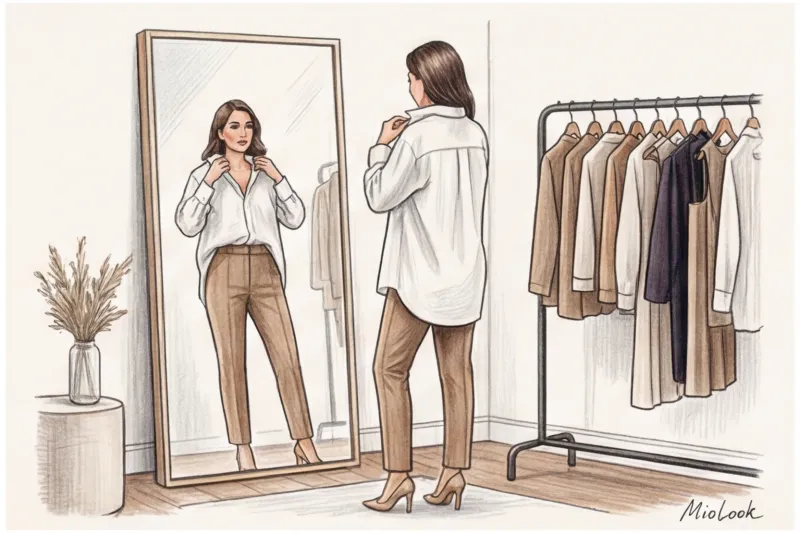
Style transformation is a project, and it needs to be approached with clear KPIs. Here's a step-by-step guide that works without fail.
Step 1: Assembling a reality mood board. Don't save images of women walking in heels on the cobblestones of Milan if your reality is a hybrid office, car rides, and dog walks. Look for references among women in your profession or with a similar lifestyle. Aim: collect 20-30 looks you could wear. right tomorrow.
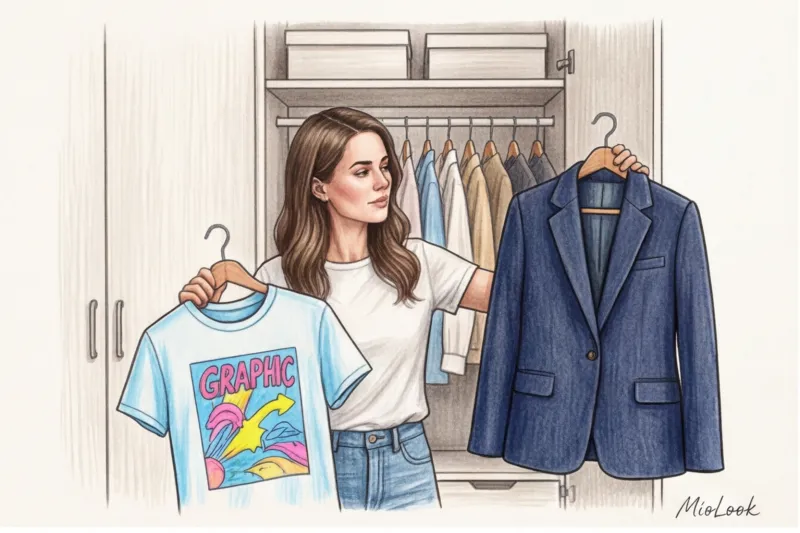
Step 2: Identify your “uniform.” Select 2-3 recurring silhouettes from your mood board. This could be a combination of straight jeans, a silk blouse, and loafers. Or a structured two-piece suit with a basic T-shirt. This is your uniform for days when you don't have time to think.
Step 3: High-low mix strategy. Don't try to buy everything new at once. Invest your budget selectively (high) – in outerwear, shoes, and bags, and buy base layers (T-shirts, simple turtlenecks) in the mid-range (30–80 €) (low). This is where technology comes to the rescue: the smart wardrobe function MioLook allows artificial intelligence to analyze your current items and suggest what to buy one An item (for example, the correct jacket) will unlock 10 new looks from your old inventory.
The Role of Accessories in a 30+ Wardrobe
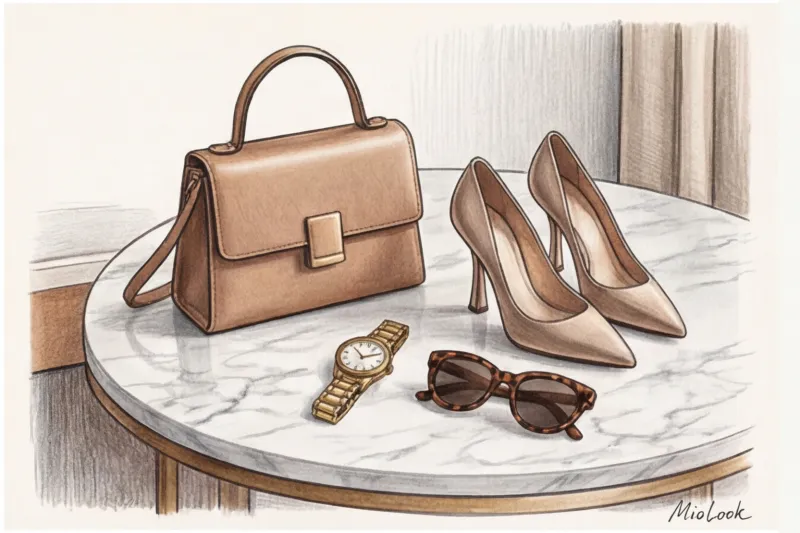
While at 20, youth and radiant skin can elevate your look, at 30, accessories become your primary tool. Shoes and bags are your style investment portfolio.
A single, structured, shape-shifting bag made of quality leather can salvage even the most casual jeans-and-white-T-shirt look. It sends the message, "I dressed casually because I wanted to, not for lack of effort."
As you age, it's best to avoid jingling fast-fashion jewelry, which oxidizes within a week. Instead, switch to statement jewelry: sculptural rings, chunky vintage clip-on earrings, and quality watches. Even if you're wearing a simple black cashmere sweater, the right pair of horn-rimmed glasses and a men's watch on a leather strap instantly add depth and intelligence to your look. We discussed how details shape perception in more detail in this article. evening wardrobe in a minimalist style.
Checklist: 5 Signs Your New Style Is Working
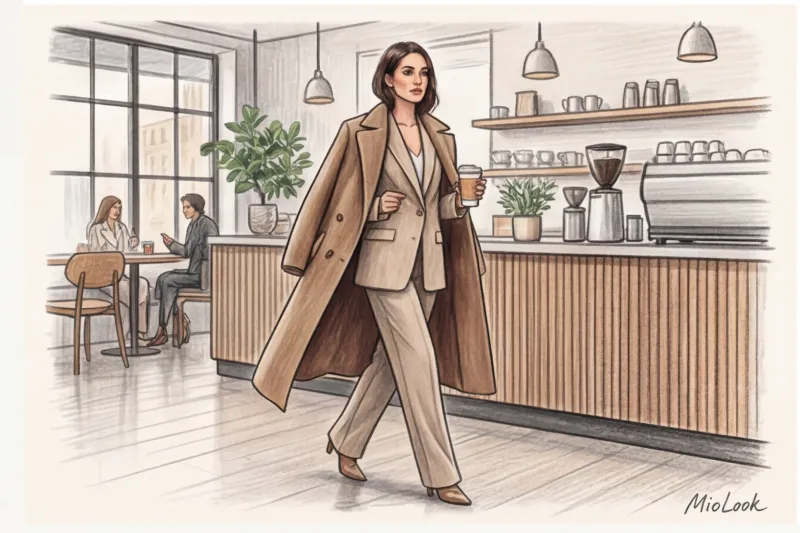
Style isn't about how many things are in your closet. It's about how you feel in them. Check your current wardrobe against these 5 markers:
- Stress-free morning: You need less than 10 minutes to get ready because the things inside the capsule fit together with your eyes closed.
- Change of focus: You receive compliments on your energy, freshness, and overall appearance (“You look amazing!”), rather than on a specific dress (“What a beautiful dress, where did you buy it?”).
- Universal Applicability: In your everyday look, you feel equally confident whether you're attending an unplanned meeting with the CEO or a spontaneous dinner with friends in the evening.
- Freedom of movement: Your clothes don't restrict you. You don't adjust your straps, tug at your skirt, or suck in your stomach throughout the day.
- Mindful Shopping: Your purchases have become rare but targeted. You enter the store knowing exactly what you're looking for and don't fall for sales.
Transforming your style after 30 is an exciting process of discovering a new version of yourself. Don't be afraid to let go of the old: by clearing out your closet, you're making room for new energy, new career heights, and a level of confidence that money can't buy.