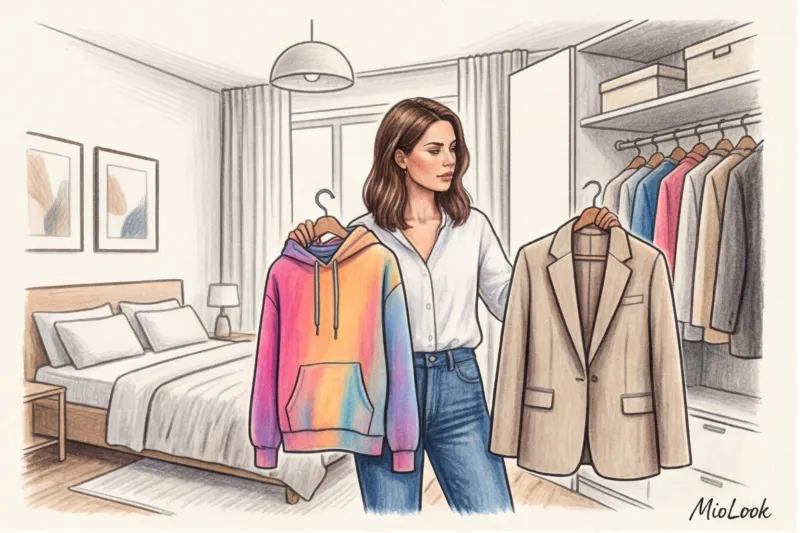
Over 12 years of working as a stylist and fashion journalist, I've noticed a paradoxical pattern: the most dangerous age for a woman's wardrobe is her thirties. It's at this age that we suddenly decide it's time to get "serious." Many girls wonder, How to change your style at 30 , and they make the same fatal mistake: they confuse elegance with premature aging and conservatism.
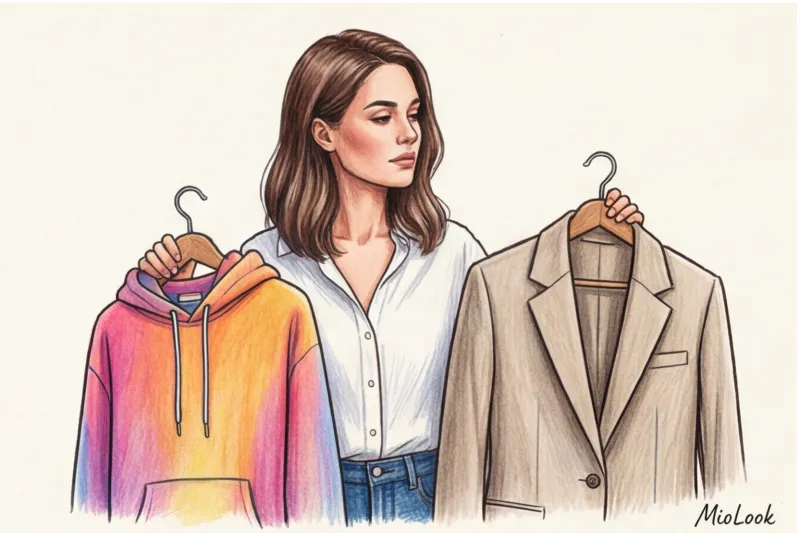
I've seen it hundreds of times. Yesterday's rebel in vintage Levi's jeans and a leather biker jacket decides her status now demands tweed and pearls. She throws away her favorite hoodies, buys three stiff sheath dresses, and... visually adds 15 years to her age. We've written more about the eco-friendly approach to such changes in our The complete guide to changing your style without breaking the bank Spoiler: You don't have to burn bridges and completely renounce your past.
The Psychology of Transition: Why a Wardrobe Crisis Happens at 30
By the age of thirty, our lives often undergo tectonic shifts. A transition to a leadership position, motherhood, a change of environment, or simply the internal feeling of "I've grown up" require a new visual language. An irresistible illusion of a "clean slate" arises—a psychological urge to clear out the closet and start anew.
But let's look at the numbers. In 2023, a study by the Ellen MacArthur Foundation confirmed a frightening statistic: the average woman wears an item of clothing only 7-10 times before discarding it. A radical closet cleanout isn't just a blow to your budget; it's an environmental crime.
In fact, about 80% of your current wardrobe can be adapted to a new stage of life. Style evolution always works better than revolution. Your task is not to amputate the part of you that loved sneakers and bright colors, but to learn to integrate them into a new, more mature context.
The "Auntie" Syndrome: The Main Mistake of Those Thinking About Changing Their Style at 30
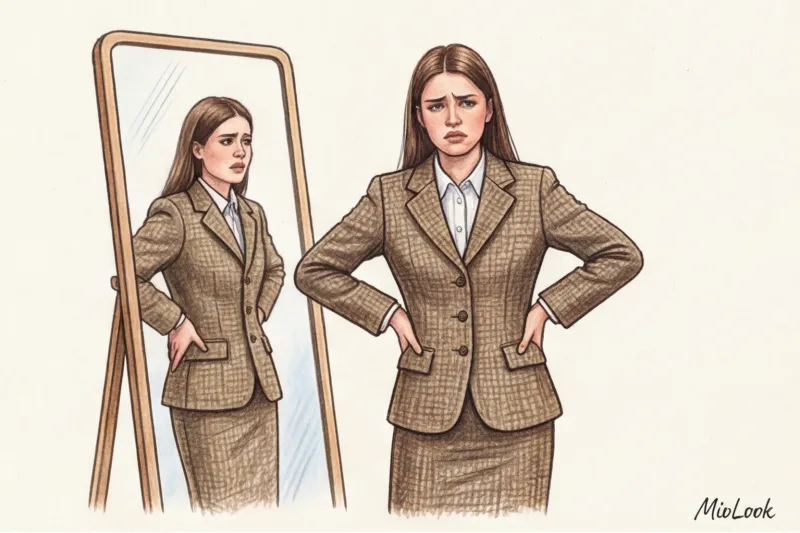
The biggest myth about turning 30 is that to look classy, you have to ditch casual clothes for a strict "beige uniform." This stereotype is the source of the infamous "auntie syndrome."
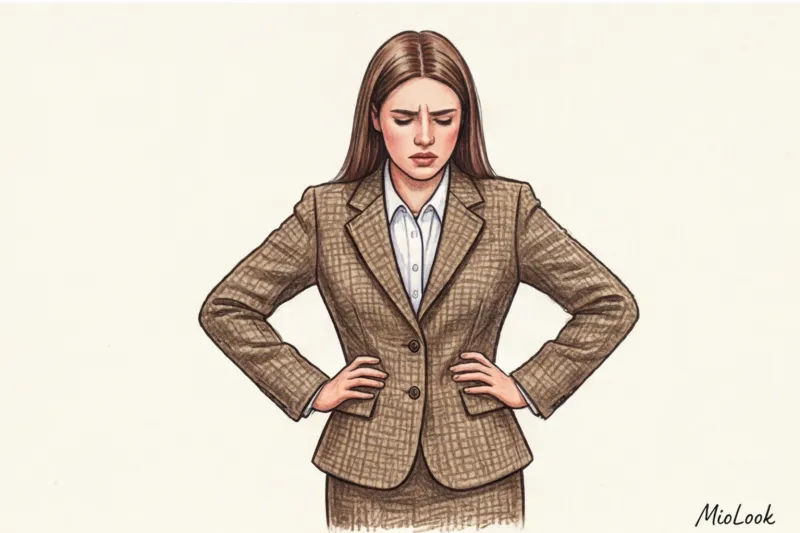
One of my clients, a 32-year-old marketing director, came to me in despair. Trying to fit in with her job title, she started wearing thick, button-down blouses with bows and pencil skirts that hit just below the knee. "I feel like a conservative politician from the 1990s at meetings." " she complained. Trying to look "expensive" by literally quoting old-fashioned classics had killed her individuality and deprived her image of modern dynamism.
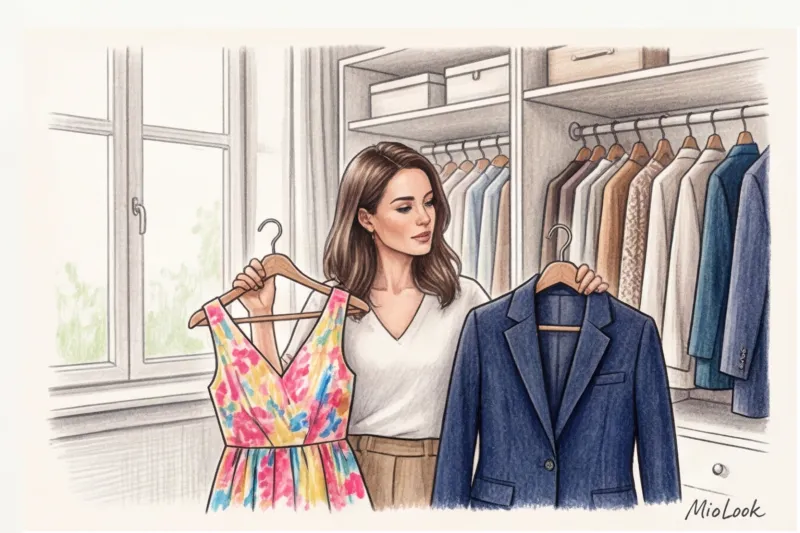
Modern elegance has nothing in common with the rigid dress codes of bank tellers of the last century. It's fluid, ironic, and comfortable. Pearls are now worn not with a tweed jacket, but with a simple white T-shirt made of thick cotton and relaxed trousers.
Access to MioLook for €0.99 — one-time payment
A smart AI stylist will select the perfect look based on your new styling goals and help you avoid the effect of "premature aging."
Get access — €0.99 onceWardrobe Evolution: Achieving Elegance Without Radical Cleanups
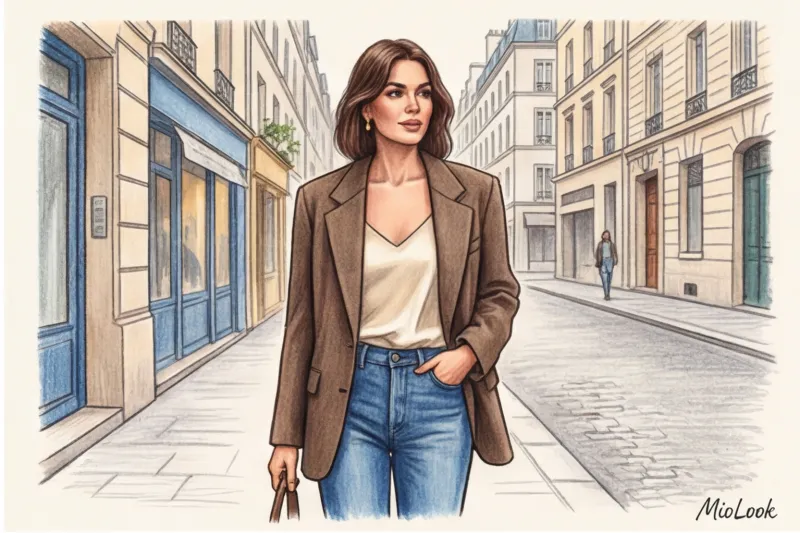
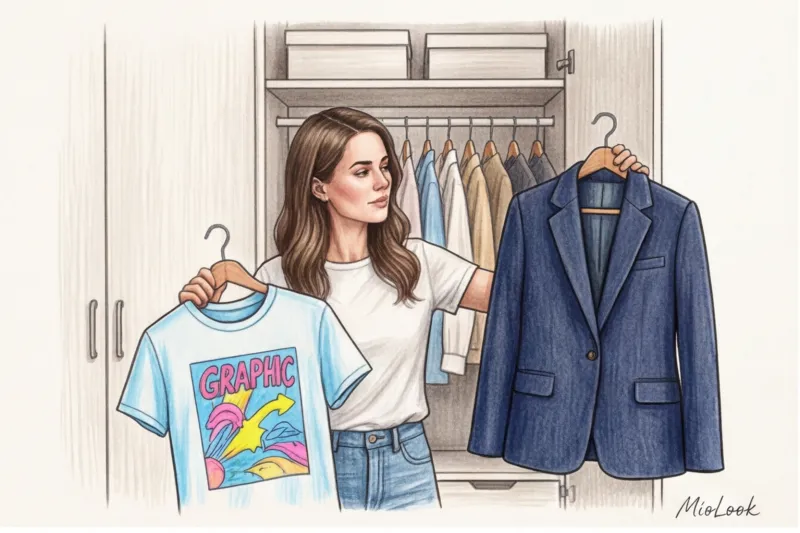
If you're not ready to part with your favorite hoodies and slogan tees, don't! I use a technique in my work that I call "increasing the degree of texture." The idea is to combine a relaxed piece from your 20s with a distinctly structured, elegant element.
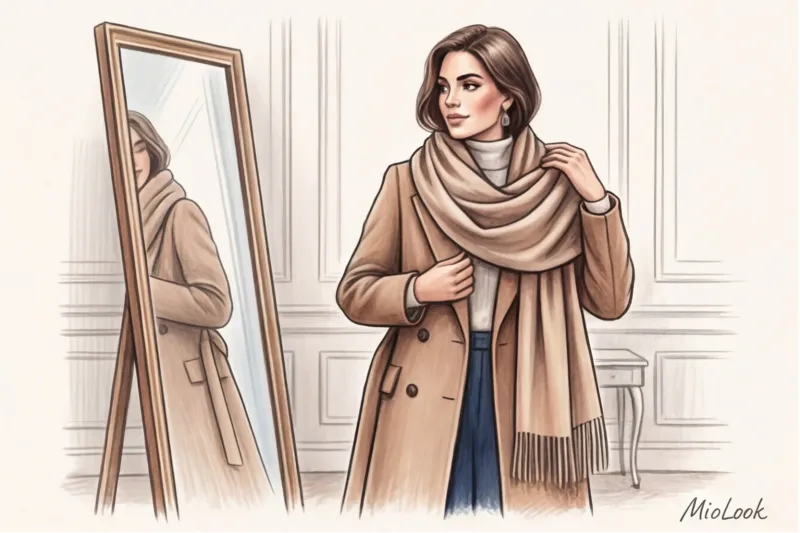
For example, an oversized gray hoodie looks youthful with leggings, but wear it under a tailored camel-colored double-breasted coat paired with leather ankle boots, and you'll get a look straight out of Scandinavian Vogue. To avoid the hassle of such unconventional combinations, I often recommend using smart wardrobe feature in MioLook , which perfectly shows how to “make friends” between different stylistic eras of your wardrobe.
The "Anchor Point" Rule: Fabrics Make All the Difference
At 30, cheap textures become the biggest betrayal of your style. Things that were easily forgiven in your student years (flimsy polyester, knitwear that stretched out at the knees, acrylic sweaters that squeaked in your hands) now mercilessly cheapen your look.
- Forget about abstract “high quality”: Look for specific measurements. If it's cotton, then a density of at least 180 g/m². If it's silk, then at least 16 momme.
- Change from tight to semi-tight: There should be air between the fabric and the body (at least 2-3 centimeters of freedom).
- Invest in tactility: cashmere, thick viscose, good quality suit wool.
Fair Limit: Dense, structured fabrics can add visual volume. If you have a distinctly romantic figure with sloping shoulders and soft lines (according to Kibbe), a stiff wool suit can look like a strange shell on you. In this case, opt for a dense yet fluid silk or heavy viscose.
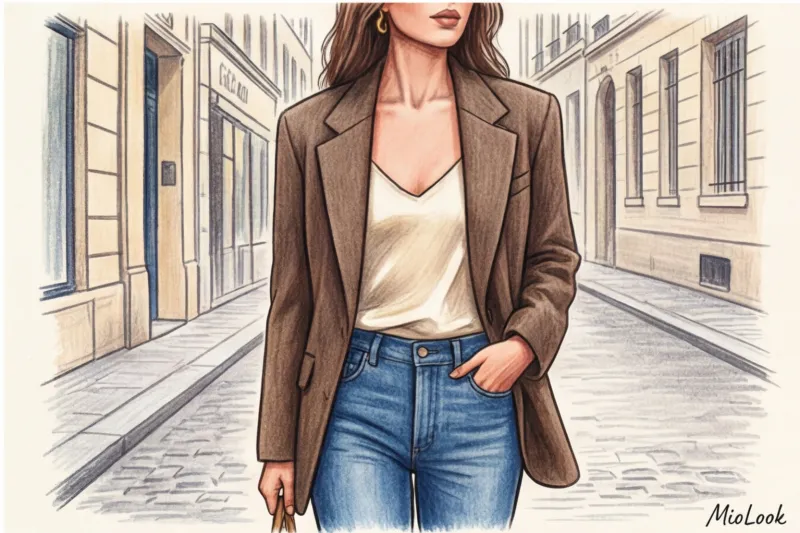
Silhouette architecture: from oversized to structured
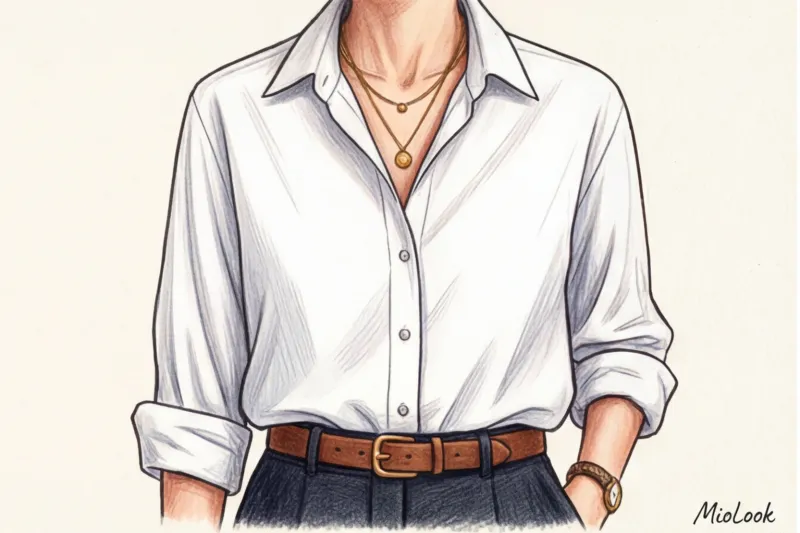
The shapeless oversize style we've been hiding in for the past ten years is gradually giving way to precise tailoring. It's appropriate to recall Christian Dior's revolution and his New Look of 1947. Dior restored body structure to women: an accentuated shoulder line and a defined waist.
Today we don't squeeze ourselves into corsets, but the principle of architecture remains relevant. The "tent hoodie" is being replaced by Tailored oversize — jackets and coats that have a defined, almost masculine shoulder line but remain loose in the torso. This silhouette instantly ties together an outfit, conveying to others, "I'm in control of my life."
The Formula of Parisian Elegance for Thirty-Year-Olds
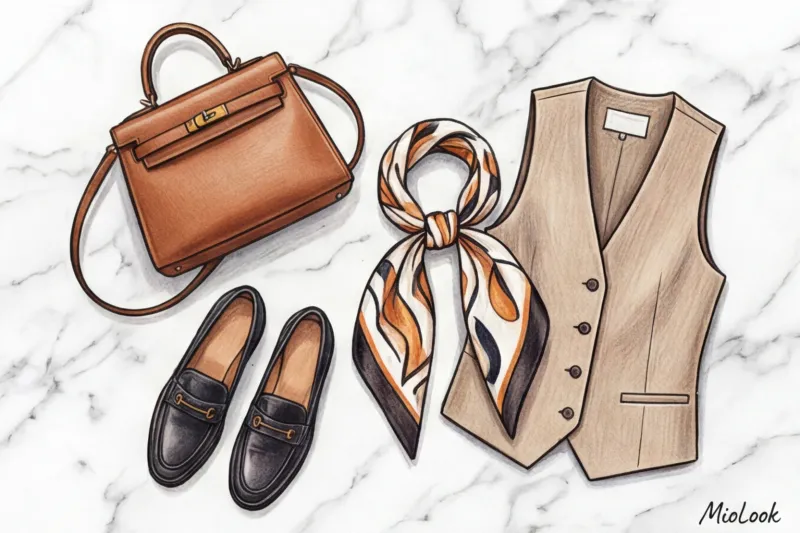
While working at Paris Fashion Week, I spent hours observing the editors of French glossy magazines. Forget the cartoonish berets and striped shirts with red lipstick. True Parisian elegance is built on the rule Je ne sais quoi (“I don’t know what” – that same elusive carelessness) and the concept of High-Low dressing (a combination of high and low).
French women over 30 masterfully downplay the pretentiousness of expensive items. They can wear an impeccably tailored €1,500 tuxedo, but leave their hair slightly tousled, as if they just rolled out of bed. Or they can pair a luxurious silk blouse with distressed, cut-off jeans.
However, there's an important nuance here: this deliberate casualness works only when paired with classy shoes and a bag. Leather loafers or ankle boots with the perfect last will elevate even the simplest pairing of straight jeans and a cashmere sweater. Accessories act as a frame, transforming a sketch into a painting.
Your ideal image begins Here
Join thousands of users who look flawless every day with MioLook. Upload your items and get ready-made look formulas.
Get access — €0.99 onceA Step-by-Step Plan: How to Update Your Style Eco-Friendly (Checklist)
Now let's move from theory to practice. If you're wondering, How to change your style at 30 Without spending my annual budget, here's the algorithm I use when auditing my wardrobe.
- Step 1: Audit of the quality of invoices. Take out all your clothes and check them for flimsiness. Keep only those that hold their shape. When buying new basics, always consider the Cost-Per-Wear index. A perfect pair of €150 wool pants that you'll wear 100 times (€1.50 per wear) will end up costing you less than a pair of €30 polyester pants that will lose their shape after three washes (€10 per wear).
- Step 2: Select 2-3 key formulas. Don't just put together an abstract "basic wardrobe from the internet." Create a uniform tailored to your real-world needs. For example, for an interview at an IT company with a casual dress code, a great formula would be: wide-leg trousers with creases + a white T-shirt + a structured jacket + white leather sneakers.
- Step 3: Strategically update your footwear. Swap out canvas sneakers for minimalist leather sneakers, and swap out round ballet flats for pointed-toe loafers or Mary Janes. The shape of the toe dramatically changes the overall silhouette.
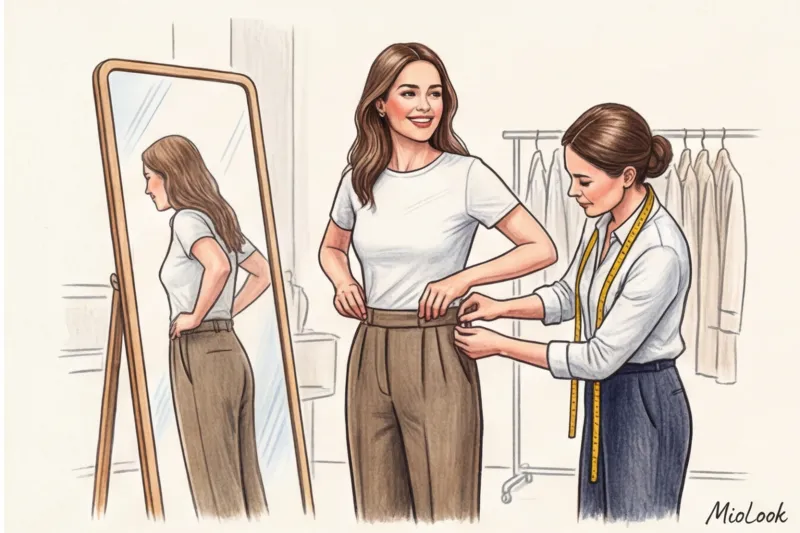
- Step 4: Find your tailor. This is an insider secret that 90% of women miss. A perfect fit is the ultimate status symbol. A €60 mass-market jacket, tailored to your exact waist and sleeve length for €20 by a tailor at a tailor shop, will look like a €500 designer piece.
Conclusion: Elegance as a reflection of your inner growth
Finding the answer to the question of how to change your style at 30 isn't about a set of rigid rules or a ban on miniskirts. According to the analytical agency WGSN (2024), today's consumers are increasingly moving away from strict age boundaries in clothing, emphasizing personal comfort and mindful consumption.
Turning 30 gives us a luxurious advantage: we finally stop trying to please others and begin to deeply understand our bodies. The evolution of your wardrobe should reflect this inner peace. Invest in quality fabrics, don't be lazy about getting tailored pieces, and boldly blend the boldness of youth with the architecture of a mature silhouette. After all, true style begins when you stop playing someone else's role.