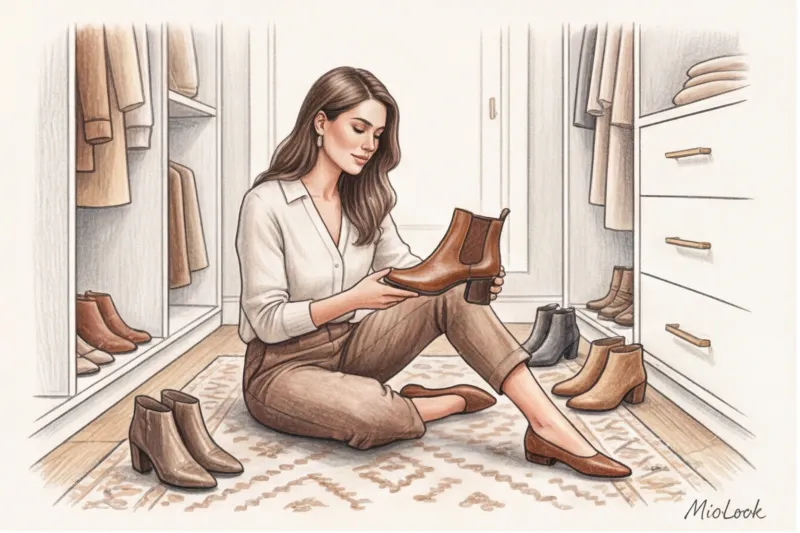
In 12 years of working as a stylist, I've learned one cruel but fair rule: you can be dressed in flowing silk from The Row and impeccable cashmere, but if your leather ankle boots look like they've survived the apocalypse, the magic of the look is instantly ruined. Many sincerely believe that the secret to an "expensive" wardrobe lies in endless shopping and the search for the perfect brands. But the truth is, How to care for shoes , defines your style much more than the logo on the insole.
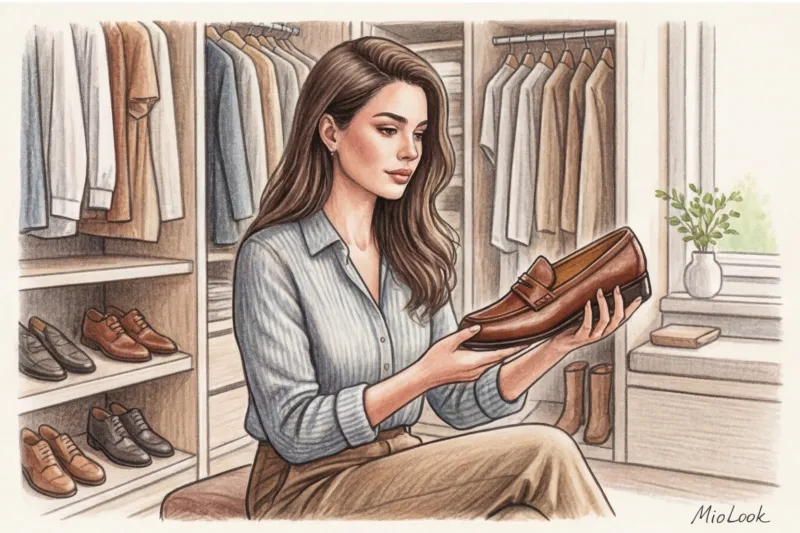
We talked about the integrated approach to conscious style in more detail in our the complete guide to eco-friendly clothing care Today, I propose transforming the routine of shoe cleaning from a boring chore into an engaging investment strategy. We'll combine ecology, savings, and impeccable style with a touch of Mediterranean pragmatism.
Cost-per-wear philosophy: why shoe care matters more than brand
Let's do the math. Shoes bear a tremendous amount of physical stress: friction, your body weight, street chemicals, temperature fluctuations. They're truly "consumables" in your wardrobe.
Imagine you bought a pair of basic pumps from a mass-market store for €50. They lose their shape after one season (about 20 wears). The cost-per-wear (CPR) is €2.50. Now, consider a pair of high-quality leather loafers for €200. With proper care, they'll last you at least 5 years (say, 200 wears). Their CPR drops to €1! You'll look significantly more prestigious while paying less.
There's also a powerful environmental benefit here. According to statistics from the respected British organization WRAP UK (2023), extending the lifespan of an item by just nine months reduces its carbon footprint by 20–30%. Every pair saved means one less non-recyclable polyurethane sole going into landfill.
The Stylists' Main Secret: The "48-Hour Rule" for Perfect Shape
Do you know why your favorite pair of shoes, which you wear nonstop, quickly lose their shape and start to smell bad? It's all about basic physics. During the day, your feet release about 20 milliliters of moisture (sweat). Genuine leather, like a sponge, absorbs it from the inside.
If you put the same damp shoes on again the next morning, the softened leather will immediately deform under the pressure of your foot. Unsightly creases form, and the last will "come apart."
The durability formula from professional shoemakers is: 1 day of wear = 2 days of rest in a well-ventilated area. Leather requires 24 to 48 hours for moisture to completely evaporate.
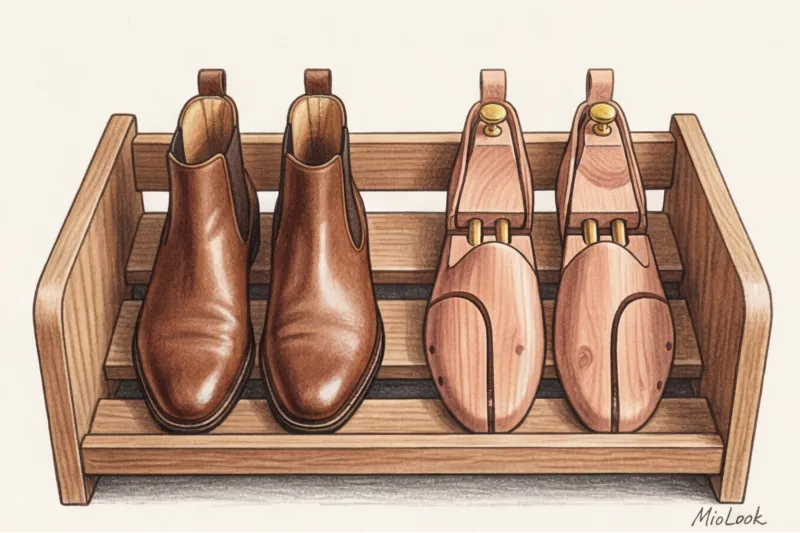
Of course, this advice doesn't work if your basic wardrobe only includes one pair of shoes per season. That's why a capsule approach always involves having at least two alternating pairs (for example, Chelsea boots and loafers for fall).
Access to MioLook for €0.99 — one-time payment
A smart AI stylist will help you create your wardrobe so that every pair of shoes has a replacement, and your looks remain flawless.
Get access — €0.99 onceTree mold holders are an investment that pays for itself within a month.
One of my clients in Madrid consistently threw out her expensive Oxfords every season because of deep, unsightly cracks at the folds. While sorting through her wardrobe, I discovered the cause: she'd been drying her damp shoes near the radiator (the worst thing you can do to leather!) and inserting cheap plastic shoe stretchers inside.
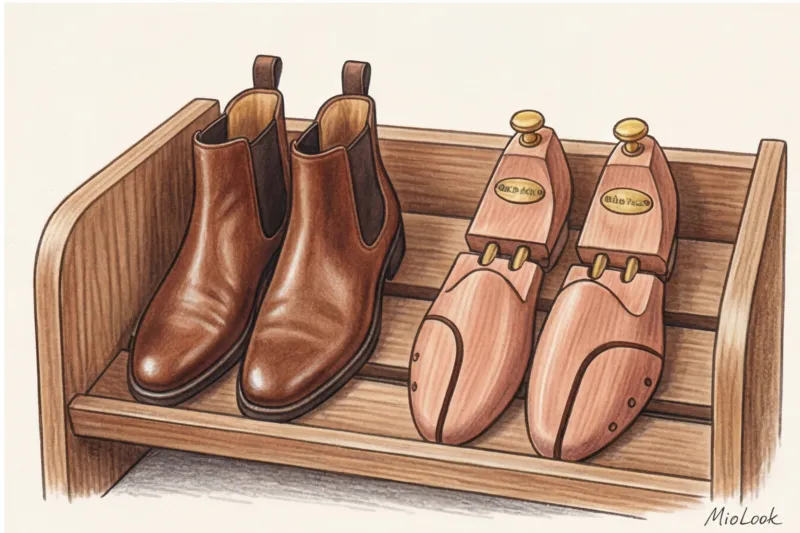
We immediately bought cedar shoe trees for €35, and the next pair lasted her five years, looking like new. Why unvarnished cedar?
- It works like a sponge: Natural wood actively draws out that invisible moisture from the lining.
- Antibacterial effect: Cedarwood essential oils neutralize bacteria and odor without synthetic deodorants.
- Tension: The pad smooths out micro-creases while the skin is still warm and pliable after removal.
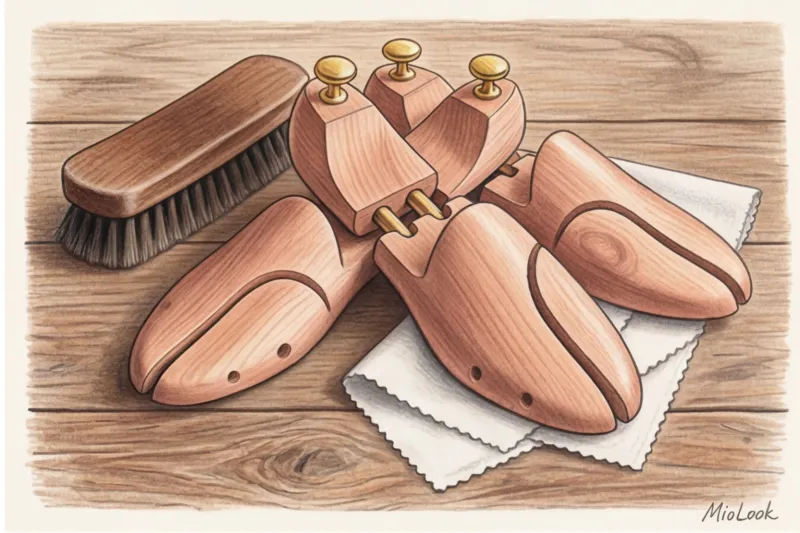
An important nuance: Never insert shoe trees into shoes that have been completely soaked by rain. Let them dry at room temperature for 2-3 hours first, otherwise the wood will warp the soaked leather.
An eco-friendly beauty routine: how to care for your shoes without toxic chemicals
Now I'm going to bust a myth that marketers have been hammering into our heads for decades. Popular silicone polishing sponges for €3 and express wet shoe wipes don't take care of their skin They are slowly killing her.
As shoe repair specialists (cordovans) point out, silicone acts as a carcinogen on natural materials. It clogs the pores. The leather stops breathing, loses its natural moisture, and begins to dry out. You may see a temporary shine, but after a month or two, deep, irreparable cracks appear along the folds.
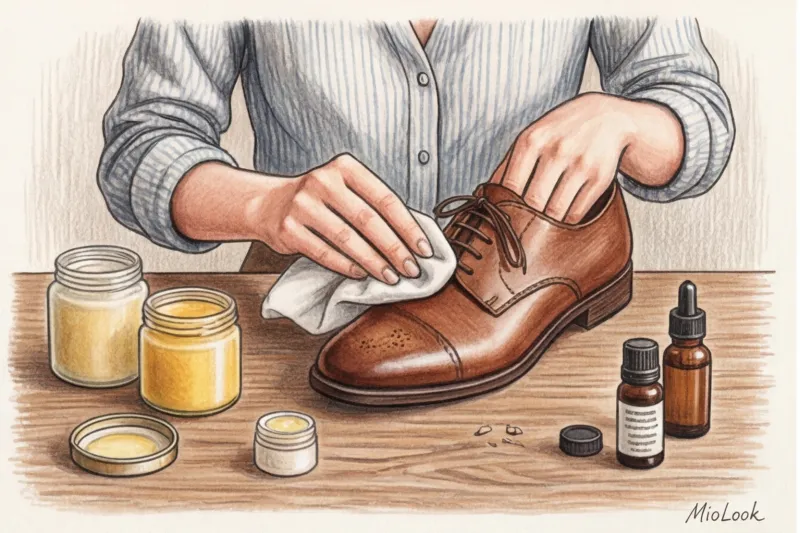
A basic and safe care kit should include:
- A stiff horsehair brush (for dusting and polishing).
- A cotton napkin (you can use an old quality T-shirt).
- Natural wax or cream based on beeswax and vegetable oils.
Cleansing: Avoid harsh methods and the washing machine
No washing machines for sneakers and shoes! At temperatures above 30°C, industrial shoe glue begins to break down, and the cushioning foam in the sole (EVA) loses its properties. For heavy soiling, use a damp cloth and natural Marseille soap.
Nutrition and protection: deep hydration of the material
The leather of your shoes needs moisturizing just like the skin on your face. Apply the cream in very thin layers using circular motions. Let it soak in for at least 15-20 minutes (ideally, leave it on overnight). Only then should you begin the final polishing with a brush: the friction will warm up the remaining wax, creating a natural protective barrier.
Ready to get started?
Try the MioLook plan for free—no commitments required. Organize your wardrobe and find the perfect combinations.
Get access — €0.99 onceMaterials: leather, suede, nubuck and modern eco-alternatives
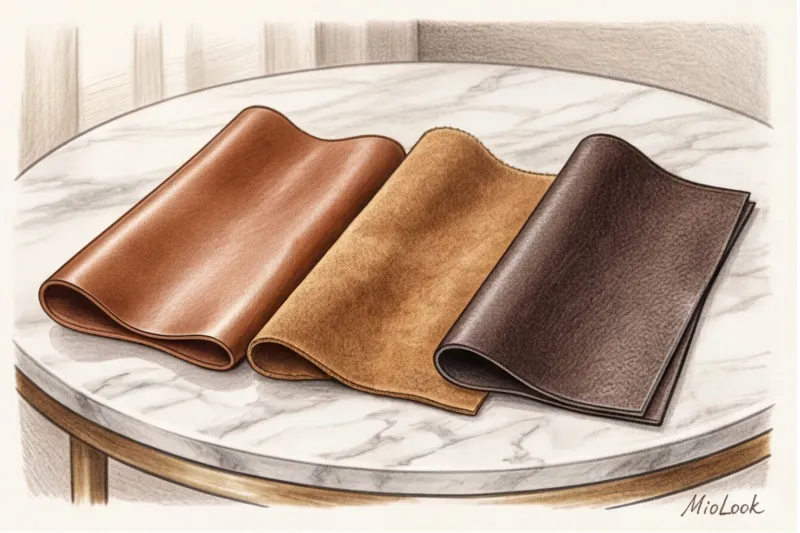
According to the Leather Working Group (LWG) 2024 standards, sustainable tanned leather requires a completely different approach to care than previous generation materials.
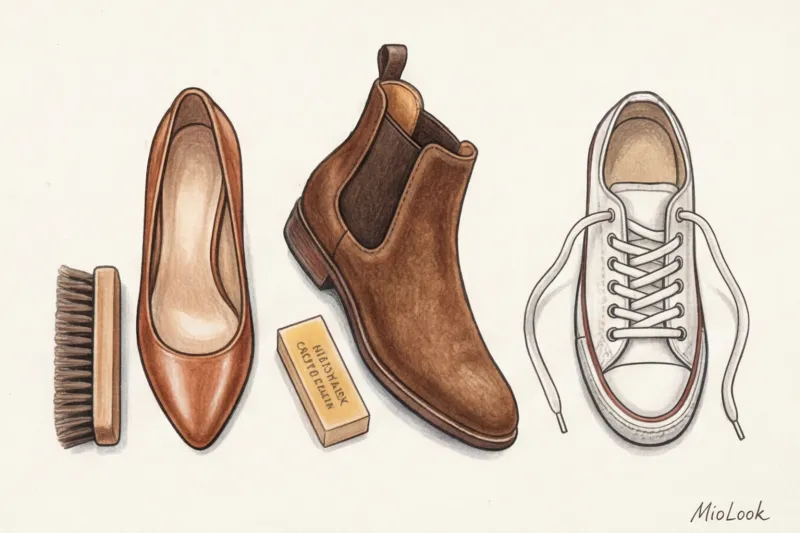
Smooth skin requires an emphasis on moisturizing (creams) and protection (waxes). But what about other materials?
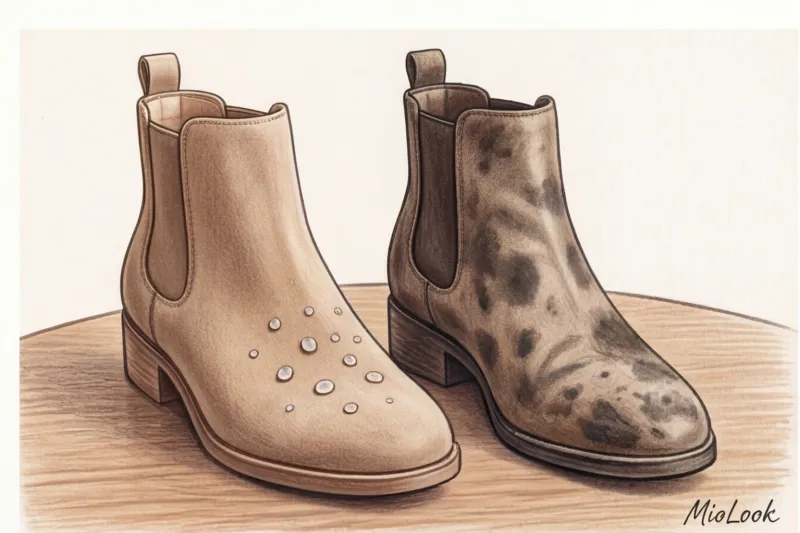
Capricious suede and nubuck: Their main enemy is water. Forget about wet cleaning. Your arsenal should include a crepe brush (with rubber bristles) to lift the nap, and a special shoe eraser to remove localized stains. Once a season, suede should be treated with a water-based water-repellent spray (fluorocarbon-free!).
Eco-leather (vegan leather): Caution is required here. Technically, most mass-market "eco-leather" is a polyurethane (PU) coating on a fabric backing. This material is physically incapable of absorbing nourishing creams. If you apply expensive beeswax to polyurethane shoes, it will simply remain as a sticky film on the surface, collecting all the street dust. For eco-leather, regular wiping with a damp cloth and treatment with gentle protective sprays against cracking are sufficient.
Seasonal "hibernation": a checklist for preparing shoes for storage
In the humid Mediterranean climate where I often live, leather shoes that aren't properly stored for the summer become covered in gray mold within a couple of months. To avoid surprises when the season changes, keep this checklist:
- Deep cleaning: Wash the sole, remove all dust and old cream.
- Maximum power: Apply a double layer of cream and don't polish it to a shine - let it work as a protective mask.
- Mould holders: Insert wooden shoe trees or, as a last resort, stuff the shoes tightly with acid-free paper (do not use newspapers, as the printing ink may transfer to the lining).
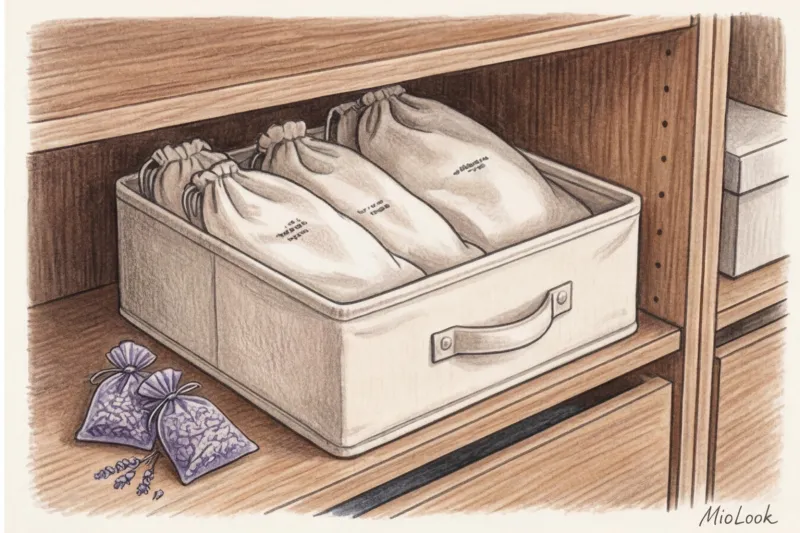
- Breathable covers: Use dusters made of thick cotton or linen. No plastic bags! Moisture condenses in plastic, which guarantees the growth of mold.
- Aroma protection: Place a sachet of natural lavender in the box to repel moths.
When it's time to see a professional: the limits of home care
As much as you love the meditative process of polishing your shoes on a Sunday morning, there are strict limits to home care.
What do we do at home? Nutrition, light cleaning, removing whitish salt stains (a 1:1 solution of water and white vinegar works great). What do we take to a professional for?
Firstly, replacing heels This needs to be done. before that , as the heel itself wore out. Restoring the heel's geometry will cost three times more than a regular heel replacement.
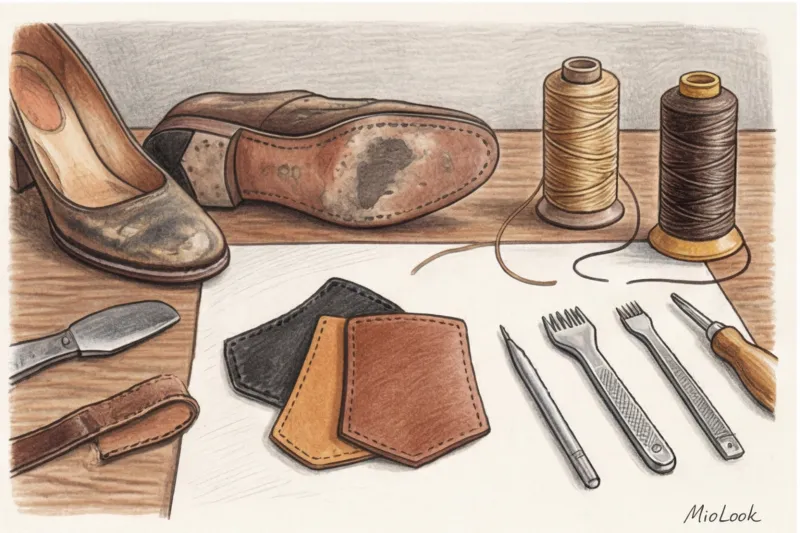
Secondly, prevention of leather soles My main professional advice: if you bought expensive shoes with thin leather soles (from classic men's Oxfords to elegant women's pumps), never wear them outside. Take the pair straight from the boutique to a shoe repair specialist. A thin rubber lining installed on a new sole will protect the shoes from wear on the pavement and getting soaked in puddles, extending their life by a decade.
Proper and eco-friendly shoe care isn't a chore or a waste of time. It's a beautiful ritual of respect for your belongings, the work of the artisans who created them, and your wallet. When you take systematic care of your wardrobe, you stop being held hostage by constant purchases. Treat your shoes like a fine wine: with proper storage and care, they only become more refined over time, acquiring that vintage patina that cannot be imitated in a factory.