"How much should I save for clothes to look stylish?"—you know what financial gurus usually answer to this question? "Ten percent of my income." And frankly, in 12 years of working as a personal stylist in Europe, I've never encountered more useless and unrealistic advice.

Ten percent of €1,500 and €8,000 represent completely different possibilities. Most importantly, this abstract figure doesn't take into account your current situation: perhaps you have a closet full of excellent basics that's missing a few bold accents, or perhaps you need to build a business wardrobe from scratch after maternity leave.
So today we'll learn how to calculate a wardrobe budget using math, pragmatism, and an analysis of your actual lifestyle. But before we get to the numbers, you need to understand what's hiding in the depths of your closet right now. We covered this in more detail in our The Complete Wardrobe Guide: How to Create a Smart Shopping List.
Why Abstract Clothing Budget Formulas Don't Work
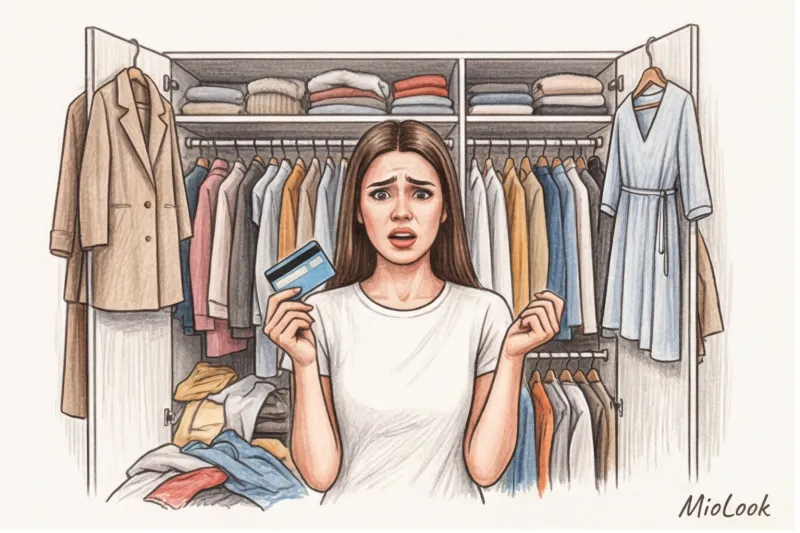
According to a large-scale 2023 study by the British organization WRAP (Waste and Resources Action Programme), approximately 30% of the clothes in Europeans' closets haven't been worn in the past 12 months. In my experience, this figure is even more alarming. Nine out of 10 of my clients' closets contain hundreds (and sometimes thousands) of euros in unworn, tag-less items.
The problem lies in three wardrobe traps:
- Pareto's Law in Your Closet: You wear 20% of your clothes 80% of the time. The other 80% hangs for "special occasions" that come once every three years.
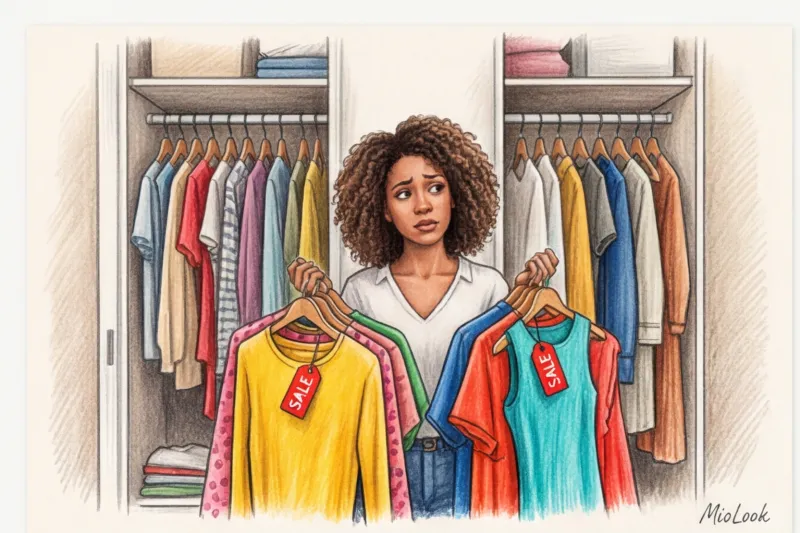
- The illusion of benefit: Spontaneous purchases at seasonal sales “just because there’s a 70% discount” eat up to 40% of your annual budget without solving the “nothing to wear” problem.
- Buying a fantasy: We often buy clothes for the woman we want to be (for example, a bohemian diva in flowing silks), although our real life is an office, a car, and walks with the dog.
Katarzyna's Method: How to Calculate a Wardrobe Budget from Scratch
Let's shift the paradigm. We plan a budget not based on "how much spare money I have," but on "what kind of wardrobe gaps I have." To make the math work, I propose using the concept Cost Per Wear (CPW) — "price for one exit."
CPW Formula: (Item Cost + Care Cost) ÷ Number of Estimated Outlets.
Many people still think that buying cheap clothes is a good deal. I argue the opposite: cheap clothes are too expensive. Let's do the math. You buy a trendy thin polyester top for €15. You wear it twice to parties, and after the first wash, it loses its shape. Your cost per outing: €7.50.
Now let's take a basic 100% merino wool turtleneck from Massimo Dutti or COS for €60. You wear it to the office twice a week for six months (approximately 48 times). Add €10 for a special wool detergent. Your cost per wear: (60 + 10) / 48 = €1.45.
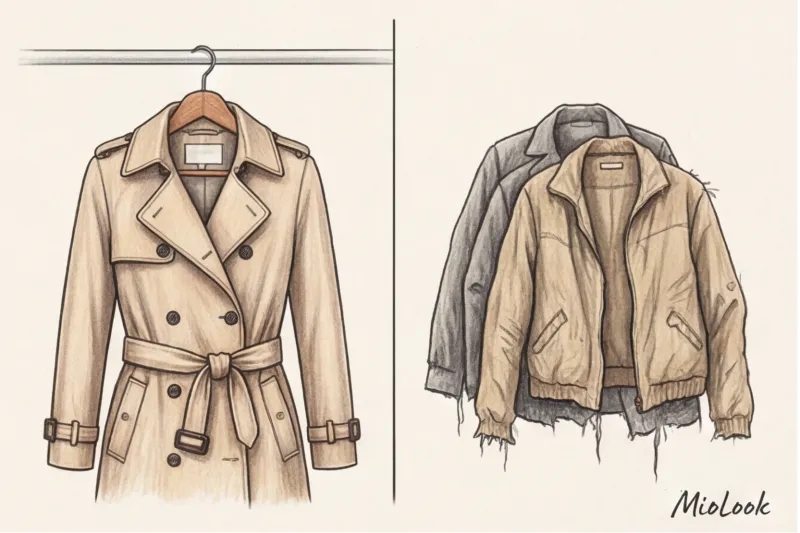
A quality item costs you 5 times less in terms of actual use. That's why you need to budget for workers tools of your style, not one-time trends.
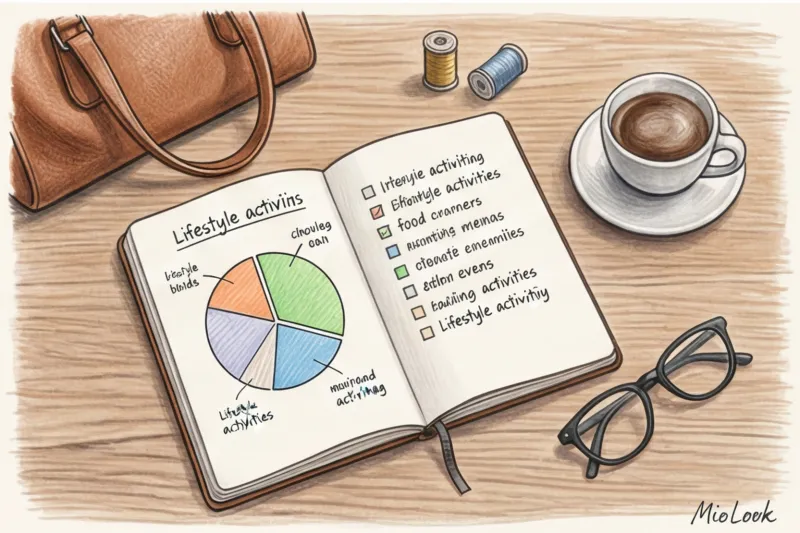
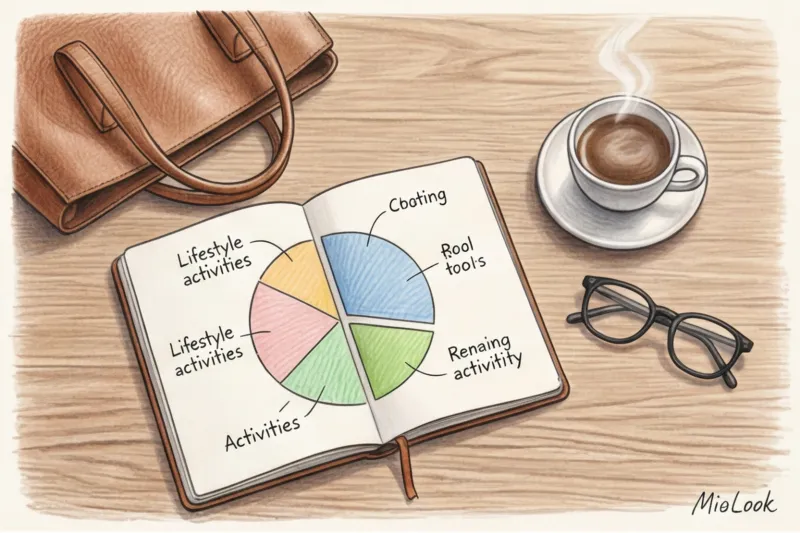
Lifestyle chart (Lifestyle analysis)
To figure out which items will be your "work tools," draw a circle and divide it into pizza-slice sections that represent your week. How much time is spent on sleep, home, the office with a strict dress code, walks with the kids, sports, and evening outs?
The main rule of budget allocation: The percentage of your spending on a particular clothing category should strictly match the percentage of time you spend in it.
A classic rookie mistake is spending 50% of your seasonal budget on flowy dresses and swimsuits for a 14-day vacation. If you spend 70% of your time working in a smart-casual office, that's where the lion's share of your investment should go. To clearly categorize your spending and avoid buying a fifth white shirt, I recommend using wardrobe visualization feature in the MioLook app.
Your perfect look starts here
Join thousands of users who look flawless every day with MioLook. Our smart AI stylist will help you calculate your wardrobe proportions and create looks from what you already own.
Get access — €0.99 onceThe 70/30 Rule: Separating Investments and Fast Trends
To create a functional wardrobe, I use a strict ratio: 70% of the budget goes to the frame, 30% to consumables and mood.
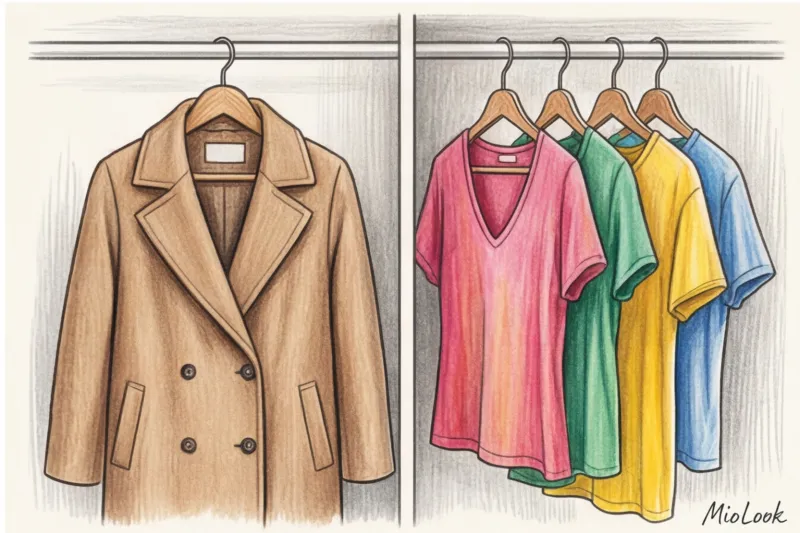
70% (Frame) These are the items that make an image look expensive. Outerwear, shoes, structured bags, perfectly fitting trousers, and high-quality knitwear. Here, we pay for the composition (wool, cashmere, silk) and cut. These items should have a minimum CPW rating, as you'll be wearing them for years.
30% (Consumables and trends) — white T-shirts (which inevitably turn yellow after a season, no matter how much they cost), basic long sleeves, micro-trends (like leopard-print tights or a rhinestone top for New Year's). These are the kinds of things you can and should save on.
When this rule does NOT work: If you work in the creative industry (stylist, art director), where trendy, recognizable pieces from the current season are your work tool and a sign of status, then the ratio may shift to 50/50.
How Much Does a Base Cost?: European Mass-Market Price Analysis (2024)
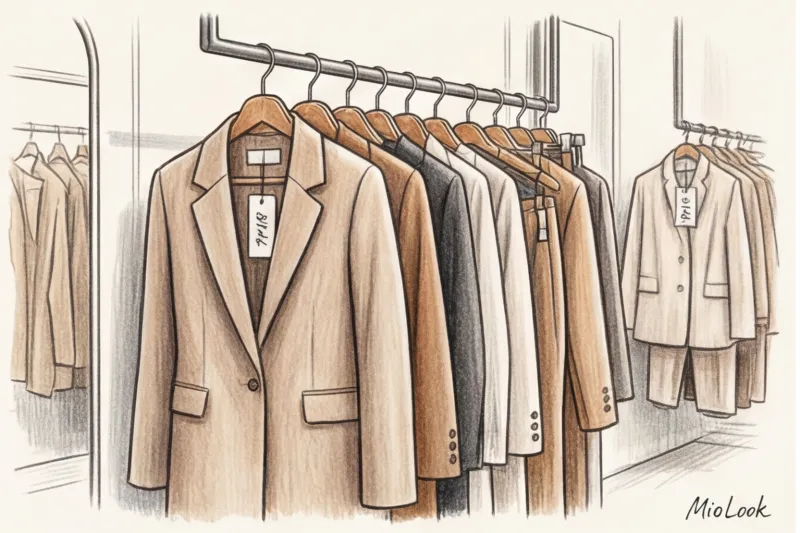
To calculate your wardrobe budget, you need to rely on real figures, not mythical expectations. Forget about a good wool coat for €40—in 2024, that's physically impossible due to the cost of raw materials. Here's a realistic price estimate for the European segment (Zara, H&M Premium, & Other Stories, COS, Massimo Dutti):
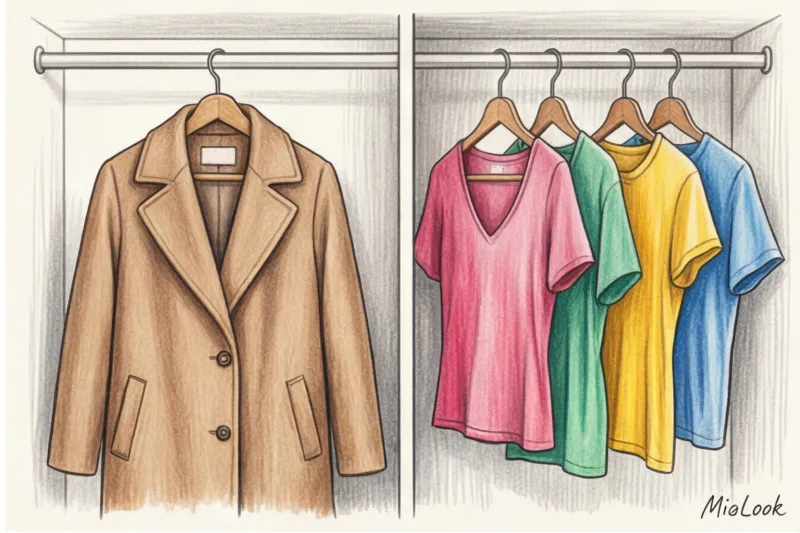
- Wool coat (from 70% wool): The range is €150–€300. The best cuts are traditionally found at Massimo Dutti and the H&M Premium line.
- High quality knitwear: A cashmere or heavy merino sweater will cost you €100–€150. I always send my clients to COS for knitwear—their clothes hold their shape perfectly for years.
- Costume group: Straight-cut jacket (viscose or wool blend) – €90–€150, palazzo or cigarette trousers – €60–€90.
- Shoes made of genuine leather: Basic ankle boots or loafers – €100–€180.
Where to save? Basic cotton (heavyweight cotton T-shirts from 180 g/m²), denim, and statement jewelry are easy to find at Zara or Uniqlo for €20–€50. Pro tip: an expensive double-breasted Massimo Dutti coat paired with regular Zara jeans and a simple white T-shirt will look like something straight out of Fashion Week. However, an expensive top worn under a cheap synthetic coat will lose all its luster.
Hidden Costs 90% of Women Forget About
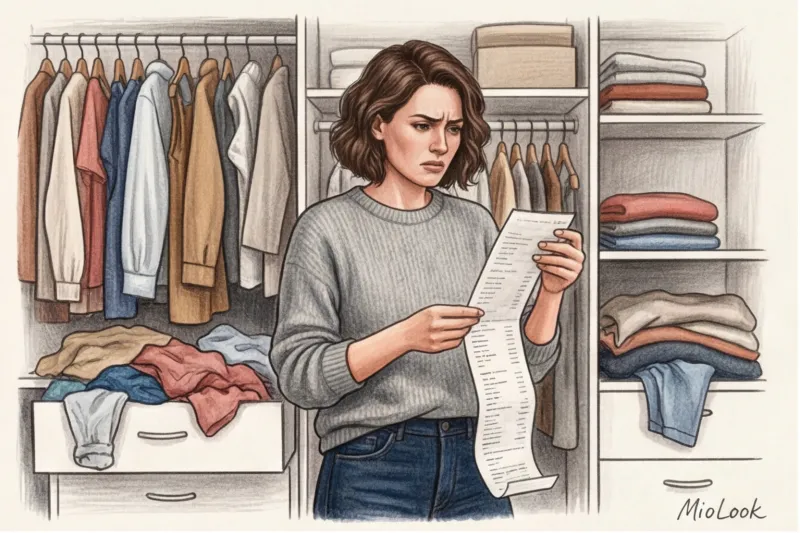
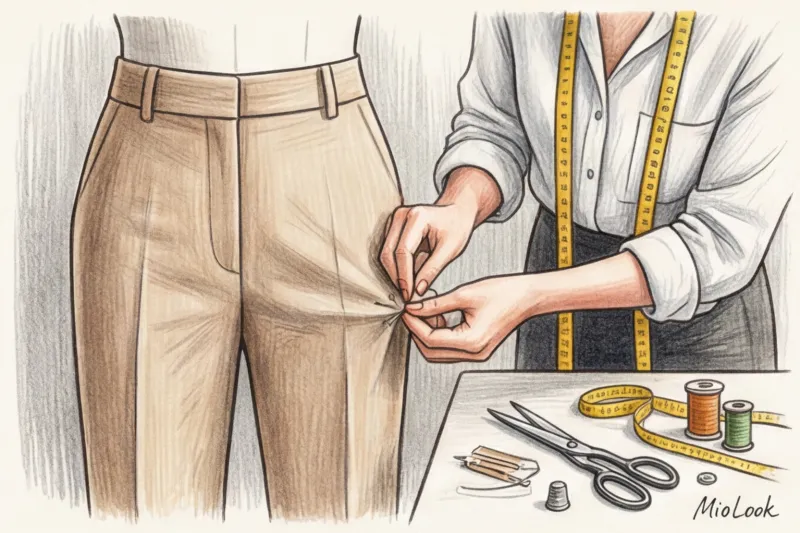
When budgeting, almost everyone makes one fatal mistake: they don't allow for maintenance. One of my clients once bought a pair of luxurious light beige palazzo pants. But she didn't take her height into account: the pants needed to be shortened. Plus, the light, delicate fabric only required dry cleaning. The result? The pants hung in the closet for a year because she didn't want to shell out €15 for a dry cleaning every other time she wore them.
Your budget must include three expense items:
- Atelier (10-15% of the cost of the item). Jacket sleeves should end precisely at the wrist bone, and trousers should be the right length to match your shoes. A perfect fit is what makes a look look expensive.
- The right underwear. A silk blouse requires a smooth, nude (not white!) bra, and a knit dress requires seamless panties. If you don't have the right underwear, you won't be able to wear new clothes. Budget at least €50-€80 per year for this.
- Care. Anti-pilling machine, shoe trees, water-repellent sprays and dry cleaning of difficult fabrics.
Ready to get started?
Plan your shopping wisely. Try the MioLook free plan—no commitments required. Upload your items and let AI find the gaps in your wardrobe.
Get access — €0.99 onceChecklist: Planning a Budget Shopping Trip Without Credit Cards
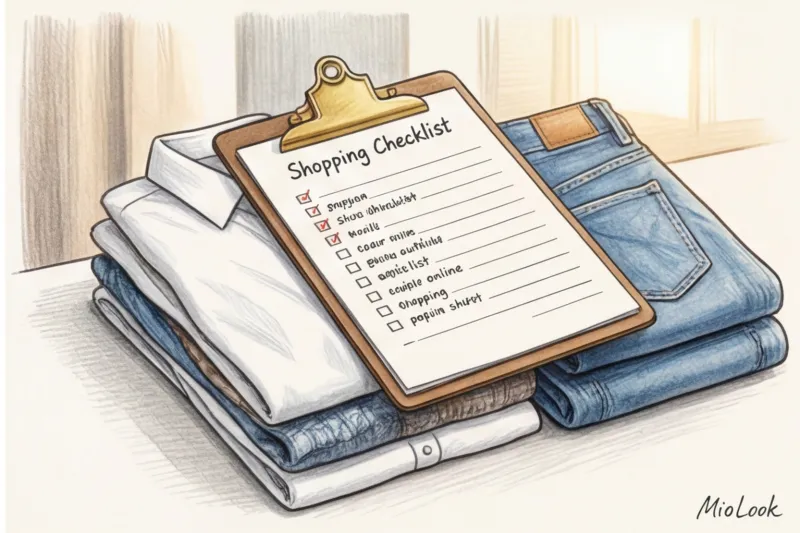
Now that we know the prices and rules of the game, let's put it all together into a specific algorithm. I make every client go through this checklist before the start of the season:
- Step 1: Inventory. Get everything out. Find "dead zones"—things you don't wear. Why? Are they too small? Are they in need of a makeover? Get rid of the dead weight or integrate it with new purchases.
- Step 2: Priority Shopping List. We divide the shopping list into three columns. Category A: It's burning (there's no warm jacket for the winter). Category B: Preferably (need a fresh white shirt to replace the yellowed one). Category C: I'd like to, but it's not necessary (a trendy burgundy bag).
- Step 3: Estimate with limits. Write a budget next to each item before you even step foot in the mall. For example: "Black pants – up to €80." If the store offers you a €120 option, you simply say "no," as that would ruin your entire financial model.
- Step 4: The 24-Hour Rule. Never buy anything over €100 straight away. Try it on, take a photo, have a coffee, and go home. If you're still thinking about it in the morning and have at least three looks in mind that match your current outfit, buy it.
Calculating a wardrobe budget isn't about denying yourself everything. It's about mindfulness. The best investment you can make in your style is taking the time to understand your needs, your body proportions, and your actual lifestyle. Only then will your money turn into a functioning wardrobe, not a warehouse of clothes with tags.