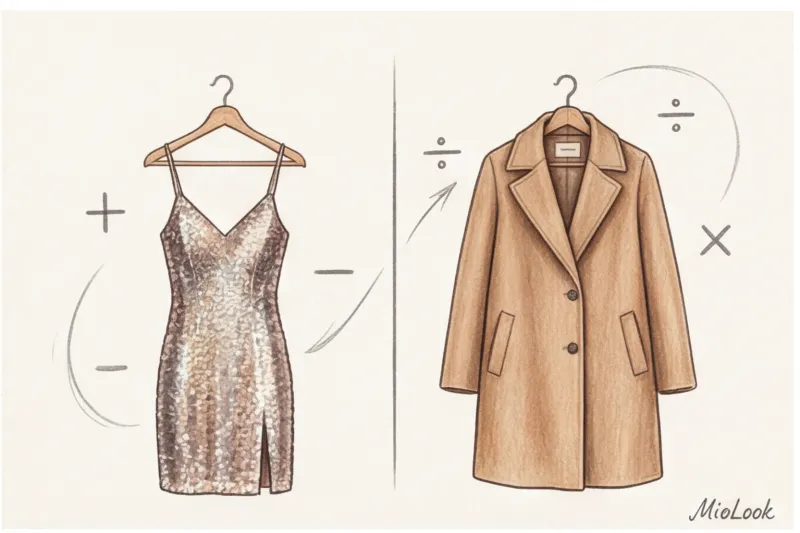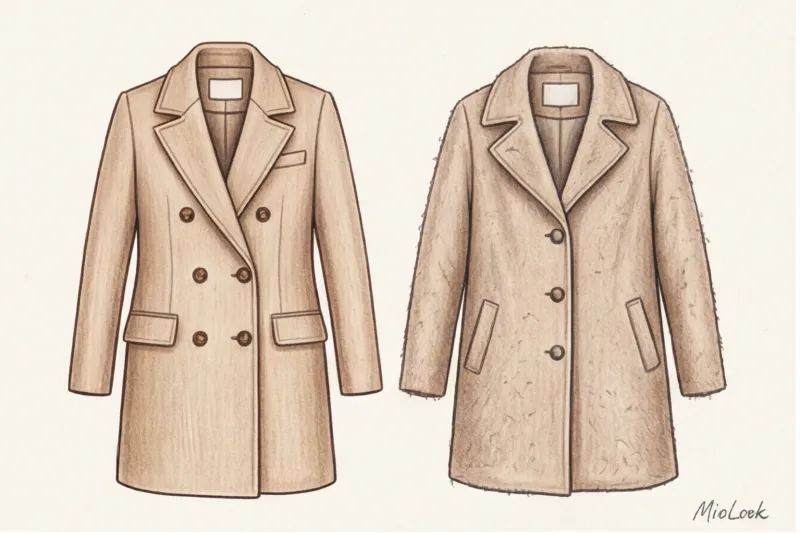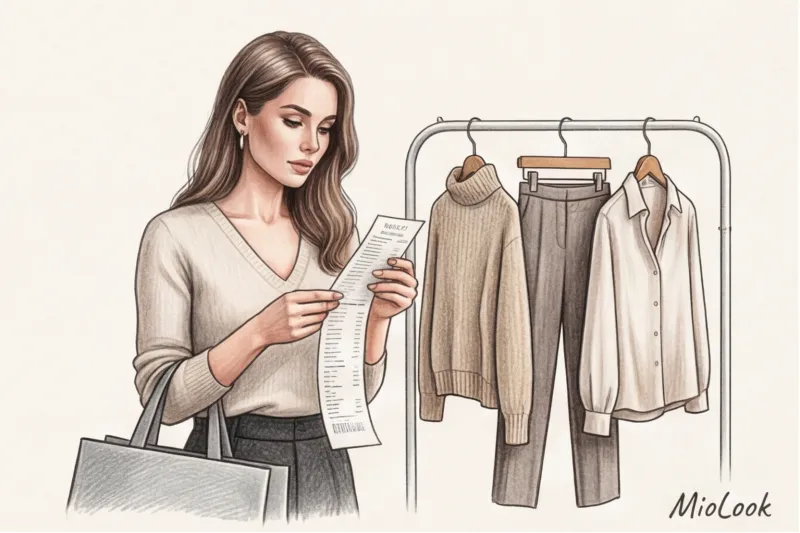
One day, a client came to me for a wardrobe review. Her enormous closet was literally bursting at the seams with the abundance of clothes. As we began sorting, a terrifying detail emerged: almost 40% of the items still had their tags attached. Most of them had been bought at final sales with huge discounts. "But it was so cheap! I just couldn't pass up a dress for 15 euros," she explained. The irony was that these "bargain" dresses had never been released, meaning their real cost to her wallet was incredibly high. It was at that moment that I realized how much we all need to rethink our approach to shopping.

I talk about how to give up the cult of disposable things in more detail in our guide. Conscious fashion: how to build an eco-friendly wardrobe But today I want to give you a concrete mathematical tool. If you want to stop blowing your budget on short-lived items, you need to master the concept Cost Per Wear (CPW) — the cost of one wearing.
Cost per wear: How to calculate the true value of your wardrobe
According to a large-scale study by the Ellen MacArthur Foundation (2017), we wear clothes 36% less today than we did just 20 years ago. The modern consumer's mind has fallen into the fast-fashion trap: we look at the price tag, see a ridiculous figure, and think we've gotten a great deal. But the price tag in the store isn't the final cost of the item. It's just a down payment.
Many of my clients ask about the baseline indicator. Cost per wear — how to calculate it This metric works. The basic formula is extremely simple:
CPW = Price of an item / Number of times you wear it
Let's look at an example of that illusory benefit. You buy a bright neon top on sale with a 70% discount for just 10 euros (or the equivalent in your currency). You wear it exactly once to a theme party, after which it settles forever at the bottom of your drawer. Your CPW is 10 euros per outing. Next to it hangs a perfectly cut basic jacket for which you paid 150 euros. You wear it to the office 75 times over the course of a year. Its CPW is only 2 euros. Paradox? No, it's pure math: the "expensive" jacket cost you five times less than the "cheap" top.
Hidden Costs: Why Mass-Market Fashion Costs More Than Luxury
Over 12 years of working as a stylist, I've learned to immediately distinguish between a garment that's been washed three times and has lost its shape, and a quality staple that lasts for years. Cheap fabrics are a ticking time bomb for your budget.
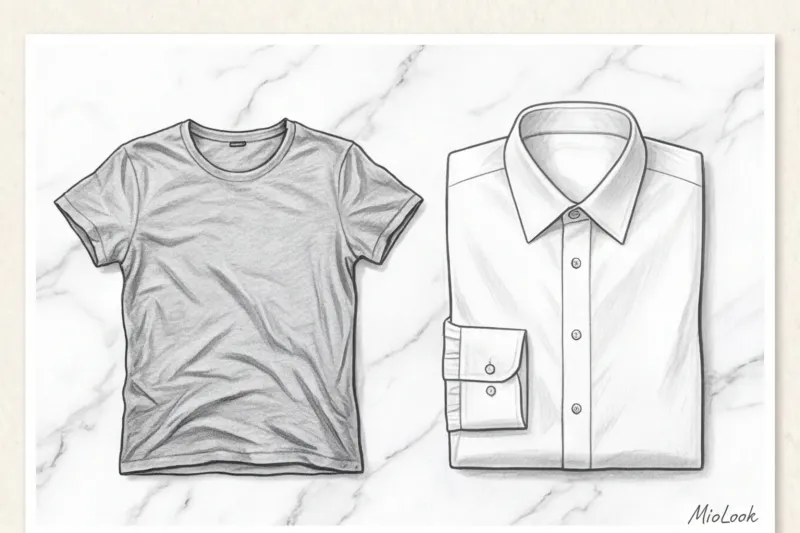
Let's take a standard white T-shirt made of thin jersey from a mass-market store (think H&M or budget Zara). It costs around 10-15 euros. Due to the low-quality yarn and loose knit, it loses its shape, becomes pilled, and develops yellow underarms after about 3-4 washes. The cost per wash is around 3-4 euros.
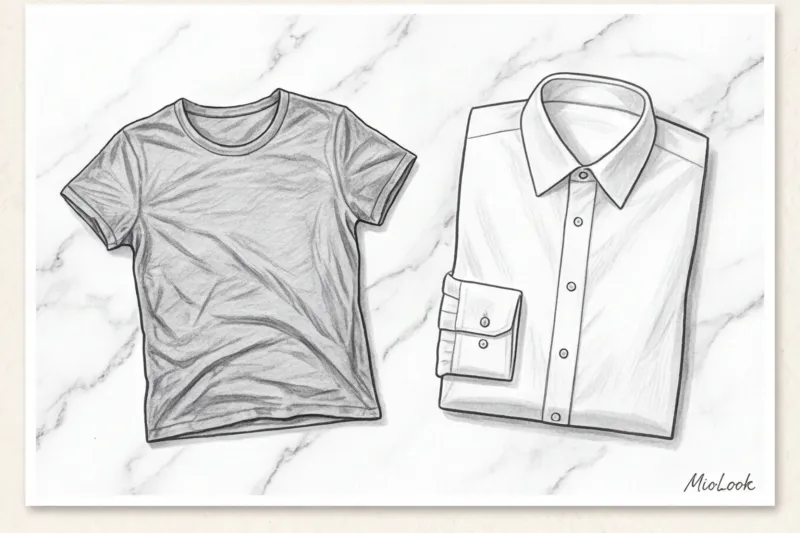
Now let's take a T-shirt made of heavy cotton (from 180 g/m²) or a blend with 5% elastane for €50. With proper care, it will withstand 50 washes without losing its shape. The cost is €1. Visually cheap items instantly "kill" the status of an outfit. It's simply impossible to look neat with a stretched-out neckline.
Moreover, according to a UN Environment Programme (UNEP, 2023) report, the fast fashion industry is the second-largest consumer of water globally and accounts for 10% of global carbon emissions. Skipping five cheap T-shirts in favor of one high-quality one not only saves you money but also directly protects the environment.
Your perfect look starts here
Join thousands of users who look flawless every day and save money with the smart planner MioLook.
Get access — €0.99 onceAdvanced CPW Formula: Considering Maintenance and Repairs
The basic formula is good for starting out, but it doesn't take into account the realities of caring for complex fabrics. The advanced formula looks like this: (Price of the item + Total cost of care and repairs) / Number of wears.
Let me give you a practical example. A client bought a stunning silk blouse from Massimo Dutti. The price was great, and it fit perfectly. But natural silk can't just be thrown in the washing machine with detergent. Every wear requires delicate dry cleaning. After two years of regular wear, the dry cleaning cost was 1.5 times the original price of the blouse! This doesn't mean you shouldn't buy silk. It does mean you should factor this cost into your initial estimate before you take the item to the checkout. The same goes for maintenance on leather shoes or replacing heels.
5 Wardrobe Items Where the CPW Formula Works Flawlessly
I always tell my clients: there are categories of things where you absolutely cannot skimp, because investing in quality here pays off a hundredfold.
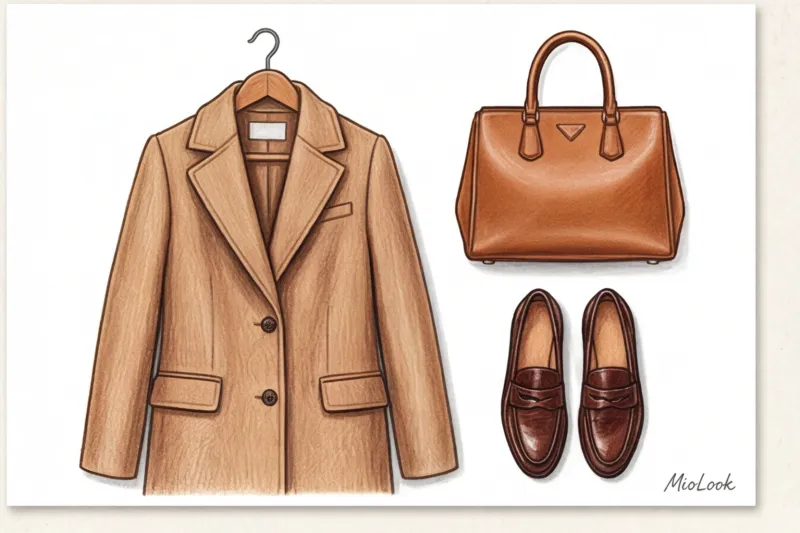
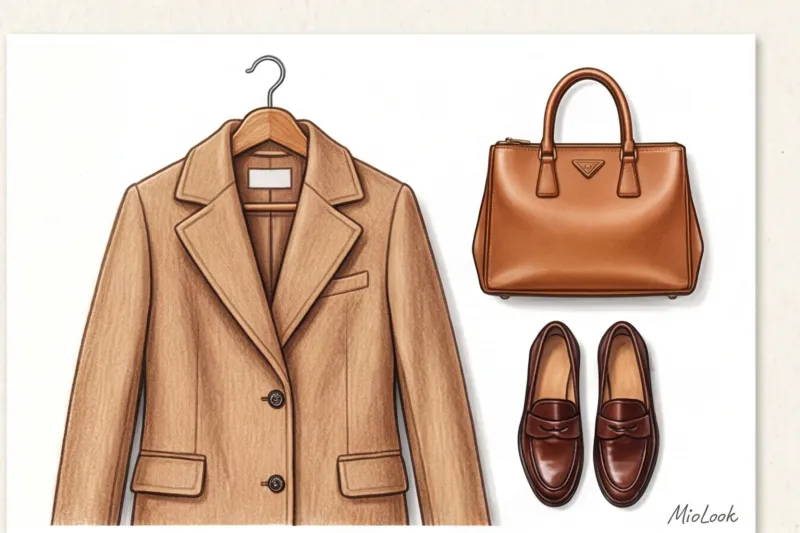
- Outerwear (coats and trench coats): A classic camel-colored wool coat with at least 80% wool content (ideally with cashmere) lasts 5 to 10 years. Its CPW approaches zero.
- Business suit and structured jacket: This is the basics for the office and smart casual style. If you want to learn more about investing in a business wardrobe, check out our article. How to look expensive: secrets of a status wardrobe.
- High-quality leather shoes (loafers, classic pumps): Genuine leather shoes adapt to your foot and last season after season. Cheap faux leather not only ruins your feet but also cracks at the bends within a month.
- Status bag: Rigid shape, minimal fittings, high-quality leather. If this The perfect leather business bag for women , you will wear it every day, 300 days a year.
- Perfectly fitting jeans: Choose thick denim without heavy embellishments, fraying, or holes. Classic Levi's straight-leg jeans or quality Zara jeans (made from 100% cotton) will pay for themselves within the first couple of months.
Cost Per Emotion: When CPW is high, it's perfectly normal
Now I want to break down the main rule I just talked about. There's one honest caveat that many style articles forget: the CPW formula works. not for all things.
The myth is that we should always strive for the lowest cost per wear. But in practice, for certain events, this rule becomes absurd. I call it the concept Cost Per Emotion (The cost of emotion) or Cost Per Impact (The cost of the impression made).
A wedding dress is worn exactly once. Its CPW is astronomically high. But do we evaluate it based on utility? No, we pay for the memories. The same goes for a luxurious evening gown for a gala dinner or a stately, flamboyant suit for your keynote speech at an industry conference.
I once prepared a client speaker for an international forum. We chose a stunning, rather expensive, complexly tailored suit from a niche designer. She wore it only twice (later, for an interview). But it was at that forum, thanks to her incredible self-confidence and the visual magnetism of this look, that she attracted an investor for her startup. The suit didn't break even under the CPW formula. It paid off with a new contract worth hundreds of thousands of dollars.

Ready to get started?
Try a free plan—no commitments required. Upload your items to your digital wardrobe and start calculating the real cost of your looks.
Get access — €0.99 once3 Main Traps: How We Fool Ourselves When Calculating
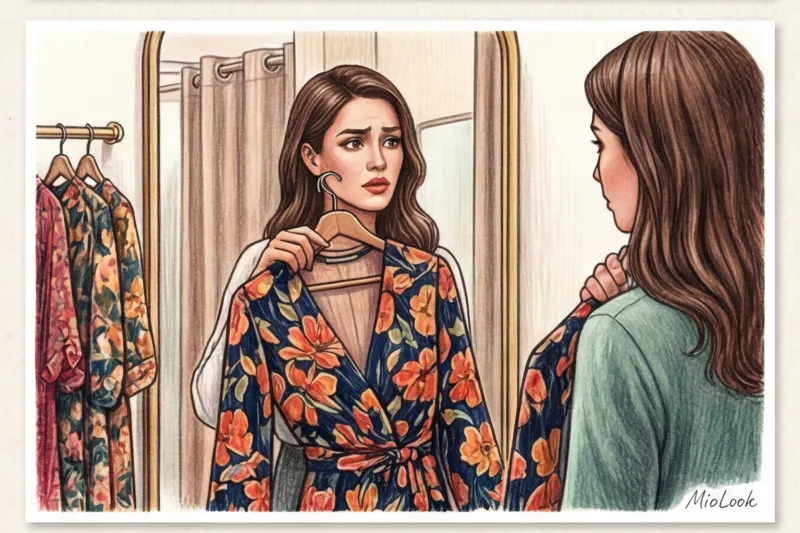
Returning to everyday reality, we often fall victim to our own illusions right in the fitting room. Here are three traps I regularly see while shopping:
- The optimism trap (“I’ll lose weight / I’ll find a reason”). You buy jeans a size too small in hopes of going on a diet. Or a fantastic sequin dress, even though your typical Friday night is pizza and Netflix. The item hangs around for years, like a monument to unfulfilled plans.
- Trend trap. You buy a trendy micro-trend (like 2000s-inspired, ultra-low-rise jeans or a neon bag), convincing yourself you'll wear it for a long time. Spoiler: in three months, the trend will fade, and the item will become a visual marker of "last season."
- The Compromise Trap. This is the most dangerous thing. You buy an "almost perfect" item on sale. The shoes are a little tight, but the Prada is 60% off! The sweater is a little itchy, but it's wool! You never You will not wear anything that causes you physical or aesthetic discomfort, no matter how favorable the price may seem.
The 3-Image Rule: A Checklist Before You Go to the Checkout
To make the Cost Per Wear formula work for you, not against you, I encourage all my clients to apply my personal style filter, the "Three Look Rule." Before you pay for a purchase, ask yourself three tough questions:
- Will I be able to create at least 3 different looks with this item from what is ALREADY hanging in my closet? If you need to buy new shoes, tights, and a blouse to wear this skirt, you're not buying a skirt, you're buying a problem.
- Will I be able to wear this in the next 48 hours? If the answer is “sometime later, when it gets warmer/colder/they ask you out on a date,” put the item aside.
- Am I prepared to care for this fabric? Do you have the patience to steam 100% linen every morning? Are you ready to dry clean white cashmere? Be honest with yourself.
Keeping track of your entire wardrobe in your head is difficult. This is where technology comes in. A smart wardrobe management app MioLook Lets you visualize potential combinations before you buy. Right in the fitting room, you can add a photo of an item and see how it pairs with your favorite jeans or work blazer. If it doesn't work out, feel free to leave the item in the store.
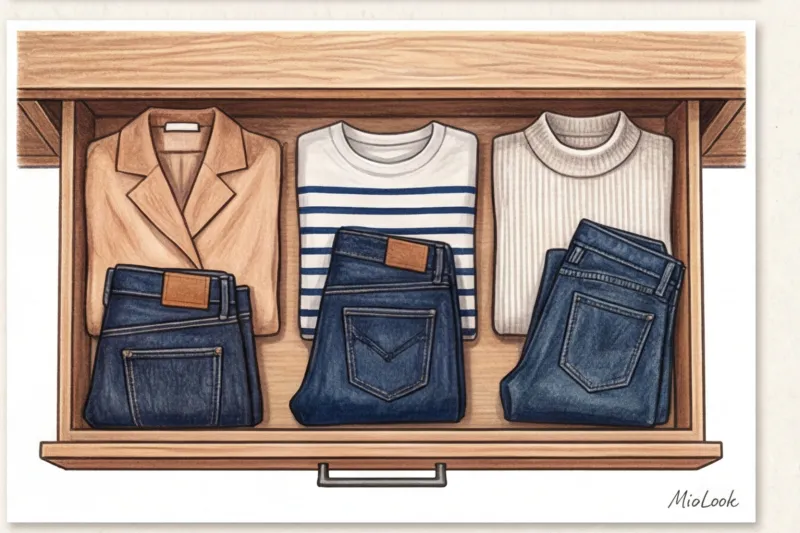
Ultimately, the art of smart shopping isn't about buying the cheapest or the most expensive. It's about buying things that will last. live Together with you. Transform the Cost Per Wear formula from a boring calculator into a filter that will protect your self-esteem and your budget from random, senseless purchases.