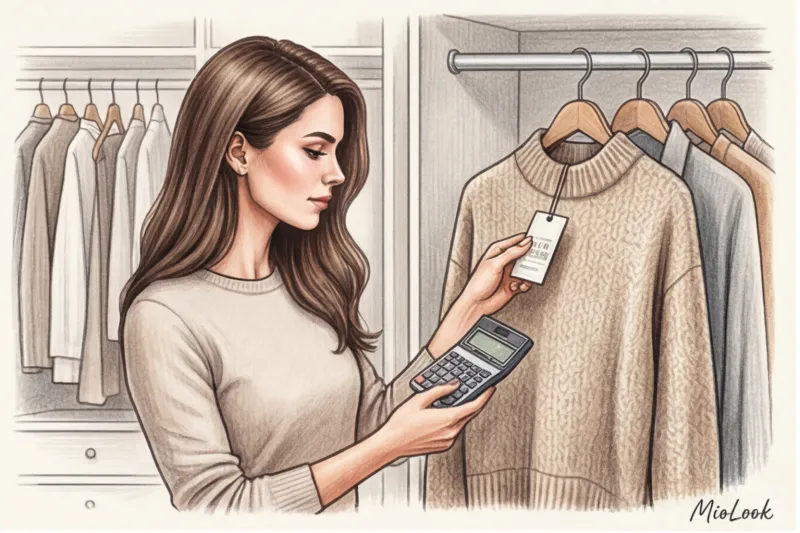
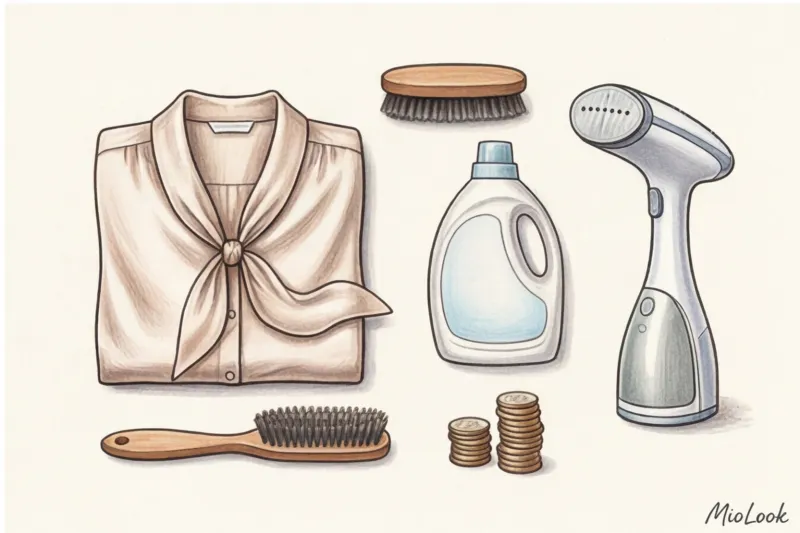
Seven years ago, a client came to me with a stunning silk blouse worth €500. It was hanging in her closet in perfect condition, neatly tucked into a dry-cleaning bag with tags still attached. Do you know how many times she wore it in two years? Exactly twice. Why? Because each trip to a premium dry cleaner cost her €20, and she was rightly afraid to wash the delicate silk at home. The service charge for this item was too high.

It is in such situations that the standard cost per wear formula (The price per wear) is seriously compromised. A true investment isn't simply dividing the price tag by the number of days it lasts. We discussed the basic principles of creating a long-lasting base in more detail in our the complete guide to a wardrobe beyond trends , but today I want to dig deeper. We'll explore the physics of fabric, the hidden costs of care, and learn how to assess a garment's true potential before you even take it to the checkout.
What is the cost-per-wear formula and why is the classic calculation outdated?
The basic definition of CPW is this: you take the cost of an item and divide it by the number of times you plan to wear it. A €300 coat that you wear 100 times costs you €3 per outing. A €100 evening dress costs you exactly €100 per outing.
This metric became wildly popular in the 2000s as a convenient tool for justifying expensive purchases. "Yes, this bag costs as much as rent, but I'll wear it every day, so its CPW is close to zero!" — sounds familiar, right?
The problem with the classic approach is that it ignores the "butterfly effect" in wardrobes. According to the Ellen MacArthur Foundation's 2022 global report, today we buy 60% more clothes than 15 years ago, but wear each item half as often. The average number of times a mass-market item is worn has fallen to a disastrous seven times.
If you buy a pair of chic trousers but don't have the right shoes to go with them, their actual CPW will be enormous because they'll end up at the bottom of your closet. This formula only works if the item physically survives until its hundredth wear, and you actually want to wear it.
Your perfect look starts here
Join thousands of users who look flawless every day with MioLook.
Get access — €0.99 onceThe Hidden Taxes of Your Wardrobe: The True Cost Per Wear Formula
In my practice, I stopped using the classic calculation a long time ago. Instead, I use the formula True Cost Per Wear (TCPW) It looks like this:
(Price of item + Lifetime care cost + Tailoring cost) ÷ Number of wears = TCPW
One of my clients was thrilled to buy a designer jacket on sale for €150. However, the sleeves were too long (adjustments and button transfers cost €40), and the fabric required dry cleaning every season (another €15 times five years). The total cost of ownership was about €265. If she had initially bought a perfectly fitting jacket for €200, which could be washed gently on a delicate cycle, she would have saved money and time.
The cruelest hidden tax is the tax on discomfort. A stiff shoe last, a scratchy sweater collar, or pants that are impossible to sit in after lunch. These items have the highest CPW in your closet because your brain will sabotage your choice of them every morning.
Maintenance and dry cleaning costs
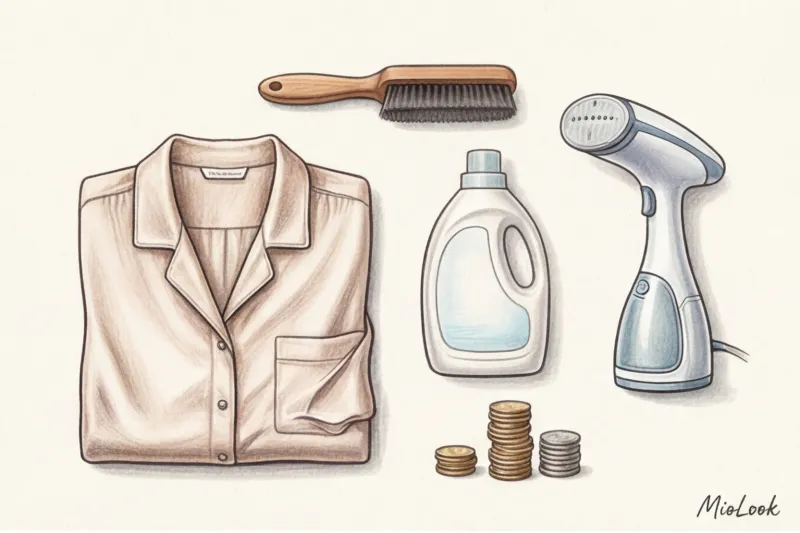
Let's compare two scenarios. You buy a bulky acrylic-wool blend sweater that starts pilling after the first week of wear and requires regular dry cleaning to maintain its shape. Over two years, you'll spend about €40-50 on maintenance.
An alternative is a machine-washable 100% merino wool sweater. Yes, it might start at €120 instead of €60, but you can wash it at home with a liquid wool detergent. No extra costs. Research by WRAP UK has shown that extending the life of an item by just nine months reduces its carbon and water footprint by 20–30%. Fewer chemicals, less waste, and a flawless look.
The Anatomy of Durability: How to Evaluate an Item Before Buying
It's impossible to calculate a good Cost Per Wear if the shirt is warped at the seams after its first wash. As a textile expert, I always inspect items tactilely and visually right in the fitting room. I advise you to do the same.
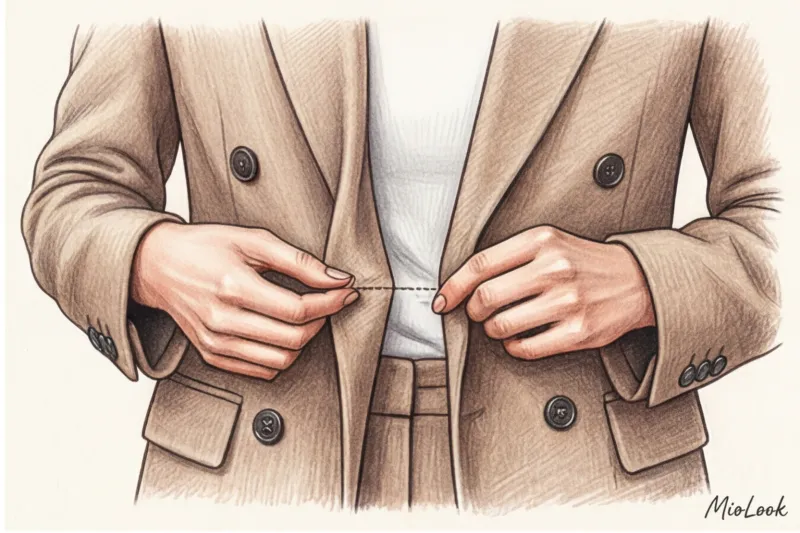
Look closely at the collar and lapels. A quality jacket will always have reinforcement (glued or stitched with a special material) inside the collar. If the fabric there is soft and hollow, the jacket will lose its shape after the first rain.
Check the thread tension. Gently (but not excessively) tug the seam on the thigh of the trousers in different directions. If you can see the threads and needle holes when held up to the light, the fabric will unravel. The seam should be tight, and the thread shouldn't have a cheap, plasticky sheen.
Be sure to check the back. Cheap mass-market items assemble items on an overlocker in one pass. High-quality brands use closed (French) or bound seams, especially on delicate fabrics like silk or viscose. A closed seam physically prevents unraveling during washing.
Fabric Composition: Why 100% Natural Isn't Always Better
Many old-school stylists repeat the mantra: "Buy only 100% natural fabrics." This is a dangerous misconception. Adding 2-5% elastane, nylon, or polyamide to wool pants isn't a cost-cutting measure, but an engineering necessity. The synthetic thread acts as reinforcement: it prevents knees and elbows from stretching, which critically reduces your TCPW.
Cotton, however, is a different story. Have you ever noticed how the side seams on some T-shirts curl up toward the stomach after washing? This happens because short-staple cotton is heavily twisted during spinning. High-quality long-staple cotton (such as Pima) will never produce this warping effect.
Access to MioLook for €0.99 — one-time payment
A smart AI stylist will select the perfect look based on your parameters.
Get access — €0.99 onceThe "Investment Pieces" Myth: When Mass-Market Is More Profitable Than Luxury
It's time to dispel the biggest myth of the glossy magazines: "You should invest in expensive basic T-shirts." As someone who works with textiles on a regular basis, I'm categorically against it. Buying a thin designer T-shirt for €250 is a financial crime.
Cotton knitwear has a limited lifespan. Enzymes in laundry detergents and the friction of the washing machine destroy the fibers, no matter how many zeros are on the price tag. A designer €250 T-shirt made of fine Egyptian cotton may look chic, but after 15 washes, it will inevitably lose its luster.
Instead, look for a high-quality mass-market T-shirt. For example, a basic T-shirt from Uniqlo's U line (or a similar one from COS) costs around €30, but it's made of heavy cotton with a gram-per-square-meter (GPS) rating of 250. This fabric feels like lightweight cardboard until the first wash, but then it lasts for years without losing its shape. Its Cost Per Wear will be mere cents, while a designer item will cost you a pretty penny.
Where is it really worth investing? In categories that don't require frequent washing and shape the silhouette: outerwear, structured leather bags, shoes, and framed jackets.
Wardrobe Math in Practice: 3 Real-World Scenarios
To make these abstract numbers more understandable, let's look at three common scenarios from my clients' wardrobes.
Scenario 1: Ultra-fashionable skirt vs. perfect jeans
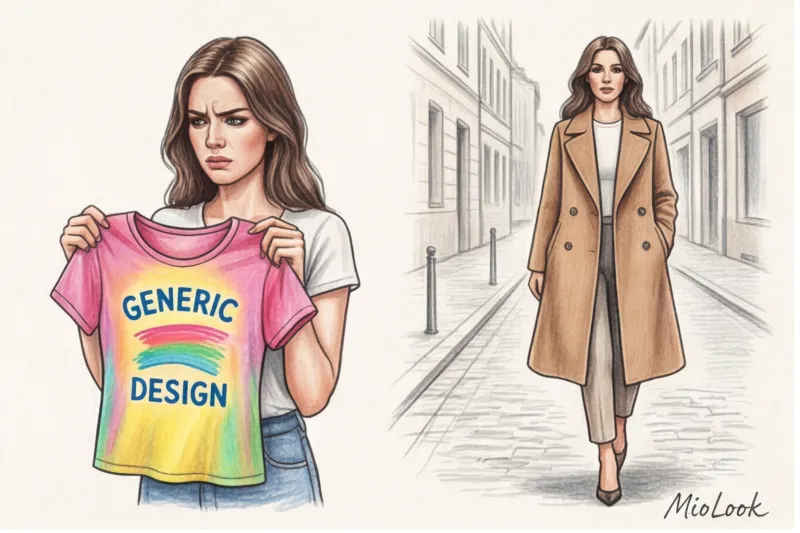
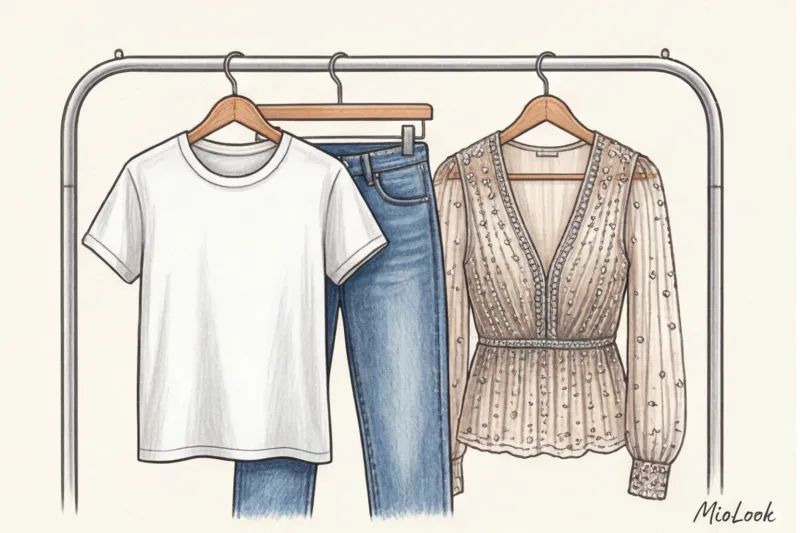
You buy a trendy sequin skirt for €30. It seems like a pittance. You wear it to a party and a friend's birthday. CPW = €15 per outing. At the same time, you buy a perfectly fitting pair of straight-leg jeans made of heavy denim for €120. You wear them three times a week for a year (about 150 outings). Their CPW = €0.80. The paradox: the expensive item turns out to be almost 20 times cheaper to wear.
Scenario 2: Three-piece business suit
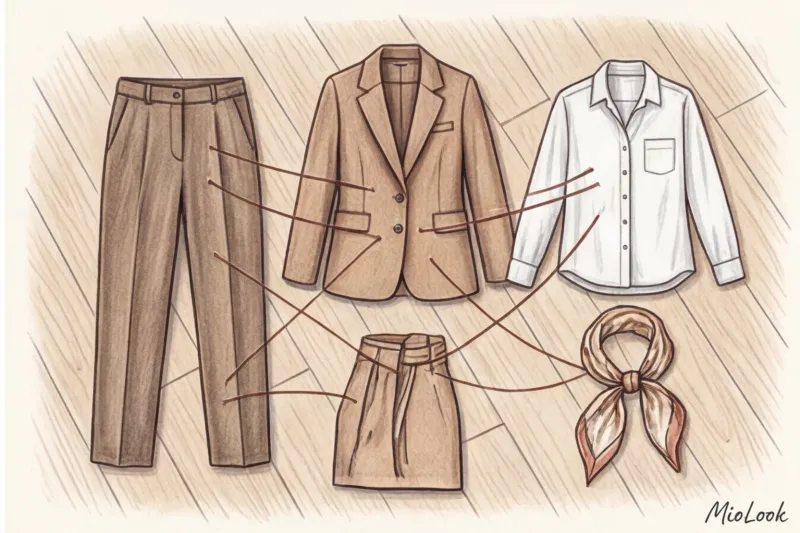
A high-quality wool suit (pants, vest, jacket) for €250 seems like a big splurge. But the secret to a low CPW is in the segmentation. On Monday, you wear the entire suit. On Tuesday, just the pants with a chunky sweater. On Thursday, the vest worn barefoot with jeans. On Friday, the jacket over a slip dress. You get at least 10 different looks from a single purchase.
Scenario 3: Winter Coat
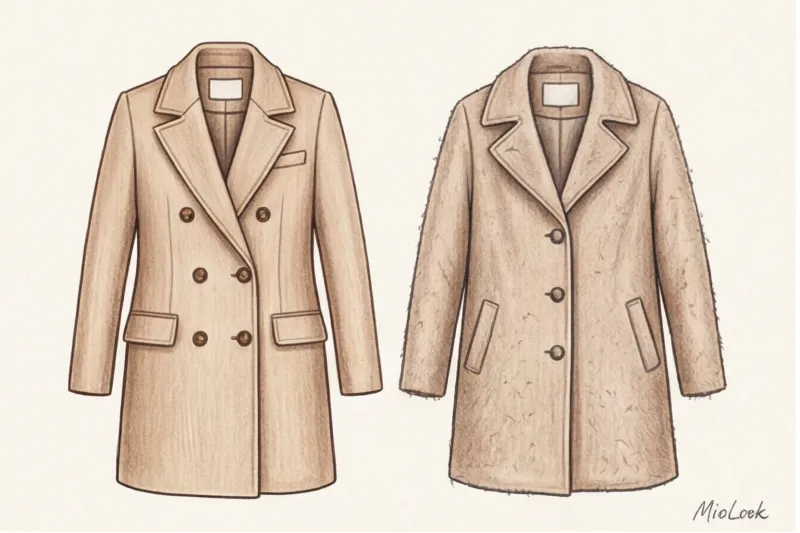
A camel-colored coat for €350, made from 70% wool and 30% cashmere, works well over a hoodie and sneakers on the weekend, or over a formal dress and boots for the office. Its versatility reduces the cost of each outfit to a fraction of the cost.

How to Reduce Cost Per Wear with a Capsule Approach
The most powerful tool for reducing CPW is a high level of compatibility. In styling, there's an ironclad "Rule of Three": if you bring a new item into your home, you should mentally create at least three complete looks with it. already hanging in your closet.
If you need to buy new pants and a special bra to wear a new shirt, you're not updating your wardrobe; you're creating a financial black hole for yourself.
To avoid having to keep all the combinations in your head, I highly recommend using digital tools. For example, you can digitize your items by adding them to MioLook smart wardrobe The algorithm will not only show you what to pair your new purchase with, but will also track wear statistics. You'll clearly see your "blind spots"—items you bought but never wore all season long.
Ready to get started?
Try the MioLook plan for free—no commitments required. Organize your closet today.
Get access — €0.99 onceChecklist: 5 questions before purchasing to maximize your savings
Next time you find yourself in the fitting room with a beautiful item in hand, don't rush to the checkout. Take a minute to look in the mirror and honestly answer these five questions. This will save you hundreds of euros over the course of a year:
- Can I create 3 different looks with this right now? (Without purchasing additional accessories and shoes).
- Am I willing to pay for the care of this fabric? (If the tag says "dry clean only" and it's an everyday top, feel free to return it to the hanger.)
- Does this item fit into my real life? (Not the fantasy me who goes to the theater every night, but the real me who works remotely and walks the dog.)
- Will the fabric withstand 50 washing cycles? (Check the density, seam tension and composition according to my instructions above).
- Does the item fit perfectly without visiting a tailor? (If the shoulders are out of place or the armholes are pulling, no amount of discounting will fix it.)
The Cost Per Wear formula isn't about stinginess. It's about respecting your work, your money, and the planet's resources. Invest in quality that embraces you, that supports your lifestyle, and that only gets better with time. Leave the compromises on store shelves—your wardrobe deserves only those pieces that reap every cent's worth.