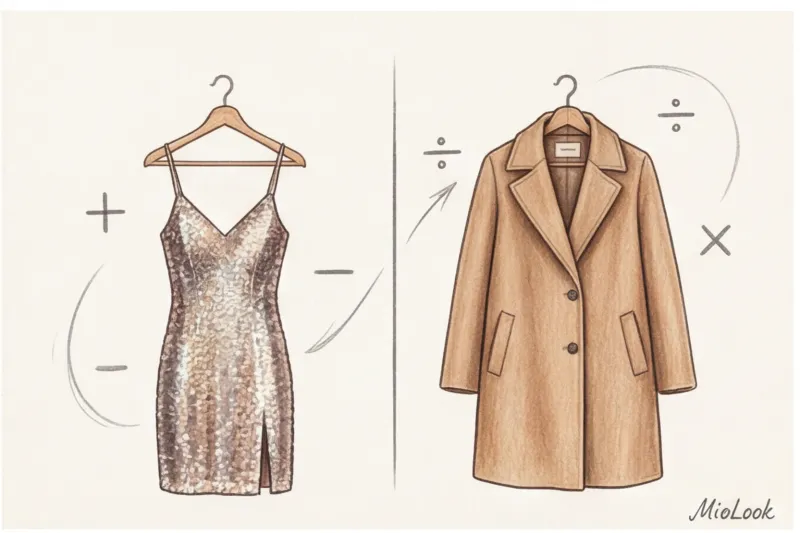
Forty-three items with store tags. That's how many we pulled from my new client's closet during our first wardrobe review consultation. Perfectly new dresses, oddly cut blouses, and synthetic sweaters bought on a whim during seasonal sales. We grabbed a calculator and calculated: these illusory bargains cost a total of about €1,300. Money that was literally hanging on the hangers like dead weight.
At this point we started talking about cost of one garment — a merciless but sobering metric that will forever change the way we approach shopping. We've shared more about how to stop blowing your budget on one-day-only items in our A complete guide to creating a basic wardrobe on a budget , and today I want to immerse you in real textile mathematics. We'll learn how to calculate the real price of things before you even get to the checkout.
The Red Price Tag Trap: What is Cost Per Wear?
The basic formula for Cost Per Wear (CPW) is incredibly simple: it's the purchase price divided by the number of days you wear the item. It sounds like simple arithmetic, but it's precisely this formula that exposes the biggest lie of fast fashion.
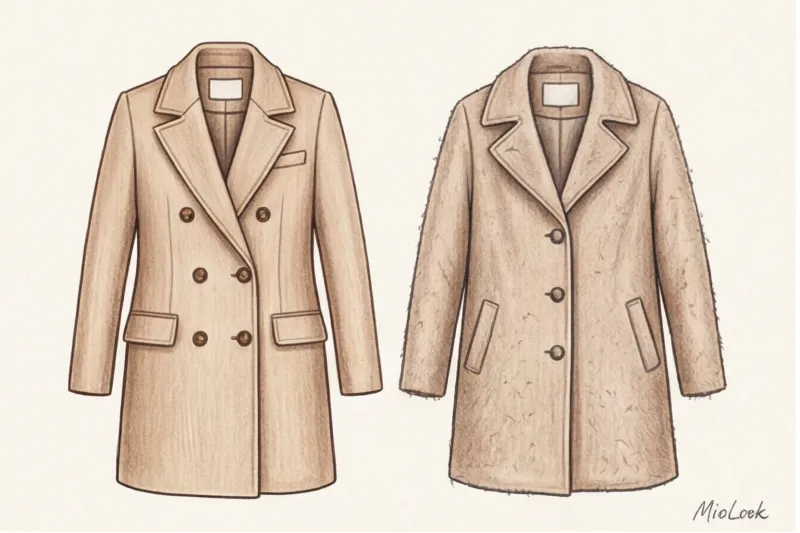
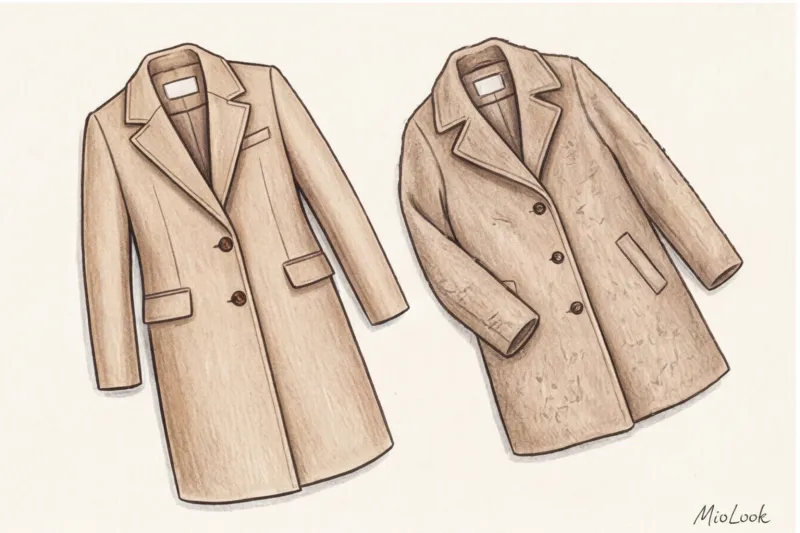
Let's compare two purchases. A woman buys a trendy 100% acrylic coat for €60. It seems like a great deal. But after 15 days of heavy wear, the sleeves and sides are covered in irremovable pilling, and the fabric loses its shape. The coat is sent to the dacha. Total: €60 / 15 wears = 4 € per exit.
Another woman buys a classic coat made of high-quality, thick wool for €300. She wears it for three seasons in a row, wearing it at least 50 times per season. Total: €300 / 150 wears = 2 € per exit.
The "buy cheap but buy a lot" paradigm is damaging not only to the environment but also to your personal budget. According to internal user analytics MioLook applications , switching to a conscious calculation of CPW and creating capsules allows you to save up to 40% of your wardrobe budget per year.
Access to MioLook for €0.99 — one-time payment
A smart AI stylist will select the perfect look based on your items.
Get access — €0.99 onceHidden Variables: An Extended Cost-Per-Clothing Formula
The classic Price/Wear formula is incomplete. As a practicing stylist, I always insist on incorporating the concept of "hidden cushioning." The expanded formula looks like this: (Purchase price + Atelier services + Dry cleaning) / Number of outputs.

Imagine an inexpensive but striking blouse made of thin viscose for €40. The tag strictly prohibits machine washing. You wear it to work and then take it to the dry cleaner on the weekend (about €15 per session). In one season, you'll have it cleaned five times. The actual cost of the blouse has now risen to €115.
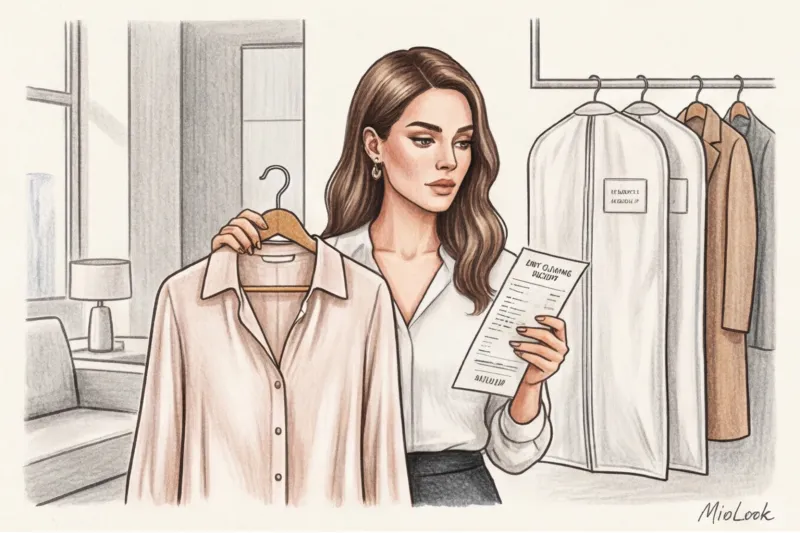
In my experience, women often forget about the cost of fittings. You buy trousers for €50, but at the tailor's, you pay another €25 for a perfect hemming and waist adjustment. And what about the sole adjustment on new leather loafers? That's also included in the receipt.
"The most insidious factor is emotional depreciation. If your skirt constantly rides up when you walk, and you sweat like a sauna in your sweater, the denominator (the number of exits) will tend toward zero, no matter how beautiful the garment is."
Textile Mathematics: How Fabric Limits Life Cycles
The connection between fabric composition and the mathematical limit of the number of cycles is pure physics. According to the Ellen MacArthur Foundation's (2021) extensive report on the cycles of fashion, the lifespan of clothing has been nearly halved over the past 15 years. And the main reason isn't that we've fallen out of love with the style, but rather the catastrophic decline in yarn quality. To understand, What fabrics look expensive and last a long time? , you need to understand the properties of fibers.
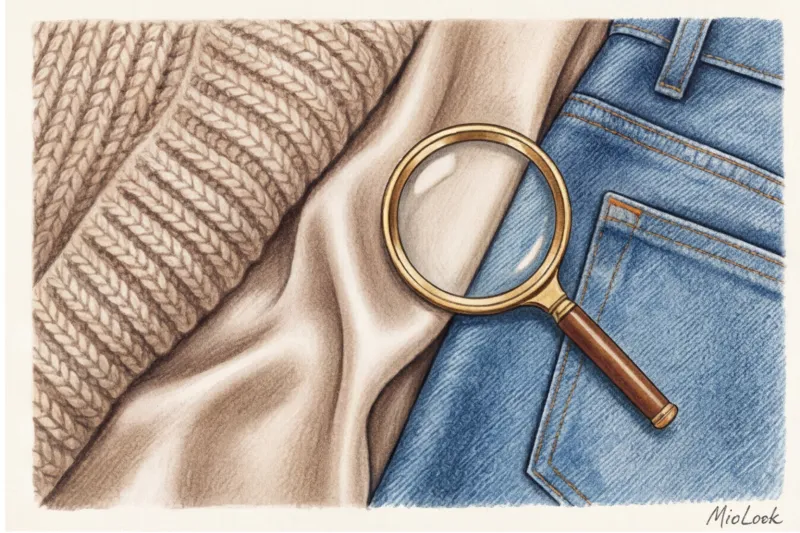
Why are acrylic and polyester more expensive?
Acrylic is often disguised as fluffy wool or mohair. However, it's a short-fiber synthetic. In areas of constant friction (like underarms or where a shoulder bag touches the surface), the short fibers quickly come to the surface and twist into tight knots called pillies. After just a week, the garment looks untidy.
Cheap polyester creates a greenhouse effect on the skin. It doesn't breathe, quickly absorbs body odors, and requires washing after every (even short) outing. Each wash is a microtrauma to the fabric. As a result, the blouse will eventually become misshapen after 3-5 washes and become permanently relegated to the category of "lounge wear."
Cotton, wool and silk: where the catch lies
Have you noticed that some cotton t-shirts warp along the side seams after the first wash? This is a sign of cheap carded cotton spun from short scraps. If you want a low CPW, look for long-staple cotton (Pima, Mako) – it's smooth, slightly shiny, and won't warp for years.
There's an interesting nuance to wool, too. 100% wool is great for sweaters, but if you're looking for casual pants or a suit, I always recommend a blend. A blend of 80% wool and 20% nylon (or polyester) will give you the best cost per garment. The synthetic thread acts as reinforcement here, preventing stretching at the knees and chafing between the thighs.
Your perfect look starts here
Join thousands of users who look flawless every day with MioLook.
Get access — €0.99 onceInvest or save? Debunking the myths of basic wardrobes
Perhaps the most harmful advice in fashion magazines is: "Invest in expensive basic T-shirts." As a wardrobe strategist, I'm categorically against it. This rule doesn't work.
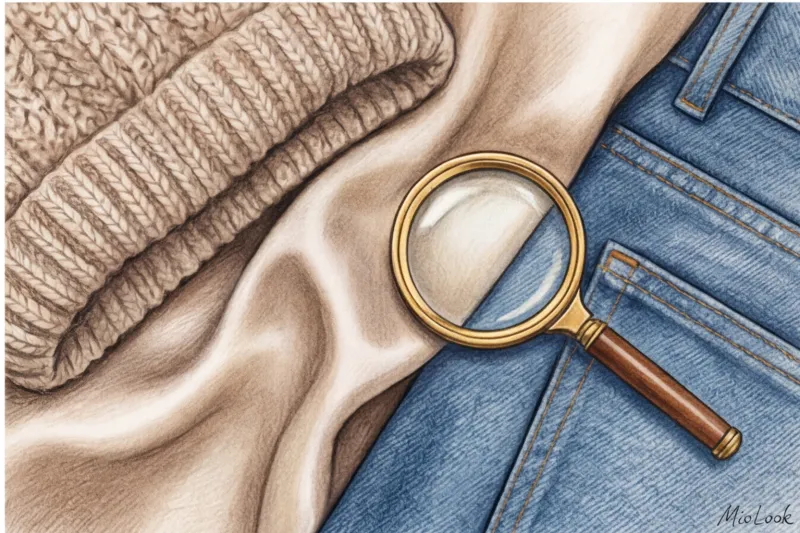
White cotton inevitably reacts chemically with our sweat and antiperspirants. The fabric turns yellow in the armpit area, regardless of whether you bought that T-shirt for €20 at a mass market or for €180 at a premium boutique. T-shirts are a disposable base layer. The CPW of an expensive white T-shirt will always be astronomically high.
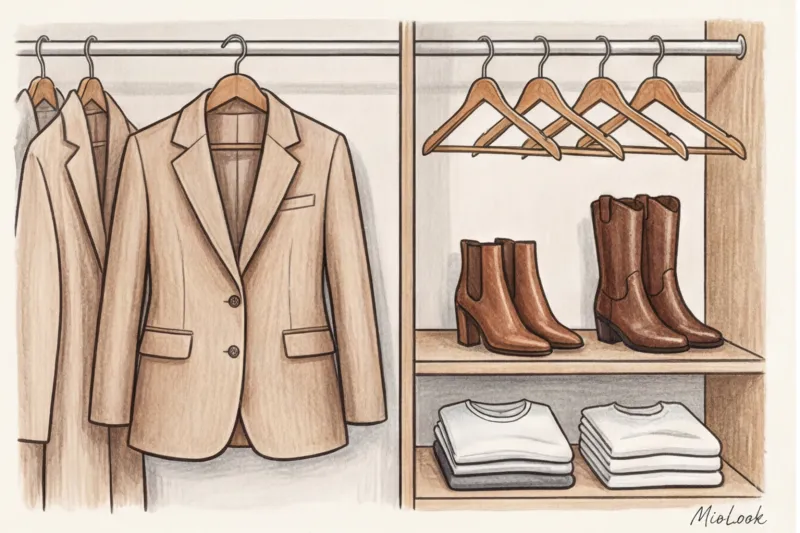
The matrix of correct investments for a stylist looks different. The main budget should be invested in outer layers of clothing and accessories , because they have the lowest wear rate. Invest in a quality structured jacket , a good wool coat, leather shoes, and a bag. You'll wear them hundreds of times, and they'll set the tone for your entire look. And you can save money on trendy one-season tops, lightweight summer dresses, and those essential basic t-shirts.
Prognostic Index: How to Calculate CPW Before Buying
According to research firm McKinsey, consumers leave up to 60% of purchased clothes in their closets, either unworn or worn only once. To avoid adding to this statistic, make it a rule to ask yourself three questions before checking out:
- What three things from my closet will I wear this with tomorrow? If you need to buy special tights, the right top, and new shoes for a new skirt, it's not a skirt, it's a financial black hole.
- Where exactly am I going to wear this this week? Not “someday to the theater,” but a specific event in your real calendar.
- Am I prepared to iron and maintain this item? If you hate ironing, a 100% linen shirt will hang in your closet forever.
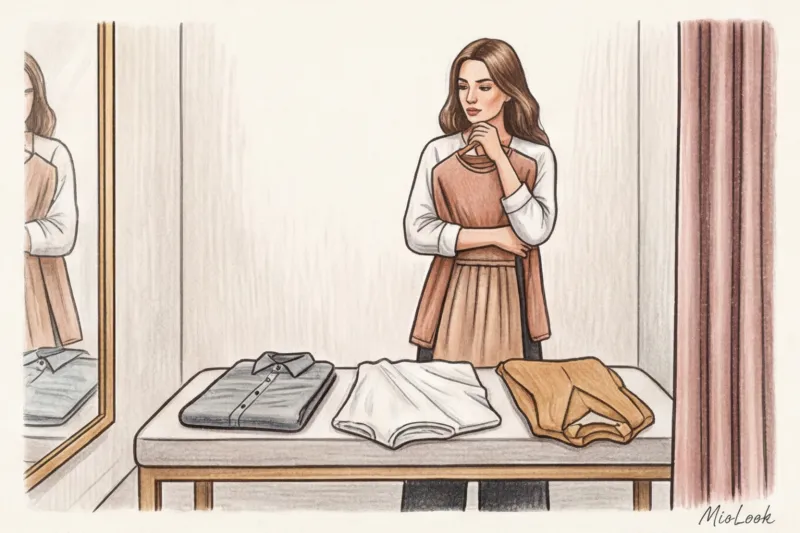
We often buy things for what we call a "fantasy wardrobe." A woman works remotely at an IT company, but she buys sequin cocktail dresses because she longs for social events. Digitizing your wardrobe solves this problem. When you upload your items to MioLook , the algorithm visually shows which categories of clothing you have idle and prevents you from buying a fifth unnecessary dress.
Fair clarification: The CPW rule doesn't apply to everything. A wedding dress or an anniversary outfit will always have a huge cost per appearance. And that's okay—in such cases, we pay for emotion and memory, not utilitarian functionality. But for everyday essentials, the math must be rigorous.
Ready to get started?
Try the MioLook free plan and organize your wardrobe without any commitments.
Get access — €0.99 onceStylist's Checklist: 5 Signs an Item Will Justify Its Price Tag
To predict the durability of an item, you need to be able to "read" it correctly. I always conduct a physical audit right in the store's fitting room.
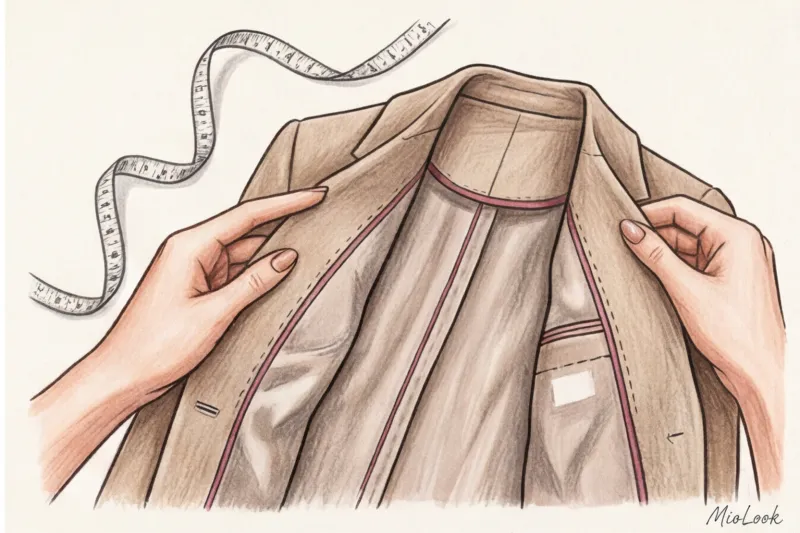
- Quality of internal seams. Turn the jacket or trousers inside out. Look for closed seams or neat bias binding. If the fabric edges are loosely overlocked with loose threads, the garment will unravel after the first wash.
- The fittings give away the class of the item. Cheap, shiny, thin plastic buttons make even good fabric look cheap. Look for buttons made of horn, mother-of-pearl, covered parts, or high-quality, dense imitation.
- Translucent density. Hold a cotton T-shirt or shirt up to a fitting room lamp. If you can clearly see the outline of your hand through it, it's less than 150 g/m². This fabric will quickly become covered in pinholes.
- Lining composition. A high-quality wool coat with a 100% polyester lining is a crime against comfort. You'll sweat. Look for the words "Viscose" or "Cupro" on the tag under the "Lining" section. They breathe and slide comfortably over your base layer.
- Symmetry of the print. Look closely at the side seams and pockets of checked or striped items. A high-quality item that will last will have perfectly matched seams. If the stripes are "smudged," it means the manufacturer was ruthlessly cutting back on fabric consumption during the cutting process.
Counting the cost of a single garment isn't about stinginess or limitations. It's about respecting your time, your work, and the space in your home. By investing in the right fabrics and analyzing your lifestyle, you paradoxically begin to spend less while looking significantly more expensive and elegant.