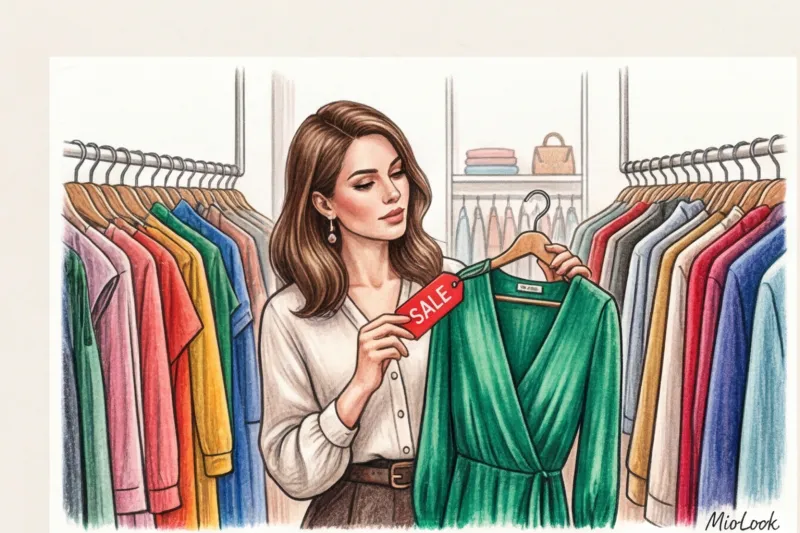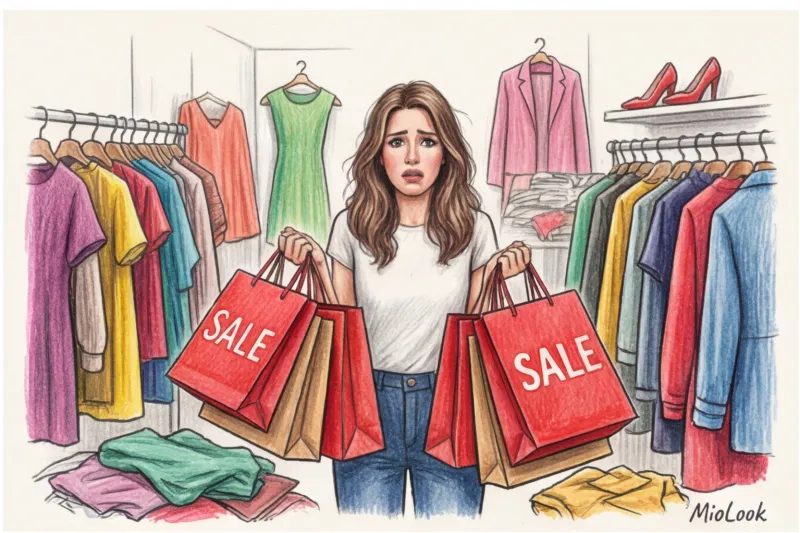
Last Tuesday, I audited a new client's wardrobe and pulled 43 items with tags still attached from the depths of her closet. Neon-colored blouses, oddly fitting thin polyester pants, five identical T-shirts of dubious quality. The total cost of these "bargain finds" was about €1,300. This money sat idle on hangers while she experienced the classic "I have absolutely nothing to wear" stress every morning.
If you are wondering, How to buy things on sale correctly , you'll have to forget everything the glossy magazines of the 2000s taught you. Seasonal sales aren't an excuse to fill your closet with cheap clothes you've got to save. As a stylist, I suggest a completely different approach. Use sales exclusively as a "lift" to higher price segments, investing your mass-market budget in premium basics. We've already covered the fundamental rules of smart saving in our A complete guide to creating a basic wardrobe on a budget.
The Psychology of Red Price Tags: Why We Buy Things We Don't Wear
According to a large-scale consumer behavior study by McKinsey (2023), 68% of women buy not the item itself during sales, but a hit of dopamine. Retail marketers know their stuff: a crossed-out price activates the brain's reward center for "getting a good deal." You're not bringing home a sweater; you're bringing home a triumph.
The problem is that the triumph wears off the next day, but the synthetic sweater stays with you. Five cheap sweaters bought in a shopping frenzy will always lose out to one high-quality cashmere jumper. A cluttered closet is the main enemy of personal style. When your space is overloaded with compromised items, you physically can't create a stylish outfit because your eye is caught by visual noise.
The MioLook app's internal analytics reveal astonishing figures: users who switch to the smart wardrobe management system reduce their annual clothing spending by an average of 40%, while their outfits become more visually expensive.
The Illusion of Savings and Hard Math: The CPW Formula
In professional styling, we never look at the price tag in a vacuum. We calculate the true cost of an item using the Cost Per Wear (CPW) formula—the price per wear. Let's do the math together.
Let's say you see an acrylic coat on sale for €60. It seems like a great deal! But acrylic loses its warmth in the slightest breeze, starts to pill within a week, and loses its shape after just one dry cleaning. You'll wear it maybe 15 times. Your CPW is €4 per wear.
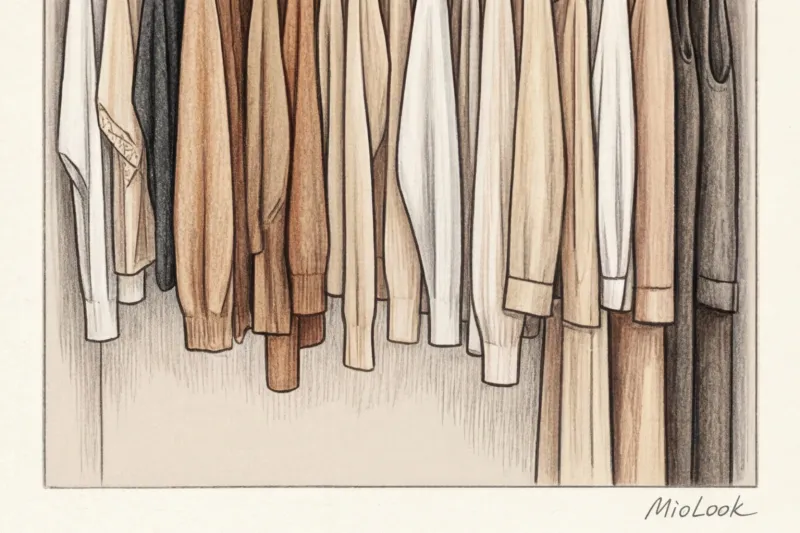
Now let's take a basic 100% wool coat. It costs €400 without a discount, but you can snag it for €200 during the final sale. It's warm, maintains its architectural shape, and looks luxurious. You'll wear it for at least 60 days at a time for three seasons in a row. That's 180 outings. Your CPW is just over €1.
Cheap items are outrageously expensive. Hidden costs for constant dry cleaning, lint removal machines, and endless replacements of worn-out items eat up your budget faster than a single status purchase.
Your perfect look starts here
Join thousands of users who look flawless every day with MioLook. Artificial intelligence will help you calculate your CPW and create a smart wardrobe.
Get access — €0.99 onceHow to Buy on Sale: The "Plus One Segment" Rule
I'll share a counterintuitive insight that often sparks debate but works without fail: buying basic items on sale at a mass market is the worst possible investment. The cheaper the item is initially, the less sense it makes to buy it on sale. Zara or H&M at half price are still patterns designed for fast fashion and fabrics that won't last the season.
My main rule, which I have developed over 12 years of working as a stylist in Europe: Use the sale as a social lift for your wardrobe The "Middle-Up and Premium" strategy involves hunting for brands with impeccable tailoring (such as COS, Massimo Dutti, Sandro, or local designer labels) that, thanks to 50-70% discounts, drop their prices to the same level as your typical mass-market items.
"Isabella's golden rule: if you wouldn't dream of owning something at full price, you absolutely don't need it at half price. A discount doesn't make something more beautiful, it just makes it more affordable."
Wardrobe Essentials: 5 Investment Pieces for Bargain Hunting
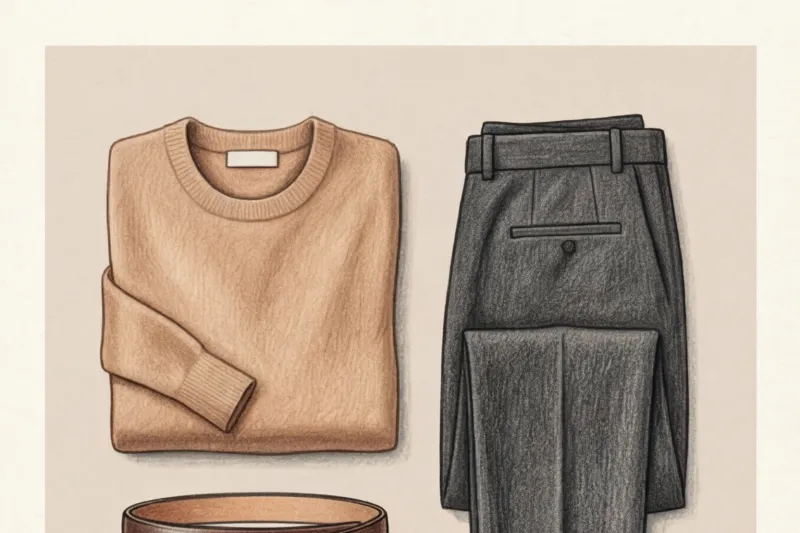
When I'm being guided through Milan shopping, I always see the same thing: Italian women ignore the racks of trendy neon tops for €15. They head straight for the cashmere, leather, and silk sections. Their goal is that Mediterranean chic, built on timeless elegance.
Shift your focus from microtrends to timeless classics. Your hunting formula should consist of five elements: the perfect coat, a structured leather bag, a crisp silk blouse, a cashmere jumper, and classic shoes. WGSN research (2024) confirms the global trend toward "quiet luxury"—consumers are tired of logos and are embracing texture.
The color of a garment directly impacts its shelf life. According to the Pantone Color Institute, shades of Camel, Navy Peony, and Charcoal remain relevant for decades, unlike seasonal fads like Very Peri or Peach Fuzz. What else is worth investing in in your wardrobe? , read our separate article.
Outerwear and knitwear: investing in composition
The right coat has a magical quality: it gathers and elevates any look, even the most casual one. You can wear straight jeans, a white T-shirt, and sneakers, but if you throw on a luxurious, perfectly tailored wool coat over it, you'll look like a street style star.
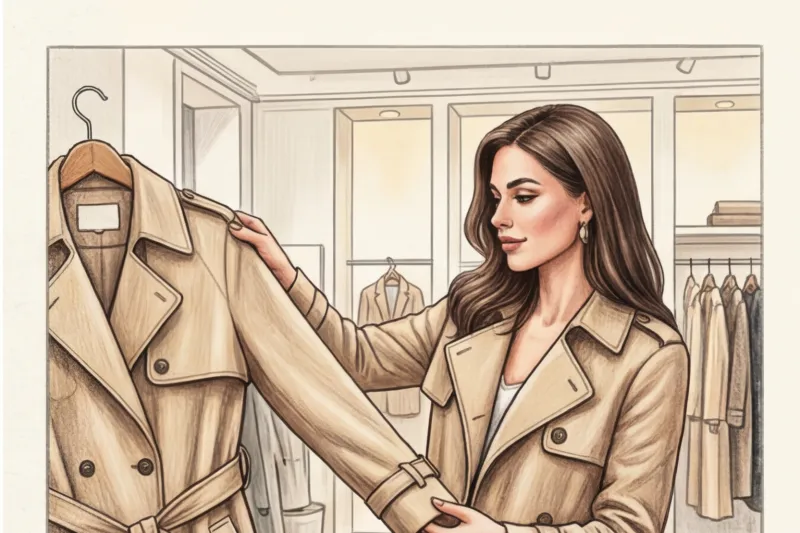
Read labels like you're signing a marriage contract. Look for 100% wool (virgin wool), cashmere, or alpaca blends. Avoid outerwear with more than 30% polyester or acrylic—it won't breathe and won't keep you warm. The same goes for knitwear. A sweater made of 100% cotton or merino wool will last for years, while a cheap viscose-acrylic blend will lose its shape after just one gentle wash.
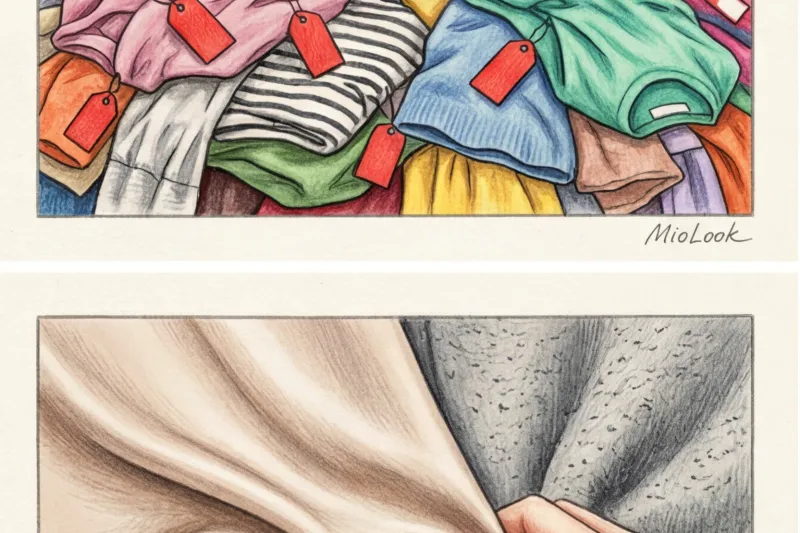
It's important to note here: this advice doesn't work for all types of fabric. For example, if you buy a summer base layer made from 100% natural linen, it will wrinkle. And this is its noble quality, not a sign of low quality. We talked about textures in more detail in the article about fabrics that look expensive.
Shoes and bags: status in detail
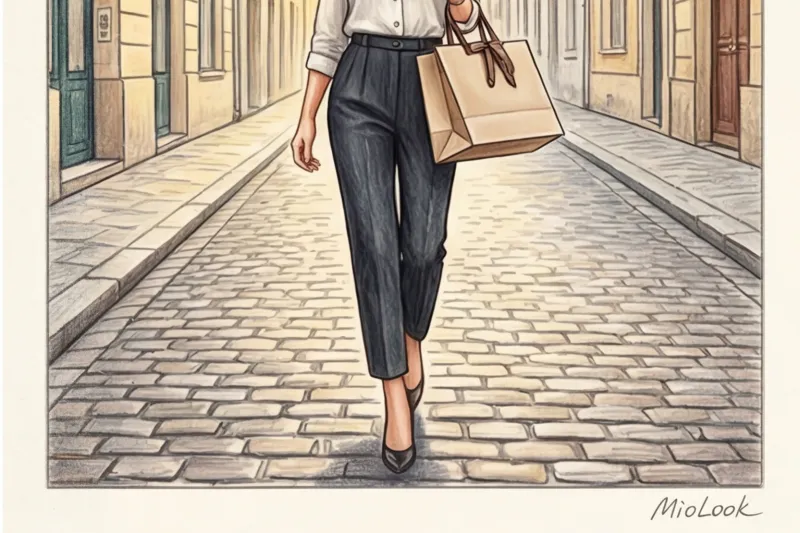
Accessories are the foundation on which your look rests. Sales are where you can find real treasures. Look for bags with a rigid, architectural shape: they always look more expensive than soft, shapeless sacks. Avoid flashy logos and excessive hardware—shiny gold chains from mass-market brands will peel after a couple of months.
When it comes to footwear, basic smooth leather loafers, classic nude pumps (match your skin tone, not just beige), or minimalist Chelsea boots are the items worth spending the lion's share of your sale budget on.
Stylist's Formula: A Checklist for Checking Items at the Checkout
Before you take your item to the checkout, have it quickly inspected right there in the store. This will save you from disappointment at home.
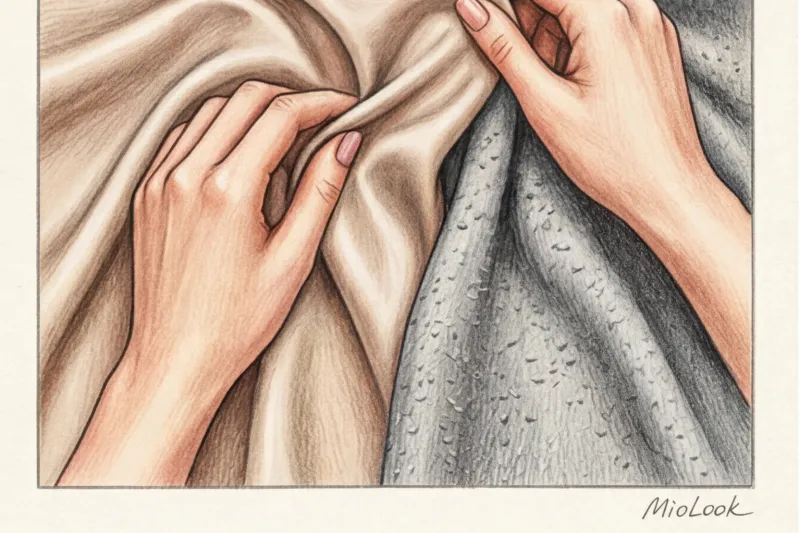
- Crease test: Squeeze the edge of the fabric in your fist for 10 seconds, then release. If it's hopelessly wrinkled, leave it at the store. You'll be exhausted ironing it, and by the middle of the workday, it'll look unkempt.
- The inside out as the face: Professional stylists always turn the garment inside out. Are the seams even? Are there any loose threads? What is the lining made of? (Ideally, it should be viscose or cupro, not squeaky polyester that will make you sweat.)
- Weight of fittings: Feel the buttons and zippers. Heavy, matte, or slightly distressed hardware indicates quality craftsmanship. Cheap, lightweight plastic ruins the overall look of the product.
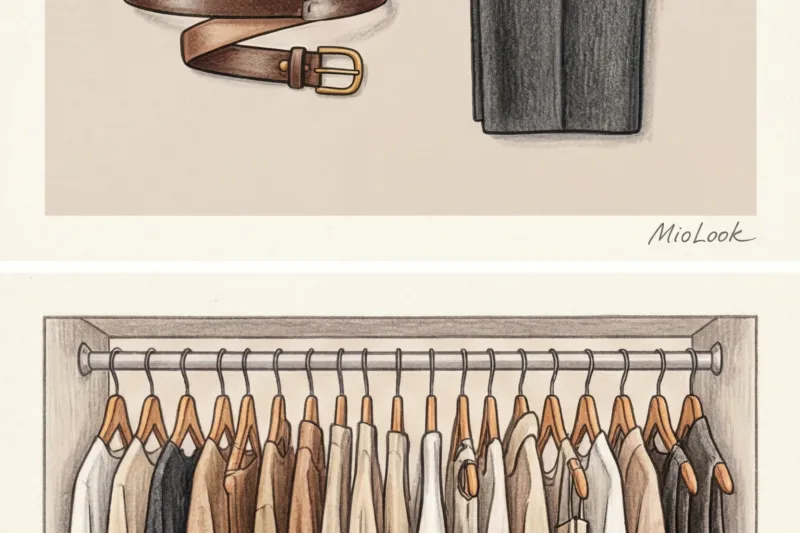
And most importantly - The rule of three images Don't buy an item if, standing in the fitting room, you can't immediately come up with three outfits to go with it from what's already hanging in your closet. Of course, this rule doesn't apply to black-tie evening dresses, which are purchased for a specific occasion. But for a basic wardrobe, it's ironclad. When in doubt, use the Smart Stylist feature in MioLook to estimate the compatibility of an item with your current capsule before making a purchase.
Ready to get started?
Try the MioLook plan for free—no commitments required. Organize your wardrobe and create stylish looks in seconds.
Get access — €0.99 onceInstead of a conclusion: your personal action plan
To ensure the upcoming sales become a truly profitable investment for you, rather than another financial disaster, follow a strict plan.
- Step 1: Closet Audit. Take a day off and digitize your wardrobe. Note any obvious gaps (for example, you have five pairs of jeans but no dress pants; lots of T-shirts but no statement silk blouse).
- Step 2: Creating a wishlist. Before the discounts start, collect links to your desired items from premium brands or high-quality mid-market stores.
- Step 3: Determine the budget. Set a euro limit for each item and stick to it. It's better to buy one perfect pair of loafers for €150 than three pairs of mediocre shoes for €50 each.

Self-confidence doesn't start with the number of items in your closet, but with how those items fit you and the quality they convey to the world. Approach sales with an open mind and remember: you deserve to wear only what makes you look flawless.