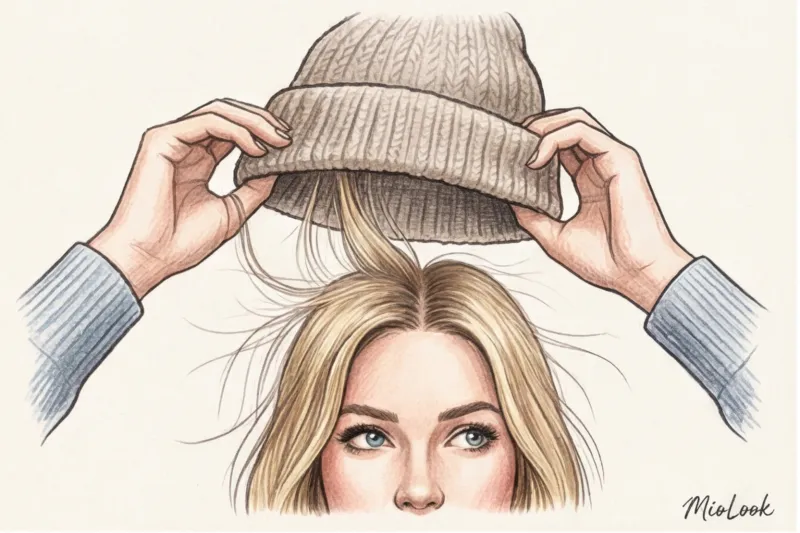
The Anatomy of a "Crushed Hairstyle": Why a Hat Kills Volume
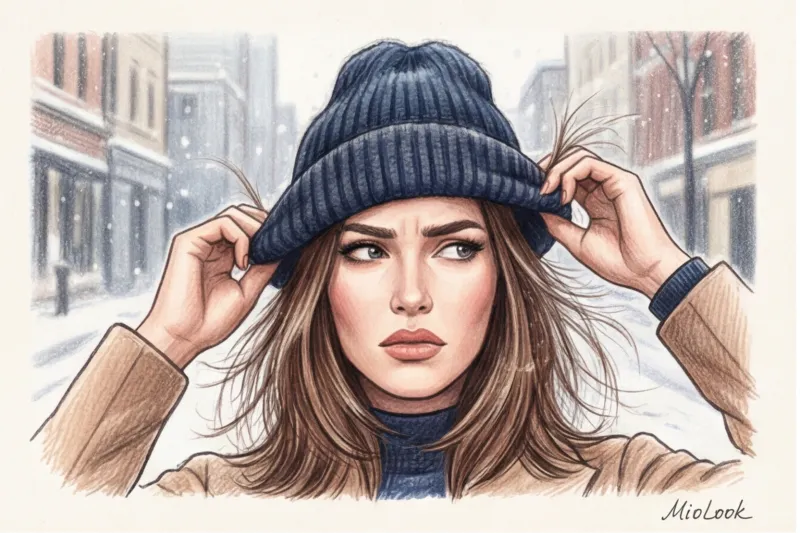
There's a curious detail hidden from view behind the scenes of Paris Fashion Week. In winter, models often scurry between show locations in voluminous down jackets and thick beanies. They have to remove their hats minutes before hitting the runway, and their hair must look flawless. Watching top stylists at work, I realized something fundamental: they don't simply try to "uncrush" hair. They create a style that has a spring-like effect and self-healing properties. Every winter, clients ask me the same question: how can I keep my hair looking presentable under a hat when it's below freezing outside? The answer lies not in the amount of hairspray, but in the laws of physics.
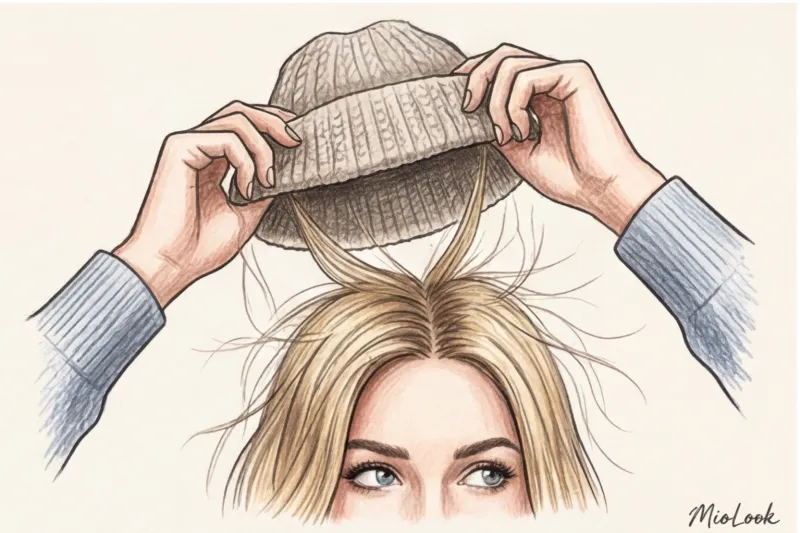
We've covered in more detail how shape and fit influence the perception of an image in our a complete guide to choosing headwear Here we will focus specifically on preserving the hair texture.
Why does hair catastrophically lose its shape under a hat? It's all about thermoregulation and the greenhouse effect. According to the Institute of Trichology (2023), a thick synthetic hat increases scalp sebum production by 30% after just one hour on public transport or indoors. The temperature difference between the freezing cold outside and the warm subway car sends the sebaceous glands into panic mode.
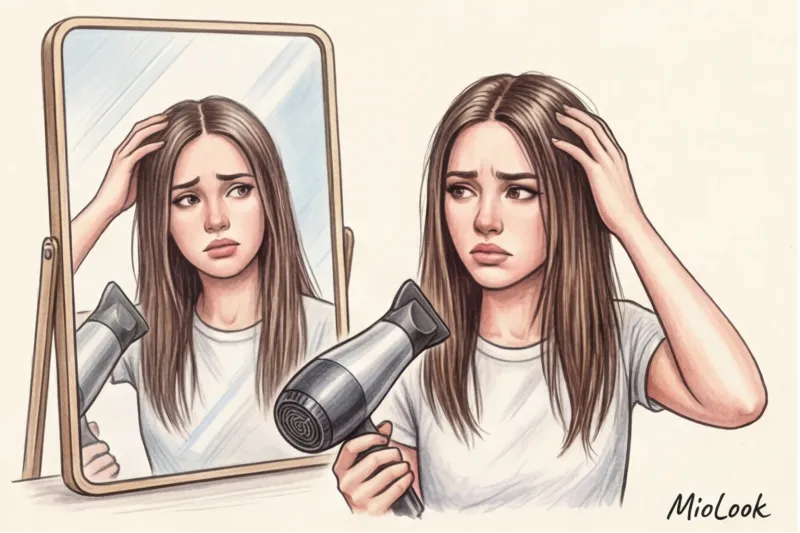
But the biggest physical mistake 90% of women make is related to the temperature of the hair itself. Everyone knows the rule "don't put a hat on wet hair." But that's not enough. While hair is hot after being styled with a hairdryer or straightener, its keratin bonds remain flexible. If you dry your hair and then put a hat on after five minutes, it will act like a flat iron, permanently locking the flat shape. Hair needs to be more than just dried; it needs to be cool down cold air.
Volume Architecture: Hair Preparation That Can Withstand Any Hat
To ensure that your hairstyle survives the mechanical pressure of knitwear, we need to abandon the concept of "rigid armor" in favor of "flexible hold." The hair should bend, not break.
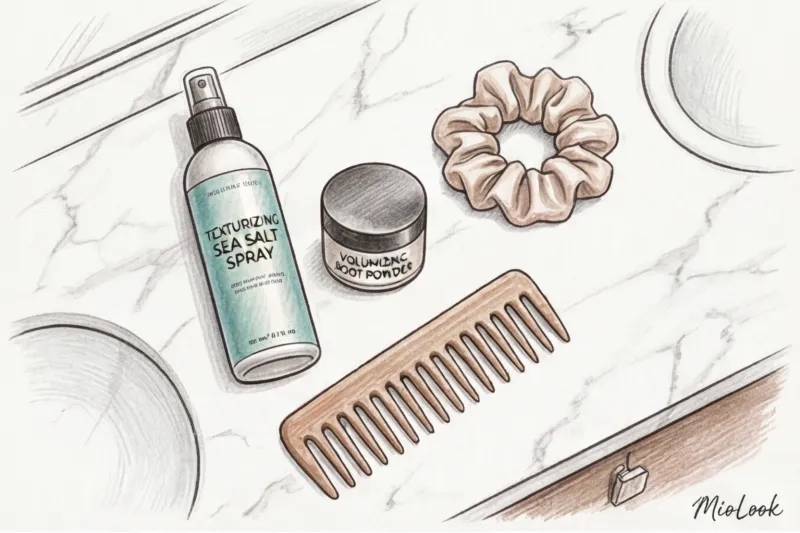
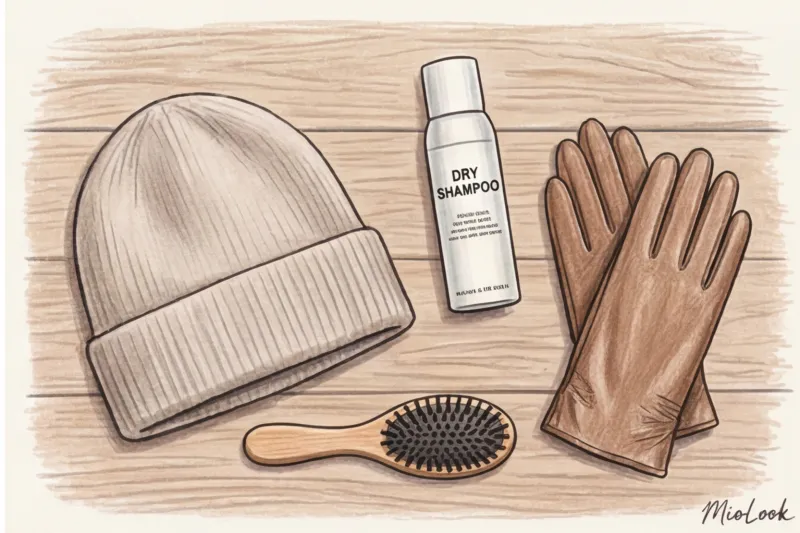
Start with proper drying. The upside-down drying technique creates that "spring effect" at the roots. But the secret of runway stylists lies elsewhere: dry shampoo should be applied to clean Your hair will be looking great before you leave the house, not greasy the next day. By spraying a little absorbent powder onto fresh roots, you create a microscopic scaffold that will absorb excess sebum from the greenhouse effect before it ruins volume.
Access to MioLook for €0.99 — one-time payment
A smart AI stylist will select the perfect look based on your hairstyle and favorite headwear.
Get access — €0.99 onceThe biggest mistake: hairspray and hard hold
Using a strong-hold hairspray before heading out into the cold is a fatal mistake. Lab tests by cosmetic brands show that strong-hold hairspray loses 80% of its volume under the mechanical pressure of a hat. The polymer film covering the hair hardens in the warmth, and under the weight of the hat, this hard "crust" simply breaks.
"Hairspray under a hat works against you. You get the effect of glass noodles you've stepped on: it's impossible to restore your hair's shape without washing it."
The same applies to aggressive backcombing. The friction from the coarse knitting will inevitably turn the backcomb into an uncombable tangle that will require time-consuming and painful untangling.
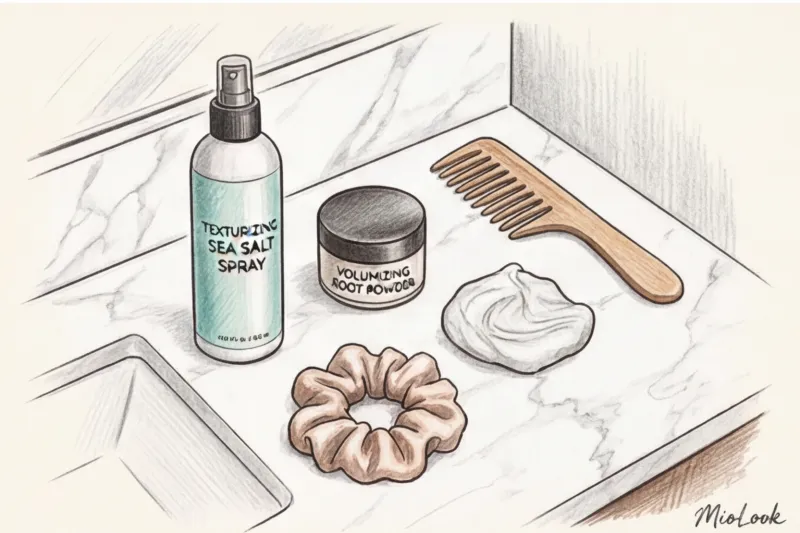
Secret Weapon: Texturizing Sprays and Salt Solutions
What's a good alternative to hairspray? Your options are salt (sea) sprays and dry texturizers. Unlike hairspray, which glues strands together, a salt solution works at the microscopic level: salt crystals settle on the cuticle, thickening each individual hair and making it stiffer yet more flexible. With the right haircut for volume This spray works wonders: after removing the cap, you just need to run your fingers through the roots and fluff them up a bit—the texture will instantly “remember” the desired shape.
How to choose a hat so as not to ruin your hairstyle under it
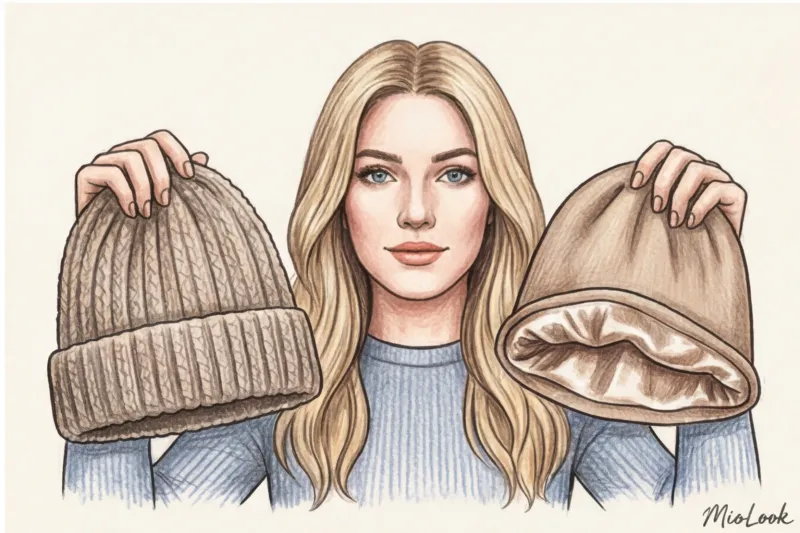
Even the most perfect styling can be ruined by cheap, squeaky acrylic. Research by textile engineers (WGSN, 2024) confirms that 100% polyester and acrylic generate maximum static tension when they rub against the hair's keratin.
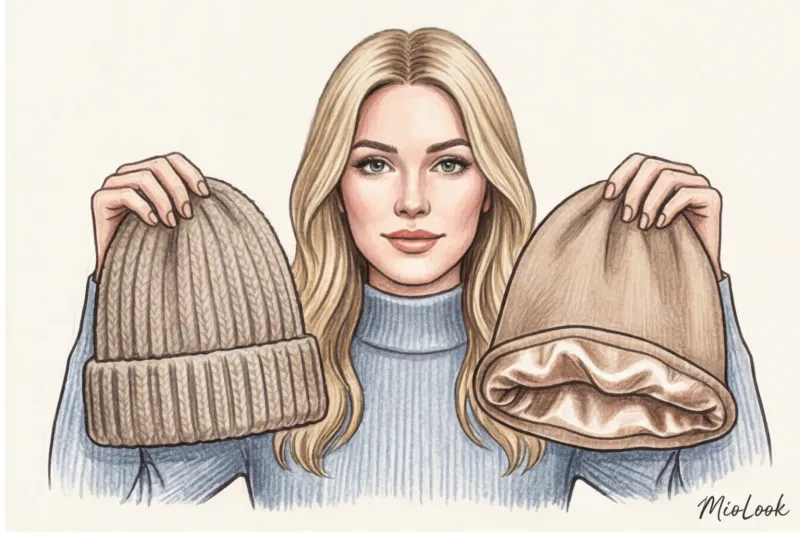
One of my clients had long complained that her hair looked dull and got greasy quickly in winter. The problem was solved when we replaced her collection of mass-market beanies for €15 with two high-quality merino wool hats with silk linings (an investment of €80 to €120). The smooth silk lining doesn't cling to the cuticle, prevents split ends, and prevents frizz.
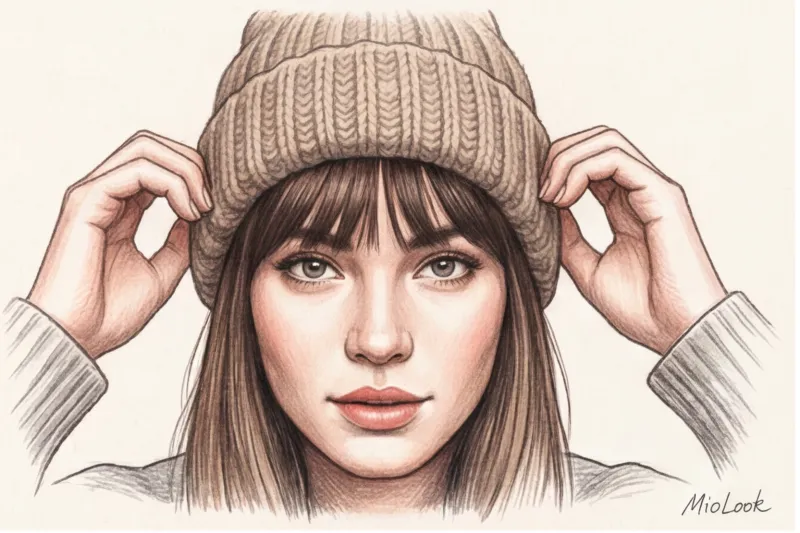
The illusion of framing is also important. Don't pull the hat down to your eyebrows like a swimming cap. Let a few textured strands of hair fall free around your face—this will balance your features and draw attention away from a slightly flattened crown.
Top 5 hairstyles that look even better after you take off your hat
In my experience, the surest way to survive winter beautifully is to stop fighting your hat and make it work for you. If you're looking for inspiration, check out smart haircuts that don't require styling , or try these 5 proven options:
- Loose textured braids. An ideal choice for long hair, the hat will add a touch of casualness at the roots, transforming a strict braid into a bohemian chic style.
- Low bun. Classic old-mani style styling The smooth geometric design at the back of the head is completely resistant to the pressure of the knitwear.
- Shaggy and mullet haircuts. This is a case where the "beanie effect" is part of the style. The slightly tousled strands after removing the beanie look exactly as the stylist intended.
- Center parting and slicked back. A runway trend perfectly suited for winter. Apply a light gel to the roots, comb your hair behind your ears, and confidently wear a hat.
- Natural curls (hat like curlers). Divide your hair into two sections, twist each into a loose bun away from your face, and put on a hat. While you're commuting to work, your body heat will help keep the wave in place.
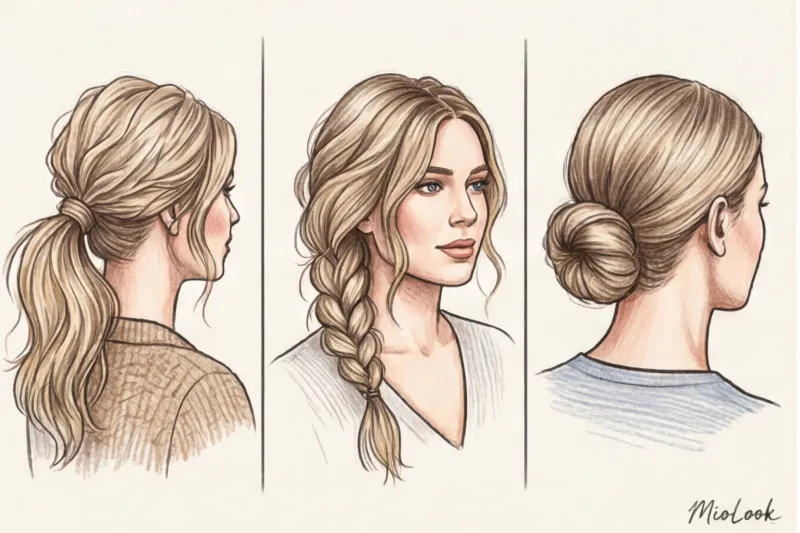
For Anna, my client with a strict corporate dress code, a low bun has become a real lifesaver. She puts her hair up before heading out, and then, once she gets to the office, simply sprays on a little shine spray. The whole process takes exactly 30 seconds.
Your perfect look starts here
Join thousands of users who look flawless every day with the MioLook AI assistant.
Get access — €0.99 onceEmergency Resuscitation: How to Restore Volume in 60 Seconds
Let's say you walk into a room, take off your hat, and your hair is stuck to your scalp. What should you do? The main rule is to put away the brush. Brushing flattened, static-prone hair will only increase frizz at the ends, leaving the roots flat.
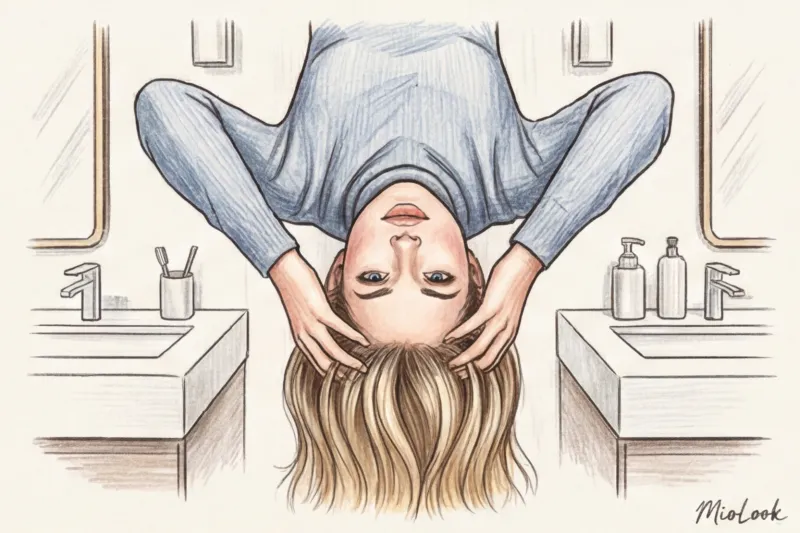
Use technology "inverted massage" (zipper technique):
- Lower your head down.
- Run the fingers of both hands deep into the roots of your hair, like the teeth of a comb.
- Use short, zig-zag motions with your fingertips (as if zipping a zipper), pulling at your scalp. This will reactivate the texturizing powder applied this morning.
- Throw your head back sharply and adjust your parting.
If your hair is very staticky and you don't have any anti-static handy, try this beauty editor trick: Rub a pea-sized amount of regular hand cream between your palms until it's completely absorbed, then simply run your hands through your hair. The cream's lipids will instantly eliminate static. But remember the fair limit: This tip only works on dry hair. If you're sweating under your hat because the weather is too warm, massaging your roots won't help—the moisture has already ruined your volume.
Checklist: How to keep your hair looking great under a hat in winter
To conclude our winter beauty guide, I'd like to share my favorite, foolproof trick that I use every day. It's basic hair biomechanics and requires no products.
Before you put on your hat, flip your usual parting to the opposite side (Or comb your hair back if you have a center parting.) Put on a hat. When you reach your destination and remove the hat, simply return your hair to its natural position. Hair that was pressed in an "unnatural" direction will automatically create powerful root volume when returned to its original position, resisting gravity.
Let's summarize your winter checklist:
- Cool your hair with cold air from a hairdryer for at least 15 minutes before going out.
- Ditch the hairspray in favor of dry powders and texturizing sprays.
- Choose hats with silk lining or made of natural cashmere, avoiding 100% acrylic.
- In any unclear situation, use the trick of changing the parting.
Winter doesn't mean you have to choose between warmth and style. By changing just a few steps in your morning routine and choosing the right materials, you can transform your hat from a styling nuisance into a stylish accessory that works by your rules.
Ready to get started?
Try MioLook's free plan—upload your wardrobe and let AI create looks for you, no strings attached.
Get access — €0.99 once