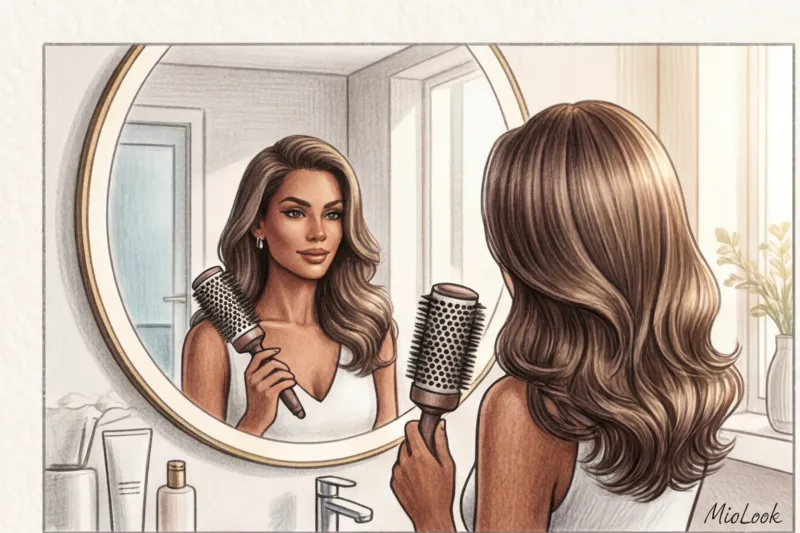
As a personal stylist, I constantly encounter the same scenario: a woman buys a luxurious Massimo Dutti jacket, chooses the perfect trousers, and does her makeup, only to have her hair style fall apart exactly 30 minutes after leaving the house. One of my clients literally bought up luxury texturizing sprays and volumizing hairsprays for €60 each, trying to achieve voluminous brushed hair. You know what the real problem was? Her shower stall.
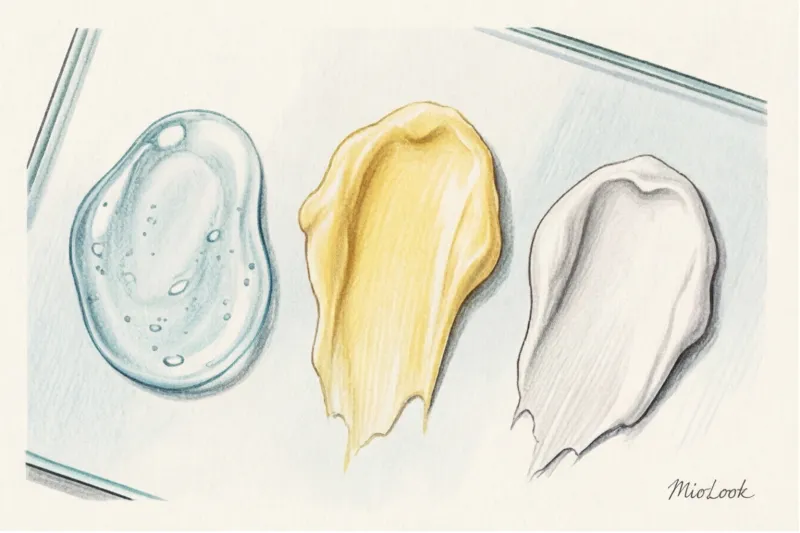
She overfed her fine hair with a heavy, nourishing mask containing shea and macadamia oils. Under the weight of these lipids, no styling product could maintain root volume—gravity took its toll. Hair is a canvas for a hairstyle, just like primer is for foundation. And how this canvas will perform during blow-drying is determined during the wash stage. We explored the fundamental principles of how preparation influences hairstyle longevity in our article. The Complete Guide: Proper Hair Care for Perfect Hair.
Today, I'm offering a fresh perspective on hair masks—not just as a "softening" product, but as a functional tool that physically alters the structure of hair strands to meet a specific need.
Hydration, nourishment, or restoration: how a mask forms a base for styling
Building your wardrobe starts with basic t-shirts, and preparing for styling starts with understanding what you're applying to your hair. If you're planning a voluminous brushed hairstyle but instead use a thick, restorative mask, you're sabotaging your results. Let's look at three key areas.
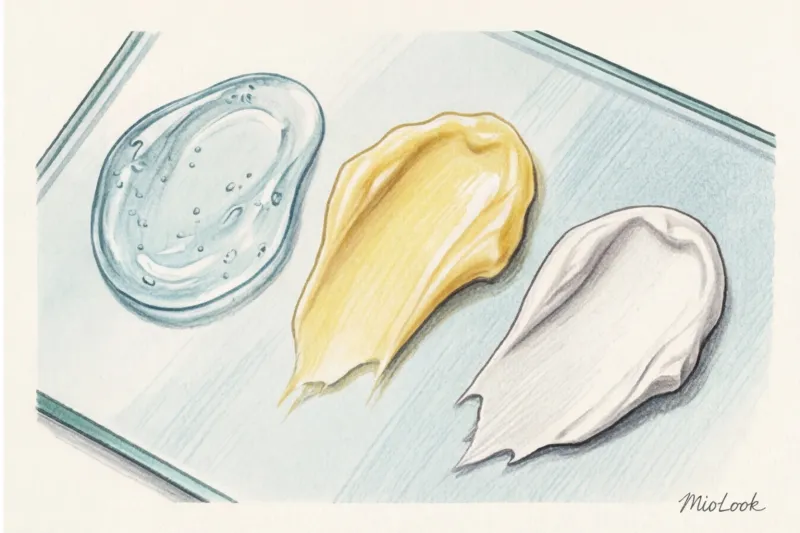
Moisturizing (humectants). Look for aloe, hyaluronic acid, glycerin, and panthenol in the ingredients. These ingredients act like sponges, attracting water into the hair without weighing it down. Hair becomes bouncy, incredibly light, and manageable. This is an absolute must-have if you're looking for airy curls with a Dyson curling iron, voluminous brushing, or a flexible texture.
Nutrition (lipids and oils). Ceramides, argan, coconut, and shea butters. This nourishing mask physically smooths the cuticle and adds weight to the hair. It coats the hair shaft, creating that mirror-like shine. It's the perfect primer for the "old money" look: sleek buns, perfectly straight, shiny hair, and straightened with a flat iron. But remember: too much nourishment kills root volume.
Restoration (proteins and keratin). Amino acids, hydrolyzed silk, or soy. According to a report by the Society of Cosmetic Chemists (2023), proteins literally act as "patches" on damaged areas of the cuticle. Hair becomes stiffer, denser, and strengthened. This restoration is essential for blondes and those who frequently use hot tools. However, an excess of proteins makes hair strands brittle and prone to breakage.
Access to MioLook for €0.99 — one-time payment
A smart AI stylist will select the perfect look based on your features and styling style.
Get access — €0.99 onceThe biggest mistake in the shower: how to apply a hair mask correctly
Over 12 years of working in the fashion industry, I've witnessed top stylists at work in their dressing rooms before shows. And the main difference between salon treatments and at-home treatments lies not only in the jars themselves, but also in the physics of the process. Up to 80% of the active ingredients in your expensive mask will wash straight down the drain if you apply it to wet, unwrung-out hair.
Let's break down how to properly apply a hair mask so it works like a salon treatment:
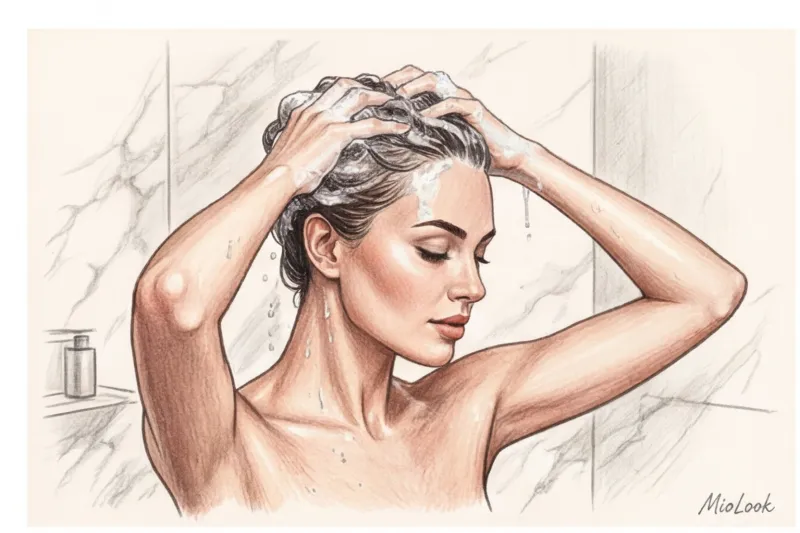
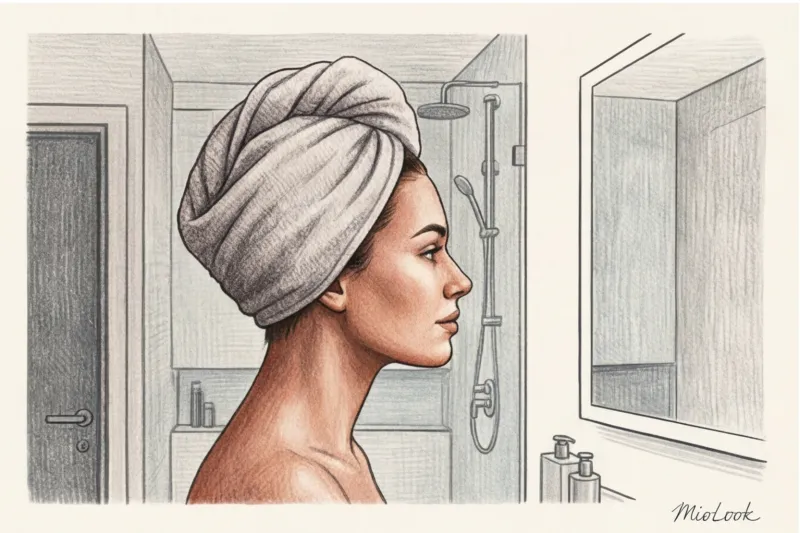
- Microfiber rule. Water is a barrier. If water drips from your hair strands, the mask has no room to soak in. After shampooing, gently squeeze your hair with your hands, and ideally, pat dry with a microfiber towel. This will absorb excess moisture without damaging the swollen cuticle.
- Geometry of the indent. Never apply a mask to the scalp (unless it's a specialized exfoliant). Keep a distance of 10-15 centimeters from the roots. Allowing conditioning agents to come into contact with the scalp guarantees your hair will look greasy by the end of the day.
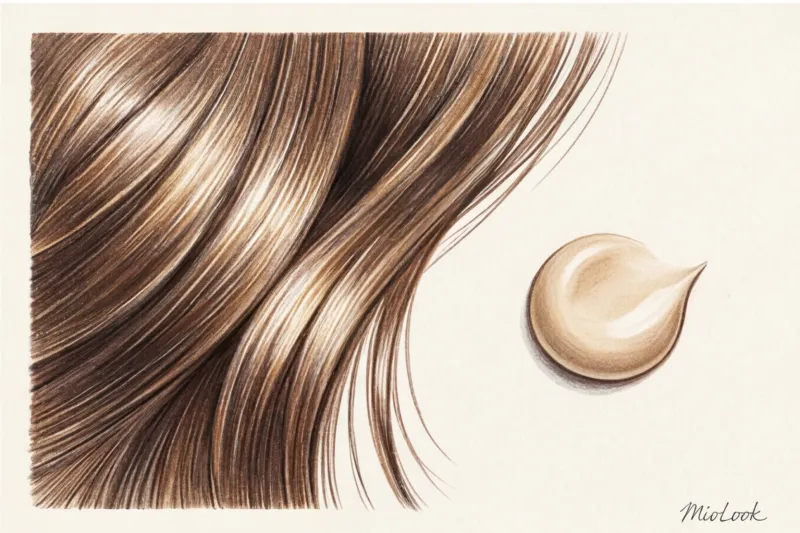
- Dosage "pea". More isn't always better. Excess product won't be absorbed; it will only stick the strands together with a polymer film. For medium-length hair, a hazelnut-sized amount is sufficient. Rub the product between your palms until it emulsifies, then apply it to the lengths.
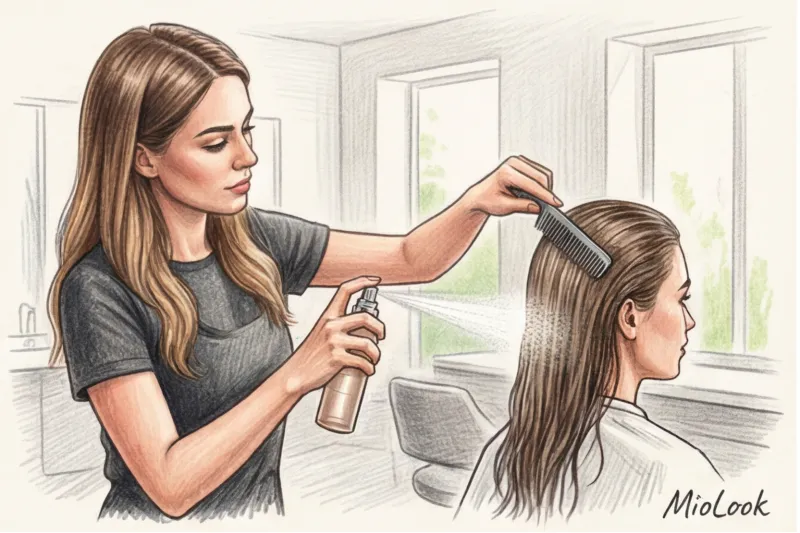
- Mandatory combing. You can't distribute the primer with your fingers. You'll need a special wet brush (like the Tangle Teezer) or a wide-tooth comb. Gentle combing ensures every hair gets its fill of the primer.
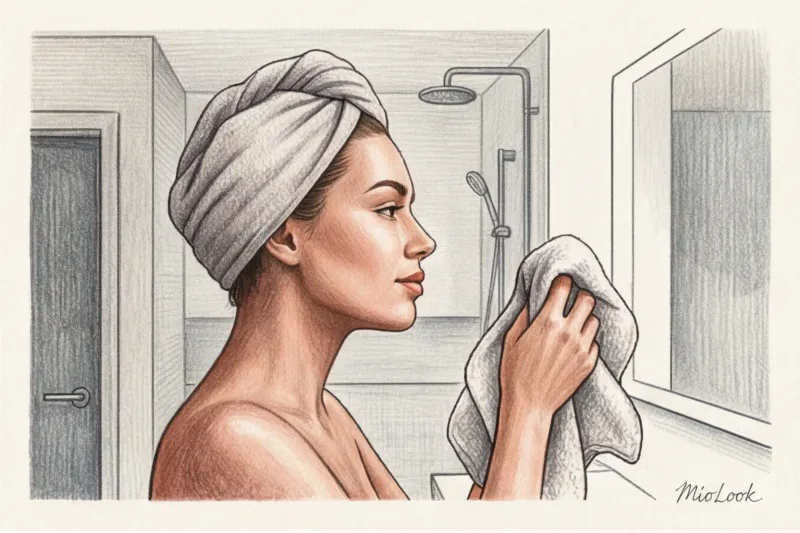
"If you simply apply the mask with your hands and immediately rinse it off, you're wasting the product. Only mechanical distribution with a comb closes the cuticle and creates that smooth base for styling."
Hidden Weight: Why Mass-Market Products Are Sabotaging Your Hairstyles
As a stylist, I love finding gems in the mass market: a great white T-shirt for €15 made of good-weight cotton is a reality. But with hair products, the math works differently. Supermarket masks under €10 often only create the illusion of care.
Instead of expensive amino acids and high-quality lipids, they use heavy, hard-to-rinse silicones (for example, Dimethicone in huge concentrations). Yes, hair feels soft for the first minute after drying. But cheap polymers have a build-up effect. With each wash, they build up on the cuticle. Hair loses its natural light reflectivity, becomes matte, dull, and loses its curl shape.
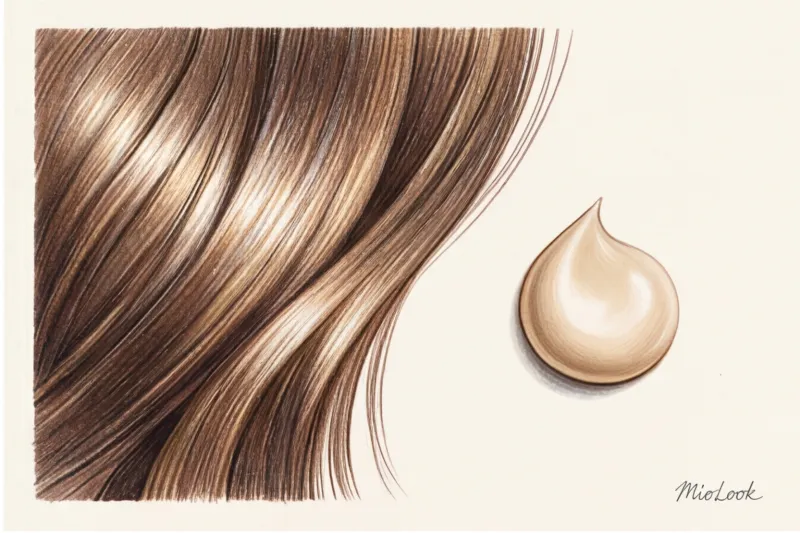
This is where my favorite Cost-Per-Use rule comes into play, which I apply when sorting out my wardrobe. A cheap mask has a watery texture, and you need about 40-50 ml per application. A €10 jar will be gone in five washes (the cost per application is €2). A professional product for €45 is highly concentrated: 10-15 ml per application is enough. A jar will last for six months, and the cost per application will be about €1.50. Ultimately, high-quality care is cheaper, and your hair doesn't look like heavy icicles.
Your perfect look starts here
Join thousands of users who look flawless every day with MioLook. Plan your looks from clothing to styling.
Get access — €0.99 onceHygral Fatigue: Why You Shouldn't Sleep with a Hair Mask on
If you go to TikTok or Instagram, you're sure to stumble upon a "brilliant" life hack: apply a mask to damp hair, wrap it in plastic wrap, and sleep like that for "deep repair." As a practitioner, I can tell you straight: this is a fatal mistake that systematically destroys your hair.
There is a term in trichology hygral fatigue When you wet your hair, its shaft swells and expands. When you dry it, it contracts. If the cuticle remains swollen from water and conditioning agents for 8 hours under a film, the internal protein bonds of the hair can't withstand the stress and break down.
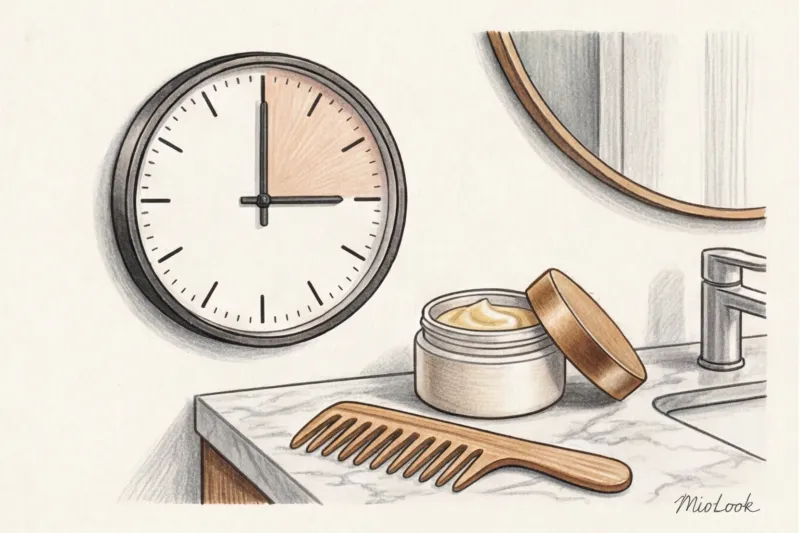
The symptoms of over-treated, tired hair are obvious: when wet, it becomes stretchy like gum, takes a long time to dry, and when dry, it breaks at the slightest tug of a brush. No curling iron will create a long-lasting curl on such strands.
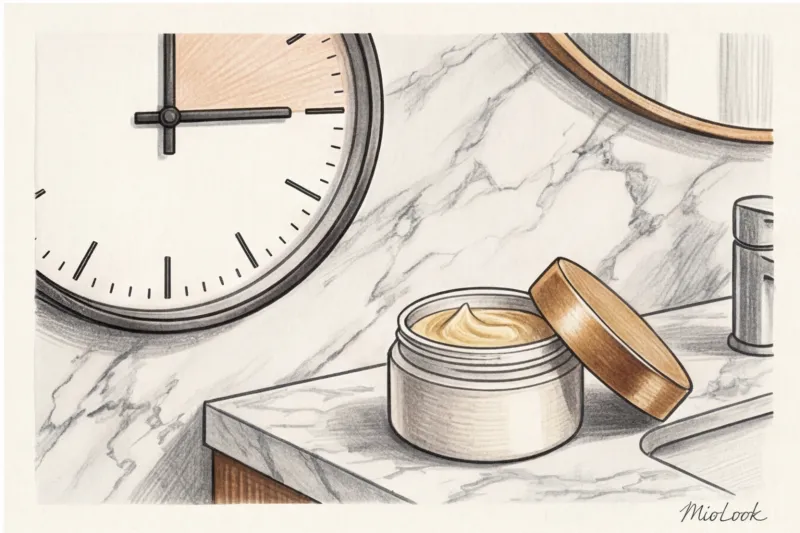
The optimal exposure time is always specified by the manufacturer. It's usually between 5 and 15 minutes. This time is physically sufficient for molecules of the right size to penetrate the cuticle. Anything later is simply excess swelling of the hair shaft. Of course, there are exceptions: there are special overnight serums for dry hair, but they have a completely different chemical composition and pH.
Checklist: Putting together a "capsule wardrobe" for your hair
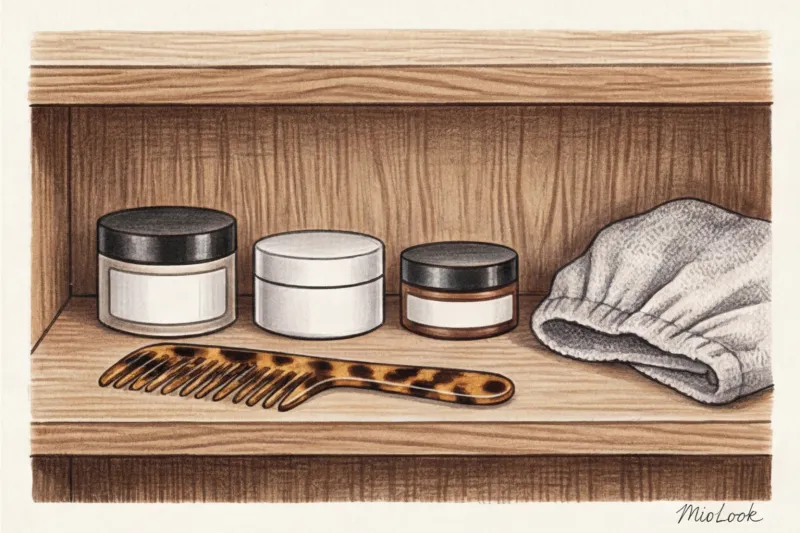
Just as you can't have just one warm sweater in your closet for every occasion, you shouldn't have just one mask on your bathroom shelf. Your hair's needs change depending on the season, your coloring phase, and the style you're trying to achieve that day.
Here's what the perfect basic hair capsule looks like:
- 1 moisturizing mask: Your base for regular use. Perfect for days when you want a lighter look, blow-dry your hair with a diffuser or use a volumizing brush.
- 1 nourishing mask: For dry winters, heating season or those days when you want a perfectly smooth, hair-to-hair style.
- 1 restorative mask: An SOS treatment with proteins. Use strictly every 1.5–2 weeks to maintain the hair structure, especially if you have blonde hair.
Hair washing algorithm for flawless styling:
- We wash the roots twice with shampoo according to the scalp type (not according to the hair type!).
- Carefully squeeze out the length with a towel.
- We apply a mask for the styling task (moisturizing for volume, nourishment for smoothness).
- Comb through and wait exactly 10 minutes.
- We wash it off.
- Optional: Close the mask with conditioner for 1 minute. Most modern professional masks already have an acidic pH (around 3.5–4.5), which naturally seals the cuticle. However, if your mask is alkaline, conditioner is essential.
Ready to get started?
Try the MioLook free plan—no commitments required. Organize your wardrobe and create beauty looks in one app.
Get access — €0.99 onceWell-groomed hair isn't the result of a genetic lottery or the magic of a single bottle costing hundreds of euros. It's a system. Just as we thoughtfully invest in a basic wardrobe, we must understand the mechanics of cosmetics. A properly chosen and correctly applied mask takes 50% of the work out of styling. Start applying the towel-dried hair rule this evening, and you'll see how even your usual styling will take on a whole new meaning.