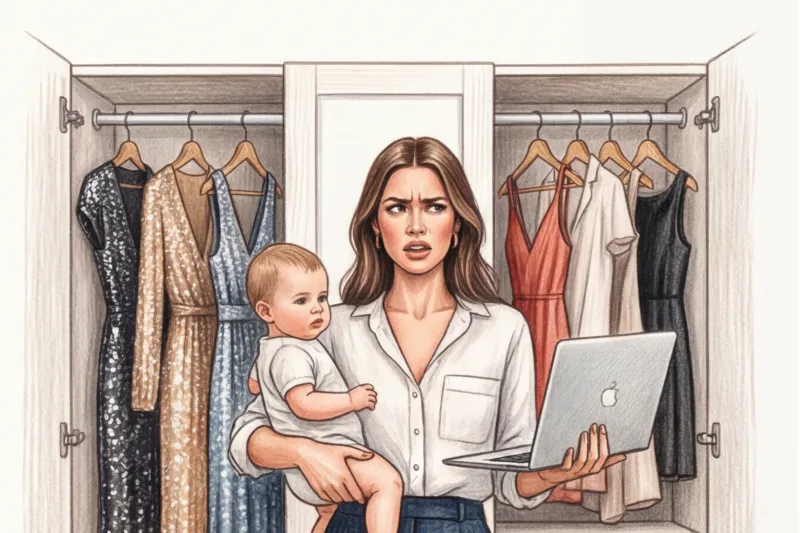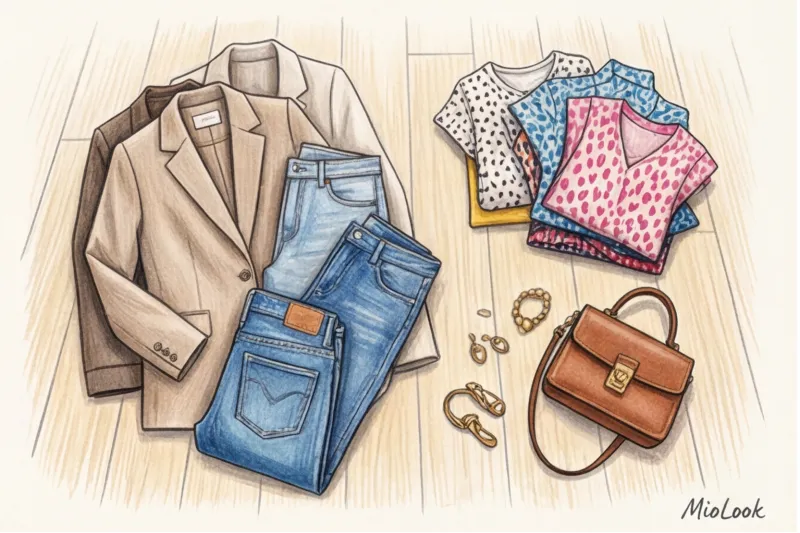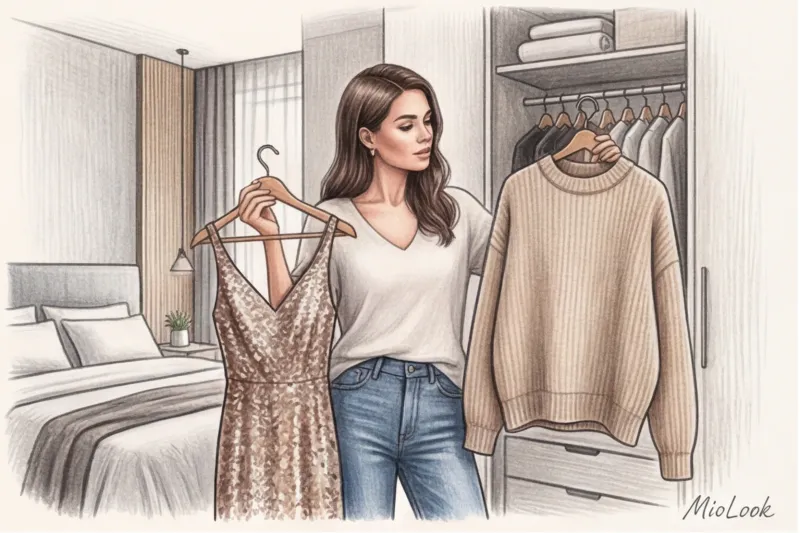
Over the 12 years I've worked as a personal stylist, I've witnessed the same scene hundreds of times: a grown, successful woman stands before me, staring into a closet overflowing with clothes, and proclaims with genuine despair, "I have absolutely nothing to wear." The problem is never a lack of clothes. The problem is that the wardrobe belongs to a woman who doesn't exist.
We're buying up striking slip dresses for parties that never happen, and formal suits for the office, where strict dress codes have long since been abolished. If you want to solve this problem once and for all, you don't need another shopping spree, but an honest audit of your routine. We've covered the basic principles of image formation in more detail in our the complete guide to finding your clothing style.
Today, we'll eschew abstract aesthetics and color types. Instead, we'll apply a rigorous mathematical approach. I'll show you how to tailor a wardrobe to your lifestyle, using high-tech fabrics and the "time chart" formula to ensure every item in your closet earns its full value.
The illusion of a perfect look: why our closet is full, but we have nothing to wear
Kibbe typologies and color theory are dead ends if they ignore your actual daily routine. You may be a perfect "Dramatic" or "Winter," but if 80% of your time is spent working remotely and taking your kids to sports, your fuchsia silk blouse will simply hang on the hanger.
One of my clients, a top IT manager, spent a long time trying to assemble a "Parisian chic" capsule wardrobe. She stocked up on tweed jackets, pencil skirts, and pumps. In reality, she worked from home three days a week and spent her evenings walking her active Labrador. The result? The luxurious jackets were worn only a couple of times a year. According to a 2021 report by the Ellen MacArthur Foundation, today we wear an item on average only 7-10 times before discarding it. We buy fantasy, not function.
The gap between your fantasy and reality is your wallet's biggest enemy. To understand how to choose a wardrobe that fits your lifestyle, you need to stop dressing your fantasy and start dressing your reality.
Your ideal image begins Here
Join thousands of users who look flawless every day with MioLook.
Get access — €0.99 onceThe Mathematics of Style: How to Match Your Wardrobe to Your Lifestyle with the Time Chart
Professional wardrobe architects rarely begin their work with fittings. We begin with an exercise. Life Pie (Time chart). There are 168 hours in a week. Subtract 56 hours for sleep, leaving 112 active hours. How exactly do you spend them?
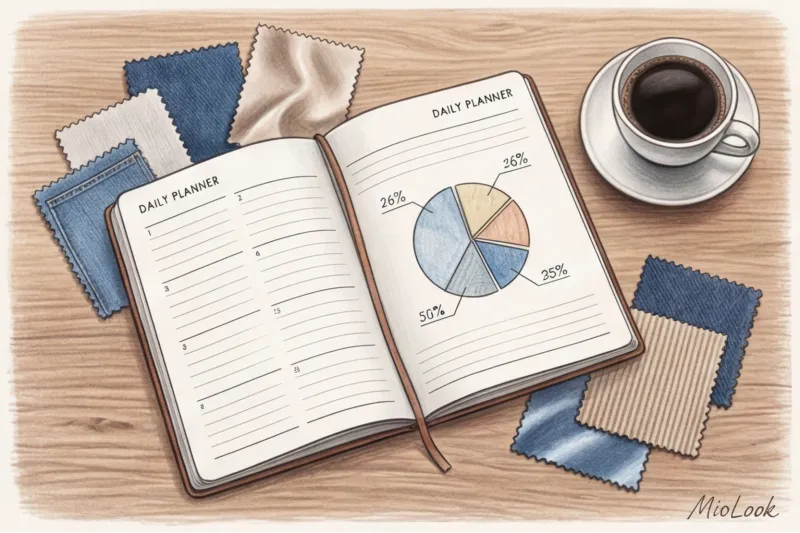
Take a piece of paper and divide these 112 hours into categories. For example:
- Office work: 40 hours (35%)
- Home and remote work: 30 hours (27%)
- Walks, everyday life, children: 25 hours (22%)
- Sport: 10 hours (9%)
- Exits (restaurants, theaters): 7 hours (7%)
The main rule of style mathematics: The percentage of items in the closet must strictly correspond to the percentages on the diagram.
If you spend 50% of your budget on evening dresses and 7% of your time on going out, you'll inevitably experience style burnout in the mornings. Your investments should be focused on the segments that take up the most time. And this is where the 80/20 rule comes into play: we wear 20% of the items 80% of the time, simply because they're the only ones that physically fit our schedules.
Breaking Free of Stereotypes: Why a Universal Basic Wardrobe Doesn't Work
Let's be honest: a classic white shirt, pencil skirt, and beige trench coat aren't for everyone. It's a myth carefully nurtured by glossy magazines of the 2000s.
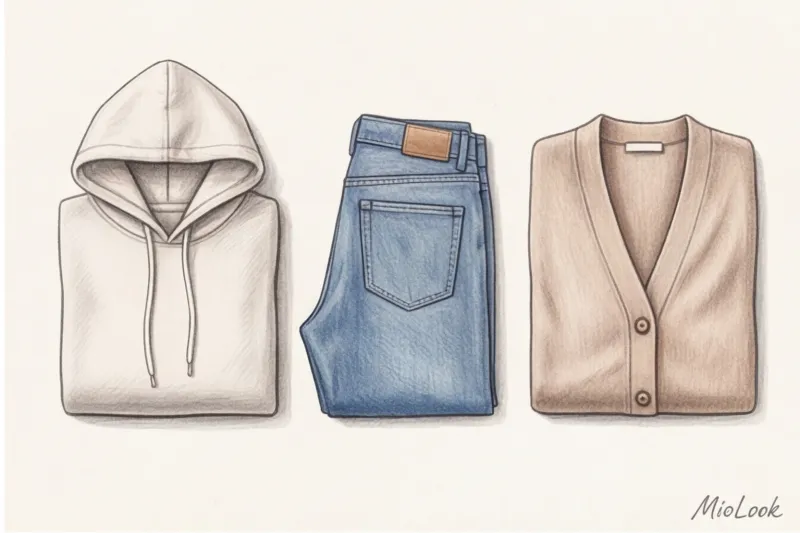
If you're on maternity leave, working freelance, or at a creative agency without a dress code, your true essentials aren't formal cotton poplin. In your case, a voluminous hoodie made of heavy fleece (at least 320 g/m²) or a quality cashmere sweater will be a much better investment than a perfect but restrictive jacket. There's no universal list of "10 things every woman should own."
"A basic wardrobe isn't a uniform you throw on top. It's a collection of pieces that don't require you to suck in your stomach or tug at your hems while going about your daily life."
Create your own everyday "uniform." If you're comfortable in jeans, learn how to properly integrate them. office-style jeans Instead of forcing yourself to wear uncomfortable pants, a personalized database eliminates the hassle of choosing clothes in the morning and gives you a sense of confidence.
Access to MioLook for €0.99 — one-time payment
A smart AI stylist will select the perfect look for your unique routine.
Get access — €0.99 onceTextile audit: choosing fabrics according to your activity level
Materials are where 90% of women stumble. You can find the perfect fit, but if the fabric doesn't match your activity level, you'll hate it by midday. Fabric directly determines your comfort.
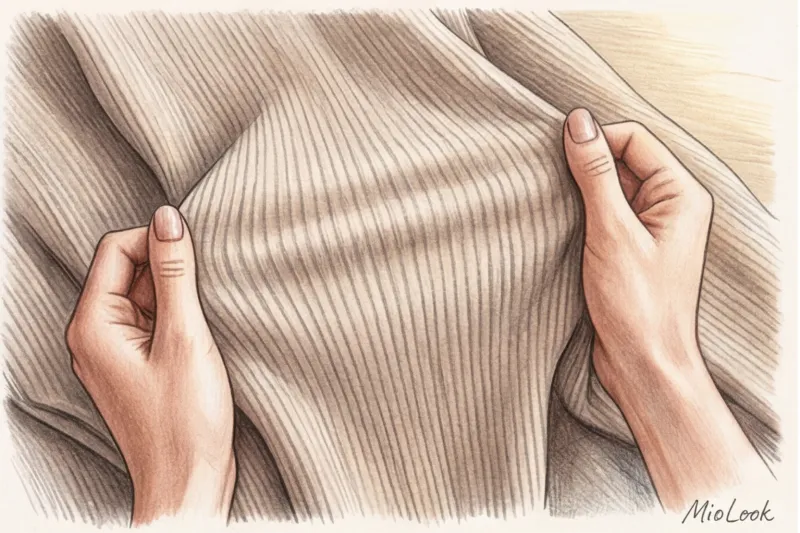
If your Life Pie As remote work becomes more prevalent, invest in lyocell (Tencel) and cashmere. According to Textile Exchange (2023), lyocell absorbs 50% more moisture than cotton, has natural antibacterial properties, and is incredibly comfortable. Avoid harsh synthetics, as they can create a greenhouse effect in the home.
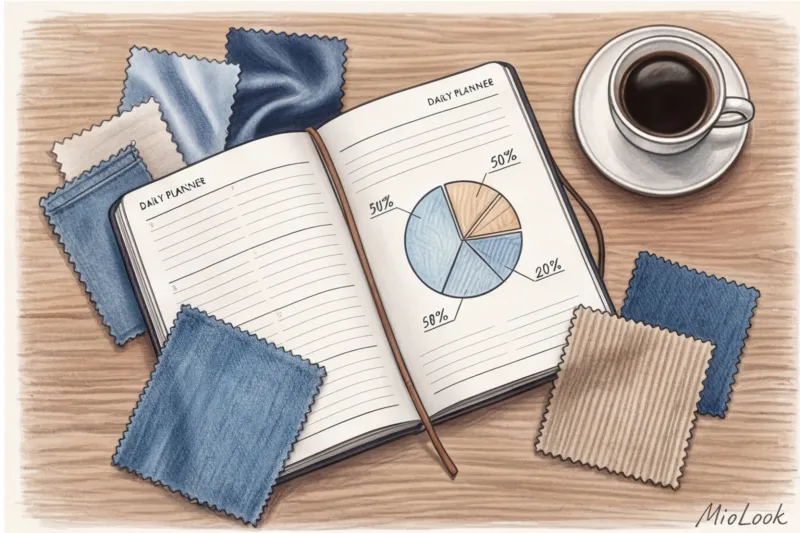
For those who are constantly on the go or frequently fly on business trips, merino wool is a great friend. Its fibers contain keratin, which destroys the bacteria that cause body odor. You can wear a thin merino long sleeve for three days straight and it will stay fresh. Also, consider heavy cotton with 2-5% elastane—it holds its shape without restricting your steps, which is especially important if you like to wear business style sneakers.
How to Read Labels: A Checklist for Different Life Scenarios
Never buy an item without checking the inseam. Here's what you need to know:
- Knitwear quality markers: Look for a tight knit and a high twist. If a sweater is see-through when held up to the light in the store, it will pill within a week.
- What is contraindicated for mothers: 100% silk and fine viscose. Any stain from baby food will leave a permanent mark or water stain. Choose heavyweight cotton or blended fabrics (80/20 cotton/polyester) that are easy to wash.
- What travelers should avoid: 100% linen. Yes, it's eco-friendly, but after an hour on a plane, you'll look like you slept in it. Look for linen with a viscose or lyocell blend.
Resilient Adaptation: What to Do When Things Don't Fit
When you create your time chart, you'll discover "mistakes" in your closet—items that are categorically inappropriate for your lifestyle. Sustainable fashion dictates: don't rush to throw them away. We can adapt them through styling.
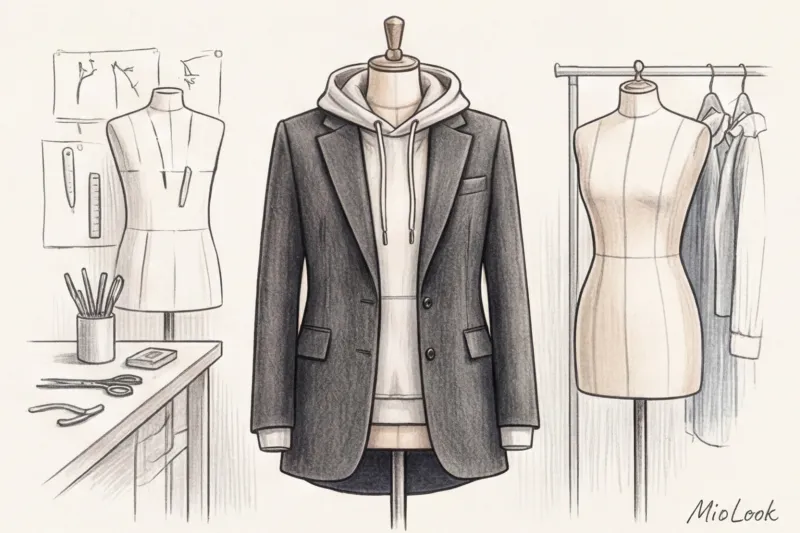
My favorite technique is - down-dressing (Downgrade). Do you have a silk midi skirt you bought for a friend's wedding? Wear it on weekdays with chunky Chelsea boots and a chunky knit sweater. Is that tailored jacket collecting dust in a bag? Layer it over that same heavy cotton hoodie.
Don't forget the power of tailoring. Shorten an evening dress to a midi length to wear with sandals in the summer. Replace the buttons on a formal coat with more relaxed horn ones. You'll be surprised how much details change the function of a garment. And the right accessories will help complete your updated look. accessories for office style.
The Cost per Wear formula in a real-life context
We often skimp on everyday clothes, thinking that "cheap clothes will do for home or going out," but we easily spend half our salary on a dress for a single evening. This is a style trap. Let's calculate Cost Per Wear (CPW)—the real cost of an item based on your activity level.

Let's say you bought a premium tracksuit made of thick cotton for 20,000 €. In your opinion Life Pie You wear it 150 days a year (working remotely, on weekends, going out). The annual CPW is only 133 € per outing. Now, let's take a dress for a corporate event that costs 5,000 €. You wear it twice. Its CPW is 2,500 €.
It's a paradox, but an expensive suit turned out to be 18 times cheaper than a budget dress! Invest maximum money in quality basics that cover 80% of your needs. Cheap knitwear will lose its shape after three washes, and you'll be back to the store. A quality item will last for years.
Ready to get started?
Try a free plan—no commitments. Start building a smart wardrobe today.
Get access — €0.99 onceWorkshop: 7-Day Test Drive of Your New Style
Reading advice is helpful, but style only changes through practice. I suggest you take a 7-day test drive. For the next week, don't try to dress "correctly." Dress as your day demands.
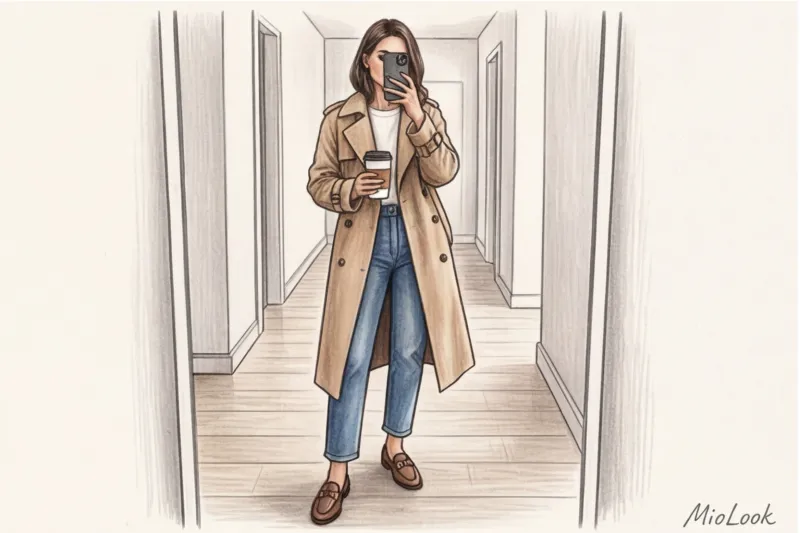
Your task is to take a picture of yourself in the mirror every day and rate your comfort level on a 1-10 scale in the evening. Analyze your "blind spots." At what points during the day did your clothes get in your way? Did your skirt constrict your stomach after lunch? Did you constantly have to tug at your sweater? Did you sweat in a synthetic blouse during a meeting?
This test drive will reveal your true needs. Only then will you be able to create your final shopping list. And this time, it won't be filled with glossy clichés, but with real-life shortages revealed in practice. The perfect style isn't the one that gets likes on social media. It's the one that allows you to stop thinking about clothes while you do what you truly love.