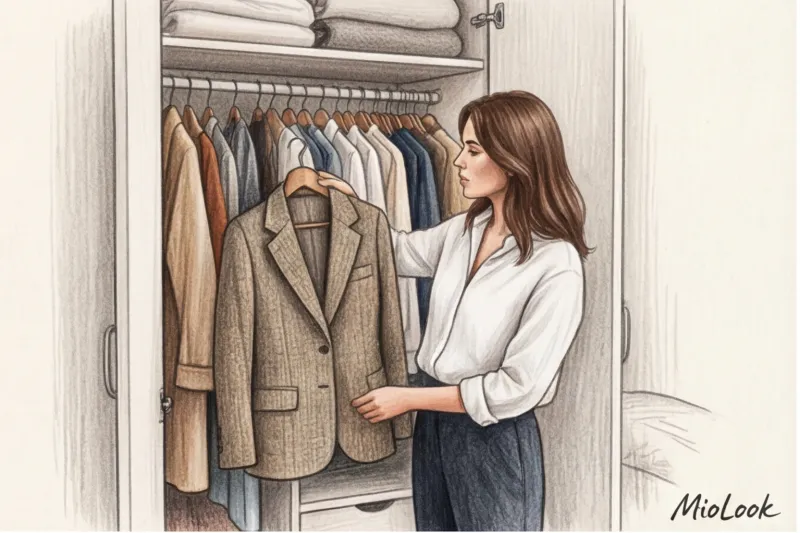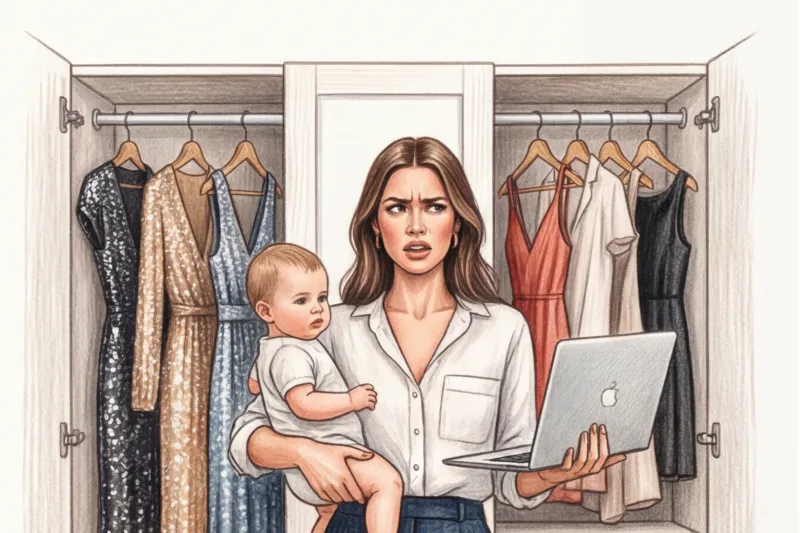
I had a client, let's call her Anna. She was a successful graphic designer who worked from home. When I first opened her closet door, I was greeted by rows of tailored three-piece suits, silk blouses with pussy bows, and even two sequined dresses. "What do you wear every day?" I asked. Anna sheepishly pulled a pair of washed-out gray joggers and a stretched-out T-shirt from the bottom shelf. Her closet was 80% filled with clothes for a life she didn't have, leading to daily stress and the mantra, "I have absolutely nothing to wear."
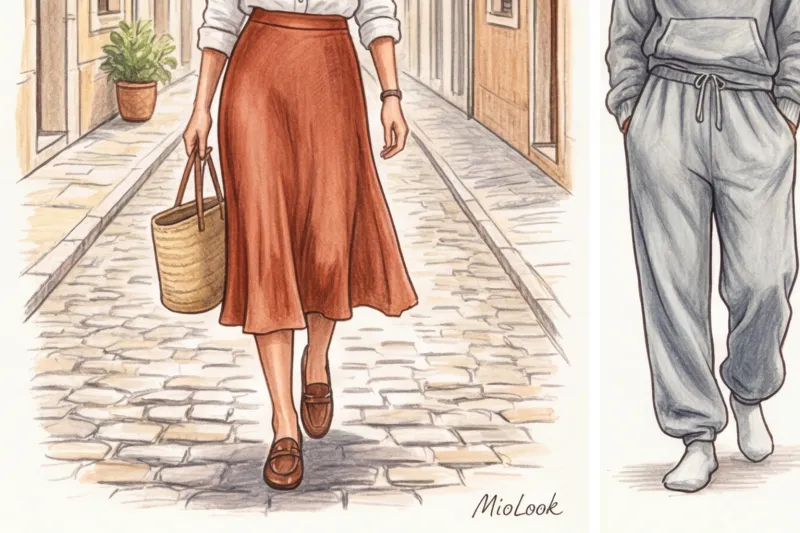
This gap between fantasy and reality is the main pitfall of modern shopping. Rejecting rigid boundaries and outdated typologies is only the first step (we covered this in more detail in our guide). How to Find Your Own Clothing Style: Forget the Rules ). The second, much more painful, but healing step is recognizing your true routine. Choosing clothing style according to lifestyle , you stop investing in illusions and start investing in your own daily comfort.
Why the "Dress for the Life of Your Dreams" Advice Is Ruining Your Style
Popular motivational advice goes, "Dress for the job or life you want." It sounds great, but in practice, it's a surefire way to an overflowing closet and an empty wallet. You won't go to more social events just because you bought an evening gown. But you're guaranteed to feel unkempt 300 days a year if you skimp on quality everyday essentials for that dress.
"We're used to dividing things into 'home wear' (read: things we don't mind ruining) and 'going out' (things we cherish). This is fundamentally wrong. The Mediterranean approach to style teaches us differently: the aesthetics of real life are more important than the occasional holiday. Luxury isn't a New Year's dress; it's the cashmere you wear while drinking your morning coffee in your kitchen."
Let's count Cost Per Wear (cost per outfit). According to a WGSN study (2023), 74% of women regularly wear only 15% of their wardrobe. Let's say you bought a fancy sequin dress for €150 and wore it once to a corporate event. The cost per outfit is €150. Now imagine that instead you bought a premium wool-blend knit lounge suit for €250. You wear it four times a week for six months (about 100 times). The cost per outfit is only €2.50! The math of style is ruthless: you should invest in what you wear every day.
Ready to get started?
Try the free MioLook plan – digitize your wardrobe and start wearing your clothes, not storing them.
Get access — €0.99 onceReality Audit: How to Calculate Your Clothing Style Based on Your Lifestyle

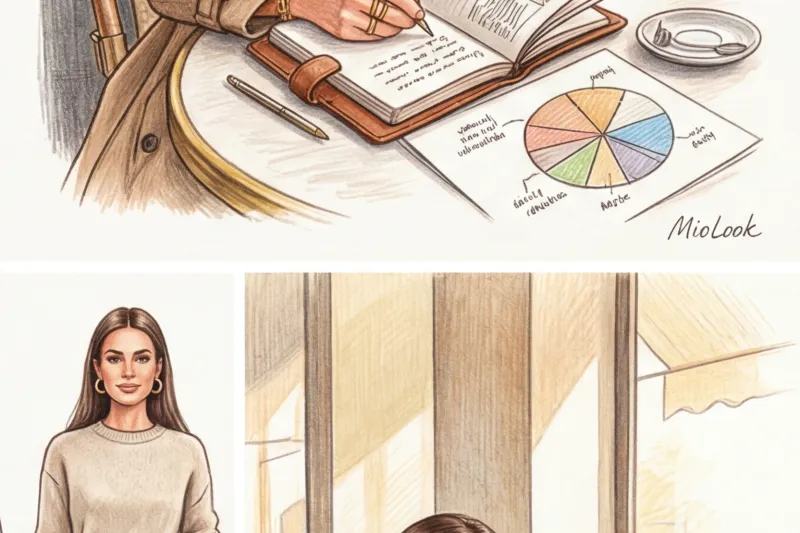
The secret to the perfect wardrobe isn't innate taste, but the rigorous mathematics of your schedule. During my first consultation, I always ask my clients to draw a pie chart of their typical 168 hours per week (excluding sleep). And this often leads to revelations. A woman who considers herself a "business woman" suddenly realizes that she spends 40% of her time at playgrounds and supermarkets, and only 30% at the office.
The Occupancy Chart: The Formula for a Balanced Wardrobe
The rule of correspondence is that the contents of your closet should mirror your time circle.
- 70% of the time (the basis of life): Whether you work in an office, remotely, or on maternity leave, this area should take up 70% of your clothing budget and occupy the best shelves in your closet.
- 20% of the time (social life): Meeting friends on weekends, going to the cinema, walking around the city.
- 10% of the time (special cases): Dates, friends' weddings, theater. For these 10%, you need exactly 10% of your clothes. Moreover, for such rare occasions, it's much more reasonable to use evening dress rental services (costing €30-50 per event instead of buying for €300).
If you're a mom on maternity leave, you don't need five silk blouses. You need three impeccably fitting jumpers made of heavy cotton (at least 180 g/m²) that are easy to wash but still look classy.
4 Main Scenarios and Formulas: Dressing Beautifully and Appropriately Every Day
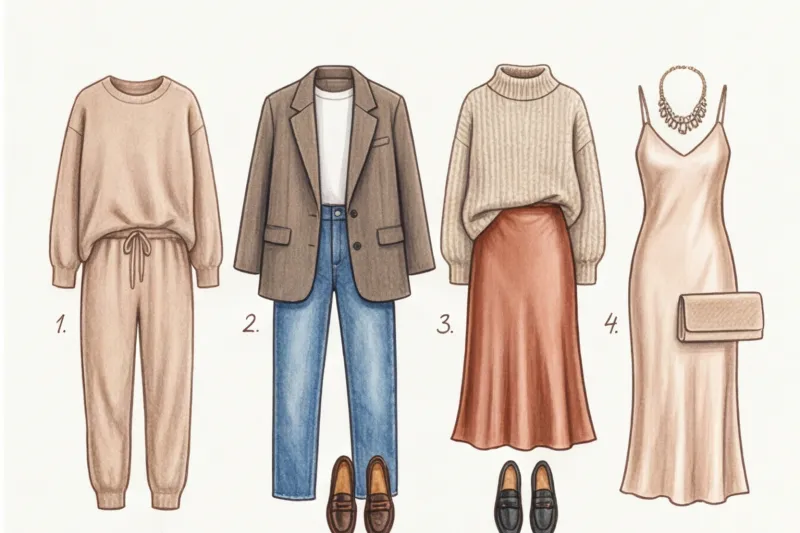
McKinsey's State of Fashion 2024 report notes a global shift in dress codes towards the concept power casual ("power casual"). The world has changed. Strict suits have given way to a relaxed elegance that doesn't look sloppy. Forget abstract style trends like "drama" or "naive romanticism." Think in functional capsules and ready-made formulas.
Scenario 1: Work from home, but with dignity
Stretched clothes kill productivity. There's a psychological phenomenon called "enclothed cognition"—our brain literally adapts to the clothes we wear. Working in pajamas signals to your psyche: "We're resting."
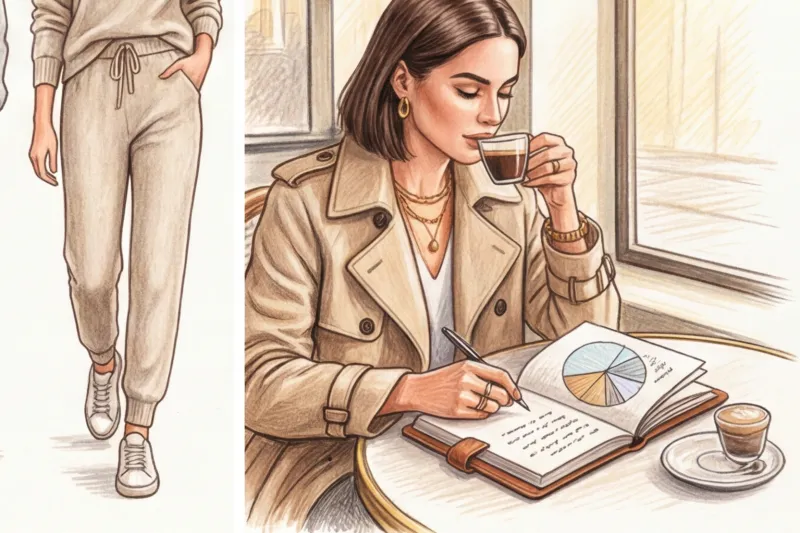
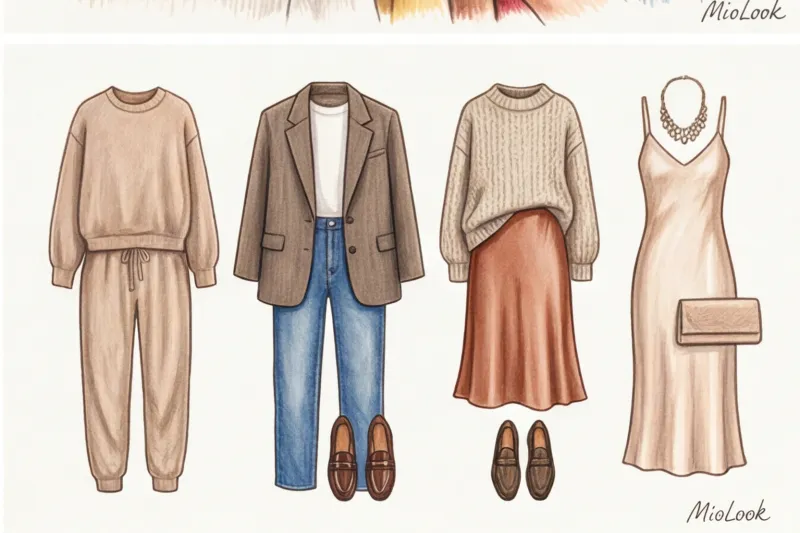
Formula: A premium knit suit (look for at least 20% cashmere or merino, smooth knit to avoid pilling) + structured hoop earrings + suede mules or leather clogs. A basic outfit like this at a high-street store like Massimo Dutti or COS will cost around €120-180, but the put-together effect is priceless.
Scenario 2: Active city routine (school, supermarket, errands)
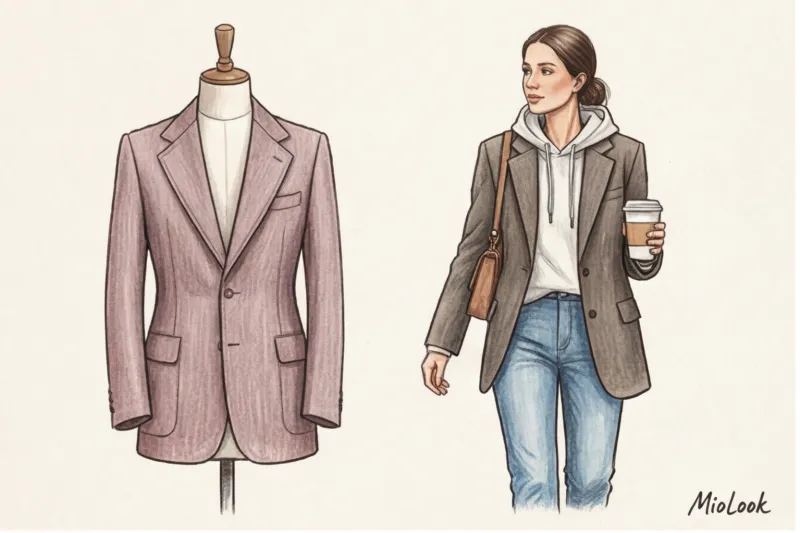
How to look chic when you have exactly 15 minutes to get ready? The secret lies in the "rule of thirds." Jeans and a T-shirt are the basics, but a blazer thrown on top is the style.
Formula: Straight-leg jeans made of heavy denim (no elastane for shape) + a basic T-shirt + a "third piece" (an oversized men's blazer or a classic trench coat) + leather loafers. This look will withstand 10,000 steps around the city and a chance meeting with friends at a cafe.
Your perfect look starts here
Join thousands of users who look flawless every day with MioLook. AI will tailor formulas to your lifestyle.
Get access — €0.99 onceScenario 3: Flexible Office and Business Meetings
Fair Limit: This formula won't work if you work at a conservative Swiss bank or a government agency with strict regulations. Formal business practices still reign there. But for 80% of modern IT companies, agencies, and corporations, smart casual has become the norm.
Formula: A midi skirt made of flowing fabric (silk or high-quality bias-cut viscose) + an oversized sweater casually tucked in at the front + an accent leather belt + high-heeled boots.
Scenario 4: Evening outings and spontaneous dates
True Parisian or Milanese chic lies in not completely changing your outfit for the evening, but rather simply transforming your daytime look. Trying too hard reveals a lack of confidence.
Formula: Take the look from Scenario 3, swap the roomy tote for a sturdy clutch, add red lipstick, and unbutton the blouse one more button. That's it. You're ready for dinner and wine.
Mediterranean Secret: How to Add Sparkle to Basics
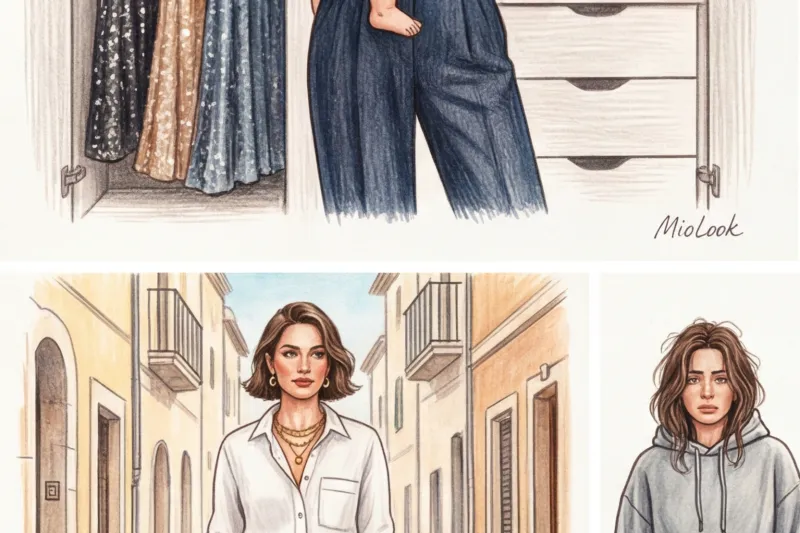
A basic wardrobe without styling is simply a collection of boring gray and beige clothes. Why do Italian or Spanish women look like movie stars in a simple white shirt, while we sometimes look like trainee waitresses? The secret is in presentation and micro-styling.
My favorite "Italian trick," which I show every client, is to play with textures and layers. Never wear smooth with smooth. Flowing silk calls for a coarse, textured, chunky-knit wool. Crinkled summer linen really shines when contrasted with the smooth, polished leather of a bag or belt.
The second point is confidence as the key accessory. A basic Uniqlo turtleneck can be transformed into a statement piece by layering two or three gold chains in different tiers over it. The jacket sleeves should be casually pulled up, revealing slender wrists, and the shirt collar should be lifted at the back. This effortless, controlled casualness (sprezzatura) communicates that the clothes serve you, not you serve them.
Common mistakes when adapting your wardrobe to your lifestyle
Let's be honest: we all make mistakes at sales when our brains panic at the red price tags. I once bought three identical gray turtlenecks, convincing myself they were the "perfect basics." But there are three fundamental mistakes that ruin your style day after day.
- Justifying sloppiness with “convenience”. Many people confuse these concepts. A pilled fleece sweater is comfortable but untidy. A loose, smooth wool jumper is both comfortable and elegant. Demand both from your clothes.
- Buying duplicates instead of variety. If you have five pairs of identical blue skinny jeans hanging in your closet, you'll never have anything to wear. You're spending your budget (each pair is €60 = €300), but your visual appearance doesn't change one bit.
- Ignoring outerwear. You can put together a luxurious cashmere look, but if you wear a worn, shapeless down jacket on top (just because "I just have to run to the car"), all the magic will be ruined. Outerwear is the first thing people see. By the way, the skill combine a hat and scarf with a coat without buying ready-made sets is another marker of a mature style.
Checklist: 5 Steps to a Wardrobe That Works for You
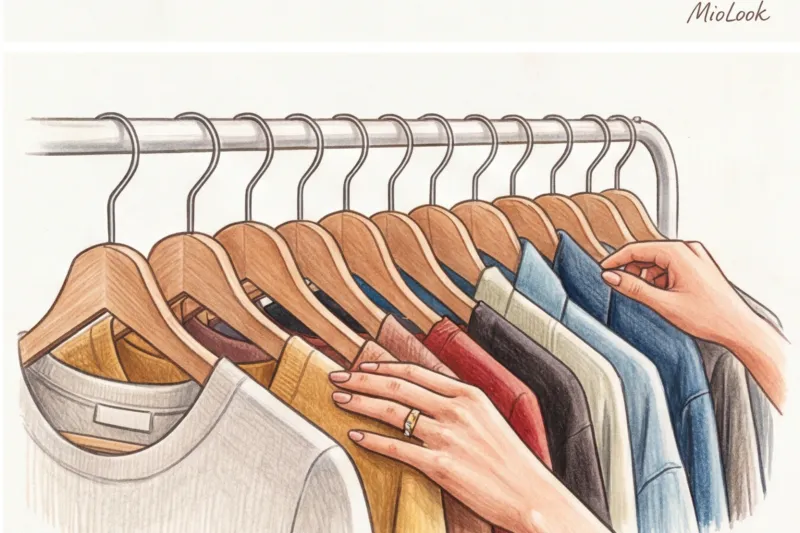
Stop buying the life of your dreams. It's time to perfectly dress the life you're living right now. Here's your action plan for this weekend:
- Step 1: Record all your activities for a week in hours and create your own personal pie chart.
- Step 2: Take stock of your closet. Physically remove "special occasion" items from sight—pack them in their covers in a far corner. Only what you can wear on Tuesday morning should be visible.
- Step 3: Define your three key formulas (uniform). For example: "jeans + jacket," "midi skirt + sweater," "knit suit."
- Step 4: Create a shopping list only for areas of your life where there's a shortage. If you work from home five days a week, pencil skirts shouldn't be on your list, even if they're 70% off.
- Step 5: Use technology. Digitize the resulting database using MioLook so that the app generates ready-made looks for you every morning based on the weather and your schedule.
Dressing for your lifestyle isn't a restriction, it's a freedom. When your clothes are in perfect harmony with your schedule, you stop wasting your morning energy fighting your closet and instead focus it on what's truly important—life itself.