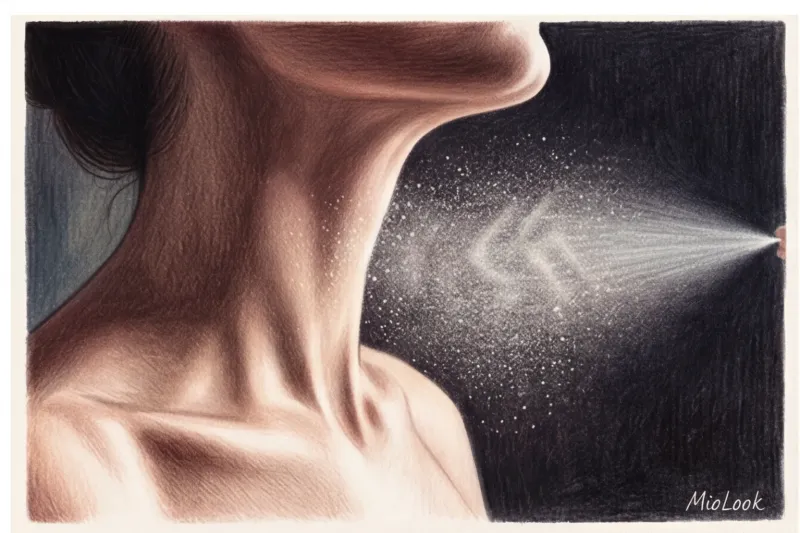
Have you ever bought a bottle of luxurious perfume, falling in love with a coworker's scent, only to discover to your horror that it smelled like... cheap soap or glass cleaner? You're not alone, and your sense of smell is perfectly fine. The problem is that the perfume industry has sold us a beautiful illusion for decades: that scent is static and universal.
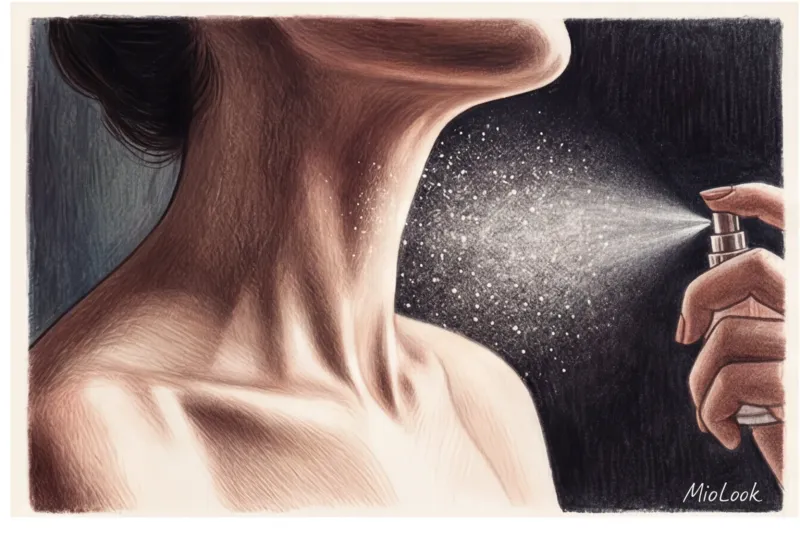
In 12 years of working as a fashion journalist and stylist, I've learned one ironclad rule: perfume isn't a ready-made dress you can just throw on. It's more like a fabric your body will sew into an outfit. That, how perfume unfolds on the skin , 10% depends on the work of the perfumer and 90% on your individual biochemistry, body temperature and even what you ate for breakfast.
Before we delve into the chemistry of the epidermis, it's important to understand the base. We discussed fragrance architecture and note classification in more detail in our a complete guide to perfume families Today, we'll transform skin chemistry from a mere matter of "entertaining biology" into a practical styling tool and explore the concept of your fragrance color type.
The Anatomy of Fragrance: Why What You Smell in a Bottle Is an Illusion
When you open the bottle cap and inhale the fragrance, you smell only the tip of the iceberg—the lightest, most volatile molecules, which perfumers call "top notes." But in the bottle, the perfume is in a state of suspended animation. The scent's life begins only when it comes into contact with the warmth of the human body.
According to the International Fragrance Association (IFRA), the rate of evaporation of perfume components is directly dependent on their molecular weight and ambient temperature. The physics of the process are merciless: light citrus molecules (such as limonene) evaporate rapidly, while heavy musk or wood resin molecules can linger on the skin for days.
Synthetic molecules, which today form the basis of 80% of niche and luxury perfumes, behave differently on the skin than natural absolutes. Natural rose essential oil contains approximately 300 different chemical compounds that react successively with your skin, creating a complex, pulsating melody. A synthetic analogue (such as geraniol) sounds cleaner, louder, but more linear. This is why complex natural compositions transform more dramatically depending on who wears them.
Access to MioLook for €0.99 — one-time payment
A smart AI stylist will select the perfect look based on all your features.
Get access — €0.99 once"Hot" and "Cool" Skin: Your Perfume Color Type
In my styling practice, I use a unique approach: just as I determine a client's color type for wardrobe selection, I also determine their skin temperature for perfume selection. Knowing your "perfume temperature" will save you tens of thousands of euro on bottles that don't suit you.
Skin temperature differences between different parts of the body can reach 1.5–2°C in different people. Does this seem like a small difference? For volatile essential oils, this is a colossal difference, completely rewriting the olfactory pyramid.
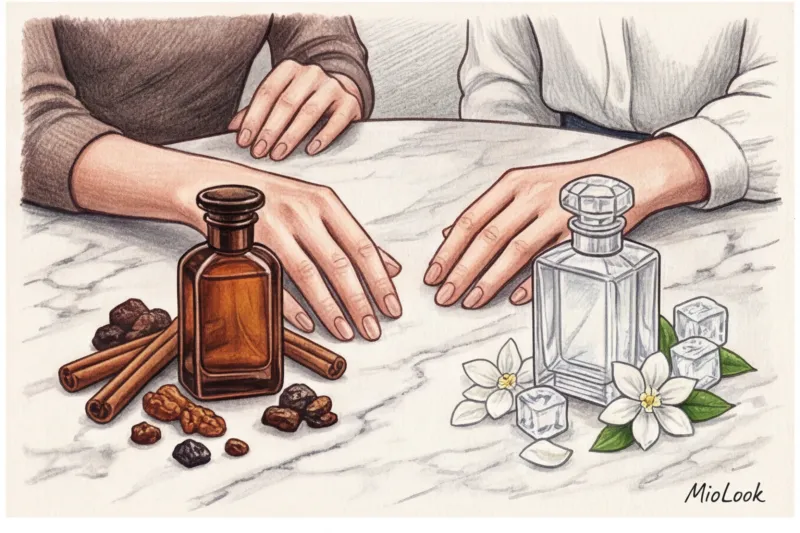
Cool Skin: Signs and Ideal Perfume Families
If you have pale, aristocratic skin, you often feel cold, your hands are cold even in a warm room, and you are prone to low blood pressure—welcome to the “cold skin” club.
On such skin, fragrances tend to be long-lasting, monotonous, and restrained. Top notes, which typically fade within 15 minutes, can linger for hours on cool skin. Base notes (heavy resins, musk) may not develop at all, leaving a feeling of incompleteness.
"I once had a client with classic cool skin. She bought the legendary Baccarat Rouge 540, swayed by the hint of strawberry jam and burnt sugar she'd heard from a friend. But on her cool wrists, the scent revealed nothing but sterile bandages and iodine—the heavy, sweet base simply failed to warm up and develop."
What is suitable: Bright chypres, classic aldehydes (like Chanel No. 5, which smells crystalline on cool skin rather than "grandmother's trunk"), and delicate white flowers (lily-of-the-valley, jasmine, tuberose). Animalic notes on you sound elegant, not dirty.
What is contraindicated: Dense gourmand aromas (chocolate, caramel, praline). Without sufficient warmth, these notes sound flat, reminiscent of a plastic doll or cheap car air freshener.
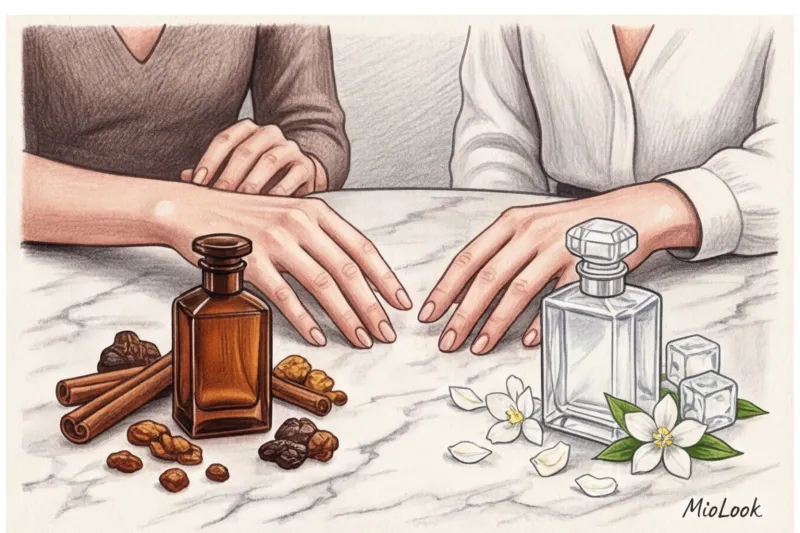
Hot Skin: How to Tame a Fast Note Release
Dark, dense, or easily reddened skin, warm hands, and closely spaced blood vessels are signs of a "hot" type. The perfume literally burns on you.
The citrusy and light floral top notes fade within 10-15 minutes. The scent quickly sinks into the base, and it's these base notes that become your primary scent almost immediately after application.
What is suitable: Oriental accords, heavy resins, woody notes (sandalwood, cedar, oud), patchouli, and gourmand. Your skin acts as the perfect fireplace for these dense components, making them sound voluminous, sexy, and expensive.
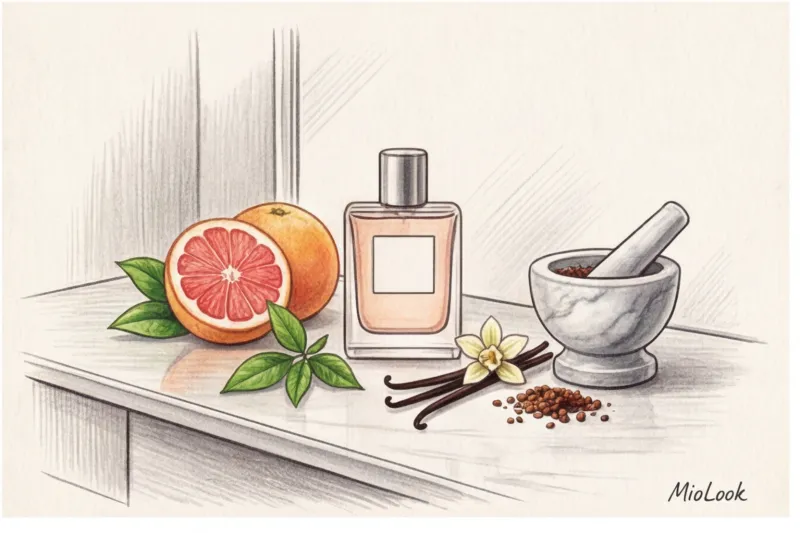
What is contraindicated: Delicate citrus, subtle aquatic notes, and ozone. On hot skin, they quickly distort, revealing sour notes or the scent of Sea Breeze air freshener. If you love freshness, look for it in cool spices (cardamom, juniper), not lemon.
Your perfect look starts here
Join thousands of users who look flawless every day with MioLook.
Get access — €0.99 onceInvisible factors: what else changes the sound of a train
Temperature is only half the equation. Research at the Osmothèque in Versailles proves that the chemical composition of the hydrolipidic mantle can completely restructure a perfume's composition.
- pH level (acidity). Normal skin pH ranges from 4.7 to 5.7. If your skin is more acidic, it can literally "eat up" delicate floral accords within 30 minutes, leaving behind a dry residue.
- Microbiome. Billions of bacteria live on our skin. Some of them literally "feed" on certain components of perfume (especially natural oils), metabolizing them and creating your absolutely unique, inimitable scent.
- Hormonal background. During Paris Fashion Week, when models sleep for three hours and live on pure adrenaline, I often noticed how their usual perfumes begin to smell sharp, almost aggressive. High levels of cortisol (the stress hormone) alter the composition of sweat, making the scent more pungent. The phases of the female cycle also dramatically alter the perception and development of musky notes.
- Diet. A love of spicy food, curry, garlic, or excess red meat alters the chemistry of the skin's secretions. These molecules mix with perfume, sometimes creating a discordant effect.
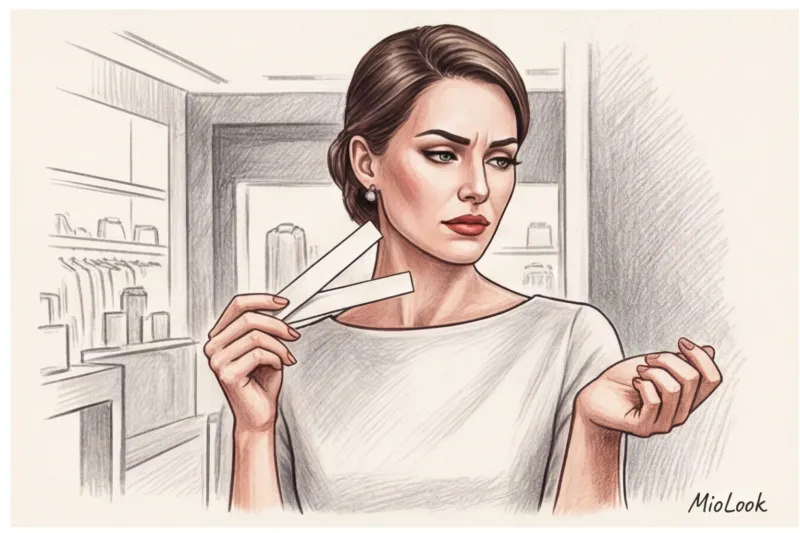
The Biggest Perfume Myth: Why You Can't Trust Blotters
Walk into any perfume boutique, and the salesperson will immediately hand you a paper strip—a blotter. My advice? Smell it out of politeness and then put it aside. Paper blotters aren't designed to help you understand a fragrance, but to sell you its top notes.
Former Hermès in-house perfumer Jean-Claude Ellena often emphasized that paper is dead. It lacks warmth, pulse, acidity, and microbiome. On paper, scent freezes in an unnatural position, like a butterfly on a pin. On skin, it lives, breathes, and evolves.
Another popular myth that needs to be debunked: "Don't rub your wrists together, you'll break the fragrance molecules!" Physics dictates that to break a perfume molecule by friction, you need to create a temperature that would cause your skin to burn. You're not breaking the molecules. But by rubbing, you're artificially heating your skin, causing the top and middle notes to evaporate in seconds. You're not breaking the fragrance; you're simply fast-forwarding its progression, depriving yourself of the pleasure of a smooth unfolding.
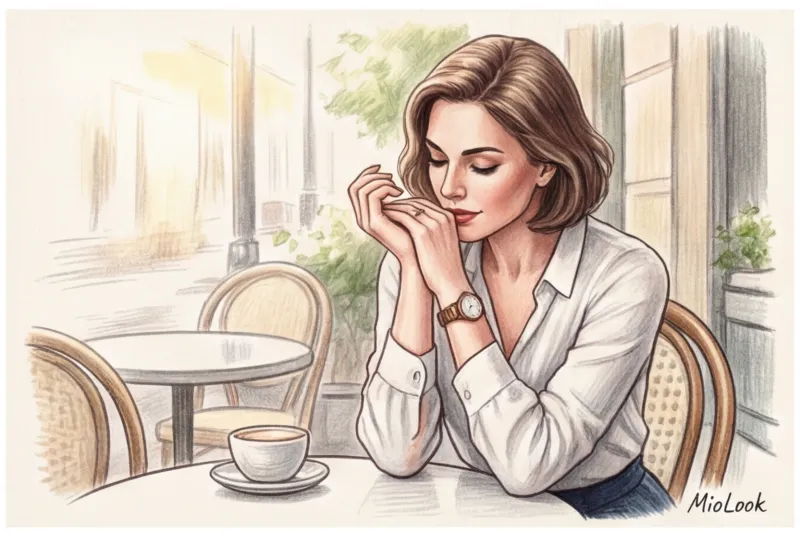
A stylist's guide to testing fragrances before buying them.
To avoid disappointment with your purchase, avoid spontaneous decisions at the checkout. Use a professional testing algorithm:
- The 8-hour rule. Never buy perfume within the first 20 minutes. Spray it on your skin and go about your business. The scent should survive temperature changes (outdoors and indoors), stress, and lunch. Only in the evening will you truly understand its true colors.
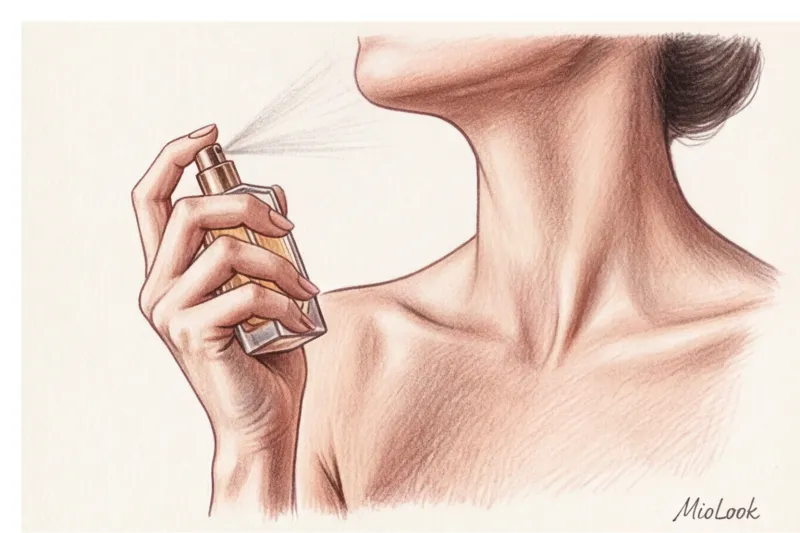
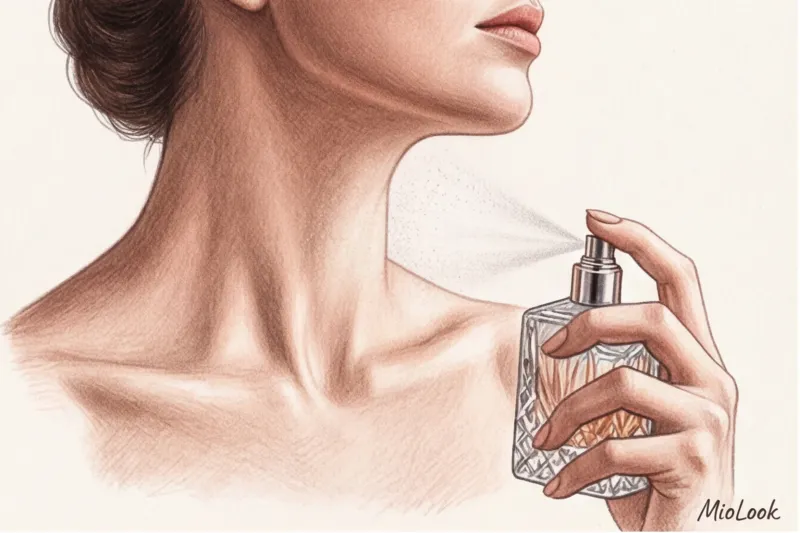
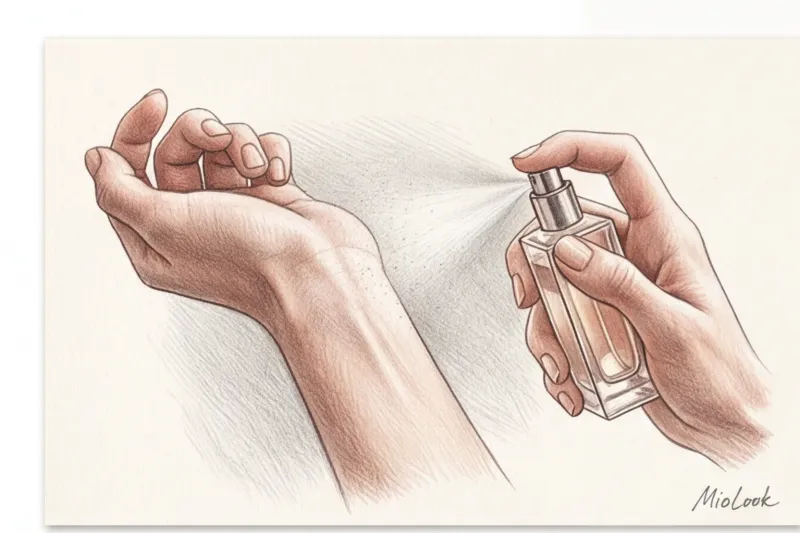
- Correct application points. Wrists are a classic choice, but they often come into contact with clothing, watches, and laptop keyboards (which can distort the scent). Ideal spots are the back of the neck (under the hair) and the jugular notch. The skin there is warm, and the scent will rise to you like a soft cocoon.
- The coffee myth. Store-bought coffee beans don't cleanse your olfactory receptors. On the contrary, coffee's essential oils deliver a powerful olfactory blast that tires your nose even faster. To "reset" your receptors, take a few sips of pure water or breathe in some fresh air (or bury your nose in your sleeve if your clothes are odorless).
- Blind test. Our brains are too susceptible to marketing. We "hear" luxury when we see a Tom Ford bottle, and subconsciously seek out bargains in mass-market stores. Ask the consultant to spray two fragrances on different hands for you, without naming the brands. Choose with your skin chemistry, not your eyes.
Olfactory Wardrobe: How to Incorporate Scent into Your Look
Perfume is the invisible, yet most influential, part of your personal brand. It enters the room a second before you and lingers long after you leave.
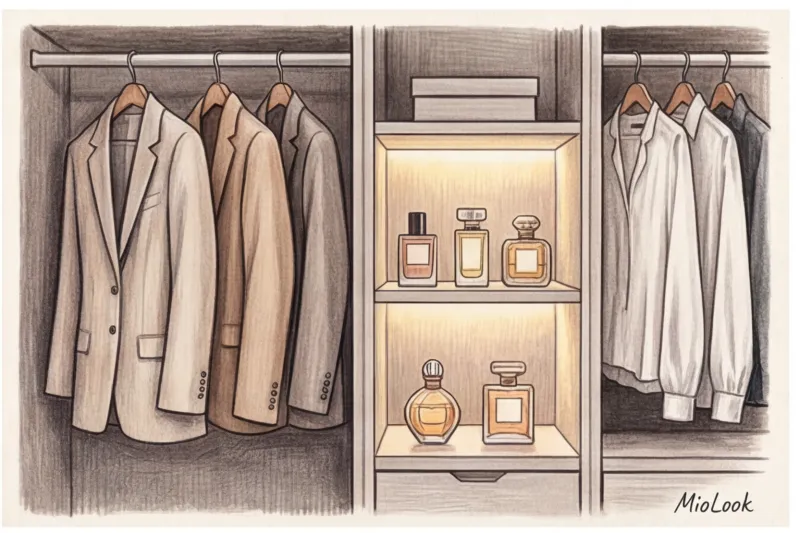
When putting together a business wardrobe for the office, it's important to remember boundaries. A loud oud scent on hot skin in a closed, open space is an act of passive aggression toward colleagues. For a business capsule wardrobe, choose fragrances from subdued families: fougères, light woody accords, or irises. They create distance and convey composure.
To avoid confusion in combinations, I recommend my clients digitize not only clothes but also fragrances. In the app MioLook You can create complete capsule collections, pairing specific bottles with specific looks. For example, a tailored Massimo Dutti pantsuit is complemented by a cool chypre for negotiations, while a relaxed COS cashmere sweater is complemented by a cozy sandalwood base for casual Fridays.
Ultimately, the perfect perfume isn't the one that gets the most compliments from bloggers. It's the one your skin embraces as if it were its own, transforming foreign molecules into your own unique signature.