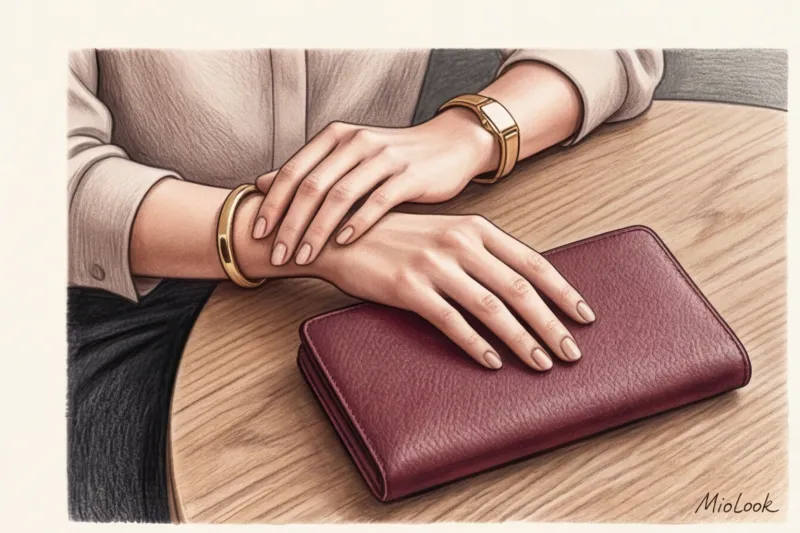
Have you ever noticed where your conversation partner looks in the first few seconds of a conversation? Spoiler: they're not examining the cut of your jacket or assessing the quality of the wool on your trousers. According to neuromarketing research, the human eye focuses on the face, décolletage, and hands for almost 70% of the entire conversation. These are the areas where glasses, jewelry, and watches are worn.
In 14 years of working as a personal stylist, I have learned one hard and fast rule: a basic wardrobe can consist of simple mass-market items like Uniqlo or COS, but it is the details that reveal your true status, character, and intentions. True the importance of accessories in an image lies not in their cost, but in the cognitive signals they send to the interlocutor's brain. We discussed the basic mechanisms of this perception in more detail in our a complete guide to the psychology of first impressions.
The Psychology of Details: Why Accessories Are More Important Than the Clothes Themselves
When you walk into a meeting room or sit down at a table on a first date, your interlocutor's brain scans your entire silhouette, but it also "latches" on to details. This is an evolutionary mechanism: we need clear visual cues to quickly classify people.
A Princeton University study (Alexander Todorov, 2006) demonstrated that assessing a stranger's status, competence, and aggression level occurs in the same 100 milliseconds as assessing their attractiveness. There's no time to think.
"Accessories act as psychological anchors. The smooth metal of a watch conveys cold calculation, while the soft suede of a bag conveys empathy and a willingness to engage in dialogue."
But there's also a flip side—the influence of objects on us. In 2012, Hadjo Adam and Adam Galinsky coined the term "enclothed cognition." Their experiments demonstrated that physically wearing a particular object activates associated abstract concepts in the brain. Putting on a heavy, classic watch physically makes you act more collected. An accessory changes not only how you're seen but also your own posture and speech.
Glasses as a Perception Filter: From Strict Competence to Creative Empathy
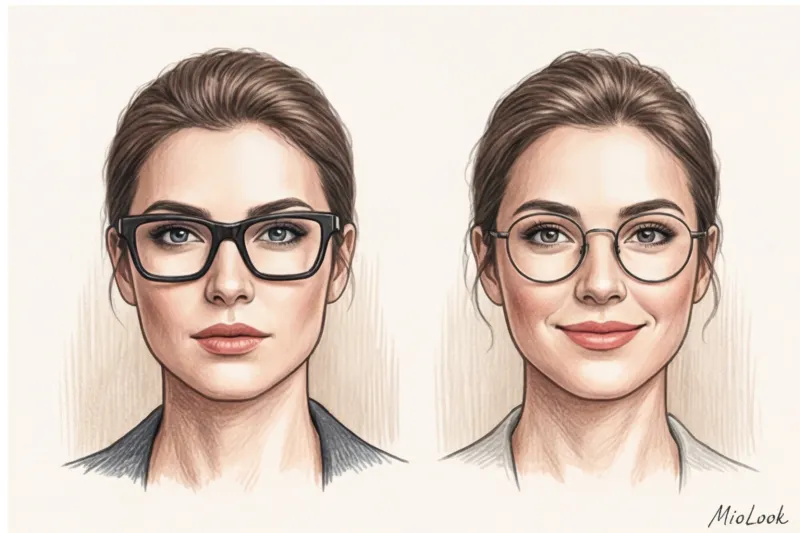
Glasses are the only accessory that sits directly on your face, blocking eye contact. They literally change the architecture of your cheekbones and brows. One of my clients, family therapist Anna, complained that new clients were having trouble relaxing during sessions. After auditing her style, I identified the problem: Anna wore narrow, rectangular black frames with sharp angles. She looked like a stern tax inspector, not someone you'd trust with your heartache.
We replaced them with soft, rounded frames made of tortoiseshell plastic, priced around €150. The result? Clients no longer felt like they were being interrogated. The level of empathy in their image skyrocketed instantly.
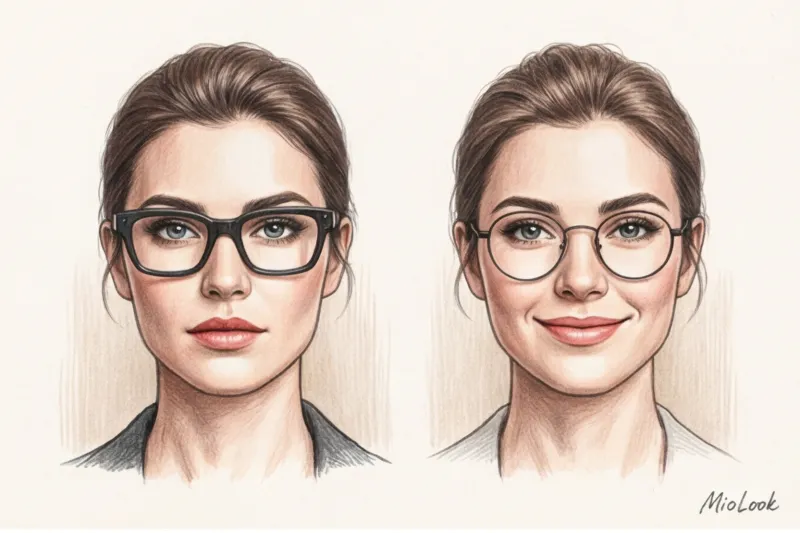
Frame geometry and the cognitive effect of "Bouba-Kiki"
In cognitive psychology, there's a classic experiment by Wolfgang Köhler (1929), known as the "Bouba-Kiki" effect. People are shown two figures: one with sharp corners and the other rounded, cloud-like. Ninety-five percent of people call the sharp figure "Kiki" and the soft one "Bouba." This auditory-visual phenomenon translates well to visual correction of the face with the help of glasses.
- Kiki shapes (sharp corners, thin metal, rectangles): They convey distance, analytical intelligence, rigor, and authority. Ideal for financiers, lawyers, and crisis managers.
- "Buba" shapes (rounded, panto, thick plastic in warm shades): They signal friendliness, creativity, and openness. Suitable for HR specialists, designers, and teachers.
Fair Limit: This advice won't work if you have naturally soft, childish features (a "baby face"). In this case, round plastic frames will make you look like a teenager. Instead, you need subtle contrast—clear lines—to add structure to your face.
The Expert's Trap for Trendy Frames
Micro-eyeglasses a la the 2000s, rhinestone-studded frames, or chunky chains (unless you're a stylist or art director) ruin the image of a competent professional. Fashion is fleeting, and expertise demands consistency. Choose a happy medium: trendy silhouettes (for example, a slightly elongated cat-eye or well-styled aviators), but in a classic style. Pay attention to the thickness of the frames—they shouldn't obscure your brow bone.
Wristwatch: A marker of your attitude to resources and boundaries
In strict corporate dress codes, a wristwatch often remains the only socially acceptable way to demonstrate status. But the devil, as always, is in the details.
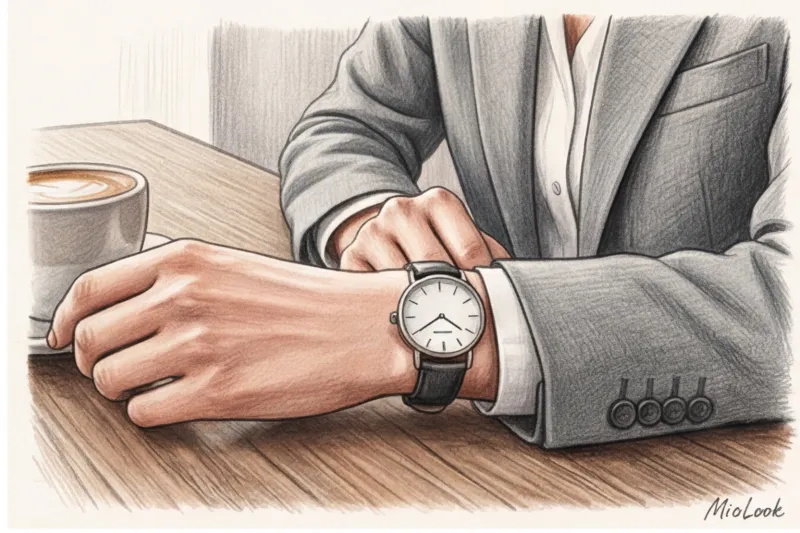
One of the most common mistakes I see in young career women is wearing watches that are too large and chunky (often men's models). Psychologically, this is interpreted as the "foreigner's shoulder effect." It's as if the woman is wearing her older brother's or father's watch to appear more respectable. This conveys insecurity. The ideal dial diameter for a woman's wrist is between 28 and 34 mm, especially in a business setting.
Mechanical vs. Smartwatches: Hidden Signals
My personal stylistic insight: I always ask senior executives to remove their Apple Watch before important partnership negotiations. Why?
Smartwatches are a great gadget for fitness and a dynamic lifestyle. But in a meeting, they send a subconscious message: "I'm always connected, I can be interrupted at any moment, my attention isn't mine." The screen on your wrist, lit up with notifications, steals the other person's focus.
A classic mechanical watch (even a simple model for €200–€300) says something different: "I respect tradition, I appreciate the moment, I'm here and now." A watch with hands conveys stability. But a worn, scuffed leather strap on an expensive Swiss watch will ruin trust faster than an inexpensive but well-made model. It's a signal that you don't manage your resources.
Access to MioLook for €0.99 — one-time payment
A smart AI stylist will analyze your wardrobe and suggest which watch or jewelry will perfectly complement your business look.
Get access — €0.99 onceA bag as an image architecture: conveying composure or relaxation
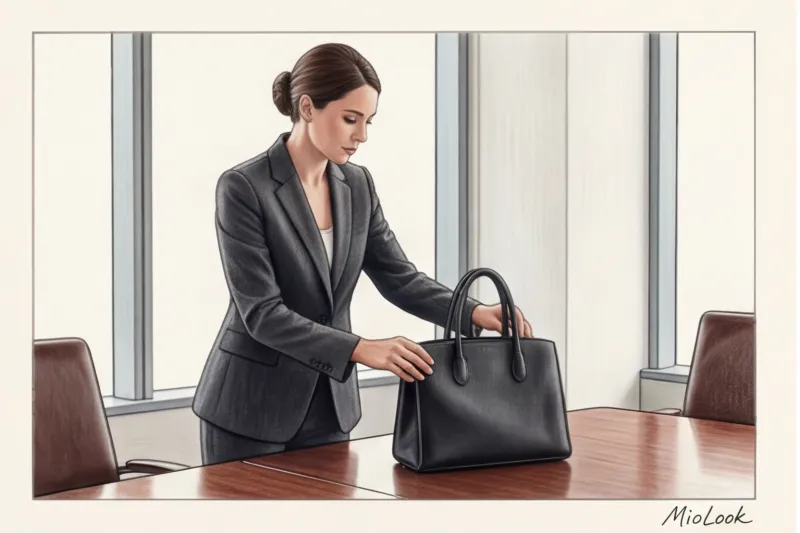
A bag takes up to 20% of your silhouette's visual area when you hold it in your hands or in the crook of your elbow. The influence of its shape on perception of proportions colossal.
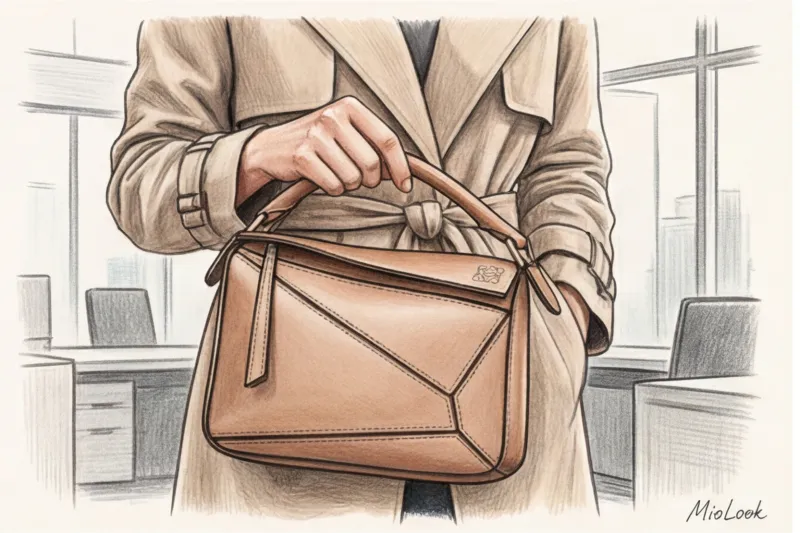
A few years ago, a partner at a law firm approached me. She complained that contractors were frequently missing deadlines, despite her strict tone in emails. She showed up to the meeting with a stunningly beautiful, expensive, but completely shapeless hobo bag made of the softest suede. We replaced it with a rigid leather tote bag with precise geometry. A month later, she wrote to me: "I haven't changed a word of my scripts, but people have started taking my deadlines seriously."
Tough forms for negotiations and authority
Tote bags with rigid bottoms, framed briefcases, Kelly-style models. Why do they work to convey authority? Here, psychology comes into play again: a bag that holds its shape, whether empty or full, is associated with a core. The bag's clear, unwavering boundaries subconsciously convey clear personal and professional boundaries for its owner. Push it, and it won't bend.
Soft Forms for Networking and Creative Industries
Hobo bags, pelmeni clutches, and soft tote bags. They convey flexibility, adaptability, and a lack of rigidity. They're the perfect choice for creative brainstorming, informal networking, or a smart Friday dress code at an IT company, where excessive formality can be met with distrust.
The Myth of Status: Why Logos No Longer Build Your Authority
If you think a bag covered in monograms from a famous fashion house will automatically elevate your status in the eyes of serious partners, I'm sorry to disappoint you. It's a counterintuitive insight, but in high-ranking business circles, logomania is now seen as a negative.
According to McKinsey & Company's 2024 luxury market report, the global trend has shifted decisively toward "stealth wealth." Conspicuous consumption is a thing of the past. When you show up to a meeting with a bag with a brand's name emblazoned on it in giant letters, it's often interpreted as a sign of insecurity. It's as if you're asking the brand to "vouch" for your success, because you doubt it yourself.
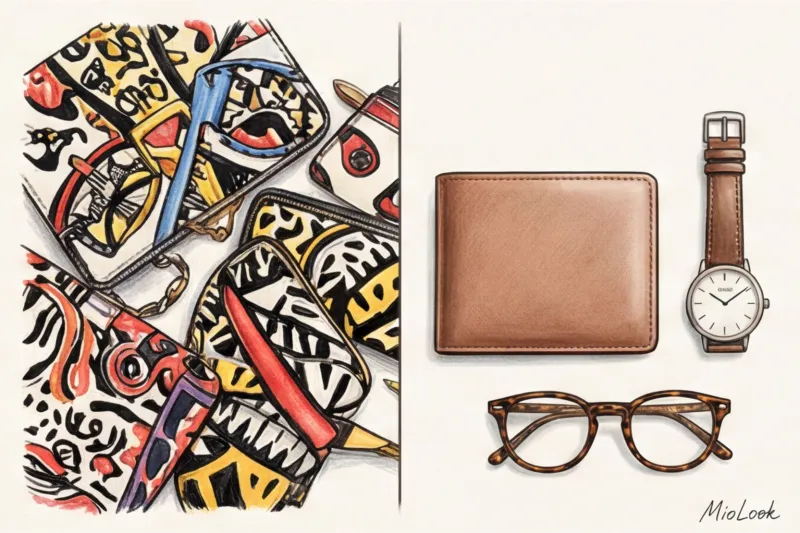
What truly commands respect? Impeccable craftsmanship. A €300 bag from a niche brand, devoid of a single logo but with perfect stitching, a hand-dyed edge, and high-quality molded hardware, will speak volumes about your taste. Decision makers evaluate the quality of the leather and the fit of the product, not marketing hype.
Checklist: Audit your key accessories before an important meeting
Before heading off to a project defense, interview, or important negotiations, do a quick audit. I give this checklist to all my clients when we're gathering basic capsule of accessories.
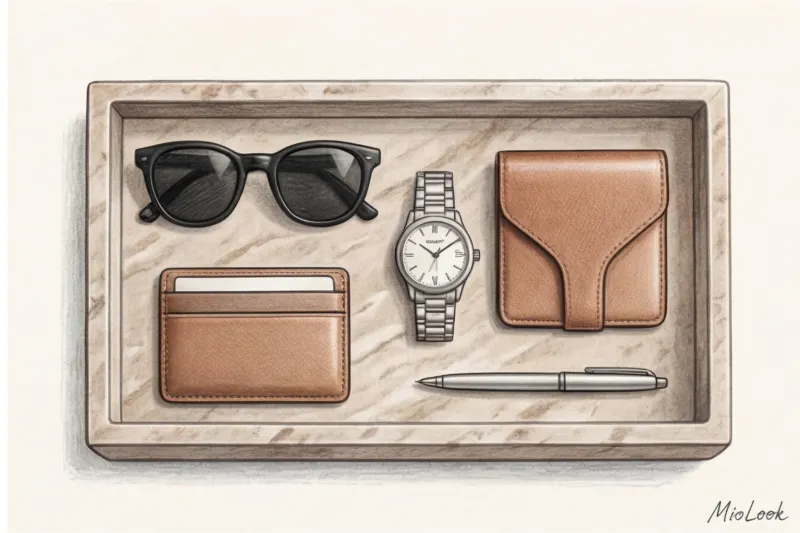
- Checking things for fatigue: Micro-scratches on a mineral watch crystal, scuffed corners on a leather folder, or even slightly cloudy eyeglass lenses are a no-no. If something looks unkempt, it detracts from your competence.
- Audit on the Authority – Trust scale: What's your goal today? Negotiating your contract terms? Wear a watch with a steel bracelet and grab a frame bag. Need to win over your team after a conflict? Choose a watch with a soft leather strap, a rounded bag, and remove your glasses if your vision allows.
- The balance rule (Coco Chanel method): Before going out, look in the mirror and take off one accent accessory If you have complex, noticeable glasses and a large watch, skip the accent belt or scarf. You don't want to overwhelm your conversation partner with too many details.
Your perfect look starts here
Join thousands of users who look flawless every day with the MioLook virtual fitting room.
Get access — €0.99 onceStylist's Summary: How to Make Your Accessories Do the Talk
Accessories are your nonverbal voice. They speak for you even before you utter a word. Make sure they don't conflict with your intentions. A smart business suit paired with a shapeless, worn-out backpack creates cognitive dissonance: the person conveys discipline in their attire, but chaos in the details.

Invest your budget not in the quantity of fashionable trinkets, but in the quality of the three things you touch every day: a good frame, a decent watch, and a bag that holds its shape.
To avoid buying unnecessary things and to understand how a new bag will fit into your current wardrobe, I recommend using the "smart wardrobe" feature in the MioLook app Artificial intelligence will help analyze the overall tone of your pieces and suggest whether your silhouettes lack firmness or, conversely, need softer lines.
Remember the most important thing: in a world where first impressions are formed in milliseconds, managing your image through details isn't about fashion. It's about commanding attention and respect.