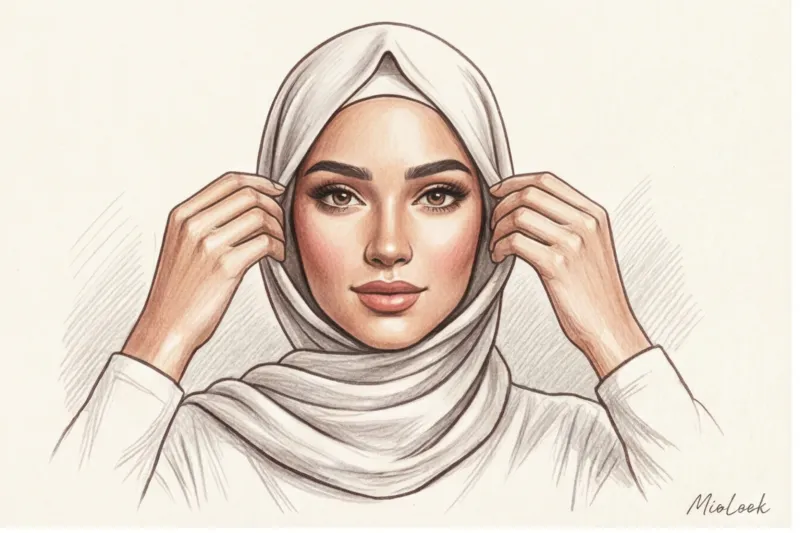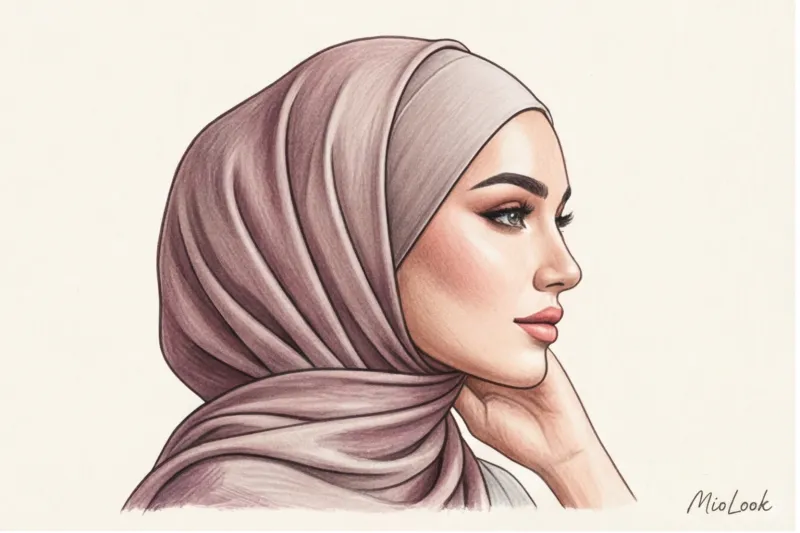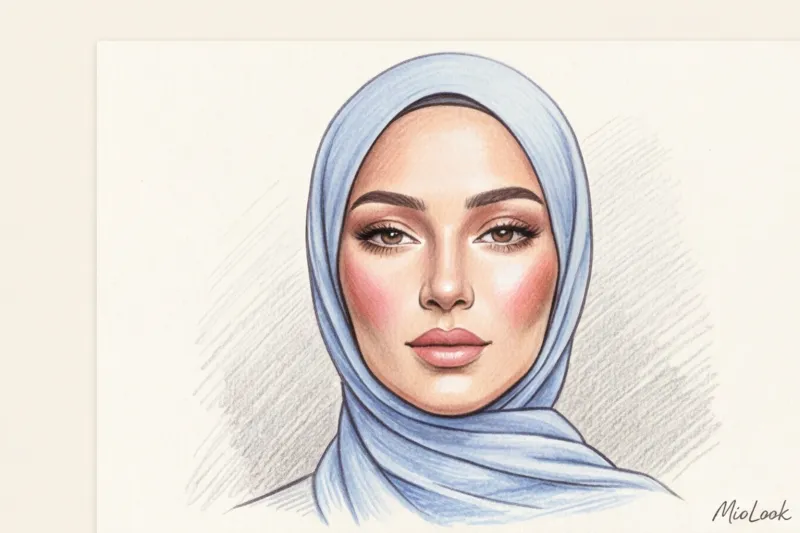
Have you ever noticed how the same silk scarf can make one face look Hollywood-sculpted, while another looks tired and haggard? Over 12 years of working as a personal stylist, I've discovered one ironclad rule: the fabric around your face acts either as a luxurious architectural frame or as a vice. And when choosing a hijab for an oval face (and especially for its elongated variety), popular online advice often has the exact opposite effect.
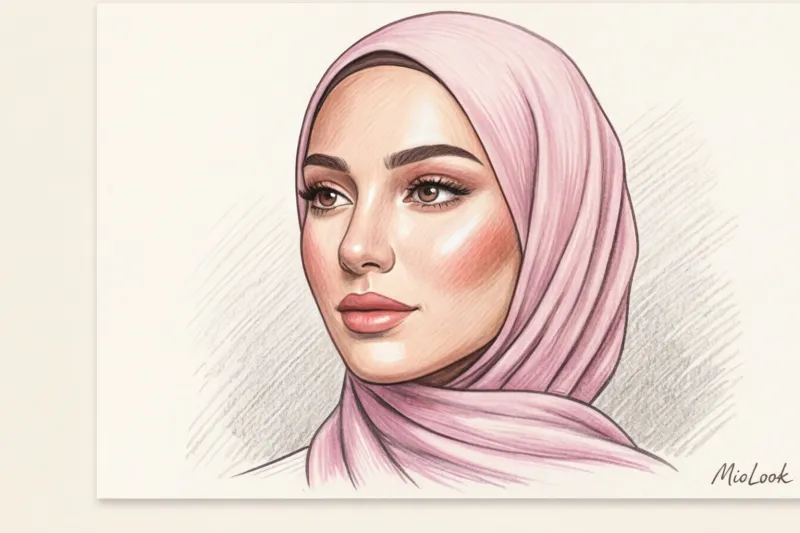
Instead of simply "pulling your hat down," I suggest you approach styling as the art of architectural framing. We'll utilize the physics of fabric, its weight, its ability to hold a fold, and the laws of optical illusion. But before we move on to the geometry of volumes, I want to remind you: no shape will save a look if the shade of the fabric makes your skin look gray. I discussed this foundation in more detail in our The complete guide to choosing a hijab color — be sure to study it to sync your wardrobe palette with your natural coloring.
Portrait Architecture: Why a Hijab for an Oval Face and an Elongated Face Are Not the Same Thing
In classical design theory and portrait photography (remember the principles of proportional construction based on the golden ratio), the ideal oval face has a width-to-length ratio of approximately 1:1.5. An elongated face, on the other hand, often has a ratio of 1:1.6 or more. It has a stunning, aristocratic bone structure, but it requires a completely different distribution of visual weight.
As the PANTONE Color Research Institute (2024) notes, the way light reflects off the fabric around the face directly influences how we perceive our features. While a classic oval face shape can be suited to almost any drape, the main goal for an elongated face is to add width to the cheekbones and cheekbones while maintaining the overall elegance of the silhouette.
A hijab isn't just a piece of fabric. It's an architectural element that alters the geometry of your head. Form-fitting materials create a continuous vertical line that draws the eye downwards, further elongating the face. Our goal is to create soft horizontal and diagonal vectors.
Your perfect look starts here
Join thousands of users who look flawless every day with MioLook. A smart AI stylist will find the perfect combinations.
Get access — €0.99 onceDebunking the Myths: Why "Hiding the Forehead" Is the Worst Strategy for a Long Face
If you've ever searched online for tips for a long face, you've likely come across this advice: "Just pull a boni down to your eyebrows to hide a high forehead." Forget it. It's the most damaging myth in modest fashion.
The sharp horizontal line across the forehead disrupts the harmony. It draws attention to the disproportion and shifts the focus downwards—to the lower jaw and chin, making them appear larger and longer.
I had a revealing case in my practice. A client, a top manager at an IT company, came to me complaining that she looked "too stern" on work video calls. It turned out she was intentionally pulling a tight black cap down almost to her eyebrows. On camera, her face visually transformed into an inverted triangle with a heavy chin. As soon as we moved the bonnet line up a couple of centimeters, revealing her hairline, and created a soft diagonal, her face instantly acquired a feminine and fresh look.
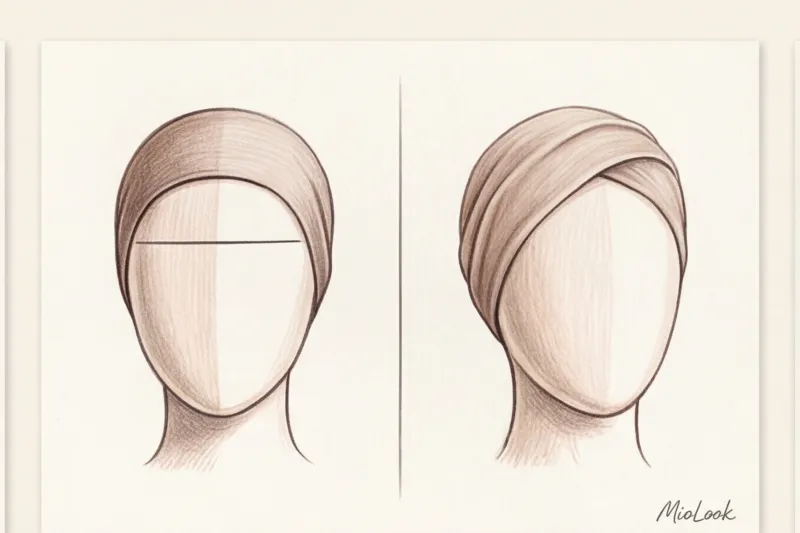
An alternative to a harsh horizontal line is a soft diagonal, a subtle asymmetrical angle at the top, or a voluminous edge of the scarf itself. These create the illusion of a more compact face without the feeling of trying to hide anything.
Texture Magic: How Fabric Changes the Physics of a Hijab for an Oval Face
Fabric physics determines everything. Texture acts like a light and shadow filter that you apply to your face in real life.
Smooth, thin, and stretchy fabrics, like classic viscose jersey, are the worst enemies of a long face. According to the laws of optics, a tight-fitting matte fabric with no inherent volume visually narrows the face by 15-20%. Jersey hugs the contours of the cheekbones and jawline like a second skin, mercilessly emphasizing the length.
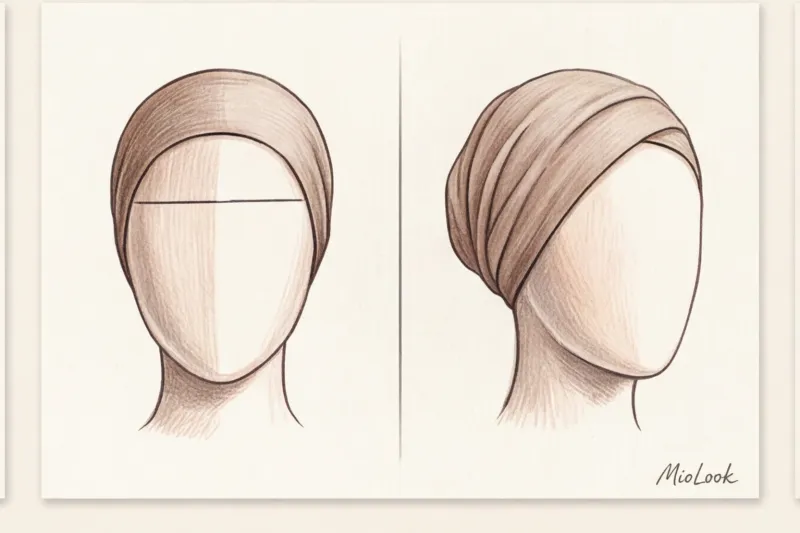
- Chiffon and crepe georgette: These are your best friends. The crepe weave (when the threads are tightly twisted) gives the fabric its elasticity. Georgette doesn't lie flat against the cheeks, creating an airy layer and natural, luxurious volume at the sides.
- Crinkle cotton and flax: An excellent choice for casual looks, the accordion texture itself creates micro-horizontal lines, expanding the portrait area.
- Silk and satin: They perfectly hold the shape of the visor and voluminous folds, reflecting light and highlighting the skin.
- Pashmina and cashmere for winter: Caution is advised. Choose a medium knit density to avoid the "sunken head" effect, where a large scarf engulfs a narrow face.
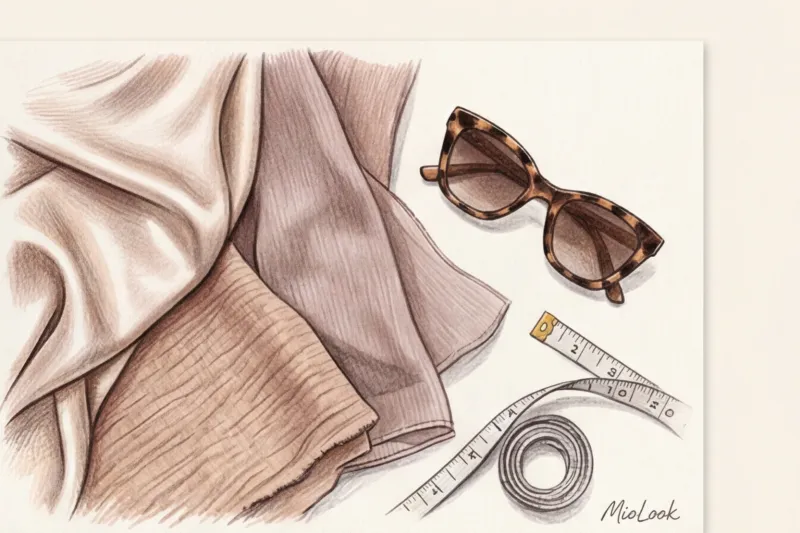
Of course, there are exceptions to this rule. These are It doesn't work If you have an elongated face but very small, delicate features (a thin nose, undefined cheekbones), coarse crinkled linen with a weight over 150 g/m² will simply overwhelm your appearance. A delicate crepe chiffon is a better choice.
3 Perfect Formulas: How to Wear a Hijab for Oval and Oblong Faces
Conscious styling begins with avoiding tight neck wraps. A tight neck instantly turns an elongated head into a lollipop. We need some breathing room. Here are three specific formulas I use on shoots and recommend to my clients.
Formula 1: Asymmetry and "Italian carelessness"
This technique borrows from the aesthetics of relaxed Mediterranean style, where a touch of casualness seems more valuable than perfect symmetry.
Textile: A stole made of georgette or thick chiffon.
Technique: Leave one end significantly longer than the other. Wrap it loosely around your head, creating a soft fold at the neck (be sure not to tighten the fabric!). Drape the longer end loosely over one shoulder, allowing it to drape.
Why it works: Asymmetry detracts from the central vertical axis of the face. A voluminous, soft crease under the chin visually shortens it and adds width to the lower third of the face.
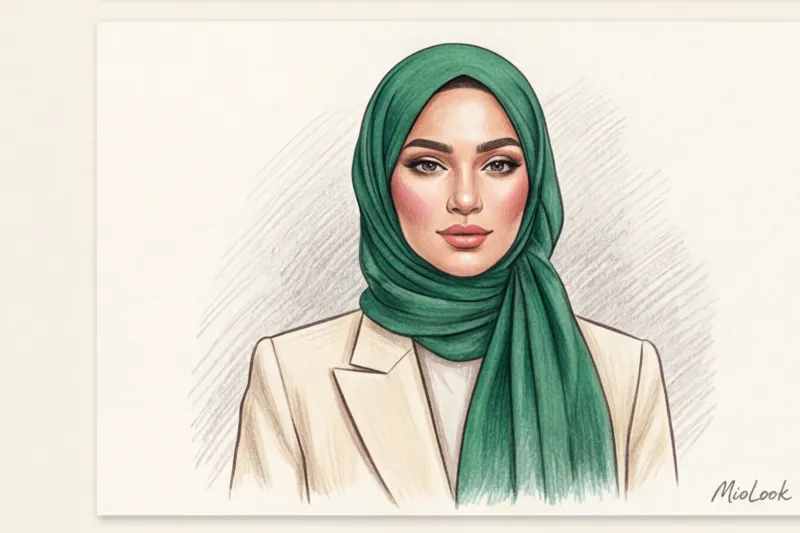
Formula 2: Turkish Style (Square Scarf with Corner)
If you have an important business meeting or conference coming up and need to look as put-together as possible, this formula is indispensable.
Textile: Thick silk, satin or cotton twill (for example, 90x90 cm format).
Technique: The square scarf is folded into a triangle. The key is to form a small, stiff, pointed corner just above the forehead. The edges hang down the sides and are carefully secured at the neck, leaving a small gap.
Why it works: The pointed top creates a new architectural geometry, drawing attention away from the length of the face. The stiffness of the silk ensures that the fabric doesn't fall down at the sides, creating that all-important volume in the cheekbone area.
Access to MioLook for €0.99 — one-time payment
Start creating your perfect looks with artificial intelligence. Digitize your wardrobe in minutes.
Get access — €0.99 onceFormula 3: Loose wrap for relaxed looks
The perfect solution for a weekend, brunch with friends, or a smart-casual outfit with jeans and a voluminous trench coat.
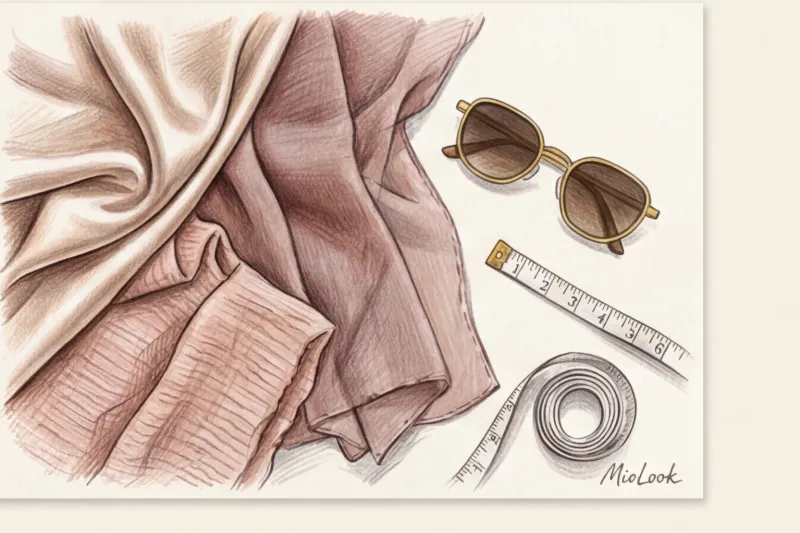
Textile: Soft crinkled cotton, muslin or linen.
Technique: Drape the scarf over your head as casually as possible, without clinging too tightly to your cheeks. Pin it under your chin, 2-3 centimeters from your neck, allowing the fabric to form a wide frame.
Why it works: This creates a hooded effect. The fabric lies away from the cheeks, visually complementing the missing width of the face. The face appears more compact within this wide frame.
Synergy of Details: How Necklines and Glasses Work Together with the Hijab
The hijab doesn't exist in a vacuum. What you wear it with can either enhance or detract from the harmonious effect.
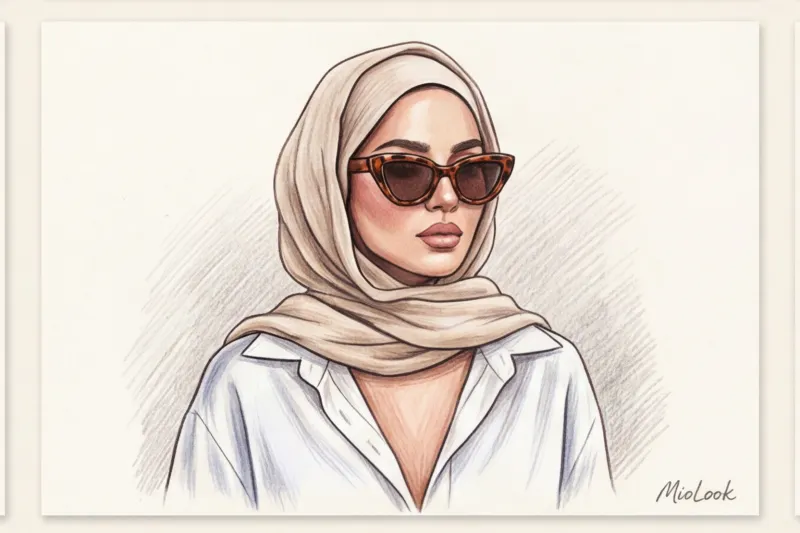
High, button-down collars (turtlenecks) paired with a tightly tied hijab are a double whammy for a long face. This combination blurs the line between the neck and head, turning the head area into a monolithic pillar. Avoid this. Choose V-necks or a classic cotton shirt of at least 120 g/m², unbuttoned to the top two buttons. This will create the necessary airiness and depth.
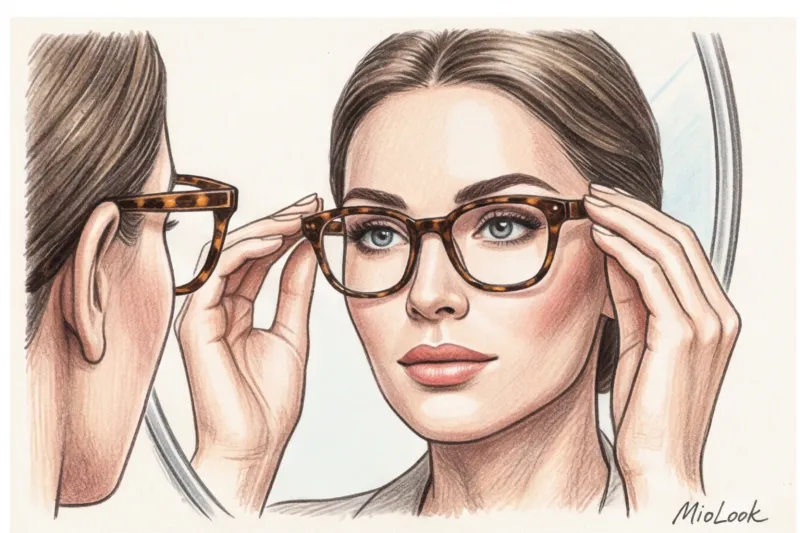
Sunglasses or optical glasses are your most powerful visual correction tool. Remember the Tom Ford 2024 collections with their statement frames. For an elongated face, choose pronounced horizontal shapes: chunky cat-eye frames or large square tortoiseshell frames. They literally cut the length of the face in half and visually widen the cheekbones.
By the way, if you prefer a turban style (where your neck is covered with a high collar and a scarf tied at the back of your head), be sure to wear statement earrings. Large hoops or accent geometric droplets will create that all-important horizontal line. (Learn more about this... How to choose earrings according to your face shape , we have already discussed this in our blog).
A stylist's checklist: your plan for a flawless look
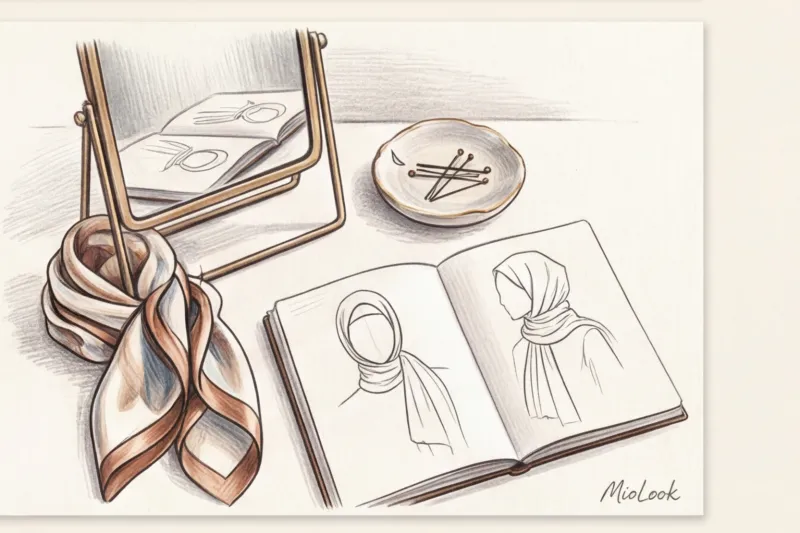
To summarize our architectural transformation, let's outline the key steps you can apply this morning in front of the mirror:
- Conduct a tissue audit: Save thin, fitted jersey for athletic wear. For everyday looks, invest in crepe georgette, chiffon, and crinkled cotton.
- Change the line of bonnie: Stop pulling the bottom hat down to your eyebrows. Pull it higher, exposing your forehead, and create a soft diagonal line so your interlocutor's gaze focuses on your eyes, not your chin.
- Add air: Never tie a scarf too tightly around your neck and cheeks. Leave some space—a loose wrap visually widens a narrow face.
- Use the power of accessories: Complete the look with glasses with horizontally elongated frames and correct necklines.
Style isn't a set of strict rules, but rather an understanding of your proportions and the ability to play with them. When you stop trying to "hide" a long face and start framing it intelligently, you'll see a whole new level of elegance in the mirror. Experiment with volume, try new textures, and let your look always reflect your inner confidence.