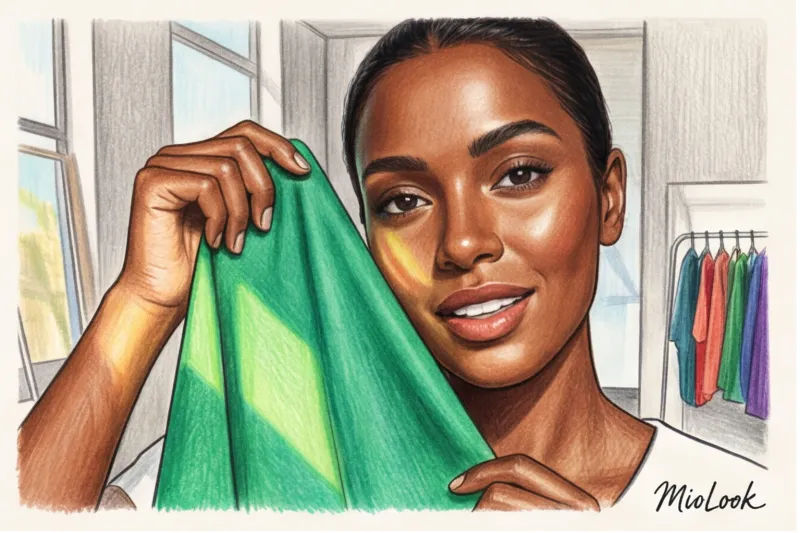
Did you know that about 40% of women with dark skin spend years wearing shades that make their faces look tired? The most damaging styling myth, which I've been fighting for 12 years, is this: "If you have dark skin, bright tropical colors and warm autumn tones suit you." Because of this misconception, women buy mustard, neon, and brick-red scarves, and then wonder why their skin looks dull and the dark circles under their eyes become more noticeable.
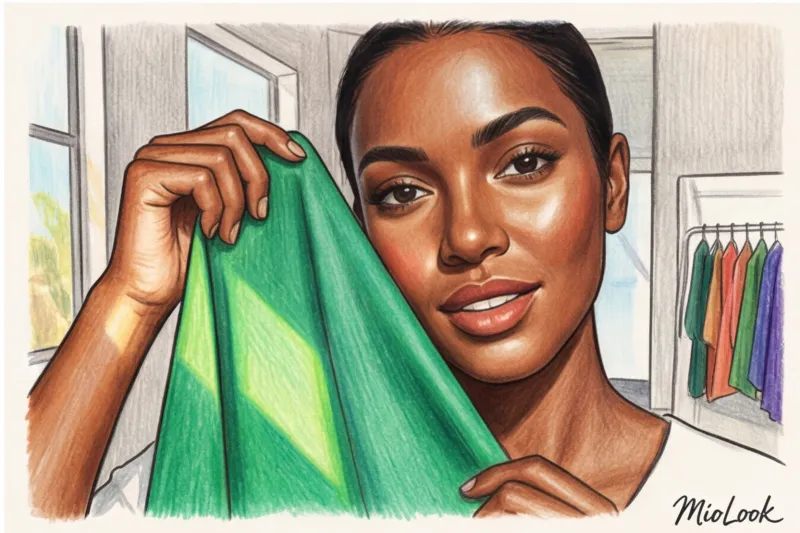
Picking up hijab color for dark skin , we work with a completely different physics of light than when choosing a dress or trousers. We talked about this in more detail in our The complete guide to choosing a hijab color , but today I want to look at the specifics of high melanin levels.
Instead of standard advice, we'll explore real-world color, the impact of fabric texture, and create a capsule collection in which each scarf will act as an Instagram filter—illuminating the face and smoothing out imperfections.
The Reflector Effect: Why Hijab Color Works Differently for Dark Skin
A dress in the wrong shade can always be "saved" with a deep V-neck, a statement necklace, or the right jacket draped over it. This trick won't work with a hijab. The fabric tightly frames the face, acting as a studio reflector. In light physics, this is called the albedo index—the ability of a surface to reflect light.
Dark skin, rich in melanin, absorbs more light than fair skin. Wearing a scarf that's already an absorber (for example, a dull, earthy shade with a matte finish) doubles this effect, visually casting your face into shadow.
"The main problem with mass-market fashion is that basic palettes are tailored to a European body type. When Zara or COS release a collection of 'universal nude' scarves, they use a cool beige or gray pigment. On dark skin, this 'nude' looks like a medical bandage."
For a hijab to be flattering, it must project the right light wave onto the skin, neutralizing natural shadows in the nasolabial folds and under the eyes.
The biggest myth in coloristics: "If your skin is dark, it means your undertone is warm."
The classic theory of 12 color types often fails on women of Middle Eastern, Asian, or Latin American descent. I had a client from Dubai, Amina. After reading a lot of glossy magazines, she bought trendy pastel and rusty brick tones, convinced she was a "Deep Autumn." During our fittings, it turned out that in a mustard hijab, she looked like she hadn't slept in a week and needed hospitalization.
Why does this happen? Dark skin often has a cool, bluish or complex olive (greenish) undertone. And when we apply a warm, orange color to olive skin, the face takes on a sickly, yellowish appearance due to the temperature clash.
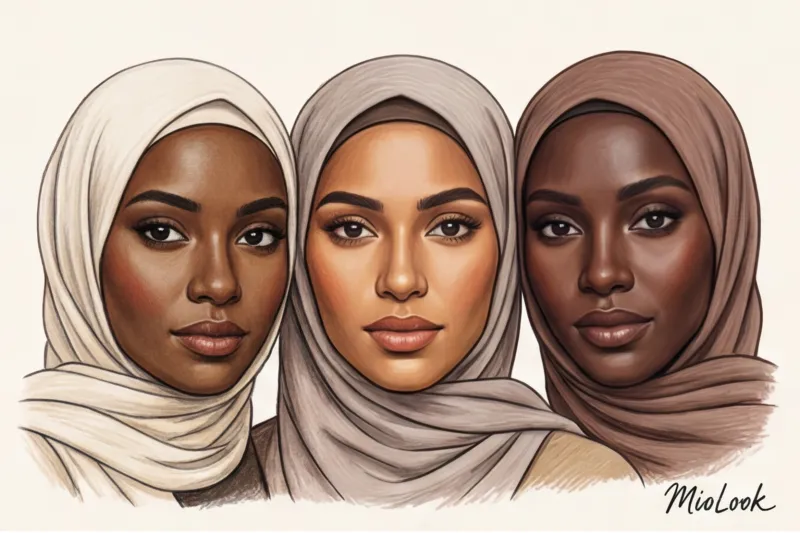
Forget about the "wrist vein test"—it's completely ineffective on tanned and dense, dark skin (veins will always appear greenish due to the yellow pigment of melanin itself clogging the vessels).
Stylist Quiz: How to Determine Your True Undertone at Home
To avoid guesswork, do a professional patch test in natural morning light. Be sure to remove your makeup—foundation will distort the results.
- White paper test: Hold an A4 sheet of paper up to your face. If your skin appears golden or peachy against it, you have a warm undertone. If it appears pinkish, reddish, or slightly grayish, you have a cool undertone. If it appears slightly greenish, you have an olive undertone.
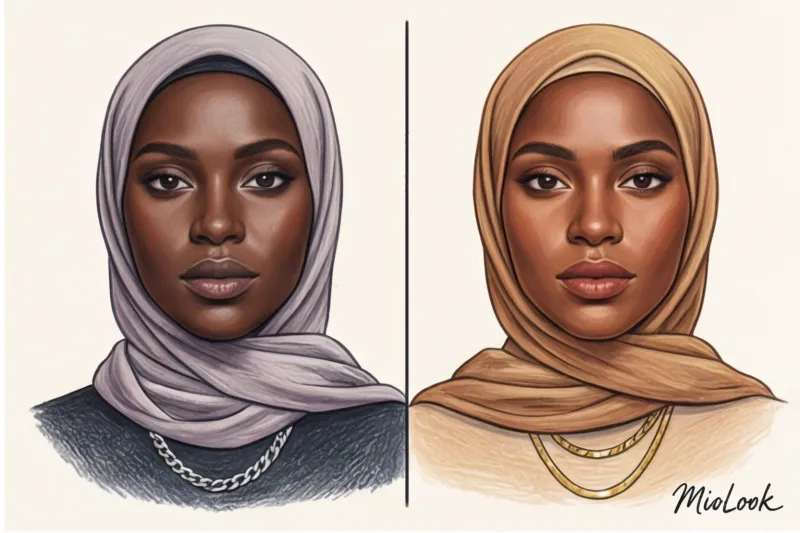
- Metal test: Take a piece of silver and gold foil (or large jewelry). What makes your face contour more defined and your eyes brighter? If silver, you're a cool type. We wrote about this in detail in the article. What metal suits my color type?.
- Earthiness test: Place a bright orange handkerchief on your face. If you look fresh, you're warm. If your face is dark and covered in shadows, you're definitely cold.
Tired of guessing with color?
Upload your photo to MioLook, and a smart AI stylist will instantly identify your personality and select the perfect hijab and clothing palette.
Get access — €0.99 onceBest Combinations: The Perfect Hijab Color for Cool and Warm Undertones
Once we understand our undertone, we move on to choosing specific shades. The secret to a perfect match is maintaining contrast.
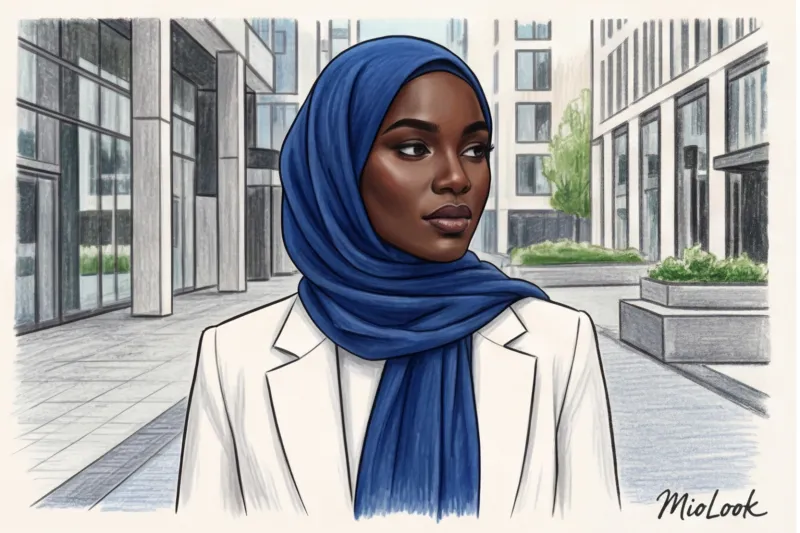
For cool and olive undertones (Deep Winter)
Your superpower is jewel tones. According to the Munsell Color System, high color saturation can cut through the sallow undertones of olive skin, bringing out its inner glow.
- Emerald and Sapphire — absolute favorites. They create a luxurious contrast.
- Rich Plum and Amethyst — work much better than flat black color.
- Ruby — an ideal alternative to classic red.
For a warm and golden undertone
You want colors that have a touch of gold or burnt clay in them.
- Terracotta and Brick - emphasize the tan.
- Deep chocolate - looks much more elegant on you than black.
- Camel and Warm Olive.
The rule for the perfect nude: Never buy a beige scarf that's the exact same color as your skin tone! It creates a horrible "no-border-face" effect—you blend into a single blur. The scarf should be exactly two shades lighter or two shades darker than your skin tone. For example, in practice, I often see that the shade warm taupe (warm taupe) from H&M works flawlessly on dark-skinned girls, serving as a great dark nude, while cool beige From the basic line, Zara makes them gray.
Danger Zone: Which Hijab Shades Are Mercilessly Ageing Dark-Skinned Women
As a personal shopper, I often remove items from clients' baskets that will ruin their mood at the very first selfie. Here's a list of the biggest color enemies of dark skin.
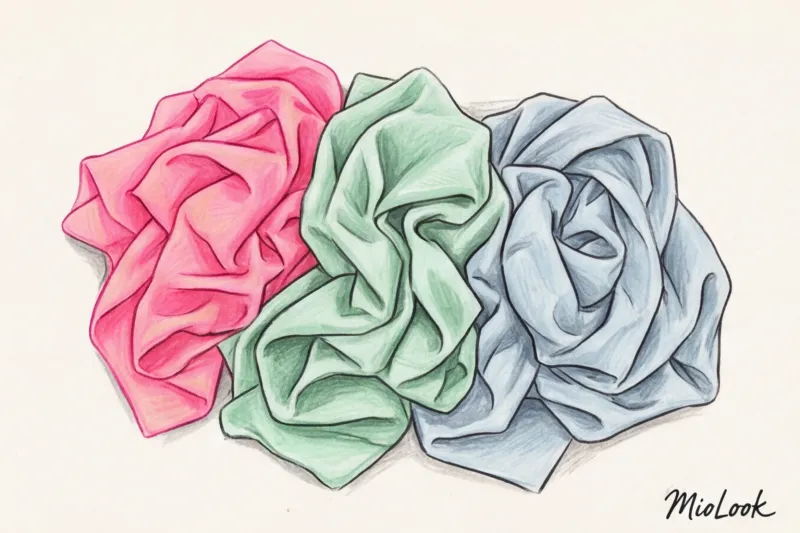
- Pastel colors with a white base (chalk pink, mint, pale blue). These colors are created by adding white pigment. On dark skin, they look alien, creating the effect of an ashen, dust-covered complexion.
- Neon and acid colors. Save them for beach swimsuits. Acidic lemon or fuchsia will overpower your complexion. People will notice the scarf, not your eyes. Plus, neon highlights even the slightest redness and pigmentation.
- Dirty yellow-green shades. The color of a child's surprise or an overripe olive will give the face the effect of an unhealthy liver.
- Mass-market "dusty rose". In the cheaper version, this color has a gray base. On European women with fair skin, it looks romantic, but on darker skin, it looks like a dirty spot, highlighting dark circles under the eyes. Read more about... How to wear pink correctly.
Material Decides Everything: How Fabric Texture Changes Your Face Color
This isn't mentioned in standard articles on color theory, but fabric texture alters color perception by 50%. Light physics studies show that matte fabrics absorb up to 30% more light than satin ones.
Imagine a deep burgundy hijab. If you buy a hijab in this color, made of matte cotton jersey or loose linen, the color will appear dull. It will absorb the light around your face, making wrinkles more visible. But if you buy a exactly the same color In silk with a density of 16 momme or higher or in high-quality smooth viscose with a slight sheen, magic will happen. Satin will act as a highlighter, "illuminating" the skin with reflected rays.
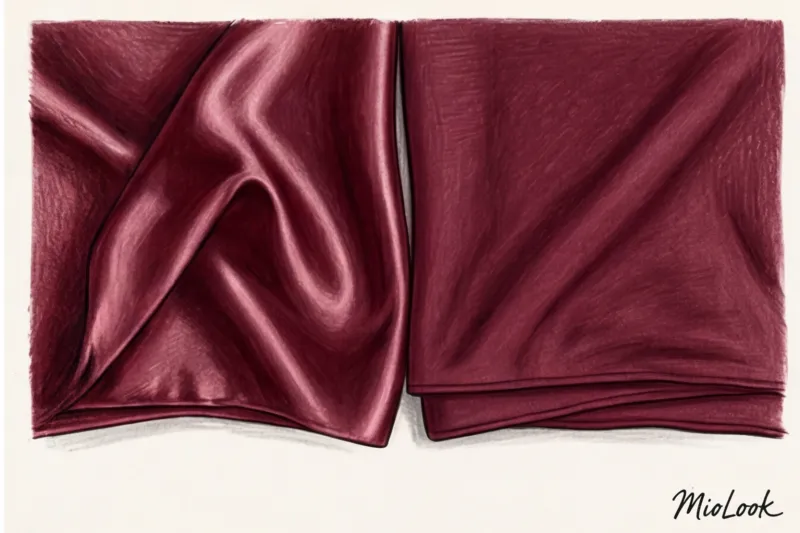
Insider stylist secret: If you really want to wear a color in the "danger zone" (for example, a complex pastel or black that makes you look older), choose it exclusively in a shiny texture (silk, satin). The shine will compensate for the lack of pigment.
But here's the honest limitation (when it DOESN'T work): If you're currently experiencing active acne, severe breakouts, or very porous, oily skin, avoid wearing anything too shiny near your face. Shiny silk will accentuate the skin's texture. In this case, high-quality chiffon or modal are your best bet: they allow light to pass through slightly, but don't have an overly shiny finish.
Organize your wardrobe
Add all your hijabs to your MioLook virtual wardrobe. The app will help you create capsule wardrobes and show you which basic shades you're missing for your perfect look.
Create a smart wardrobeStylist's Capsule: 5 Versatile Hijab Colors to Buy Right Now
To avoid standing in front of your closet every morning, put together a smart capsule wardrobe. According to WGSN's 2024 analysis, the trend toward minimalism and mindful consumption has shifted toward deep, luxurious shades. Here are 5 foolproof investments for dark skin:
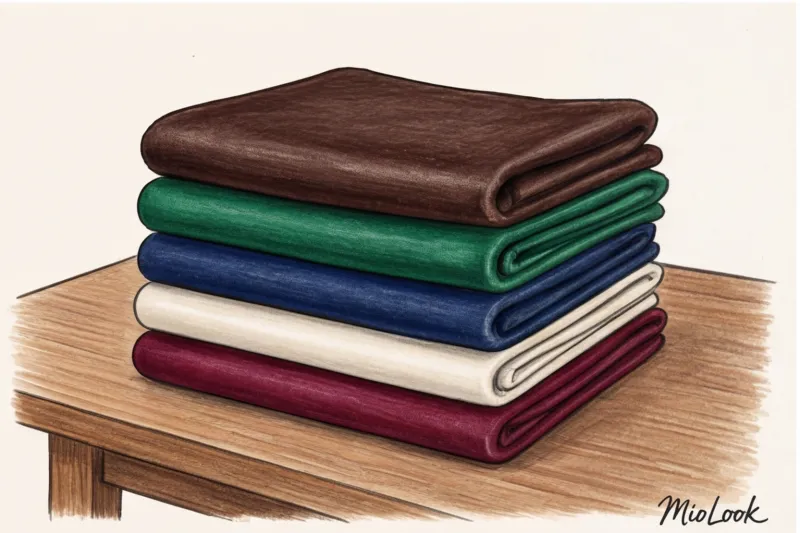
- Rich Chocolate (Espresso brown): Your new black. The perfect base that looks softer and more expensive than graphite.
- Deep emerald green: It brings out a healthy glow and looks stunning with gold jewelry.
- Navy blue: Creates maximum status in a business style. If you don't know, What to wear with blue For important meetings, combine it with beige suits.
- Ivory: Replace it with crisp white. Mass-market whites often have a blue tint and create an overly harsh contrast with dark skin. Ivory offers a subtle, refreshing touch.
- Deep wine (Burgundy): A luxurious accent that replaces bright lipstick in everyday looks.
Checklist: Audit Your Hijab Collection in 15 Minutes
Theory is useless without practice. Right now, or this weekend, set aside 15 minutes to go through your collection. I give this algorithm to every one of my clients.
Step 1: Ruthlessly put away all the chalky pastels and neon colors. If you're too embarrassed to throw them away, save them for wearing around the house or layering them under other scarves (like an undercap if it's barely visible).
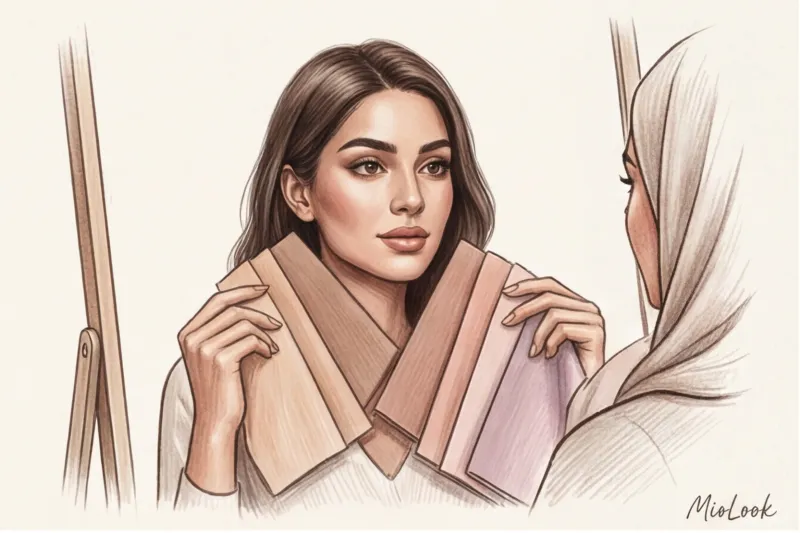
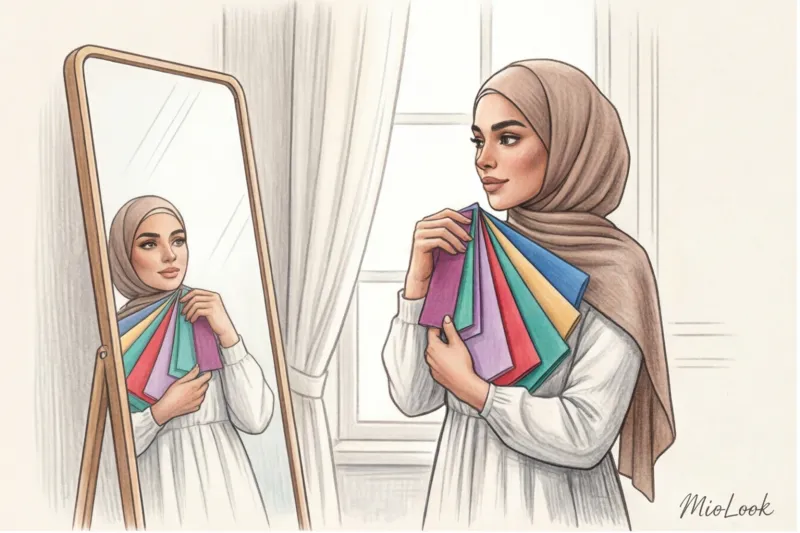
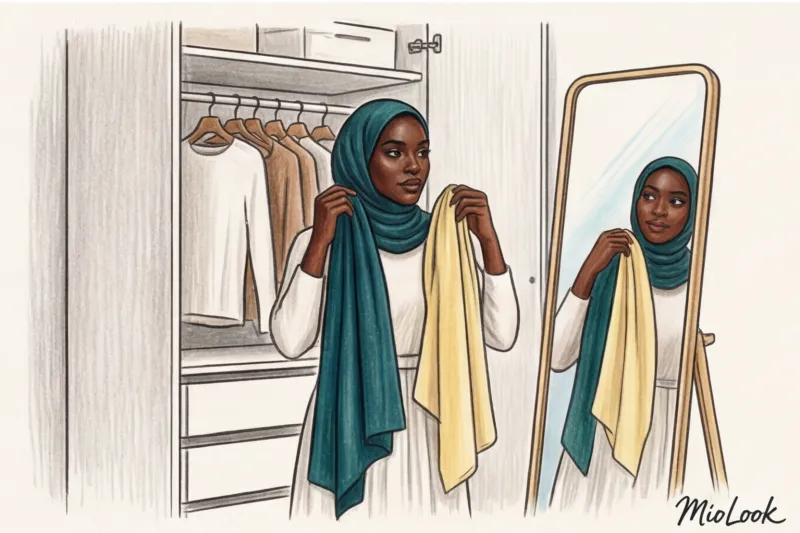
Step 2: Go to a window with a mirror (daylight only!). Take three of your favorite scarves and three that you rarely wear for some reason. Apply them one at a time and focus on just two areas: the dark circles under your eyes and the nasolabial folds. You'll immediately see which fabrics deepen these shadows and which act as an eraser.
Step 3: Make a shopping list. You need at least one perfect nude (remember the rule: 2 shades lighter or darker than your skin tone) and one deep base (Espresso or Navy).
Step 4: Next time you buy something, check not only the color but also the texture. Hold the fabric up to your face right in the store, at different angles to the light.
Color selection isn't magic or an innate gift; it's about understanding the physics of light and understanding your own contrasts. Free yourself from the stereotypes of "warm, dark-skinned girls," find your true undertone, and every look will look like it was created by a team of professional stylists.