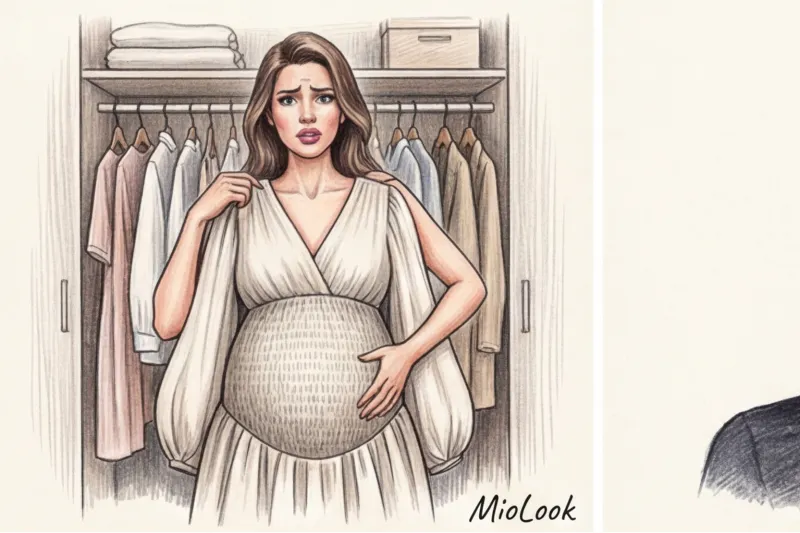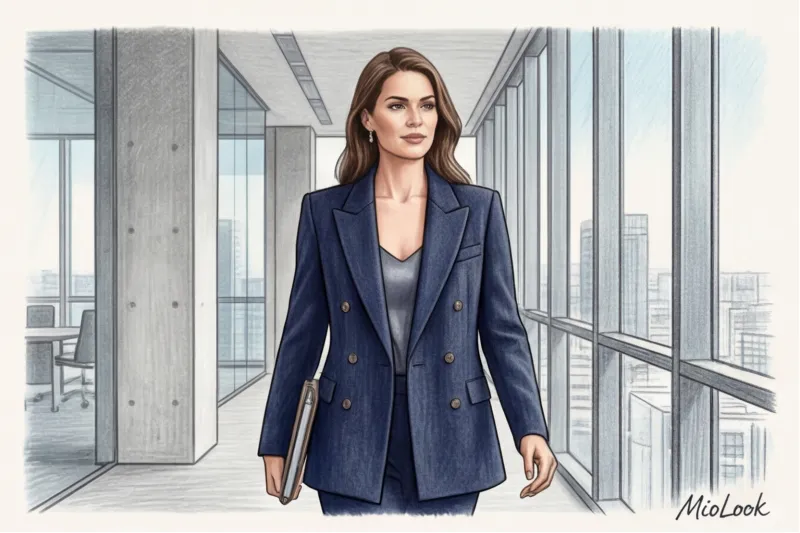
Two lines on a pregnancy test are a huge joy, but for a woman actively pursuing a career, it's also a strategic challenge with an asterisk. This is especially true if you're in the middle of an important project, expecting a promotion, or simply aren't ready to share personal news with colleagues ahead of time. The panic of the first few weeks often pushes us to impulsive purchases: we start buying oversized hoodies and loose dresses, hoping to hide in them until maternity leave.
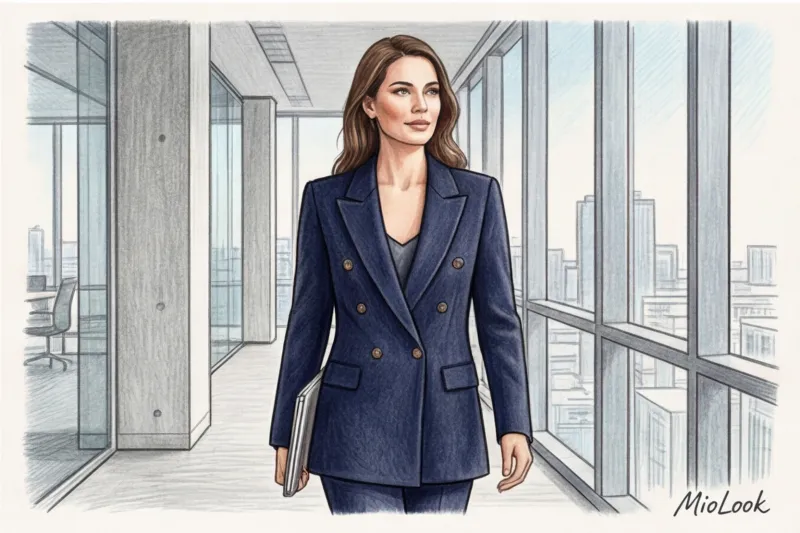
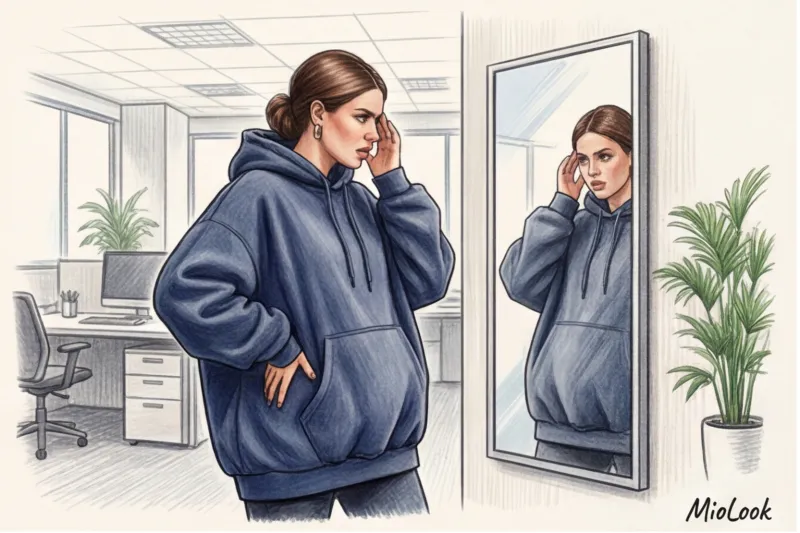
But let's be honest: abruptly swapping a smart suit for baggy knitwear is the loudest way to announce to the office that something has changed. If you're looking for a practical answer to the question of how to conceal your pregnancy at work, your clothes should be your architectural tool, not a camouflage net. We've covered the basic principles of creating such a wardrobe in more detail in our The complete guide to office wear for pregnant women , and today we'll take a detailed look at the most challenging task—styling the first trimester.
Why oversized clothes are your enemy: the main mistake when hiding a belly
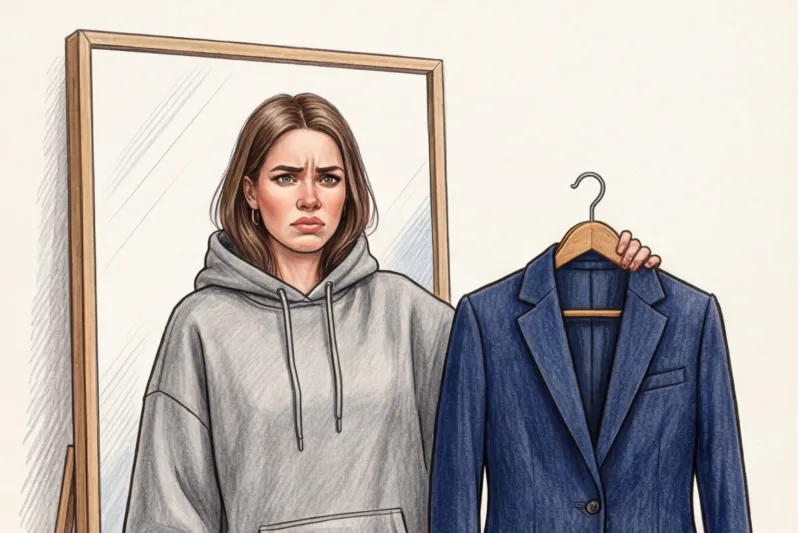
The most common request I get from clients early in pregnancy is, "Sofia, let's buy me clothes two sizes too big." And this is a fatal mistake for your business image.
Oversized clothing doesn't hide altered proportions; it emphasizes them. When you wear something that's too big in the shoulders, armholes, and sleeves, your silhouette becomes bulky. Psychologically, in a corporate environment, shapeless, baggy clothing is subconsciously interpreted as sloppiness, fatigue, or a loss of control. And right now, it's crucial for you to project maximum composure and professionalism.
Instead of soft volume, we need rigid structure. Clothes in your normal size, but with a proper, shape-resistant cut, are ten times more effective. Moreover, buying temporary oversized items contradicts the principles of sustainable fashion. According to The Business of Fashion (2023), specialized fast-fashion lines for pregnant women are one of the fastest-growing segments of textile waste, as these items are worn for no more than 3-4 months and then end up in landfill. Invest in the right cut, not in excess volume.
Textile Geometry: How Fabric Density Decides Everything
The secret to invisibility lies in the law of textile resistance. The fabric of your clothing must be dense enough to create its own independent framework, rather than obediently clinging to the contours of your body.
In my studio, we often conduct a tactile test: I ask the client to put on a thin viscose blouse and then a heavy cotton shirt (at least 180 g/m²). The difference is dramatic. Thin knits, cheap viscose, and satin are all fabrics that betray the wearer. They highlight the slightest bloating (which in the first trimester is often associated not even with the growing uterus, but with hormonal fluid retention).
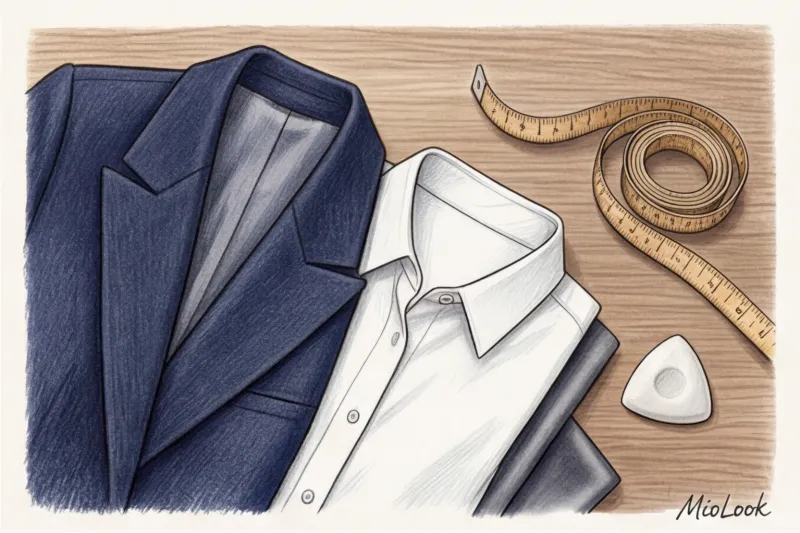
Clothing with a high elastane content is particularly dangerous. According to research by the Institute of Textile Technologies, cheap stretch fabrics (with elastane content exceeding 5-7%) act as a greenhouse. They can increase body temperature in the contact area by 2-3 degrees. In the first trimester, when a woman's thermoregulatory system is already under enormous strain due to progesterone, this is critical. You will sweat constantly and feel discomfort.
- Hazardous fabrics: thin underwear knitwear, cupra, cheap polyester, fabrics with elastane more than 5%.
- Life-saving fabrics: thick cotton (poplin, oxford), wool gabardine, tweed, heavy matte silk.
Your perfect look starts here
Join thousands of users who look flawless every day with MioLook. Our smart algorithm will help you find the perfect fit.
Get access — €0.99 onceHow to hide pregnancy at work: clothing and the right styles
The basic styling principle during this period was to create vertical lines through layering. An unbuttoned jacket over a top visually cuts the figure into three narrow vertical stripes, completely eliminating volume at the waist.
Jackets with a rigid shoulder belt
Your best ally is a high-quality, straight-cut, double-breasted jacket. The focus here is on the shoulders. A clear, defined shoulder line (yes, shoulder pads are a must) visually balances your proportions. If your shoulders appear structured and broad, your waist automatically appears narrower, and your stomach is lost in the straight cut of an unbuttoned blazer.
For warmer weather, a long vest made from suiting fabric is a great alternative. It achieves the same elongating effect without overheating the body.
Blouses and shirts: optics and asymmetry
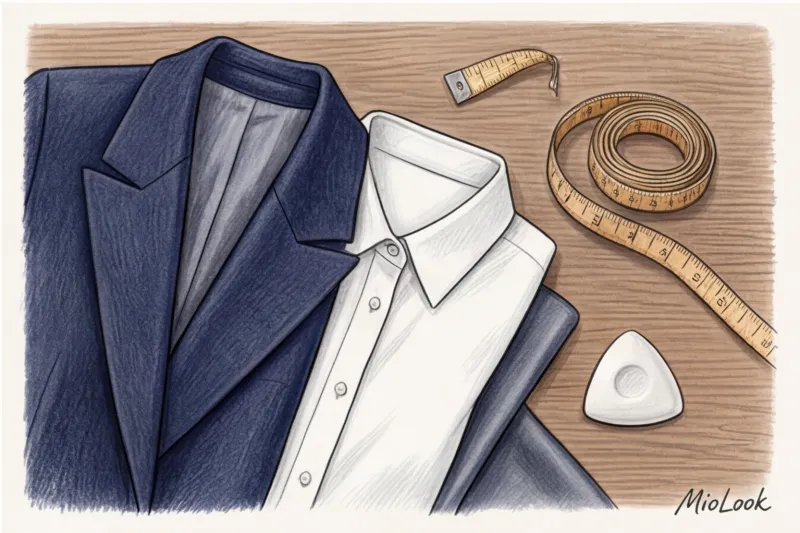
Forget fitted blouses with darts. We need menswear-style shirts made of stiff cotton (an investment of around €80–€120 that will pay for itself a hundredfold). They're best worn untucked or French-tucked—tucking just a small edge at the front or side to define the leg line but leave some room around the midriff.
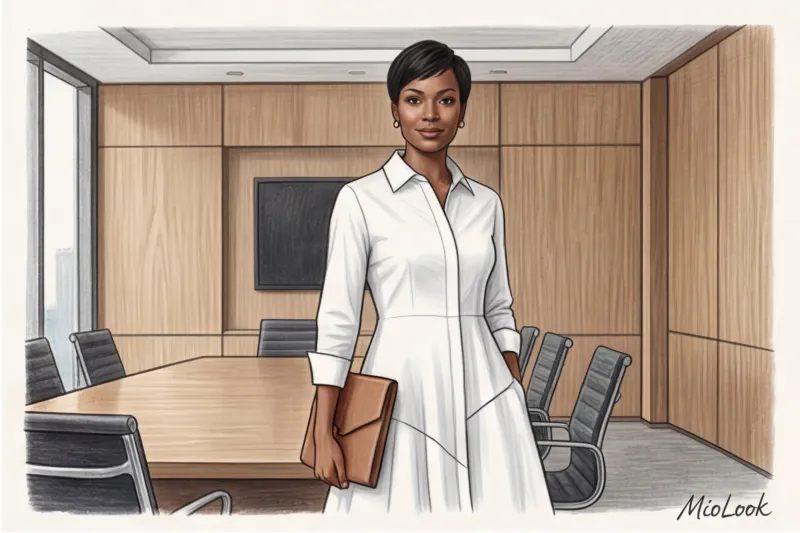
Pay special attention to wrap tops made of thick matte silk and peplums. But be careful: the peplum should be modern, architectural, with an asymmetrical edge, not the childish ruffles of the 2010s.
Dresses and skirts: freedom without losing status
If you prefer feminine silhouettes, opt for A-line dresses with a 60s-inspired silhouette. They look formal and elegant, yet completely flattering.
When it comes to skirts, pleated skirts made of thicker fabrics work great, but there's a secret: choose styles with an elasticated waistband only at the back, leaving a rigid, smooth waistband at the front. This allows the fabric to stretch as needed, without creating unsightly bunching at the stomach.
Color and Print: Optical Illusions in Business Dress Code
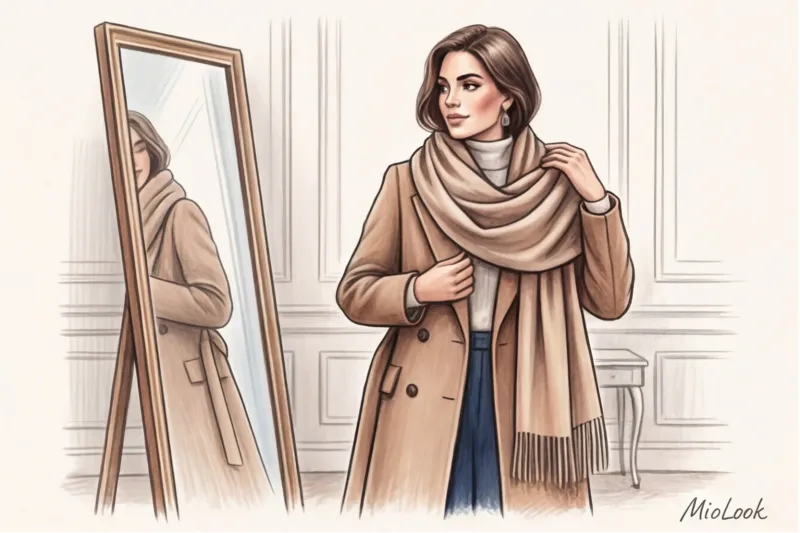
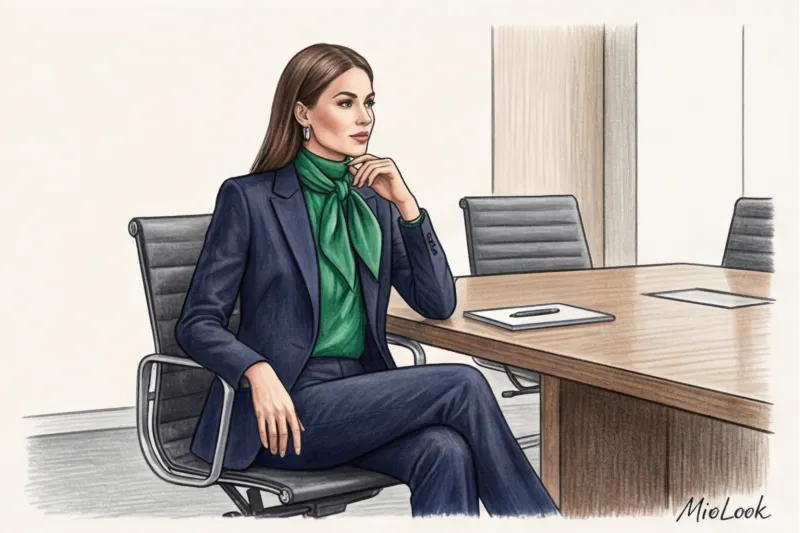
Color is a powerful tool for optical correction. The most effective technique I use with my clients is reverse color blocking. We use a dark inner layer (for example, a graphite top and matching pants) and a light outer layer (an off-white or camel jacket). The dark "column" inside visually narrows the silhouette and absorbs volume, while the light jacket draws attention away from itself.
But what you should definitely avoid is a small floral print. Even in a corporate setting, it looks questionable, and when paired with a changed figure, it instantly gives off a typical "pregnancy" vibe. Contrary to popular belief, horizontal stripes are acceptable, but only if they're a thick knit, like a Breton striped shirt, worn under a crisp blazer.
"Monochromatic looks in deep shades (navy, burgundy, emerald) work flawlessly. A single color from neck to ankle prevents the eye from getting caught in localized volumes, creating a continuous, elongated line."
Portrait Zone: Distracting Attention with Accessories
In style, there's a golden rule called "anchoring"—we direct the gaze of our interlocutors through accent points. If you don't want your colleagues looking at your waist, make them look at your face.
I had a revealing case in my practice. My client, Anna, a partner at a major law firm, learned of her pregnancy at the very beginning of a complex three-month merger deal. Publicity could have cost her her leading position in the negotiations. We built her entire wardrobe around tailored, dark, loose-fitting suits and a stunning portrait area. We used large vintage brooches high on the lapel, statement geometric earrings, and silk bobs tied in intricate knots.
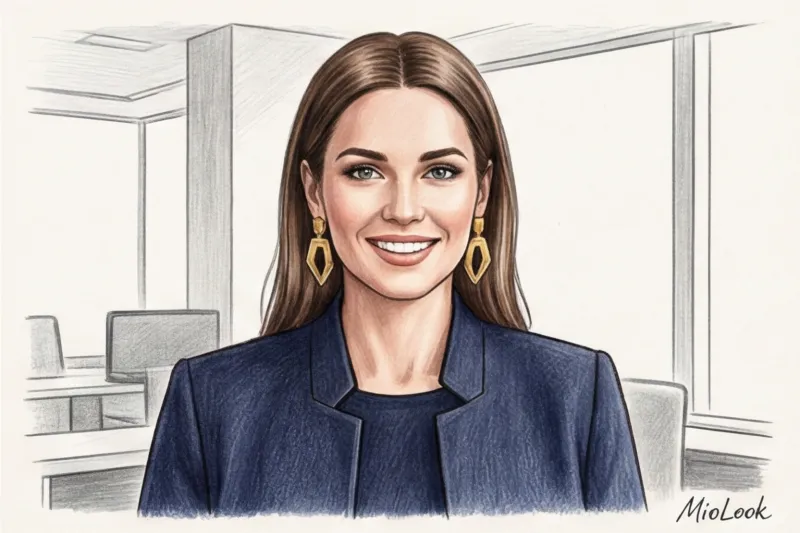
None of the 15 male negotiators at the enormous table even suspected that by the end of the deal, she was already four months pregnant. Their gazes were constantly focused on her face and shoulders.
Also, remember that your beauty routine during this period should be impeccable. Clean, graphic hair and fresh makeup maintain your expert status and offset a slightly relaxed cut.
Access to MioLook for €0.99 — one-time payment
A smart AI stylist will help digitize your accessories and suggest stylish combinations to create the perfect portrait zone.
Get access — €0.99 onceWardrobe audit: find the right items without going to the store
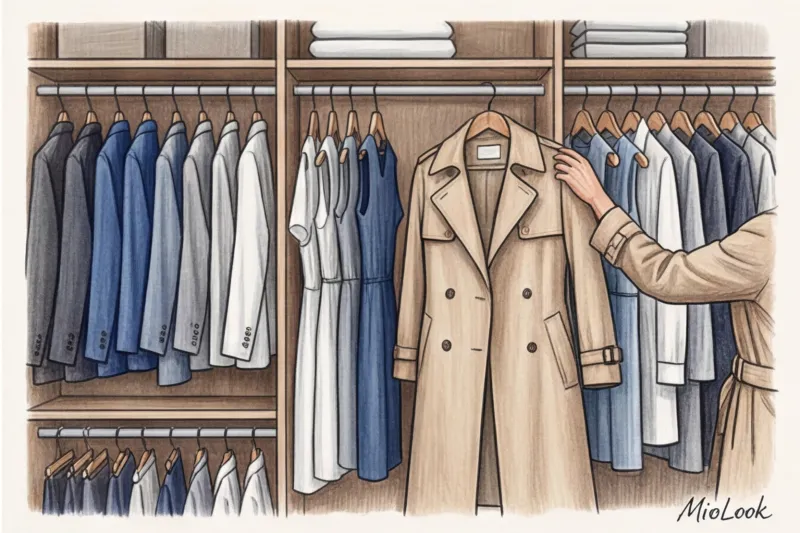
I sincerely urge you not to rush to the maternity store in your eighth week. According to statistics we collect from our clients, about 70% of your regular basic wardrobe can serve you faithfully until the end of the second trimester if you style it wisely.
Take inventory of your closet. Look for mid-rise or low-waist pants (they won't squeeze your stomach), drawstring skirts, loose shirts, and straight-cut dresses. To avoid going through your clothes every morning, digitize your wardrobe. Upload your items to the app. MioLook , you can tag them with "loose fit" and "straight silhouette." The algorithm will automatically suggest safe combinations for every day, eliminating morning stress.
Use life hacks to transform your current items. A simple elastic hair tie threaded through the loop of your favorite office pants and draped over a button will give you an extra 3-4 centimeters of freedom, while a long top or untucked shirt will reliably hide this structure from prying eyes.
Checklist: A Safe Business Capsule for the First Trimester
If after your audit you realize you still need to buy some extra items, here's a minimalist shopping list that will cover all your needs for the coming months. The budget for such a capsule wardrobe is around €300–€450, but you'll still be wearing these items after maternity leave.
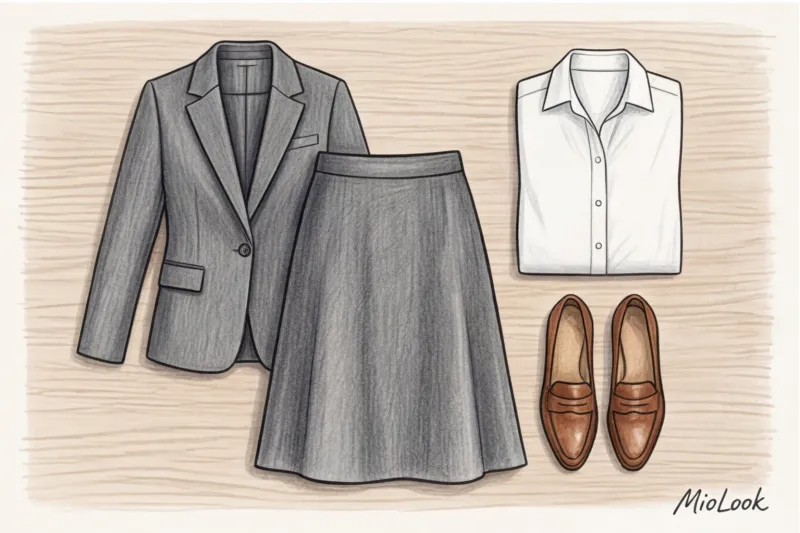
- 1 structural jacket: your usual size, but straight, men's cut (not fitted).
- 2 shirts made of thick poplin: white and blue, can be purchased in the men's department for the right silhouette.
- 1 A-line dress: made of dense suiting fabric with the addition of viscose, midi length.
- Palazzo pants: with a high elastic waist (ribbed) or a hidden side zipper to avoid creating bulk in the front with fittings.
Shoes deserve a special mention. Hormonal changes soften ligaments, and your center of gravity begins to shift. Avoiding high heels isn't a whim, but a safety precaution. Replace them with classy leather loafers, oxfords, or elegant kitten heels (heel 3-4 cm).
When does this approach NOT work? I'm always honest with my clients: if the first trimester is accompanied by severe morning sickness and hyperesthesia (when any touch of fabric, even thick cotton, triggers nausea), forget about stiff jackets. In this case, your only option is premium, heavy cashmere knitwear and maximum comfort. Health always comes before dress code.
Pregnancy isn't a reason to abandon your professional style and hide behind bland clothes. A well-designed wardrobe will allow you to feel confident, handle important meetings, and manage your impressions until you decide to share your news with the world.