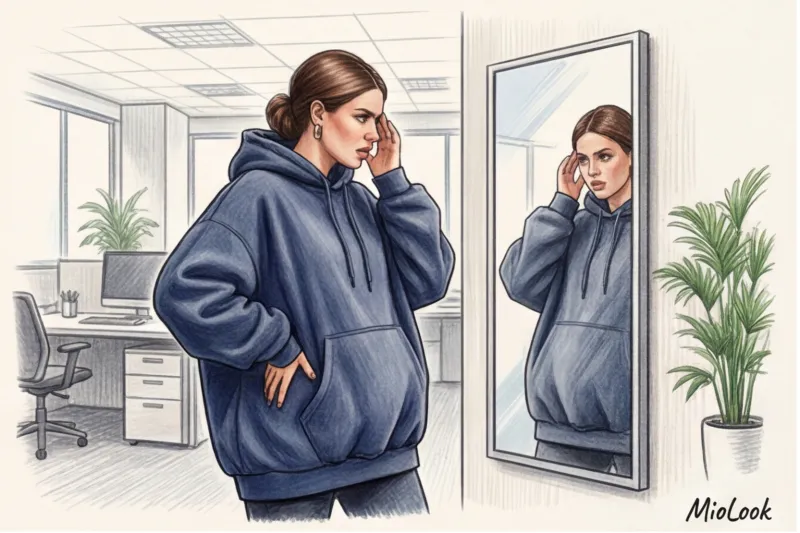
Physiology or optical illusion: why does the belly appear so early?
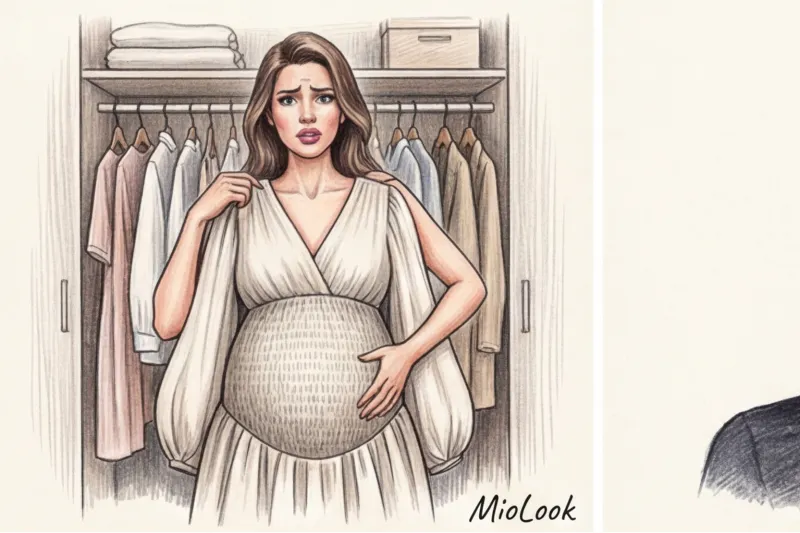
According to a global study by the WGSN agency (2023), approximately 70% of women shop for maternity clothing as early as 8–10 weeks. And this is despite the fact that the fetus is still physiologically the size of a small plum. So where does that bulk come from that makes it so difficult to button your favorite jeans?
The answer lies in physiology: in the first trimester, your belly expands not because of the baby, but because of hormonal changes, fluid retention, and bloating. This means it's too early to switch to empire-waist dresses and maternity pants with knit panels. Your goal now is not to pack your new volume into baggy items, but to create an optical illusion with a regular wardrobe. We've covered more about building a basic, functional wardrobe during this period in our complete guide. Maternity Capsule Wardrobe: How to Maintain Style.
After 14 years as a personal stylist, I've learned the most important thing: hiding your belly in early pregnancy isn't a matter of clothing size, but rather its design. Let's figure out how to maintain your usual status and elegance without buying parachutes.
The Biggest Camouflage Mistake: Why Oversized Clothing Doesn't Work
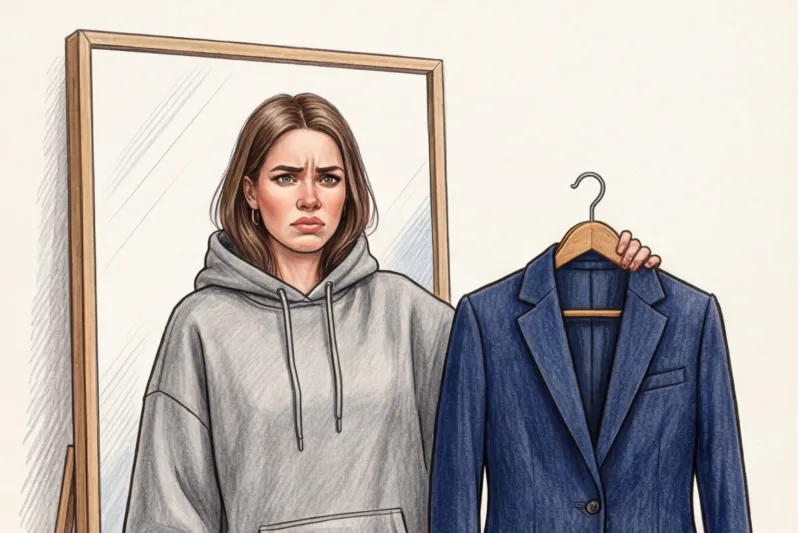
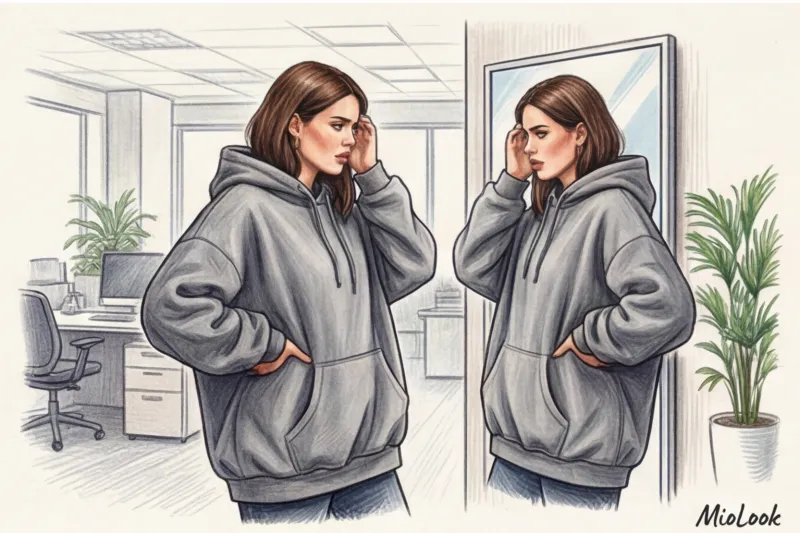
The most common impulse for a woman who discovers her pencil skirt has become a dig at her waist is to buy a hoodie two sizes too big. This is a colossal mistake.
Last year, a client, a top manager at a major bank, contacted me. They were planning a major merger, and she needed to conceal her pregnancy at all costs until her second trimester. Before our meeting, she had solved the problem simply: she bought oversized sweatshirts and tight-fitting sack dresses. The result was disastrous. Her colleagues didn't suspect she was pregnant, but they began whispering about why she had suddenly stopped taking care of herself and had visibly gained 5-7 kilograms.
Trying to hide a small belly with a completely oversized fit always backfires. The figure loses its contours, becomes bulky, and the bulky fabric draws even more attention to the belly area. The difference between a stylish, relaxed silhouette and a baggy look is the air space between the body and the fabric. You don't want a huge size, but a well-fitted, semi-fitted cut.
How to Hide Your Belly in Early Pregnancy: 3 Golden Rules of a Stylist
The main rule for the first few weeks: we're moving away from a tight fit toward a refined semi-fit. This is that 2-3 centimeter gap between the fabric and your skin that allows you to breathe freely and prevents others from noticing your changes in size.
Architecture of cut instead of shapelessness
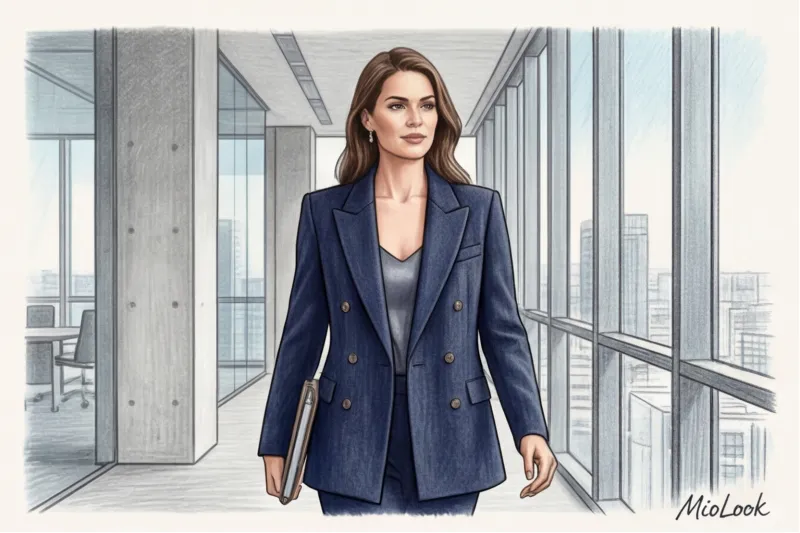
Look at the collections of brands like The Row or the old Celine of the Phoebe Philo era. Their secret lies in architectural cuts and sturdy materials. Stiff fabrics—heavyweight cotton (from 180 g/m²), coated linen, high-quality suiting wool—hold their shape rather than clinging to yours.
A structured shoulder line on a jacket instantly draws attention to itself, visually creating an inverted triangle. Against the crisp, defined shoulders, any waist size appears insignificant. Avoid empire-line dresses with drawstrings right under the bust—they literally scream "I'm pregnant." Opt for an A-line or straight fit.
The illusion of verticality and multi-layering
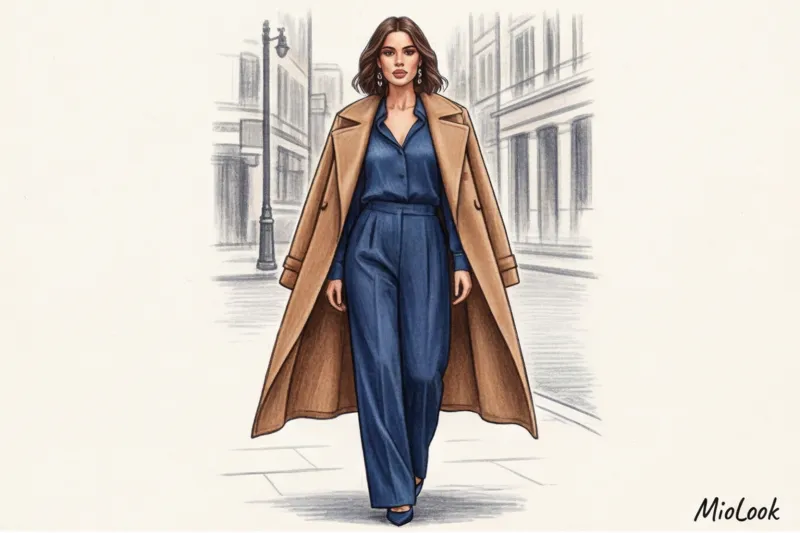
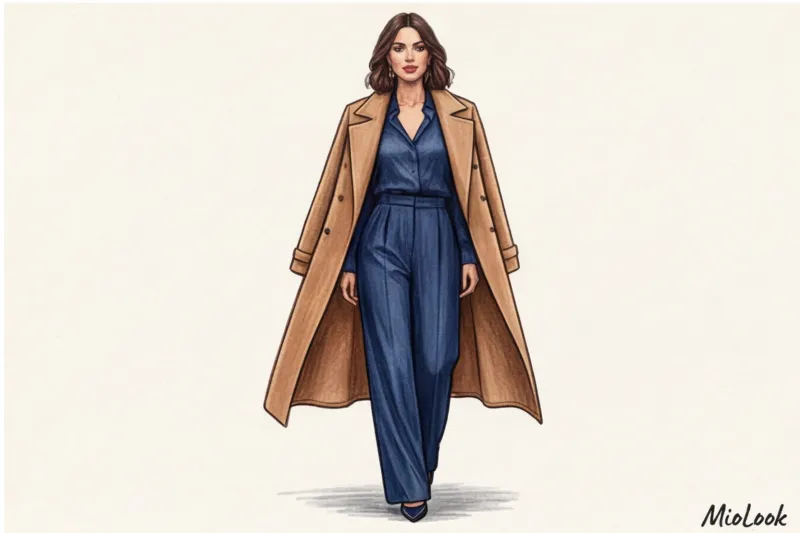
One of the most powerful styling tools is creating an "inner column." You wear a monochrome base layer (for example, a navy top and trousers) and layer a contrasting jacket, long vest, or trench coat over it, leaving it unbuttoned.
The two sides of the unbuttoned top layer act as a frame. They physically cut off the volume at the sides, creating a narrow vertical line down the center of the figure. Important: the top layer must end below the hipline, otherwise the horizontal cutting line will cut right through the widest part of the figure.
The magic of prints and textures
Fabric texture can be your best friend or your worst enemy. Fine knits, unlined viscose, and silk satin are all traitors. They're highly reflective and highlight even the slightest bloating from a glass of water, not to mention pregnancy.
Opt for matte fabrics: they absorb light and visually reduce volume. If you love patterns, choose geometric or abstract prints with medium contrast. They act as optical camouflage, drawing the eye along the pattern rather than focusing on the contours of the body.
Wardrobe Inspection: What to Keep and What to Put Away for Six Months
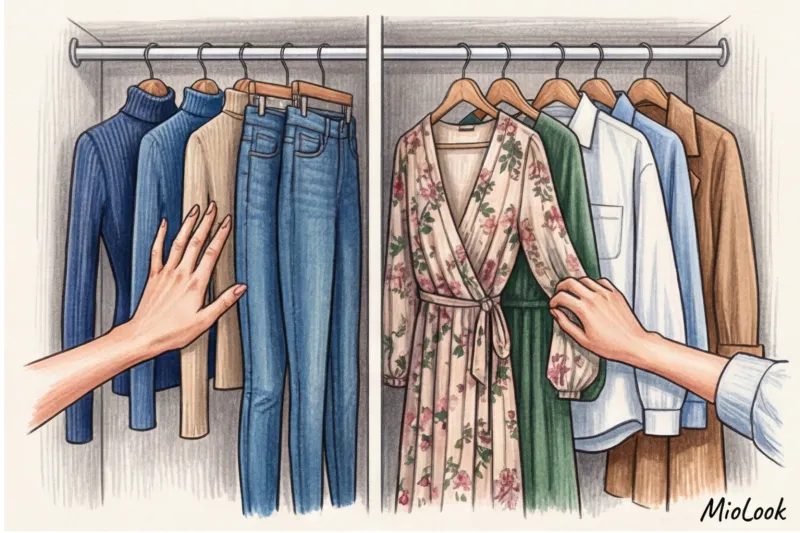
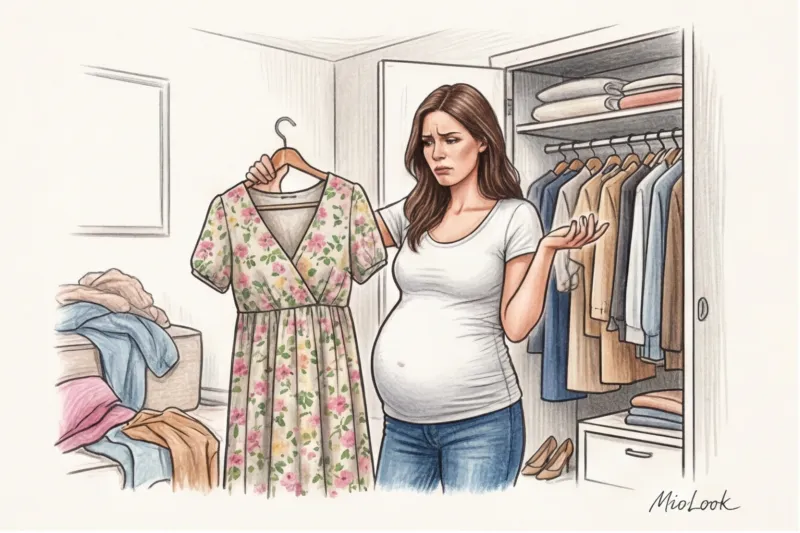
When I conduct closet reviews with pregnant clients, we usually discover something surprising: about 40% of their current wardrobe is perfectly suitable for the first trimester. You don't need to rush out and buy new items with the "maternity" tag.
What to put on the far shelf:
- High-waisted skinny jeans (they not only highlight your belly but also harm your digestion)
- Pencil skirts made of thin fabric without elastane
- Fitted turtlenecks (especially those made with fine ribbed fabric)
Your hidden reserves:
- Men's shirts (take a look in your husband's closet—oversized men's shirts fit much more snugly and correctly than women's shirts)
- Wrap dresses—Diaana von Furstenberg's legendary invention—allow you to adjust your waistline to the millimeter.
- Pleated skirts with soft elastic
To quickly create new combinations from old items and understand what exactly is missing, I recommend digitizing your closet. You can upload photos of your clothes to MioLook — and the app will automatically create comfortable looks for you every day, taking into account your new body measurements.
Your perfect look starts here
Join thousands of users who look flawless every day with the help of MioLook, the smart AI stylist. Upload your wardrobe and get ready-made looks.
Get access — €0.99 onceBusiness Capsule for the First Trimester: Putting Together Discreet Office Looks
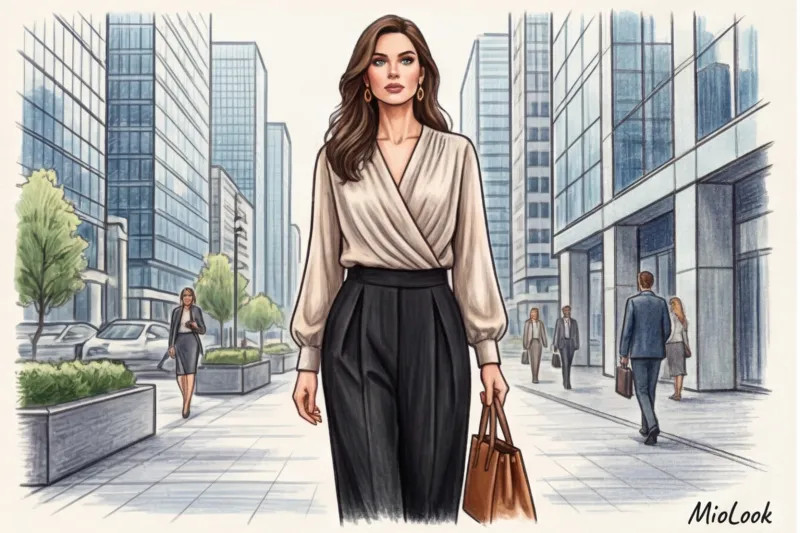
Office dress codes often don't tolerate liberties, but even a formal wardrobe can be adapted. Remember the principles in our article "Business Capsule Wardrobe: 15 Items for 30+ Looks"—many of these items will save you now.
Replace those simple, tailored shirts that start to loosen up at the chest or stomach with blouses featuring delicate draping, a knot at the waist, or a neat, architectural peplum. A peplum is a brilliant detail: it sits snugly at the waist (which you still have) and then flares out to cover the stomach area.
Instead of skinny cigarette pants, switch to palazzo pants with soft pleats at the front. These folds of fabric are originally intended by designers to create subtle volume in the hips and stomach area. They will make your curved silhouette look like a tailor's design, not a body modification.
Trouser Question: How to Extend the Life of Your Favorite Jeans and Trousers
Maternity jeans with a wide knit belly panel are a waste of money in the first trimester. Your belly isn't big enough to support them, and the jeans will constantly slip down.
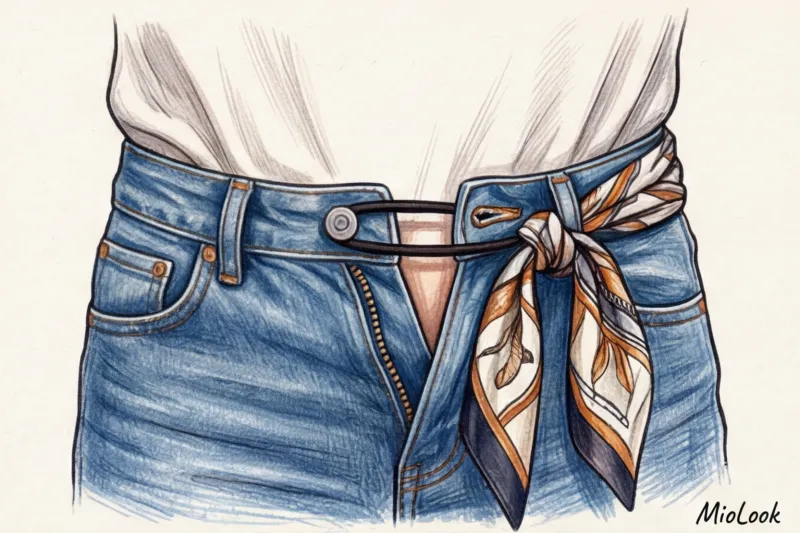
Instead, use an old professional hairstylist trick from regular shoots: thread a strong hair elastic through the buttonhole of your jeans, then drape both loops over the button itself. This will give you an extra 3-5 centimeters of freedom.
Limitation: This trick absolutely DOES NOT work with low-rise jeans or trousers made of thin suiting fabric—the elastic will pull the fabric and distort the fit. Use only heavyweight denim with a mid- or high-rise waist.
How can you hide this maneuver from prying eyes? You can wear a long sweater or use a French tuck, tucking the shirt in only on one side. And my personal life hack: to reliably hide an open zipper, I thread a narrow silk twill scarf through the front belt loops of my trousers and tie it in a loose knot. It works as an accent belt.
Accents and Distractions: Managing Attention
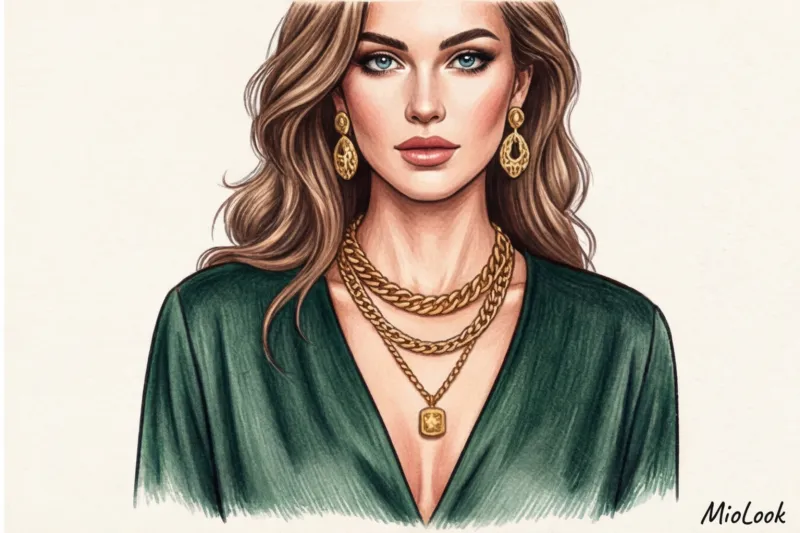
In styling, there's a golden rule of optical illusion: the human eye always gravitates to the brightest, most contrasting, or most detailed point in an image. Your goal is to shift the visual weight to the portrait area.
Let people look at your stunning earrings, not your waist. Opt for deep V-necklines (they also elongate your neck), statement collars, tiered necklaces, and bright silk scarves.
Don't forget about bags and shoes. If your clothes have become more relaxed and casual, accessories should be as structured as possible. A soft shirtdress paired with a soft hobo bag will make you look like a cloud. The same dress with a rigid tote bag and graphic loafers will show that your style is still under strict control.
Access to MioLook for €0.99 — one-time payment
A smart AI stylist will create the perfect look in seconds. Upload your items, experiment with accessories, and expertly manage visual accents.
Get access — €0.99 onceChecklist: A Smart Shopping Plan When Your Old Items Are Too Small
If your pre-pregnancy wardrobe is starting to feel tight, don't rush to the maternity section. The clothes there are often made of cheap knitwear and cluttered with childish prints. It's much wiser to go to your favorite mass-market or mid-market brands (such as COS, Massimo Dutti, or Zara) and buy items 1-2 sizes bigger.
3 investments that will definitely pay off:
- High-quality straight-cut jacket (in the range of €150–€300). Choose a long model made of high-quality wool. After giving birth, it will become your favorite oversized basic.
- A loose white shirt made of thick cotton (budget €60–120). Ideal for layering, holds the collar shape perfectly.
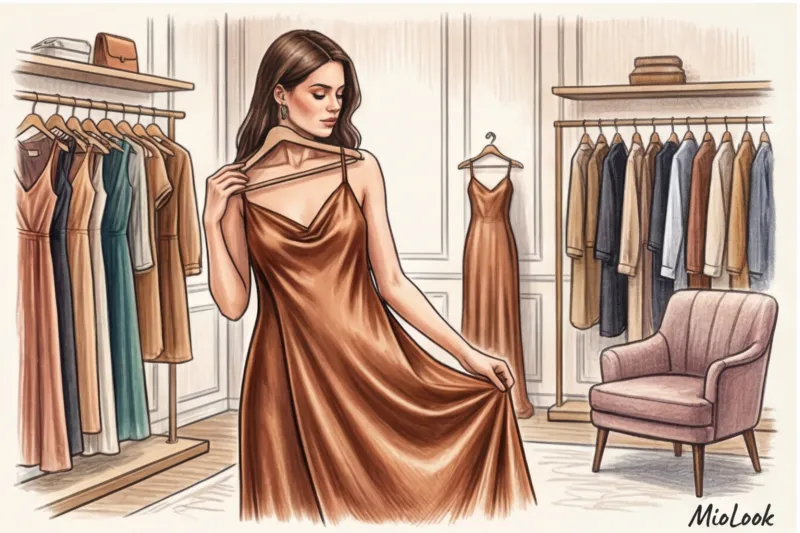
- Bias cut slip dress The bias cut has a unique property: the fabric flows softly across the figure, stretching where needed and contracting where needed, without creating tension.
Be sure to pay attention to the ingredients. Hormonal changes in the first trimester often cause increased sweating and altered thermoregulation. Avoid synthetics (polyester, acrylic) in the beauty area entirely, opting for breathable fabrics such as silk, viscose, or light cotton.
Remember the most important thing: your personal identity and status shouldn't be lost in pregnancy. Only your body proportions change, but your style, cut, and impeccable taste remain. Master the lines, use the right textures, and you'll navigate this period as gracefully as any other stage of your life.