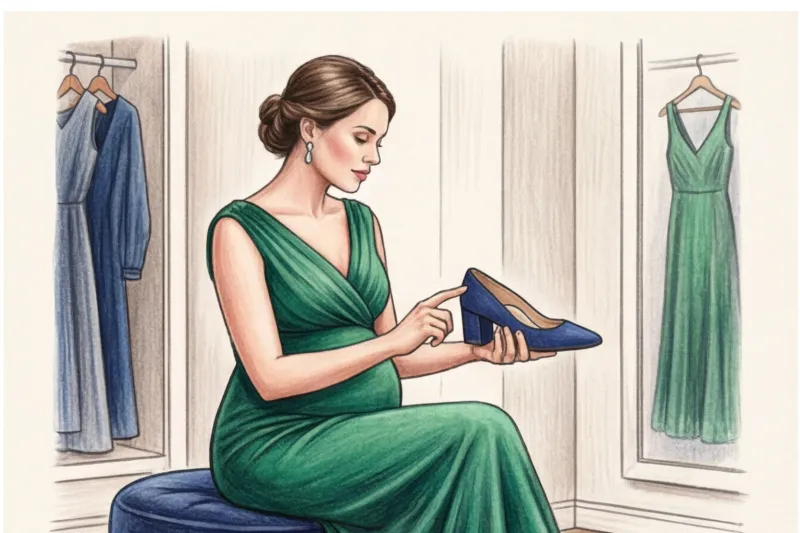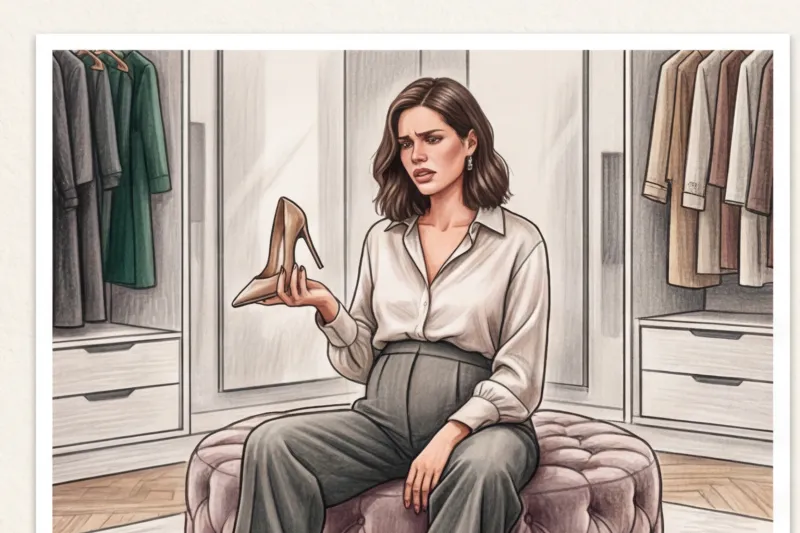
One of my clients, Elena, was sitting on a pouf in the fitting room seven months pregnant, close to tears. In one hand, she was clutching a pair of luxurious €650 Jimmy Choo pumps, into which her swollen feet simply couldn't fit. She had a corporate New Year's party in three days, and she was certain the flat soles would ruin her silk slip dress, turning her evening look into a "lounge" look. We solved the problem in twenty minutes by buying velvet Mary Janes from a nearby boutique. Elena dazzled at the party and, most importantly, danced instead of sitting in the corner with her feet aching.
The question of whether heels are appropriate during pregnancy arises for every woman whose calendar is filled with holidays and work events. We've already discussed the physiology of these changes in more detail in our The complete guide to comfortable maternity shoes: style and foot health Spoiler alert: you won't have to switch to those bland orthopedic shoes. Modern European mass-market footwear offers dozens of trendy alternatives that look classy and expensive.
Why do your usual heels suddenly become your enemy during pregnancy?
Let's be honest: your favorite stiff B-width pumps (standard narrow) are no longer your friend. And it's not just weight gain. According to the American Foot and Ankle College (ACFAS), the main culprit behind shoe size changes during pregnancy is the hormone relaxin. It's produced to soften the pelvic ligaments before childbirth, but it also relaxes over 100 ligaments in the foot.
What happens in practice? The foot literally "spreads" outward, often increasing in size by half or even a full width. If you try to wear your expensive designer shoes during this period, you'll simply ruin them. The skin deforms along the sides, and after childbirth, the shoes will lose their shape forever.
"Every centimeter of heel height increases the pressure on the forefoot. During pregnancy, a woman's center of gravity already shifts 2-3 cm forward. By wearing high heels, you force your lower back into an extreme lordosis, increasing the load on your spine by 40%." This is simple biomechanics that cannot be disputed.
The Dangers of "Safe" Kitten Heels: Why Stilettos Are Worse Than High Heels
There's a dangerous style myth: while 10-centimeter stilettos are off-limits, elegant kitten heels (a 3-4 cm high glass heel) are the perfect compromise. As a practicing stylist, I categorically disagree.
A kitten heel is the most dangerous option for those with a displaced center of gravity. The support surface of a kitten heel is approximately 1 square centimeter. With increased weight and weakened ankle ligaments, this microscopic support point cannot compensate for the body's natural sway. The risk of twisting an ankle on a smooth restaurant floor is much higher in these shoes than in classic platform shoes.
What heel height and shape is acceptable at different stages of pregnancy?
The first trimester often allows for fashion experiments. Until your belly starts to grow rapidly, you can wear your usual shoes for short outings (for example, walking from a taxi to a restaurant table). But starting in the second trimester, the rules of the game change.
The American Podiatric Medical Association (APMA) offers clear recommendations: completely eliminating heels isn't necessary, but their geometry is important. The optimal choice is a block heel or a neat wedge. The math for safe shoes for expectant mothers is as follows: a height of 3–4 cm, with a base width of at least 4 x 4 cm. Only this heel width ensures proper weight distribution on the heel.
Access to MioLook for €0.99 — one-time payment
A smart AI stylist will select the perfect look based on your new proportions and save it in your digital wardrobe.
Get access — €0.99 once5 Elegant Alternatives for a Holiday Look (Without Compromising on Style)
Over 12 years of work, I've assembled a tried-and-true capsule collection of evening shoes that are a lifesaver for my pregnant clients. You can easily find similar styles in the €50-€150 price range at Zara, COS, Massimo Dutti, or &OtherStories.
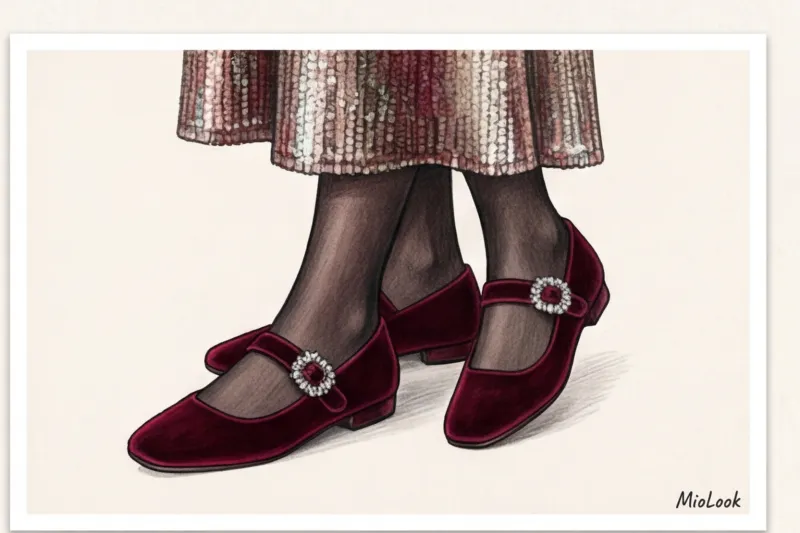
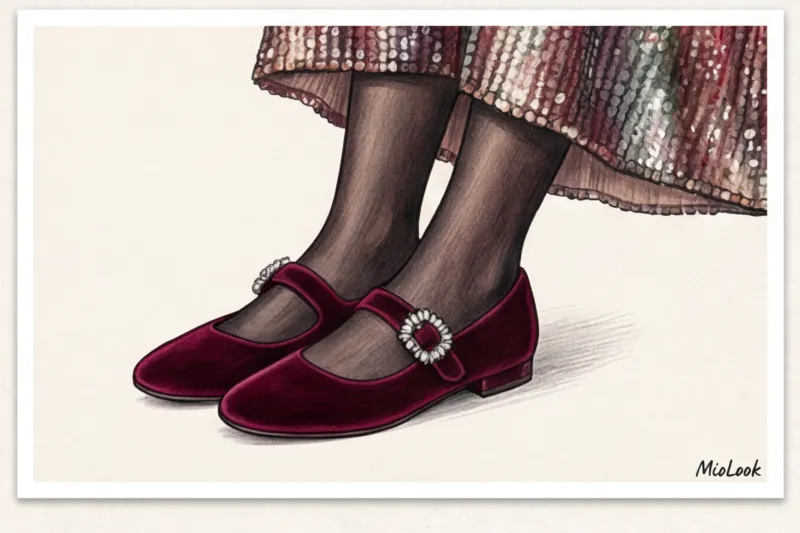
- Velvet Mary Jane ballet flats. An absolute hit of recent seasons. Velvet instantly elevates the dressiness, and the strap on the instep prevents slippage. At Massimo Dutti, these styles typically cost around €80–€100. Tip: look for styles with crystal buckles.
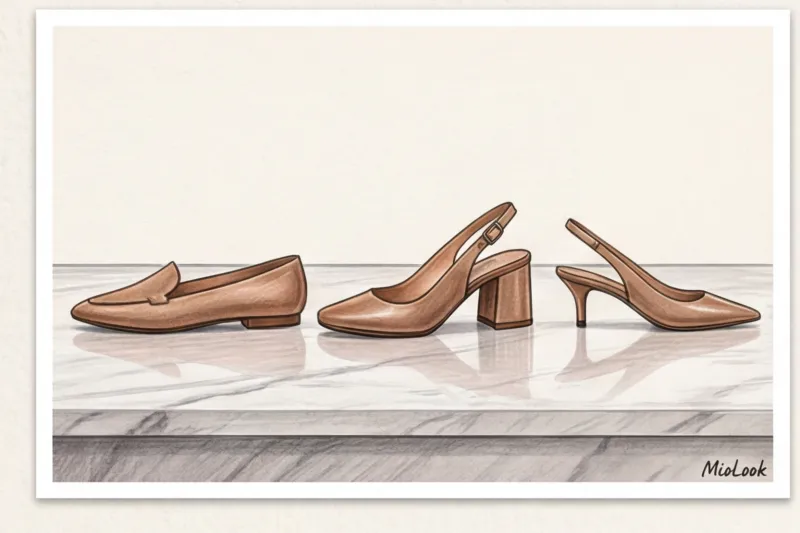
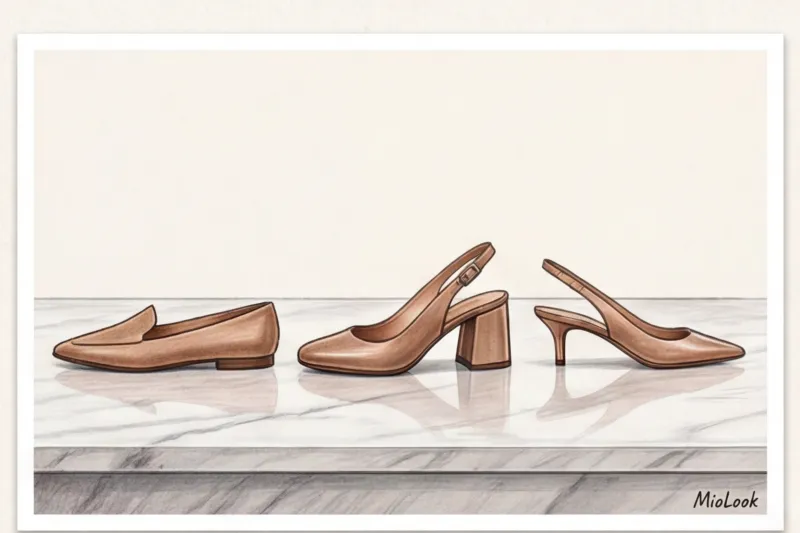
- Slingbacks with a trapezoid micro heel. A Prada-inspired silhouette. The open heel and adjustable strap are a lifesaver if your feet swell by evening. You can loosen the buckle discreetly.
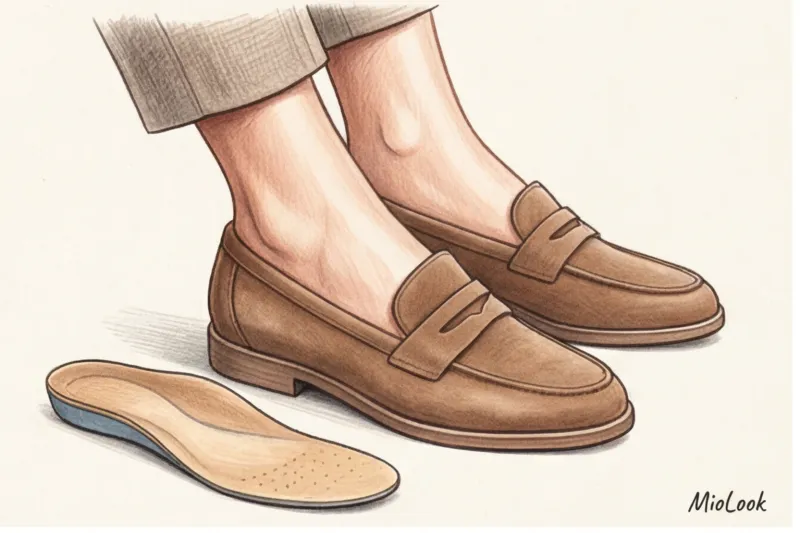
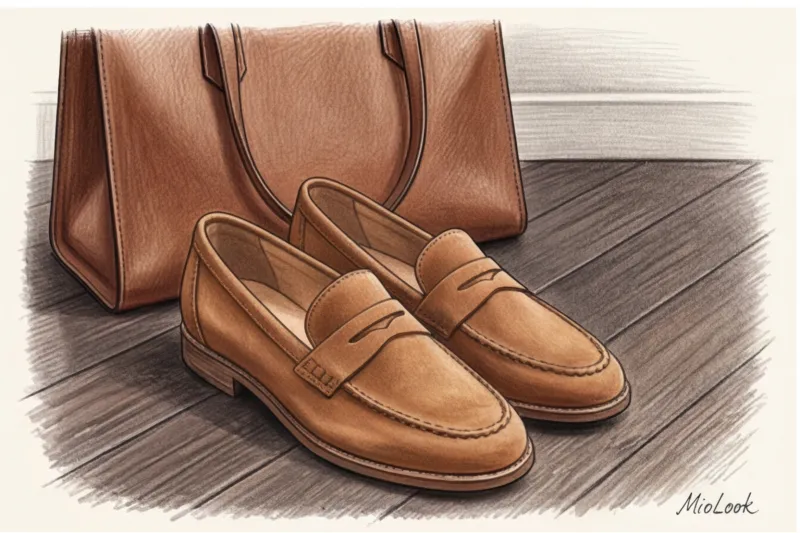
- Pointed toe nappa loafers. Nappa is an ultra-soft, premium leather that stretches almost like a glove. The pointed toe visually compensates for the lack of a heel, making the foot appear more graceful. Disclaimer: This technique won't work if your toes are very swollen—in that case, choose a soft, square toe.
- Smart flat mules. Satin models with large Manolo Blahnik-style brooches. Perfect for a corporate event or dinner: under the table, your feet can easily be removed from their shoes and given a rest.
- Sock boots with a wide heel. If the event is taking place in a cool room or you're wearing a short dress, the stretchy fabric upper won't squeeze your ankle, adapting to any size. COS often has great options under €120.
By the way, to avoid racking your brains over what to pair your new pair with, I recommend uploading a photo of it to wardrobe in the MioLook app The neural network will automatically suggest stylish combinations with your pre-pregnancy loose-fitting dresses and jackets.
How to visually elongate your silhouette without high heels
We're used to thinking that only heels make us look slimmer and taller. As an image consultant, I can assure you that optical illusions are far more effective than the physical elevation of a heel.
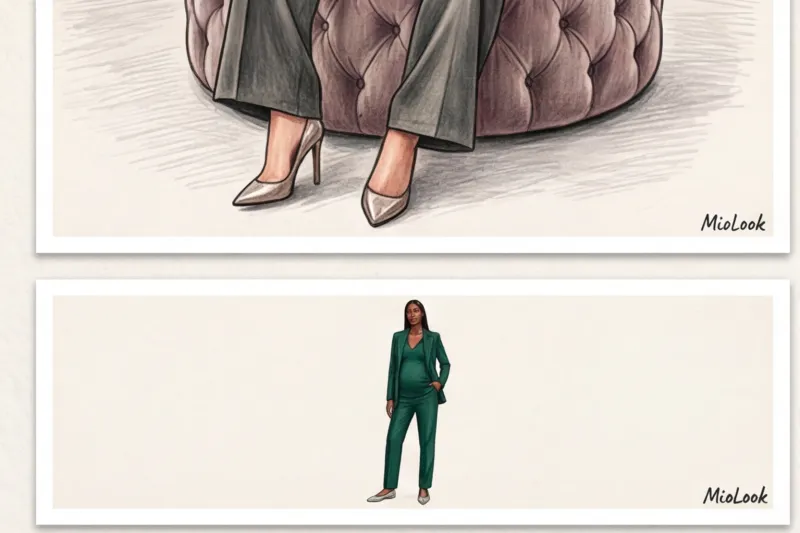
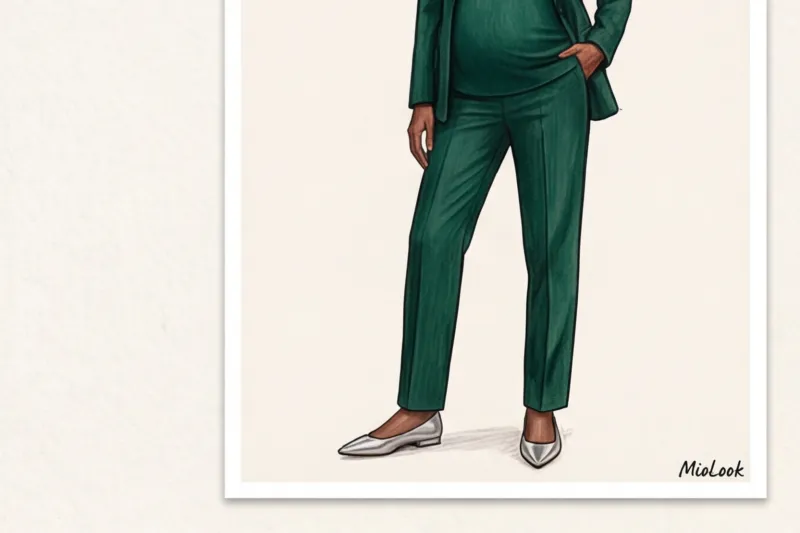
First, embrace the monochrome principle. Tights that match your shoes exactly (for example, black 20-denier semi-sheer tights and black suede slingbacks) create a continuous vertical line that elongates the leg just as well as stilettos. Second, work with the proportions of the outfit itself. A deep V-neck on a jacket or dress draws the eye upward. And to further draw the eye away from the flat soles, add statement accessories in the portrait area: chunky chandelier earrings, a flower choker, or a statement necklace.
Your perfect look starts here
Join thousands of users who look flawless every day with the MioLook smart wardrobe.
Get access — €0.99 onceChecklist: How to Choose and Buy the Perfect Holiday Shoes for the Mom-to-Be
Buying evening shoes during pregnancy is a strategic decision. I always send clients to the store with the following checklist:
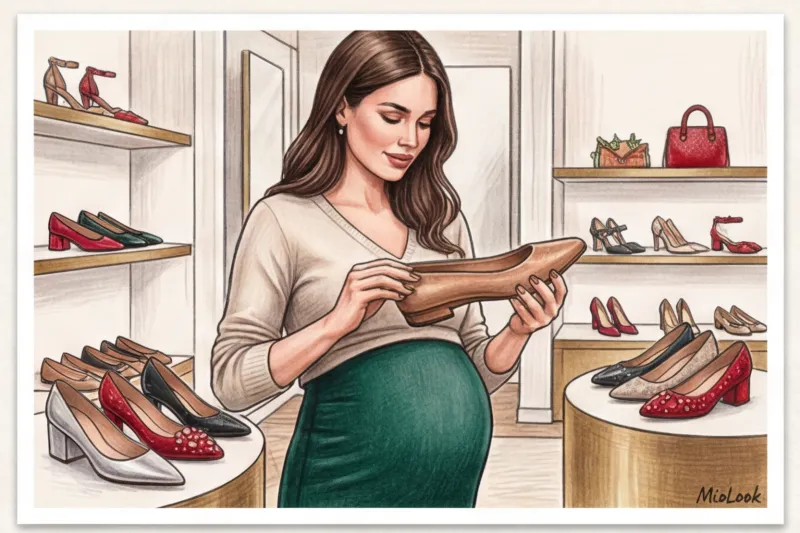
- Shopping hours are only after 17:00. By evening, feet reach their maximum volume (especially in pregnant women). Shoes bought at 10:00 a.m. in the morning will look like Spanish boots by the time the evening party begins.
- Flexibility test. Take a shoe and try to bend the sole. It should bend easily in the front third (where the toe joints are), but it should never fold in half! If the shoe bends in the middle, it won't provide adequate arch support.
- Smart fittings. Look for models with adjustable elements. Straps should have hidden elastic bands at the base of the buckle.
- Texture is more important than color. Avoid patent leather (it has virtually no stretch and creates a "greenhouse effect"). Choose genuine suede, velvet, satin, embroidered mesh, or nappa leather.
Conclusion: Your comfort is true luxury
Wearing uncomfortable shoes and enduring pain for the sake of a few pretty photos is an approach that's long gone out of fashion. High heels during pregnancy are an unnecessary risk to your health and spine for the sake of one evening.
Style doesn't stop when you get two lines on your pregnancy test; it simply evolves to a new, more conscious level. Luxury today means feeling confident, relaxed, and ready to dance until midnight. Rethink your evening wardrobe, invest €80-€100 in the perfect pair of velvet Mary Janes or elegant slingbacks with a stable micro heel, and you'll realize that the absence of stilettos only makes you happier.