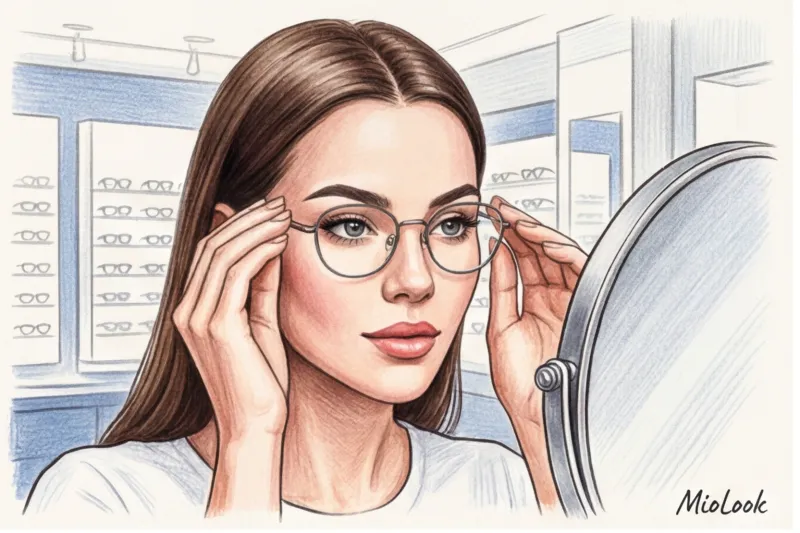
Stop tracing your face with lipstick on the mirror. Seriously, this is the worst advice I've ever read from glossy magazines in the 2000s. When you try to transfer your three-dimensional, sculpted face onto a flat glass surface, you lose the most important thing—the volume of your cheekbones and the depth of your eyes. After 12 years as a personal stylist, I've learned that facial architecture defies a 2D approach.
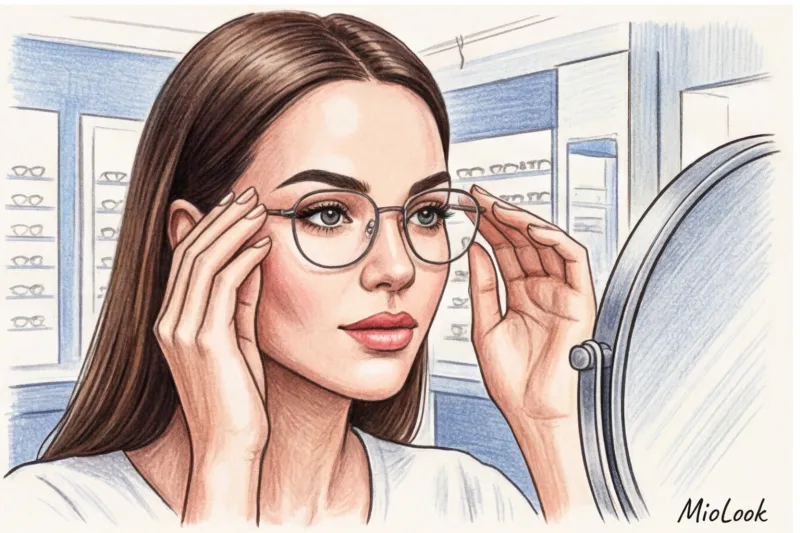
We've covered in more detail why old typing methods are obsolete in our the complete guide to determining your face shape But today we'll talk about a specific, very beautiful and technically complex geometry. If you have What glasses should I wear if I have a heart-shaped face? Choosing the right face isn't just a matter of trends, but of mastering proportions. According to WGSN research (2024), 80% of the visual perception of our facial shape is determined not by our natural bone structure, but by our hairstyle and the right glasses.
Facial Anatomy: How the "Heart" Face Differs from the "Inverted Triangle" Face
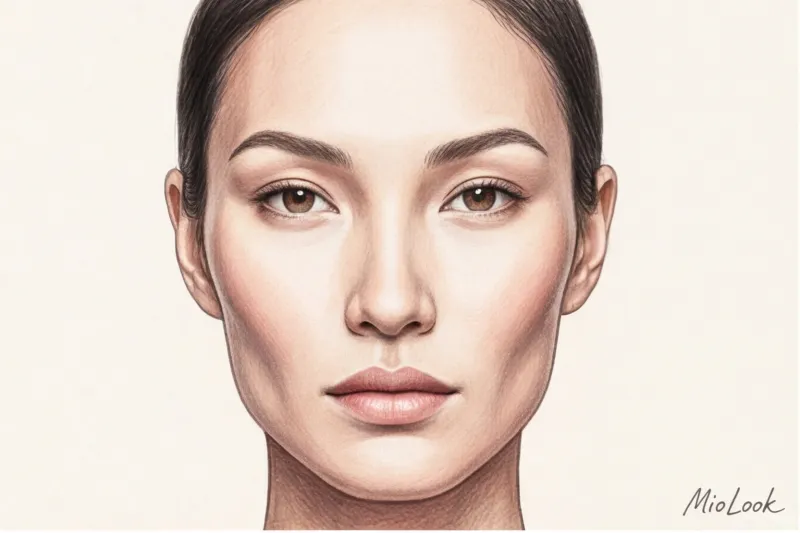
These two shapes are often confused, lumped together as "wide forehead, narrow chin." The difference lies in the nuances. The "heart" shape has a characteristic wedge-shaped hairline (the so-called "widow's peak") and slightly softer, rounder cheeks. The "inverted triangle" has a straight hairline and more defined, sharp features.
But you know what? When choosing accessories, this distinction blurs. The main goal in both cases is the same: we're working with a wide upper third and dominant cheekbones. Outdated articles still scream that a narrow jawline must be "definitely visually widened." Forget it. In the era of modern minimalism, a sharp, chiseled chin is an aristocratic detail that shouldn't be artificially weighed down. We don't hide it; we create balance at the top so the face doesn't appear "drooping."
The main problem when choosing accessories: the conflict between cheekbones and frames
If you have prominent cheekbones, you're probably familiar with the "smile" problem. You try on a pair of luxurious glasses, smile at your reflection, and the frames immediately pop up, pressing against your cheeks. And after you take them off, red marks are left on your skin.
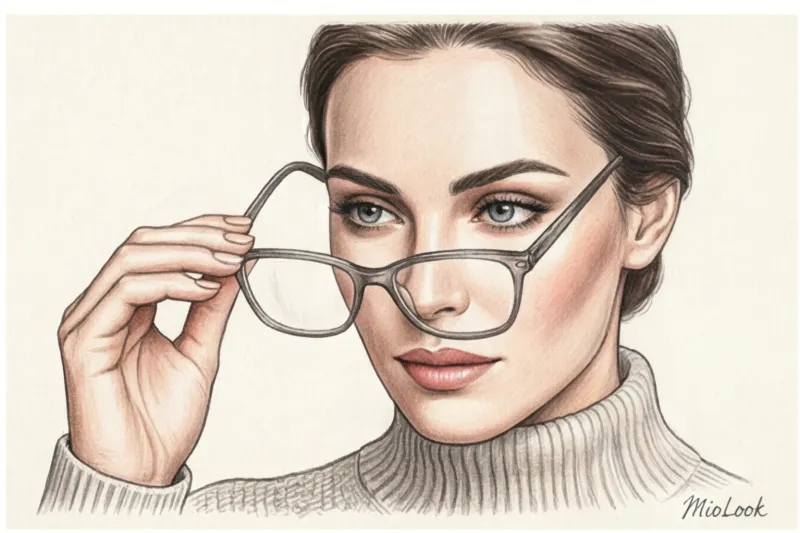
That's why solid plastic frames from mass-market stores (like the hit models from Zara or Mango) often disappoint those with a heart shape. They're designed for an average, flat profile. Instead, choose frames with movable silicone or titanium nose pads. These allow you to lift the lens above your cheekbone, ensuring proper ventilation and fit.

Heart-shaped face: which glasses will be your investment and which will be a mistake
Let's bust the biggest optical myth right off the bat: classic, sharp cat-eye glasses are your worst enemy. Yes, opticians sell them to everyone. But look at the geometry: the cat-eye frame draws lines up and out. You already have a wide upper face! By wearing such frames, you visually stretch your forehead even further, and your delicate chin becomes a painfully sharp point.

One of my clients had been buying narrow, rectangular sunglasses from the mass market for years, genuinely confused about why she looked like an alien in photos. We simply shifted the visual weight downwards. When we replaced them with the right pair of aviators, her features instantly became softer and more harmonious.
Access to MioLook for €0.99 — one-time payment
A smart AI stylist will select the perfect look and accessories for your face shape.
Get access — €0.99 onceIt's important to remember the Cost Per Wear formula here. It's better to invest in one perfect, basic pair of Ray-Bans for €150 that will balance your proportions than to buy five trendy pairs from H&M for €30 that will distort your facial structure.
Top 3 Fail-Safe Glasses Silhouettes
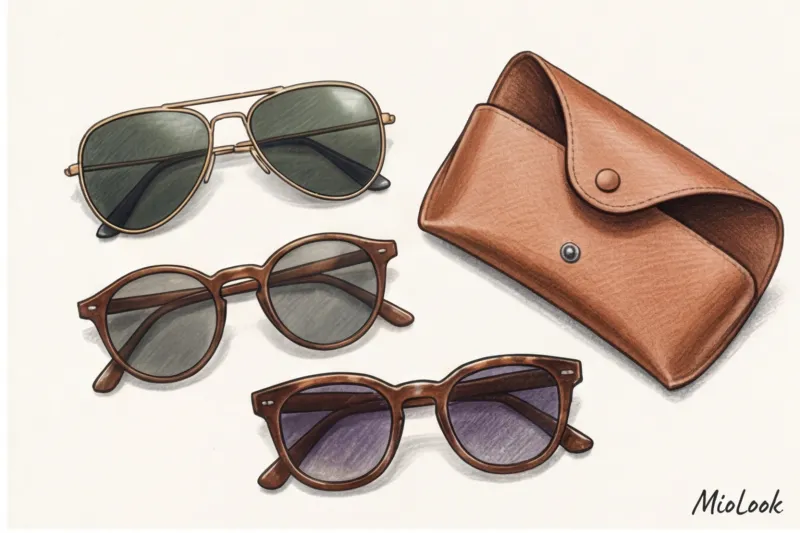
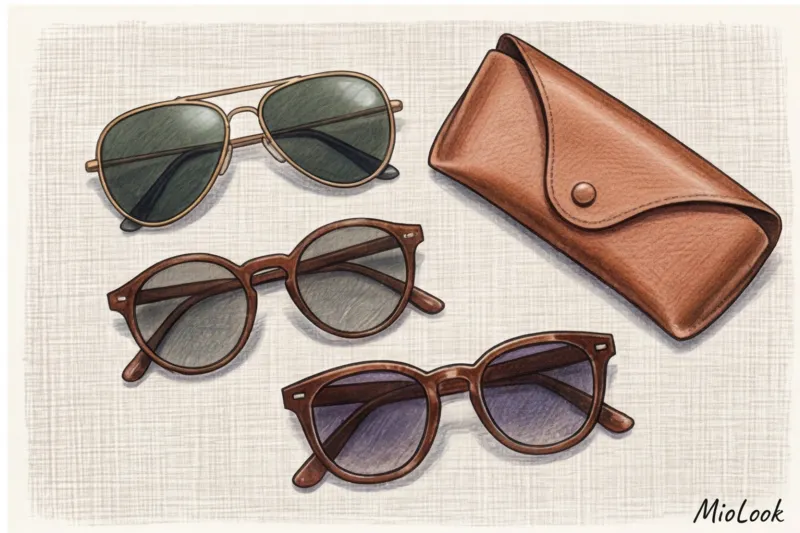
- Aviators (drops): An absolute must-have. Their teardrop shape draws the eye downwards, filling the empty space on the cheeks and perfectly balancing a wide forehead.
- Panto: Classic round or oval frames with a slightly straightened top line. They masterfully soften any sharp angles.
- Frames with an accent bottom: Gradient frames (darker at the bottom) or all-light/metal frames are a good choice. The iconic Clubmaster frames are only suitable if the plastic top doesn't contrast too much with your skin tone.
Optical Illusions: How the Width of the Nose Bridge and Temples Change Everything
Something that's almost never mentioned in glossy magazines is the technical millimeters of fit. Engineers at leading European optical brands like Lindberg and Mykita know that the visual perception of the forehead depends on the attachment point of the temples.
If the temples are high (at the top of the frame), they visually lengthen the face. For heart-shaped frames, look for glasses with medium or low temples—this will optically trim off excess forehead height. Disclaimer: This technique will NOT work if you have a naturally low hairline, as it can make your forehead appear too flat.
The second expert marker is the bridge width. If you have a wide upper third of your face, a narrow bridge of 16 mm will crowd your eyes together. Look for a bridge width of 18 to 22 mm on the temples—this will make your forehead appear less massive.
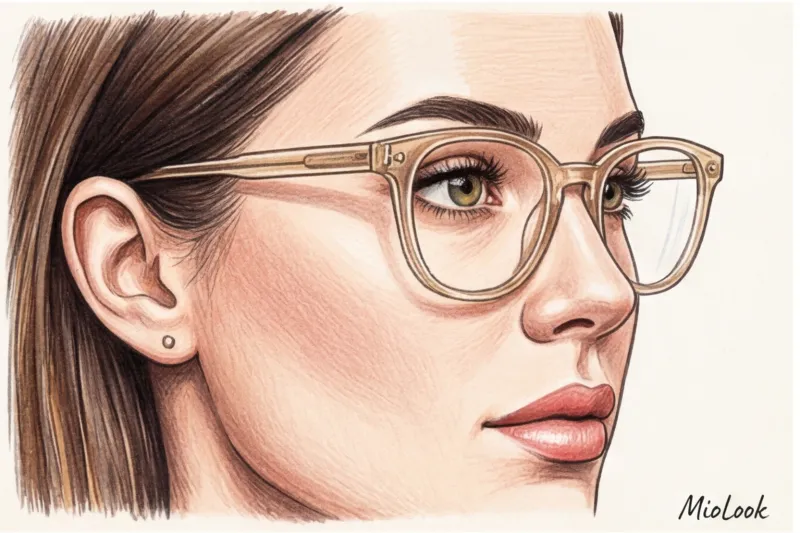
"Thick acetate, solid black frames are a killer for delicate proportions. On a narrow chin, they look like heavy weights. Opt for translucent textures: champagne, ash gray, tortoiseshell." — Katarzyna Nowak
Earrings and necklaces: creating balance in the portrait area
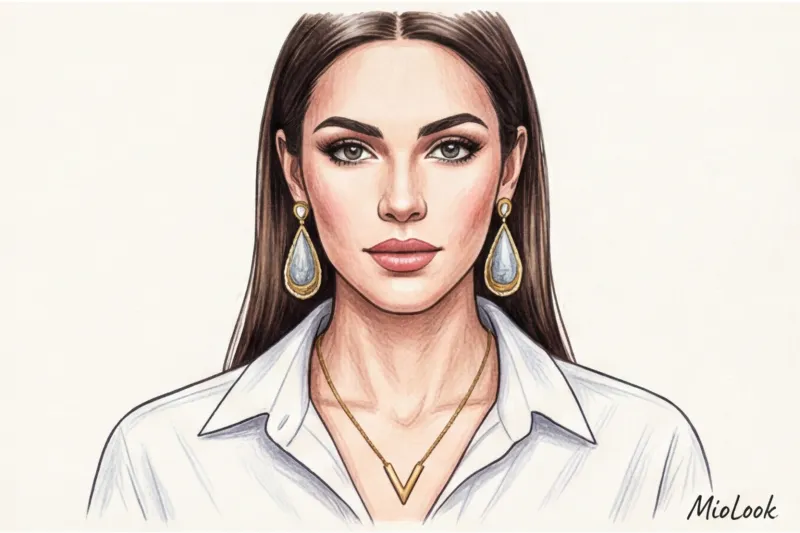
We've covered glasses. Now let's move on a bit. Portrait photographers often use the inverted pyramid rule when framing shots. For a heart-shaped face, this rule applies literally to jewelry. Your ideal earring shape is narrow at the earlobe and flares out at the bottom.
Throw away small studs, studs, and short, round earrings that fit tightly on the earlobe from your virtual trash can. Against broad cheekbones, they'll simply disappear and serve no purpose. Read more about how to assemble your jewelry collection in this article. about a basic jewelry wardrobe.
You need drop earrings, chandelier earrings, and trapezoid earrings. Length is critical: they should end exactly at jawline. This is where we need extra visual volume.
Necklaces and chains: how a V-shaped line elongates the neck
A fashionable solution for a narrow chin is a choker with a striped shape. They horizontally "cut" the head off the neck, visually sharpening the chin and separating it from the body. Replace them with V- and Y-shaped pendants and charms. They create the perfect extension of your facial contours, drawing the eye to your décolleté.
Massive turtleneck necklaces are only acceptable in one scenario: when worn with a deep V-neckline (for example, an unbuttoned jacket worn with nothing on). In this case, the neckline is offset by the horizontal line of the necklace.
Your perfect look starts here
Join thousands of users who look flawless every day with the MioLook virtual fitting room.
Get access — €0.99 onceHats, caps and hair accessories
Headwear can either save your look or turn your head into a mushroom. Aim for asymmetry and moderate volume.
- Hats: Medium-brimmed fedoras and cloche hats. The key is to wear them slightly to the side. The asymmetrical fit breaks the strict geometric lines of a wide forehead.
- Winter hats: Avoid chunky beanies. They add extra inches to already full beanies. Opt for smooth textures (cashmere, fine merino wool) and a mid-rise. The current collections of COS and Massimo Dutti always offer excellent basic options for €40–€60.
- Hair: If you use headbands or scarves, never slick your hair back. Always leave a few strands loose at your temples—they'll act as curtains, concealing the width of your forehead.

Katarzyna's Checklist: Going Smart on Accessory Shopping
Theory without practice is dead. Next time you go eyewear or jewelry shopping, use this step-by-step fitting plan. For convenience, you can create a mood board in the app beforehand. MioLook , so you can understand what you will wear with the new items.
- The rule of an honest photo. Never judge the fit of your glasses by a selfie! A phone's front camera drastically distorts perspective at close range, exaggerating your nose and forehead. Take photos from chest level with your arm outstretched, or better yet, ask to be photographed from the side or look at yourself in a full-length mirror.
- Facial expression test. Put your glasses on? Now smile broadly, frown, tilt your head down, and shake it. The frames shouldn't bounce on your cheekbones or slide down to the tip of your nose.
- Portrait zone capsule. To avoid buying too much, you need the basics: 1 pair of perfect basic sunglasses (aviators or pantos), 2 pairs of statement drop earrings (one for day and one for evening), and 1 medium-length pendant.
Style isn't about blindly following trends; it's about knowing your own geometry. Stop fighting your cheekbones and sharp chin. Once you start buying accessories that complement your natural features rather than fight them, shopping will cease to be a chore and become a mathematically precise art.