Horizontal Architecture: How a Hairstyle for an Off-the-Shoulder Dress Changes Proportions
Imagine this: you bought a stunning off-the-shoulder silk dress for 150 euros at COS or Massimo Dutti. You put it on, carefully gather your hair into a tight, classic bun to "show off the neckline," step back to the mirror... and suddenly realize your shoulders look unnaturally massive, and your neck has disappeared. Sound familiar? My name is Darina Marchenko, and in my 12 years as an image consultant, I've seen this scenario dozens of times.
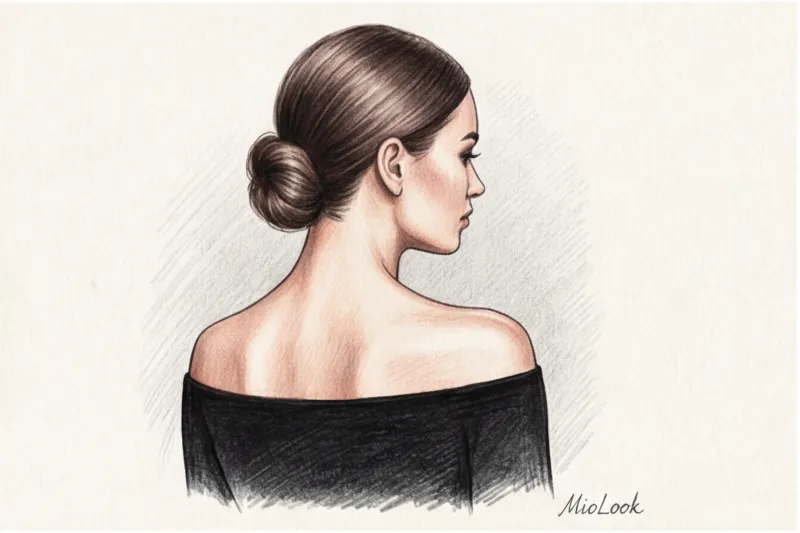
Ideal hairstyle for an off-the-shoulder dress — it's far more than just a way to keep strands of hair out of your face. It's a complex architectural element that must interact with the strongest horizontal line of your silhouette. We've already covered the basic principles in more detail in our The complete guide to the perfect hairstyle for a dress neckline , but today I want to take a look at the most insidious area - completely bare shoulders and collarbones.
Bare shoulders create an uncompromising horizontal line. According to visual perception research (specifically, the 2023 FIT Fashion Institute of Technology reports), 80% of a person's attention is concentrated in the "portrait zone"—the triangle from the crown of the head to the chest. When you wear a bustier dress, you visually expand your upper body by 10-15%.
Here, I always turn to the philosophy of the legendary Vidal Sassoon: a hairstyle cannot exist separately from the bone structure. The weight of your hair, its density, and the direction of its styling all come into physical conflict (or harmony) with the bare skin of your décolleté. If your shoulders are narrow and sloping, the horizontal line of a dress will flatter them beautifully. But what if they are naturally expressive? Let's break the stereotypes.
The biggest myth of stylists: why the "off-the-shoulders = up-do" rule no longer works
The most harmful myth propagated by glossy magazines in the 2000s was: "If your shoulders are bare, your hair must be up." Forget it. Blindly following this rule mercilessly ruins the proportions of approximately 30% of women.
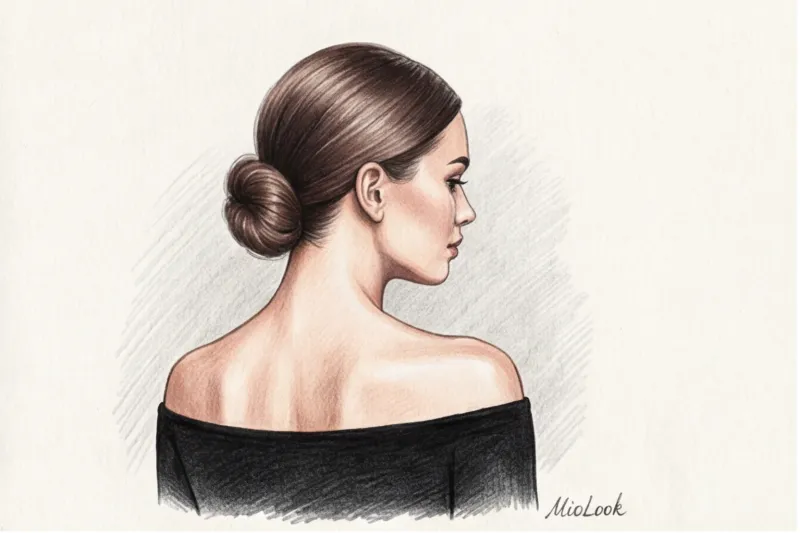
Why does this happen? A "bare" headband without a single strand of hair creates a huge, monolithic block of skin. The observer's eye glides over it from left to right, scanning for maximum width. If you have a broad chest or an athletic figure, a sleek bun with an open neckline instantly creates the effect of a "swimmer before the start."
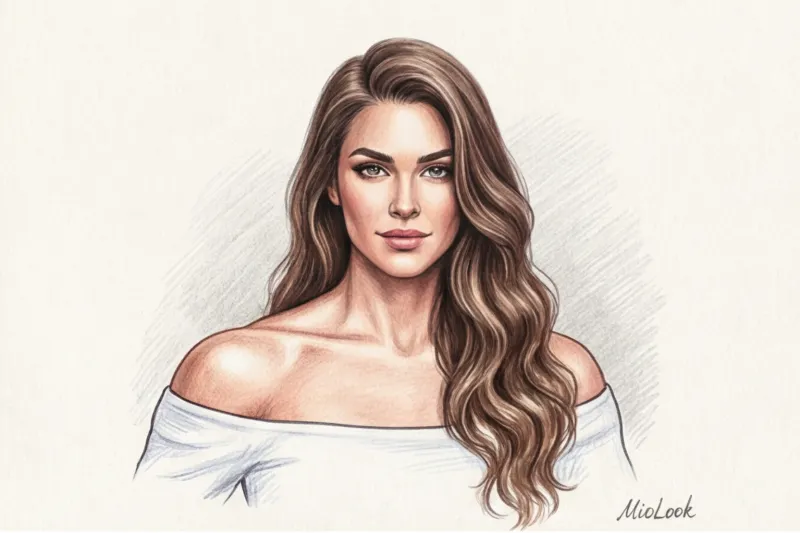
Body type and shoulder width: when loose locks save the look
"The hair that falls on the collarbones works like vertical curtains on a theater stage—it delicately trims excess width and sets the right focus."
One of my clients, Elena, who has an inverted triangle figure, avoided bustier dresses for years. In a stunning €250 corset dress made of thick taffeta, she felt like a "monumental statue"—all because the hairstylist had created a high, sleek bouffant. As soon as we removed the pins, straightened her hair, and let it fall in a smooth cascade over her shoulders, her figure instantly acquired a fragile appearance. The vertical line of her hair canceled out the heavy horizontal line of her neckline. If you're still confused about your proportions, read this article about... How to choose the perfect haircut for your Kibbe type.
Access to MioLook for €0.99 — one-time payment
A smart AI stylist will select the perfect hairstyle and look based on your proportions.
Get access — €0.99 onceThe Best Updos for Off-the-Shoulder Dresses: Focus on the Neck
If your shoulders are balanced or slightly narrower than your hips, updos are your best bet. High hairstyles work as a stunning optical illusion, adding a few inches to your overall height.
But texture is crucial here. The smoothness of your hairstyle should either compete with or complement the fabric of your dress. Dense, flowing silk or satin require strict discipline—a perfectly smooth finish. But relaxed linen, cotton, or viscose with a crinkled effect beg for texture: a subtle, matte finish with a salt spray.
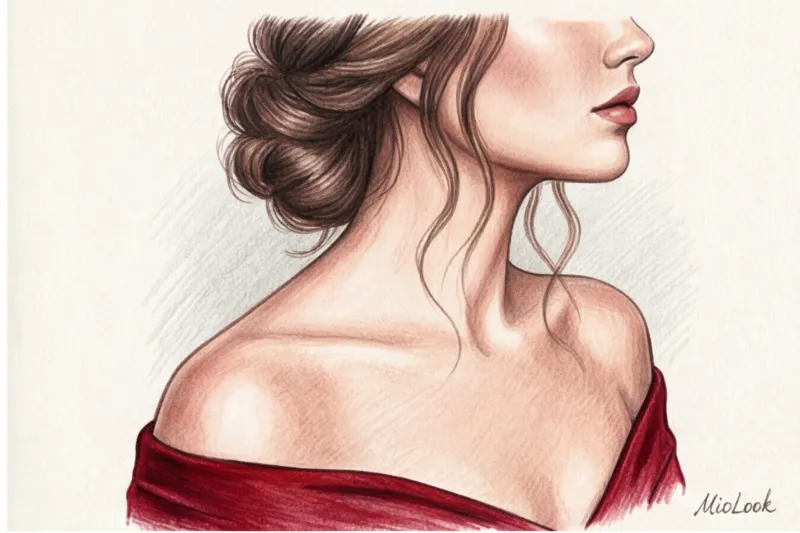
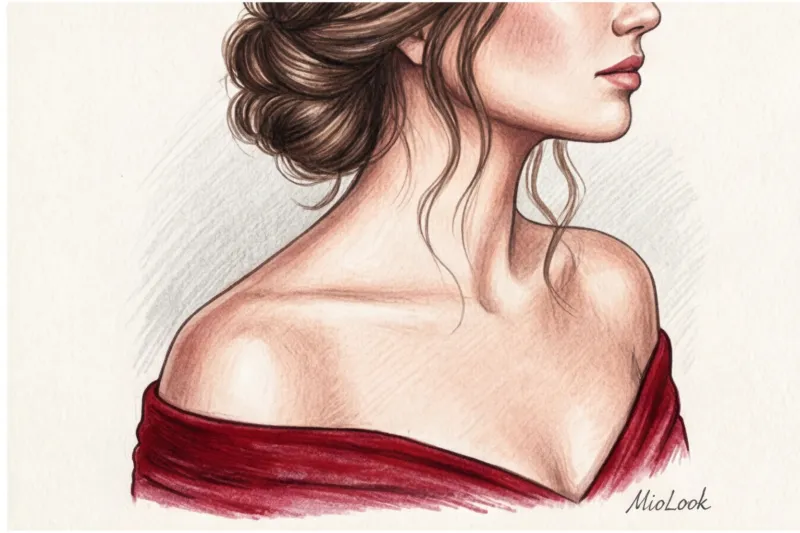
Low Textured Bun: Romantic and Collarbone-Facing
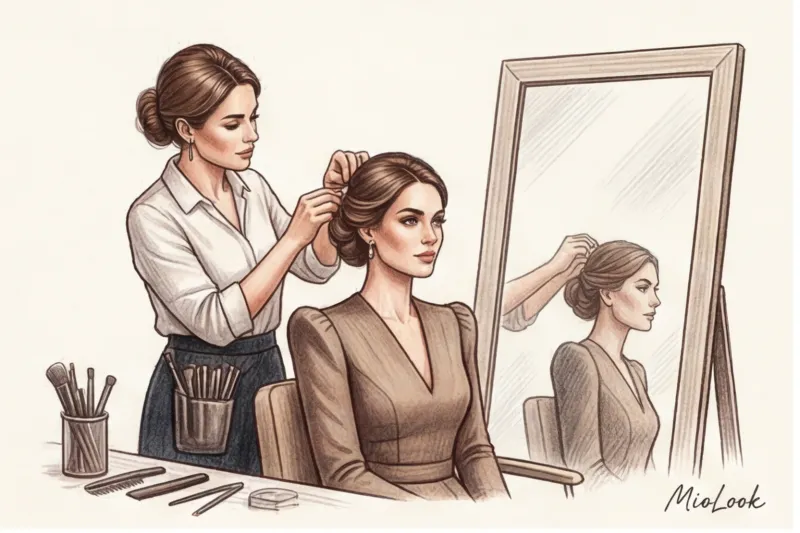
A low, airy bun is an absolute classic for evening wear. But I always ask: don't make it too tight. Leave one or two thin strands of hair around your face, just brushing your collarbone. This won't overwhelm your décolletage, but it will create a romantic line that will draw the eye straight to the graceful curve of your neck.
Plus, the right amount of volume at the back of the head offsets a flat profile, which is especially important if your dress is tight-fitting. If you're heading to a special occasion, this option is ideal—check out our selection. best wedding hairstyles for guests.
Smooth ponytail and high knot: strict geometry and statics
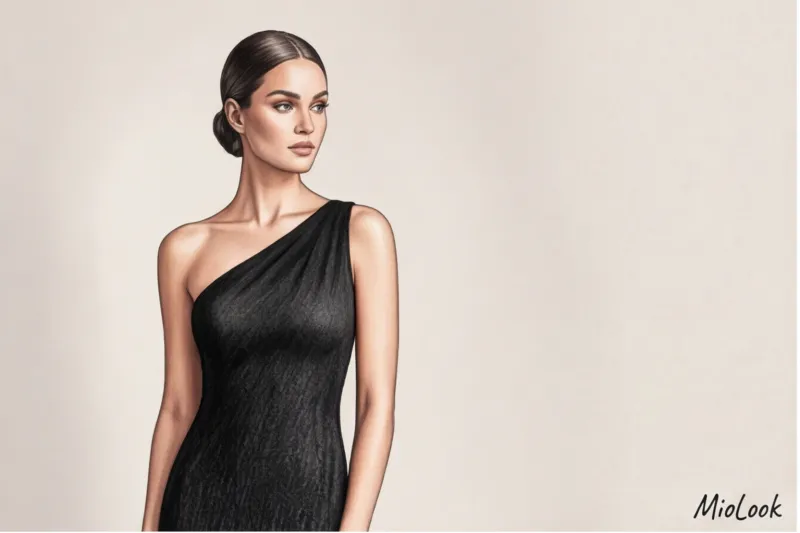
A sleek ponytail or a tight architectural knot is the choice for those who love minimalism and geometry. The effect glass hair (Glass-like, mirror-like hair is a trend confirmed by WGSN's 2024 reports) looks stunning with simple dresses without unnecessary embellishment.
However, let's be honest. This setup has a strict limitation (when it DOESN'T work): If you have fine hair that lacks natural thickness, a tight, slicked-back ponytail without high-quality clip-in extensions will make your head look disproportionately small against the wide, bare shoulders. You'll end up with a "mousetail" effect. In this case, it's better to opt for textured volume.
Loose Hair and Half-Up Hairstyles: The Rules of Balance
Leaving your hair completely loose is luxurious, but it can be a real turn-off when worn off-the-shoulder. If your strands look untidy, you risk looking overgrown. Keep your hair defined and healthy-looking (use a gloss serum before going out).
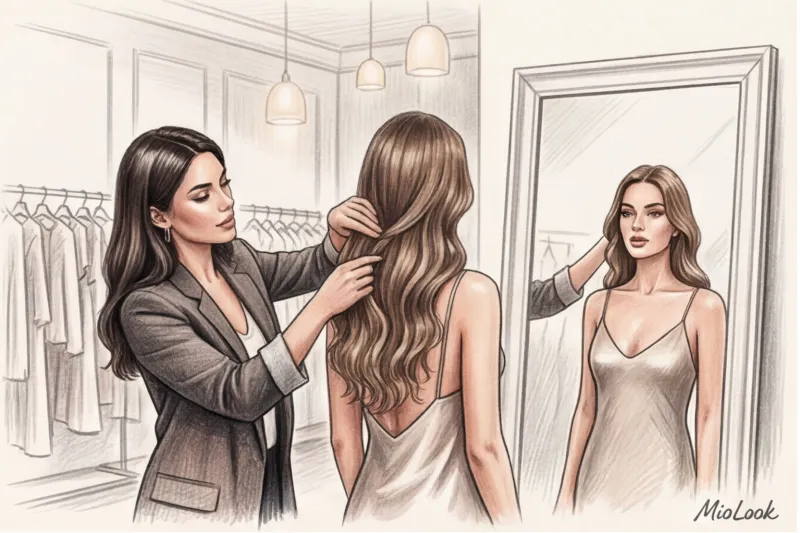
The perfect compromise between formality and relaxation is the famous "malvinka" (half-up, half-down). You sweep the front strands away from the face, revealing the cheekbones and neck, but leave the length softly draping the back and shoulders.
Asymmetry and side-swept hairstyles: the secret of the red carpet
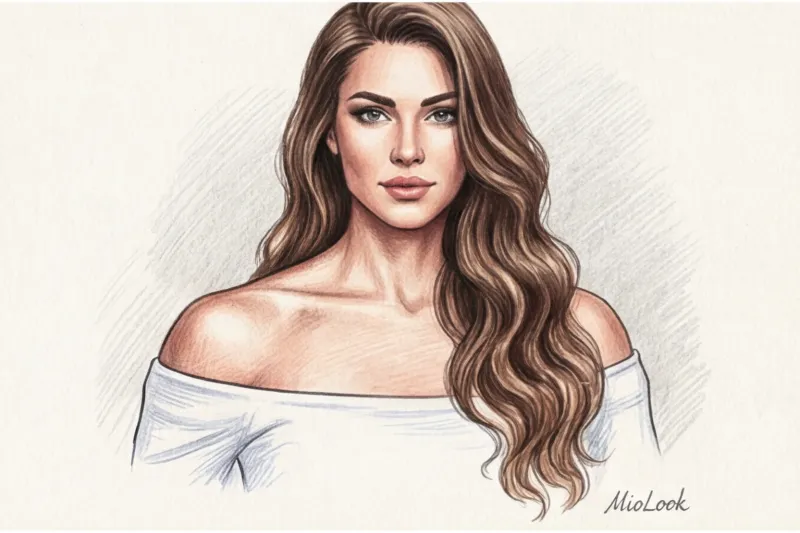
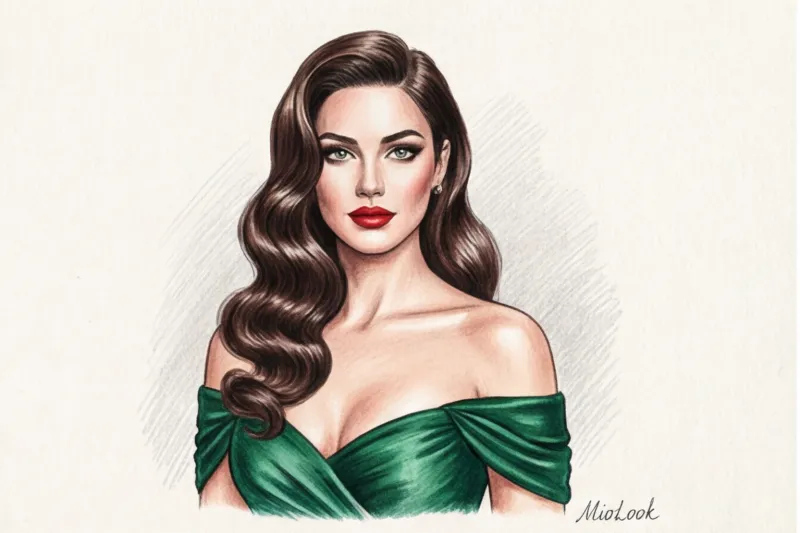
My personal favorite and Hollywood stylists' secret weapon is deep asymmetry. The classic Hollywood wave, thrown completely over one shoulder. Why does it always work?
The secret is in the diagonal. The rigid horizontal line of a bustier dress is cut diagonally by a shiny wave of hair. One shoulder is left completely bare, revealing your fragility, while the other is hidden by the hair, disguising any real or imagined width. This is the most flattering technique for any figure.
Your perfect look starts here
Join thousands of users who look flawless every day with the MioLook app.
Get access — €0.99 onceHow Face Shape and Neck Length Dictate Your Hairstyle Choices
The length of your neck dictates the rules of the game no less than the cut of the dress itself. In hairdressing, there are strict principles of the "golden ratio" (a ratio of 1 to 1.618). The ideal ratio of forehead height, face length, and neck allows you to wear absolutely any shape. But what if your neck is a bit short?
The math is simple: if the distance from your chin to your collarbone is short, an off-the-shoulder dress is your best bet, as it visually lowers the "starting line" of your neck. Add to this a high, messy bun at the very top of your head, and you'll visually elongate your neck by a good 4-5 centimeters.
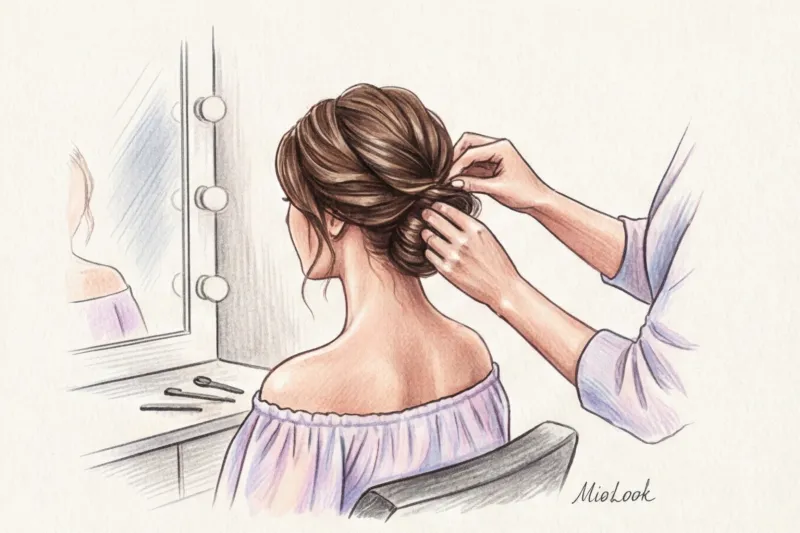
Face shape also requires compensation. If your face is round, absolutely avoid sleek, low buns at the nape of the neck with a center parting. You're looking for vertical extensions: long curtain bangs, casually released strands along the cheekbones, or an asymmetrical side parting. Incidentally, for elegant women of a certain age, properly shaped strands around the face work better than any sculpting—we wrote about these tricks in detail in the article about Anti-aging haircuts for medium-length hair.
Daryna Marchenko's Checklist: 5 Steps to the Perfect Off-the-Shoulder Look
To save you from those painful second thoughts in the mirror, I've put together a short checklist. Go through these steps every time you pull a collarbone-baring dress out of your closet:
- Estimate the width of your shoulders relative to your hips. If your shoulders are visually wider than your hips, wear your hair down or create a Hollywood side part. If your shoulders are narrower, feel free to wear your hair up.
- Consider the texture of the fabric. Smooth, dense fabrics (such as satin in the €100–€300 price range) call for smooth, shiny hair. Textured fabrics (linen, lace, chiffon) pair well with textured curls and a slightly carefree look.
- Choose between geometry and softness. Sharp, angular features look stunning with soft waves. Rounded features, on the other hand, benefit from crisp, straight hairlines.
- Think about the geometry of the decorations. Long chandelier earrings should not get tangled in loose hair. If hair is pulled back high, the empty neckline can be balanced with a choker or statement necklace.
- Check the image in dynamics and in profile. Take a side selfie. Your hairstyle shouldn't make the back of your head look flat, especially if your dress has voluminous elements like puff sleeves.
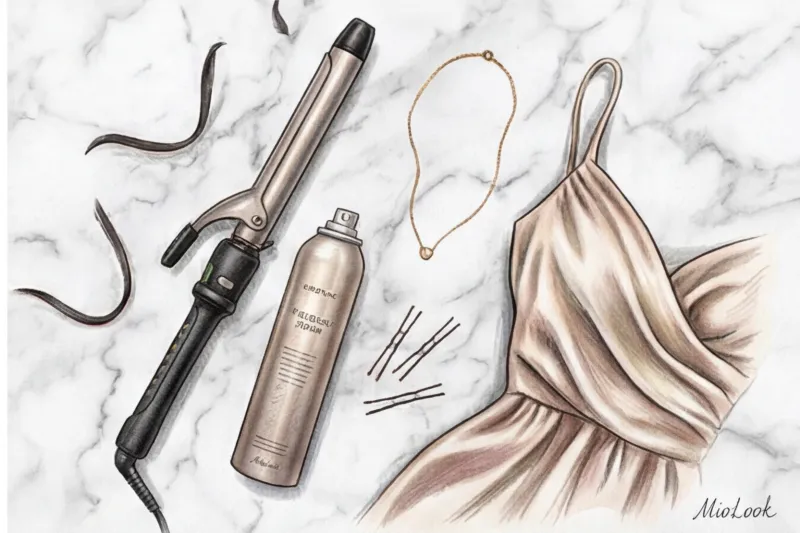
Your style isn't a collection of random items, but a cohesive mechanism where the neckline and hairstyle work in perfect tandem. Stop hiding your individuality behind the outdated stereotype of "bare shoulders require updos." Next time, when choosing a hairstyle, consider not the style but the architecture of your body—that's when you won't just wear a beautiful dress, but become one with it.