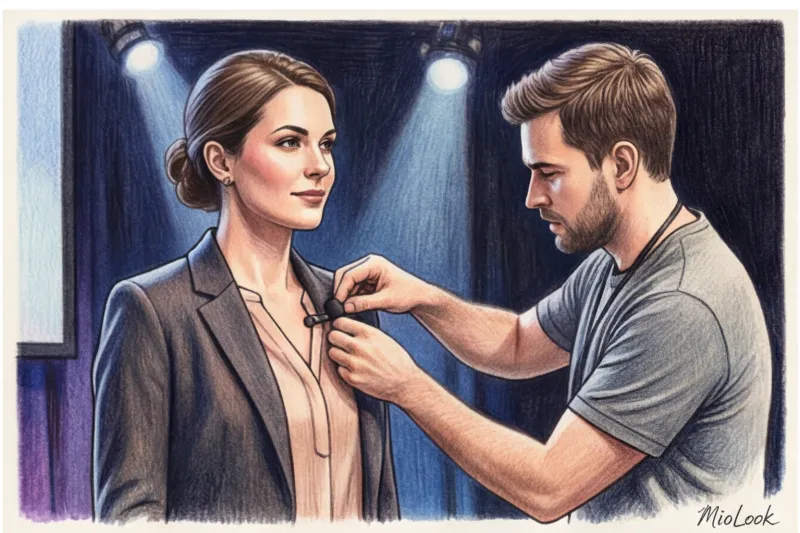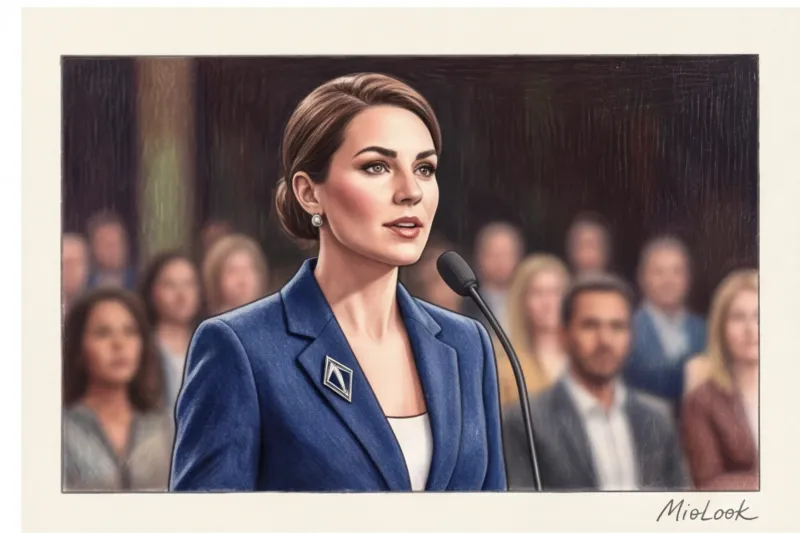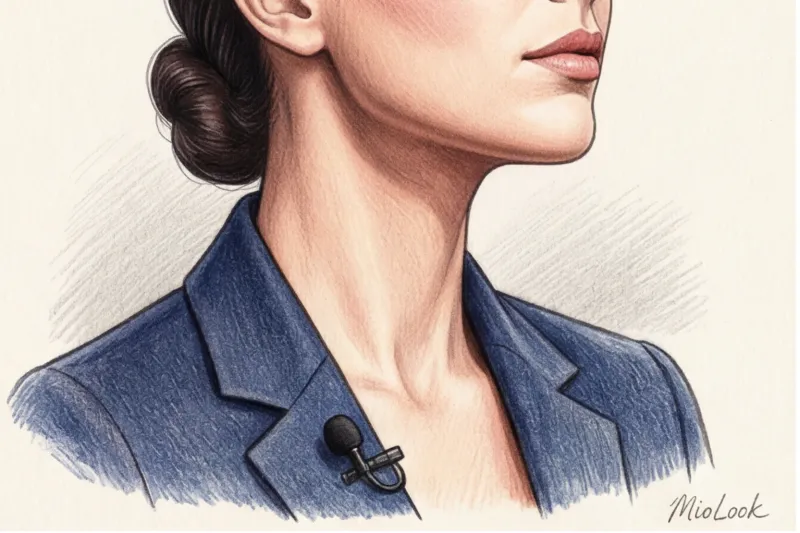
Three years ago, I stood backstage at a major IT conference, watching as the brilliant CEO of a tech startup nearly botched her biggest pitch of the year. Her presentation was flawless, her suit was perfect, but her hair—a luxurious, salon-fresh voluminous bob—had a life of its own. Every time she turned her head toward the graph-filled screen, strands of it rubbed against the lavalier microphone. A loud, scratchy sound of static echoed through the room. Five minutes before she went on stage, we had to scramble to tie those perfect curls into a tight bun using paper clips and bobby pins borrowed from the event coordinator.
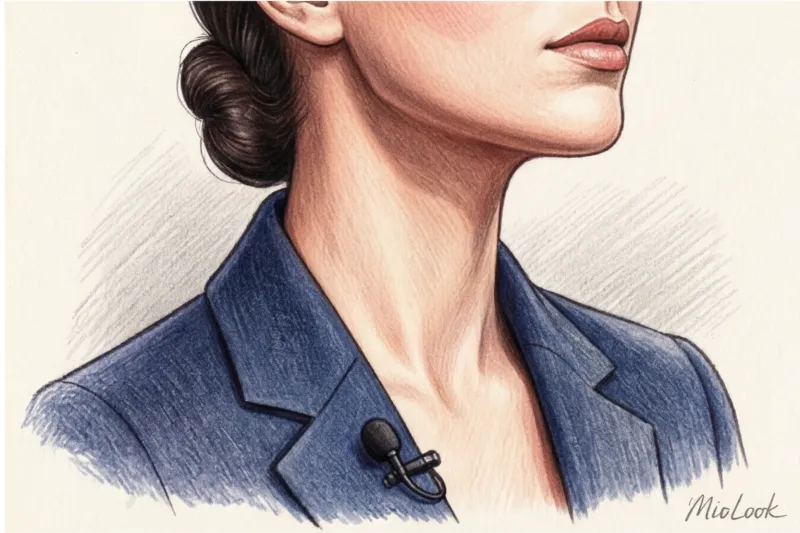
That day I was once again convinced: hairstyle for public speaking — it's not a question of aesthetics. It's a functional tool, a question of stage acoustics and attention management. Your clothes act as a second microphone (I talked about this in more detail in our the complete guide to the speaker's wardrobe ), and hair is an architectural frame. It can either focus the audience's attention on your eyes and words or become the main source of visual noise.
Why hair for public speaking is a matter of acoustics, not just beauty
If you ask any professional sound engineer what they hate most, the answer will be unambiguous: long, loose speaker hair. Human hair, when rubbing against the metal mesh of a lavalier microphone, creates high-frequency interference.
To eliminate this crackling during a broadcast, the sound engineer has to roll off the high frequencies on the mixing console. As a result, your voice begins to sound muffled, like a barrel, losing the overtones that convey confidence and energy. You may be a brilliant speaker, but due to improper placement, the audience will hear only a muffled sound.
Add to this the statistics: according to the Bizzabo platform (2024), over 80% of modern industry events are held in a hybrid format or recorded on video. During a live presentation, the audience might ignore the way you fix your hair. In a close-up video, this gesture takes up half the screen and mercilessly undermines your expertise.
Access to MioLook for €0.99 — one-time payment
A smart AI stylist will select the perfect look for the stage, taking into account your appearance and goals.
Get access — €0.99 onceThe Anatomy of the Perfect Speaker Styling: 3 Ironclad Rules
Over 12 years of working with executives and speakers, I've discovered three immutable laws of stage styling. If your look doesn't pass any of these filters, call a stylist and rethink the concept.
1. The rule of open face and stage lighting
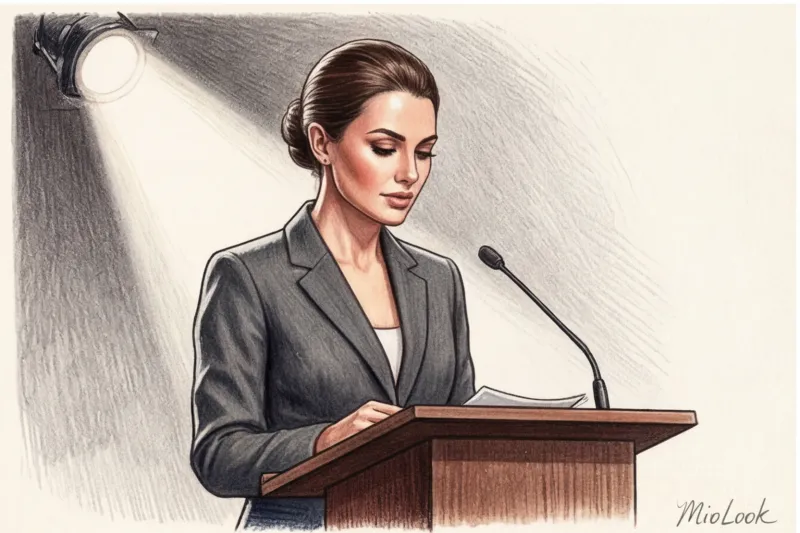
Theater and conference lighting is radically different from daylight. Spotlights hit from above and to the side at harsh angles. Any strand of hair falling across the forehead or cheekbones (for example, a long curtain fringe) instantly casts a sharp diagonal shadow on your face. As lighting experts from the Association of Theater Designers note, such shadows visually "sink" the eyes and create the illusion of deep bruises. The audience subconsciously interprets this as extreme fatigue or, worse, reserve.
2. My own Tilt Test
I make every client do this test before going on stage. Stand up straight and quickly tilt your head down 45 degrees, mimicking looking at notes or a prompter monitor. Then, just as quickly, lift your head. If even one strand falls into your eyes and you have to brush it away with your hand, your hairdo is unsuitable for professional use. On stage, you'll do this move 20 times, and each time it will steal a second of the audience's attention.
3. Architectural stability versus "helmet"
The stage is a static-heavy environment. Dry, air-conditioned air, huge LED screens behind you, the synthetic lining of your jacket—all of this turns your hair into a static magnet.
Many people try to solve this problem by slathering their hair in strong-hold hairspray until it's like a concrete helmet. This is a fatal mistake. Under bright light, the cured hairspray will shine like plastic, cheapening the look. Instead, use matte texturizing pastes for the roots and lightweight anti-static creams for the lengths.
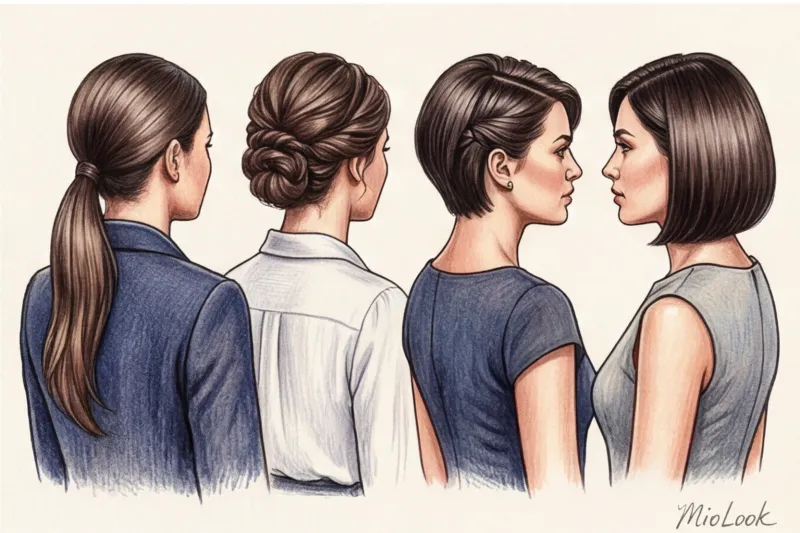
Top 5 Hairstyles That Don't Distract (And Last for Hours)
The shape of your hairstyle conveys a certain psychological message. Clean, geometric lines are subconsciously associated with control and discipline. Here are five options that never fail.
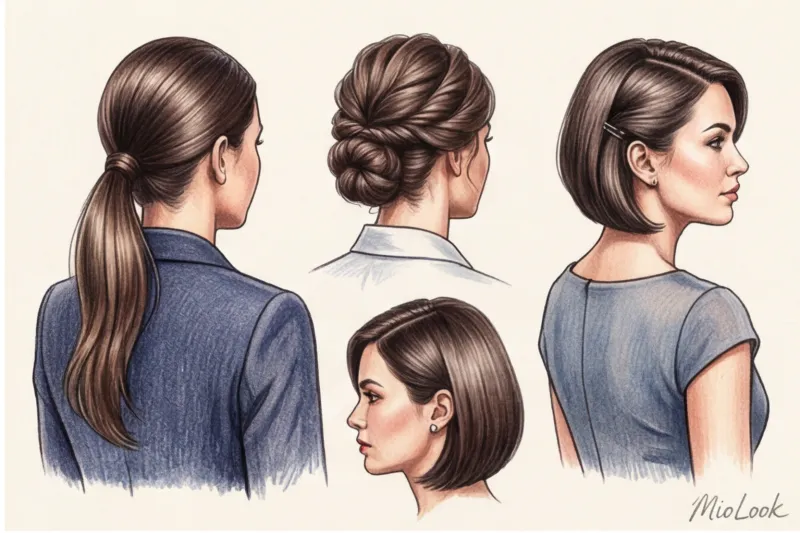
Stylist's advice: To understand which of these styling will work best with the geometry of your suit, I highly recommend using MioLook Upload a photo of your jacket into the app, and the AI will show you whether a low bun clashes with a high collar.
Low Bun
An absolute winner in corporate dress codes, it leaves the neck completely open (perfect for holding a microphone) and doesn't catch on jacket lapels. To avoid looking like a strict 90s head teacher, part your hair straight down and keep minimal, natural texture at the roots. Smooth the back, but keep the crown lively.
Sleek Ponytail
If your format is a high-energy, TED-style startup pitch where you'll be walking around the stage a lot, a ponytail will add the necessary dynamism to the look. A prerequisite for a classy look: the hair tie should be hidden by a strand of your own hair. A visible hair tie (especially a fabric one) instantly reduces the look to "just out for a run" level.
Asymmetrical styling (Side Sweep)
The perfect compromise for those who absolutely hate wearing their hair up. The hair is tossed over one shoulder, while the opposite side is slicked back behind the ear and secured with bobby pins. The sound engineer will place the microphone on this "clean" side, giving you the best of both worlds: beautiful length and clear sound.
Architectural bob and short haircuts
Short hair seems easy to manage, but under the spotlights it often frizzes. The key here is a matte hold. Use clay to shape the strands around the face. They should lie in a single monolith, not fall apart with every turn of the head.
Your perfect look starts here
Join thousands of users who look flawless every day with MioLook.
Get access — €0.99 onceThe Biggest Myth: Why Hollywood Curls Are the Enemy of Video Recording
Perhaps the most common argument I have with clients before conferences is: "But these voluminous curls look amazing in the mirror! I look like a star!"
Yes, in the mirror. And in a static photo on Instagram. But the stage obeys different laws.
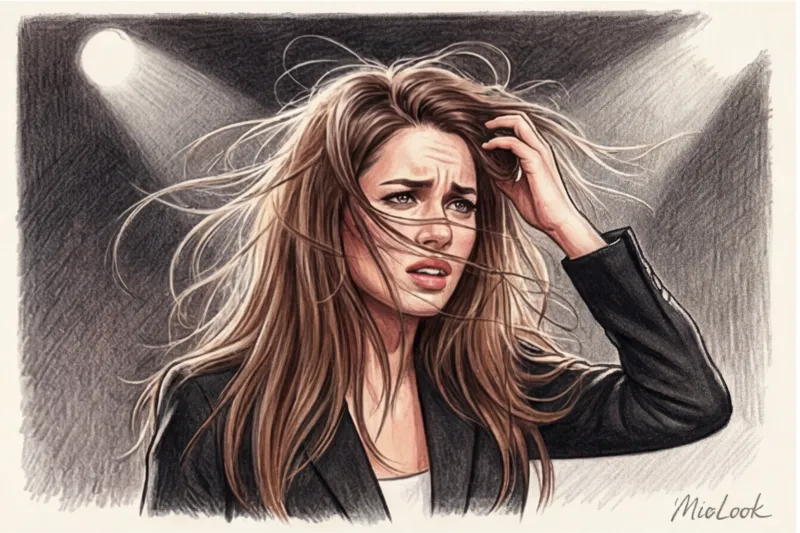
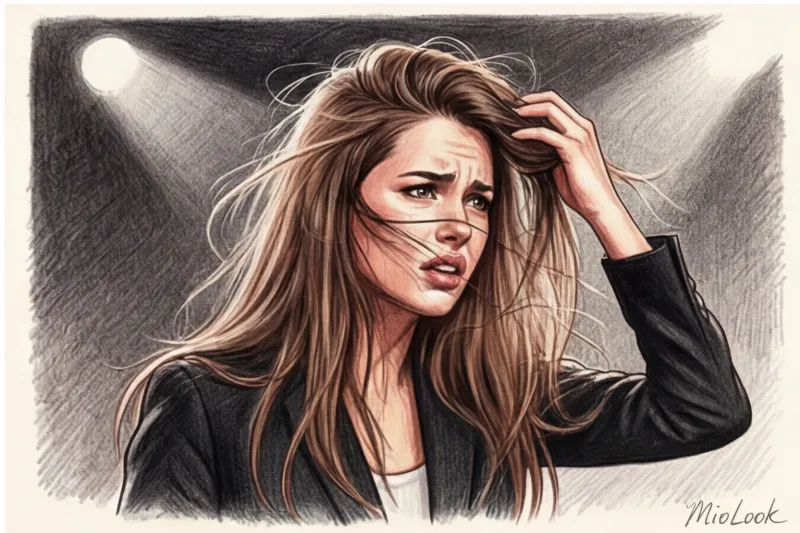
A 2023 study of nonverbal communication by the Science of People Institute demonstrated a direct link between a speaker's microgestures and the audience's level of trust. When your hair is loose, you physically can't control its movement. It gets in your eyes, sticks to your lip gloss, and gets staticky from the screen.
"Every time you tuck a strand of hair behind your ear, the audience interprets this gesture as a sign of insecurity, an attempt at self-soothing, or nervousness. If a speaker tucks their hair more than three times in 10 minutes, their credibility as an expert drops by 20%.
Of course, I must add a caveat. This rule isn't universal. If you're speaking at a creative arts festival, talking about freedom of expression, or building your personal brand on bohemian relaxation, a touch of casualness will work in your favor. But if you're defending a financial report to a board of directors or pitching to investors in the fintech sector, loose locks will undermine your credibility.
Pre-Stage Checklist: Speaker's First Aid
Even the perfect hairstyle can crumble under the pressure of stage conditions. My styling kit contains three inexpensive products that have saved world-class speakers more often than expensive styling products.
- Antistatic wipes. Use regular dryer sheets. Run them through your hair from roots to ends a minute before you go out. This will instantly remove static and prevent your hair from tugging at the microphone.
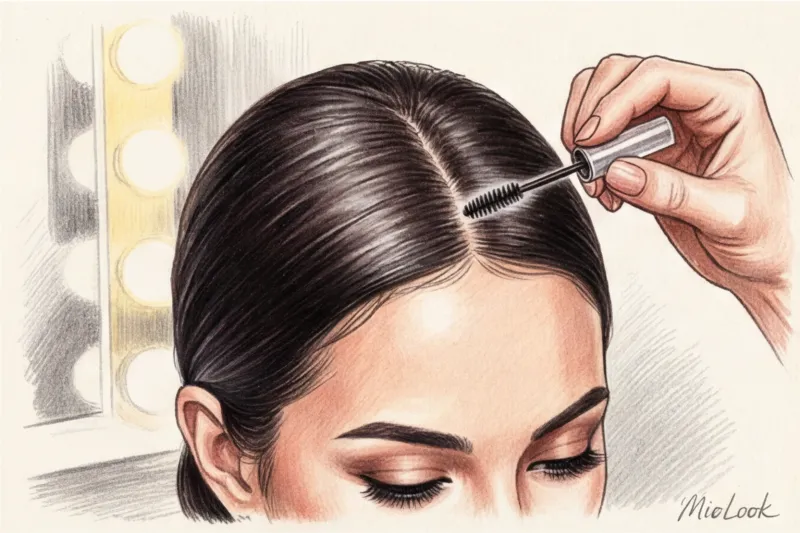
- Transparent eyebrow gel. The main enemy of backlighting on stage is baby hairs. Under the spotlights, these fine hairs begin to glow, creating the effect of a fluffy dandelion or a halo around the head. Clear brow gel seamlessly and seamlessly adheres them to the main body of hair.
- Matte toothbrush and varnish. Spray a regular toothbrush with hairspray and brush it along your parting. This will smooth out the texture without making your hair look dirty or stuck together.
Preparing for a speech is a mathematical exercise, with no insignificant variables. Your hairstyle for a public speech should be your armor, not your vulnerability. The next time you're preparing for an important presentation, put together your entire look—from your shoes to your hairstyle—and test it out in motion. Take a step, bend, turn. If you don't have to adjust anything, you're ready to conquer the room.