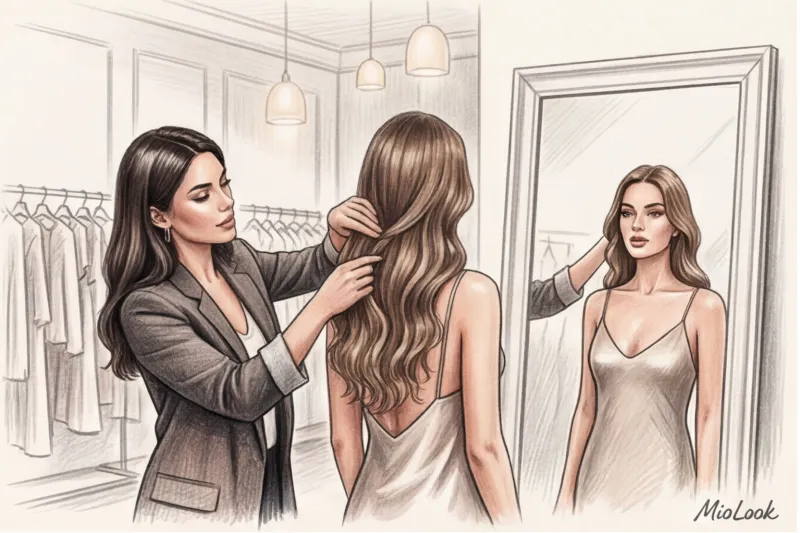
Do you know what gives away a truly prestigious and expensive look in the first three seconds? No, it's not the logo on the bag or even the impeccable seams on the jacket. Our brain instantly reads the so-called "portrait zone"—the line from the crown of the head to the collarbone. You can spend €800 on the perfect silk dress, but if the hair is styled incorrectly, the designer's entire architectural design will collapse.
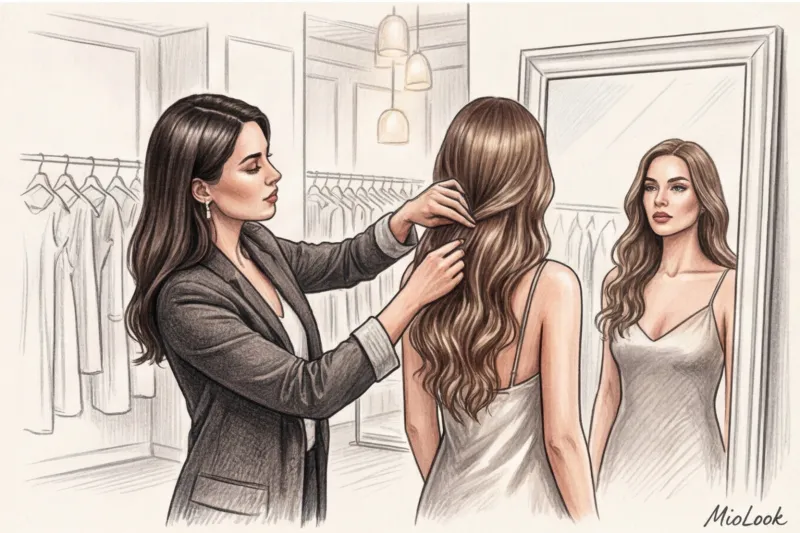
Ten years ago, glossy magazines dictated strict rules: bare shoulders required an updo, and a deep neckline required Hollywood curls. Today, the philosophy of "quiet luxury" has erased these outdated dogmas. Hair has become a fully-fledged architectural element of the silhouette, designed not just to complement an outfit but to shape the proportions of your body. We discussed this shift in the industry in more detail in our a complete guide to fashionable women's haircuts and hairstyles.
If you have ever wondered, How to choose a hairstyle to match a dress Without looking like you spent three hours getting ready for your high school prom, this article is for you. Forget tons of hairspray and bobby pins—let's talk about geometry, airiness, and modern styling.
Image architecture: why your hairstyle and dress neckline should be in sync
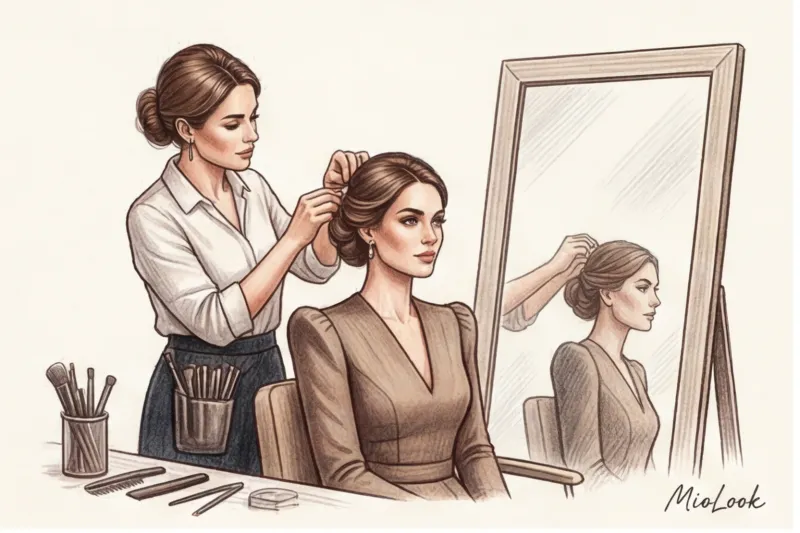
Over 14 years of styling clients for red carpets, weddings, and important business events, I've noticed a paradoxical thing. Women spend hours searching for the perfect cut, but they decide how to style their hair five minutes before they go out. "I'll do a bun so my neck shows," they say. And they make a fatal mistake.
The fact is, 70% of the visual success of an evening (and even everyday) look depends on the balance of volume in the upper body. Even the legendary Vidal Sassoon argued that a haircut is pure architecture that should work in synergy with the bone structure and lines of the clothing.
In my practice I use reinforced concrete The 5-centimeter rule The idea is very simple: the ends of your hair should never end exactly where the edge of the fabric begins. Your hair should either fall 5 centimeters short of the neckline (leaving a strip of bare skin) or overlap it by at least the same 5 centimeters.
"We once rescued a client's look an hour before a gala dinner. She had a stunning dress with a square bob neckline and a graphic bob. The problem was that the cut of her hair matched the neckline to the millimeter. This created a visually "chopped-off neck" effect—her head seemed perched directly on her shoulders. We simply combed her hair back with a slightly dampened effect, revealing the necessary 5 centimeters of her neck—and her silhouette instantly lengthened, losing 5 kilograms."
Of course, every rule has exceptions. This doesn't apply to ultra-short pixie cuts, where the neck is naturally exposed, or to very complex cascading collars, which require individual fitting. But in 95% of cases, it's those 5 centimeters that save the look from looking too "blank."
Access to MioLook for €0.99 — one-time payment
A smart AI stylist will select the perfect look based on your individual proportions and wardrobe.
Get access — €0.99 onceV-neck and deep neckline: extending the vertical line
A V-neck is a powerful tool in a stylist's arsenal. Its main purpose is to create a central vertical line that visually elongates the neck, slims the torso, and makes the face more graceful. We wrote about this in detail in our article about visual correction of the figure with clothing.
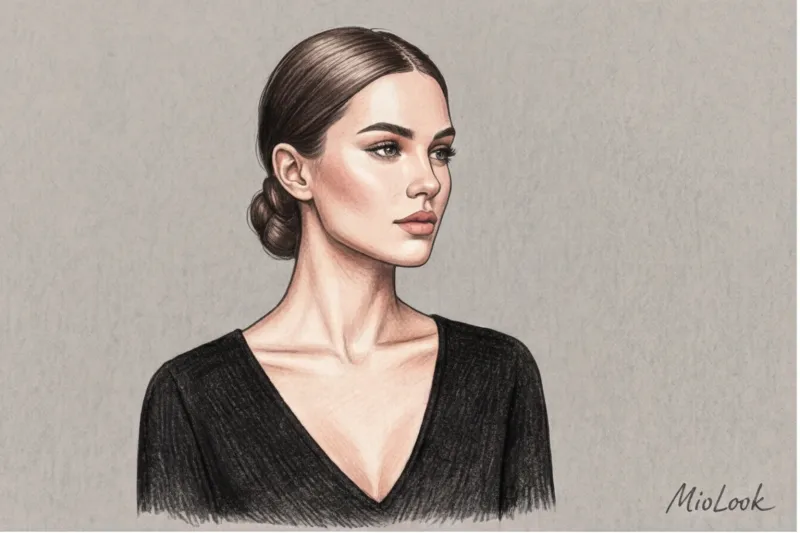
How do you choose a hairstyle for a dress with such a neckline without ruining the magic? The main rule: don't block the vertical line with a solid wall of hair.
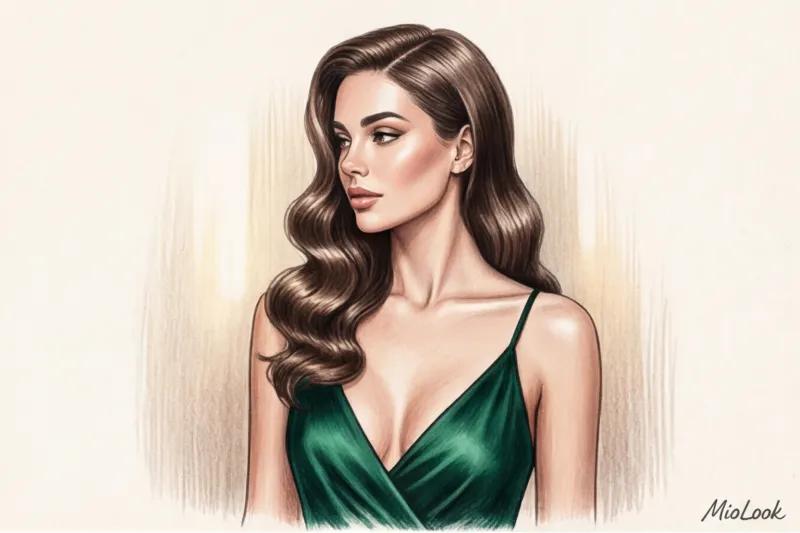
- Best solutions: If you have long hair, slick it back or gather it into a sleek low ponytail. If you prefer to keep your hair loose, go asymmetrical—toss a soft Hollywood wave over one shoulder. The other shoulder will remain exposed, allowing the V-line to continue to shine.
- What to avoid: Voluminous, tousled curls that fall evenly across both sides of the chest will transform the sharp, slimming triangle of the neckline into a shapeless square, adding unnecessary volume where it's completely unnecessary.
Closed necks (turtlenecks, halter necks, and stand-up collars): adding air
Turtleneck dresses, strict halternecks, and high-neck tops are the most treacherous territory for those with medium- to long-length hair. The fabric, tightly clinging to the neck, naturally reduces the space between the chin and shoulders.
There's a common stereotype that a closed neck requires a strict, "ballet" bun on top of the head. Yes, it works, but in 2024, it looks too prim, as if you've tried too hard.
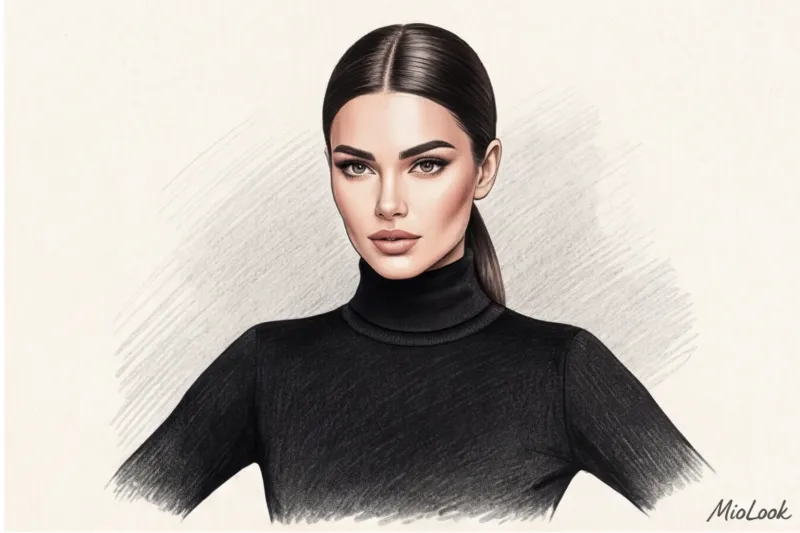
The modern alternative is aesthetics expensive hair (expensive-looking hair). My favorite formula for business meetings or status events: a thick cashmere turtleneck (even if it's from the basic Uniqlo line for €40) plus a perfectly ironed, low, structured ponytail with a clear center parting. It looks a hundred times more convincing than a hair tower.
A casual French twist (also known as a "shell") works great for relaxed looks. The secret is to leave a few strands loose near the face—they'll add that much-needed air between your face and the collar. If you're unsure whether this style will suit you, you can always upload a photo of yourself and try different options. MioLook app before going to the salon.
Your perfect look starts here
Join thousands of users who look flawless every day with the MioLook AI app.
Get access — €0.99 onceOff-the-Shoulder and Asymmetry: Breaking Outdated Stereotypes
It's time for my favorite myth-busting exercise. Most online articles still insist, "With a strapless dress (bandeau), always wear your hair up to show off your bare shoulders and collarbone!"
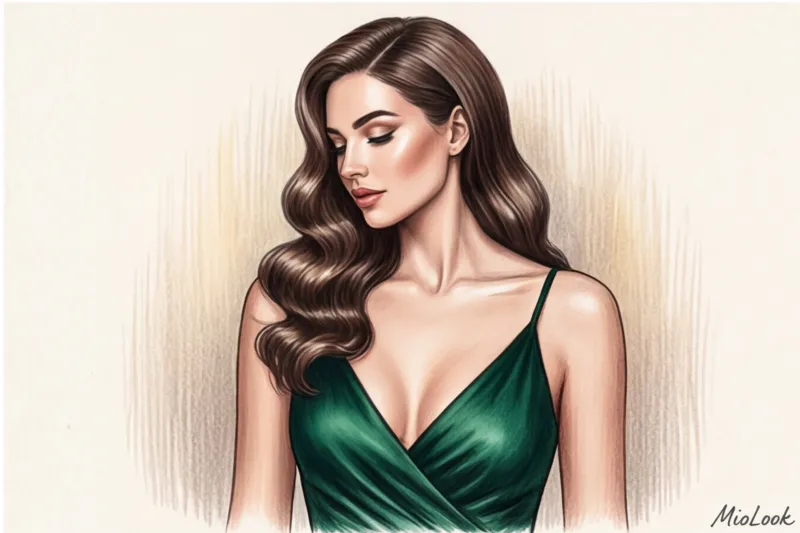
I categorically disagree. A high bun with a bustier dress will, in most cases, take you back to the 2000s prom era. If you look at the latest shows from Bottega Veneta or Khaite, you'll notice a completely different approach.
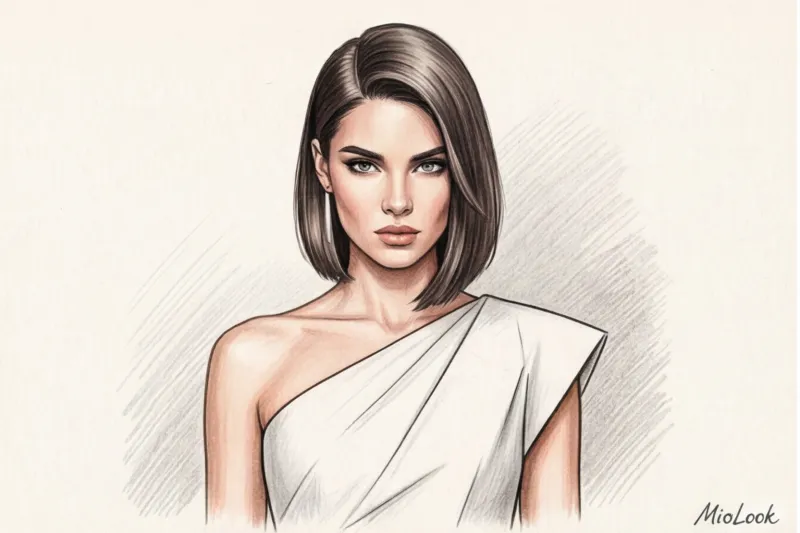
The most prestigious and modern combination for a bare-shoulder look is loose, perfectly straight, healthy-looking hair tucked behind the ears and pulled back. While the collarbones are exposed, the straight lines of the hair cascading down the back act as strict architectural columns. This creates an incredibly sophisticated, confident, and slightly casual silhouette.
When it comes to asymmetry (one-shoulder dresses), the golden rule of scales applies: volume must always balance emptiness If your right shoulder is covered with fabric or decorated with a voluminous bow, sweep the hair over the bare left shoulder. This will stabilize the proportions and prevent the look from falling to one side.
Round neckline and boat neckline: Parisian chic and volume balance
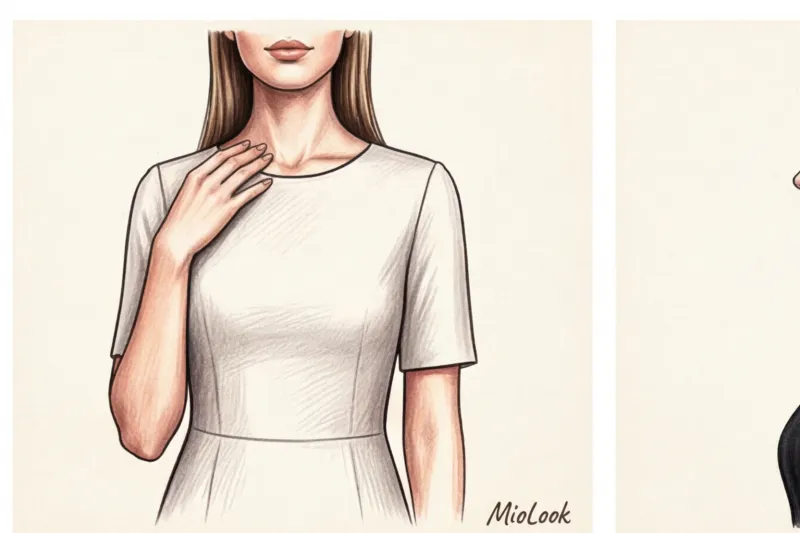
The bateau neckline, made famous by Audrey Hepburn, visually broadens the shoulders. It's a great way to create a slimmer waist, but it requires careful styling.
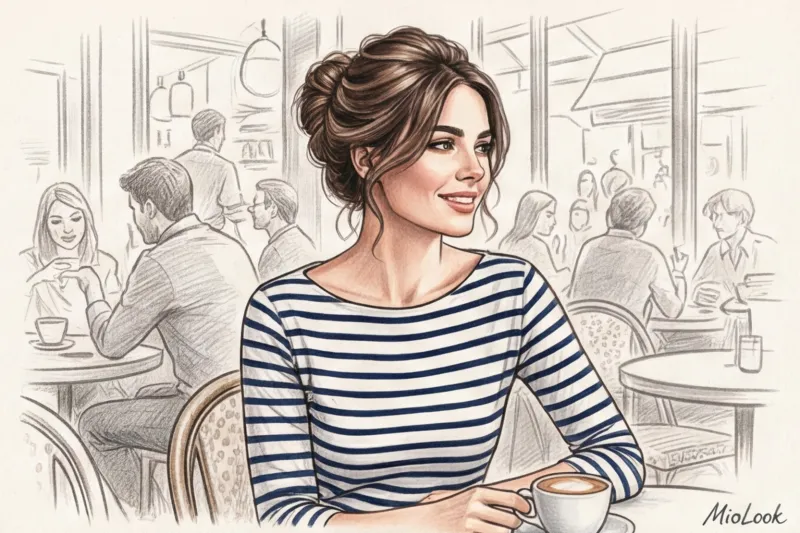
Since the fabric forms a horizontal line from shoulder to shoulder, the hair shouldn't lie heavy across this line. Ideal companions for a boat neck are short textured haircuts (pixie, garcon) or soft, slightly messy high buns. This is where Parisian chic comes into its own: you've gathered your hair with your hands, secured it with a pin, and a few strands have accidentally fallen onto your neck. Incidentally, this exposed neckline and collarbone is the perfect canvas for statement jewelry, as we mentioned in the guide. What to wear with large jewelry.
The basic crew neck, found on T-shirts and classic sweaters, can handle almost anything. But it's the one that works best with the bedhead effect—a slight tousled look. A sleek, intricate, hair-on-hair style next to a simple knit collar will look out of place, revealing that you've tried too hard.
Ready to get started?
Try the MioLook plan for free—no commitments required. Organize your wardrobe and find perfect combinations in one click.
Get access — €0.99 onceThe Biggest Beauty Mistakes: How to Avoid Cheapening the Most Luxurious Dress
Beyond geometry, there's also texture. How do you choose a hairstyle to go with a dress with sequins, intricate ruffles, or a bold print? Remember this rule: there can only be one prima donna in the image.
A complex dress requires an extremely simple, minimalist hairstyle. If you wear a €1,500 beaded dress and add a complex five-strand braid with pearl pins, the result will be visually overwhelming. There will be nothing to catch the eye, and the couture look will descend into provincial kitsch.
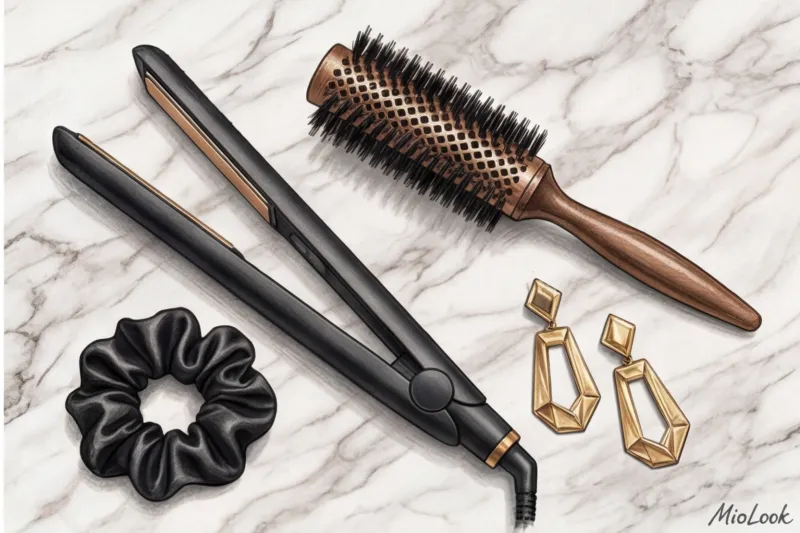
The second, no less common mistake is the condition of the hair itself. A global Dyson study (2023) on heat damage found that over 60% of women regularly over-dry their ends with straightening irons, sacrificing quality for the sake of perfect shape. Trust me: matte, split ends, and lifeless ends will ruin even the flowing silk from The Row. The luxurious texture of the fabric always mercilessly highlights the appearance of unkempt hair. It's better to go out with slightly frizzy, yet vibrant and moisturized hair than with perfectly straight, but over-dried, "straw"-like locks.
Stylist Checklist: The Formula for the Perfect Match Before You Go Out
To never doubt yourself in front of the mirror again, I suggest my clients run their finished look through a simple algorithm. Do this 10 minutes before leaving the house:
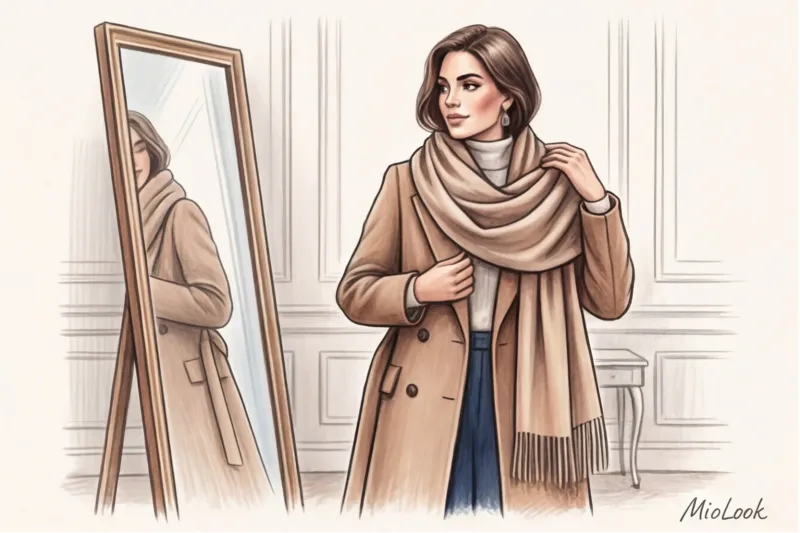
- Two meter test: Step back exactly two meters from the full-length mirror and squint slightly. You should be able to clearly see the outline of your neck. If your hair blends into the fabric of your dress to form a single dark (or light) spot, you've violated the 5-centimeter rule. Your hair should either be pulled back or pushed back.
- Motility test: Turn your head sharply to the left, then to the right. Did your hair spring back into place? If you have to adjust your hair with your hands after every movement, you'll feel stiff all evening. A perfect hairstyle should feel lively.
- Texture test: The texture of your clothing dictates the texture of your hair. Matte, light-absorbing fabrics (wool, tweed, velvet) pair beautifully with glossy, shiny hair (the glass hair effect). However, glossy silk or satin are best balanced with a more matte, textured style using a salt spray or dry powder.
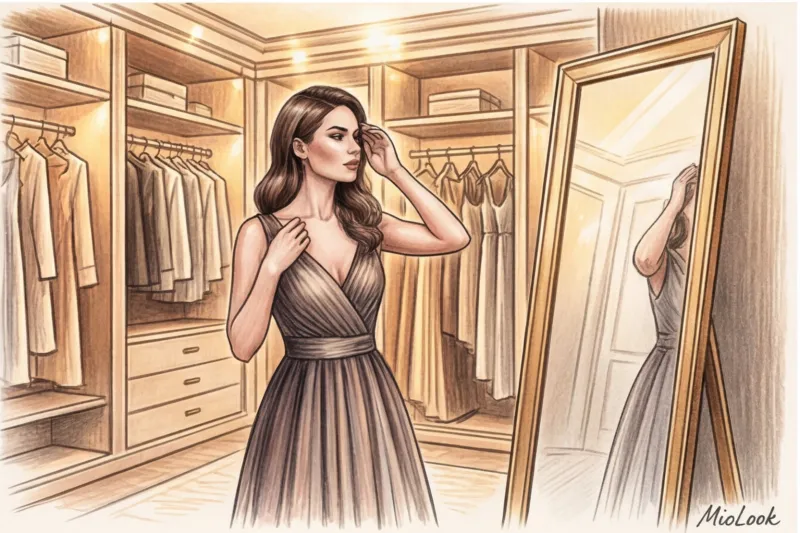
Choosing a hairstyle to match your dress's neckline isn't magic or an innate gift, but rather a knowledge of the laws of visual illusion. Don't be afraid to break the outdated rules of glamour from the 2000s, test new proportions, and remember: the most stylish hairstyle is the one that others will think you spent no more than five minutes on.