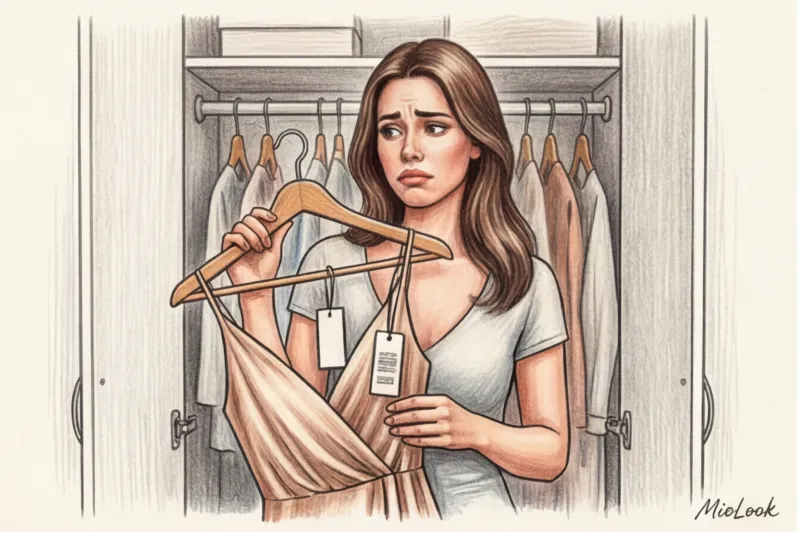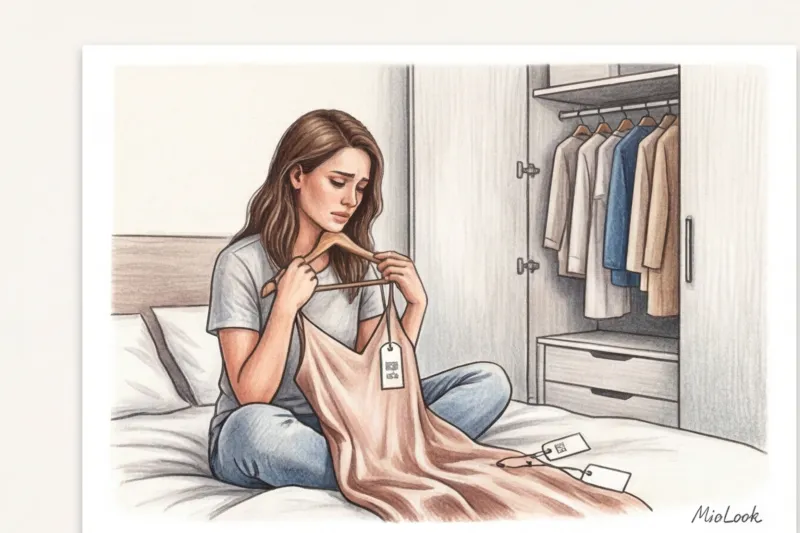
One of my clients, let's call her Anna, once confessed to me a terrible stylistic sin. She bought a stunning emerald silk dress for €500. She tried it on at home, realized there was simply no reason in her life for such luxury, and... hid it in the farthest box under her bed. Every morning, while choosing her outfit for the day, she tried not to even look at that box, because feeling guilty after buying clothes literally burned her.
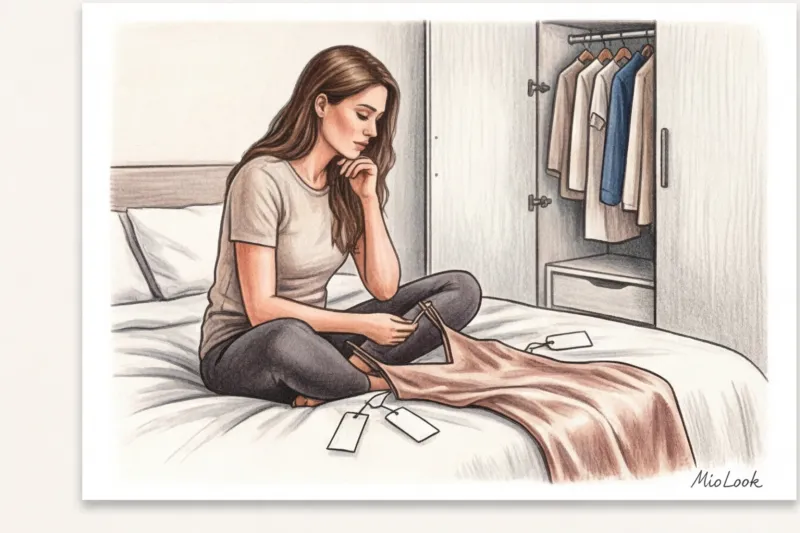
Sound familiar? Over 12 years as a stylist, I've seen hundreds of these "boxes of shame." We're used to scolding ourselves for impulsive spending, chanting mantras about mindful consumption, and vowing "never again." But clichéd advice like "just stop spending money" doesn't work. We've covered the root of this problem in more detail in our A complete guide to the psychology of shopping and wardrobe management.
As a stylist with the soul of a Mediterranean woman, I suggest you look at the situation differently. Shopping mistakes aren't your failures. They're incredibly valuable (albeit expensive) lessons in self-discovery. What you experience when looking at an unwanted item is an "identity hangover," a stark conflict between your real life and your secret fantasies.
The Anatomy of Remorse: Why Guilt Occurs After Buying Clothes
According to a large-scale study by Movinga, Europeans, on average, don't wear up to 80% of the items in their wardrobe. Their closets are full, but they have nothing to wear—we examined this phenomenon in detail in the article The Closet Paradox But why do we continue to take things to the checkout?
From a retail psychology perspective, the moment you pay, your brain is hit with a wave of dopamine. The euphoria peaks when the salesperson wraps your purchase in crisp paper. But as soon as you step inside, the magic wears off. Why?
Because in the fitting room we often buy not the item itself, but the promise of another life We pay for the "fantasy self." That emerald dress of Anna's was meant for her alter ego: a woman who drinks champagne on a yacht on the Côte d'Azur, not drives to the office at 9 a.m. in the November slush. The gap between fantasy and reality is the true cause of devastation.
Your perfect look starts here
Join thousands of users who look flawless every day with MioLook. Our smart AI stylist will help you avoid accidental purchases.
Get access — €0.99 onceThe Sunk Cost Trap: Why We Keep Things That Make Us Sad
Nobel Prize-winning economist Daniel Kahneman brilliantly described the "sunk cost fallacy." The idea is simple: people find it incredibly difficult to give up something they've already invested money, time, or effort in, even if that investment is ultimately a loss.
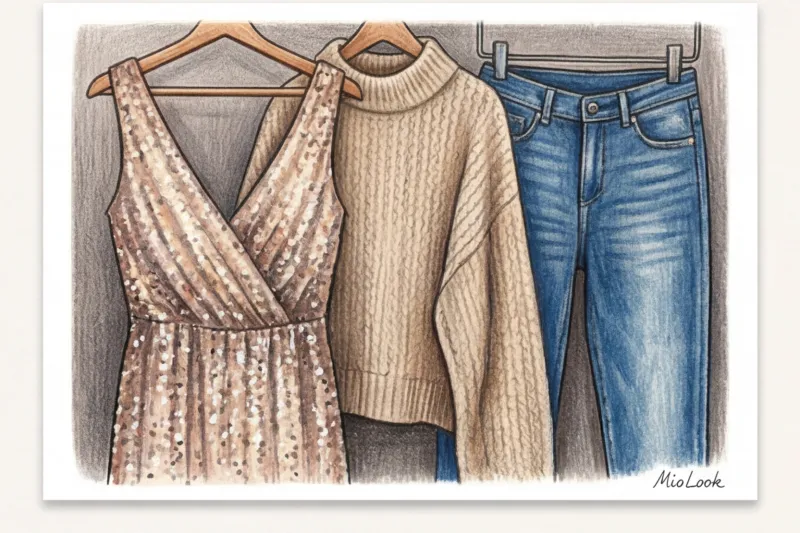
In the context of a wardrobe, this seems like an absurd monument to one's own impulsiveness. The average woman keeps around €300–€400 worth of tagged clothes in her closet—a frozen mess that ruins her mood on a daily basis. The more expensive the mistake, the more stubbornly we refuse to get rid of it.
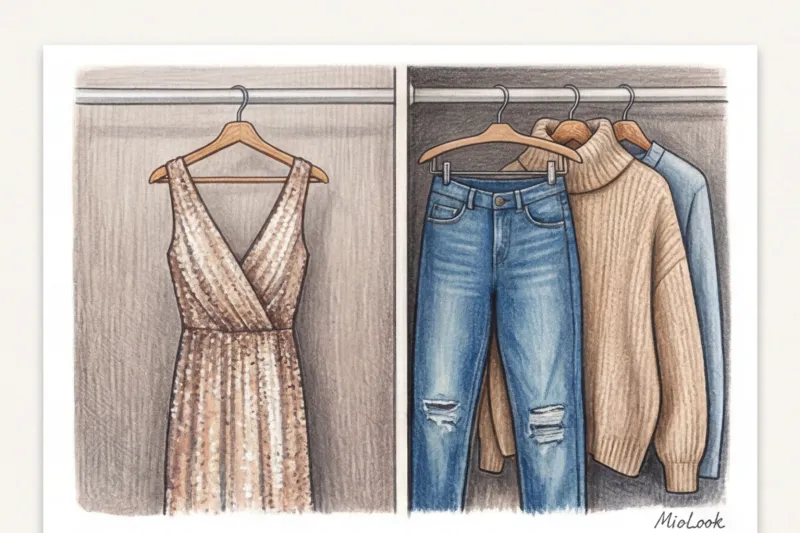
A counterintuitive insight from a stylist: holding on to an item out of guilt is like paying for it twice. You've already paid the store your money. By leaving the item in your closet as an eyesore, you're giving it your emotional energy every day. Get rid of it, and you'll feel physical relief.
Top 5 Shopping Scenarios That Guarantee You'll Feel Guilty
Let's look at some common traps. Do you recognize yourself in them? Great, then the enemy has been spotted.
- Scenario 1: The Magic of the Red Price Tag. You buy something just because it's 70% off. The illusion of colossal savings disables critical thinking. But an unflattering jacket bought for €40 instead of €150 isn't €110 saved; it's €40 wasted.
- Scenario 2: Emotional Band-Aid. A tough day at work, a fight with a partner, fatigue. Shopping here acts as a quick antidepressant. About that, How to stop emotional clothing shopping Entire books have been written about it, but the first step is simply recognizing the pattern.
- Scenario 3: The Clone Effect. Fearing to step out of your comfort zone, you buy a fifth pair of nearly identical black trousers. They seem like basic items, but when you get home, you realize you've spent the money, and your wardrobe hasn't changed one iota.
- Scenario 4: A thing for the sake of an event. Buying an ultra-specific outfit for one evening. If you're looking for, What to wear to a corporate party Choose pieces that can be "disassembled" into everyday outfits. A dress completely embroidered with glass beads will likely die in the closet after one party.
- Scenario 5: Things are too complicated. An architectural asymmetrical cut or a loud print. You buy a soloist, forgetting that they need a corps de ballet base. If you need to buy shoes, a bag, and special underwear to go with the outfit, it's a financial black hole.
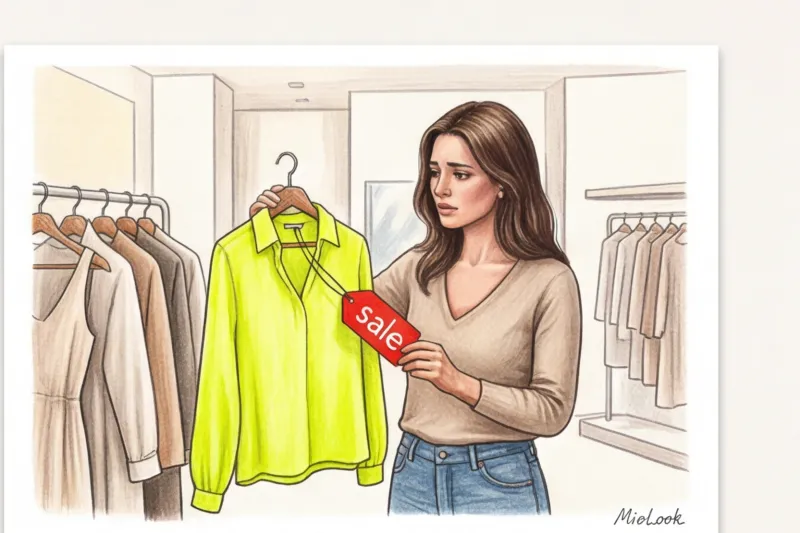
To avoid the fifth scenario, I always advise my clients to use the virtual fitting room feature. If you have digitized your items in MioLook app , you can take a photo of a new blouse right in the store and see if it goes with your favorite jeans.
Impulse buying as a subconscious signal
A common belief is, "Impulsive shopping is evil, avoid it." I disagree. Wrongful purchases shouldn't be immediately thrown into the trash; they should be analyzed like dreams at a psychoanalyst's.
What does a sudden purchase of a leopard-print top mean if your everyday style is the dull gray minimalism of COS? Clearly, a suppressed need for visibility, boldness, and sexiness has awakened within you. Your subconscious is screaming, "I'm bored!" Understand this signal and translate it into safer stylistic choices: if you're not ready to wear a leopard-print top, start with a leopard-print belt or bag.
Access to MioLook for €0.99 — one-time payment
Start creating perfect looks with the help of artificial intelligence and integrate complex purchases into your basic wardrobe.
Get access — €0.99 onceA Stylist's Indulgence: How to Eco-Friendly Forgive Yourself for Spending Money
The first step to healing is allowing yourself to make mistakes. Finding your unique visual code without making mistakes is impossible. Treat financial losses like paying for a course called "Investing in Experience." Now, for your €80, you know for sure that the midaxie length doesn't work for your height. Lesson learned, let's move on.
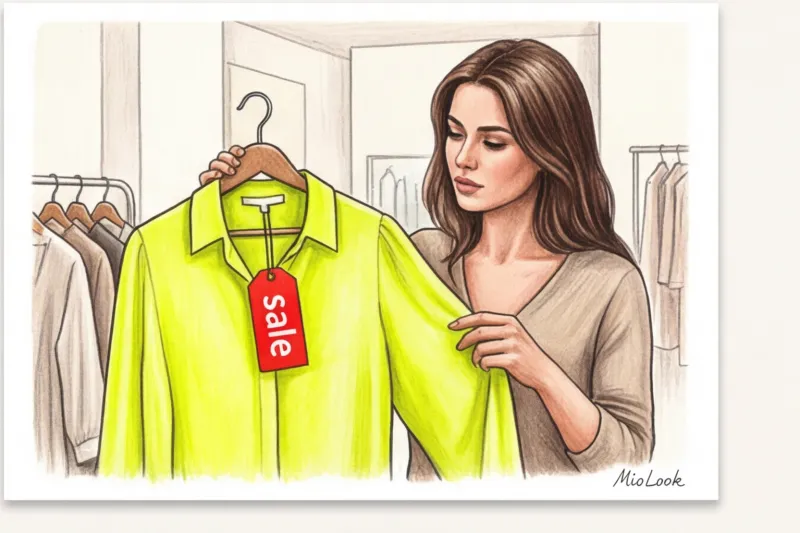
What to do with the thing itself? We have two strategies.
Strategy 1: Lower the temperature.
My favorite Mediterranean trick: take an overly dressy, "mistaken" piece and roughly ground it with a base. My foolproof formula: Sequin skirt + basic oversized grey hoodie + distressed sneakers = relaxed chic Or that very same silk slip dress of Anna's: we wore it with a simple white T-shirt made of thick cotton, added chunky loafers, and it took on a daytime life!
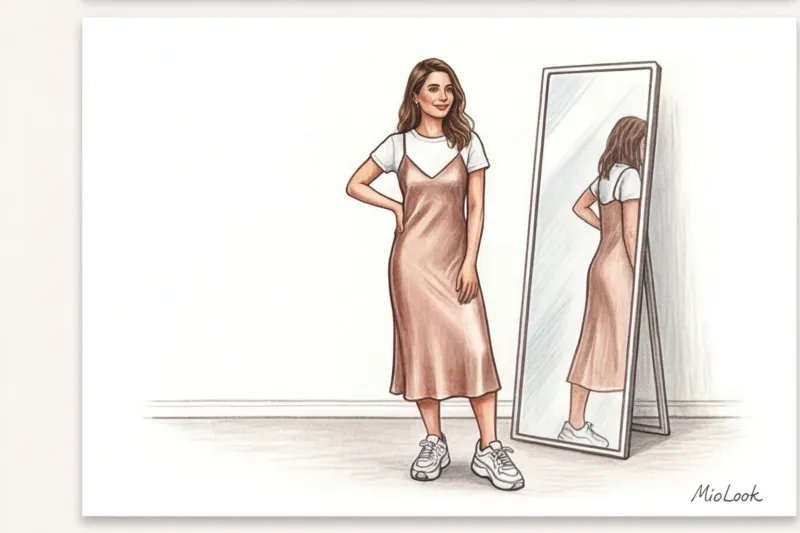
Strategy 2: Ecological separation.
If it's impossible to reduce the temperature (for example, you're physically uncomfortable in the fabric), the item should go. Organize a swap party with your girlfriends (swapping clothes and wine is the perfect Friday night format). Or use The best clothing resale platforms Even a 40% refund will lift the burden off your soul.
Checklist: How to Prevent a Shopping Hangover (A Practical Guide)
To prevent guilt from ruining your joy with new purchases in the future, run the item through this checklist before you go to the checkout.
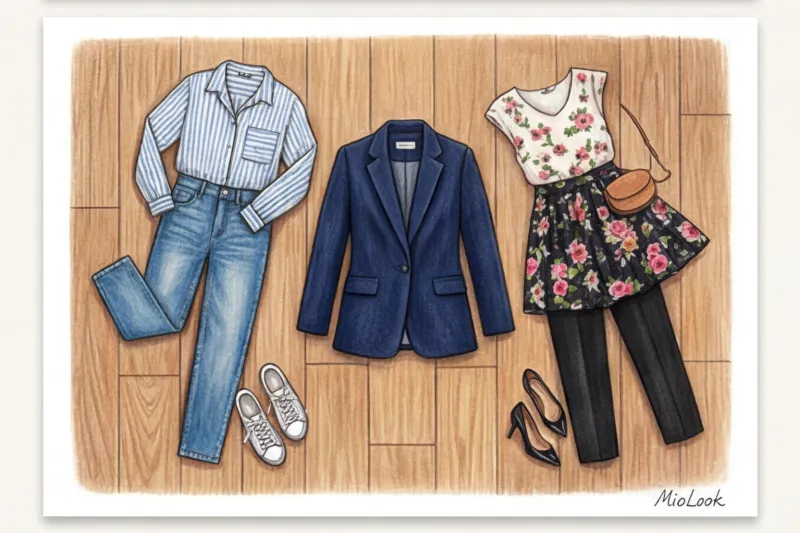
- The rule of 3 images. Don't buy something if, standing in the fitting room, you can't mentally create three complete looks with it from what you have. already hanging in your closet. (This, by the way, is the basis of any capsule wardrobe ).
- Cost-per-Wear metric. A professional stylist's tool: Divide the item's price by the expected number of wears. A €200 cashmere sweater that you'll wear 100 times over the winter (€2 per outing) is much more affordable than a €30 acrylic top with rhinestones that you'll wear once (€30 per outing).
- 360° comfort test. Sit in the fitting room. Raise your arms. Bend over. Ask yourself, "Can I wear this for 8 hours without tugging at the hem or adjusting the neckline?" If you have even the slightest doubt, leave it in the store.
- Inventory before shopping. You won't buy a fifth white shirt if you know you have four. Digitizing your wardrobe MioLook saves you from duplicate purchases.
- 24 hour pause. Let the dopamine cool off. Leave the item at the checkout until tomorrow. If you wake up in the morning thinking, "I can't live without it," buy it.
Fair warning: This rule does NOT work if you are researching clothing resale and vintage A unique archival item can be snatched away in a minute; decisions need to be made quickly.
Ready to get started?
Try the MioLook free plan—no commitments required. Digitize your wardrobe and stop wasting money on clothes you can't wear.
Get access — €0.99 onceInstead of a conclusion: turning mistakes into the foundation of personal style
Clothes are just pieces of fabric sewn together with thread. They're a utilitarian tool. They should serve you, adorn you, give you confidence, not make you feel guilty or take away your peace of mind.

The perfect wardrobe isn't built on rigid, ascetic prohibitions. It's built on an honest dialogue with yourself. Forgive yourself for past mistakes. Sort out that "box of shame" under the bed. Treat yourself with finding your own clothing style as an exciting Mediterranean game - with ease, passion and a glass of sparkling wine, and not as a strict exam where every mistake results in a failing grade.
The main takeaway you should take with you today is: Your style isn't defined by the things you buy randomly. It's defined by the conclusions you draw from them.