Behind the scenes at the fashion shows: why top models choose the scent of sugar
Backstage at Paris Fashion Week always smells of hairspray, strong black coffee, and... burnt sugar. I noticed this paradox ten years ago, when I first went backstage at a Dior show. You'd think an industry obsessed with the zero-size figure would smell of icy ozone and bitter herbs. But in reality, models are slathering themselves in vanilla- and caramel-infused perfumes. Why? To simply reduce stress and cortisol levels before hitting the runway. And it really does work.
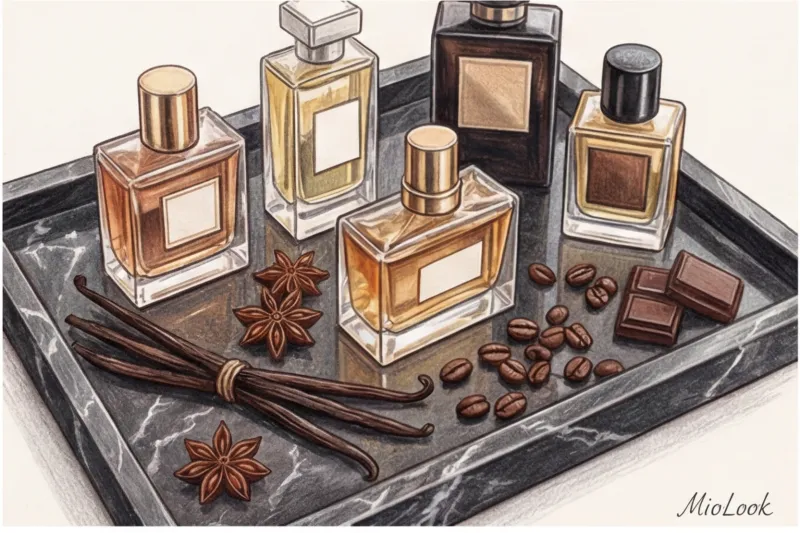
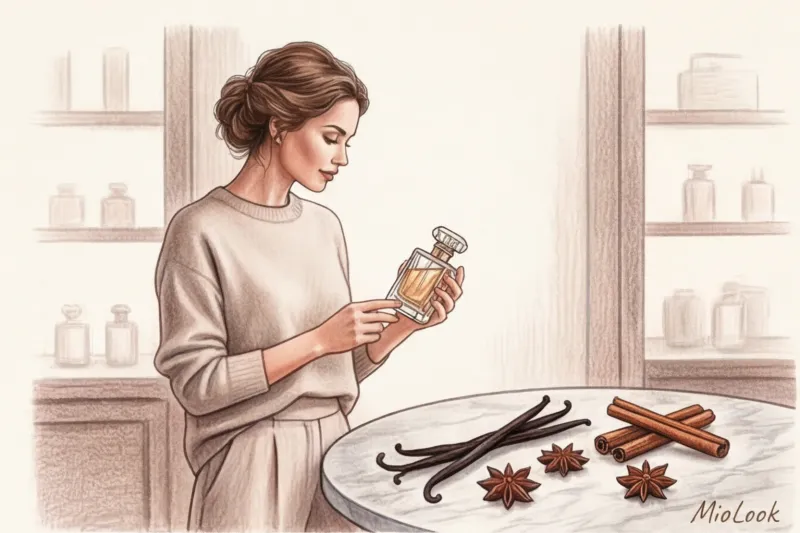
First, let's clarify the terms. Technically, gourmand fragrances are A perfume family whose olfactory pyramid is built around "edible," dessert-like accords. We've covered more details on how to navigate the classification in our guide. Perfume Families: How to Blind Buy Perfume But today, we'll look at gourmands not through the eyes of a chemist, but through the eyes of a stylist. We'll explore how the scent of vanilla and dark chocolate can become a strategic tool, working in contrast to a formal wardrobe.
Gourmand fragrances: more than just the smell of a bakery
The conventional wisdom holds that sweet perfumes are a sign of youth, frivolity, and an absolute taboo for a serious woman. This is a colossal misconception. Modern gourmands have long since moved away from the straightforward scent of cinnamon rolls.
The revolution happened in 1992. Perfumer Olivier Cresp created the legendary Angel for Thierry Mugler, adding an unprecedented dose of ethyl maltol—a synthetic molecule that smells like cotton candy and strawberry jam—to the formula. Until then, perfumes had been floral, chypre, and oriental, but never overtly edible. According to Michael Edwards (creator of the famous Fragrance Wheel), the gourmand group became a logical yet daring offshoot of the classic oriental family.
Today, according to the analytical agency WGSN (2024), gourmand compositions account for over 30% of the entire perfume market. But their profile has changed. The sticky sweetness of the 2000s has given way to "niche" gourmands: perfumers are mixing caramel with sea salt, vanilla with the scent of smoldering wood, and chocolate with earthy patchouli. It is precisely these complex and rugged scents that we will integrate into your style.
The Anatomy of an Edible Sillage: Popular Notes and Their Impact
To manage impressions, you need to understand the textures of your perfume trail. Just as we distinguish cheap polyester from Mulberry silk, our nose detects the quality and depth of perfume ingredients.
Vanilla and Tonka Bean: From Classic to Niche
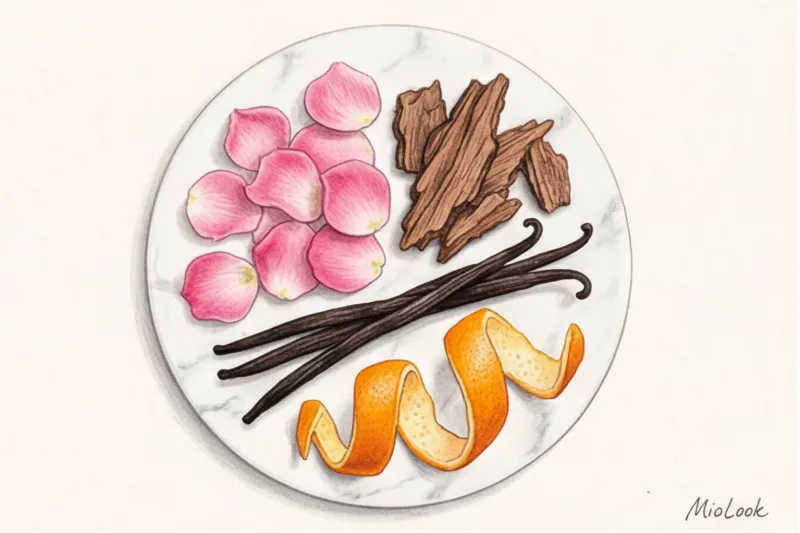
Forget the dull scent of candy-smelling vanilla from a packet. Real bourbon vanilla bean smells luxurious: it has leathery, woody, and even slightly alcoholic nuances. Research in aromachology (specifically, data from the International Flavors & Fragrances Institute) proves that the scent of natural vanilla is subconsciously associated with safety and basic trust, reducing anxiety.
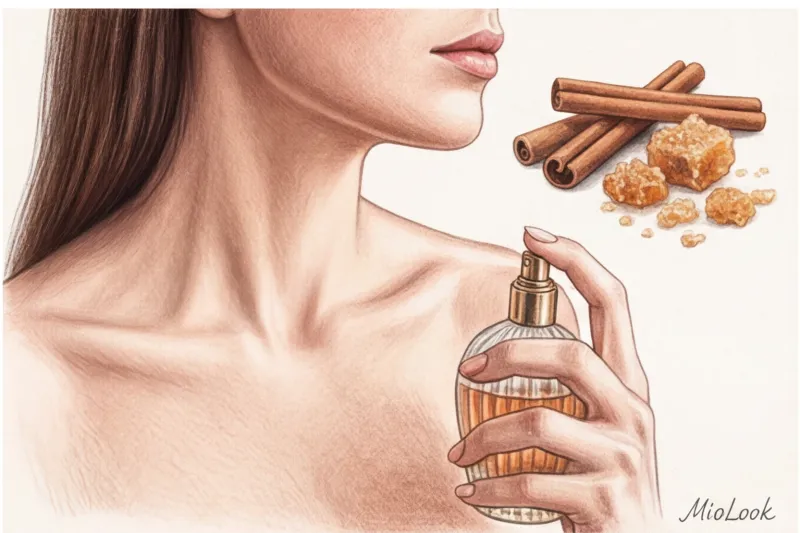
A more complex alternative to vanilla is tonka bean. Thanks to its high coumarin content, it produces a multifaceted accord of freshly cut hay, bitter almond, and cherry pit. It's an ideal choice for those seeking a sweetness with a masculine, masculine character.
Chocolate, caramel and praline: discreet sweetness
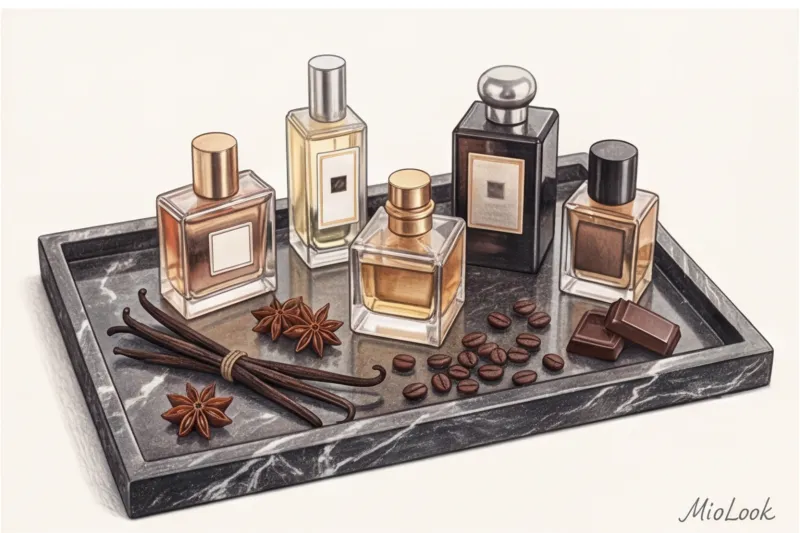
Chocolate in perfumery rarely smells like a milky bar. It's most often paired with patchouli. Patchouli imparts an earthy, raw, slightly basement-like quality that instantly transforms edible chocolate into a prestigious truffle. As for caramel, the main trend of the last five years has been the addition of salt. The contrast between sweet and salty creates dynamism; the scent breaks free from monotony and begins to "play" on the skin.
Alcoholic and spicy accents: a grown-up gourmand
How do you make a sweet scent suitable for an evening out or a prestigious event? Add a little edge. Notes of aged rum, oak-barreled cognac, amaretto, and strong espresso instantly elevate the composition to the 18+ category. Cinnamon, cardamom, and pink pepper act as balancers—they prevent the scent from becoming cloying, adding a dry, prickly texture.
Access to MioLook for €0.99 — one-time payment
A smart AI stylist will select the perfect look to suit your mood and perfume.
Get access — €0.99 onceThe Myth of "Frivolity": How to Wear Sweet Perfume to the Office
Now let's move on to practice. As a stylist, I often encounter clients' fear of sweet perfumes in the workplace. "I won't be taken seriously," they say. And they're right if they wear a pink frilly dress and drizzle it with syrupy cologne. But the magic of style lies in contrasts.

The secret of elegance is not in smelling “expensive,” but in creating an intriguing dissonance between what people see and what they feel.
One of my clients is a partner at a major law firm. She has a distinctly Ruler archetype: a stern gaze, an uncompromising stance, and a wardrobe dominated by tailored charcoal-gray three-piece suits and white shirts with starched collars. Those around her were frankly intimidated. We decided to soften her image without changing her wardrobe. I suggested she swap her cool, distancing chypre for a niche fragrance with notes of bitter coffee, dark rum, and dry vanilla.
The effect exceeded expectations. The distance between them during negotiations began to close twice as fast. The dry gourmand against the clean lines of the suit with its defined shoulders worked like a psychological trick: visually, she remained an unwavering professional, but olfactorily, she conveyed empathy and comfort.
Perfume Wardrobe: Combining Gourmand with Textured Clothing
Perfume is an invisible accessory, and it should resonate with the textures of your clothes. In styling, there's a concept called synesthesia—a cross-perception where we can "touch" a scent or "hear" the color of a fabric. Here are three surefire combinations I recommend:
- Cashmere, angora and thick knitwear + milky and almond notes. This is the quintessential "quiet luxury" aesthetic. A soft, fluffy sand-colored sweater is perfectly complemented by enveloping fragrances with notes of sandalwood, warm milk, and praline.
- Smooth nappa leather and thick silk + alcoholic-chocolate aromas. A leather pencil skirt or silk blouse calls for a scent with character. Cherry in cognac, dark chocolate with chili, or rum with tobacco will create a look with just the right amount of drama.
- Tweed and suit wool + dry vanilla with wood. The rough, dense texture of the tweed perfectly balances the sweetness. Woody-vanilla aromas make the tailored wool jacket less formal while maintaining its elegance.
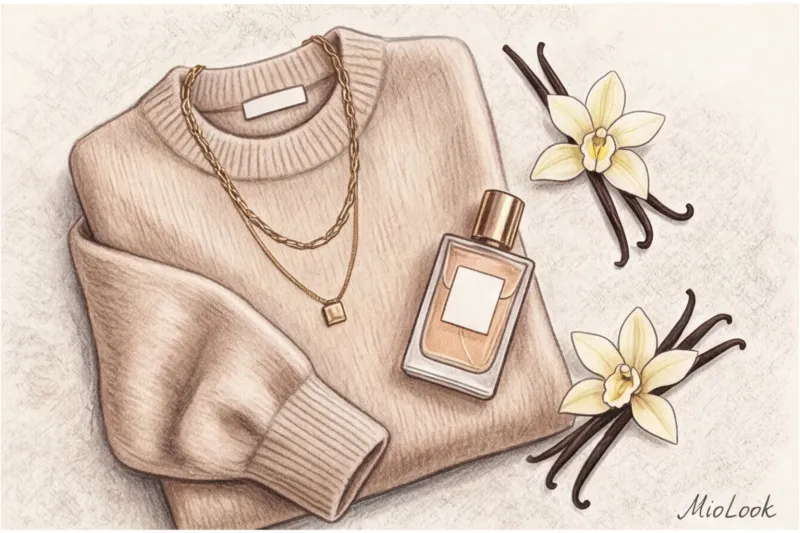
To avoid confusion in combinations, I advise my clients to associate a specific bottle with the assembled capsule. In the appendix MioLook When planning your looks for the week, you can mentally (or in notes) add the desired fragrance to each outfit. Artificial intelligence will help you create a flawless visual base from your pieces, and the right perfume will make this look more dimensional and memorable.
The biggest mistake beginners make: olfactory overdose
While citrus scents (colognes) evaporate from the skin within a couple of hours, gourmand compositions are marathon runners. They consist of heavy molecules (base notes), which can linger on hot skin 40-50% longer than fresh accords. And herein lies the main danger.
I must lay out a strict limitation: when does gourmand fragrance NOT work? In confined spaces at temperatures above 25°C. In the summer heat, the harmless ethyl maltol molecule transforms into a sticky, suffocating weapon of mass destruction. Heat distorts sweet notes, making them sound cheap and intrusive. Save active pralines and chocolate until the first frosts of October.
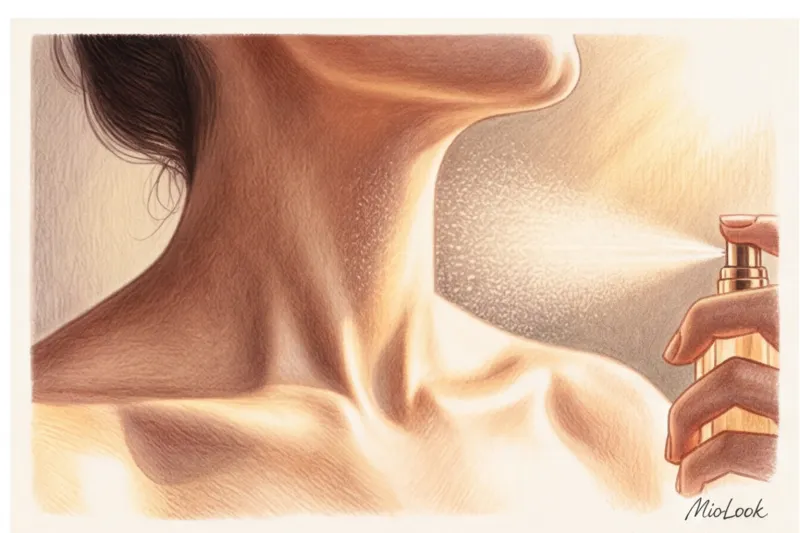
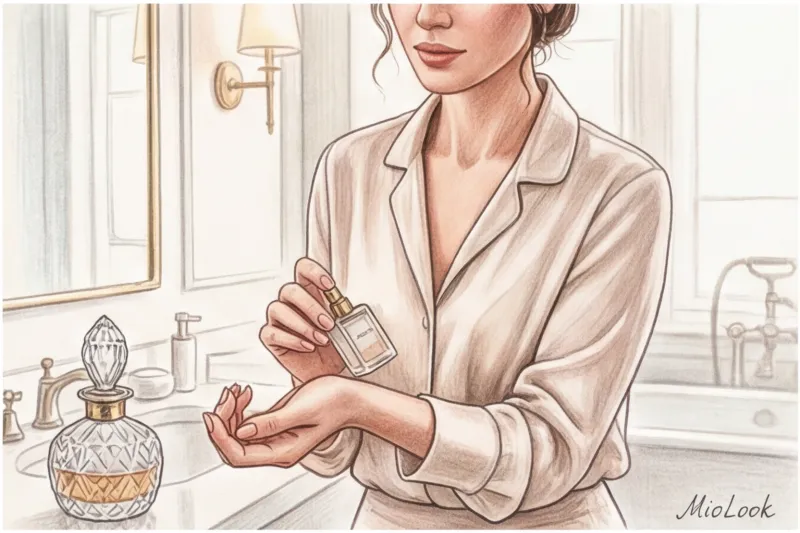
How to apply these fragrances correctly? Forget spraying directly on your neck and behind your ears. Use the "cloud entry" method: spray the perfume into the air in front of you and step into the settling mist. This way, the scent will be evenly distributed throughout your hair and clothing, creating a subtle aura rather than a thick trail that intrudes on others.
Checklist: How to Choose Your Perfect Gourmand Perfume
Buying a gourmand fragrance blind or after a quick test in a store is a surefire way to disappointment. To find your perfect dessert bottle, follow this process:
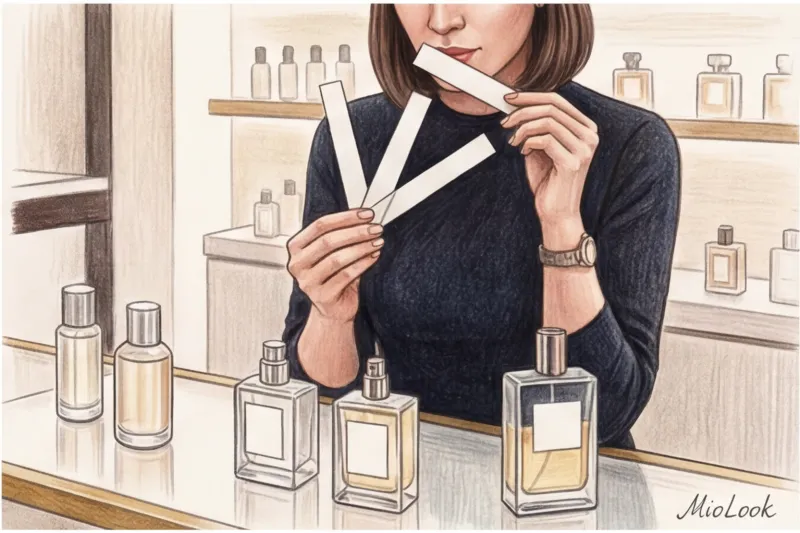
- Test on skin only. A paper blotter is completely incapable of revealing the base resinous and sweet notes. The paper is cold and dead, revealing only the top notes of the composition.
- Follow the 30-minute rule. Never go to the checkout immediately after applying. The top notes (often citrus or light berries) will fade within 15 minutes, and the heavy base will take over. Let the fragrance linger on your hand for at least half an hour.
- Consider the "temperature" of your skin. On "hot" skin (if you have close blood vessels and warm up quickly), fragrances unfold quickly, and the sweetness can become overwhelming. On "cool" skin, vanilla and caramel will sound more subtle and vibrant.
- Seek balance. Study the pyramid carefully. The ideal gourmand fragrance always has a counterbalance: bitter patchouli, sour bergamot, salty notes, or dry cedar. If the pyramid consists only of sugar, vanilla, and candy, the perfume will sound flat.
Your perfect look starts here
Join thousands of users who look flawless every day with MioLook.
Get access — €0.99 onceYour new level of olfactory comfort
Gourmand fragrances have long since outgrown their status as "girly perfumes." In the hands of a woman who understands the rules of style and knows how to play with contrasts, they become a powerful tool of influence. They can soften the strictest dress code, put your interlocutor at ease during difficult negotiations, and, most importantly, give you a feeling of absolute inner comfort on stressful days.
Rethink your fragrance wardrobe this season. Try incorporating a mature, dry gourmand with notes of coffee, rum, or woody vanilla into your everyday looks. Pair a tailored jacket with the scent of dark chocolate, and you'll see how it changes not only the reactions of others but also your own posture.