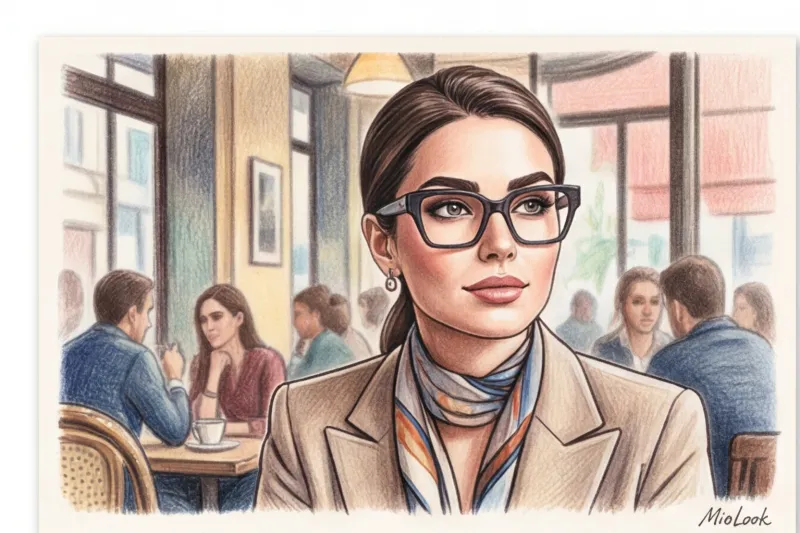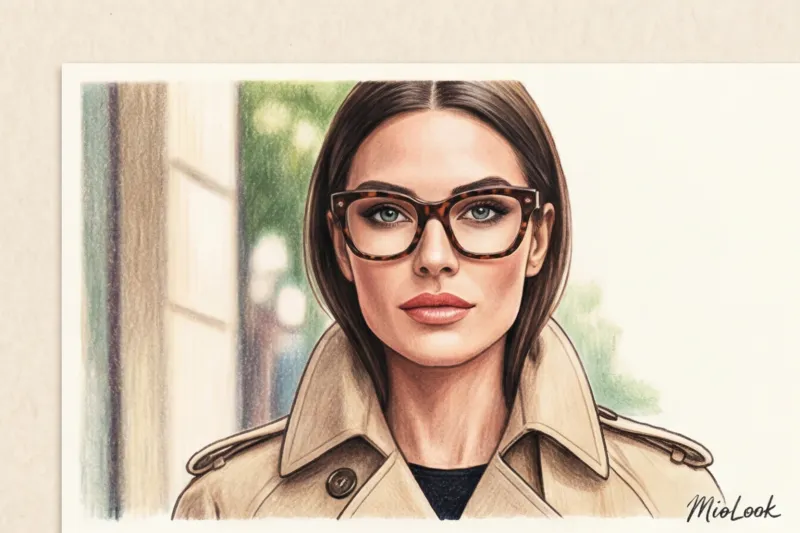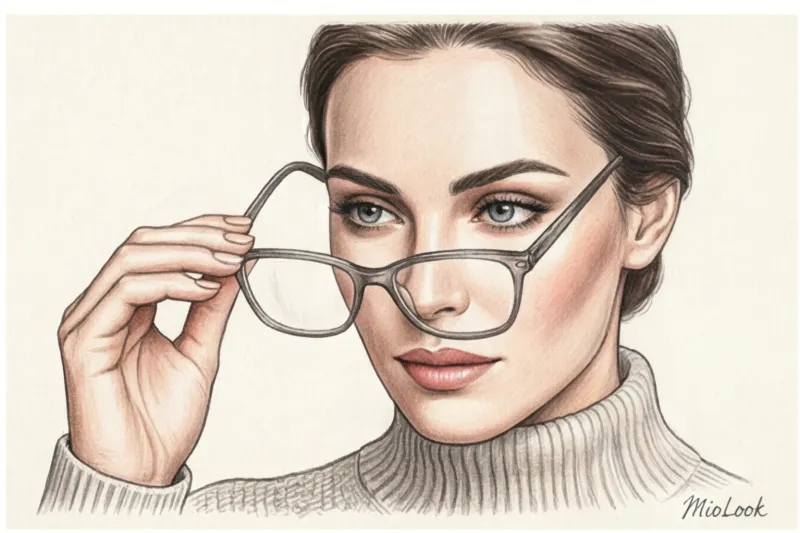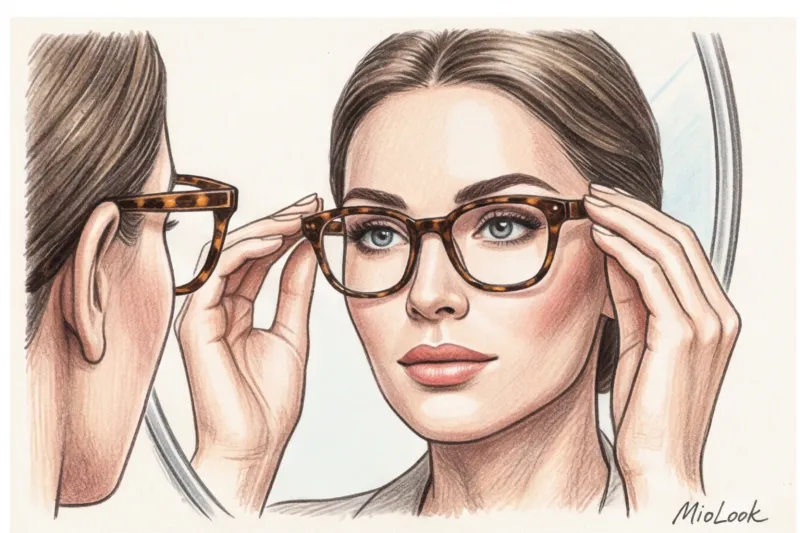
Over 12 years of working as a fashion journalist and stylist, I've heard the same phrase hundreds of times: "My face is too long, so only giant glasses that take up half my face suit me—they at least somehow hide my proportions." And every time, I want to respond: a long face isn't a flaw to be hidden behind a massive plastic fence. It's a stunning, aristocratic architectural foundation, reminiscent of Amedeo Modigliani's portraits.
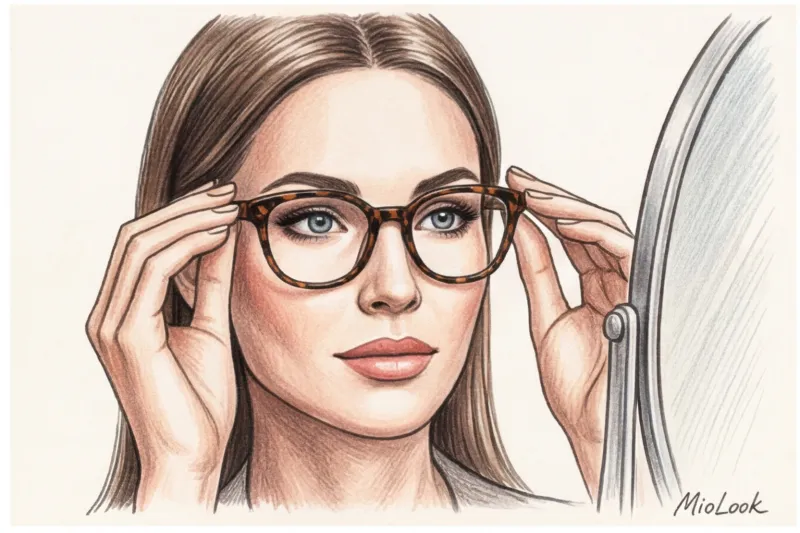
Today we will completely change our approach. We will stop using glasses for an elongated face as a camouflage net and learn how to use them as a tool for controlling others' gaze. We wrote more about the basic principles in our a complete guide to choosing glasses for your face shape , but here I want to delve into the intricacies of working with an elongated oval and a rectangle.
The Architecture of an Elongated Face: Why Old Rules for Choosing Eyeglasses No Longer Work
This fall, I attended the Silmo optical fair in Paris—the industry's premier event, where independent designers and technologists set trends for years to come. The key insight I took away from there perfectly aligns with the WGSN trend bureau's analysis for 2024–2025: the industry has finally shifted from the concept of "correcting flaws" to "expressing individuality."
The anatomy of an oblong face (whether oval or rectangular) typically includes a high forehead, an elongated jawline, and often prominent, sculpted cheekbones. Advice from glossy magazines in the 2000s urged: "Wear your biggest round glasses to shorten your face." But let's be honest: in practice, this often makes the face look comical, turning a grown woman into a teenager trying on her mother's clothes.
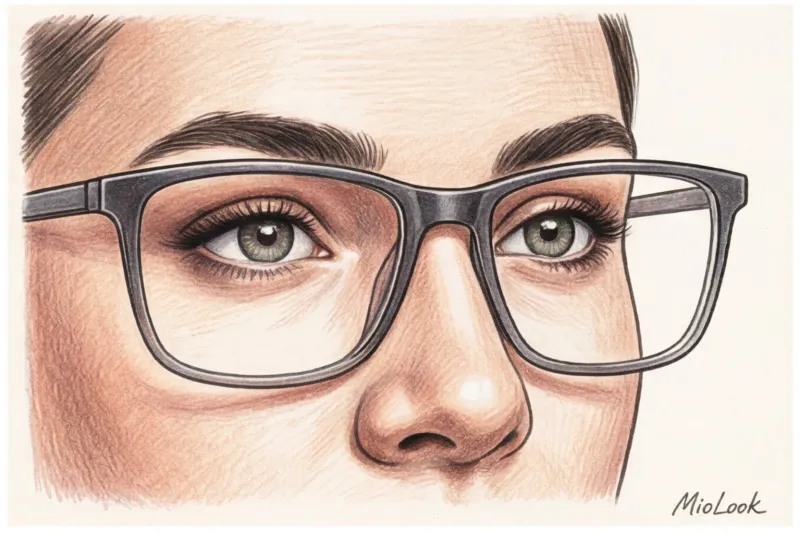
Breaking stereotypes: glasses for an elongated face don't have to be huge
Massive, oversized frames, especially if the width is incorrect, can simply overwhelm the delicate features of a long face. Blindly following the rule "the bigger, the better" ignores the laws of optical illusion.
"A frame shouldn't hide your face. It should work like an architectural cornice—setting a rhythm and breaking up the monotony of verticality with a well-designed horizontal," one of Mykita's leading engineers noted on the sidelines of Silmo. And I completely agree.
Access to MioLook for €0.99 — one-time payment
A smart AI stylist will select the perfect look based on your individual proportions.
Get access — €0.99 onceGeometry in Action: How Frames Shape Facial Proportions
Behavioral psychology tells us that we only have three seconds to form a first impression. When someone looks at a long face without glasses, their gaze moves vertically from top to bottom. When choosing frames, our goal is to encourage the viewer's gaze to move wider.
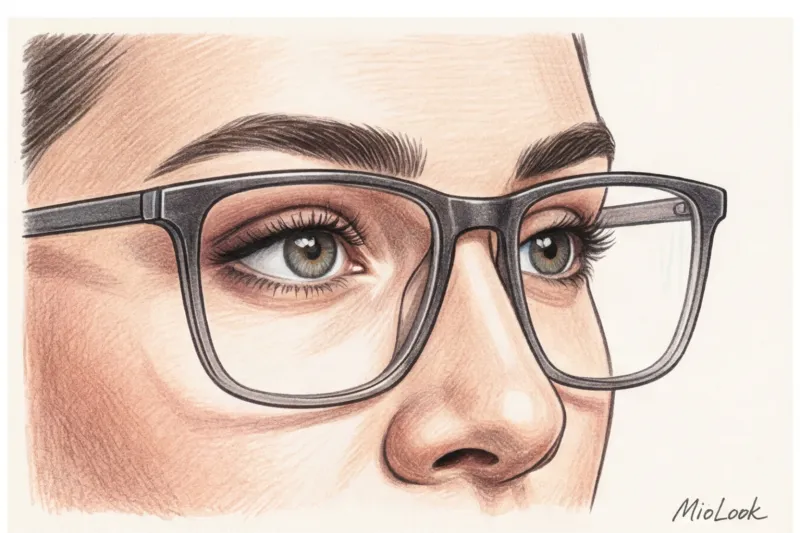
How can this be done technically? Here are the three pillars on which optical balance is built:
- Role of the bridge (bridge of the nose): This is a critical point that many people miss. A high and thin bridge visually lengthens the nose. An elongated face needs low and wide bridge (For example, in the shape of a keyhole). It visually "cuts" the nose, making it more compact and the entire face more harmonious.
- Frame width and the 2mm rule: This is a rule I've put into practice with my clients. The width of the frames should extend beyond your temples by a maximum of 2-3 mm on each side. Anything less makes your face appear wider; anything more makes your eyes appear closer together.
- Emphasis on the outer corners: Any detail on the outer edges of the frame (metal rivets, thicker plastic) acts as a magnet, stretching the face horizontally.
Top frame line and eyebrow architecture
Straight upper line (the so-called flat top ) is a powerful tool. It creates a sharp, contrasting horizontal line. The main rule: the frame should either follow the curve of the brow, positioned slightly below it, or overlap the brow by no more than a third. If there is too much empty space between the top line of the glasses and the brow, the face will appear even longer.
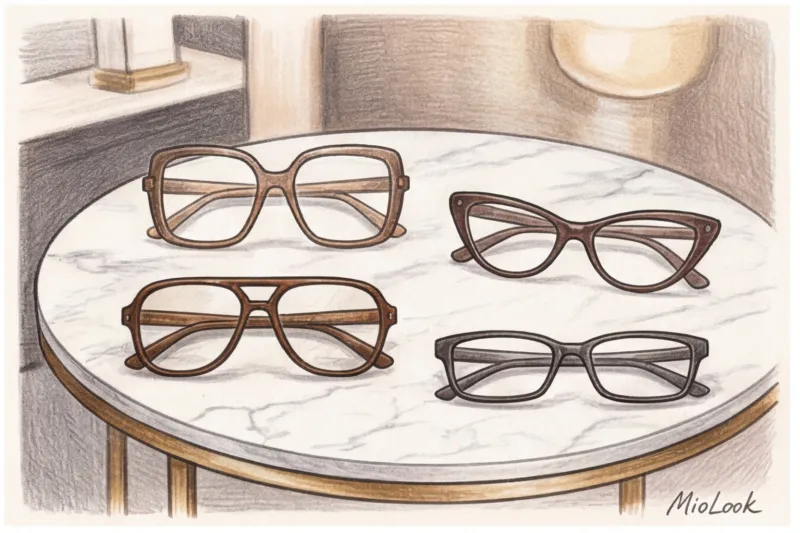
Top 5 Frame Shapes That Perfectly Flatter an Oblong Face in 2024/2025
Let's move from theory to practice. If you are forming expert image or building a strong personal brand , the choice of the shape of glasses will tell more about you than a business card.
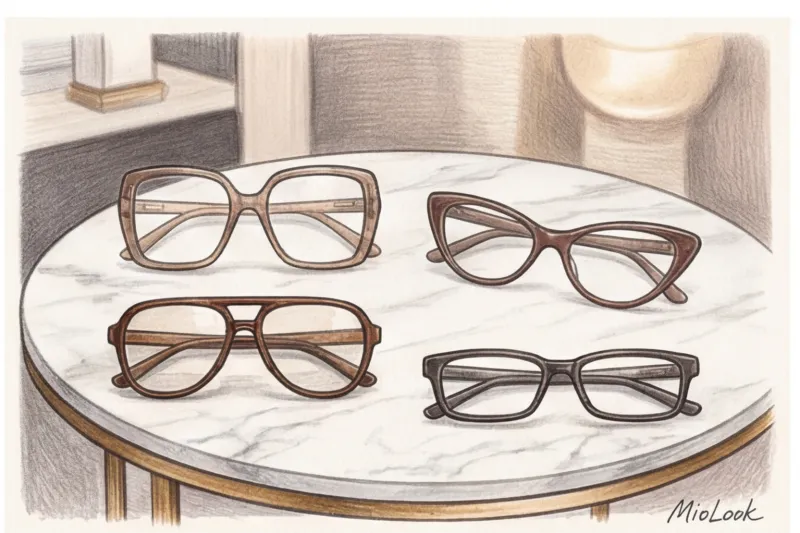
- Oversized squares with soft corners: A 70s style inspired by Celine. Perfect for the "Creator" archetype. They add just the right amount of volume to the cheeks, but thanks to the rounded corners, they don't weigh down the jawline.
- Horizontally elongated "cat-eyes": Important: not pulled up high, but rather pulled out to the sides. They phenomenally draw the eye to the temples.
- Thick Acetate Aviators: Forget thin metallic drops—they'll only accentuate elongation. Thick acetate (especially tortoiseshell) creates the desired heaviness in the center of the face.
- Geometric Polygons (Hexagons): An excellent choice for a business dress code when you need to show structure and character.
Bayonetta Trend: How to Wear Skinny Glasses Without Breaking All the Rules
And now for a counterintuitive insight. For decades, the conventional wisdom was, "A long face should absolutely not wear narrow rectangular glasses; they'll make it look even longer." But the latest Miu Miu and Prada shows have shattered this myth.
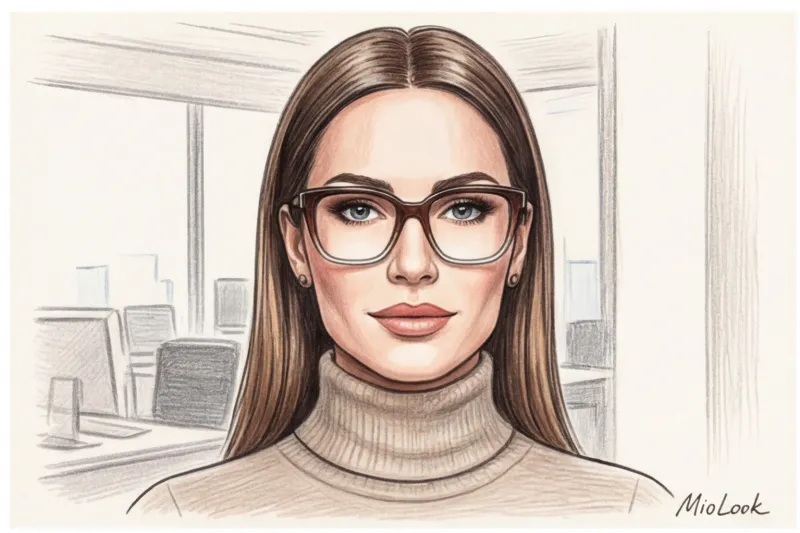
Narrow glasses in the librarian core style (Bayonetta trend) can Look stunning on a long face. Why? Because the contrasting, accentuated horizontal line of a narrow frame visually works like a wide belt on a long coat—it sharply "cuts" the vertical line in half.
But there is a strict limitation (when it DOES NOT work): The plastic should be thick enough, and the bridge wide. Thin metal wire in a narrow shape will really throw off the proportions. Look for high-quality acetate. Even in the mid-price range (€100–€180), you can find excellent options.
Your perfect look starts here
Join thousands of users who look flawless every day with MioLook. See how your new frames will complement your wardrobe.
Get access — €0.99 onceColor and texture: subtle tools for optical balance
If shape is the foundation, then color is the facade. When choosing glasses, stylists often use coloristic tricks (by the way, if you don't know your palette yet, check out our article about 12 color types of appearance ).
- Ombre effect (gradient): My favorite technique: frames that are dark on top and flow smoothly into the sheer bottom. The dark top creates a strong horizontal line along the eye line, while the sheer bottom literally melts into the skin, drawing attention away from the length of the chin.
- Color-blocking and accent temples: Bright temples or contrasting fastenings make the person you're talking to focus on the width of your face rather than its length.
- Plastic thickness: An elongated face, especially one with prominent features, requires visual weight. Thin metal would simply disappear against such a background. Thick acetate adds density and structure to the face.
Stylist's Checklist: Testing Glasses for Long Faces Before Buying
Last month, a client named Anna, a top manager at a fintech company, contacted me. She'd spent weeks ordering dozens of frames online, and they all "looked weird." We went to the optician and applied my basic checklist, saving a ton of time. Save it for your next shopping trip:
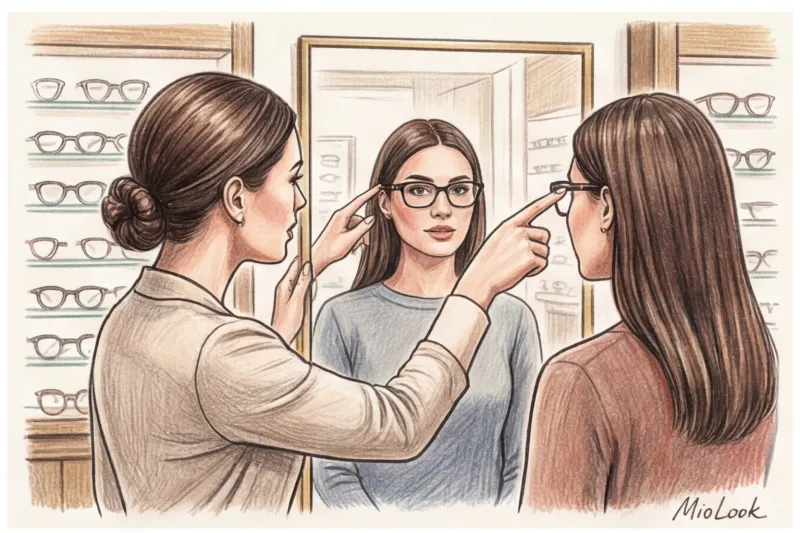
- Smile test: Put on your glasses and smile broadly. If the apples of your cheeks lift the bottom edge of the frames and the glasses bounce, they're not for you. For long faces, frames that are too deep are often recommended, which don't pass this test.
- Pupil position: Your pupil should be exactly centered horizontally across the lens and in the upper third vertically. If your eyes are misaligned toward the bridge of your nose (a condition called strabismus), the frame is too big across the bridge.
- Temple Width: The temples should run parallel to each other from the frame to the ears. If they press into the temples, widening into a V shape, the frames are too small and will visually narrow your face even more, emphasizing its length.
Summary: Frame as a personal PR manager
The right pair of glasses can do more for your image than a perfect suit or an expensive bag. They provide the focal point for eye contact.
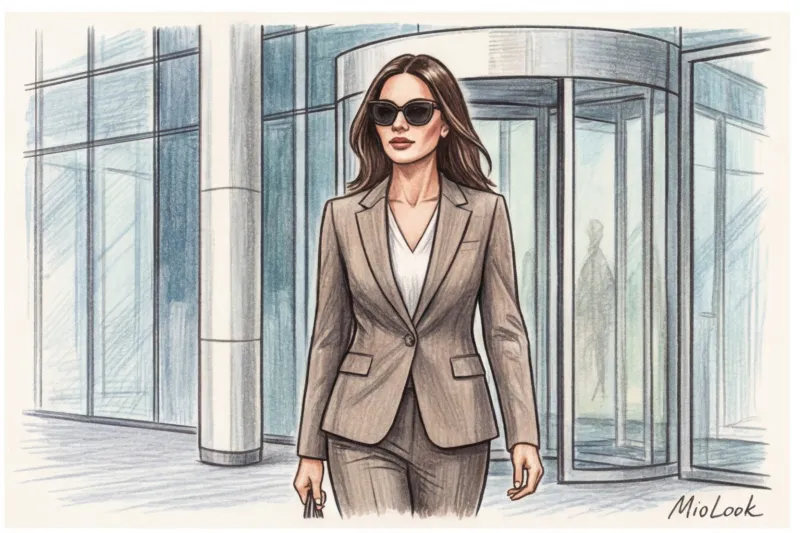
An elongated face is a beautiful base. Stop trying to "hide" it behind featureless round glasses. Use strong horizontals, experiment with thick acetate, try trendy narrow Bayonetta frames to "cut" the vertical. Treat your lens selection like an architectural project—and the results will amaze you.
Ready to get started?
Try the MioLook free plan—no commitments required. Create your virtual eyewear collection and capsule wardrobe in one click.
Get access — €0.99 once