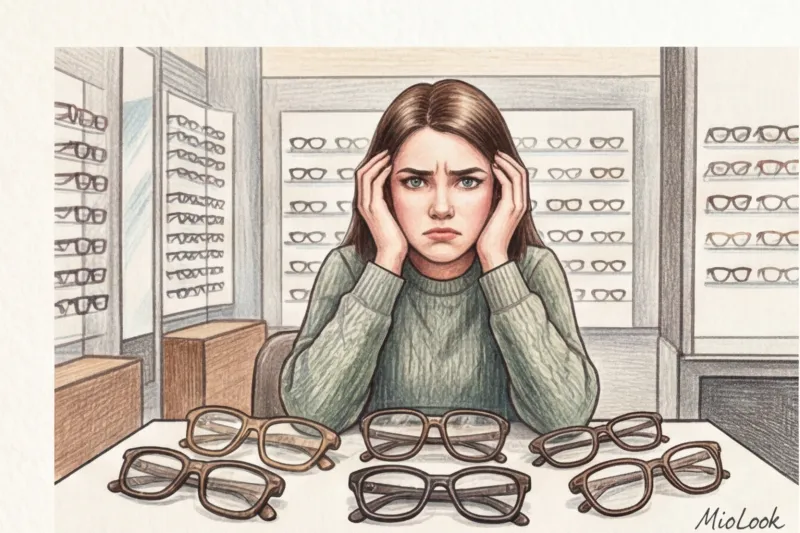
Have you ever noticed that after trying on glasses at the optician, you often feel ten years older? This is especially true if you have a heart-shaped face—with a broad forehead, prominent cheekbones, and a pointed, graceful chin. For decades, fashion magazines have taught us to perceive this aristocratic architecture as a "geometric error" that needs to be urgently camouflaged. We've covered the evolution of these rules in more detail in our a complete guide to choosing glasses for your face shape.
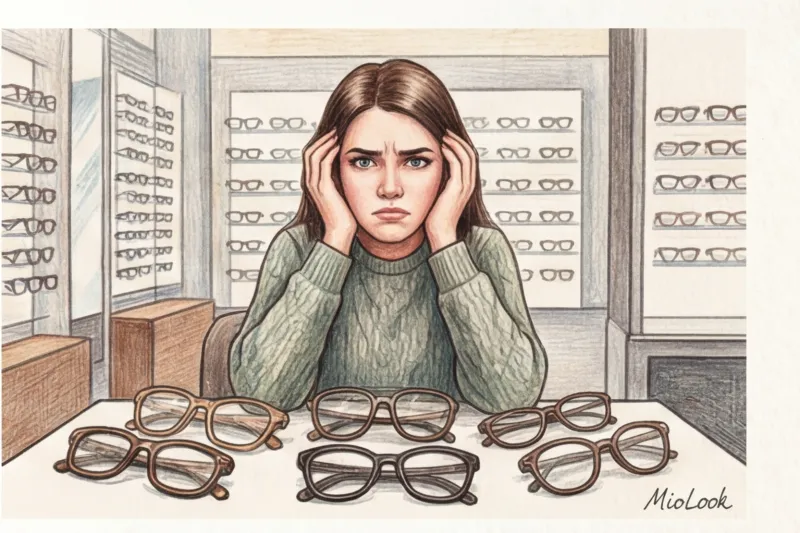
Outdated guidelines advised one thing: choose frames with a heavy bottom (like classic butterfly frames) to artificially "weight" your chin. Do you know what this leads to in practice? It leads to buying bulky glasses that visually pull your face down, create a heavy silhouette, and add years to your appearance. I suggest you forget this dusty math. Properly chosen heart-shaped glasses should make your pointed chin an elegant feature, not a disadvantage to disguise.
The Anatomy of a "Heart": Why the Old Rules for Choosing Eyeglasses No Longer Work
Let's look at the facts. According to a major report by the WGSN trend bureau (2024), optical fashion has finally shifted from "corrective" shapes to accent ones. This means we're no longer trying to reshape our faces with glasses—we're emphasizing their natural dynamics.
A heart-shaped face has stunning sculpting. The widest part is at or just below the temples, then tapers gently but firmly toward the chin. When you follow the old 2000s rule and wear glasses with a massive bottom edge, you disrupt this natural balance. Up to 90% of the time, the person you're talking to is looking at your "portrait triangle" (eyes, nose, lips). The heavy bottom of the frame literally obscures this area.
"Trying to widen a narrow chin with massive glasses is like wearing a full skirt just because you have narrow hips, ignoring the fact that the style doesn't suit you at all. It's an outdated approach to camouflage."
Last month, my client Elena came to me for a consultation. At a prestigious optician's, the consultant practically pushed boring rimless glasses on her, arguing that "she shouldn't draw attention to her broad forehead." In these invisible glasses, Elena looked dull and self-conscious. As soon as we swapped them for striking champagne-colored translucent acetate frames (costing around €120), her high cheekbones instantly became a plus, and her gaze gained depth.
Heart-Shaped Glasses: 4 Modern Shapes That Work for You
European mass-market and mid-range brands (like COS, &Other Stories, and specialized brands like Ace & Tate) offer excellent, trendy silhouettes in the €90–€150 range. The key to achieving a heart-shaped frame is the correct arch design and a lightweight bottom.

Soft cat eye: a lifting effect without the aggressiveness
Forget those sharp, aggressive retro glasses from the 1950s that make you look like a cartoon secretary. Modern cat-eye — is a smooth, rounded line with the corners just slightly upward. This shape works brilliantly with a heart-shaped face:
- Raised outer corners draw the eye away from the width of the forehead and towards the temples, creating a natural lifting effect.
- They follow the natural line of the cheekbones without cutting them in half.
Fair Limit: This tip doesn't work if you have very straight, low-set eyebrows. The cat-eye frame will clash with the horizontal line of your brows, creating the effect of a perpetually surprised or frowning face. In this case, move on to the next shape.

Ovals and Panto: Intelligent Retro
The panto shape (from pantoscopic, meaning providing a wide field of view) has a straighter top line and a rounded bottom. It's the foundation of intelligent smart casual. If you're collecting Date look for a 30-year-old woman and you want to look relaxed, but with dignity - panto will be the perfect accessory.
For a heart-shaped face, oval and panto shapes are great because their width usually matches the width of the face, and their soft bottom doesn't clash with a pointed chin. Choose warm-toned metals (matte gold, bronze) or thin plastic.
Translucent acetate: volume without visual weight
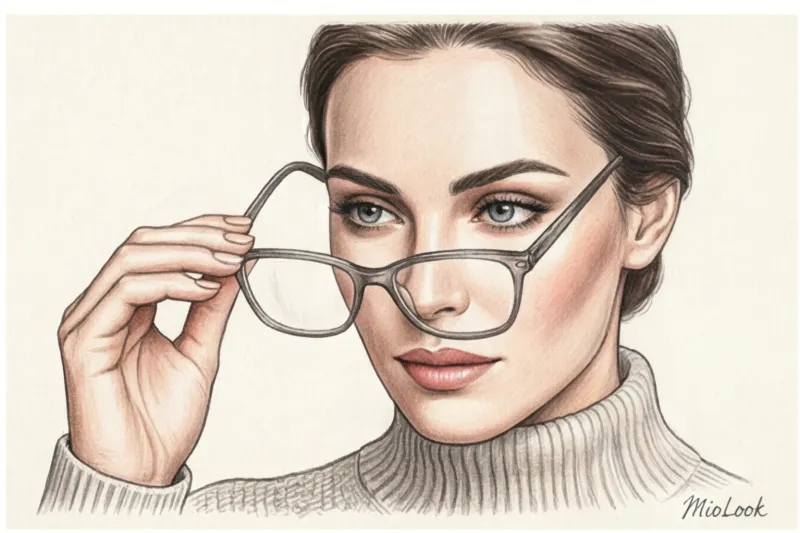
This is my favorite styling hack. The material is often more important than the shape itself. Girls with heart-shaped faces are often wary of large, trendy frames, thinking they'll "swallow up" the narrow lower part of their face. The solution is colored, translucent acetate.
Shades of ice gray, caramel, champagne, and dusty rose allow light to pass through. These frames give you the fashionable volume and status you need, but blend seamlessly with your skin without creating harsh edges. They're the perfect choice if you need versatile glasses that will complement both a formal suit and a casual look. comfortable clothes for home when you work remotely.
Your perfect look starts here
Join thousands of users who look flawless every day with MioLook. Our smart AI stylist will help you find the perfect pair of glasses for your wardrobe.
Get access — €0.99 onceDanger Zones: Which Frames Can Throw You Out of Balance (and How to Avoid Them)
Even the trendiest glasses can work against you if they clash with your facial geometry. Let's explore the top anti-hits for the heart-shaped face.
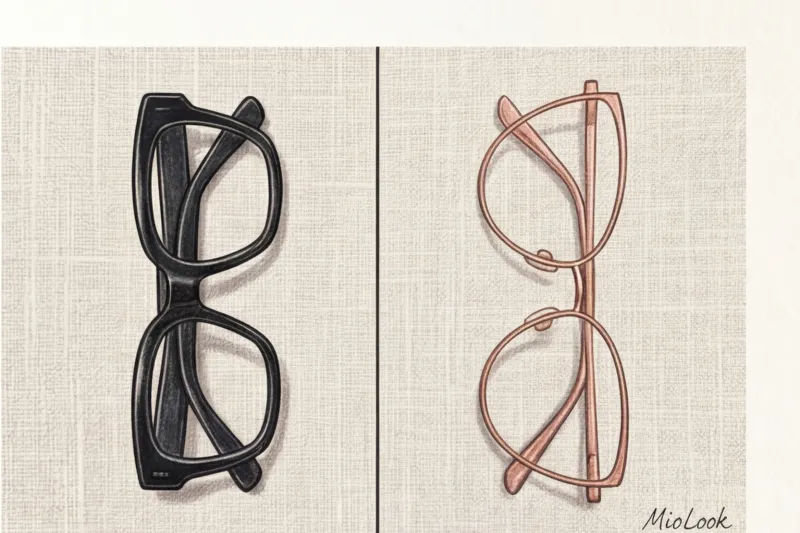
Heavy rectangles. A wide forehead + a narrow chin + chunky black rectangular frames = the Terminator effect. You get a harsh horizontal line that cuts off the top of your face from the bottom. If you're going for a meeting and have carefully considered What to wear on a first date , such a frame will kill all the romance and lightness of the image, adding unnecessary severity to the face.
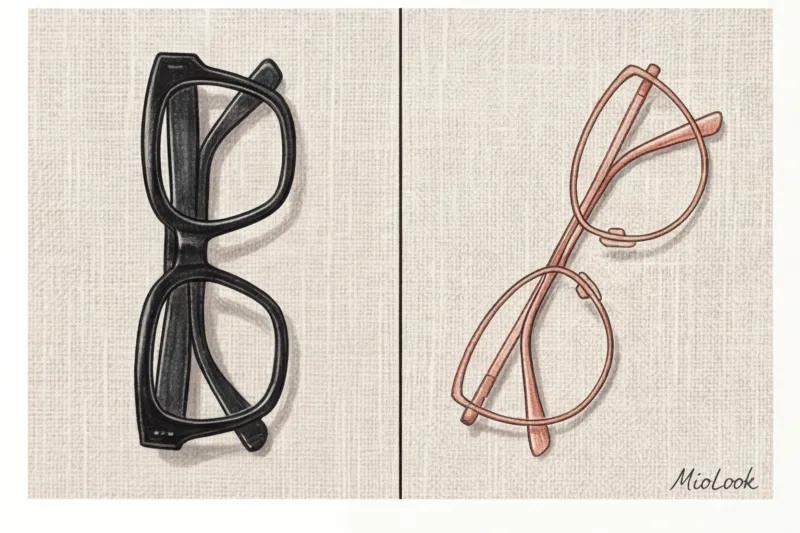
Oversized aviators. The physics of fit are merciless here. Classic teardrop-shaped glasses have an elongated bottom. On a heart-shaped face with high cheekbones, these droplets will inevitably settle onto the cheeks. The moment you smile, the glasses will bounce up, leaving marks on your foundation. Furthermore, the teardrop shape visually pulls the corners of the eyes and lips downward.
Style hack: If you're a fan of rectangular shapes and don't want to give them up, opt for ultra-thin titanium (there are some amazing lightweight models in the €150-€250 range) or semi-rimless designs, where the bottom is held in place by an invisible wire.
Optical Illusions: Secrets of the Nose Bridge and Temples
Glasses are microarchitecture. And the devil is always in the details of the fit, especially around the bridge and temples. Professional optician standards do not tolerate imprecision.
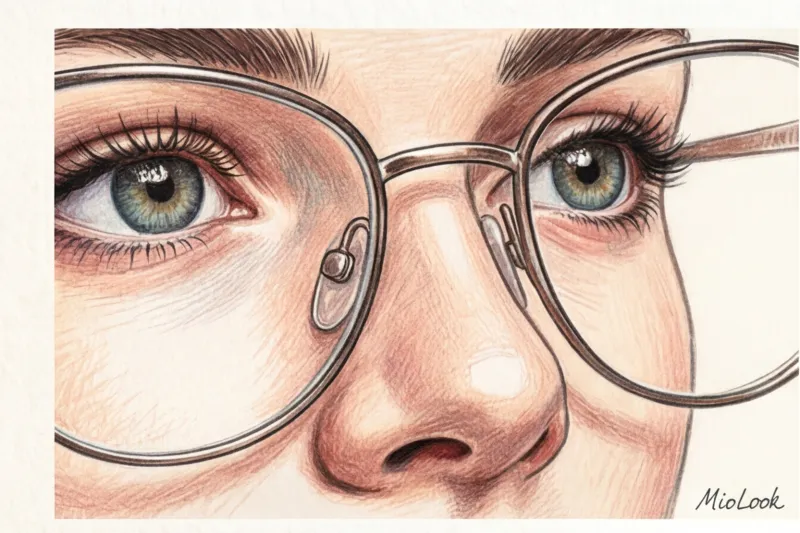
The width of your bridge dramatically changes the perception of your face. If you have close-set eyes (common with a heart shape), choose frames with a clear bridge or a light bridge. Conversely, a dark, accentuated bridge visually draws your eyes closer together.
The position of the bridge also matters:
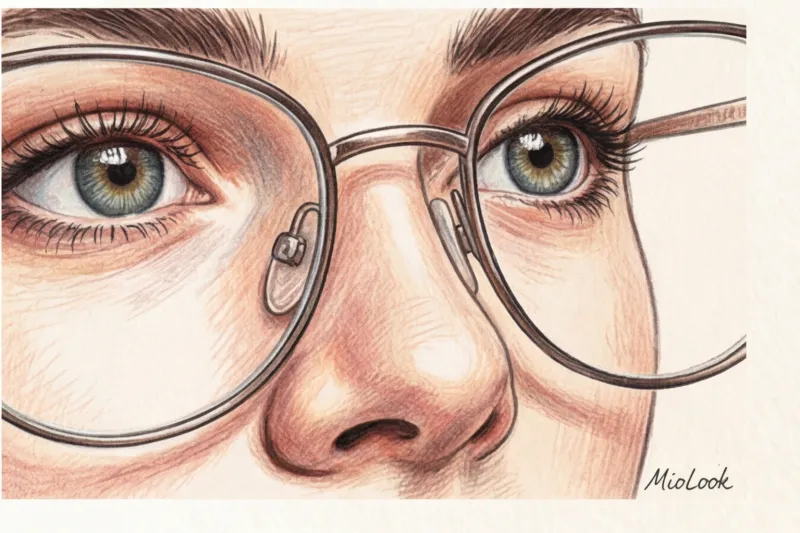
- High Bridge (at the level of the top line of the frame) visually lengthens the nose.
- Low bridge (keyhole shape) "shortens" the nose and draws attention to the center of the face, distracting from the wide forehead.
Pay special attention to the temples. Heart-shaped faces should definitely avoid glasses with heavy embellishments, logos, or rhinestones on the temples. Your face is already at its widest in this area. An additional 5-7 millimeters on each side will make the top of your head appear disproportionately large compared to your narrow chin.
Access to MioLook for €0.99 — one-time payment
Have you put together your wardrobe but aren't sure which accessories will work? Start creating the perfect look with the help of artificial intelligence.
Get access — €0.99 onceA stylist's checklist: how to try on glasses at an optician's
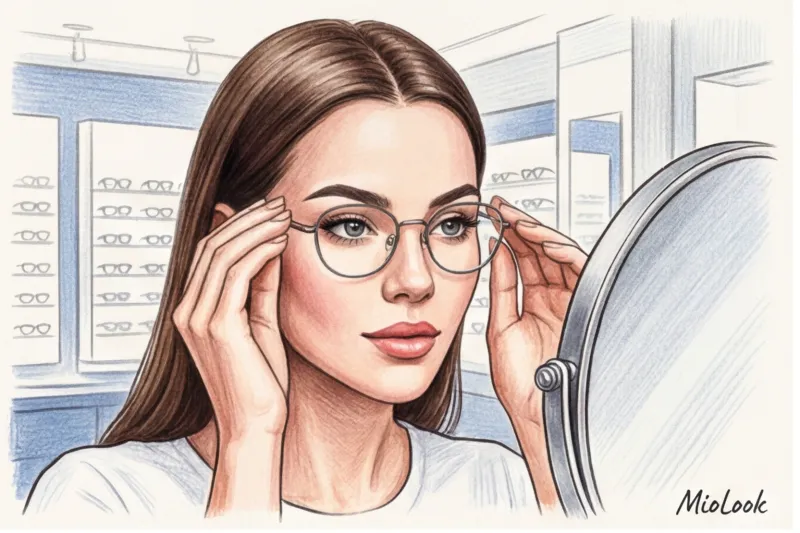
Theory is great, but we all get lost in front of the mirror at the store sometimes. Save this practical checklist for your next glasses purchase. Over 12 years of working as a stylist, I've developed these rules through experience with hundreds of clients.
1. The 3 millimeter rule. The frames shouldn't extend beyond the widest part of your face (usually your temples or cheekbones) by more than 2-3 millimeters on each side. If they're wider, you look like a child wearing mommy's glasses. If they're narrower, your face appears unnaturally wide.
2. Eyebrow line. The top arch of the frame should follow the curve of your eyebrows, sitting just below them or right on the line. The frame should never cross the middle of your eyebrow or completely obscure it, creating a "double brow."
3. Smile test. Put on your glasses and smile broadly in the mirror. If the frames bounce on your cheekbones, put them back on the shelf. They're not the right fit and will irritate you every day.
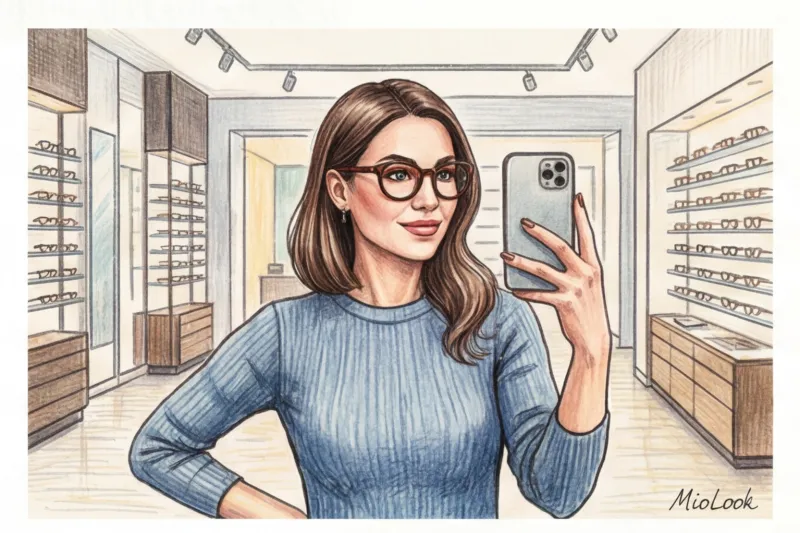
4. Video test. This is my top insider tip. I always ask my clients to film themselves during fittings. In a static mirror, we instinctively adopt a "working" pose, freeze, and hold our breath. Turn on the front camera, turn your head, say a few words, smile. You'll immediately see whether the glasses are slipping down your nose or whether they make your face look gloomy in motion.
Choosing glasses for a heart-shaped face isn't a geometry lesson where you have to compensate for wideness with narrowness. It's an opportunity to highlight your high cheekbones and chiseled chin. Choose lightweight acetate, soft panto lines, or a graceful cat-eye. And to see how your new look will complement your favorite looks, upload a couple of your photos to MioLook — a smart algorithm will suggest the best color and style combinations with a new accessory.