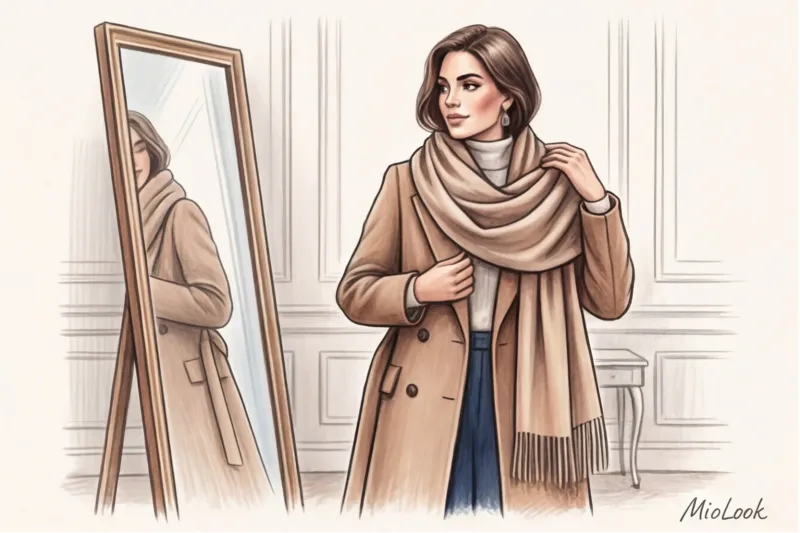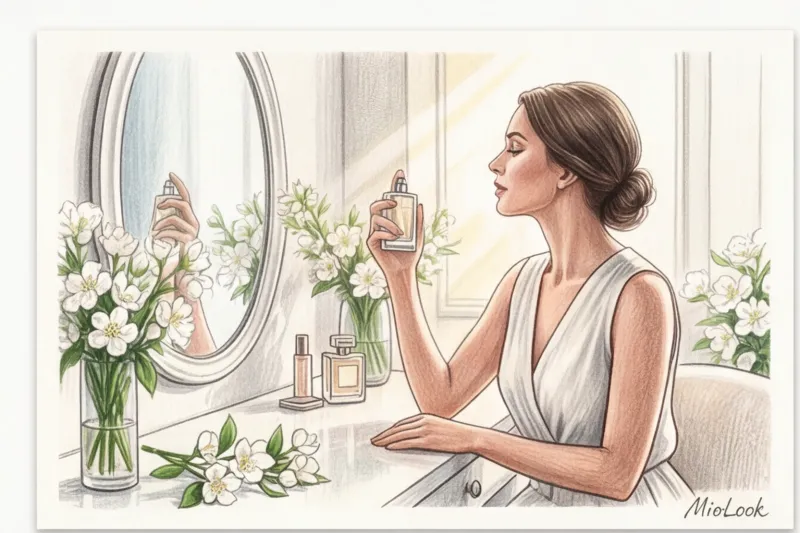
You know what I hear most often from clients when we're finishing off a look with perfume? "Olena, not citrus, I don't want to smell like air freshener." And then we spritz a complex blend of Calabrian bergamot and smoky vetiver on her wrist, and magic happens. The woman straightens her shoulders, takes a deep breath, and realizes: freshness can be incredibly expensive and prestigious.
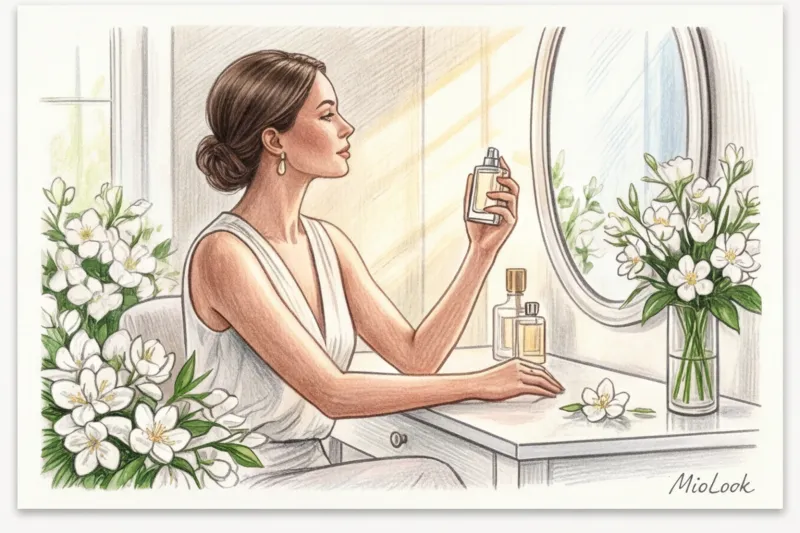
Over 14 years of working as a stylist, I've developed an ironclad rule: a look doesn't end with shoes and a bag. Your sillage is an invisible accessory that enters the room a second before you and remains there long after you leave. We discussed fragrance classification in more detail in our a complete guide to perfume families , but today I want to talk about the most underrated category, in my opinion.
We'll explore the physics of light notes, dispel accusations of their instability, and learn how to match perfume to fabric textures as expertly as you match shoes to a pantsuit.
The Anatomy of Freshness: Why Are We So Drawn to Lighter Scents?
If you look at the famous "Fragrance Wheel" by Michael Edwards (the British perfume expert who systematized scents back in 1992), fresh notes occupy a huge section. These include citrus, green, aquatic, and fruity compositions. But why are they so popular?
The psychology of perception works flawlessly: evolutionarily, our brain associates the scents of greenery, clean water, and citrus with safety, youth, energy, and purity. In the context of a business attire, this translates to professionalism and composure.
"In my experience, nine out of 10 women who prefer architectural minimalism in clothing are intuitively drawn to fresh perfumes. Complex oriental trails clash with simplistic tailoring, while austere citrus or greenery complements it."
According to a 2024 report by the analytical agency WGSN, the global trend toward "quiet luxury" (old money) increased sales of green and mineral fragrances by 34%. Today, fresh perfume plays the role of the perfect basic white T-shirt made of thick cotton—it's appropriate anywhere, refreshes the face, and brings together an entire look.
Fresh citrus perfumes for women: from banal lemon to prestigious bergamot
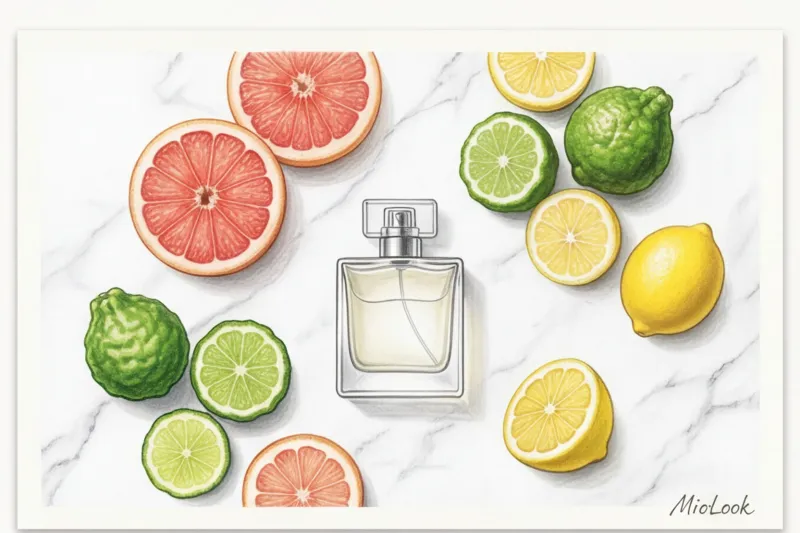
When girls search fresh citrus perfume for women , they're often afraid of encountering a flat, monotonous lemon drop scent. The difference between mass-market and a good niche product lies in volume and the presence of bitterness.
In premium perfumes, the star notes aren't sweet mandarins, but tart yuzu, pungent grapefruit, neroli (bitter orange blossom), and, of course, bergamot. Bergamot is generally considered the most expensive citrus. It doesn't smell edible. It has a complex, slightly woody, austere profile.
One of my clients, an IT director, had trouble finding the right mood for important interviews. She wore a heavy, enveloping vanilla scent that clashed with her formal Massimo Dutti jackets and her job title. When we switched to a more austere grapefruit-vetiver scent, she confessed, "I feel like I'm wearing invisible armor. My head works more clearly."
The Myth of Resilience: Why Citrus Fruits Are the First to Fade
The most common complaint about citrus perfumes is that they fade within an hour. Yes, that's true. And it's not the manufacturer's fault, but the laws of physics.
Citrus essential oil molecules have very low molecular weights and are incredibly volatile. According to IFRA (International Fragrance Association) standards, natural top notes of lemon or bergamot can physically last 15 to 45 minutes on warm skin. Then, the heart and base notes (woods, musk, and flowers) come into play.
If you're promised a "24-hour long-lasting lemon scent," you're looking at a harsh synthetic that will 99% likely deliver that glass cleaner note. The citrus's lack of longevity is a sign of its noble, natural origin. Simply carry a 5 ml atomizer and reapply the scent every four hours. It's an elegant ritual, not a hassle.
Access to MioLook for €0.99 — one-time payment
A smart AI stylist will create the perfect look and suggest how to integrate your perfume into your capsule wardrobe.
Get access — €0.99 onceGreen scents: the smell of mown grass and crisp shirts

If citrus is energy, then green notes are calm and distant. This group includes notes of galbanum, crushed fig leaf, tea tree, mint, basil, and tomato tops.
Stylistically, green fragrances are the best companions for smart casual and natural textures. They pair phenomenally beautifully with:
- Linen suits (especially undyed, natural shades).
- Crisp white poplin shirts.
- Fine cashmere in spring.
Incidentally, about 60% of strict corporate dress codes tacitly endorse green scents. In an open office space, they don't intrude on colleagues' personal boundaries, creating an aura of "someone who just got out of the shower."
Aquatica: What the sea smells like in a bottle and who it suits
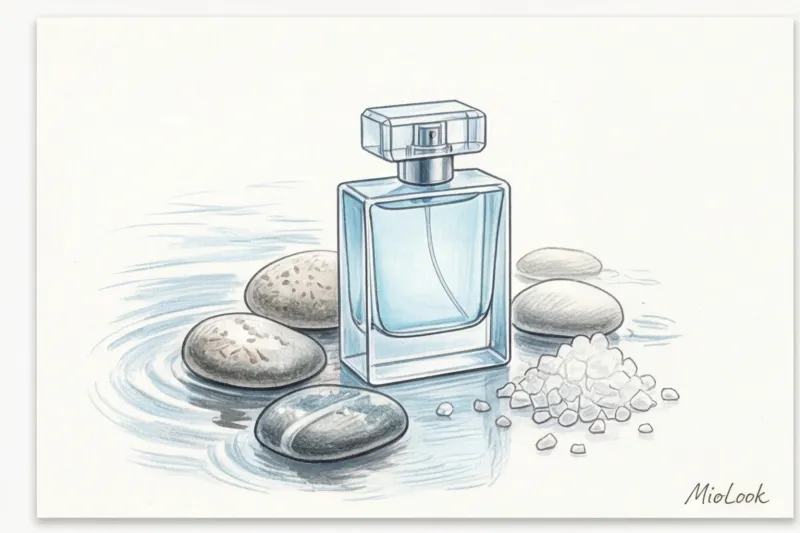
Forget the aquatic scents of the '90s that smelled of chemical melon and ozone. Modern marine fragrances are all about minerality. They smell of wet pebbles, salt on tanned skin, washed-up driftwood, and the cold northern sea.
This effect is created using modern synthetic molecules such as calone and ambroxan. Mineral aquatics perfectly complement avant-garde style, deconstruction (in the spirit of COS or Maison Margiela), and monochrome looks.
But there is an important limitation here (when it DOESN'T work): If you have so-called "cool" skin (you often feel cold, have pale skin, and low blood pressure), classic aquatic scents might work best with brine or cucumber lotion. Marine notes need body heat to evaporate the salt and leave a beautiful freshness. Green teas and citruses work best on cool skin.
Perfume Wardrobe: How to Pair Fresh Perfumes with Your Outfits
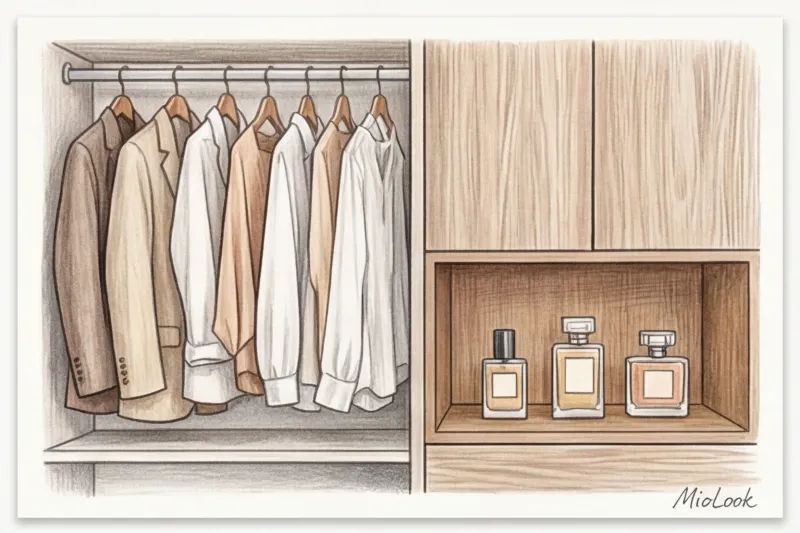
The perfume must match the texture of the fabric. I use two methods in my work: the principle of similarity and the principle of contrast.
Similarity principle:
Flowing fabrics (silk, chiffon, viscose) call for aquatic tones or light green tea. Crisp tailoring (suited wool, heavy cotton from 180 g/m²) perfectly holds the sharp, dry citrus. Textured linen with its rough edges blends perfectly with notes of fig leaf or basil.
Contrast method:
Try layering a crisp, icy grapefruit over a chunky, heavy alpaca knit sweater. This play on contrast (heavy texture and weightless scent) makes the look incredibly complex and stylish.
In the appendix MioLook We often recommend that clients associate a specific bottle with a specific clothing capsule. You simply photograph your perfume and add it to your completed outfits. This creates a powerful psychological anchor: putting on this outfit and applying this scent automatically puts you in the desired work or relaxation state.
Layering Instructions for Extended Wear
If you want your fresh scent to last longer, use these tricks from stylists and perfumers:
- Bath line: Use fragrance-free shower gel and body lotion, or from the same line as your perfume. The scent lasts twice as long on your skin's moisturized lipid mantle.
- Textile anchor: Apply perfume not only to your skin, but also to the inner seams of clothing made from natural fabrics (cotton, wool). Synthetics (polyester) distort odors, while natural fibers retain them for days.
- Molecular base: Apply a pure Iso E Super molecule (such as Escentric Molecules 01) to your skin, wait a couple of minutes, and then spray your favorite citrus scent on top. The molecule will act as a primer, "sticking" the volatile notes to your skin.
Your perfect look starts here
Join thousands of users who look flawless every day with MioLook, collecting capsules in a couple of clicks.
Get access — €0.99 onceChecklist: How to Test and Buy Fresh Fragrances
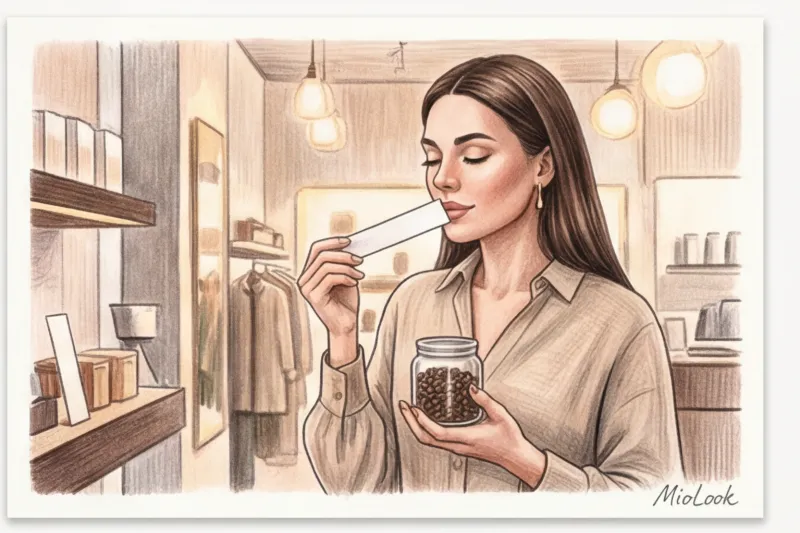
To avoid buying another bottle that will gather dust on the shelf, follow three simple rules in the store:
1. No citrus blotters. The paper is dead. It has no temperature or scent of its own. Citrus fruits on paper always smell sharper and more sour than in real life. Test only on your wrist.
2. The 15-minute rule. When you spray a fresh fragrance, for the first 2-3 minutes you'll smell the alcohol and the aggressive release of essential oils. This is marketing designed to entice impulse purchases. Leave the store and take a walk for 15 minutes. Only once the scent has settled in and blended with your skin's chemistry should you make a decision.
3. Seasonality in reverse. It's commonly believed that fresh and citrusy scents are exclusively for summer. This is a colossal misconception! Try applying sharp bergamot or icy mint in -15°C weather. In the cold air, these notes become crystal clear and crisp, like snow beneath your feet. Meanwhile, in the summer, in 30°C heat, they can quickly become cloudy from sweat.
Conclusion: Your Invisible Accessory

Fresh scents aren't boring. They're not an attempt to "smell like nothing" or hide in a crowd. On the contrary, they're a sign of self-confidence. By choosing complex green tea, tart grapefruit, or mineral salt, you convey to the world your absolute self-sufficiency.
Review your fragrance wardrobe today. Dig out that forgotten summer bottle of citrus and try wearing it to the office tomorrow with a crisp white shirt or an oversized sweater. Allow your style to become voluminous—after all, a truly luxurious look always consists of a unity between what we see and what we breathe in.