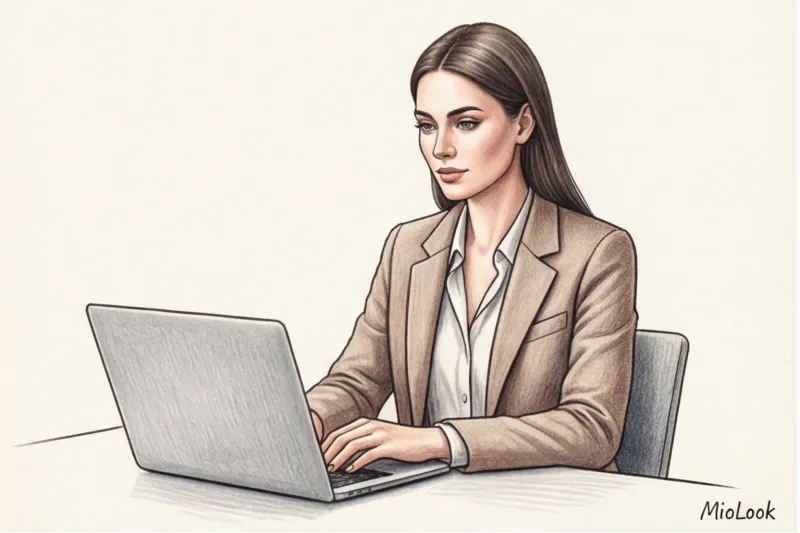
I vividly remember the moment when the "jacket on top, sweatpants on bottom" illusion failed miserably for one of my clients. During important online negotiations with investors, she had to suddenly stop to grab her charger, and her stretched-out Snoopy pajama pants were treacherously captured in the webcam's frame. She eventually got the contract, but the sting of her own unprofessionalism haunted her for a long time.
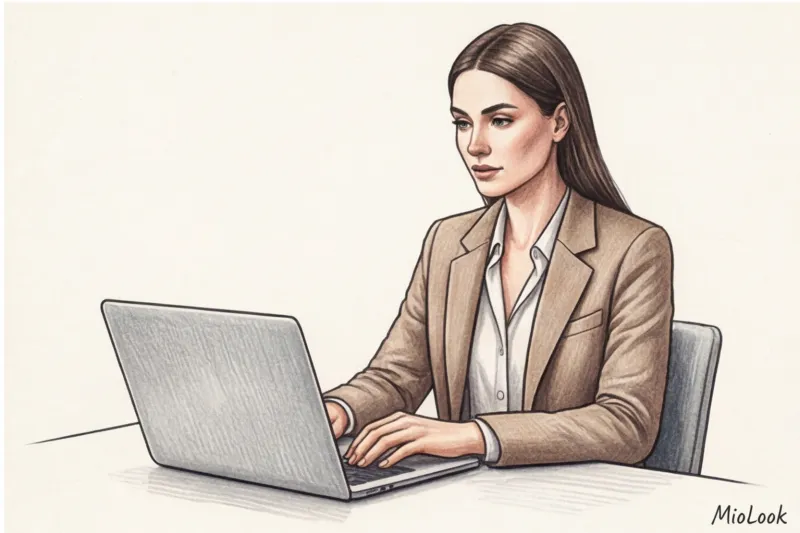
But even if you exclude such disasters, shapeless loungewear steals your money every day without you noticing. Ideal capsule wardrobe for a freelancer It's not built on bland oversized hoodies, but on rigorous mathematics and an understanding of how fabrics impact performance. We've covered the basic principles of creating such a foundation in more detail in our the complete guide to the hybrid capsule.
Let's forget the "just wear what's comfortable" advice and put together a work wardrobe based on the strict rules of style and neuroscience.
The End of Pajama Time: Why a Freelancer's Capsule Wardrobe Needs to Change
Clothing isn't just fabric that covers the body. It's a tool for switching cognitive registers. In 2012, Northwestern University researchers Hajo Adam and Adam Galinsky coined the term Enclothed Cognition (clothed cognition). Their experiments proved that clothing physically alters our cognitive abilities and focus of attention.
I had a revealing case in my practice. A graphic designer named Anna came to me complaining of burnout and impostor syndrome. During meetings, she always wore soft, shapeless T-shirts. We replaced her "relaxed" top with a structured, asymmetrical, heavy-knit top from COS. The result? Within a month, Anna had increased her bill by half. She admitted that the structured clothes made her feel physically "armored," her voice sounded more confident, and she no longer hesitated when asking prices.
"The concept of Workleisure (work + leisure) isn't a compromise between the office and the couch. It's clothing that feels like home wear, but is perceived by others as a prestigious work uniform."
WGSN's 2024 analysis shows that the workleisure segment is finally replacing traditional loungewear. We no longer divide our lives into "strict office" and "relaxed home"—we need hybrid armor.
Zoom Effect: Portrait Zone Rule
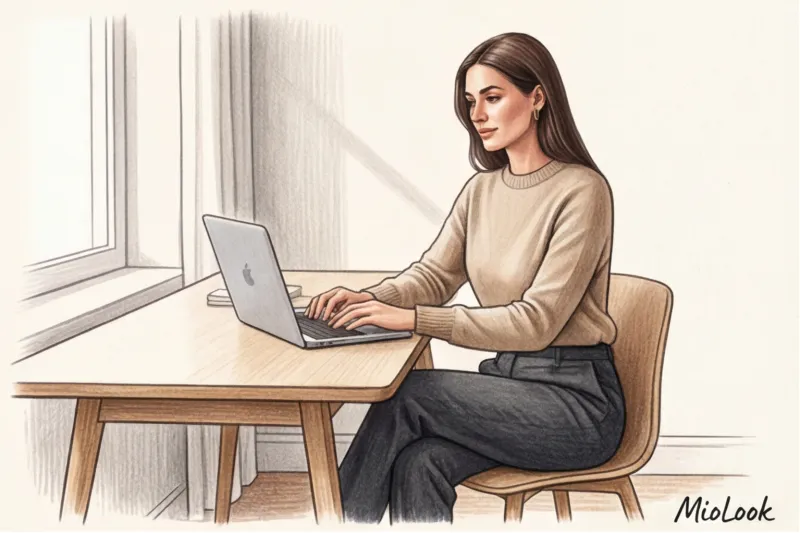
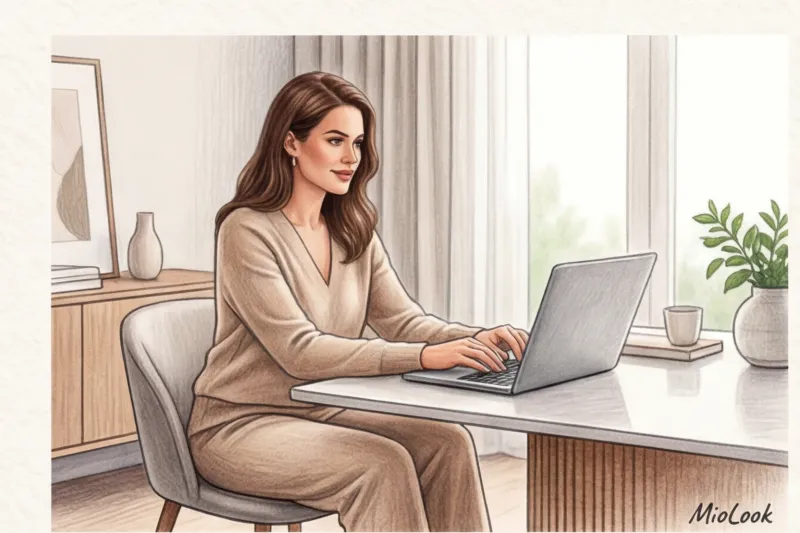
When working remotely, 80% of your interviewer's attention is focused on the area from your collarbone to the top of your head. You may be wearing the perfect palazzo pants, but if you're wearing a soft, shapeless top, the camera will perceive you as someone who just rolled out of bed.
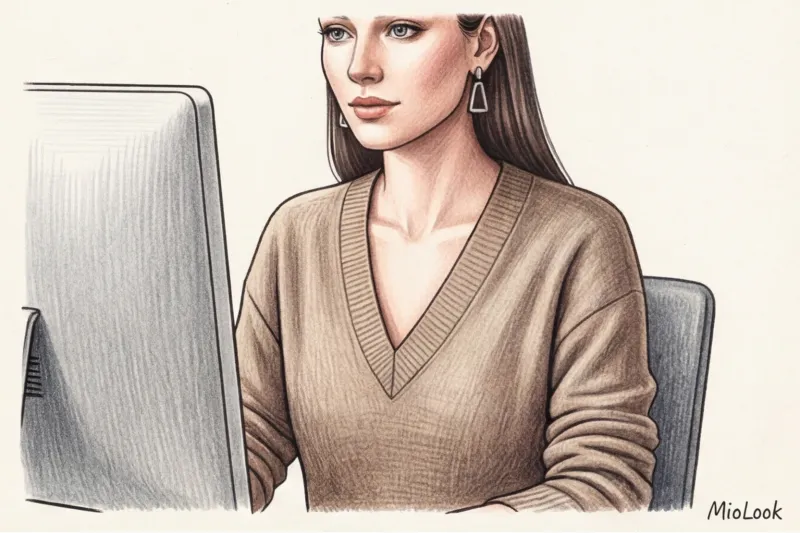
As a stylist who regularly prepares experts for webinars, I've identified three golden rules for the portrait zone on the screen:
- The geometry of the cutout decides everything. A V-neck or a neat polo collar visually elongates the neck and adds a touch of architectural style to even the softest knitwear. A crew neck made of thin fabric always looks like lingerie on camera.
- The light from the monitor eats up the texture. The flat, cool light of a screen makes smooth fabrics (thin silk, cheap viscose) look shiny and cheap. Choose matte textures: ribbed, tight knit, waffle.
- Colors that work for you. Avoid stark white (the camera often overexposes it, turning you into a radiant blur) and fine stripes that create a strobe effect (moiré). The best shades for online makeup are deep emerald, terracotta, sapphire, and rich chocolate—they make the face look rested even without a ring light.
Your perfect wardrobe starts here.
Tired of worrying about what to wear to a meeting every morning? MioLook, the smart AI stylist, will help you digitize your clothes and create the perfect capsule wardrobe for remote work in just a few minutes.
Get access — €0.99 onceHybrid Capsule Mathematics: The 4-3-2 Formula
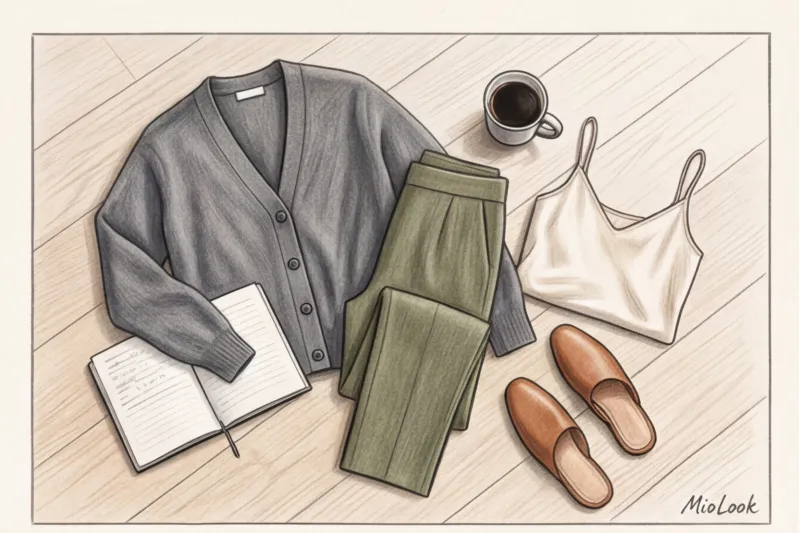
The main problem freelancers face is the endless accumulation of "well, I'll just finish it at home" items. To stop this chaos, assign each item a specific task. I offer my clients a strict 4-3-2 formula: just 9 items that will cover 100% of your needs for a working month.
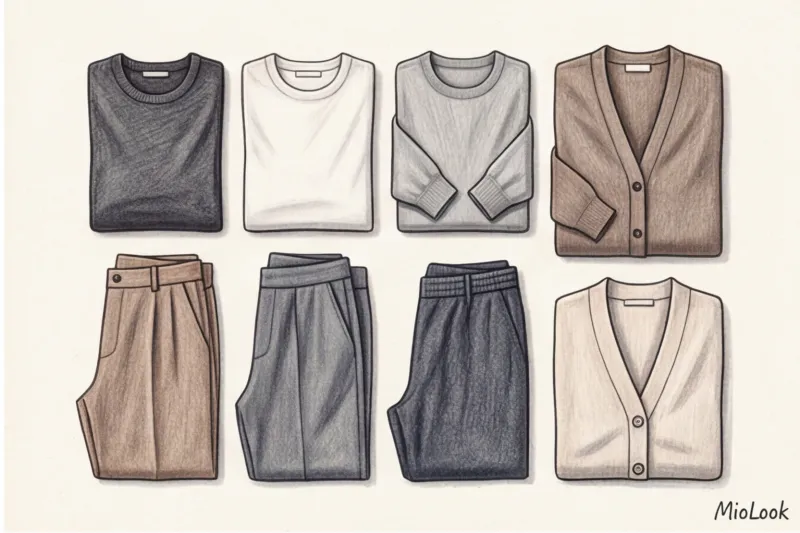
4 tops: structure without rigidity
Your "tops" are your primary investment positions. They wear out first and are most often seen.
- Two thick basic T-shirts. Look for cotton weights between 180 and 220 g/m². They're not see-through, hold the sleeves' shape, and don't cling to the body.
- One long sleeve polo sweater. The perfect compromise between a tailored shirt and a relaxed sweater. The collar sets the tone, while the knitwear provides comfort.
- One top with an interesting texture (ribbed, asymmetrical). For important presentations and zoom meetings with new clients.
3 bottoms: comfort that a courier wouldn't be ashamed of
Let's be honest: brushed fleece joggers are a stylistic nightmare. After just two days of wearing them, they stretch out at the knees, turning you into a teenager on sick leave.
- Trousers made of thick jersey with creases. They stretch like leggings, but the stitched crease gives them a suit-like feel.
- Wide-leg trousers made of thick cotton or flowing viscose blend. By the way, if you have doubts about choosing eco-fabrics, read our analysis about Does Tencel wrinkle and how does it behave when worn?.
- One pair of comfortable straight-leg jeans. Be sure to add 2-3% elastane so that you can sit comfortably in them for 4 hours straight.
2 Second Layers: Armor for Difficult Negotiations
When you need to instantly increase the level of formality, the second layer comes to the rescue.
- Thick knit cardigan. Avoid thin button-downs that hang like dull curtains. A cardigan should hold the shape of the shoulders.
- A loose knit blazer without a rigid lining. Puts on 2 seconds before turning on the camera, feels like a cardigan, looks like a three-piece suit.
Fabrics that deceive the eye: a stylist's secret
The secret to an expensive home wardrobe lies not in the brands, but in the ingredients. The main enemy of a remote worker is deformed elbows and knees from constant sitting.
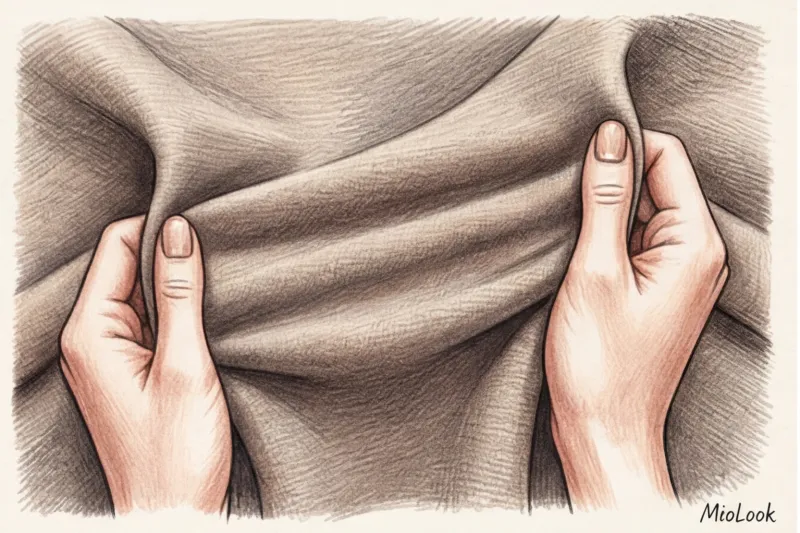
If you want something to last a long time, look for weaving on the tags or in the product descriptions. Ponte (Ponte di Roma) This double-knit fabric holds its shape perfectly, concealing any figure flaws while still being stretchy. It's perfect for lounge pants and jackets.
What's my honest disclaimer? This advice isn't for everyone. If you live in a very hot climate or your apartment gets overheated in the winter, heavy Ponte will feel like a spacesuit. In that case, switch to a 50/50 linen-viscose blend—it breathes, but the viscose prevents the linen from bunching up into hard creases.
What you should absolutely avoid: 100% acrylic (you'll sweat and the item will pill within a week), thin 100% viscose for trousers (it will gather all the wrinkles when you sit down), and pure fleece (it cheapens the look to the level of a country trip).
Where to buy a remote work base (and where to save money)
My clients often ask whether they need to buy expensive brands when working from home. The answer lies in the cost-per-wear metric.
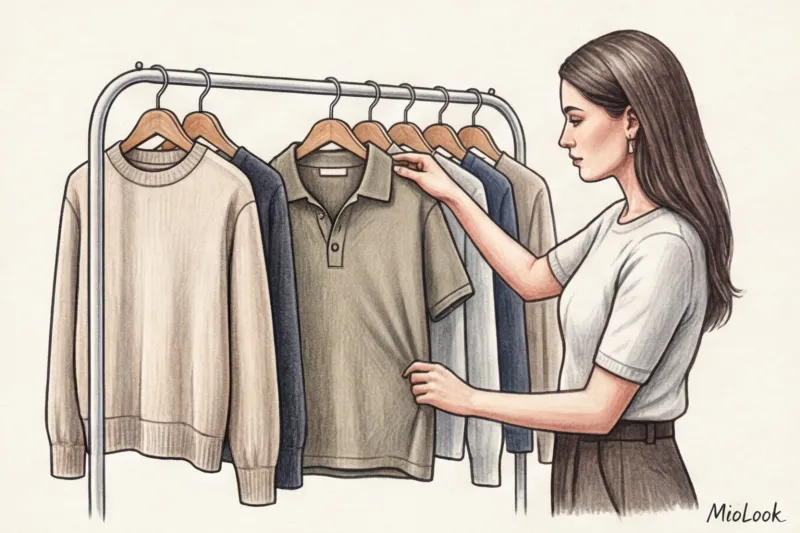
Let's do the math. You could buy three cheap hoodies at a mass market for €30 each. Total: €90. After a month of daily wear, they'll fade and become pilled. Or you could buy one perfect merino wool polo sweater at COS or Massimo Dutti for €90. You'd wear it three times a week for six months (about 70 times). Each wear would cost only ~€1.20, but you'd look like a premium expert.
- Where to look for structure: Massimo Dutti (the best knitted jackets and polos), COS (architectural cut, dense fabrics, asymmetry).
- What you can save on: Basic, heavyweight T-shirts. Zara and H&M have excellent options in their Premium lines (look for 100% heavy cotton). They'll cost €15–25 but will last a long time.
Don't know what to combine your new purchases with?
Upload photos of your items to MioLook. Our algorithm will show you dozens of stylish combinations based on what's already in your closet.
Get access — €0.99 onceRookie Mistake: Why the "Dressy Hoodie" No Longer Works
The IT industry has long cultivated the myth that oversized hoodies are the uniform of the free, wealthy, and successful professional. But what worked for Mark Zuckerberg ten years ago works against you today.
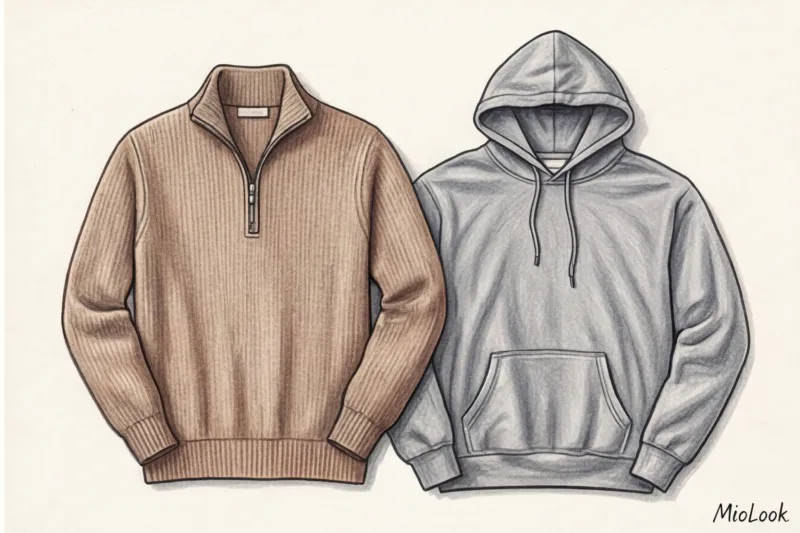
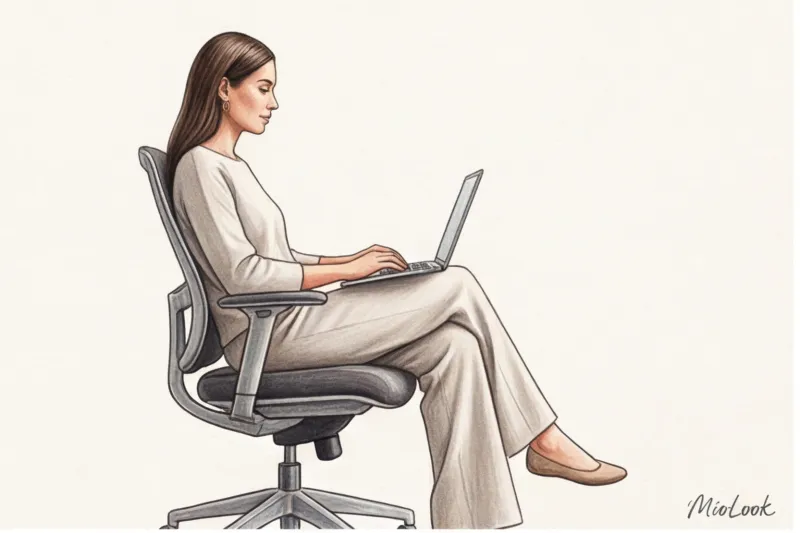
Firstly, the hoodie's geometry is incompatible with sitting in front of a camera. The hood at the back creates a visual "hump," pushing your neck forward and ruining your posture. And the kangaroo pocket on your stomach bunches up into a shapeless lump as soon as you sit down.
Secondly, research shows that overly relaxed clothing reduces productivity. When you're wearing a bulky hoodie that you can curl up in, your brain receives the signal: "We're relaxing." According to my freelance clients, ditching the hoodie during work hours increases concentration by at least 20%.
What to replace it with? Straight-cut sweatshirts without prints with a neat V-shaped stitching under the collar. An even better option are sweaters with a quarter-zip (zip-neck). They provide the same level of warmth, but the zipper creates the necessary vertical line and elongates the silhouette.
Details and accessories: the finishing touch for a status expert
Home accessories can seem absurd. Why wear a watch when the time is always displayed in the lower right corner of your monitor? The answer lies, once again, in psychology.
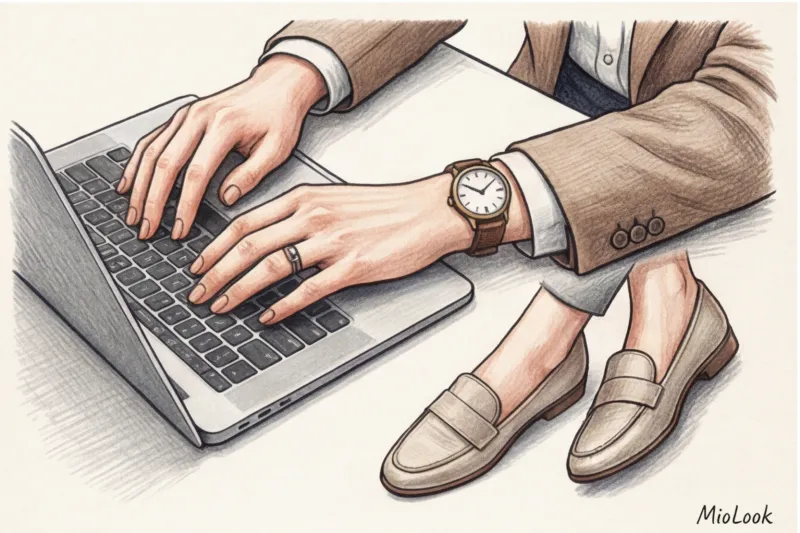
- A watch as an anchor. The physical feeling of the weight of a metal or leather watch on your wrist is a powerful anchor that tells your subconscious, “I’m at work.”
- Decorations in the portrait area. Simple geometric earrings or an accent chain over a basic T-shirt instantly send the message to your interlocutor: “I’ve been preparing for this meeting with you; you’re important to me.”
- The right shoes (my personal life hack). When I first started consulting online, I worked barefoot or in fluffy slippers. Listening back to recordings of my calls, I noticed my voice sounded too soft, almost lulling. As soon as I started wearing leather loafers or structured slip-ons at my desk, my posture changed, and my voice gained confidence and firmness. Shoes physically gather us together.
Checklist: Putting together a freelance wardrobe in a weekend
Stop putting off your style until "someday, when I go to the office." Your wardrobe is your daily business tool. Take these three steps this weekend:
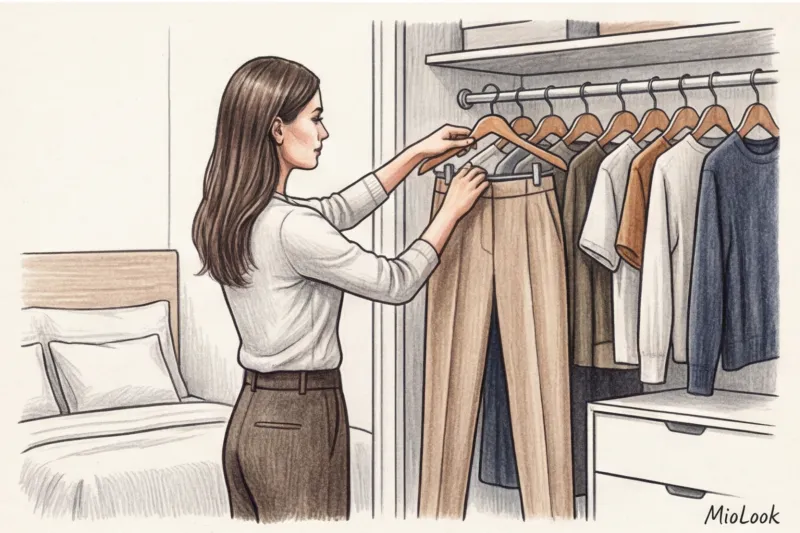
- Step 1: Hard inventory. Take out all the clothes you wear while working from home. Ruthlessly put away anything overtly sporty, stretched out, pilled, or with Mickey Mouse prints. Save them for cleaning or a lazy Sunday.
- Step 2: Check via webcam. Put on the tops you plan to wear on calls. Sit at your desk, turn on the front camera in normal lighting. Do you look pale? Does the neckline seem too low? The item goes in the "reject" pile.
- Step 3: Make a shopping list using the 4-3-2 formula. Don't buy a tenth T-shirt if you don't have any structural second layers. Cover only the empty slots.
Your appearance while working remotely is the only visual representation of your professionalism that your clients will see. Invest in fabrics that hold their shape, avoid toxic oversized clothing, and you'll see a change not only in how your clients view you but also in how you approach your work.