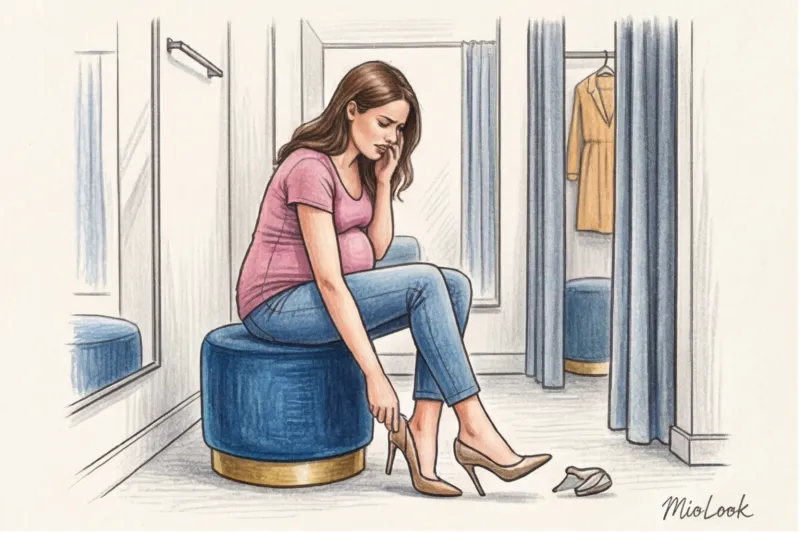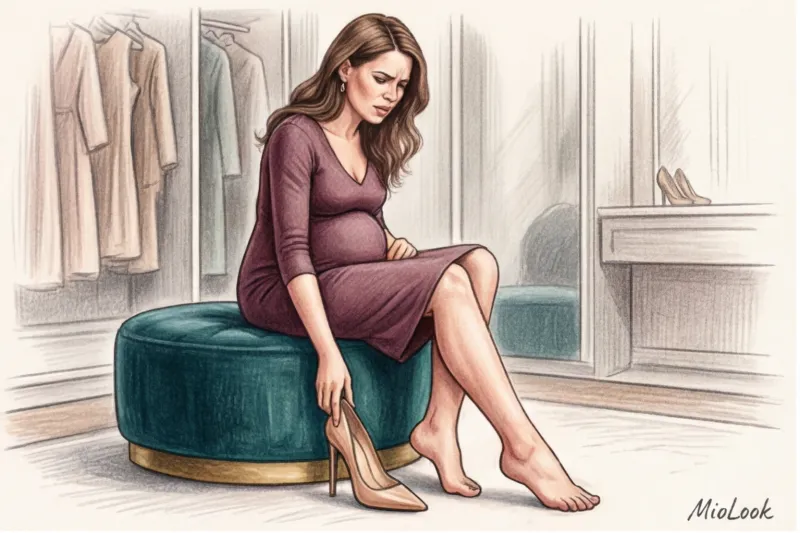
Last month, a woman came to me for a wardrobe review, close to tears. She was clutching her favorite, perfectly worn-in suede Loro Piana loafers, which cost around €850 and had been purchased a year before maternity leave. "They're hopelessly small; I'll have to sell them for next to nothing," she sighed. It's a classic story: foot size during pregnancy It becomes a major wardrobe pain point for most women. For some reason, we're prepared for a change in waist or bust size, but the betrayal of our favorite shoes always takes us by surprise.
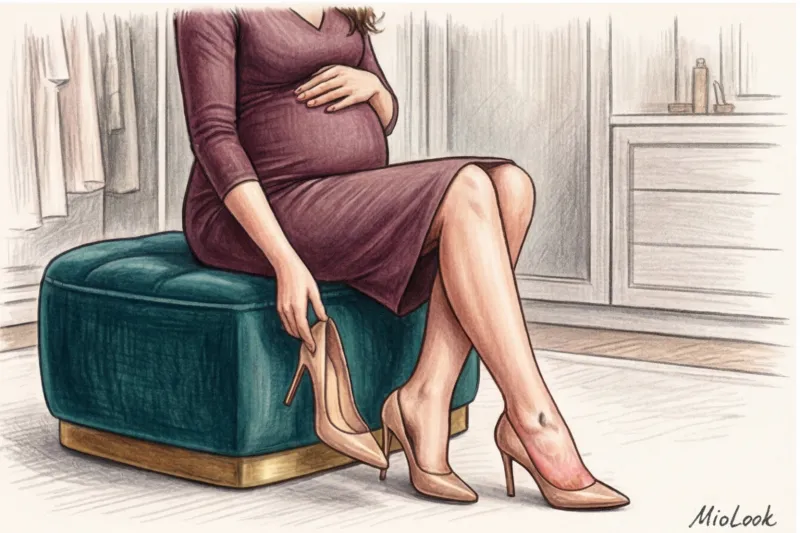
We have discussed the general principles of selection in more detail in our The complete guide to comfortable maternity shoes: style and foot health Here, I want to break down the specific mechanics: what exactly is happening to your foot, why buying sneakers "one size too big" is the worst thing you can do for your back, and how to save investment pairs from premature trashing.
The Physiology of Style: Why Foot Size Changes During Pregnancy
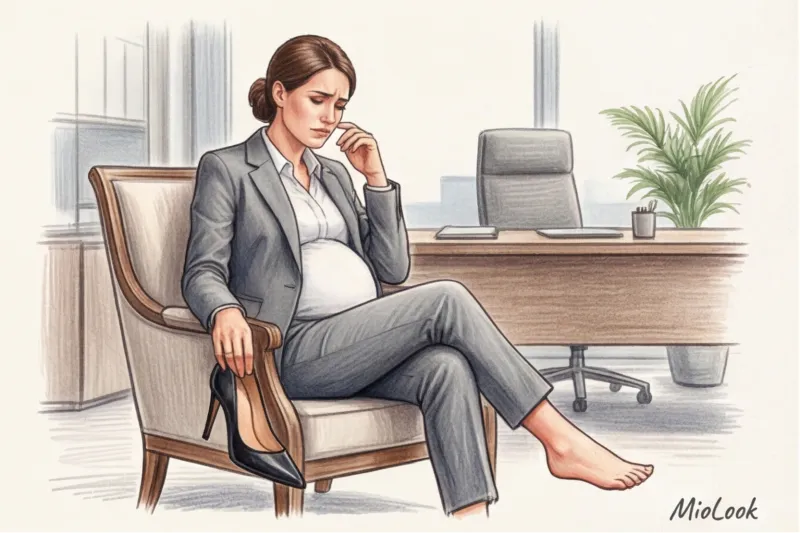
Let's forget about trends for a minute and look at biomechanics. Shoes that fit perfectly just a couple of months ago suddenly turn into medieval torture devices. And it's not because you ate one too many croissants.
According to the American College of Foot and Ankle Surgeons (ACFAS) in 2023, the main culprit is the hormone relaxin. Its production peaks around the 14th week of pregnancy. Relaxin's evolutionary purpose is logical: it softens the pelvic ligaments, preparing the body for childbirth. But hormones don't have a built-in GPS navigator. Along the way, relaxin relaxes more than 100 ligaments in your foot.
Add to this the shift in the center of gravity and the natural increase in weight. All this new mass presses on the relaxed arch of the foot. The result? The arch flattens, and the foot literally "spreads" horizontally under the weight of the body.
Swelling or actual deformity? How to tell the difference
Many of my clients attribute tight shoes solely to swelling. But it's important to distinguish between temporary fluid accumulation and structural changes.
- Edema: The swelling changes throughout the day. In the morning, shoes fit fine, but by evening they dig into the skin. The swelling is mild, leaving an indentation when pressed with a finger. It completely resolves within 2-3 weeks after giving birth.
- Structural change: My feet have become wider at the bone and joint level (especially at the metatarsophalangeal joints). My shoes feel tight even early in the morning.
Do a home test: remove the insole from a shoe that's become too small, place it on the floor, and stand on it, fully transferring your weight. If your toes or the sides of your foot extend significantly beyond the edges of the insole, the structure has changed, and not just fluid accumulation.
Temporary or permanent? What do the harsh statistics say?
The main question I get asked during my consultations is: "Emily, will I ever wear my skinny pumps again?" The answer sounds a bit sobering, but it's something you need to be prepared for.
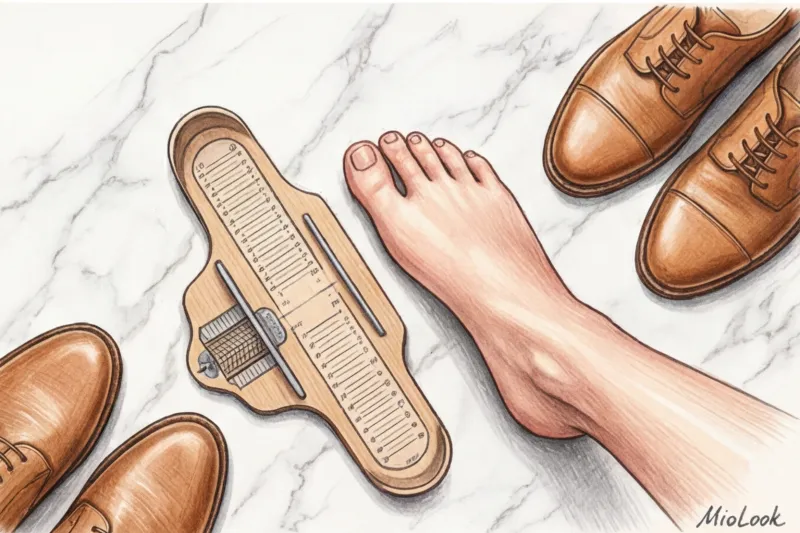
A study published in American Journal of Physical Medicine & Rehabilitation , shows that in 60–70% of women, the flattening of the arch of the foot remains permanent. Yes, foot size does change permanently during pregnancy in more than half of cases. The length of the foot may increase by 2–10 mm, but the key transformation is not in length.
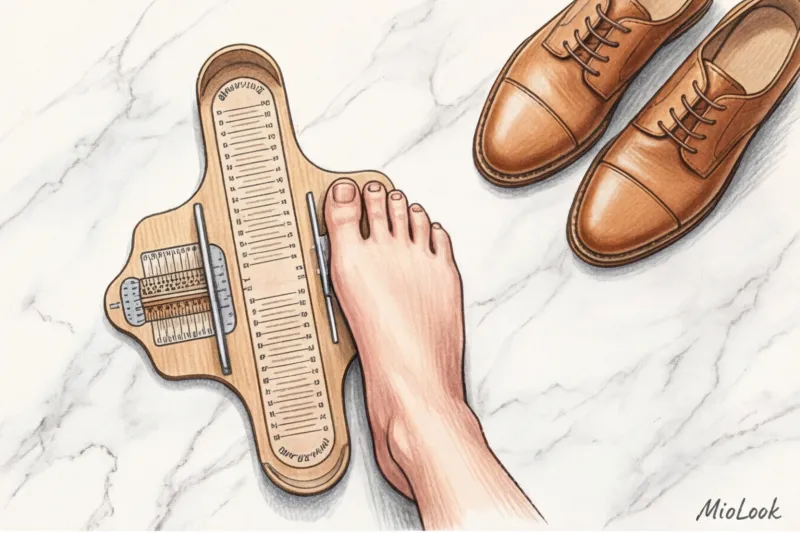
Foot width changes. In the shoe industry, length is designated by numbers (38, 39, 40), and width by letters. Women are rapidly moving from the standard B width to wider C or D widths. Interestingly, the most dramatic changes occur during the first pregnancy. During subsequent pregnancies, the ligaments develop a certain "memory," and the foot is significantly less deformed.
Access to MioLook for €0.99 — one-time payment
A smart AI stylist will select the perfect look based on your new measurements and wardrobe.
Get access — €0.99 onceThe Biggest Mistake: Why You Shouldn't Just Buy Shoes Two Sizes Bigger
When your favorite shoes start to pinch, the instinctive response is to order a new pair a size or two bigger. Were you wearing a 38? I'm going with a 40! In my 12 years as a stylist, I've seen the consequences of this decision dozens of times. And it's disastrous for your posture.
If your foot has become wider (increased in width) and you buy longer shoes, your gait biomechanics will be disrupted. The arch support and sole curve in size 40 shoes are designed for a longer foot. The anatomical arch support will end up not under your arch, but somewhere closer to your heel.
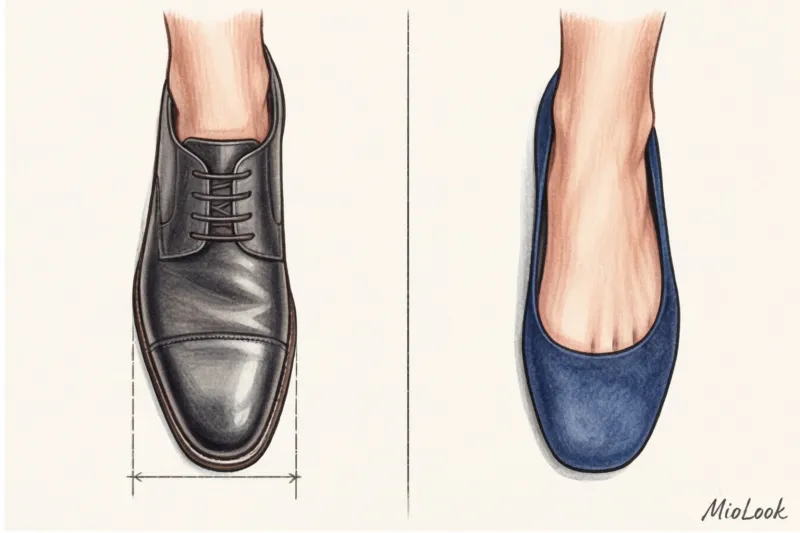
What happens next? Shoes that are too long leave a gap in the front. With every step, your toes reflexively curl (dig into the insole) to hold the dangling shoe in place. You begin to shuffle, your walking pattern changes, and your knees and lower back, which are already suffering during this period, become overloaded.
The correct solution: look for your usual length size, but in rulers Wide fit (increased fullness). These capsules are now available from almost all global brands, from ASOS and COS to the premium segment.
A guide to saving your current shoe wardrobe.
I conducted a wardrobe audit for over 50 new mothers and noticed a disturbing trend: about 80% of them, in a fit of anger and hormonal fluctuations, get rid of their fancy, expensive shoes within the first year after giving birth. Stop it.
Relaxin levels can persist in the body for up to 5 months after lactation ends. Only after this period does the foot take its final shape. Until then, your decisions are not objective. When we digitize clients' things through MioLook , I always recommend using a rigid two-category system.
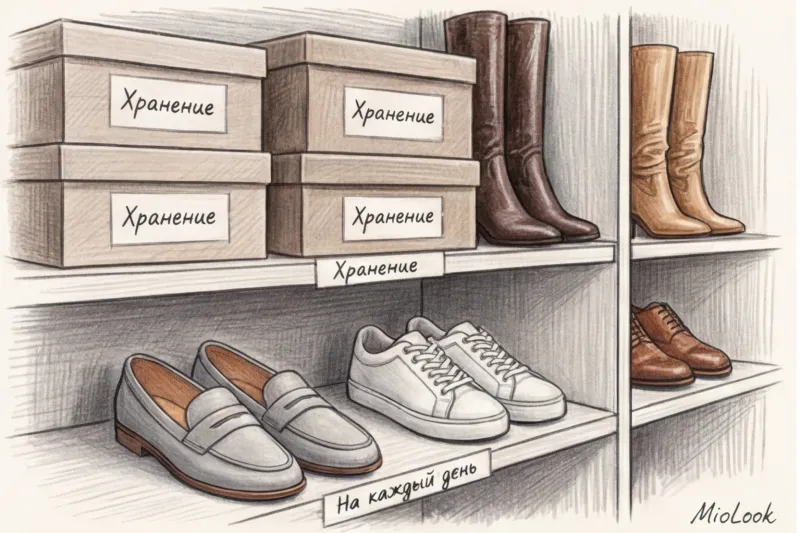
Category "Pause":
We're relegating shoes with rigid lasts to the back of the closet. Polished calfskin Oxfords, patent leather pumps, pointed-toe pumps. Anything that won't stretch. We don't sell them; we freeze their status for at least 8-10 months.
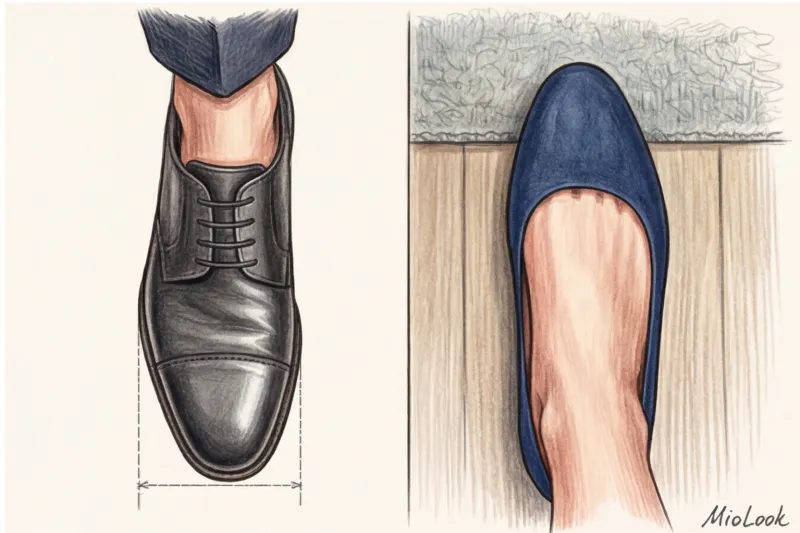
Category "In progress":
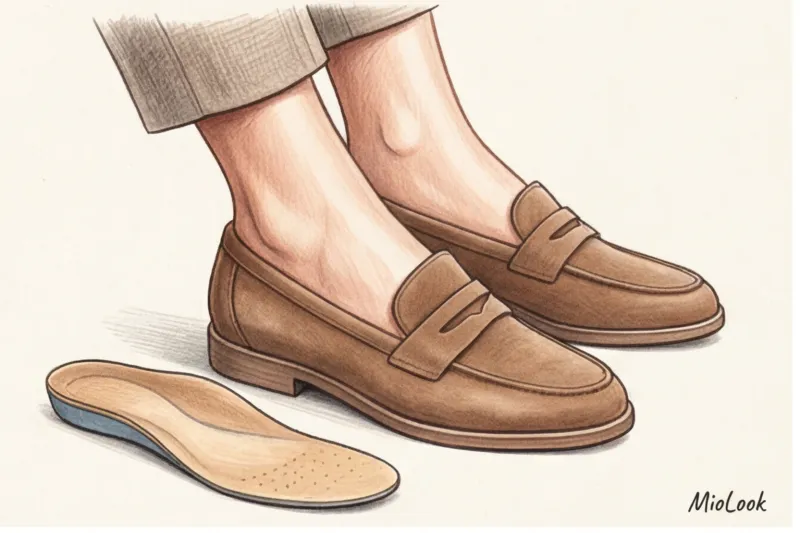
We leave soft suede, lace-up shoes (which allow you to adjust the instep), slip-ons with elastic bands on the sides, and open-heeled models on display.
By the way, getting back to the story with the Loro Piana loafers, we agreed with the client to put them away for six months. Suede is an incredibly flexible material. Once the postpartum swelling subsided and her hormone levels stabilized, we took the loafers to a reputable repair shop for professional stretching. The €850 loafers were saved for €30 because we adjusted the width, not the length.
Your perfect look starts here
Join thousands of users who look flawless every day with MioLook. Digitize your wardrobe in just a few clicks.
Get access — €0.99 onceSmart Shopping: What Shoes to Buy During Pregnancy (and Wear Afterward)
Forget boring orthopedic shoes that look like you've given up. Modern foot sizes during pregnancy call for the concept of "adaptable shoes"—stylish pairs that can adjust to your foot circumference within 1-2 centimeters.
What materials to look at:
The clear winner is genuine suede without a rigid lining. Technological fabrics with memory foam and perforated leather also work well. The price range here is vast: from decent basic models in the mass market for €50–€70 to premium leather pairs for €200–€400.
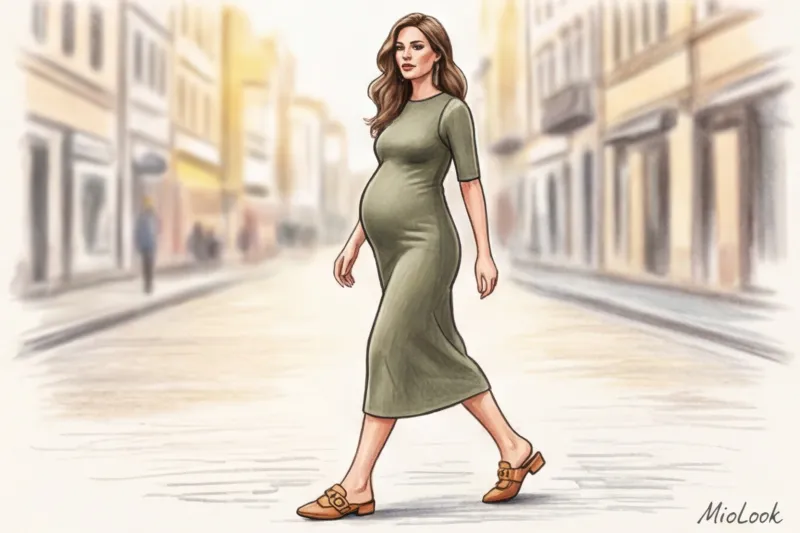
Design features for searching:
- Lacing and Velcro: allow the pressure in the lifting zone to be relieved in the evening.
- Chelsea gussets: wide elastic inserts on the sides.
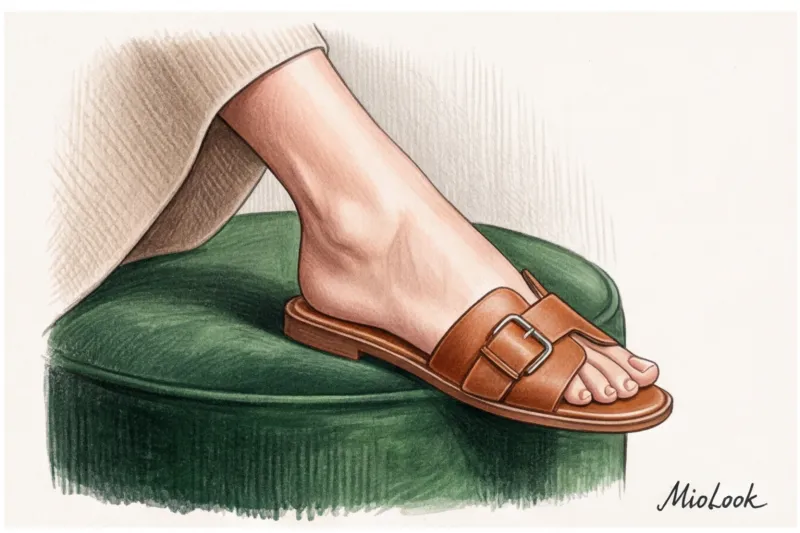
- Adjustable straps (like Birkenstock): salvation for the change of fullness.
Stylish alternatives:
Instead of sneakers that require a lot of lacing, opt for trendy retro styles with Velcro fastenings. Slingbacks (shoes with an open back and a strap) with a kitten heel are ideal for the office or meetings. The heel strap is easily adjustable, and the open back reduces swelling.
Fair limitation: This advice works for healthy feet undergoing normal pregnancy changes. If you were diagnosed with severe flatfoot or plantar fasciitis before pregnancy, soft suede without heel support will be harmful. In this case, a rigid heel counter and a custom orthotic insole are the only solution.
Checklist: How to choose the perfect pair if your foot size fluctuates
If you're heading out to buy a new pair right now, keep this checklist from a practicing stylist. These simple rules will save you hundreds of euros in bad purchases.
- Fitting time is only after 16:00. By evening, feet reach their maximum volume due to gravity and natural daytime swelling. Even if your shoes fit perfectly at 10 a.m., you won't be able to walk to the taxi in them by 7 p.m.
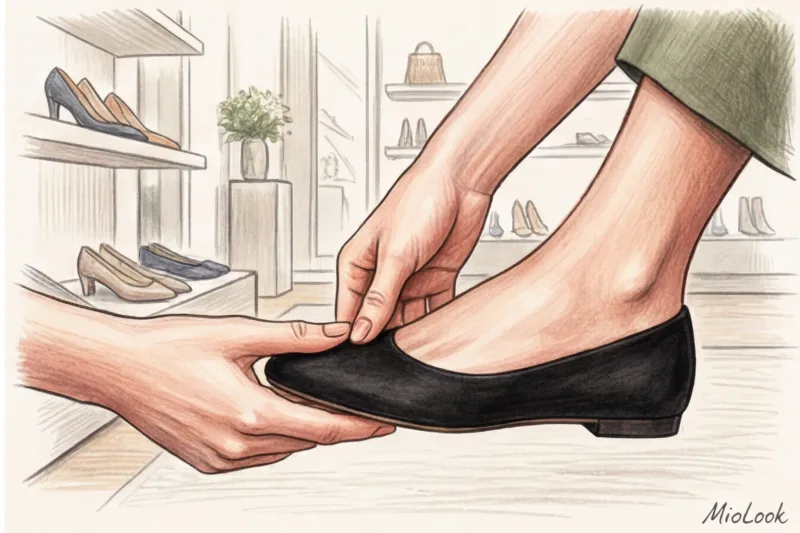
- Rule of thumb. After putting on your shoes, stand up straight. Press your thumb into the toe of the shoe. There should be exactly 10-12 mm of space between your longest toe (for some, it's the big toe, for others, the second toe) and the edge of the shoe. No more, no less!
- Flexibility test. Take the shoe in your hands and try to bend the sole. It should bend exactly where your toes bend when walking (in the front third), not in the middle of the foot.
- Place for the instep support. If you're buying stylish, soft, flat-soled moccasins, make sure they have enough room (in terms of instep height) to accommodate an orthotic half-insole. This will support your flattening arch.
A change in foot size during pregnancy isn't a death sentence for your style or a reason to switch to bland, worn-out Ugg boots. Treat it as an interesting style challenge. The right width, luxurious suede, and a smart approach to wardrobe organization will allow you to remain elegant at any stage of pregnancy—and most importantly, do it painlessly.