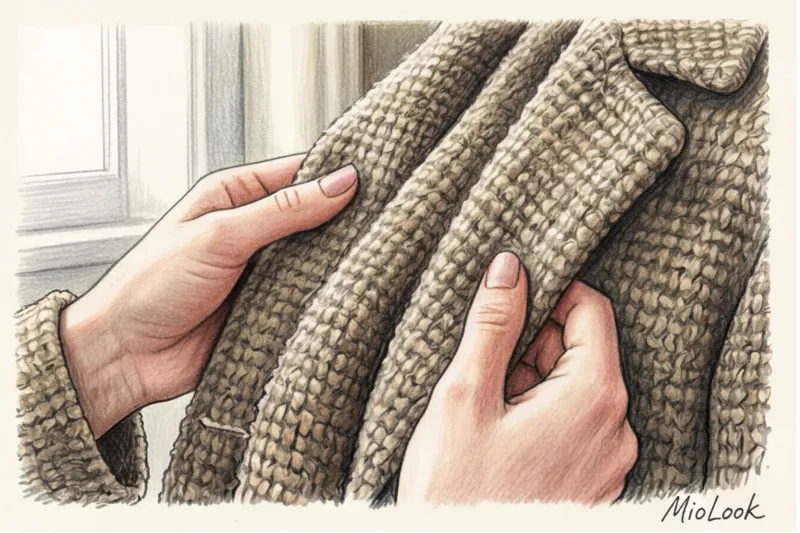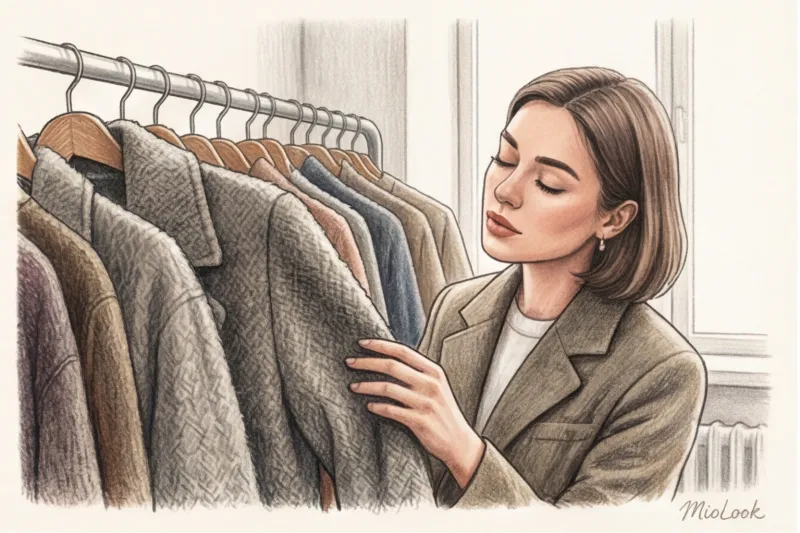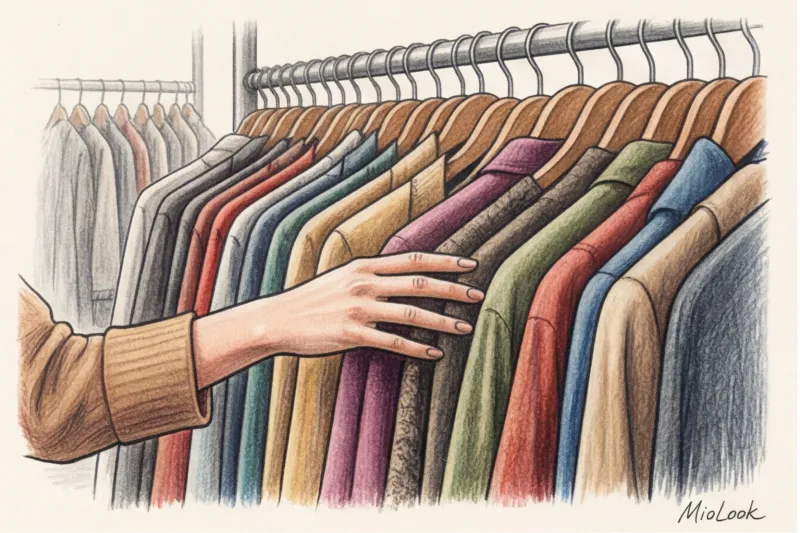
Close your eyes and slowly run your hand along a long rail of tightly hung clothes. Can you feel it? Stiff, creaking polyester, thin, characterless cotton, and suddenly—heavy, cool, fluid fabric that seems to respond to your touch. That's how, blindly, I found a legendary Max Mara cashmere coat from the 90s in a tiny Parisian vintage shop. I didn't see the tag, but my fingers recognized luxury before my eyes.
For many, the hunt for vintage luxury turns into a game of "spot the familiar logo." But if you really want to know, How to find designer items at second-hand stores , you'll have to give up this habit. Logos are the first thing that gets counterfeited. We covered the basics of such purchases in more detail in our The Complete Guide to Second-Hand Shopping: Finding the Pearls And today I'll teach you to think not like an ordinary shopper, but like a professional buyer. We'll examine the "anatomy" of an item, because true class is always hidden in the details that aren't immediately apparent.
Search strategy: how to find branded items among thousands of racks at a second-hand store
When I take clients to Milan's vintage boutiques for the first time, I impose a strict rule: looking at labels is prohibited for the first 15 minutes. According to a 2024 report by The RealReal, up to 30% of big-name items in non-specialized secondhand stores are not originals, but high-quality replicas from the early 2000s. Visually searching for monograms is a trap.
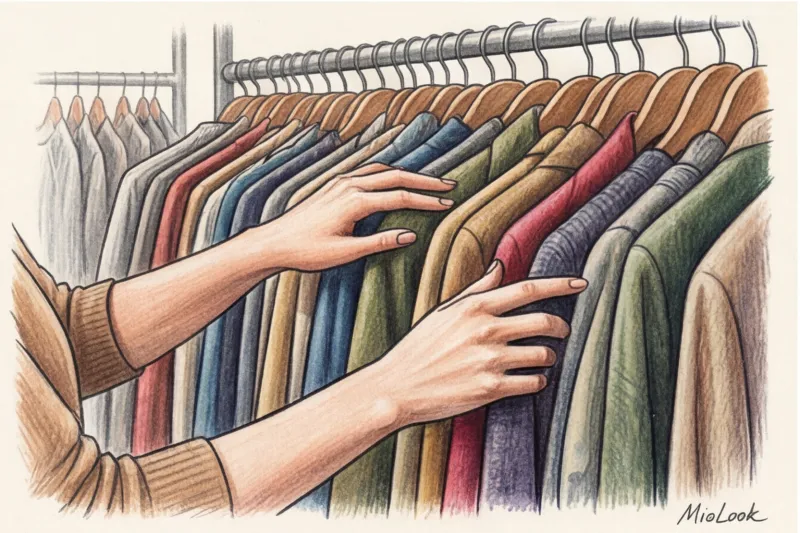
The secret of experienced stylists is to "scan" the aisles with your hands. You walk along the hangers, looking for anomalies: unusual density, a specific weight of fabric, a particular texture. Only when an item catches your tactile attention do you take it out and check the brand. This approach saves hours of time and prevents disappointment.
The 5-Second Rule: How Fabric Reveals a Item's Status
The original speaks to you through the material. Modern mass-market fabrics often use crisp, static-producing polyester. But heavy, vintage silk flows, feels pleasantly cool against the skin, and has a refined, subdued sheen.
Genuine wool from the 80s and 90s is radically different from modern wool. It doesn't emit electricity, has a matte finish, and often has a tighter twist. Take the fabric between two fingers and rub it gently: high-quality cotton (especially mercerized) will feel smooth and cool, while cheap cotton will quickly reveal its loose, fuzzy nature.
Access to MioLook for €0.99 — one-time payment
A smart AI stylist will find the perfect look for your vintage finds.
Get access — €0.99 onceLuxury architecture: the main differences between the original and the fake at the cut level
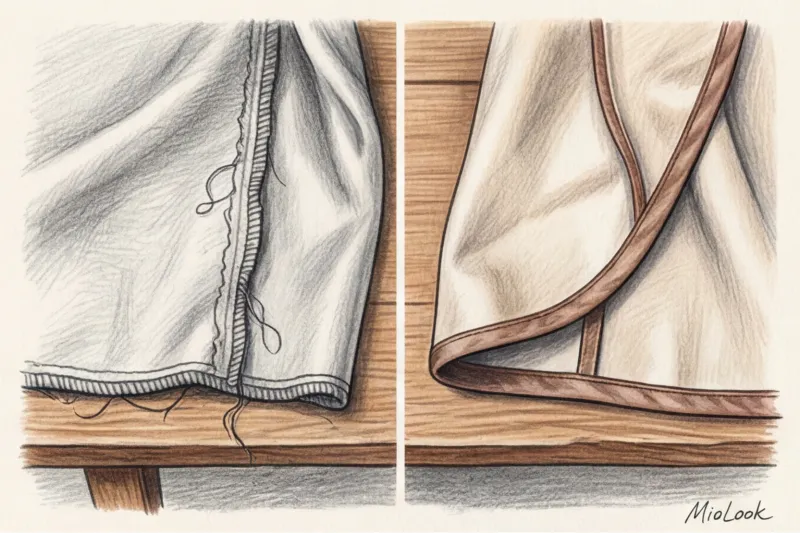
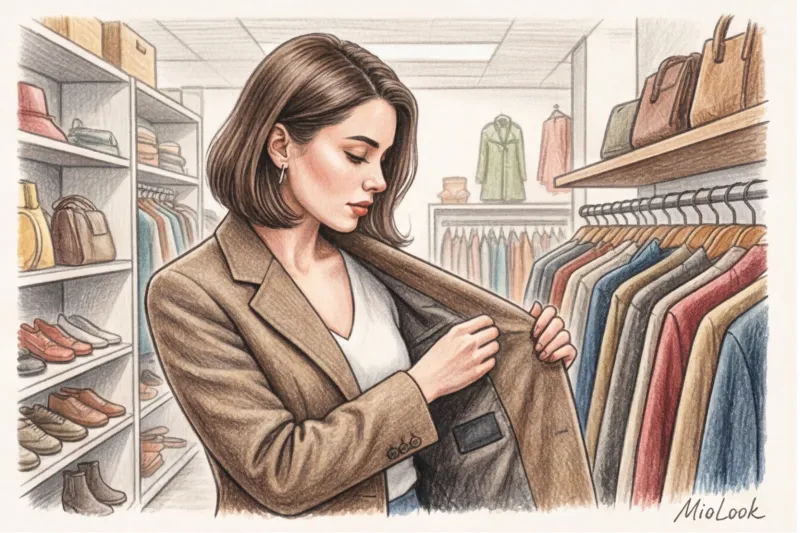
Counterfeiters are businessmen, not artists. They skimp on things that buyers usually don't notice. Therefore, the main rule of authentication is to turn the item inside out. The back side is the product's identity document.
Pay attention to the pattern joins. In authentic luxury clothing, the checks, stripes, and monogram patterns must match perfectly at the side seams, pockets, and lapels. This requires a huge amount of expensive fabric, something counterfeiters will never do.
Another indicator is the weight of the item. True luxury is almost always heavier than mass-market items. A prime example: an original Chanel tweed jacket is on average 300-400 grams heavier than its counterfeit counterpart. Why? Because of the density of the tweed itself and the signature brass chain, which is sewn into the hem of the lining to create a perfect fit and balance the silhouette.
Hardware is the number one traitor
The engraving on buttons from a premium brand will always be clear, deep, and easy to read. On counterfeits, the letters often appear "melted," as if covered in a thick layer of glaze.
Historically, old-school fashion houses used zippers from a Swiss company. riri or Italian Lampo If you see these exact locks on a vintage Dior bag or a Gucci jacket, it's a great sign. If the brand uses Japanese YKK (which is also the norm for many brands), the markings must be clearly stamped and without displacement.
Evaluate the metal. Real brass develops a beautiful, elegant patina over time. Plastic disguised as metal (a common sight on counterfeit bags from the 2000s) simply peels off in chunks, revealing a gray or white base.
Anatomy of seams and edge finishing
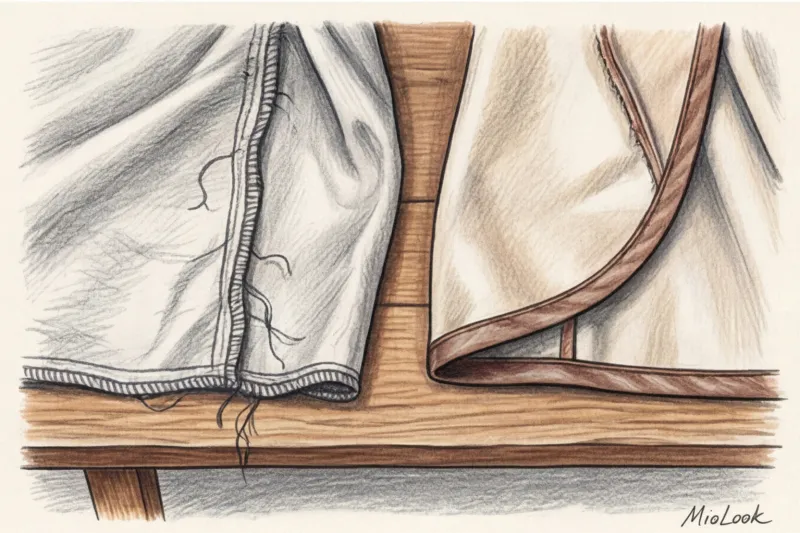
A cheap overlocker, with loose threads and crooked stitches, is a death sentence. In luxury 20th-century garments, fabric edges were finished with bias binding or a closed French seam (a lace seam).
Consider the stitch density. Premium brands use 4-5 stitches per centimeter of stitching. The more frequent the stitching, the stronger the seam and the longer it took to produce. Also, pay attention to handwork: armholes and collars on expensive jackets are often hand-stitched.
A fair exception: this "perfect inside out" approach doesn't always work with the deconstructive designs of Japanese and Belgian brands of the '90s (like early Maison Margiela or Comme des Garçons). There, exposed, unraveling seams and protruding threads are a conceptual design, not a sign of a fake.
Reading Tags: Fashionable Forensics in a Vintage Store
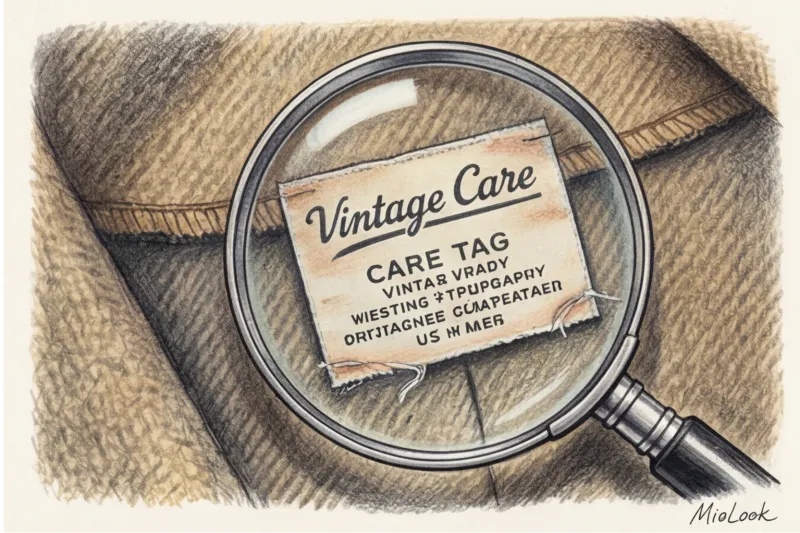
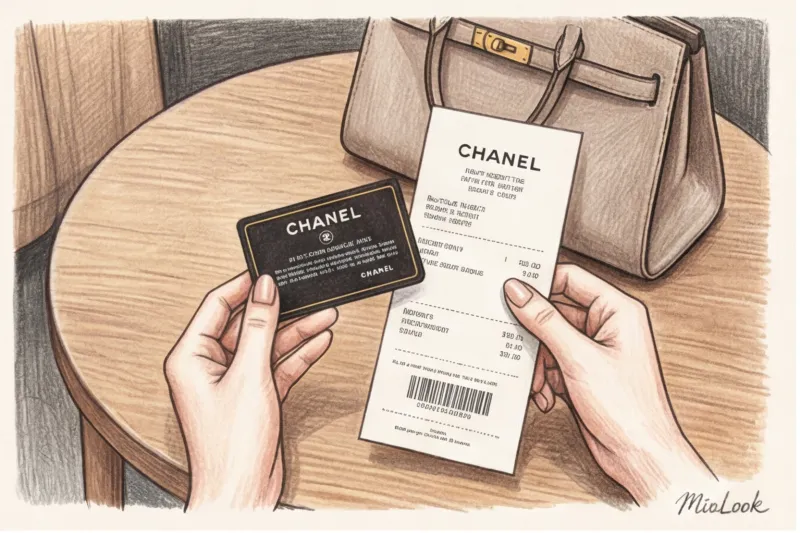
The tag is the final boss in the authenticity game. The typography immediately gives away fakes. "Dancing" letters, varying font weights, and lack of proper spacing (kerning) between characters—all of this screams non-originality.
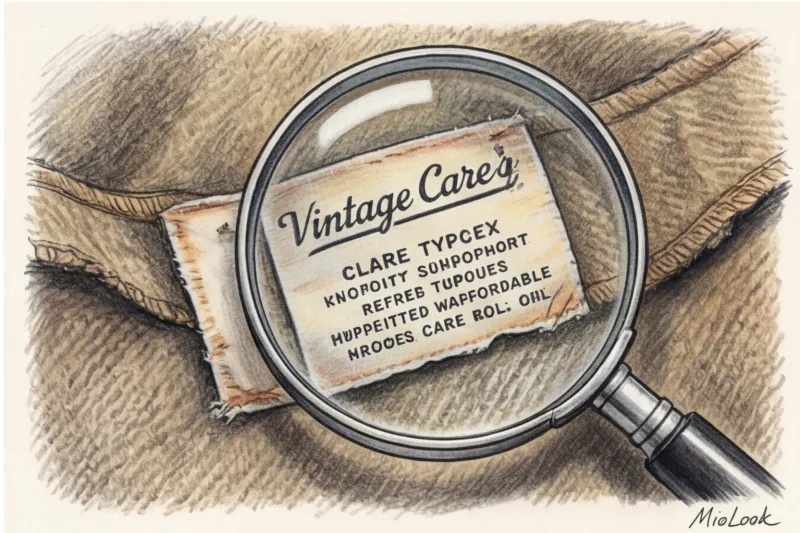
The evolution of labels is a science in itself. An old vintage label Made in France or Made in Italy A Dior blouse from the '70s or '80s looks completely different from a modern one. My personal life hack: use your smartphone right in the fitting room. If you find a silk Dior blouse that looks like it's from the '80s, Google "Christian Dior clothing tag 1980s." Logos have changed: Dior of that era used a completely different font than it does today.
Look for serial numbers and RN codes (Registered Identification Numbers). These are small numbers on internal tags that can be searched in databases to identify the manufacturer and year of production of the collection.
Your perfect look starts here
Join thousands of users who look flawless every day with MioLook. Digitize your vintage haul.
Get access — €0.99 onceRed Flags: When "Perfect Vintage" Should Raise Your Red Flags
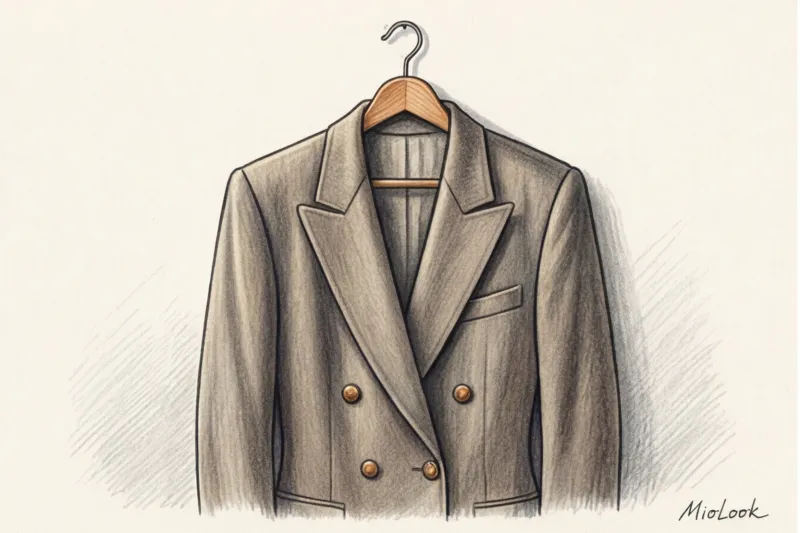
Here we encounter the main paradox of vintage shopping. Many women believe that if an item looks like new, it must be incredibly high-quality luxury. In fact, the ideal state is the loudest alarm.
One of my clients, a senior executive, proudly showed me a "vintage" Burberry trench coat she'd bought secondhand. It looked like it had just been pulled off a mannequin. The tags were blindingly white and stiff. We began checking it, and I pointed out the D-rings on the waistband—they turned out to be lightweight plastic coated with paint, not heavy metal. It was a fake from the 2010s. A 20-30-year-old garment should have a natural patina on the hardware, the tag should have softened from washing or dry cleaning, and the fabric should have acquired a slight patina.
Be on the lookout for anachronisms. If you see a garment styled in the 70s (wide lapels, specific cut), but the tag lists modern sizes S/M/L, it's a fake or a modern mass-market item. Back then, only numerical sizes were used.
And don't forget about your sense of smell. The distinctive, pungent chemical odor of inexpensive dyes, often found in counterfeit markets, rarely fades for decades. Genuine wool or silk smells neutral or retains a light scent of old perfume.
Top Most Counterfeited Brands: Specific Authentication Secrets
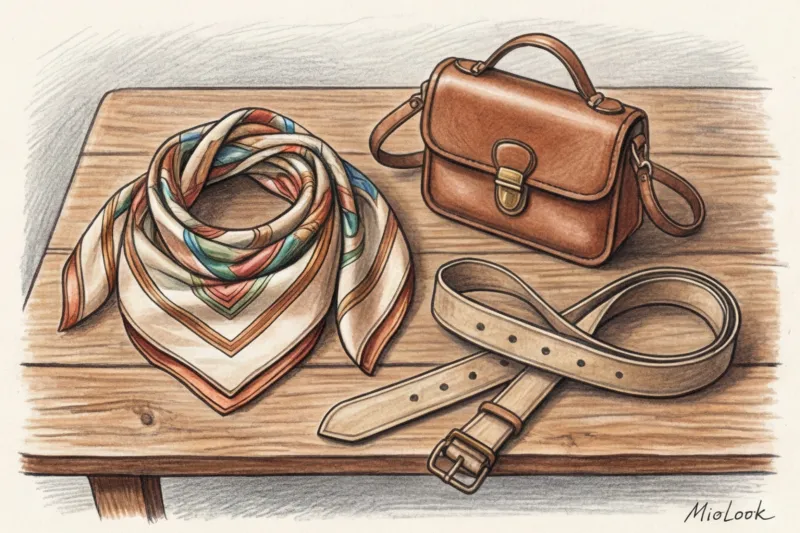
A 2023 study by experts at the resale platform Vestiaire Collective found that some brands are counterfeited ten times more often than others. If you come across these names at a thrift store, turn your inner detective on high.
- Burberry: The main target is the famous Nova Check. In the original, the red, white, and black lines must form a flawless geometric pattern. The stripes must meet evenly at the seams, without shifting even a millimeter. The lining of the original trench coat is dense and matte, not shiny.
- Levi's: Turn over the main button on your jeans. A three- or four-digit factory number (e.g., 501, 524, 555) should be stamped on the back. The famous Red Tab on the back pocket also has its own chronology: if the word "LEVI'S" is written in capital letters (Big E), you're looking at a rare pair made before 1971.
- Polo Ralph Lauren: Study the anatomy of the embroidered horseman. On the original, you can clearly see the reins, polo stick, and horse's tail. On a fake, the horseman often looks like a shapeless blob with extra threads.
- Silk scarves from Hermes and Louis Vuitton: The main secret lies in the edge finishing. Original Hermès bodice are always hemmed. hand roller — the edge is rolled by hand toward the front (against the pattern), not the back, and secured with blind stitches. Machine stitching is an absolute guarantee of a fake.
A Stylist's Checklist: 5 Steps Before Buying a Designer Thrift Store
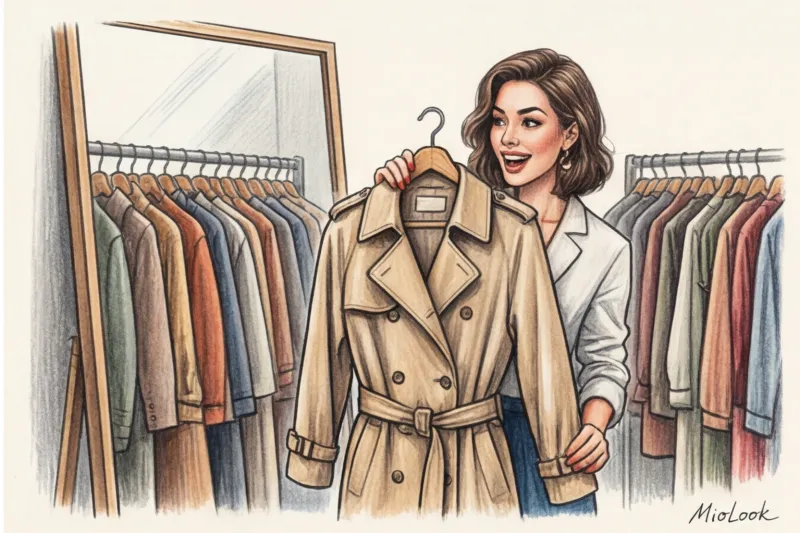
Over the years of working with wardrobes, I've developed a strict algorithm. Before taking your find to the checkout, run it through these five steps:
- Tactile testing. Squeeze the edge of the fabric in your fist for a few seconds. High-quality natural fabrics (wool, thick silk) will quickly regain their shape, while cheap synthetics or low-quality viscose will remain wrinkled. Consider the weight.
- Inspection of fittings and backing. Check the zippers (look for YKK, riri, or Lampo stamps), the engraving on the buttons, and the quality of the seam finish. No cheap overlock stitching on silk blouses.
- Analysis of tags. Check the fonts for typos, unevenness, and make sure the tag design matches the era of the item's creation.
- Checking symmetry. Pin the patterned pieces together. Is the checkered pattern misaligned at the seam? Leave the garment on the hanger.
- Self-worth test. This is my favorite and most important step. Ask yourself: "Would I buy this coat or bag if there was no logo at all?"
If the answer is "no," and you're only attracted by the brand name, pass on the purchase. The true value of vintage isn't in the letters on the label, but in the luxurious cut, unique fabrics, and history the item brings to your style. And when you find that perfect wardrobe staple, don't forget to add it to your virtual closet. I often recommend my clients use smart wardrobe feature in MioLook To instantly see how a new vintage gem will pair with your favorite basic jeans or a modern blazer. True style is born at the intersection of eras.