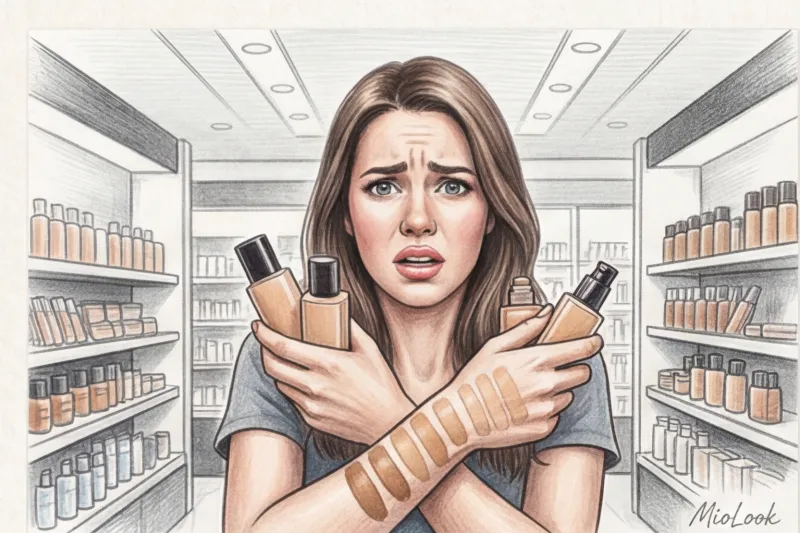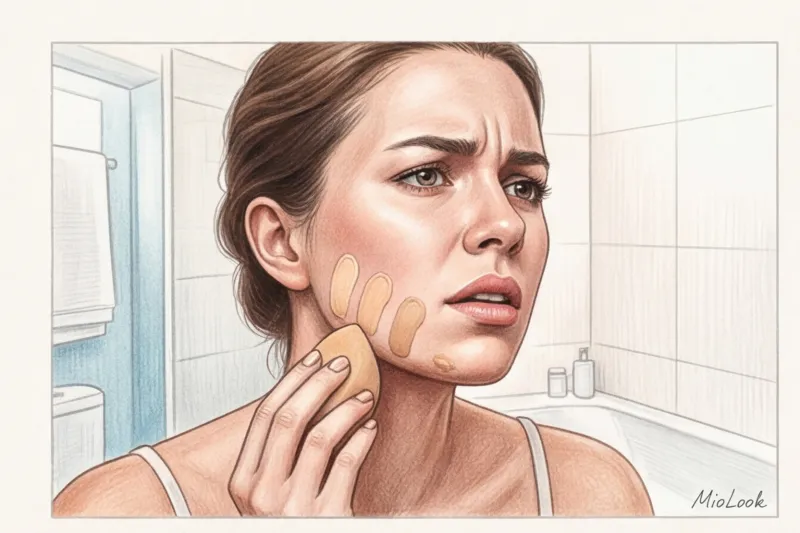
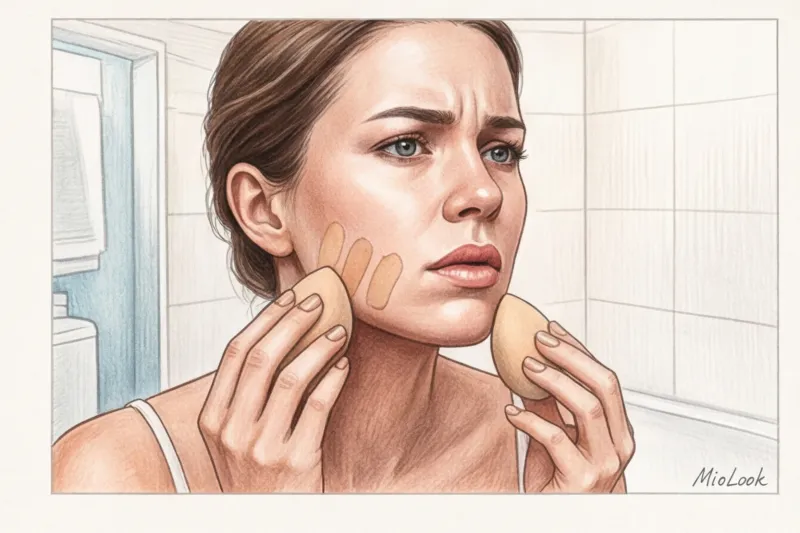
Have you ever stood in front of your car mirror in bright daylight, horrified to realize your face is two shades darker than your neck? Spoiler: you're not alone. One of my clients, Anna, bought three bottles of the famous Armani Luminous Silk (€60 each) from different stores over the course of six months. At duty-free, she was sold a shade with a pink undertone, at Sephora, a salesperson convinced her to buy a "warm beige," and she chose the third herself by testing it on her wrist. The result: €180 wasted because, in daylight, all three options looked like stage makeup.
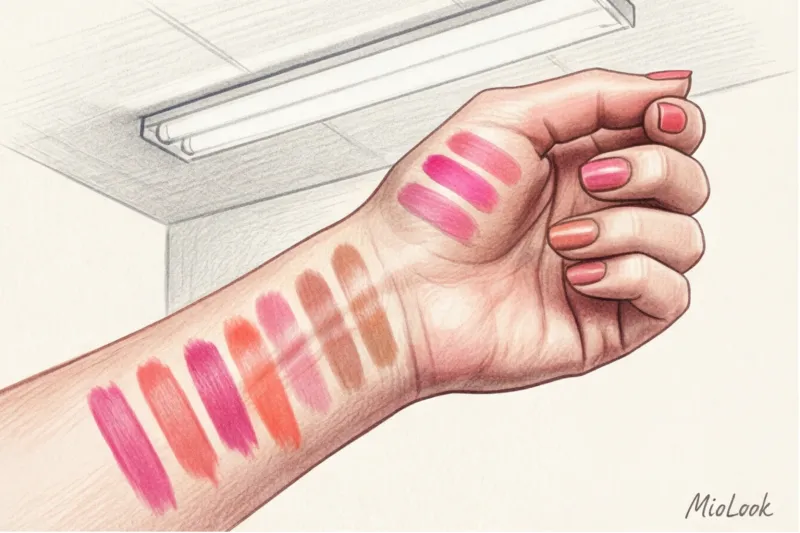
It's a modern paradox: we trust our smartphones with our finances and heart rate, but we continue to buy cosmetics the old-fashioned way, smearing a tester on our hand under the neon lights of a shopping mall. And yet today choose foundation online With the help of artificial intelligence, this isn't a fun game with filters, but a rigorous financial tool that protects your budget. We discussed in more detail how algorithms are displacing intuition in the beauty industry in our complete guide to Virtual Hairstyle Try-Ons: How AI is Changing the Beauty Industry.
As a personal stylist, I constantly encounter the problem of how the wrong skin tone can ruin even the most carefully curated wardrobe. In this article, I'll explain why store swatches are always wrong, how to trick a phone camera with a simple piece of paper, and why a neural network can match the right shade better than an experienced makeup artist.
The Cost of Mistakes: Why Use AI to Choose Foundation Online?
Let's do the math. The average price of a quality foundation in Europe today is €40-60. Even at high-end mass-market stores like Zara Beauty or & Other Stories, prices start at €15-20. Every jar that's "slightly yellowish" or "looks grayish" ends up as dead weight in a makeup bag. Statistics show that up to 70% of women have bought the wrong shade at least once. Why does this keep happening?
The biggest myth of the beauty industry that needs to be debunked: Testing the cream on your wrist is useless The skin on the inside of your hand has a completely different thickness, texture, and, most importantly, a different amount of melanin than your face. It has a different capillary network. By choosing a foundation based on your wrist, you're choosing makeup for your hands, not your face.
The second problem is lighting. Fluorescent lights in shopping malls mercilessly distort color temperature. They eat away red pigments and enhance green ones. You might think your skin tone blends in, but step outside and you'll see a yellow mask.
Swatching foundation in a store under artificial light (and using dirty testers) is the worst and least accurate method of choosing a foundation of all.
Access to MioLook for €0.99 — one-time payment
A smart AI stylist will select the perfect look for every day based on your appearance.
Get access — €0.99 onceHow Algorithms See Your Skin: Biometrics vs. Guessing
When you try to choose a foundation online through branded apps (for example, those powered by L'Oréal or Il Makiage), it's not a standard camera that's at work, but a sophisticated biometric scanner. According to AR technology developers ModiFace (2023), their algorithms analyze your face using 150 unique points.

What's the fundamental advantage of AI over the human eye? A neural network can distinguish between temporary skin issues and its underlying undertone. If you have rosacea (redness on your cheeks) or a fresh breakout, a store associate will often try to cover it up with a yellow pigment, ignoring the fact that your neck is a completely cool, pinkish tone. The algorithm, however, ignores localized redness. It reads the depth of shadows and pigmentation in areas where the skin is clear, matching your scan to the chemical formula of a specific product in its database.
Warm, Cool, or Olive: How AI Solves the Undertone Problem
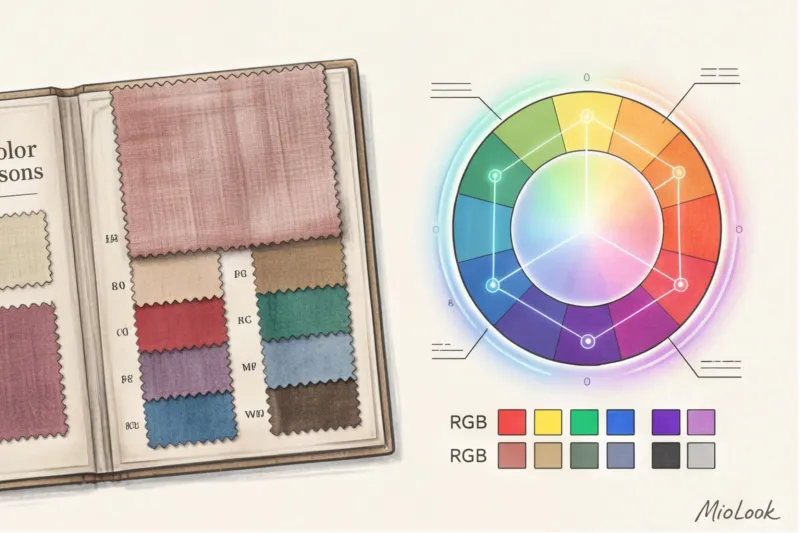
The biggest pain point when choosing cosmetics is olive skin tones. For years, women with this complexion have been sold either overtly pink or sickly yellow creams. The human brain struggles to recognize the complex gray-green pigment in skin. AI handles this in seconds, eliminating 90% of unsuitable products.
There's a direct connection here with your wardrobe. Your skin tone is the foundation of your color type system. A perfectly chosen skin tone makes it easy to build a clothing palette. If you want to delve deeper into how makeup complements a formal style, I recommend checking out our article about Office makeup for a business suit and etiquette rules.
Stylist checklist: how to prepare your skin and lighting to choose the right foundation online
Technology only works perfectly if you give it the right input. You can't just turn on the front camera while sitting on the couch under a yellow chandelier and expect miracles. Over 12 years of working as a stylist and organizing photo shoots, I've developed a strict protocol for preparing for any visual scan.
- Window Rule: You need only diffused daylight. A north- or east-facing window (in the morning) is ideal. Avoid direct sunlight, otherwise the AI will think you're three shades darker than you actually are.
- Blank Canvas Rule: Wash your face and apply only a basic moisturizer. Absolutely no SPF products (titanium dioxide makes your face appear white on camera) or serums with light-reflecting particles (they create glare that confuses the scanner).
- Neutral zone: Pull your hair back into a tight ponytail to reveal your jawline and neck. Be sure to wear a white or light gray T-shirt. Bright clothing (especially neon or red) will highlight your chin.

My secret life hack. Modern smartphones (especially the latest iPhone models) have a very aggressive automatic white balance. The phone attempts to "enhance" the image by making your skin appear more tanned and warmer. To trick the smart camera, take a regular white sheet of A4 paper and hold it to your chest, just below your chin, while scanning. The presence of a reference white color in the frame will force the phone's camera algorithms to turn off the "enhancement" and capture your true skin tone.

Your perfect look starts here
Join thousands of users who look flawless every day with our app.
Get access — €0.99 onceAI's Blind Spot: Oxidation and Skin Type
As much as I love technology, I must warn you of its main limitation. This is when AI doesn't work with 100% accuracy.

The algorithm provides an ideal snapshot of the "here and now" situation. But it has no idea how the cream's chemical formula will react with your sebum (oil) two hours later. This process is called pigment oxidation.
Remember this ironclad rule: if you have oily or combination skin, your foundation will almost always oxidize. When exposed to sebum and oxygen, the pigment darkens. Dense matte formulas containing a lot of talc and absorbents are especially prone to this (as opposed to lightweight moisturizing fluids).
So, if the online analyzer says your ideal shade is 2N (Neutral), but your face starts to shine by lunchtime, feel free to order shade 1.5N or even 1N. Choose a shade half a shade lighter. Within an hour of application, it will settle and darken to match your natural color.

Ideal complexion and status: how makeup influences a business wardrobe
As a personal shopper, I often see the same scene: a client invests €250 in a stunning wool jacket from COS or buys a flawless silk blouse from Massimo Dutti, only to have the look look sloppy and cheap. Why? Because of the mask effect on the face.
Your complexion is the foundation of your status. If the shade is wrong, you're forced to "pull" it down to your neck to hide the transition. What happens next? That's right, the collar of your white shirt or light trench coat becomes rusty by mid-day. A perfectly matched AI-powered tone blends seamlessly with your jawline. You simply don't need to apply it to your neck, meaning your clothes stay clean.

Moreover, the right tone opens up access to "dangerous" colors in your wardrobe. Many women are afraid to wear stark black, cool gray melange, mustard, or khaki in portrait mode, complaining that these colors make their faces look dull and tired. In fact, the color of the blouse isn't to blame. The culprit is a foundation with the wrong undertone, which clashes with the fabric's temperature. With the right base, you can wear any shade. By the way, by uploading a photo of yourself with your perfect tone to the app MioLook , you will see how your personal palette of suitable things expands.
Step-by-step plan: from virtual scanning to smart shopping
To make this theory practical for your wallet, let's boil it all down to a clear, actionable checklist. Here's your action plan for today:
- Step 1: Preparation. Remove your makeup, put on a grey T-shirt, take a white sheet of A4 paper and go to a window without direct sunlight.
- Step 2: Cross-scan. Don't rely on just one service. Try the online search on Sephora's website and then in the brand's app (for example, Charlotte Tilbury or Estée Lauder). If two different AI tools return a similar undertone (for example, both say "light neutral"), you're on the right track.
- Step 3: Adjust for oxidation. Assess your skin type. Dry? Choose the exact shade the algorithm suggests. Oily or combination? Go half a shade lighter.
- Step 4: Purchase. Order online without fear. The hassle and money saved on pointless testers are better spent on a good makeup primer or a quality brush.

Ready to get started?
Try a free plan—no commitment. Build your smart wardrobe today.
Get access — €0.99 onceTechnology takes the romance out of cosmetics shopping and adds mathematical precision. By eliminating the guesswork involved in guessing your shade under store lights, you'll not only save hundreds of euros a year. You'll also achieve that "expensive, well-groomed skin" effect that even the most luxurious product can't create if it's even half a shade off your natural undertone.