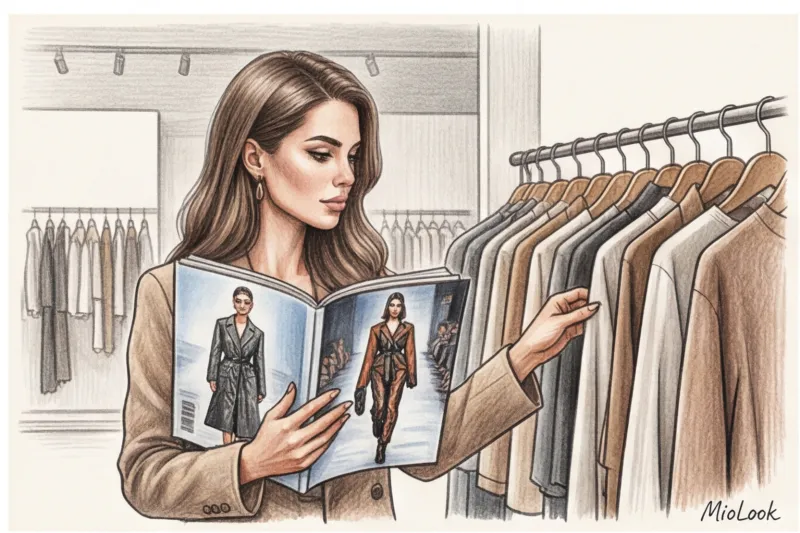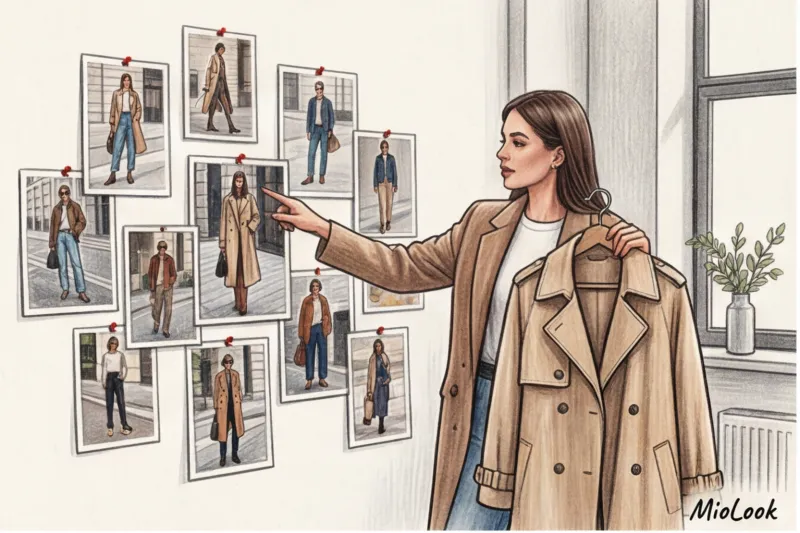
Do you also have a Pinterest board called "Style" or "Inspiration" with 300 flawless street style looks saved, but every morning you still reach for your usual jeans and black sweater? You're not alone. Industry statistics reveal the harsh truth: over 80% of users regularly save fashionable looks on visual platforms, but less than 15% successfully translate these looks into real life.
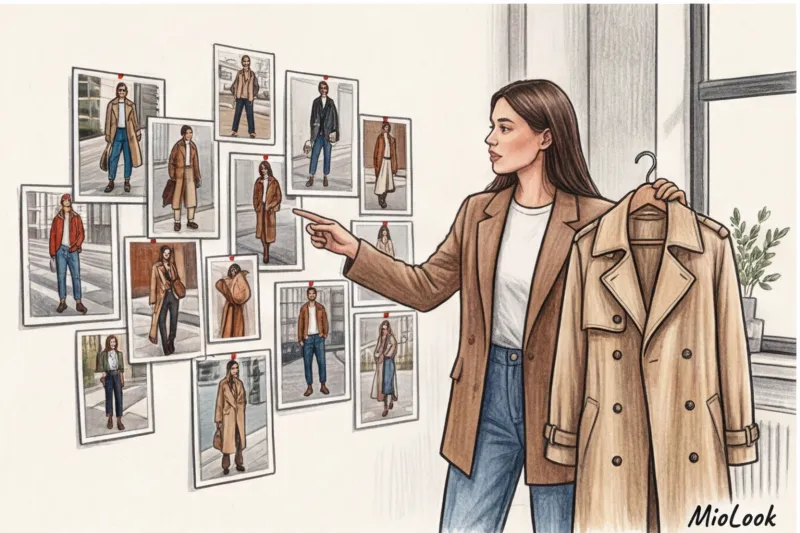
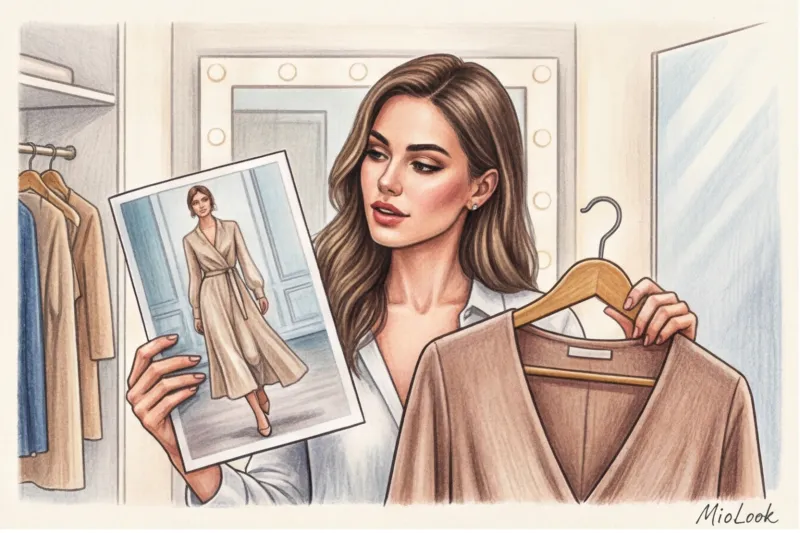
I see this every day in my styling practice. Women try to find clothes based on Pinterest photos, buy things that seem identical to the image, and then look in the mirror with disappointment. The problem isn't your figure or budget. The problem is that you're trying to copy a physical item, not a stylistic formula.
In this article, I won’t just show you which buttons to press (although we talked about the evolution of such technologies in more detail in our The complete guide to finding clothes by photo ). I'll share an insider's approach: how professional stylists deconstruct images so that AI finds not just visual clones, but items that will truly flatter your figure and fit into your wardrobe.
Why Finding Clothes from Pinterest Photos Is the Best Shopping Strategy
Text search is officially dead in fashion. If you type "beige oversized trench coat with wide lapels" into an online store, the algorithm will return ten thousand options: from a wrinkled €30 mismatch made of thin polyester to a designer masterpiece for €2,500. Words don't convey the proportions, volume, and density of the fabric.
Our brain evaluates style differently. We perceive aesthetics in milliseconds, assessing the silhouette as a whole rather than analyzing tags and descriptions. This is why visual search is so effective. According to a 2024 report by the e-commerce analytics agency WGSN, visual search increases purchase accuracy by a whopping 37%. The algorithm sees what you see: how the light hits the shoulder of a jacket and the depth of the neckline.
The Anatomy of a Pinterest Look: A Stylist's Perspective
Before mindlessly uploading a screenshot to search, pause for a second. What exactly prompted you to save that photo? Most beginners make the biggest mistake: they look for an exact replica of every detail, right down to the color of the cuff buttons. This is a recipe for failure.
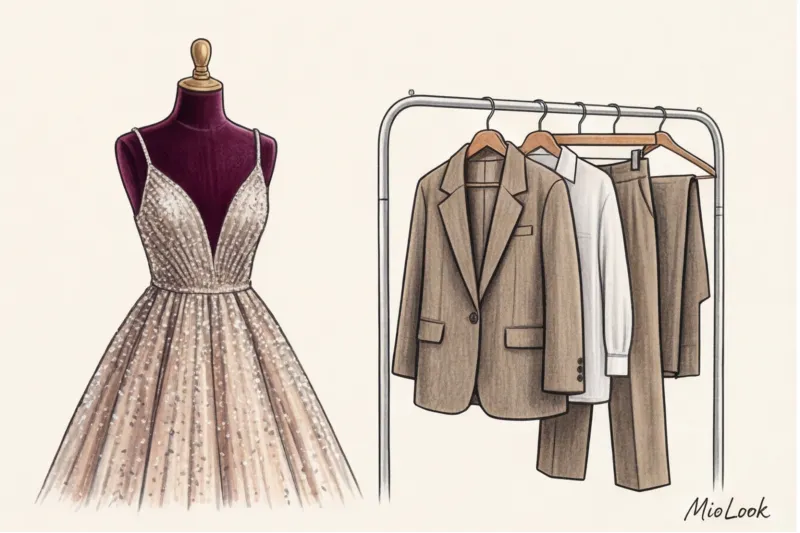
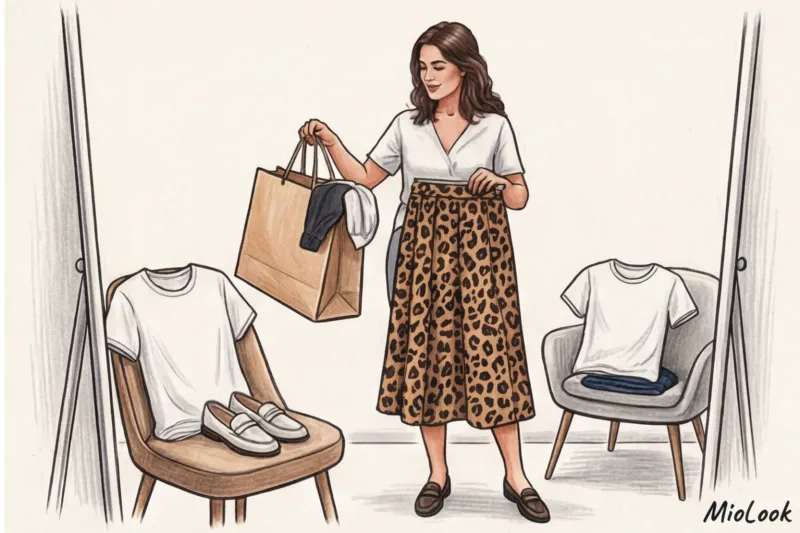
A professional look works through the "anchor thing" rule Any successful outfit has only one, or at most two, elements that hold the whole look together. Everything else is just background. If the picture shows a woman wearing a luxurious, statement leopard-print skirt, a simple white T-shirt, and basic loafers, your only visual focus should be the skirt. The basics are from your closet.
"Volume balance is everything. According to the rule of thirds in visual fashion perception, the ideal silhouette is divided into 1/3 and 2/3 ratios. It's this ratio that should be copied, not the brand name."
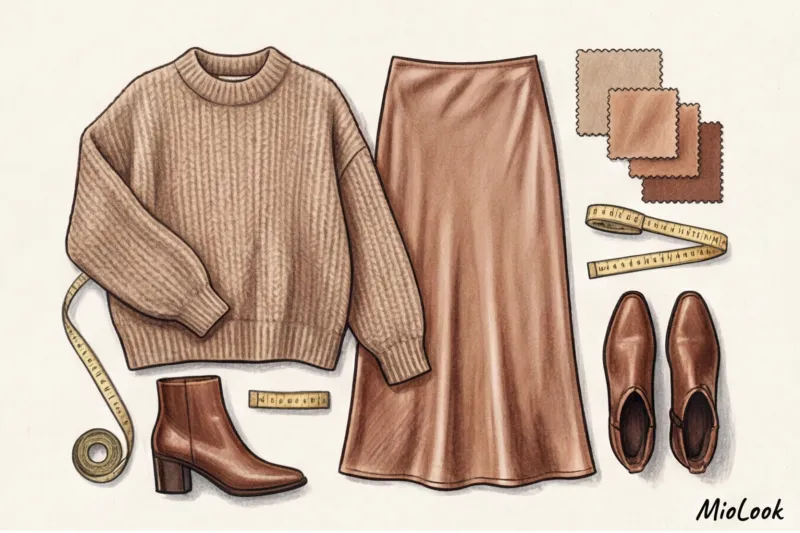
Texture and fabric are more important than brand
In my work with clients, I often search for items not by color, but by the way they drape. Mass-market algorithms are often tricky: they'll slip you an item of the perfect cut and color, but made from a completely different fabric. Matte silk and cheap, static-prone polyester may look identical in a catalog photo. But in real life, the cheap fabric will instantly give away its authenticity.
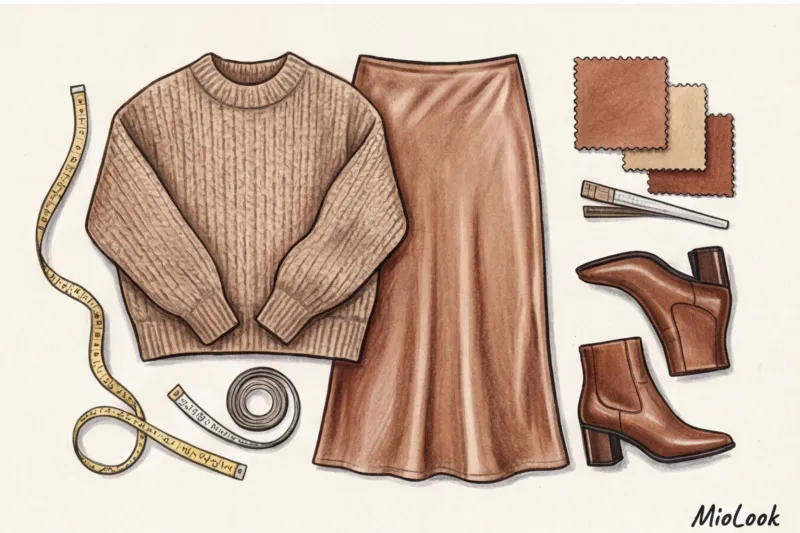
How do you read density from a photo? Pay attention to creases. If a cotton shirt has soft, large folds around the elbow, it's heavy cotton (180 g/m² or more). If the fabric bunches up in a small accordion pattern, it's a thin, translucent material that will never look as stylish as the Pinterest reference.
AI Tools: How to Find Clothes from Pinterest Photos in Seconds
Today, we have dozens of visual search tools: from the basic Google Lens to built-in features on ASOS and H&M. However, general-purpose search engines are often guilty of simply looking for "similar pixels." They might return a carpet if its pattern matches the print of your dress.
This is where specialized fashion algorithms come into play. For example, when you upload a photo to MioLook The neural network analyzes not just color, but also cut elements: collar type, sleeve fit, and garment length. Furthermore, the AI stylist evaluates how a particular item will work within the context of your existing wardrobe.
The golden rule of cropping: Before submitting a photo to search, crop it. Remove the model's face, handbag (if you're looking for a coat), and the background with beautiful Parisian streets. Include only the item you need in the frame. The less visual noise the algorithm receives, the more accurate the results will be.
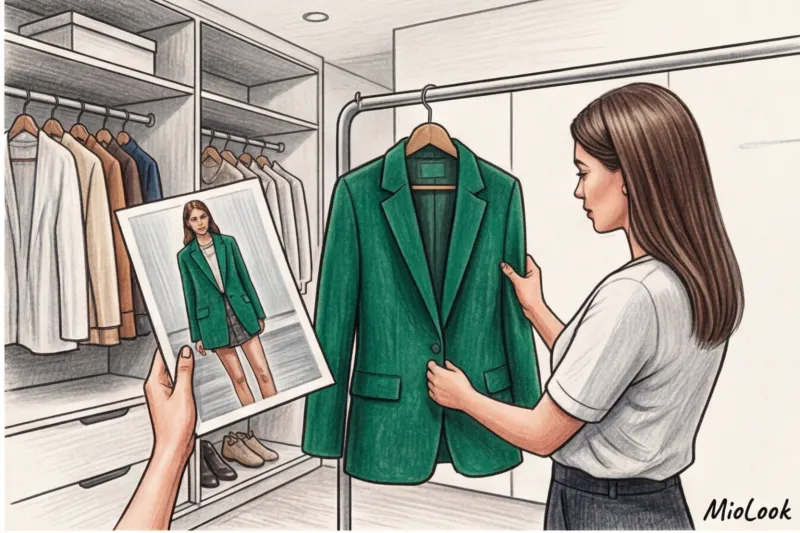
Your perfect look starts here
Join thousands of users who look flawless every day. Upload references and find perfect alternatives in one click.
Get access — €0.99 onceExpectation vs. Reality: The Main Pitfall of Exact Copying
Time for hard stylistic truth: the desire to find accurate A copy of something is a trap. And here's why.
One of my clients fell in love with a look she found on Pinterest: a casually draped, oversized camel-colored coat. We found the original—a luxurious Max Mara coat for €800. She bought it, put it on, and... looked like a sad rectangle. Why? Because the model in the photo is 180 cm tall and wears a size XS, wearing a size L coat. The stylist pinned the excess fabric in the back (out of frame) with three clothespins to create a beautiful drape in the front.
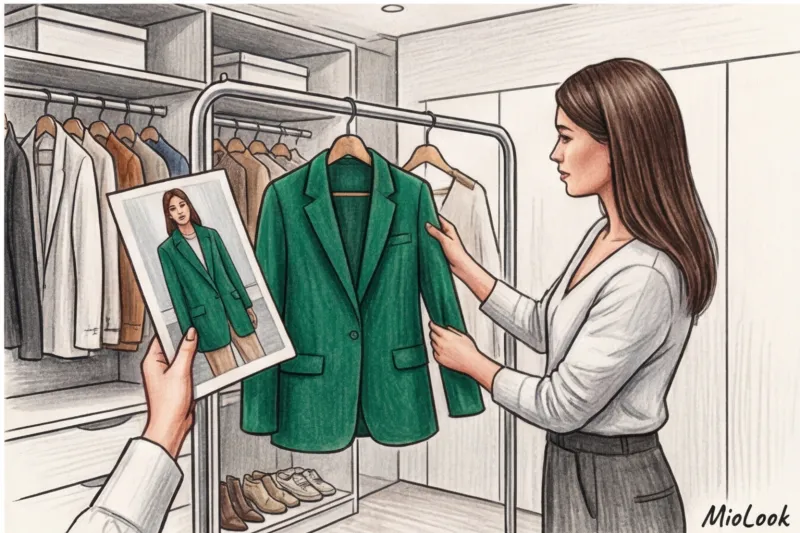
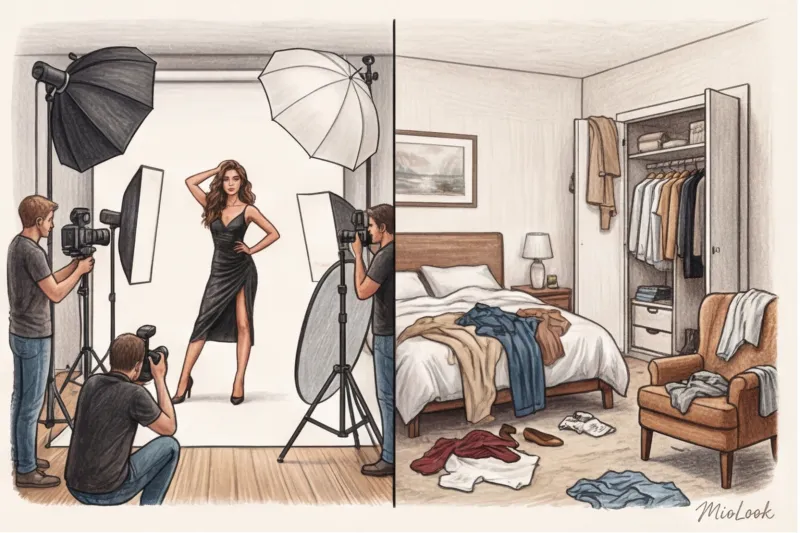
Fashion shoots are an illusion. They involve directional lighting, hidden pins, double-sided tape, and hours of post-production. So our job is to bring the vibe of the look to life, tailoring it to your body type.
If you're 160 cm tall and the girl in the photo is wearing palazzo pants dragging on the pavement, you don't need those exact same pants. You need straight-leg, full-length pants made of a flowing fabric (such as viscose with 5% elastane), worn with low-heeled shoes. The visual effect of relaxation will be the same, but without distorting your proportions.
A practical checklist: assembling the onion from the picture in 4 steps
Enough theory. Let's walk through a simple process that takes no more than 15 minutes.
- Step 1: Deconstruction. Divide your look into three categories: base (what doesn't attract attention), accent (the main thing), and styling (accessories, how to wear).
- Step 2: Isolated search. Only crop the statement piece. If you're looking for a jacket, set a price filter (for example, in the €50–€150 range) to immediately eliminate irrelevant luxury items or overly cheap fast fashion. Look for a match based on texture.
- Step 3: Inventory the base. Don't buy the white shirt in the picture if you already have three similar ones hanging in your closet. Use what you have. Capsule approach saves from senseless spending.
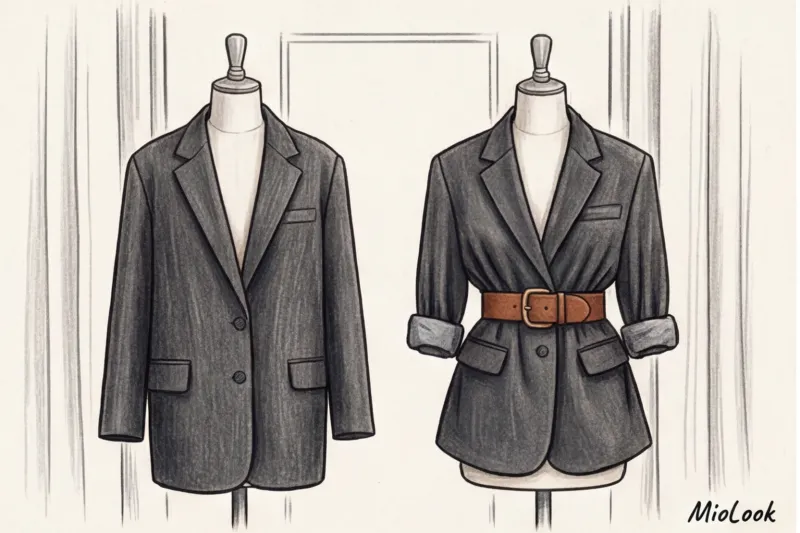
- Step 4: Styling Secrets. Look closely at the original photo. Is the sweater tucked in completely or just at the front (French tuck)? Are the sleeves rolled up? Is the belt visible? These are the micro-actions that make a look "Pinterest-worthy."
Access to MioLook for €0.99 — one-time payment
A smart AI stylist will select the perfect look based on your Pinterest references and check how the new item will fit into your current wardrobe.
Get access — €0.99 onceCompatibility test: will this find fit into your wardrobe?
Finding clothes from Pinterest photos and buying them is only half the battle. The most common complaint I hear is, "I bought this amazing cardigan just like the picture, wore it once, and now it's just hanging in my closet."
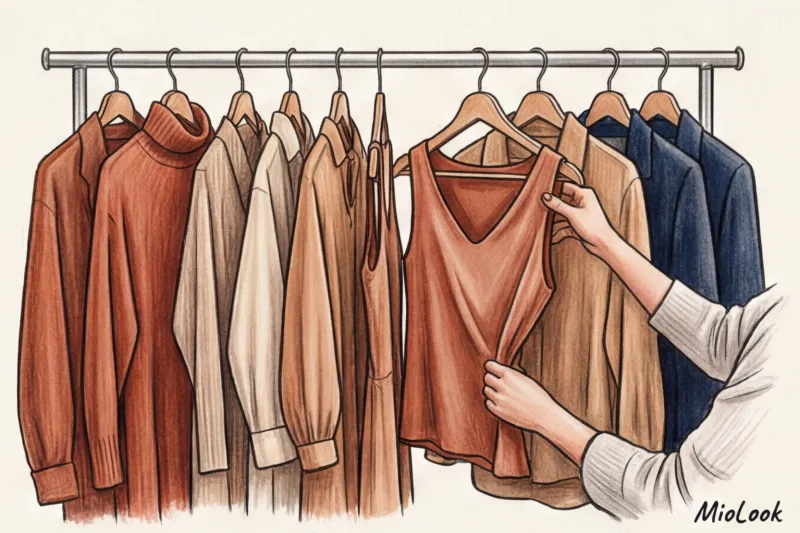
To avoid the appearance of “one-stop shopping”, conduct a rigorous test before paying for your cart - The 3-bow rule You should immediately, without thinking, come up with at least three completely different looks with this new item, using only the clothes that are already in your closet. For example, if you buy a comfortable casual sweater for going to the cinema Think about it: could you wear it to the office over a shirt? Or to Sunday brunch with jeans?
If your imagination fails you, use technology. Upload a photo of a potential purchase to the MioLook virtual fitting room feature, and the algorithm will automatically show you which items from your digital capsule collection will pair perfectly with it.
Ultimately, being observant and able to work with references is a skill that can be trained. Stop looking for blind copies of brands. Use Pinterest not as a catalog for direct copying, but as a textbook on proportions, texture combinations, and color schemes. Then your real-life images will garner as many likes as the images on your inspiration board.