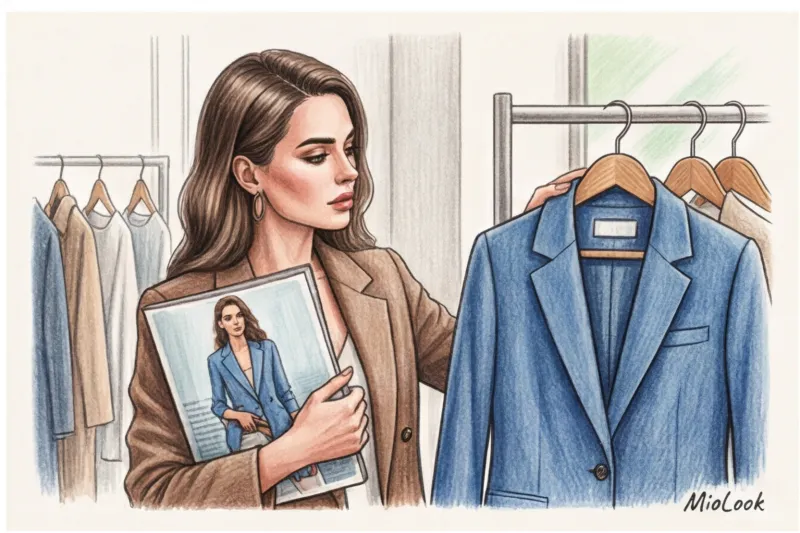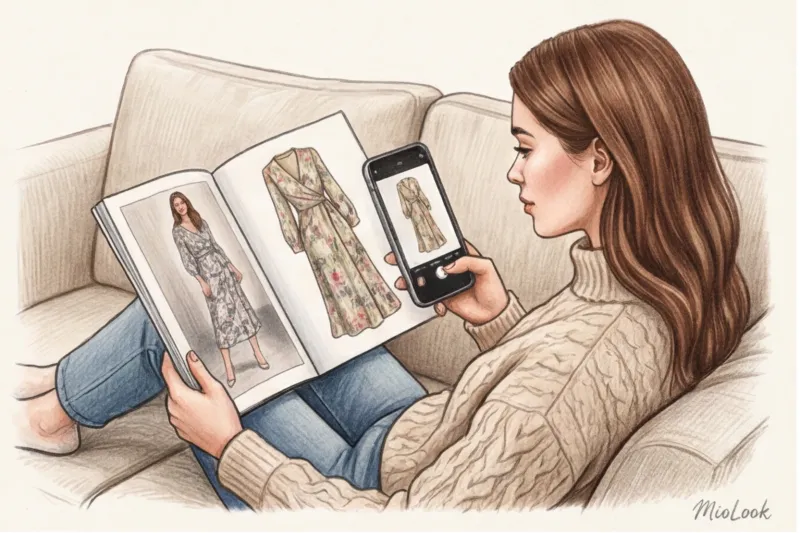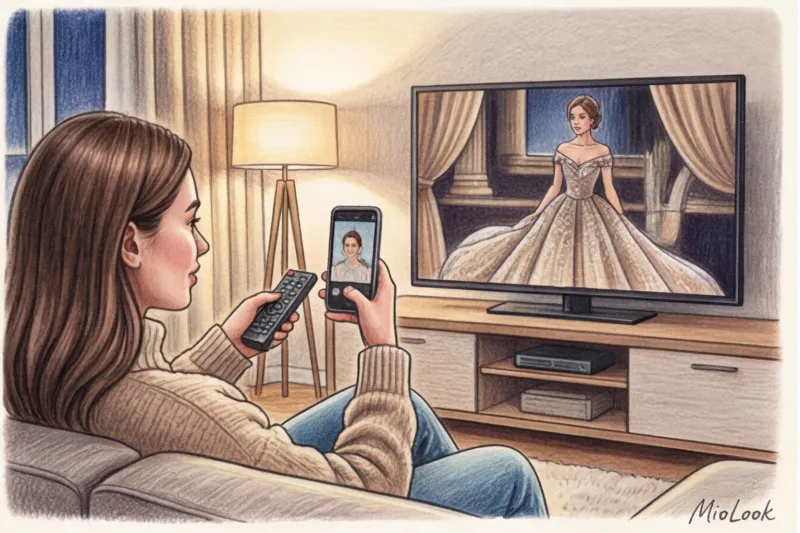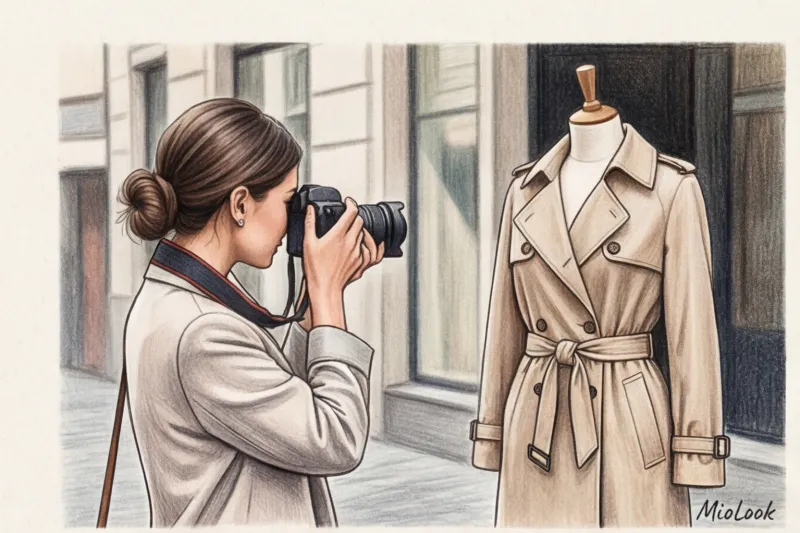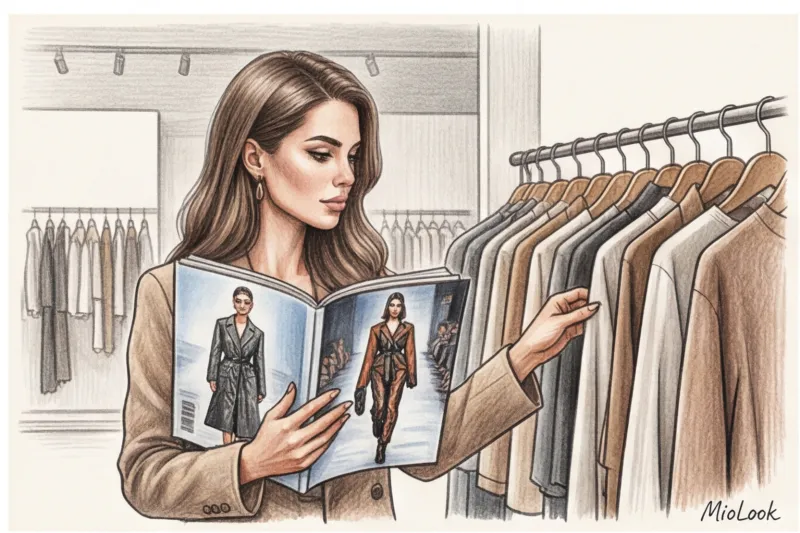
Imagine this: you're scrolling through your feed and see the perfect cashmere cardigan from Khaite for €1,800. Your mind has already conjured up three outfits with it, but your credit card gently hints that the purchase is out of your budget. Your first instinct is to go to a popular marketplace and search for "beige cardigan with puff sleeves." The result? An hour wasted and hundreds of acrylic cardigans that don't even remotely resemble the original.
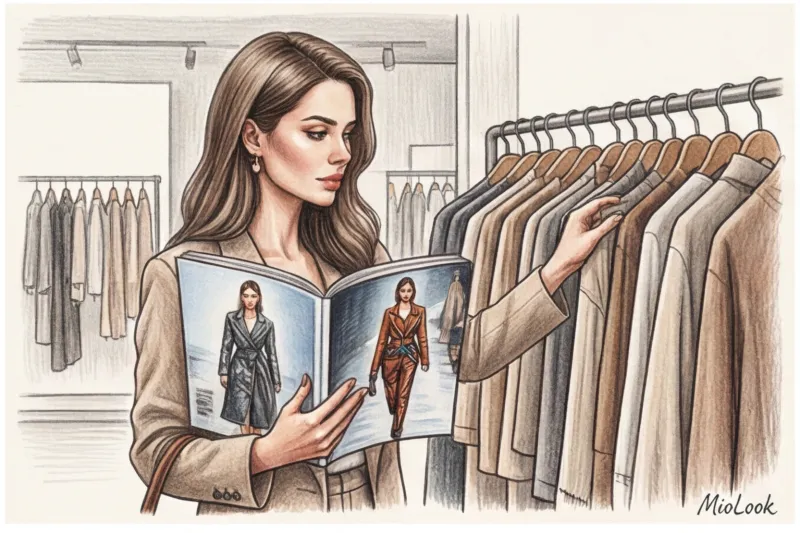
As a textile expert and stylist, I see women give up at this stage every day. But the secret is that text searches for complex silhouettes no longer work. It's much more effective. Find similar clothes from photos cheaper , using artificial intelligence algorithms. We discussed the mechanics of such technologies in more detail in our The Complete Guide to Visually Searching for Clothes However, uploading a picture to the app is only 10% of the success. The remaining 90% is your ability to analyze the alternatives suggested by the neural network so that you don't buy a cheap, one-season rag, but a quality item with a good composition.
The Evolution of Shopping: Why We're Tired of Text Searches
Trying to describe a complex cut in words is doomed to failure. How do you describe the shade "dusty rose with cool undertones"? Or "asymmetrical draping at the waist that flows into the slit"? Text tags are too simplistic for modern fashion.
Our psychology is designed to perceive a complete image. We value silhouette, the way fabric flows over the body, and proportions. According to the WGSN global report (2024), visual search increases online shopping accuracy by an impressive 37%. Users who search for items using references return half as many items.
This is where the concept of a smart wardrobe comes in. AI tools such as MioLook , help translate our visual desires (screenshots from fashion shows or images of street style bloggers) into real things on store shelves.
How Algorithms Work: Learning to Find Similar Clothes by Photo for Less
To understand how to trick the system, you need to understand how it thinks. A neural network doesn't see a "beautiful dress." It breaks the image down into vectors: it recognizes the color code (for example, HEX #F5F5DC), the geometric shape of the neckline, the length of the garment, and the surface texture (glossy or matte).
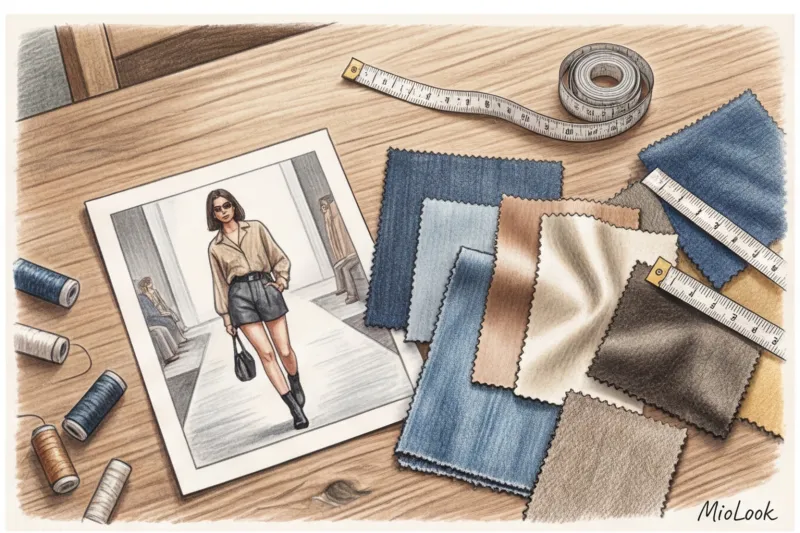
The main mistake I see my clients make is searching through overly cluttered photos. If you upload a photo of a model in a crowd against the backdrop of a colorful Parisian café, the AI will happily find... similar cobblestones or an umbrella in the background.
Algorithm for preparing an ideal reference:
- Crop the photo so that the item takes up 80% of the frame.
- Crop the model's face and bag (if looking for a coat).
- Increase the contrast if the item blends into the background.
Which references are best absorbed by AI?
Studio photos of brands (from a cyclorama) always work better than live street style. They have the right lighting, which doesn't distort the true color of the fabric. If you see a cool item on TikTok or Reels, don't take a screenshot while it's moving (the item will be blurry). Wait for the blogger to stop, or take a screenshot while the item is being shown close-up.
Remove all Instagram filters from the original. The warm preset will blur the cool gray sweater, and the AI will give you a selection of beige and brown equivalents.
Your perfect look starts here
Join thousands of users who look flawless every day with MioLook. Upload references and find perfect alternatives.
Get access — €0.99 onceThe Clone Illusion: Why 100% Similarity in Photos Is a Trap
And now, my favorite counterintuitive insight: You uploaded a photo of a Yves Saint Laurent jacket, and the marketplace gave you absolutely the same A picture, but with a €40 price tag. Should I be happy? No, run away without looking back.
A 100% visual similarity to a catalog photo from a no-name seller is a huge red flag. A Business of Fashion report (2024) on the phenomenon of "dupe culture" clearly states: fast fashion factories are simply stealing studio photos from luxury brands in 60% of cases. You're not buying a replica. You're buying a pig in a poke, sewn from the cheapest polyester in a basement, loosely based on a stolen photo.
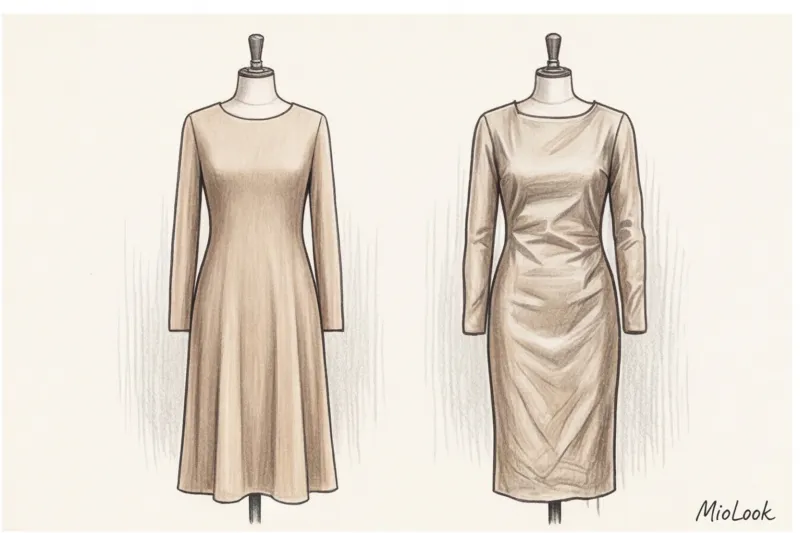
A perfect, honest-to-God dupe will always have subtle differences in the photo: different hardware, a slightly different lapel width, or the actual model in the shot. This proves that the brand actually made the item and didn't simply copy someone else's jpeg.
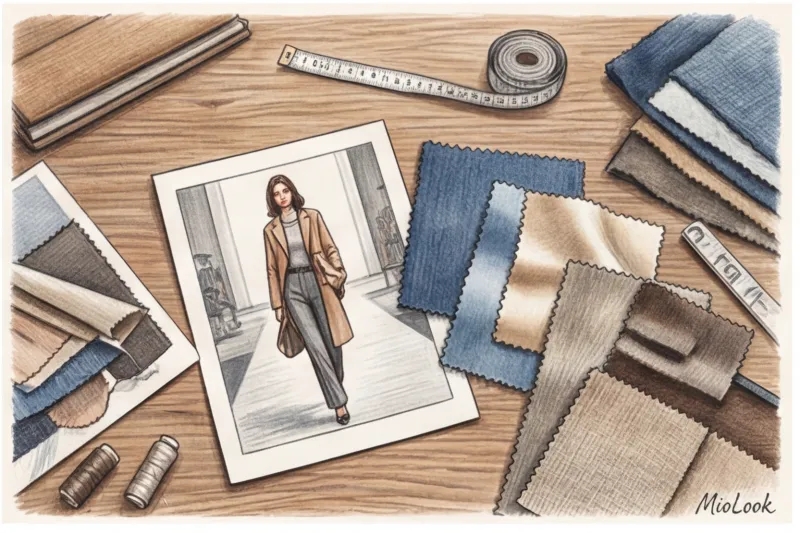
Fabric and Drapery: What Artificial Intelligence Can't See
The neural network hasn't yet learned to sense materials. It can find an identical cut, but it will ignore the physics of the fabric. Ever notice how cheap palazzo pants sit stiffly instead of flowing when you walk? That's the difference in material weight. The thick cotton of the original will hold its architectural shape, while the thin viscose-polyester blend of the analog will sag after two hours of wear. I wrote about this in more detail in the article. Fabrics that look expensive: a stylist's secrets.
From luxury to mid-market: where smart savings are hidden
Let's do some wardrobe math. What goes into the price of a €1,000 jacket from a renowned fashion house? About 15% is the cost of high-quality fabric and cuts, 5% is the trimmings and assembly, and the remaining 80% is the markup for the brand, marketing, the Milan show, and the ambassador's fee.
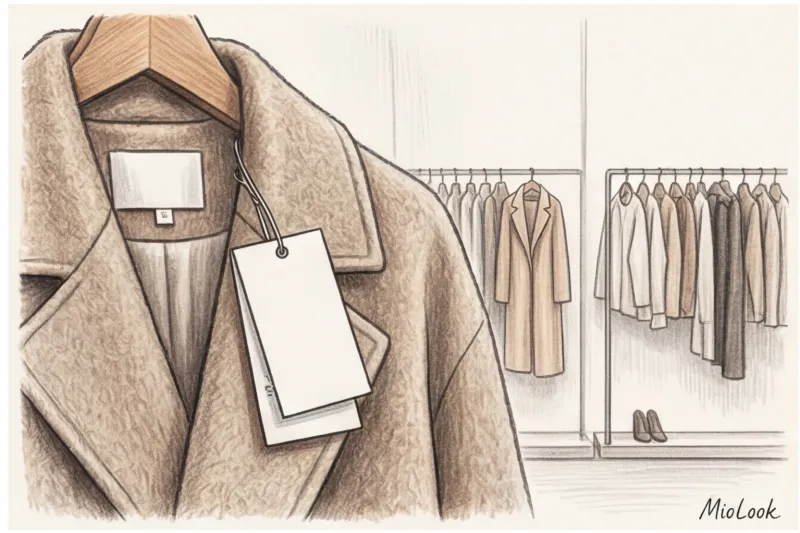
Does this mean a €30 jacket is a good deal? Absolutely not. For €30, you won't even recoup the cost of a decent fabric. But a €150–250 jacket in the premium mass-market segment (for example, COS, Massimo Dutti, or reputable local brands) is the golden mean.
You get quality comparable to luxury (the same natural ingredients, expertly crafted patterns), but without the expense of advertising campaigns. It's in this price range that visual search works flawlessly.
Access to MioLook for €0.99 — one-time payment
A smart AI stylist will create the perfect look, analyze your figure, and help you find high-quality alternatives to branded items.
Get access — €0.99 onceChecklist: Assessing the quality of a similar product using the product card
As a practicing stylist, I spend hours online shopping for my clients. Over the years, my eye automatically gravitates toward cheapness. If you find something similar in a photo, do a zoom test before clicking "Add to Cart."
- Kink test. Zoom in on the model's photo. Do you see hard, papery creases around the elbows or groin? This is a sure sign of cheap, squeaky synthetics. Good semi-wool or thick viscose will crease into soft, rounded folds.
- Composition analysis. Don't be afraid of synthetics, be afraid of using them incorrectly. A basic T-shirt should be at least 95% heavyweight cotton (at least 180 g/m²) and a maximum of 5% elastane for form. For suits, up to 30–40% polyester or nylon is acceptable—they make wool wear-resistant. But a 100% acrylic sweater is a crime against your comfort (and the environment).
- Hem width. Look at the hem of the garment or the sleeve edges. Quality brands have a wide hem (3–5 cm), which adds weight to the edge, causing the garment to lie flat. Cheap counterfeits often have a simple overlock finish with a 1 cm hem.
- Print docking. If you're looking for a checkered or striped garment, look at the side seams and pockets. Expensive tailoring always requires perfect pattern matching. Cheaper production cuts the fabric without regard for the pattern.
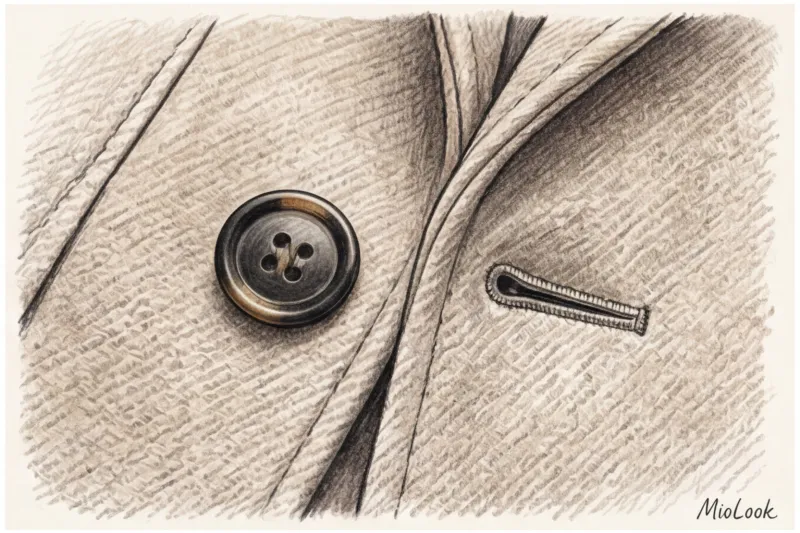
- The fittings give everything away. Shiny gold buttons made of lightweight plastic ruin any item. If the fabric is perfect but the buttons are cheap, go for it, but plan a trip to the haberdashery for horn or matte metal hardware.
Smart Shopping in Practice: A Cashmere Sweater Case
I'll share a recent story from my experience. My client Anna dreamed of the iconic Loro Piana polo-neck sweater (costing around €2,200). We uploaded a photo to a search engine.
The first issue: dozens of blatant fakes for €20–40 made of 100% acrylic. Yes, they looked similar in the preview. But I know (and Anna now does too) that acrylic will stop warming you after the first walk, and after the third wash, it will become covered in a layer of pilling.
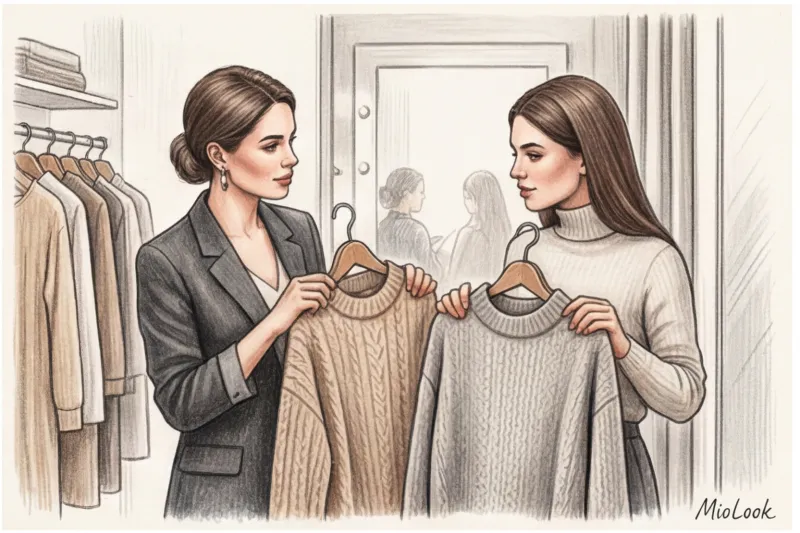
We changed our strategy. Looking for an exact copy was a bad idea. We started looking. the essence Things. After uploading the photo, I added a text filter in the app: "Merino wool," set the price range to "from €100 to €250," and excluded ultra-fast brands.
The result? We found a gorgeous sweater from a Scandinavian brand for €140. It was 80% visually similar (the ribbed cuffs were slightly different), but the composition was 90% merino and 10% cashmere. This is a piece that will last Anna at least five years. We sacrificed 20% of the visual identity for 100% quality. That's the art of smart shopping.
Investing in Style: How to Avoid Turning Your Closet into a Storage Area for Dupes
Finding similar clothes by photo is a brilliant tool AI has given us for saving money. But it's just that, a tool, not an end in itself. The ease of searching often encourages impulse purchases.
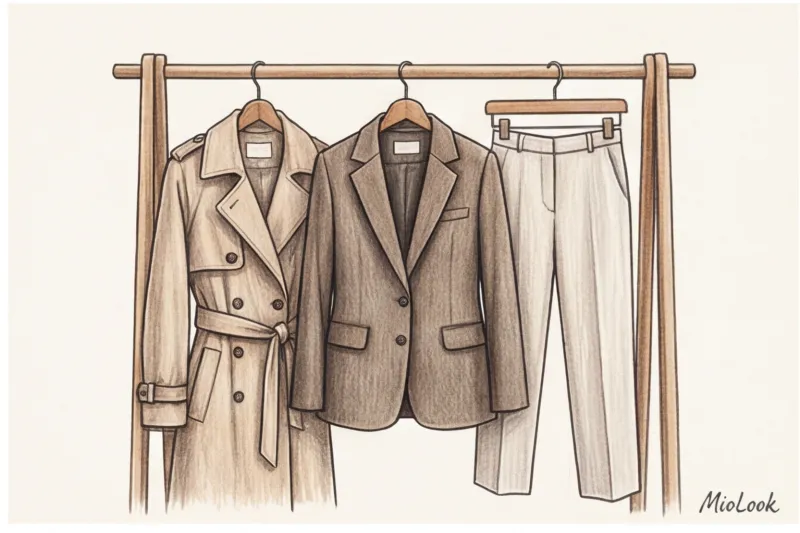
Before you pay for your shopping cart with a perfectly found, on-trend look, apply the "Three Looks" rule. If you can't create three complete looks from your current wardrobe with this new item right now, without buying more, close the tab. No amount of savings will justify an item that will hang around with the tag for years.
Quality should always trump quantity over glossy imagery. Look not for brand clones, but for high-quality alternatives that will complement your personal style every day.