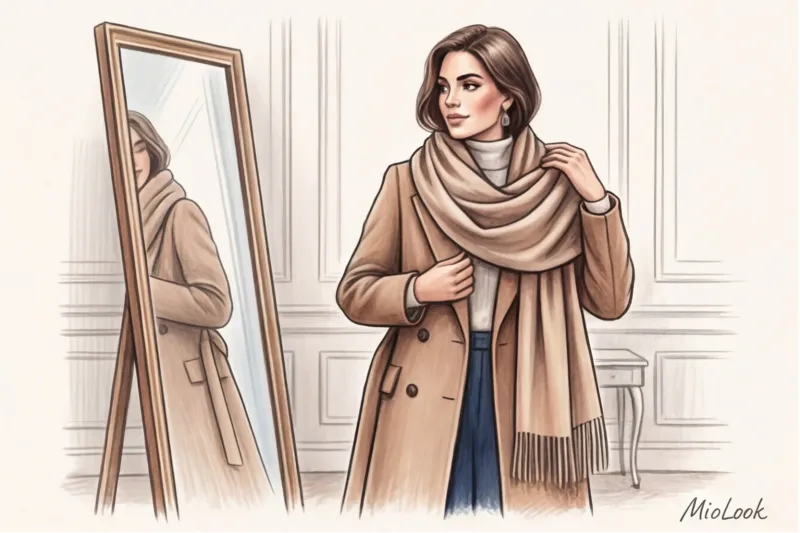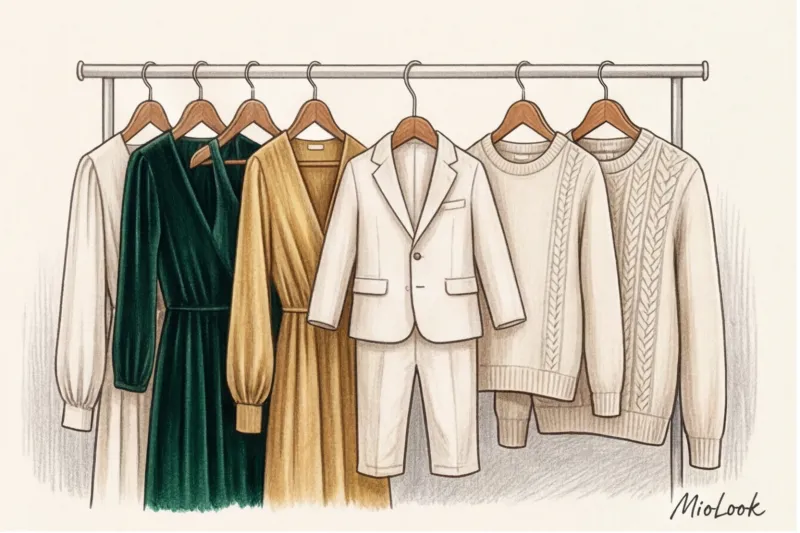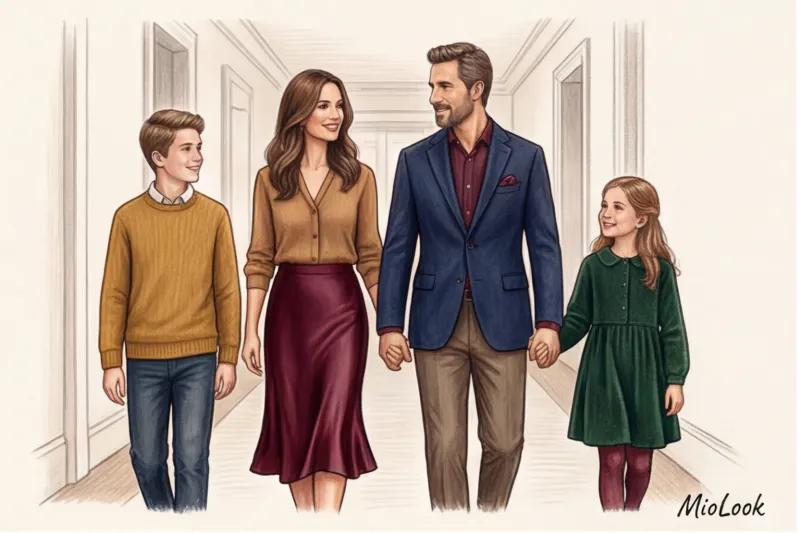
Festive Family Look: From Uniform Effect to Status Harmony
"Sofia, our perfect Christmas photos ended in tears after exactly ten minutes," a client once wrote to me. She spent weeks searching for five identical red reindeer sweaters for the whole family, ordering them from a popular high-street website. The results were disastrous: the scratchy acrylic irritated the delicate skin of her youngest son's neck, her husband, who suffers from allergies, began scratching himself constantly, and her fifteen-year-old daughter flatly refused to leave her room wearing them, calling it "complete cringing" and a violation of her privacy.
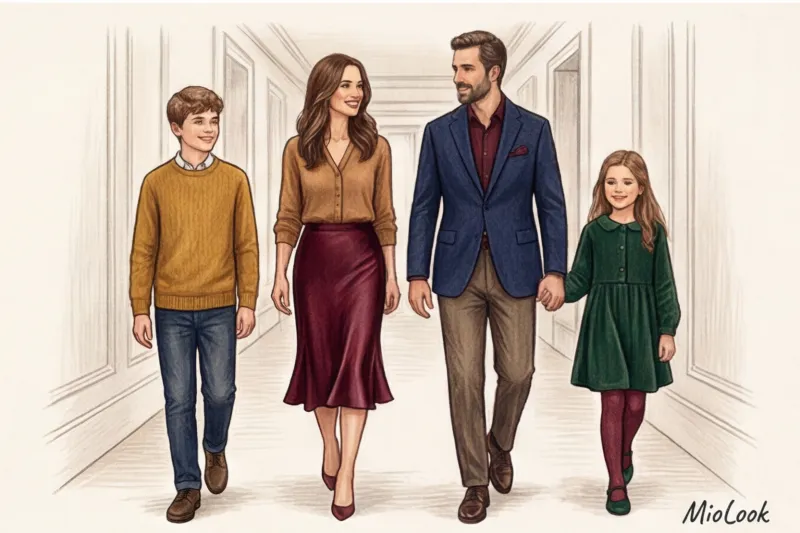
This example from my many years of experience perfectly illustrates why the modern holiday family look has changed dramatically. The trend for a "uniform" effect—that infamous matchy-matchy look from the 2010s, when families dressed in identical pajamas, slogan T-shirts, or clone dresses—is a thing of the past. Today, such a head-on approach looks not only stylistically outdated but also downright artificial.
In modern fashion, the main rule of expensive visuals sounds simple, but requires a certain amount of skill: coordinate, not copy Status harmony is built on complex undertones, overlapping fabric textures, and the use of complementary shades from the same color palette. When you look at a stylishly dressed family, you don't see clones. You see a group of vibrant individuals united by a subtle, elusive visual code.
The psychological aspect plays no less a role here than the correct color selection. When we dress our family for a celebration, our main goal is to emphasize the family unity without categorically suppressing the individuality of each member. This is especially sensitive for teenagers, for whom clothing is a crucial tool of separation and self-expression. Forcing them to wear exactly the same clothes as their five-year-old brother is a sure way to ruin the holiday.
Instead of ultimatums, offer a compromise: allow teenagers to integrate familiar silhouettes into their look (for example, their favorite wide-leg palazzo pants or a voluminous jacket), but ask them to keep them within the group's overall color palette. Geometric patterns are excellent for creating subtle visual connections. We discussed in detail how to skillfully incorporate complex patterns into a basic wardrobe in our article about types of checkered patterns in clothing — this technique works simply flawlessly for uniting different generations in family photo sessions.
Beyond aesthetic differences, the move away from matching outfits stems from a serious global problem facing the fast fashion industry. The environmental footprint of disposable, one-night-only outfits is horrifying. According to a large-scale study by the British environmental organization Hubbub, conducted in 2019, 95% of New Year's sweaters and themed holiday outfits sold in mass markets are made entirely or partially of plastic—primarily cheap acrylic and polyester.
Buying low-quality synthetics just for a single photo by the fireplace, only to consign them to the landfill after the weekend (or to the back of the closet where they'll release microplastics for decades during the wash) is a crime against responsible consumption. Not only does it cause irreparable harm to the planet, but it's also completely irrational in terms of your family budget.
Going Green: The 30-Wear Rule for Dressy Clothes
As a textile expert and ambassador for sustainable fashion, I always encourage my clients to embrace the concept #30wears This global movement, founded by eco-activist Livia Firth, offers a simple yet sobering test. Before you ring up the checkout or hit the "order" button, ask yourself one question: "Will I (or my child) wear this item at least 30 times?" In the context of formal wear for weddings and New Year's, this sounds like a real challenge, but that's exactly how you build a smart, effective wardrobe.
Let's count Cost Per Wear (CPW) — the cost per wear, which is the main indicator of conscious shopping. We'll use family outfits as an example. If you buy a "disposable" shiny polyester set for €40, which the family will wear only once to a children's party, the actual cost of that outing will be exactly €40. But if you invest in a high-quality basic jacket made of a thick wool blend for €150, which your spouse will wear for New Year's, then to a friend's wedding, and then comfortably wear to the office with jeans for three years (let's say 60 times), then the CPW will be only €2.50. The mathematics of quality speaks for itself.
The secret to a truly stylish and eco-friendly approach is to avoid buying everything from scratch. Chances are, you already have some great basics tucked away in your closets that could serve as a solid foundation for a special occasion. This is where modern wardrobe analysis technologies come in.
Before heading out on a grueling family shopping spree at the mall, I highly recommend digitizing your current items. Upload your database to the app. MioLook , you can visualize your entire family's wardrobes on a single screen. Artificial intelligence can help you discover unexpected, unrelated elements you never even considered. For example, the algorithm might discover that the deep wine hue of your silk top perfectly complements your husband's suit pants and your daughter's microcorduroy skirt. You can create mood boards of future looks right on your phone, and ultimately, you'll only need to purchase one or two missing accent pieces. This will save you hours of precious time before the holidays, hundreds of euros, and our planet's resources.
Formulas for a stylish family look without buying identical items
Did you know that a camera lens "sees" your family very differently than you see yourself in a hallway mirror? According to the Pantone Color Institute, the human eye perceives the harmony of a composition in tenths of a second—even before we have time to focus on faces. That's why ditching the identical reindeer sweaters in favor of a complex palette instantly elevates your photos from the "cute but ordinary" category to the realm of Vogue aesthetics.
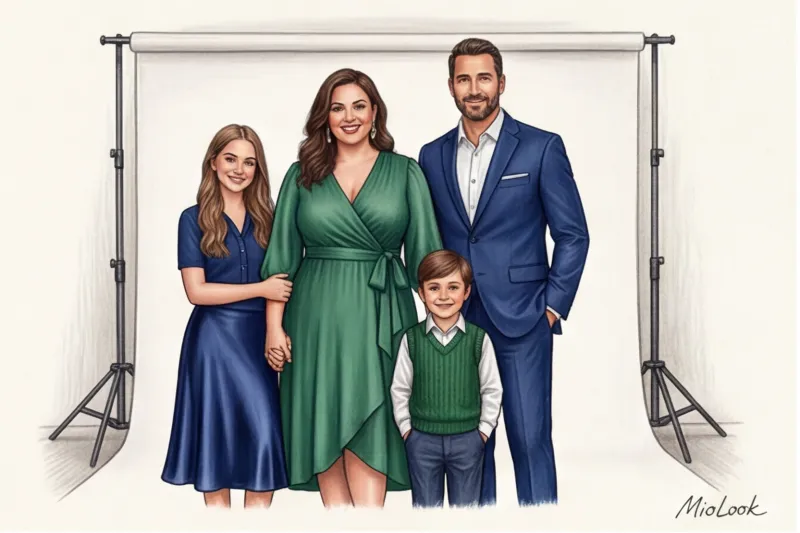
For families of 3-5 people I always use Itten's color wheel , but with one important caveat: we don't use bold (garish) colors, but muted, "dusty," or darkened shades. The most reliable scheme for a group of three is analogous (three adjacent sectors on a circle). For example, deep emerald, rich navy, and a refined teal. If there are four or five participants, a split-complementary scheme works perfectly. We take one dominant warm tone (for example, a rich burgundy) and contrast it with variations of the cool spectrum—shades of pine forest and muted blue. There's no ostentatious uniformity, but the photo creates absolute visual unity.
The secret to high-status photos isn't forced smiles, but the absence of visual noise. When your family's clothes blend into a cohesive palette with carefully chosen color transitions, your emotions and faces take center stage.
If you are afraid of overloading the frame with an abundance of shades, use rule of uniform emphasis The essence of the method is simple: one complex, multi-colored print unites the monochrome looks of the other participants. One of my clients chose a full dress in a classic Royal Stewart tartan for her daughter, featuring deep red, navy blue, and a thin mustard thread. This print became our "anchor." Mom wore a navy pantsuit, Dad a burgundy cashmere pullover, and the youngest son wore sand-colored corduroy trousers (pulling out that same mustard thread from the tartan). The complex pattern acted as a bridge, uniting all family members into a single story.
The third working scheme that I often practice is Cross-pollination formula It's a subtle play of details, where one person's dominant color is echoed in micro-elements of others' wardrobes. For example, the rich plum hue of a mother's dress is delicately echoed in a father's silk pocket square or tie, a daughter's velvet slippers, and a son's watch strap. Fair warning: This method can be easily ruined if you obsessively try to match tone-on-tone shades in different fabrics. Red cotton and red wool will always have different temperatures, and that's okay. To avoid spending hours in fitting rooms trying to remember "that plum," I recommend digitizing your items first. smart wardrobe feature in MioLook — the algorithm will help you find these cross-color connections from what you already have.
Create the perfect family look without the stress.
Upload photos of your items to MioLook. Our AI stylist will analyze shades and textures to create harmonious looks for the whole family, eliminating the need to buy new outfits one-time.
Get access — €0.99 onceA play of textures: velvet, silk and wool against flat polyester
Over 12 years of styling shoots, I've developed a firm rule: in a dressy wardrobe, the texture of the fabric is always more important than its cut. You can wear the simplest slip dress or a basic blazer, but if they're made of a fine material, the look will look premium.
Why does fabric influence perception so much? It's all about the laws of physics and light refraction. Dense merino wool absorbs the camera flash, creating soft shadows and elongating the silhouette. Velvet, thanks to the direction of the nap, provides the deepest color rendition—no other material can make sapphire color appear so three-dimensional and multifaceted. It is precisely this physical property that underlies my signature method. "Triad" Its essence is to unite the family not through color, but solely through texture. Imagine: the entire family is dressed in velvet, but the mother is in a ruby suit, the father in an emerald jacket, and the children in shades of dark amethyst. You get a stunningly dense frame without the slightest hint of boredom.
The key to creating a luxurious visual effect, if you're not going all-out velvet, is to combine matte and glossy surfaces within a single family group. The husband's matte cashmere sweater beautifully highlights and enhances the flow of the wife's glossy silk dress.
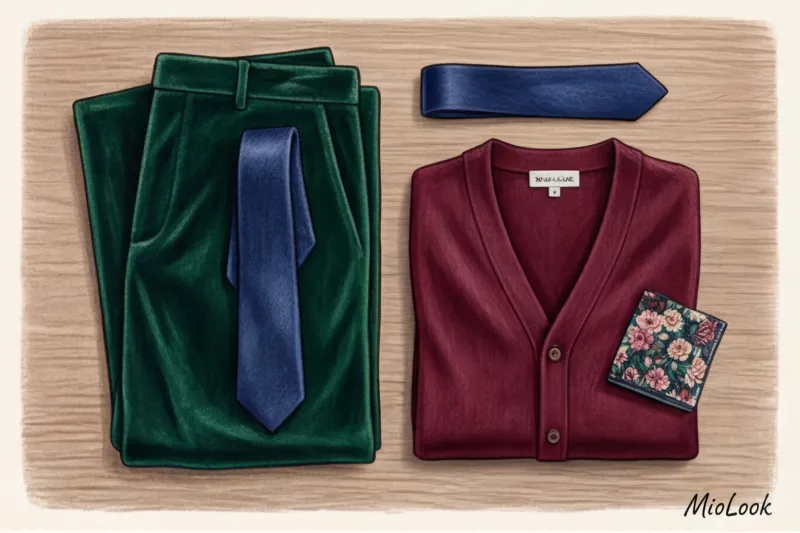
But be extremely careful with glossy finishes. Our goal is to avoid "cheap" plastic sheen. When faced with the choice between a €40 dress made of polyester acetate and a simple top made of thick organic silk (charmeuse) for €120, I'll choose the latter without hesitation. Synthetic acetate, under the light of softboxes or restaurant chandeliers, reflects as harshly as a plastic bag. It mercilessly highlights the slightest imperfections in the figure and flattens the image, literally devaluing the entire photo shoot. High-quality silk or heavy premium viscose, on the other hand, have a delicate, diffused glow from within—they softly reflect the light onto the faces of loved ones standing nearby, creating that very prestigious, warm harmony.
New Year's Family Look: Cozy and Elegant for the Big Night
According to the WGSN Consumer Habits Report (2023), over 60% of family photos taken during the winter holidays clearly exhibit what's called "contextual dissonance." What does this mean in practice? It's that typical picture by the fireplace: Mom in a luxurious sequin dress, Dad in a stretched-out casual jumper, and the kids in stiff, scratchy suits that make it impossible to sit comfortably. This fatal discrepancy in levels of elegance ruins any holiday family look faster than poor lighting in the living room.
The main rule for a harmonious shot is a consistent level of formality. You can't wear a black-tie maxi dress and have your husband in sweatpants sit next to you. To achieve this balance, you should always start with the location.
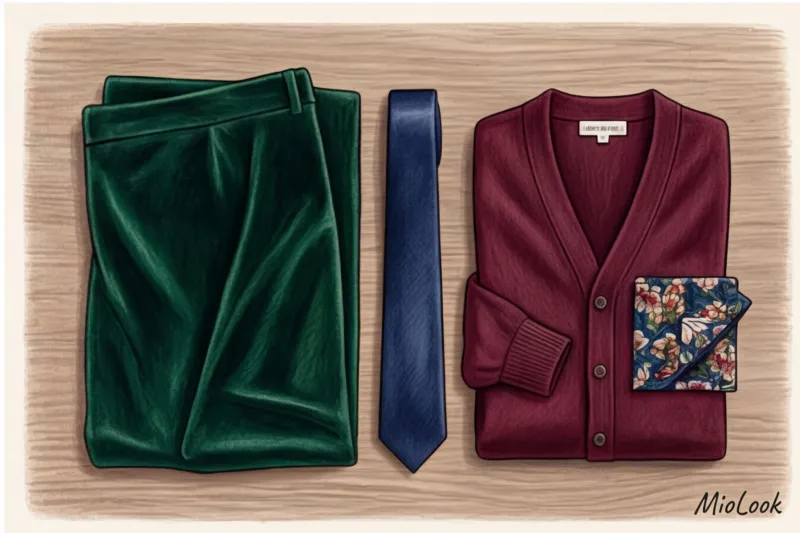
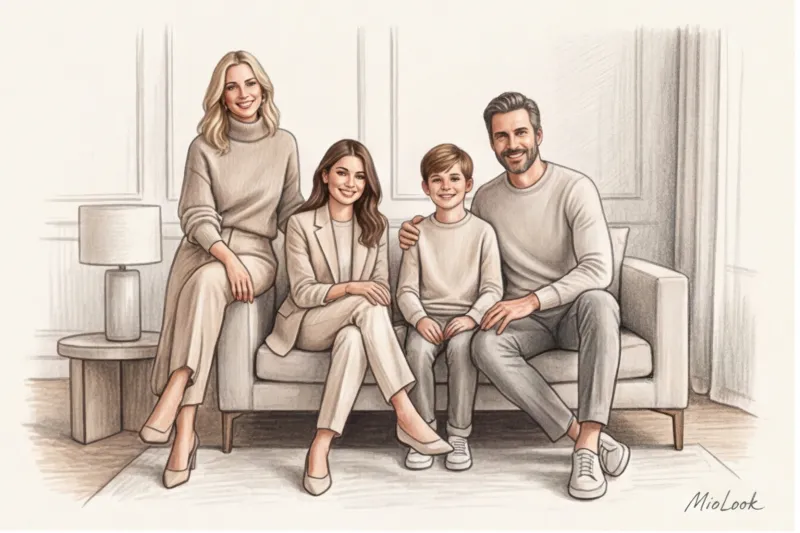
If you're planning a home celebration, rustling taffeta eveningwear and cotton pajamas are equally inappropriate. Pajamas (even the famous matching plaid sets) will dull the look, making it too casual, while ball gowns look downright comical against the sofa. The optimal solution for home is premium knitwear. Invest in cashmere sweaters, thick-knit merino wool cardigans, and flowing heavy cotton trousers. Why choose these? Natural matte fibers absorb camera flashes, creating soft, complementary shadows in photos. Basic but high-quality cashmere currently ranges from €120-€150, and this item will definitely not be consigned to the back shelf after January 1st. It's best to avoid garish scarlet in your palette. Deep, calming shades look much more refined: complex greens, rich burgundy, and enveloping milky tones.
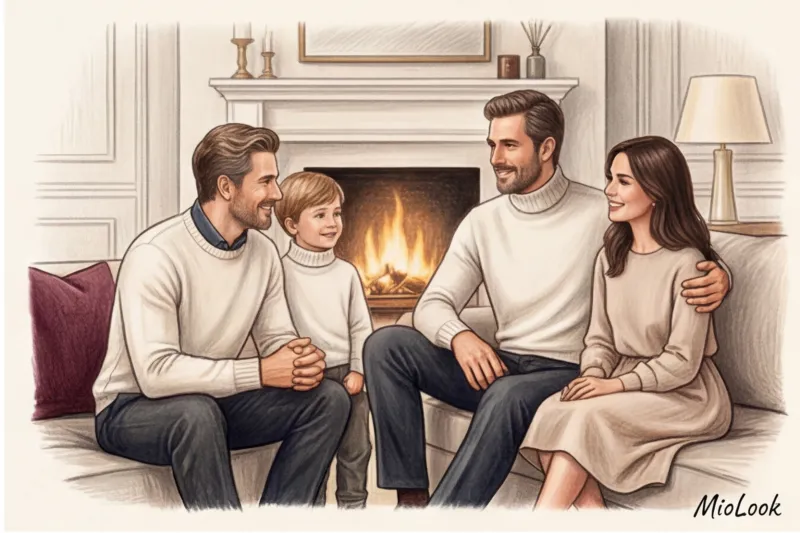
A completely different approach is required if the celebration is taking place at a restaurant or country club. Here, relaxed cardigans give way to smart casual with evening elements. Instead of forcing the whole family into formal attire, play on elegant layering and statement fabrics. Mom might choose a silk slip with a menswear-inspired jacket, dad a deep emerald corduroy jacket over a turtleneck, and the child might pair comfortable chinos with a matching turtleneck.
Evening elements in family smart-casual are often subtle accents: intricate velvet textures, chunky metal jewelry, pumps instead of everyday loafers. They elevate the look without feeling like you've tried too hard.
To plan these combinations in advance and avoid discovering an hour before you go out that your textures are desperately clashing, I recommend creating visual mood boards. You can digitize your outfits through MioLook and create a collage of everyone's clothes on one screen. This simple habit allows you to spot any imbalances in formality or color before you even start ironing.
Wedding Family Look: Etiquette and Impeccable Taste of Guests
One of the most common mistakes invited families make is trying to look like a single decoration for someone else's celebration. Wedding etiquette dictates a strict rule: guests should not visually compete with the newlyweds. If you overdo the coordination of outfits within your family, you risk stealing the spotlight in group photos. The basic principles of appropriateness here closely echo the rules of business etiquette and strict dress codes from our related articles, where restraint is always valued over flashy accents. And, of course, don't forget the main no-no: no element of the family wardrobe should copy the shades of the bride's dress. Avoid pure white, ivory, and champagne, even in children's attire.
Last season, I styled a family of four for a Provençal-style destination wedding. The invitation called for lavender. The worst advice for such occasions is to dress everyone in identical all-purple looks. This risks blending in with the banquet hall tablecloths or looking like a retinue of bridesmaids. When planning this festive family look, we took a different approach: we integrated the theme color exclusively through accessories.
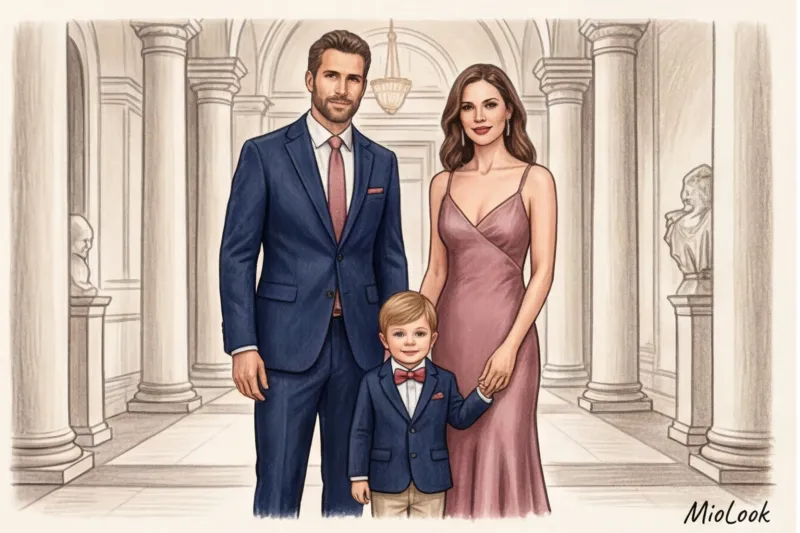
The father wore a deep plum tie, the daughter a soft lilac ribbon, the mother amethyst earrings, and a barely-there lavender pocket square in the teenage son's breast pocket. The main backdrop was neutral sand and light gray suits made of breathable linen blends. The theme color served as a subtle unifying thread, without overpowering the look.
A formal dress code (Black Tie) for the whole family presents a completely different level of complexity. Purchasing long-term tuxedos and evening gowns requires a serious budget and a cool head of budget. A good classic men's tuxedo made of tropical wool will cost between €600 and €900, a perfectly reasonable investment if the head of the family attends such events at least a couple of times a year. However, for rapidly growing children, renting is definitely a better option. A high-quality children's three-piece suit or miniature tuxedo can be rented for around €50-70 per occasion. This is a smart and eco-friendly choice, freeing your closet from expensive, one-time-only items.
Renting women's full-length dresses is also often more cost-effective, especially if you prefer dresses with complex cuts or bold embellishments that will be memorable to guests and won't look as fresh by the next celebration. Before heading to rental shops, I strongly recommend digitizing your database. You can upload your husband's existing classic suit to MioLook and directly in the app, virtually try on evening dress options from catalogs to assess in advance how harmoniously their textures work together.
Access to MioLook for €0.99 — one-time payment
Start creating perfect images with the help of artificial intelligence
Get access — €0.99 onceChildren's comfort: the secret to a peaceful holiday
Did you know that, according to child psychologists, about 70% of children's tantrums at crowded celebrations are triggered not by fatigue or too many sweets, but by uncomfortable clothing? It creates instant sensory overload. As a textile technologist, I often see gorgeous outfits in stores that, in practice, turn a child into a ticking time bomb. The child can't clearly articulate, "Mom, this lurex thread is scratching my collarbone," so they simply start crying and throwing a tantrum. As a result, your perfectly crafted family holiday outfit falls apart even before the main course is served.
Sensory compatibility between fabric and a child's skin is more important than any visual aesthetics. Dressy clothing should not alter the natural biomechanics of movement or cause even the slightest itching.
The main enemy of a relaxing evening is hidden synthetics and a stiff lining. Luxurious tiered skirts, using stiff tulle for volume, or bodices heavily embroidered with sequins should never be worn next to bare skin. Analyzing the lining is the first and most important step when shopping for a children's dress. Look for so-called "cotton covers" (cambric, fine single jersey, or muslin). If you're choosing a dress, even in the premium segment (€100 to €250), be sure to check the sewing technique: rough seams should be hidden between layers of fabric or, ideally, brought out with a soft overlock (for toddler dresses). Also, make sure the breathability of the cotton isn't blocked by a layer of hot-melt adhesive, which is often used to attach voluminous decorative appliqués.
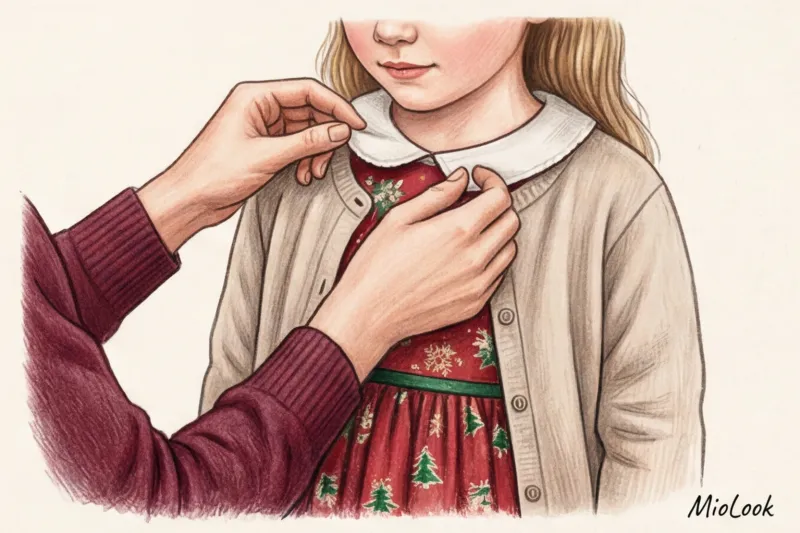
The second aspect of a smart approach is freedom of movement and proper temperature regulation. Children are hyperactive at parties: they run around, sweat, and then inevitably end up in drafts or under air conditioning. It's best to leave those stiff, heavy polyester shell jackets to the mannequins. My professional advice: use smart layering. Choose a lightweight basic dress or a breathable poplin shirt, and for warmth, consider a loose cardigan made of merino wool or heavy cotton. To ensure that your everyday warming layer doesn't ruin the shot, I recommend digitizing your clothes in advance and packing them in a MioLook smart wardrobe — the app will clearly show whether a cozy sweater matches the formal outfits of the rest of the family.
Finally, secure hardware is crucial. Bulky metal zippers on the back that cut into the seat, and scratchy Velcro fasteners are a no-no. I strongly recommend completely avoiding tight bow ties with hard elastic bands for children. They constrict the neck, cut off circulation, and make you want to rip the accessory off immediately. Replace them with soft bow ties with secure clips that attach to the collar, or simply choose a shirt with a stylish mandarin collar made of softened linen. Remember: the elegance of a prestigious portrait should never come at the cost of a child's tears.
Capsule Approach: The Life of Holiday Items After the Celebration
The most unfortunate fate of a beautiful item is to become a "disposable" investment. Statistics from the British environmental agency WRAP (2023) show that approximately 30% of formal wear is worn exactly once. Once your perfectly curated festive family look has served its purpose at a photo shoot or reception, it's time to apply the principle of deconstructing your formal look. This is the skill that distinguishes a modern, mindful wardrobe from the expensive habit of buying clothes strictly for special occasions. The idea is to break down your formal outfit into its individual components and integrate each element into your everyday routine, dramatically reducing the cost per wear.
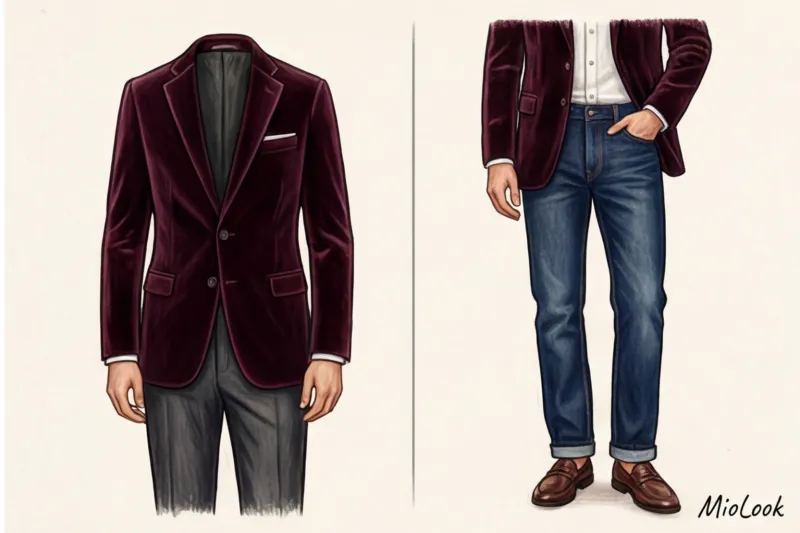
Let's take a classic example. A men's or women's velvet jacket (a good basic option in heavy cotton will cost you between €150 and €250) shouldn't be left gathering dust in the closet until next New Year's. We style men's and women's statement pieces by contrast: the luxurious texture of velvet requires a matte, light-absorbing "neighbor." Pair such a jacket with straight-leg distressed jeans, a basic white T-shirt, and leather loafers—the result is impeccable smart-casual for brunch or a casual office. The denim instantly balances the overly formal look of the top.
This same law of texture paradoxes works flawlessly for children's wardrobes. Fluffy gowns made of taffeta, velvet, or layered tulle look stunning outside of formal occasions, if their flourish is tempered by a slightly casual setting. Children's formal dresses, paired with chunky boots (for example, classic Chelsea boots with a lug sole) and a voluminous chunky-knit wool sweater worn over them—this is a formula that dramatically extends the lifespan of a garment. The child gains warmth and freedom of movement, and the expensive garment earns its price before it's completely outgrown.
Based on my experience reviewing clients' wardrobes, I've compiled my personal list of the top 5 elegant pieces that easily become part of a casual wardrobe:
- Silk almond skirt (bias cut) - perfectly “calms down” with a voluminous gray hoodie and basic sneakers;
- Velvet jacket - works instead of a regular trench coat on a cool evening;
- A quality white shirt — an ideal base layer under a thick jumper or textured vest;
- Mary Jane shoes — add Parisian chic to a pair with regular wide-leg jeans;
- Wool cardigan with accent buttons - replaces a light jacket in the off-season.
You don't need the expertise of a professional stylist to learn how to incorporate such items into your everyday life. I always recommend uploading a photo of a "complex" item to your smart wardrobe—the algorithm will instantly show you how. MioLook helps you create everyday outfits with just one dressy piece. Artificial intelligence will analyze your basics and select the most unexpected, yet stylistically perfect pairings from what's already in your closet to complement your statement piece.
Your ideal image begins Here
Join thousands of users who look flawless every day with MioLook.
Get access — €0.99 onceChecklist: Putting together a festive family look step by step
When people approach me to style a family of four or five, we never start with a trip to the mall. A frantic shopping spree a week before the big day is the main enemy of a harmonious photo and your budget. Over the years, I've developed a rigorous algorithm that transforms preparation into a clear, manageable task, not a stressful survival quest. Save this checklist; it will work flawlessly for any event.
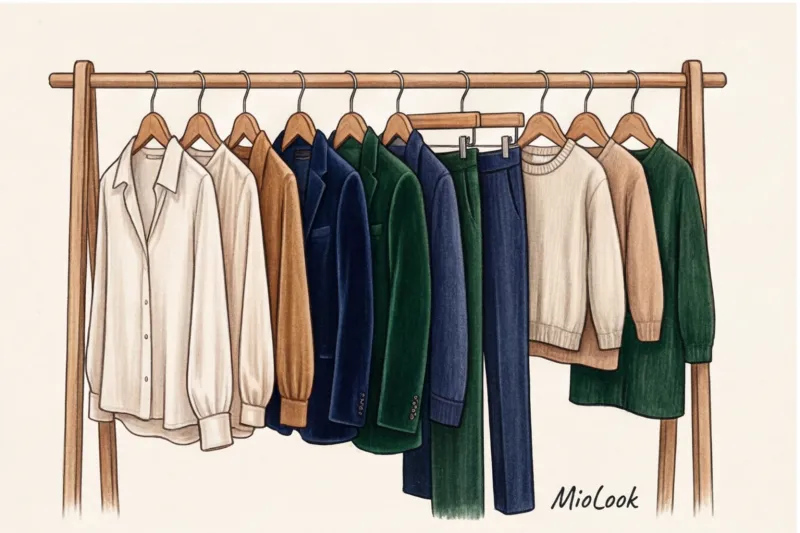
Step 1: Determine the location and level of formality
Context dictates everything. Before choosing a color palette, honestly assess the "temperature" and format of the event. A solid velvet suit will look heavy at a daytime summer wedding, and light linen dresses will be lost in a pompous restaurant interior with heavy drapes.
- For a restaurant or hall: We focus on structured fabrics, heels, classic leather shoes for men and a subtle sheen (silk, satin).
- For an evening at home: We're ditching stiff collars and stiletto heels. We're embracing tactile comfort: cashmere, thick knits, suede loafers, and flowing midi skirts.
Step 2: Selecting an Anchor Element
An "anchor" is the item with the most complex print, vibrant texture, or multifaceted color combination in your group. In professional circles, we call this the "first-fiddle rule." Most often, the anchor is mom's dress or a statement jacket belonging to an older family member.
Let's say you've chosen an Erdem dress or a high-quality equivalent with a large botanical print: terracotta flowers with splashes of mustard and dusty pink spread across a deep emerald background. Congratulations, your color palette for the whole family is ready.
Step 3. Distributing colors from the anchor to the rest
Now we're literally breaking down the anchor print into its molecules. You're taking shades from the dress and distributing them in large color blocks among the other pieces.
- Dad gets a turtleneck or sweater in a deep emerald color (repeating the background of the dress).
- For my son, I wore terracotta-colored corduroy trousers (replicating the color of the buds) and a neutral shirt.
- Daughters - dusty pink cardigan or skirt (repeat the accent petals).
This is how you create that professional-level festive family look: you look like a single whole, but at the same time, no one is an exact copy of the other.
Step 4: Review your wardrobe (search for matches)
According to the Fashion Revolution global report (2023), most people actively wear only 20-30% of their wardrobe. Before heading to the store, audit your closets using the color matrix you've identified.
To avoid laying out mountains of clothes on your bed while trying to keep a picture in your head, digitize potentially suitable items through a virtual fitting room in the MioLook app This feature allows you to assemble a family image puzzle right on your smartphone screen. You'll clearly see how Dad's emerald sweater fits alongside Mom's silk, and you'll immediately understand where the gaps in the composition have formed.
Step 5: Buy only the missing high-quality basic items
Only at this final stage do we open store websites. We search strictly for the missing connecting elements. And here lies the main secret of eco-friendly consumption: don't buy disposable "dressy" synthetics for €40 that will fall apart after the first wash.
Instead of a cheap statement piece, invest in a luxurious base piece that complements your color scheme. A high-quality merino wool cardigan for €120 or a crisp Egyptian cotton shirt for €90 will make a statement at a special occasion and then transition seamlessly into your everyday wardrobe, making every penny worthwhile.
The perfect holiday look is one you forget about exactly five minutes into the celebration. It's not too tight or itchy, the textures work for you in the spotlight, and the mirror reflects a beautiful, individual, yet infinitely united family. Invest time in planning, trust in high-quality fabrics, and may your holiday photos always be flawless.
Guide Chapters
Virtual Family Clothing Try-Ons at MioLook
How to avoid tears and discomfort during a family photo shoot? Learn how to create the perfect holiday wardrobe stress-free with the help of smart technology.
Christening Attire for Parents: A Stylish Family Look
How to choose family outfits for a baptism to avoid awkward photos? We'll share the secrets of an elegant family look.
Evening Dress Code for Couples: Black Tie Style Rules
Forget about matching your tie to your dress! We'll explore the key rules of black tie style that will help you look truly classy at any special occasion.
How to Dress for Parents' Graduation: A Stylish Family Look
Forget awkward matching outfits. We'll show you how to create harmonious looks for mom, dad, and the graduate.
Matching Father and Son Outfits for the Holidays: A Guide
Styling tips for creating a stylish father-son duo look. Learn how to coordinate items comfortably and tastefully.
Festive Family Look for Plus Size Women: Stylist Tips
How to create a harmonious look for a family photo shoot when standard shapes don't work? Learn the professional secrets of a plus-size stylist.
How to Match Family Clothes by Color: Family Look
Wearing the same outfit for a photo shoot is hopelessly outdated. We'll show you how to create a harmonious and stylish family look with the right color combinations.
New Year's Pajamas for the Whole Family: A Stylish Family Look
Forget about awkward matching outfits! We'll show you how to create a stylish and harmonious holiday look for the whole family, one that will make everyone feel comfortable.
A stylish family look for a child's birthday
How to create a stylish family look for a children's party and avoid the "clone" effect. Insider tips from a stylist on choosing textures and shades.
The Perfect Family Wedding Look for Guests: Stylist Tips
Forget boring identical outfits! Learn how to create a stylish and harmonious family wedding look using color principles and modern etiquette.
New Year's Family Look for a Photo Shoot: Ideas and Trends
Forget about matching deer sweaters! Learn a professional stylist's secrets for creating stylish and harmonious looks for the whole family.
Mother and daughter dresses: how to choose a matching style
Should you buy identical dresses for your mother and daughter? We explore common family look mistakes and learn how to create harmonious looks.