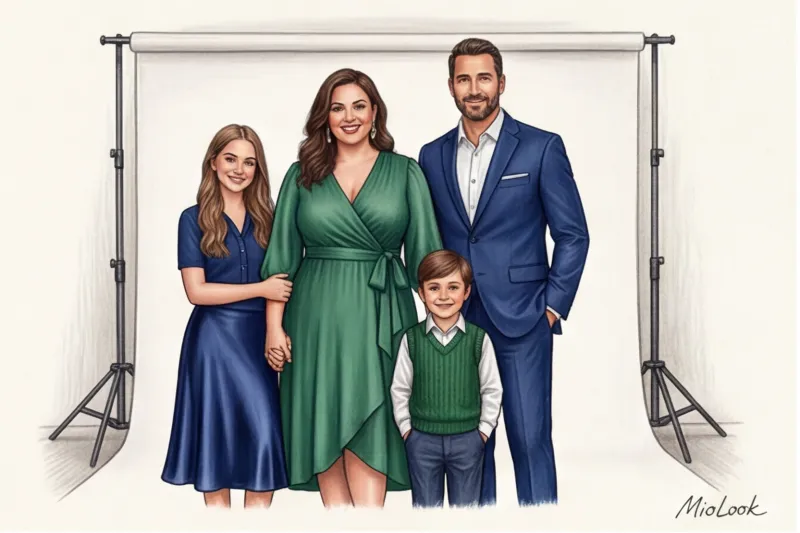
Have you ever noticed how, before every holiday family photo shoot, mothers begin to nervously seek a compromise between "making us look harmonious" and "making me look less like a square"? The statistics are relentless: over 70% of curvy women experience genuine stress when choosing clothes for group shots. The reason is simple: the lack of suitable patterns in standard "family" mass-market lines.
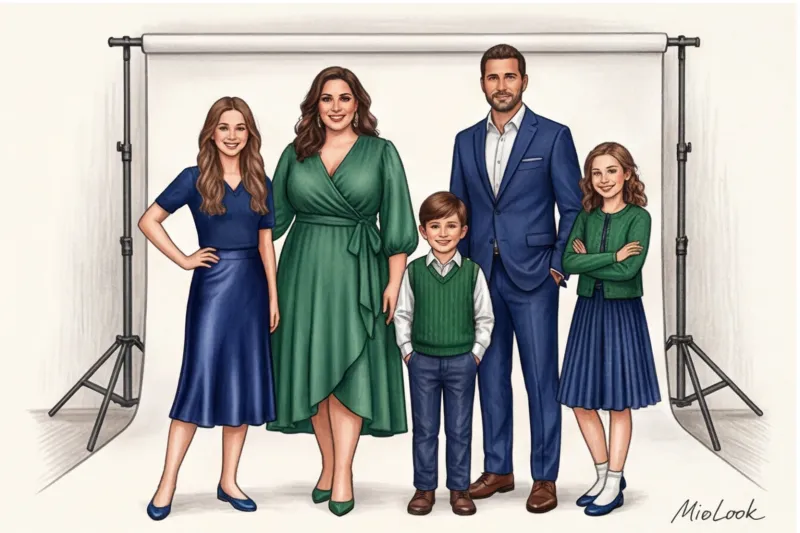
I remember a client, a beautiful plus-size woman, who flatly refused to do New Year's shoots. She felt monumental in matching chunky knit sweaters next to her petite husband and skinny children. It was then that we decided to permanently abandon the traumatic idea of matching clothes. Instead, we applied a professional approach through color and optical illusions. We discussed the basic rules for creating such wardrobes in more detail in our A complete guide to the festive family look: stylish looks for special occasions.
In this article, as a practicing stylist and colorist, I'll share how to create the perfect family look for plus-size women, combining different body types with complementary colors and textures. Forget boring, cloned outfits—we're going to create a classy harmony.
Why the "uniform" effect is the worst enemy of a non-standard figure
Let's be honest: the matchy-matchy concept (when the whole family dresses identically) only works in laundry detergent commercials. In real life, identical clothes mercilessly highlight differences in size. This is a basic law of perception: when the brain sees two identical objects, it automatically begins to compare them. If you put identical striped shirts on a size 10 man and a size 12 woman, the horizontal stripes will play a nasty trick on the female figure.
The main problem with ready-made mass-market sets lies in the patterns and fabrics. Brands sew sets using generic patterns to reduce costs (usually such a set costs €40-€80 for the whole family). One time, a client of mine with an apple-shaped figure literally burst into tears in the fitting room: she bought identical taffeta dresses for herself and her seven-year-old daughter. On the daughter, the stiff material looked like a princess, but it turned her mother into a rigid rectangle, adding visually about 10 kilograms.
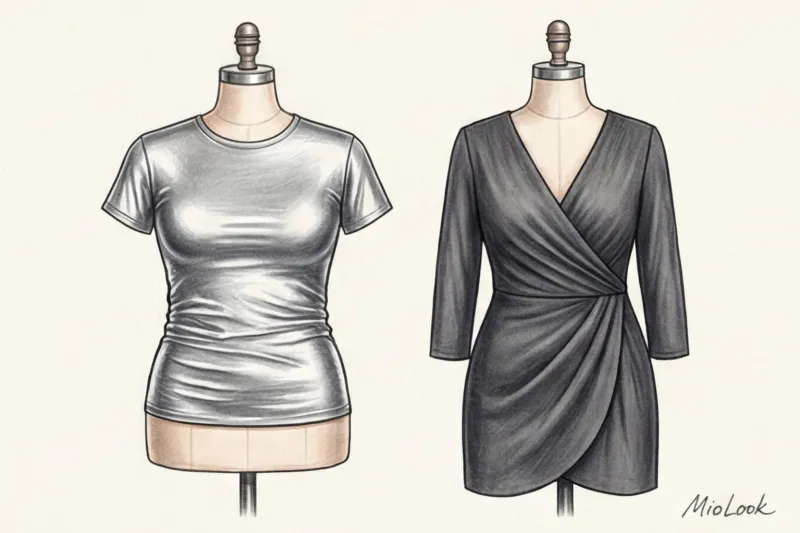
Stiff fabrics (brocade, taffeta) and shiny textures (sequins, lurex) are the worst enemies of curved figures. They don't drape, but rather stand upright, ruining the body's natural proportions.
Instead of the "kindergarten group" effect at a matinee, I propose putting together looks the way fashion house stylists do before shows: through a single concept, but taking into account the architecture of each specific body.
Access to MioLook for €0.99 — one-time payment
A smart AI stylist will select the perfect look for the whole family, taking into account the characteristics of each figure.
Get access — €0.99 onceColor formula: how to create a stylish family look for plus-size women without copying styles
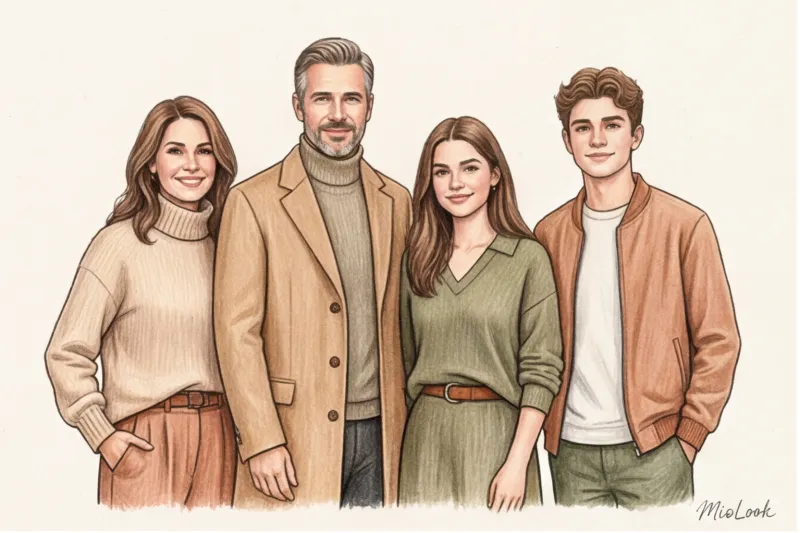
The foundation of a well-designed family look is the rule of a uniform temperature base. You don't have to dress in the same color, but all the shades in your capsule should be either strictly warm or strictly cool. Johannes Itten's color theory proves that harmony is achieved not through identical colors, but through the relatedness of shades.
My favorite professional technique is a color gradient. It looks a hundred times more valuable than the proverbial "white top, black bottom." Take green, for example. For a plus-size mom, we choose a deep, rich emerald shade (it's slimming and flattering). The daughter might wear a light mint dress, and the dad a dark green pine jacket or jumper. It's the same color, but its saturation varies.
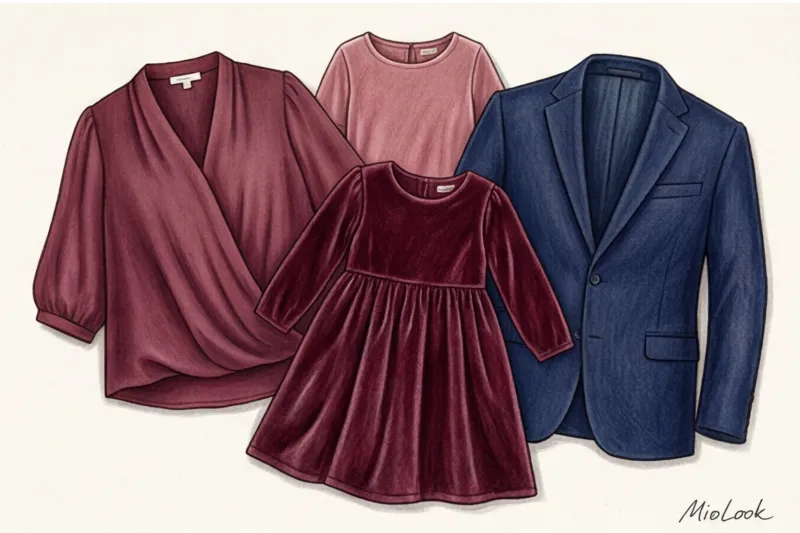
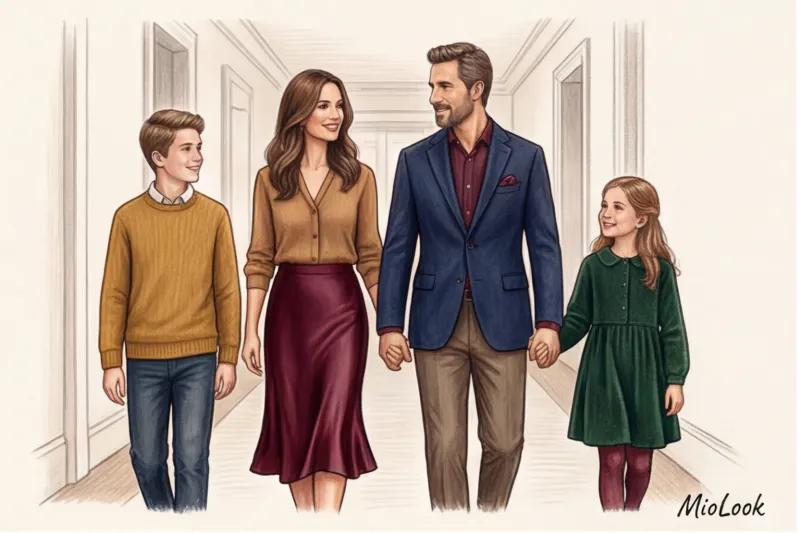
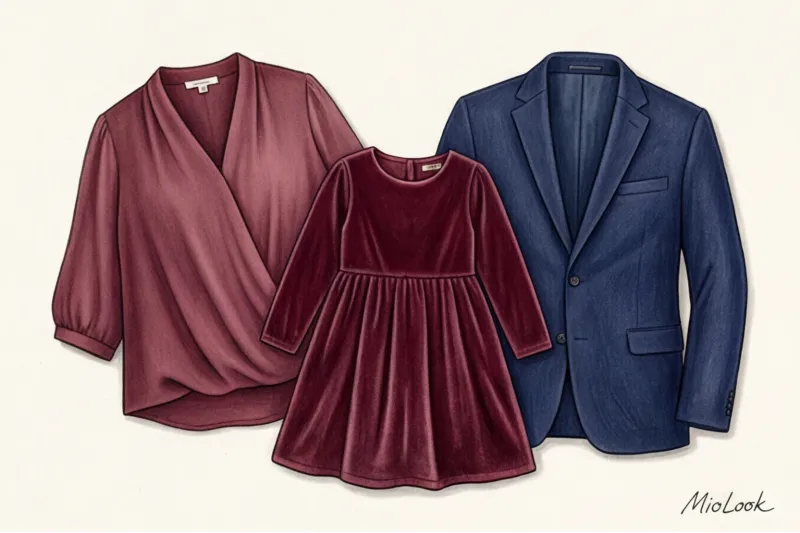
Family members often have dramatically different colorings. How can you balance your mother's "Summer" color type (muted, cool tones) and your husband's "Winter" color type (bright contrasts) in the same photo? My colorist's secret: use transitional shades. If your husband looks good in a crisp white shirt and a jet-black suit, your mother shouldn't wear a washed-out gray—she'll get lost. We use a complex burgundy or deep sapphire shade that will complement your husband's contrast without overpowering your mother's soft complexion.
Visual Weight in a Frame: Hiding Volume with Shades
Professional fashion photographers always work with the concept of "visual weight." Dark and matte colors "weigh" more in the frame, while light and shiny colors weigh less. That's why you shouldn't blindly follow the myth that "plus-size women should hide in the shadows and wear black, while children wear bright colors."
If a mother wears a stark black dress, while her husband and children wear crisp white shirts or pastels, the photo creates a "black hole" effect. The camera literally swallows up the silhouette in the dark, visually cutting the mother off from her family. The right solution is to choose the same brightness level for everyone. For example, if the family is wearing light colors, a plus-size mother might look great in a matte pearl gray or dusty rose shade in a thick fabric. It's not the black color that creates the silhouette, but the right cut and thickness of the material.
Playing with Textures: How to Adapt One Color to Different Body Types
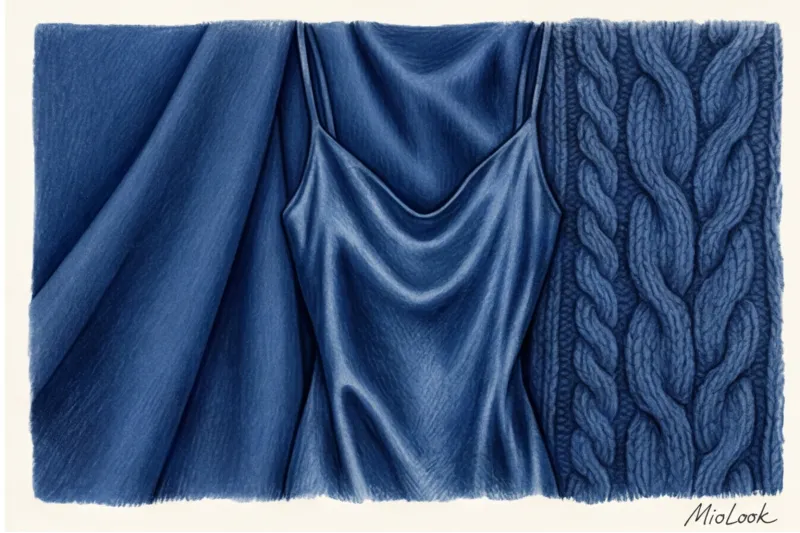
The secret to looks that look like a million dollars is simple: one color, but completely different fabrics. This technique allows you to disguise any figure nuances while remaining within the family concept.
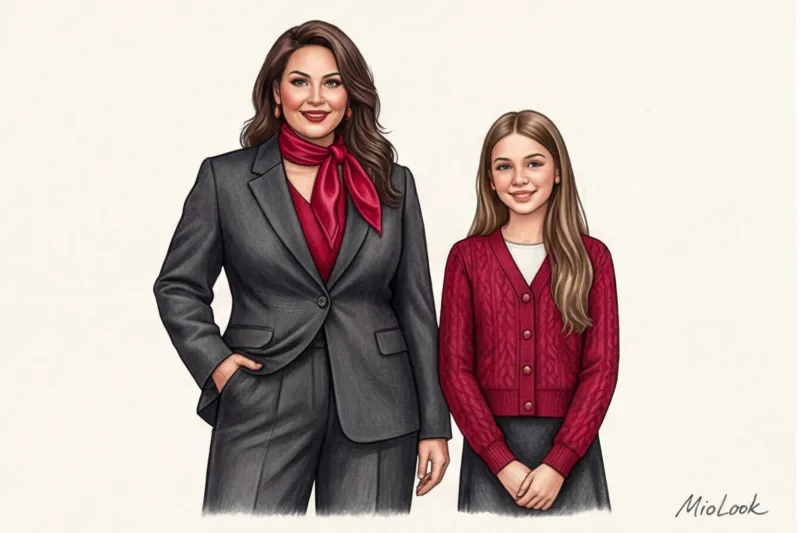
For plus-size figures, it's crucial to choose matte, heavy, flowing fabrics. Thick silk, matte crepe with a weight of at least 200 g/m², high-quality suiting wool, or viscose with added elastane (approximately 5%) are ideal. These fabrics tend to fall downwards under their own weight, creating a clear vertical line and concealing uneven contours.
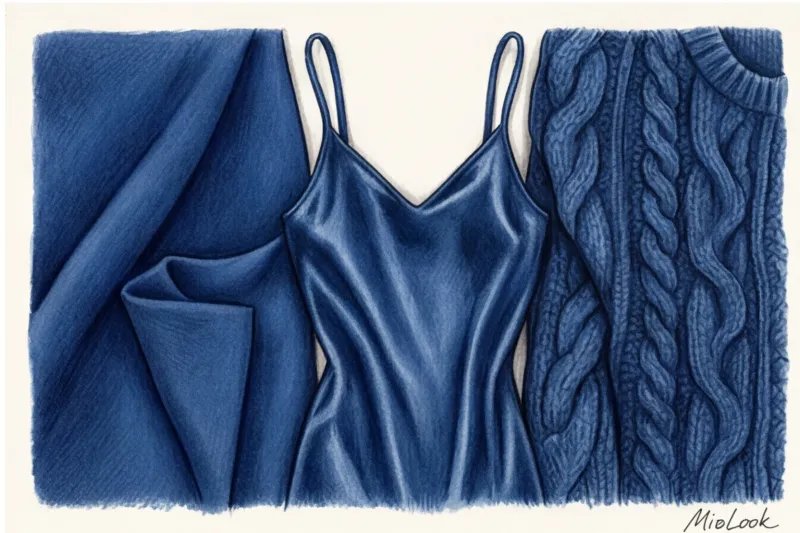
For slimmer family members and children, textured fabrics like velvet, corduroy, sequins, chunky knits, or tulle can be used in the same color scheme. They'll add just the right amount of volume where needed.
Optical illusion: the shimmer of sequins on a clone dress will add at least two sizes to a curvy woman. Light reflects off each sequin in all directions, visually expanding the body. Save the sequins for a skirt for your slender teenage daughter.
Let's look at an example. A family chose a ripe cherry shade for their New Year's shoot. For the mother, we chose a thick crepe wrap dress (the wrap creates a cinched waist and elongates the neck). For the father, we chose a velvet jacket in the same shade (it adds a touch of class). The daughter chose a tulle skirt with cherry glitter, and the son chose burgundy corduroy trousers. Perfect, fun, and complementary for everyone.
Your perfect look starts here
Join thousands of users who look flawless every day with the smart wardrobe in the MioLook app.
Get access — €0.99 onceThe "Unifying Accent" Strategy: When Figures Require Radically Different Cuts
There are situations when compromise in style is impossible. A mother needs a smart, well-tailored pantsuit for confidence, while her five-year-old daughter dreams of nothing but a fluffy princess dress. Forcing her child to wear a boring, minimalist sundress is a surefire way to ruin everyone's mood.
In such cases, creating a unified identity through accessory groups or prints can be a lifesaver. McKinsey's "State of Fashion 2024" study clearly identifies a trend toward "quiet luxury" as opposed to flashy, identical logos. We create cohesion through subtle touches: scarves, bow ties, suede shoes, or hairpins in the same sophisticated shade.
Another powerful tool is the "cross-pollination" rule. The mother's silk top echoes the son's chinos and the subtle checkered pattern on the father's jacket. If you use prints (such as classic tartan or houndstooth), vary their scale: a medium or slightly larger diagonal check will suit a plus-size mother (it's slimming), while a small, height-appropriate check will suit the child.
Anti-trends: 5 mistakes that will ruin your holiday family photos
In 12 years of working as a stylist, I've seen hundreds of ruined photos. Here's what you should discard immediately, so you don't have to hide your album away later:
- T-shirts with the same inscriptions. "Best Dad," "Boss Mom," "Son of the Tsar"—this cheapens the image and turns a family photo into a souvenir from a resort tent.
- Matching acrylic deer sweaters. Not only is 100% acrylic staticky and uncomfortable on the body, but these sweaters also fit terribly on large-busted figures. The print on the chest stretches, distorting the proportions.
- Total denim of the same color. If the whole family wears blue jeans and denim shirts, you'll blend into a single blue blob in the photo. Denim should be broken up with different textures: leather, suede, cashmere.
- Ignoring teenagers' personal boundaries. Forcing your 15-year-old son to wear a velvet bow tie for the sake of a photo shoot is a recipe for ruined photos. Let him choose his own style (like a hoodie), but within the palette you've set.
- "Funny" New Year's pajamas for adults. This is my biggest style trigger. Onesies and ribbed flannel sets mercilessly flatter plus-size figures, highlighting every fold and creating awkward creases in the groin area.
A stylist's checklist: creating the perfect Family Look for any body type, step by step
I give my clients this step-by-step guide before they go shopping on their own. Save it to save time and stress (and avoid impulse purchases of €200–€300):
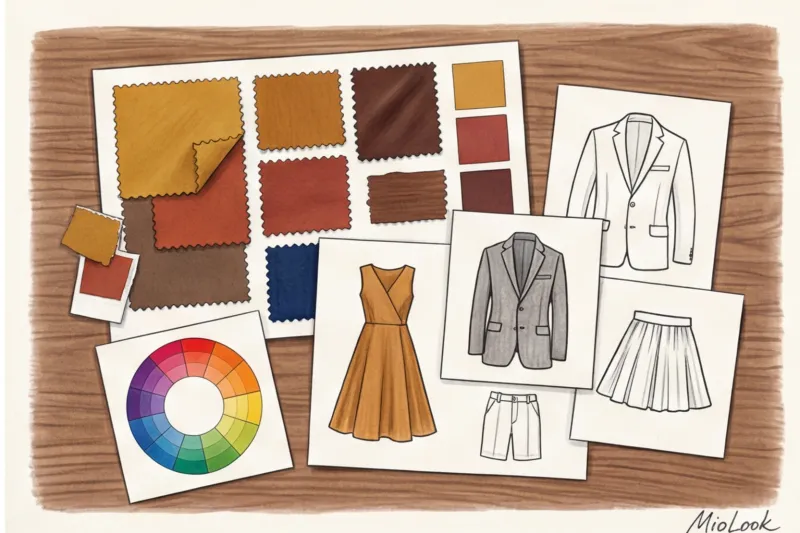
- Step 1: Assess the background. Choosing clothes always starts with the location. If the studio is in loft-style brick tones, avoid neon pink. Use the contrast or nuance of the interior as a guide.
- Step 2: Choose a lead color based on the most complex family member. Most often, it's mom. Find the shade that makes your skin look fresh and your eyes pop. Everyone else will follow suit—men's and children's fashion tolerates more compromises.
- Step 3: Choose your individual styles. First, we dress mom with her figure in mind (V-neck, wrap, vertical lines), then we select a comfortable cut for dad and the kids.
- Step 4: Add textures and patterns. Make sure your bed pile includes matte, shiny, smooth, and fuzzy textures.
- Step 5: Take a test photo with your phone in daylight. Lay out your items side by side or put them on and take a photo in the mirror. The camera sees differently than the human eye: it will immediately show if someone is out of place.
Creating a harmonious look for a family with different body types isn't math with rigid rules, but rather a culinary art where you blend ingredients to achieve the perfect taste. The main conclusion you should draw is this: your individuality and the beauty of your figure shouldn't be sacrificed to the concept of "sameness." Clothes should serve you, highlighting your best features, and Smart selection algorithms in the MioLook app will always help you find that perfect compromise.