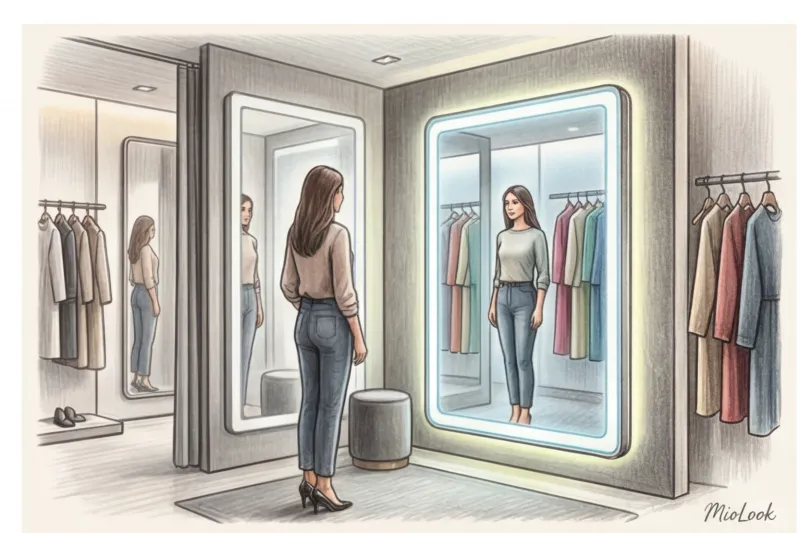
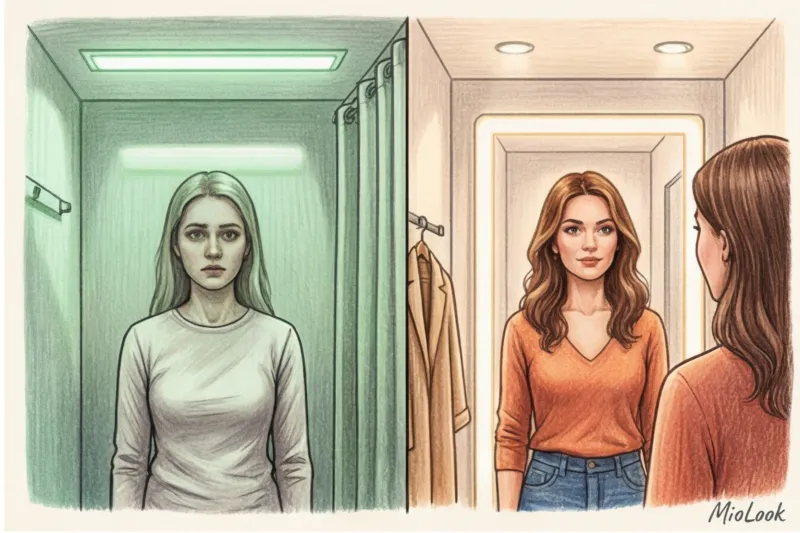
Fourteen years ago, one of my clients literally burst into tears in the fitting room of a luxury boutique. She was wearing an impeccably tailored, heavy wool suit for €800, but in the mirror she saw a tired woman with a sickly greenish tint to her complexion. The problem wasn't the pattern, or her figure, and certainly not her. The whole problem lay in the cheap fluorescent lighting in the dressing room. The client left without a purchase, and the boutique lost money. It was then that I, as a stylist and colorist, first began to wonder: why do stores spend millions on window dressing but completely screw up the final stage of the sale?
Today the situation is changing. Genuine innovations in fashion retail — it's not just delivery robots or futuristic store design. These are technologies that eliminate psychological barriers for shoppers: the fear of choosing the wrong size, color distortion, and simple physical fatigue. We covered this in more detail in our A complete guide to smart mirrors and AI in brick-and-mortar boutiques In this article, I want to explore this issue from the perspective of a practicing image consultant. Let's look at how technology transforms aggressive sales into genuine customer care.
Innovation in Fashion Retail: Why Technology Has Become a Necessity, Not a Luxury
Customer expectations have been forever transformed. According to the McKinsey State of Fashion (2024) global report, modern shoppers demand a completely seamless experience—they want the tactility and atmosphere of a physical boutique combined with the speed and convenience of online shopping. But the main problem with offline shopping remains the same: cognitive and physical fatigue.
In my practice, there's an unspoken "fourth fitting limit." After a woman tries on and off her fourth outfit, her cortisol (the stress hormone) levels rise and her dopamine drops. She gets hot, her hair gets staticky, and her mood plummets. If the perfect item hasn't been found by this point, the deal is off.
Innovations in fashion retail are solving precisely this problem. They reduce the time between "wanted" and "purchased," removing unnecessary steps from the equation. Stores of brands like COS and Zara are already testing concepts where physical space works in conjunction with data analytics, anticipating your desires even before you voice them to a consultant.
Smart mirrors: ending the biggest shopping nightmare in the fitting room
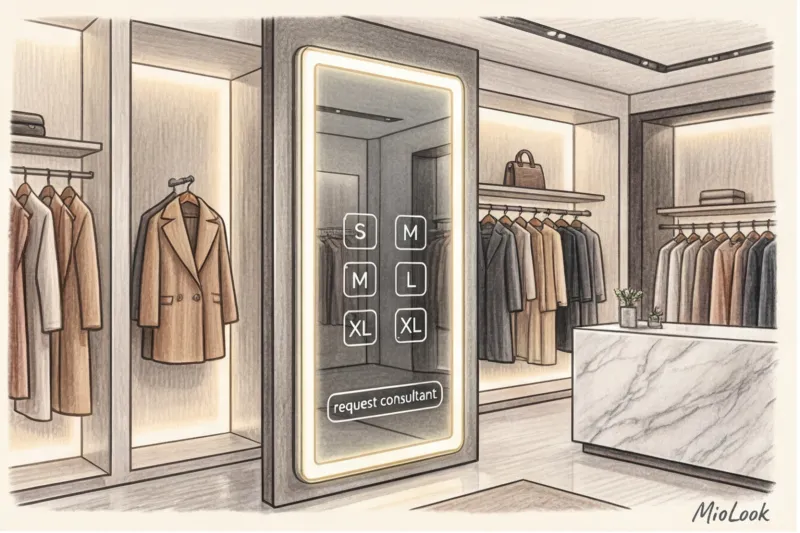
Imagine a typical situation: you're standing in a cramped stall in your underwear. The pants you bought are too small. What should you do? Get dressed again, go out into the store, look for the right size (which might not be on the rack), or open the curtain and yell, "Girl, do you have these in a size 44?!" It's a humiliating and uncomfortable process.
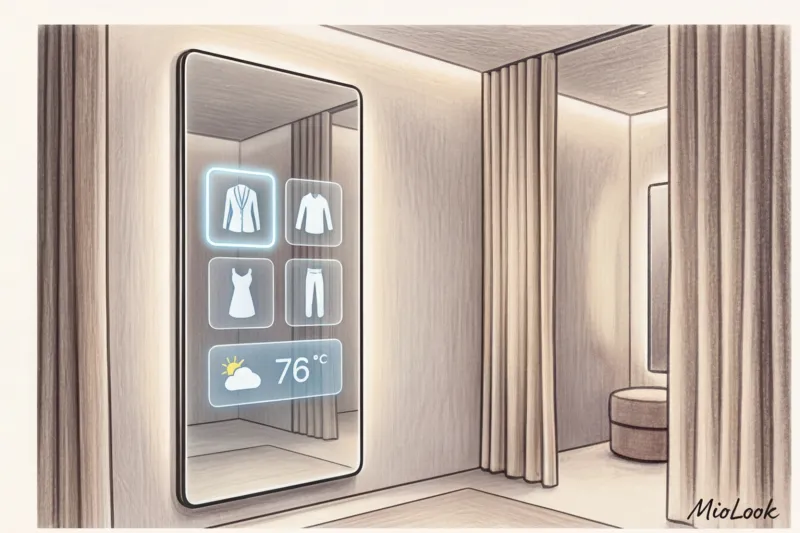
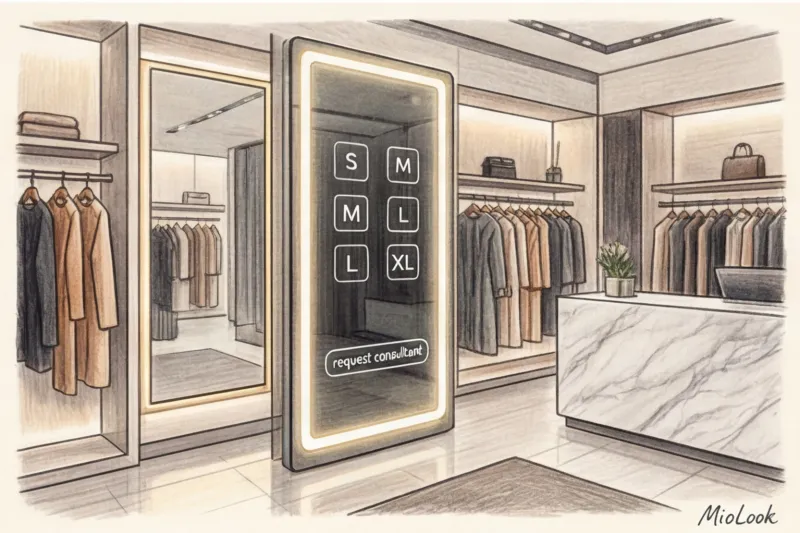
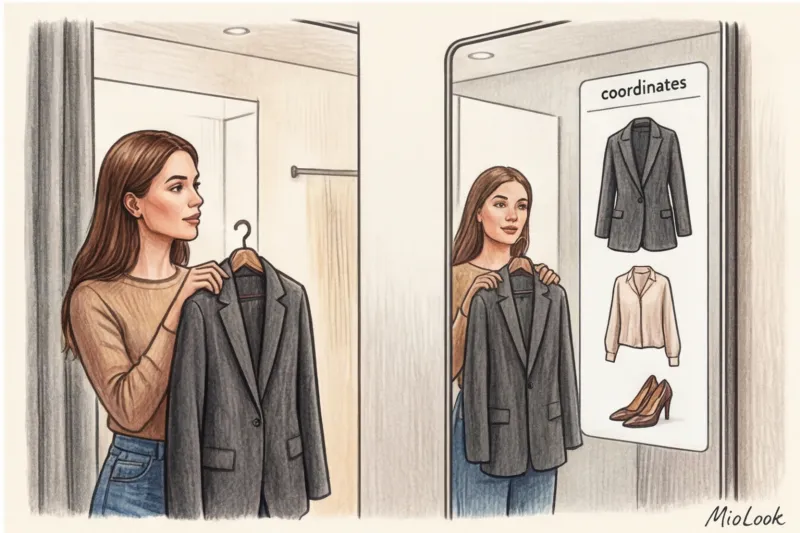
The smart mirror acts as your silent and highly effective assistant. Thanks to RFID (radio frequency identification) tags, the mirror instantly detects what items you've brought into the booth.
- One-click size request: You press a button directly on the glass's touch-sensitive surface, and the consultant receives a notification on their terminal: "Booth No. 3 requires trousers, item number 1045, size M."
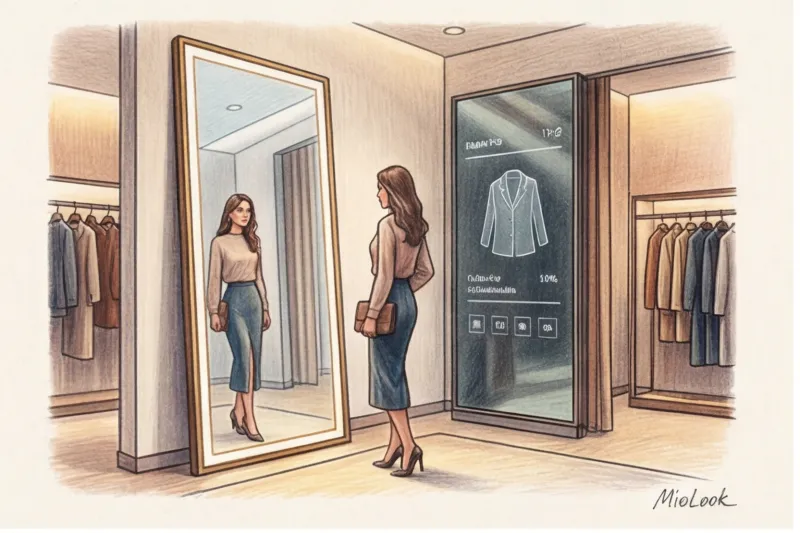
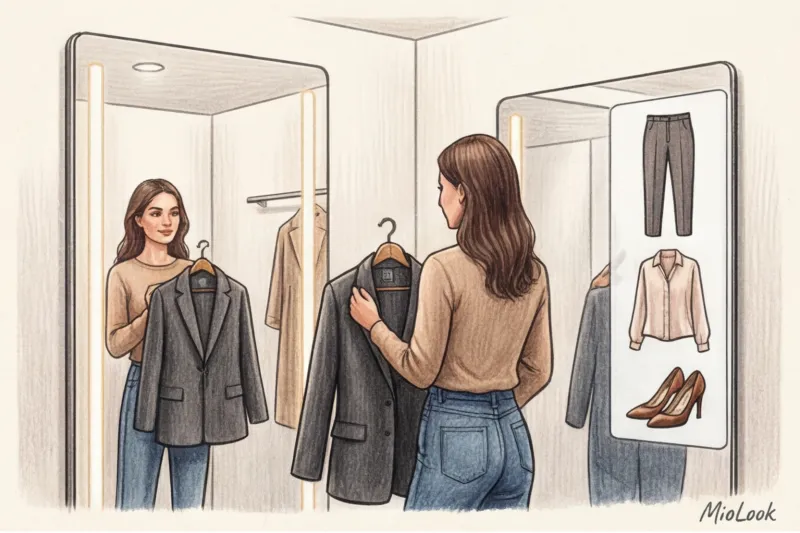
- Automatic styling: The mirror analyzes your basic item and suggests complements. Picked up a tailored jacket? The screen will show you which silk tops and shoes from the store's selection will pair it perfectly with your outfit.
- Change of lighting: You can see how the fabric behaves in different lights (we'll talk about this in more detail).
Your perfect look starts here
Join thousands of users who look flawless every day and collect capsules in a couple of clicks.
Get access — €0.99 onceThe Right Light and Color: AI Solutions Through the Eyes of a Colorist
As a certified colorist, I can talk for hours about how lighting kills conversions. Let's recall Johannes Itten's classic color theory: color perception depends on the light source. If a client has a "Cool Summer" complexion (pinkish skin tone, ash-colored hair), and the fitting room lights are warm (around 2700K), her skin will visually take on a sickly yellowish-gray tint.
Now add in an unsuitable dress color, and a woman will never buy it, even if the cut is perfect. The innovation that changes everything is adaptive LED lighting, synchronized with a smart mirror.
"When trying on a €300 evening dress, you should see yourself in the subdued, warm light of an expensive restaurant, and when choosing a gray wool office suit, you should see yourself in the harsh, neutral light of daylight. Technology allows you to switch between these modes with a single touch."
Some advanced virtual colorimetry systems go even further. Built-in AI scans the contrast of a customer's appearance and can provide subtle on-screen suggestions: "This fuchsia shade will really highlight your eyes, but if you're looking for a base, consider a muted plum (there are two available).".
The Illusion of Innovation: Why a Tablet in the Studio Won't Replace a Stylist
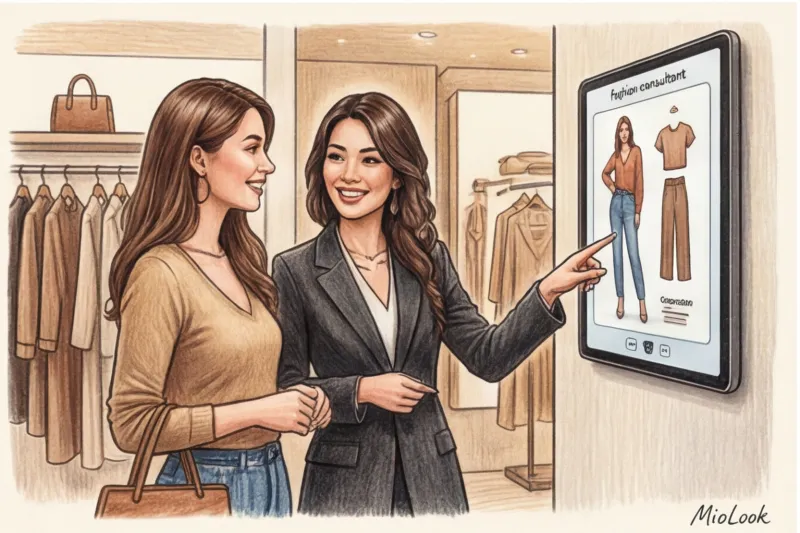
Business owners often make a fatal mistake. They install a huge interactive screen with a product catalog in the center of the store and proudly proclaim "innovation." In reality, this is the worst thing you can do to the customer experience.
Why? Because the basic screen simply shifts the consultant's work onto the customer. Forcing someone to stand in the middle of the store and filter t-shirts by size on a tablet isn't customer service; it's self-service, which is annoying.
A true AI assistant works predictively (ahead of schedule):
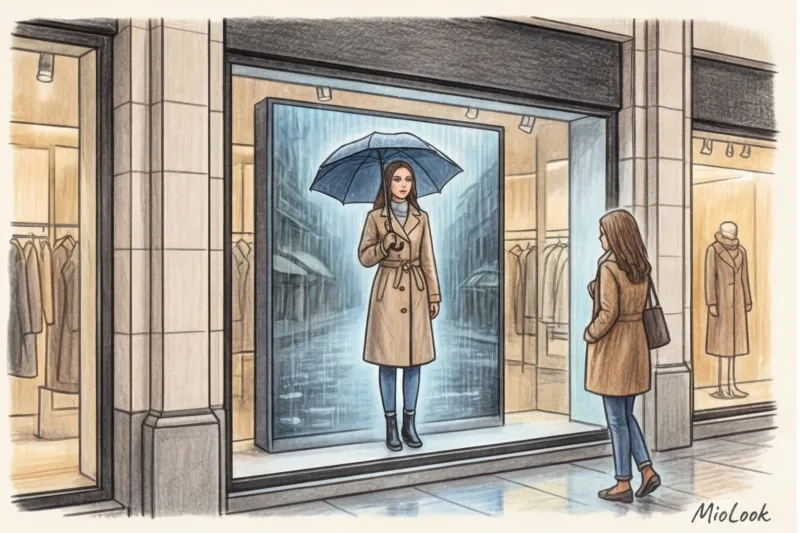
- Weather adaptability: AI-powered display windows analyze the weather outside. Is it raining? Digital mannequins on the screens instantly "change" into waterproof trench coats and stylish rain boots.
- Silhouette recognition: Without collecting biometric data (preserving anonymity), the camera determines that a petite woman has stopped in front of the display case and displays images that look flattering on a petite figure.
Ready to take your style to the next level?
Try the MioLook free plan—no commitments required. Our smart algorithm will take your skin tone and body type into account.
Get access — €0.99 onceHyper-personalization: Algorithms for creating a capsule wardrobe
Did you know that clothing return rates in the fashion industry reach 30–40%? And the main reason for returns (besides the wrong size) is the classic "I have nothing to wear it with." A woman buys a statement skirt out of pure emotion, brings it home, realizes there are no matching shoes or top, and returns the item to the store.
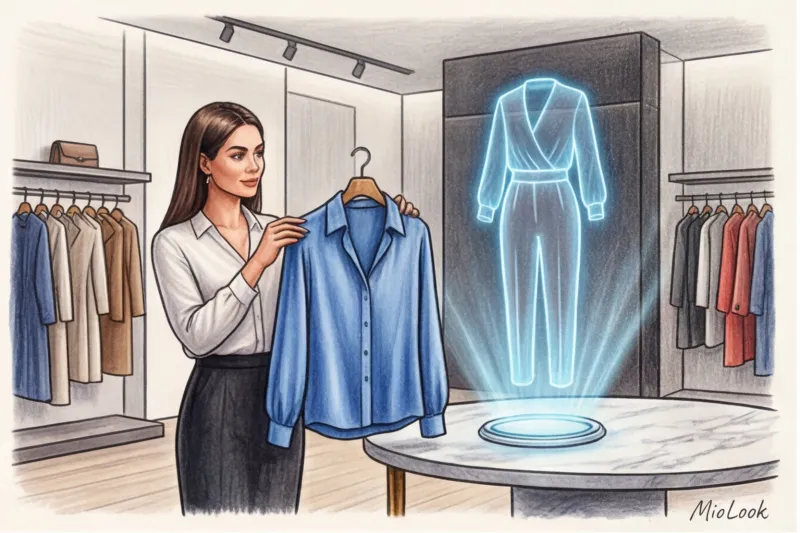
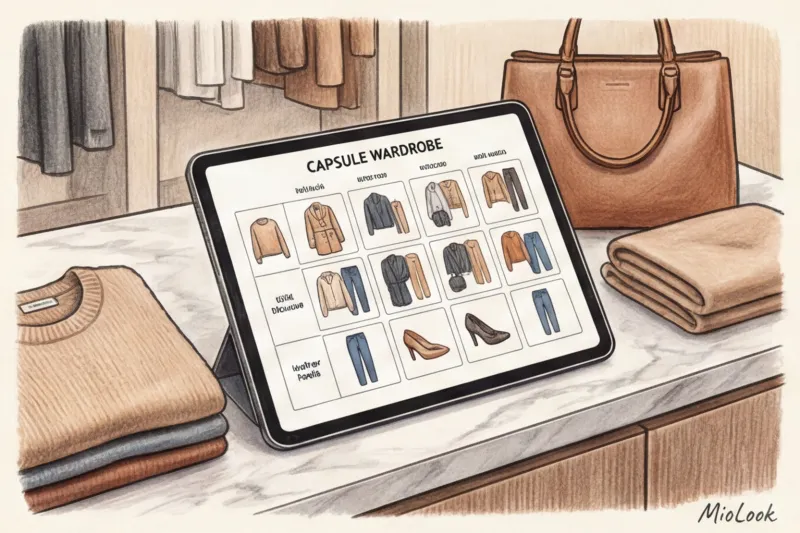
Technology helps sell complete looks rather than individual items. Imagine: a customer walks into a Massimo Dutti boutique or a local premium brand. The store's AI is integrated with her virtual wardrobe app. The system analyzes the database and provides the consultant with a suggestion: "Anna already has our wide-leg beige trousers from last year's collection and a navy cashmere sweater in her wardrobe. Offer her this new terracotta jacket—it'll complete the capsule perfectly.".
This is exactly what we use it for. the "smart wardrobe" feature in MioLook When your items are digitized, AI algorithms act as your personal stylist, eliminating impulse purchases that then hang with the tags in your closet for years.
Implementing Fashion Tech: A Step-by-Step Plan for Business
Over 14 years of consulting with brands, I've discovered a golden rule: don't buy technology for the sake of it. Implementation should address specific pain points for your business. Here's a step-by-step plan:
- Audit of current issues: Analyze your metrics. If you have a low Units Per Transaction (UPT), you need AI recommendation algorithms on fitting room screens. If you have a high abandonment rate, consider changing the lighting and installing call buttons.
- Integration of core solutions: Start small. RFID inventory management speeds up the process of finding an item in the warehouse from 15 minutes to 30 seconds. The right lighting (LEDs with adjustable color temperature) pays for itself within the first month by reducing purchase abandonment.
- Staff training: This is a critical stage.
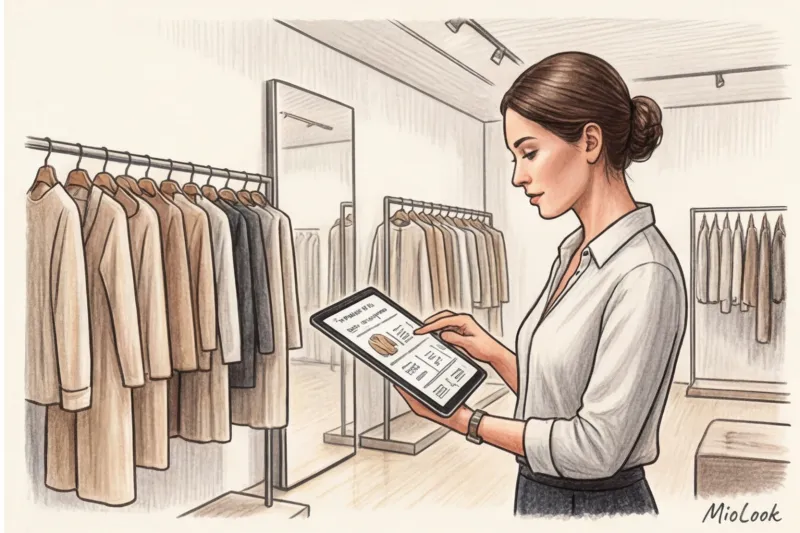
When does this NOT work? Innovations in fashion retail fail completely if you implement them while your consultants are afraid of competing with AI or don't know how to use it. Technology shouldn't replace human empathy. It should transform consultants into "super-stylists" equipped with all the data they need to provide impeccable service.
Access to MioLook for €0.99 — one-time payment
A smart AI stylist will select the perfect look for you by analyzing what's already in your closet.
Get access — €0.99 onceThe Future of Customer Service: Empathy, Powered by Technology
In conclusion, I want to emphasize: real technology works seamlessly. Clients shouldn't be impressed by the complexity of your algorithms; they should be impressed by how easy and enjoyable it was to spend money with you. According to WGSN research, by 2028, the combination of a physical boutique and smart virtual stylists will become the absolute industry standard, not a premium feature.
We're not just selling a piece of fabric cut to a pattern. We're selling self-confidence, status, and a good mood. And if technology helps a woman walk out of the fitting room with her shoulders back and a smile on her face, then it's a wise investment.
If you want your business to remain competitive, start small: go into your fitting room, turn on the lights, look in the mirror, and honestly answer the question: "Would I buy this item from me?" If the answer is "no," you know where to begin your transformation.