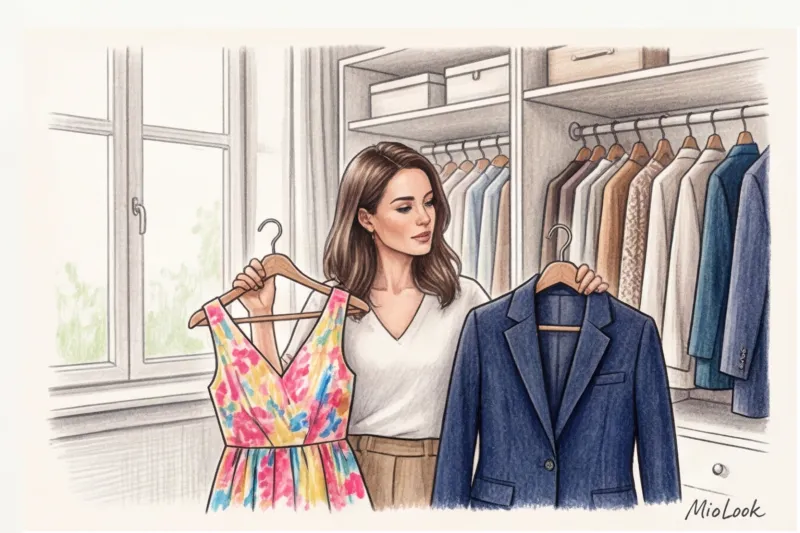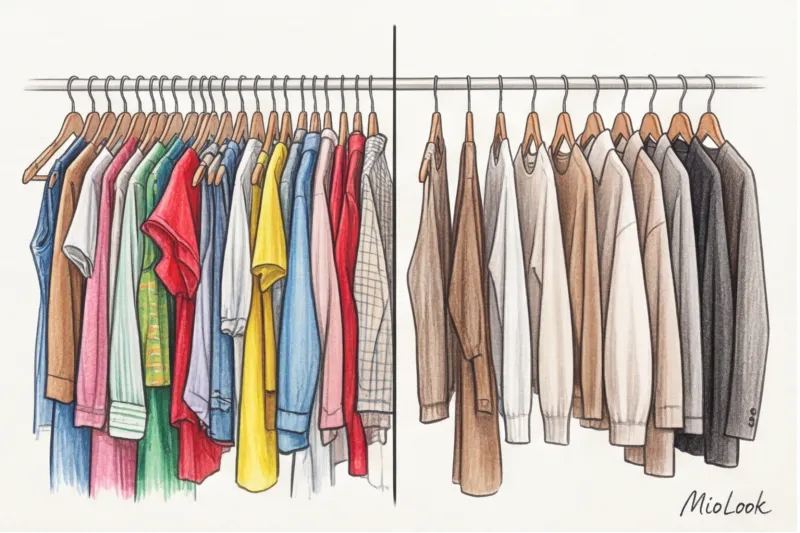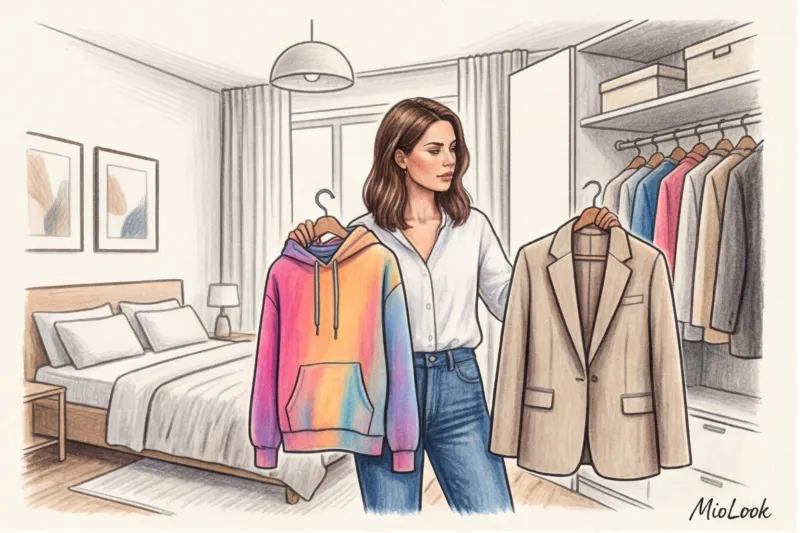
On the eve of my 30th birthday, I stood in front of my open closet with a huge trash bag in my hands, sincerely planning to get rid of half my clothes. Glossy magazines of the 2000s had firmly ingrained the idea: once you're in your 20s, hide your knees, buy tailored jackets, and forget about neon. But when I started throwing out my favorite, perfectly fitting pieces simply because they "didn't match my passport number," it dawned on me: the problem with my wardrobe wasn't the length of my skirts at all.

Today, when people ask me, How not to dress at 30 , my answer is simple: don't wear things that steal your energy. Forget outdated "don't wear" lists. Instead, I suggest taking a broader view (spoiler: we've covered the architecture of such a closet in more detail in our complete guide to Basic wardrobe for a 30-year-old woman ). The true hallmark of mature style is a refusal to compromise on fit and comfort, not a rejection of fashion trends.
How not to dress at 30: the main myth about "dressing for your age"
According to a major WGSN report for 2024, the concept of age-appropriate fashion is officially dead. Today, boundaries are blurring, but the biggest mistake I see my clients make isn't trying to look "too young." It's settling for things that cheapen their look.
One of my clients, IT director Anna, was seriously considering giving all her short skirts to her younger sister. "I'm 32, and I'm a manager," she sighed. We didn't throw out a single one. The problem wasn't the length of the miniskirts, but how Anna wore them. We swapped the thin, translucent nylons for thick, opaque 100-denier tights, added heavy leather loafers instead of stilettos, and a voluminous cashmere sweater. The result was a chic smart casual look—daring yet classy.
The difference between the outrageous style of a 20-year-old and the style of a 30-year-old lies in the design. You can wear anything, but the quality of the fabric and fittings must be impeccable.
Your perfect look starts here
Join thousands of users who look flawless every day with MioLook. Our intelligent AI stylist will select formulas that work best for you.
Get access — €0.99 onceVampire Items: What's Really Time to Throw Out of Your Closet
My personal manifesto as a stylist: no item, even one with a cult brand logo, is worth enduring discomfort for eight hours straight. At 30, our nervous system begins to physically reject poor clothing.
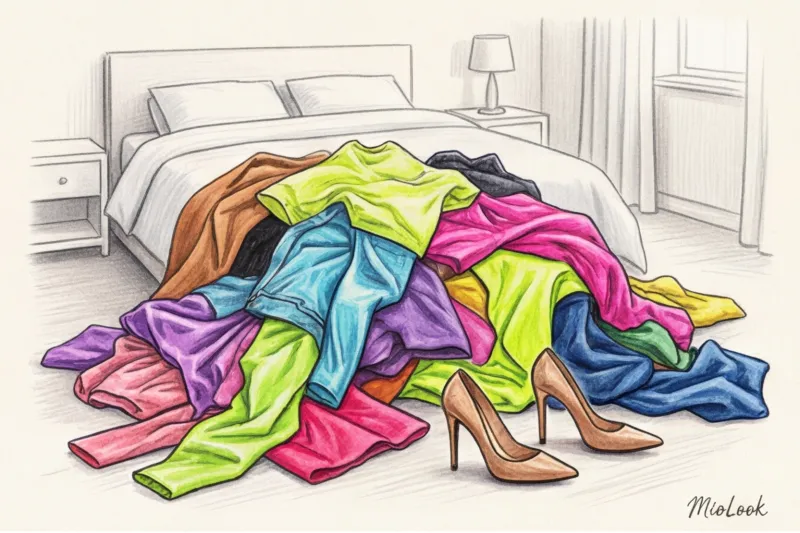
Synthetics that don't breathe and prickly textures
Acrylic sweaters that pill after the first wash and blouses made of 100% cheap polyester are the main enemies of your comfort. They not only look cheap (squeak, shine, and become staticky), they also disrupt your body's thermoregulation. Tactility is the secret to luxury looks.
Invest in cupro (a cotton cellulose fabric that imitates silk), heavyweight viscose, merino wool, and real silk (19 momme). Replace five mass-market polyester shirts with one good poplin shirt with a weight of at least 120 g/m².
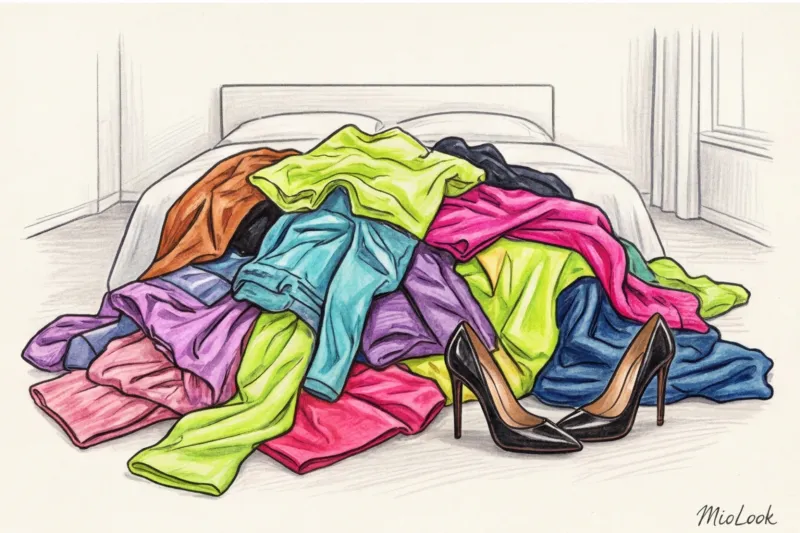
Shoes for "standing up" and things that require control
Do you have jeans that you have to tug down every time you sit down? Or a top where a strap keeps slipping down? Throw it away. A study on the psychology of body language (Amy Cuddy) has proven that uncomfortable clothing makes us slouch and conveys insecurity. If you choose a jacket for a Friday meeting that makes it impossible to raise your arms to point to a chart, you've lost the negotiation before it even starts.
Someone Else's Life's Clothes: Overcoming the "What if it comes in handy" Syndrome
Have you ever felt like you've opened your closet and found it completely overflowing with items, but had nothing left to wear? Psychologists call this the "fantasy-self wardrobe" syndrome. These are clothes you bought for a life you're not living.
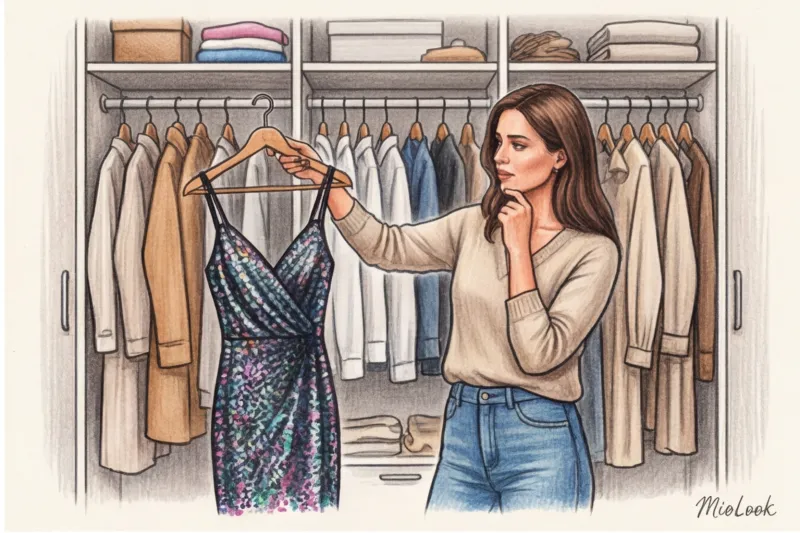
This includes club dresses with rhinestones (you go to a club once every three years), uncomfortable shoes for the red carpet, and those jeans that "I'll lose 5 kilos and fit into them." This visual noise causes a commotion every morning. Decision Fatigue (Decision fatigue). Your brain wastes resources sorting through unnecessary things even before you've had your coffee.
When my clients download MioLook and start using the smart wardrobe feature, they're faced with some harsh statistics. The app clearly demonstrates the Pareto Principle in action: women only wear 20% of their closet 80% of the time. The rest is psychological ballast , which is time to send for recycling.
Access to MioLook for €0.99 — one-time payment
Start creating your perfect looks with AI and digitize your closet to see real statistics.
Get access — €0.99 onceFast Fashion and Wardrobe Math: Why Cheap Costs Expensive
At 30, it's time to stop making emotional, impulsive purchases like, "Well, it's only €15 on sale, so what?" To understand the value of a thing, I teach my clients a formula. Cost Per Wear (CPW) — cost per wear.
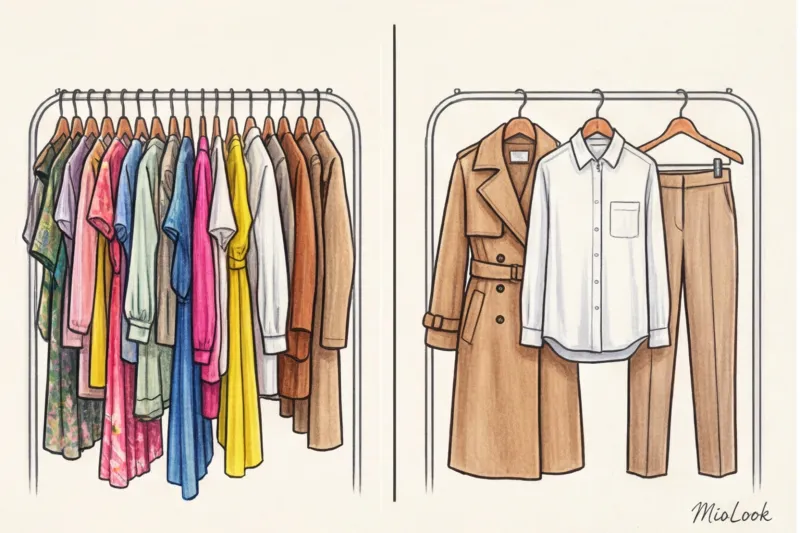
It's calculated like this: the cost of the item + the cost of dry cleaning/repair, divided by the number of days you wore it.
- Sweater from H&M for €30: It's pilled and lost its shape after 3 washes. You've worn it 5 times. Your CPW = €6.
- Basic jumper made of 100% cashmere for €180: You wear it for 2 seasons, wearing it at least 2 times a week (about 80 times). Your CPW = €2.25.
Cashmere turned out to be almost three times cheaper than acrylic! To be fair, I'd like to point out one limitation: this formula doesn't work well for strictly evening wear (black-tie dresses will always have a high CPW, but they're essential for status). But for everyday and office wear, it's the perfect filter.
A technological approach to analysis: a screening algorithm
To stop clinging to things emotionally, you need objective data. I've always been a fan of numbers, so I conducted a personal experiment: I tracked all my outfits for six months using a planning app.
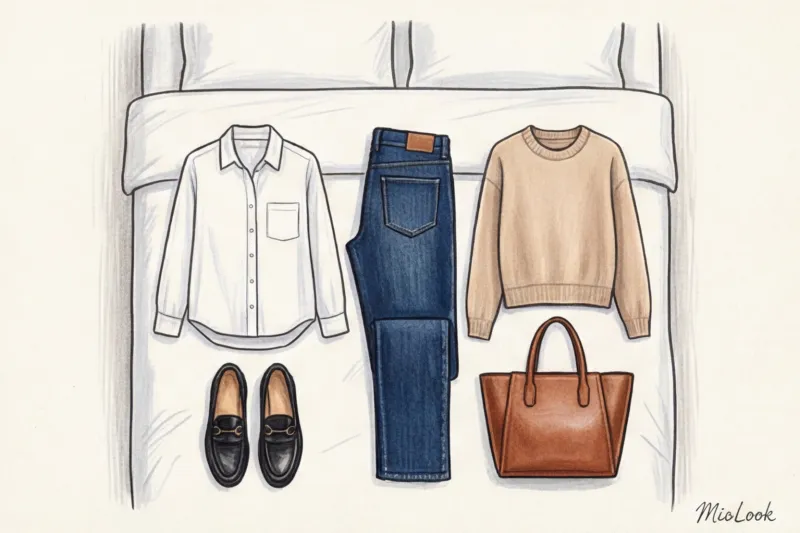
The results shocked even me, an experienced stylist. It turned out I hadn't worn three expensive silk blouses with bows that I'd been saving for "special occasions." never in 6 months. But the simple straight jeans made of thick denim earned their price by 300%. In the end, I collected a huge bag of untouched clothes and donated them to charity and recycling without a single regret.
If you're not ready to digitize your closet yet, use the famous Hanger Experiment Turn all the hangers in your closet so the hooks face you. When you put something on and put it back, hang it correctly (away from you). After three months, you'll be able to see which items are still hanging with the hooks facing you. These are the ones that are ready to go.
Ready to get started?
Try MioLook's free plan—no commitments required. Upload photos of your items, and the algorithm will automatically suggest pairings.
Get access — €0.99 onceChecklist: 5 Steps to a Wardrobe That Works for You
Take a Saturday morning off, turn on your favorite podcast, and do it. No excuses.
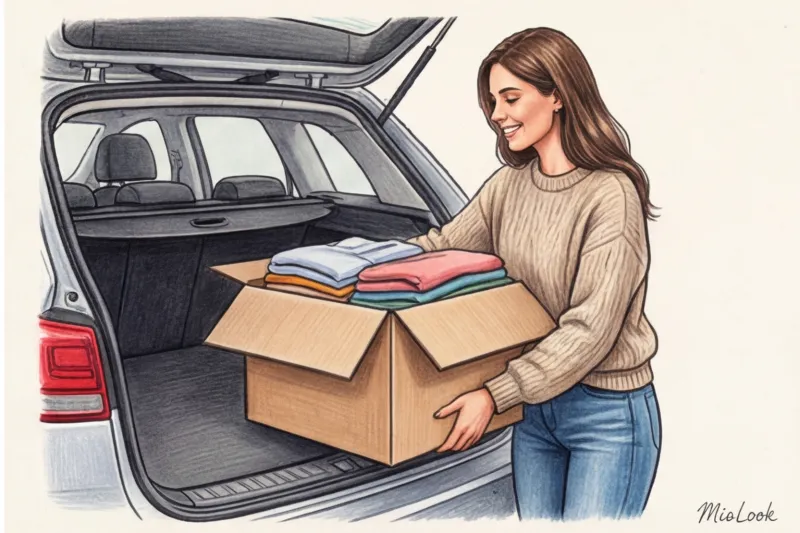
- Take everything out and try it on. Assessing the landing here and now Not in 2019, not before pregnancy. If the item is too small, pulls at the chest, or wrinkles at the hips, put it in the return box (or you can sell branded clothing ).
- Comfort test. Put something on? Raise your arms, sit down on a chair, bend over. If you feel the urge to take it off or adjust it immediately, get rid of it.
- Checking the fittings. Replace cheap plastic buttons with horn or metal ones—this will instantly increase the cost of the item by €50. If your knitwear has pilling that won't machine-remove, or if the elbows are stretched out, throw it in the trash.
- The rule of three images. Take an item you're hesitant to keep. Can you create three completely different looks with it, paired with what's already in your closet? If not, it's a standalone piece and doesn't belong in a smart capsule collection.
- Make a shopping list. Threw away four washed-out white t-shirts? Write down: "Buy ONE perfect thick cotton t-shirt (budget €30-€50)."
Style after 30 is an amazing time. It's the moment when you finally stop trying to prove something to others and start dressing for yourself. By getting rid of "vampire clothes," you'll make room for more than just new sweaters or pants—you'll free up time in the mornings, money from pointless purchases, and the mental space to feel confident every day.