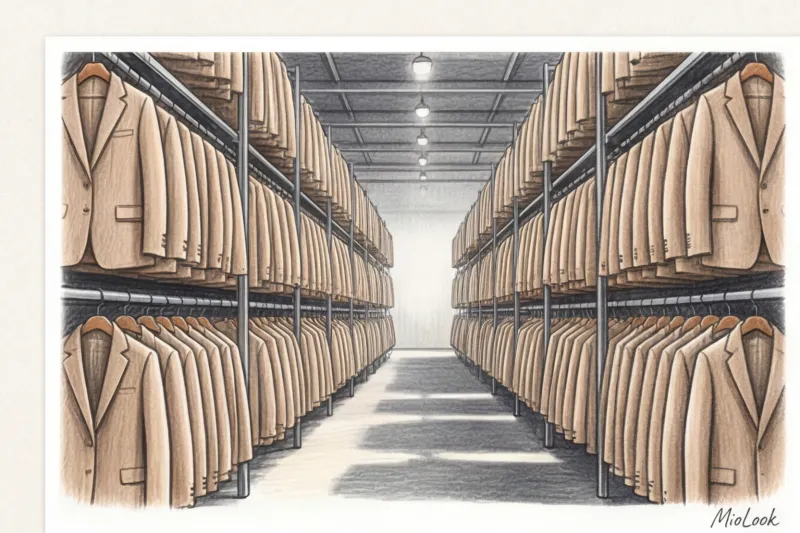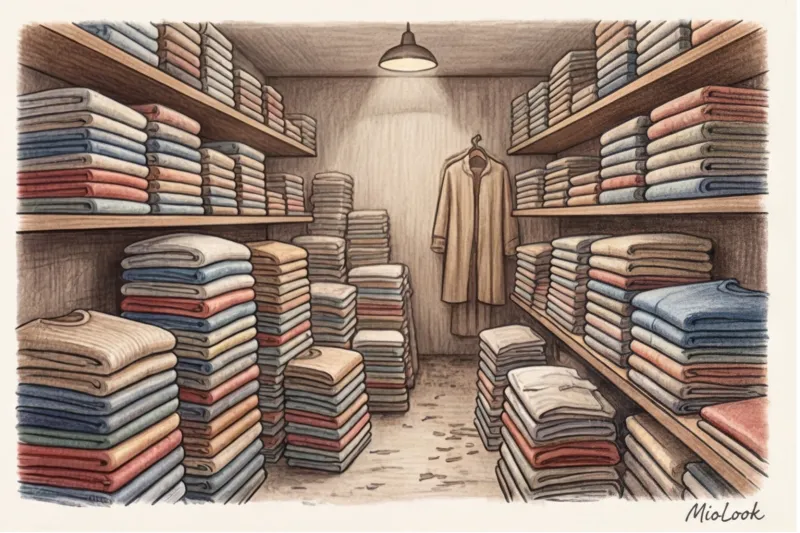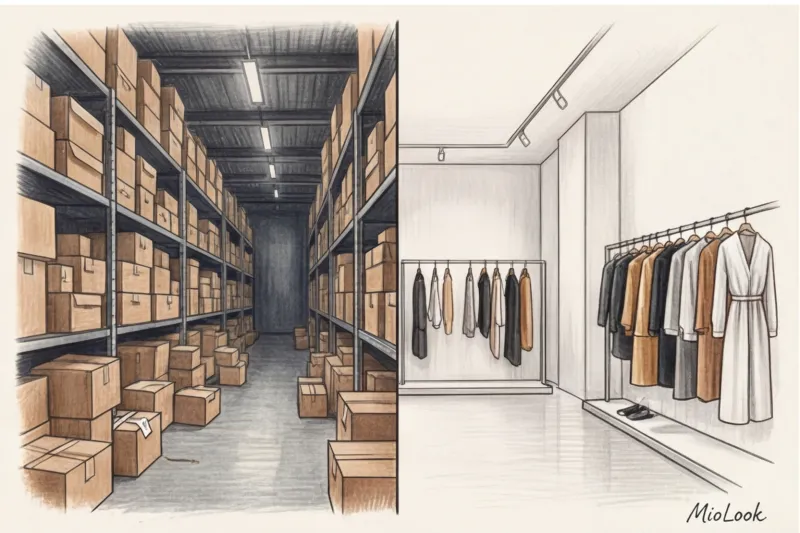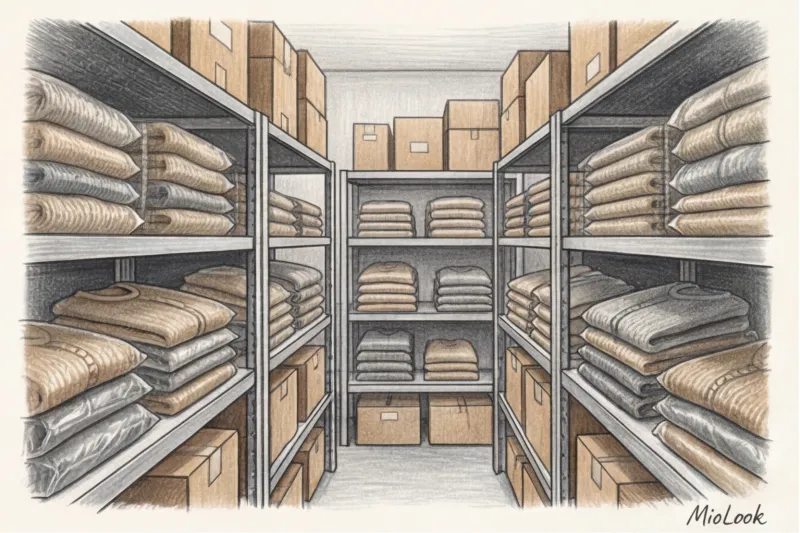
A couple of years ago, I was auditing a European mid-market brand. The owner proudly showed me a warehouse where thousands of identical white semi-fitted shirts were stacked in neat rows. Around €40,000 was frozen in this "safe" stock. "It's a classic, Katarzyna. The basics will always sell," he confidently declared.
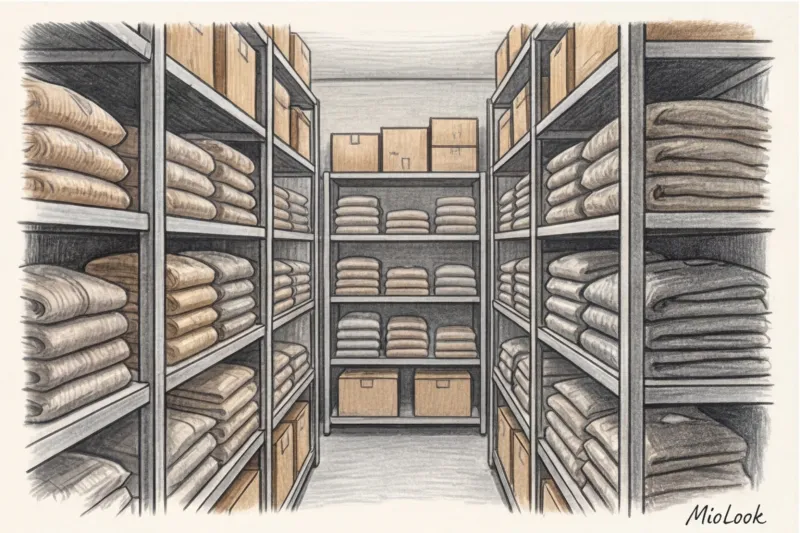
A year later, these shirts were still sitting in the warehouse, selling at a rate of three a month, even with a 50% discount. Why? Because the global silhouette had shifted to an oversized, masculine cut. This situation proved to me once again: Inventory management in clothing retail — these aren't dry mathematical formulas of logistics. They are, first and foremost, consumer psychology and smart styling. We've already discussed how technology is changing the approach to planning in more detail in our guide to Analytics for the Fashion Business: AI and Trend Forecasting.
Let's explore how stylistic techniques, the rejection of the illusion of "eternal essentials," and capsule merchandising help retailers sell collections without stock.
The Cost of Mistakes: Why Inventory Management in Apparel Retail Needs a Reboot
The generation of buyers who sipped champagne at Milan fashion shows is giving way to analysts with Excel spreadsheets. And this is a necessary measure. According to McKinsey's global report "State of Fashion 2024," approximately 30% of all clothing produced globally never finds a buyer and is sent for disposal or recycling.
The problem of overstock isn't just lost profits. It's a huge hidden cost. You pay for warehouse storage, your working capital is tied up in unsaleable inventory, and the logistics of returns eats into the small margins earned on best-sellers. Evolution from buyer's intuition to analytics became a question of survival.
"The biggest mistake modern retailers make is treating inventory as a physical asset. In the fashion industry, clothing older than one season is a liability that generates losses every day it sits in the warehouse."
Added to this is the colossal pressure from EU environmental legislation, which increases fines for the disposal of unsold collections every year. Everything must be sold. But how can this be done if demand fluctuates faster than production?
The "Eternal Base" Trap: The Main Mistake in Matrix Formation
The most dangerous and at the same time the most widespread myth in the fashion business is: “Basics are the safest investment; white T-shirts and straight jeans will always be bought.”
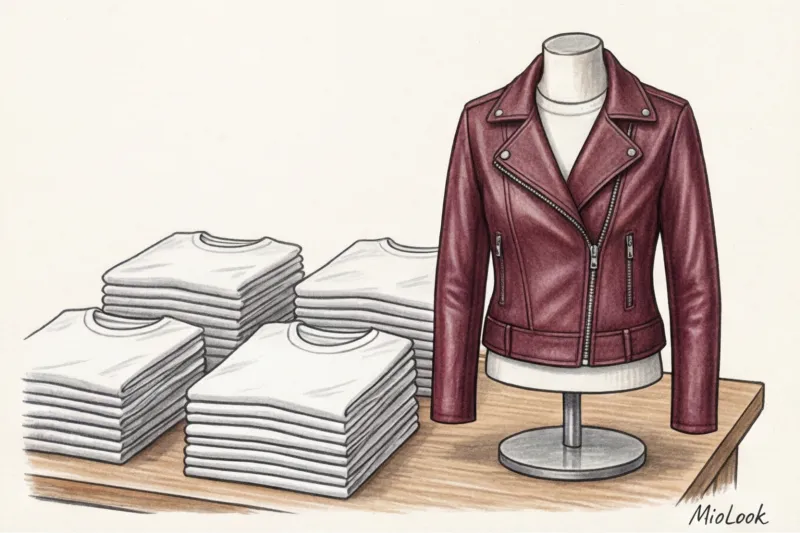
In reality, overproduction of essential items is the main reason for cash flow shortages at small boutiques and local brands. As a practicing stylist, I constantly observe this in my work with private clients. No one wakes up with an irresistible urge to buy a basic gray jumper for €120. Essential items are purchased out of strict necessity, and more often than not, clients are willing to wait for a seasonal sale to buy them for less. But a trendy faux leather jacket in a deep burgundy shade evokes emotion—it's bought right then and there, at full price.
Of course, this principle doesn't work for everyone. If you're a niche brand producing thermal underwear or socks, you can afford to stock a single style. But in the fashion segment, the classic ABC analysis often fails: what was a sales driver (category A) last fall may become dead weight today simply because the current skirt length has changed.
The 80/20 Rule in the Realities of the Modern Wardrobe
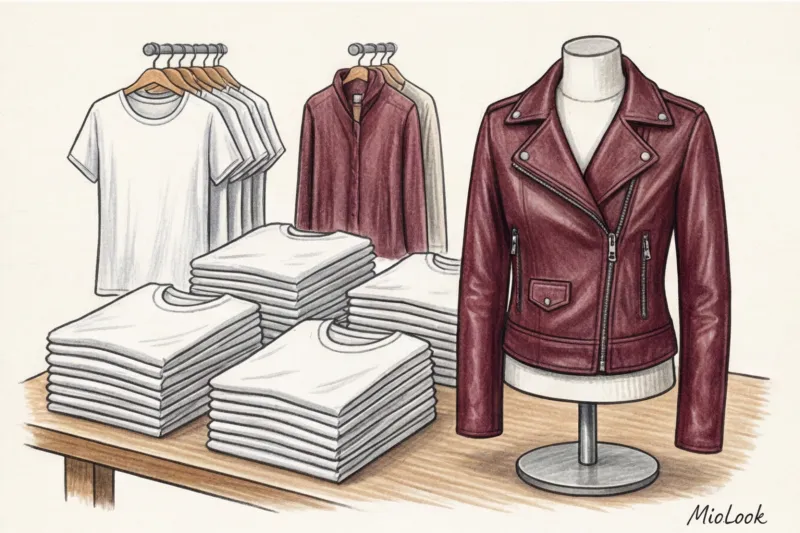
In fashion retail, the Pareto principle is inexorable: 20% of SKUs generate 80% of profit. The mistake brands make is trying to artificially assign this 20% at the production stage, based on last year's data.
Look at the Inditex (Zara) business model. They don't guess. They test micro-batch production. They produce 300 units of a new dress per region, monitor the response within the first 48 hours, and only if the item takes off do they launch large-scale production. Integrating well-established commercial micro-trends speeds up turnover far more than relying on the proverbial beige trench coat.
Try MioLook
A smart AI stylist will choose the perfect look for you and help you understand how items work in a real wardrobe.
Get access — €0.99 onceThe Capsule Principle: How Styling Helps Reduce Costs
My favorite optimization tool is the transfer of personal assembly principles capsule wardrobe B2B procurement. It's time to stop buying "separate, pretty things" and start buying "ready-made solutions."
In merchandising, this is called cross-merchandising. When a customer walks into a boutique, she shouldn't have to worry about what to wear with that complicated asymmetrical skirt. Four top options should be hanging on a rail nearby: a basic top for the office, a dressy blouse for an evening out, a voluminous sweater for a casual look, and a jacket.
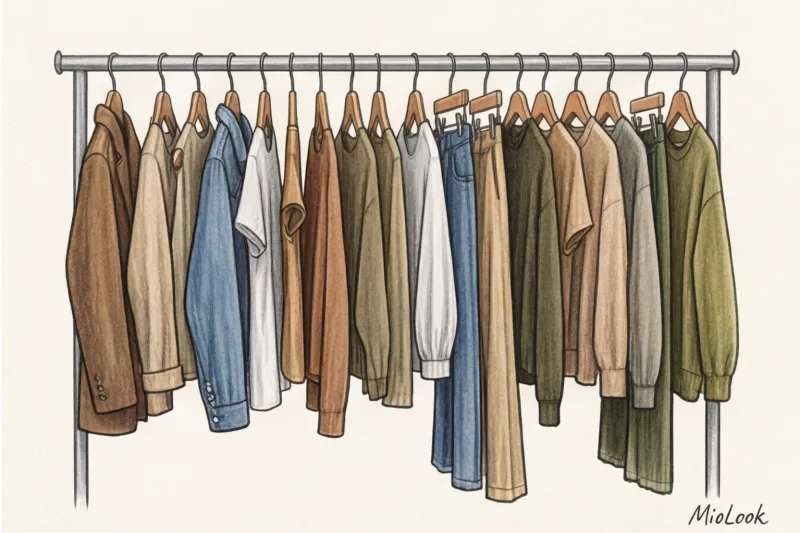
The math here is simple. If a skirt pairs with only one blouse in a collection, the risk of it "hanging" is highest. If the skirt stylistically complements four different tops, this risk is reduced by 70%. A well-designed capsule collection on the rail automatically increases the most important retail metric—UPT (Units Per Transaction). The customer isn't buying a thing; they're buying a look.
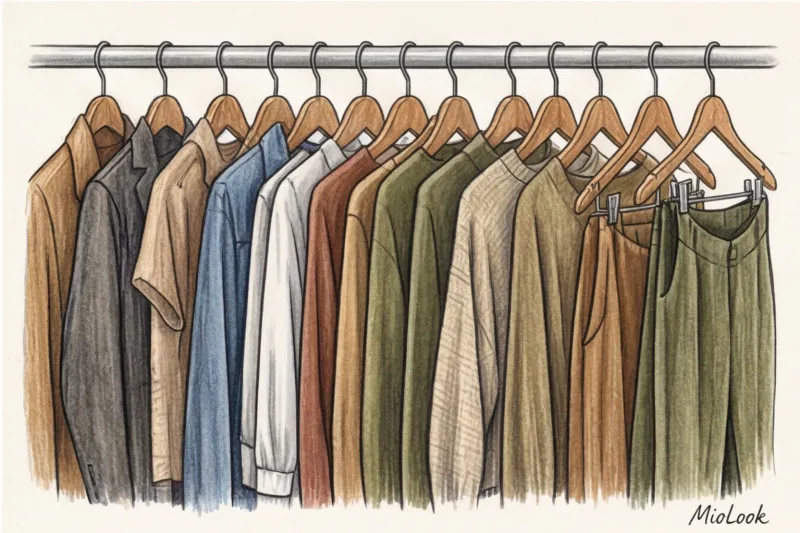
When ordering a collection from the factory, ask the designer or invited stylist to assemble the matrix so that the palette and textures intersect. Olive, terracotta, deep blue, and milky white—create a story where all the elements blend seamlessly.
Artificial Intelligence and Analytics: Predicting Demand Before Purchasing Fabric
We live in an era where technology allows for a paradigm shift: from the outdated “produce and try to sell” to the modern “anticipate demand and produce exactly as much as will be bought.”
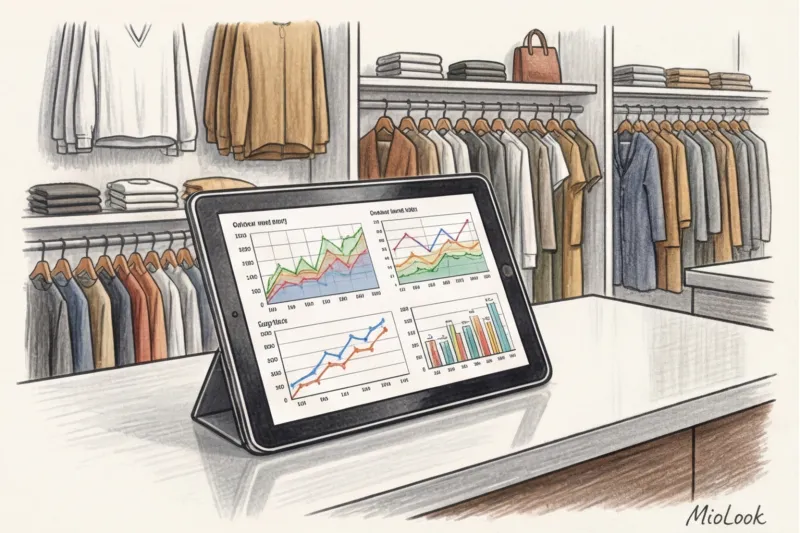
AI algorithms today analyze not only internal sales statistics (which always look to the past), but also millions of search queries, street style photos from fashion weeks, and viral TikTok videos. Major forecasting platforms predict with 90% accuracy that in four months, there will be a surge in demand for butter-colored bubble skirts in Europe.
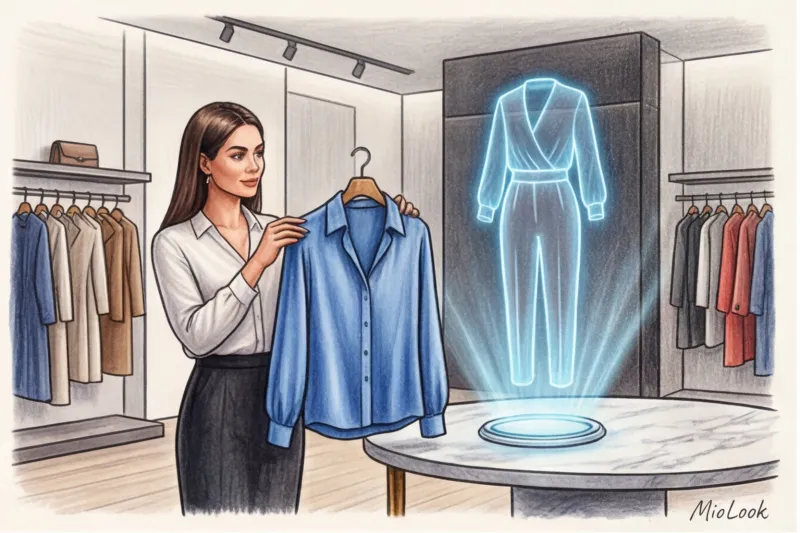
Another huge cost item, especially in e-commerce, is returns. Statistics show that up to 40% of clothes purchased online are returned to the warehouse because the customer chose the wrong size or the item doesn't fit. Innovations are addressing this issue as well. By integrating solutions like MioLook virtual fitting room Powered by artificial intelligence, brands are giving customers the ability to see the exact fit of a garment on their body. This is radically reduces the percentage of clothing returns and saves companies thousands of euros on logistics.
Eco-friendly sales: how to sell off leftovers without losing face and margins
Even with perfect planning, you'll still have excess inventory. The question is how you manage it. Aggressive red "-70% SALE" banners are detrimental to your brand in the long run. You're literally teaching your audience: "Don't buy now, wait a month, and we'll give it away."
Instead of markdowns that slash margins, try restyling. This is my favorite professional trick. Do you have a batch of plain gray oversized sweaters hanging around, looking boring on the hanger? Don't rush to slap a red price tag on them.
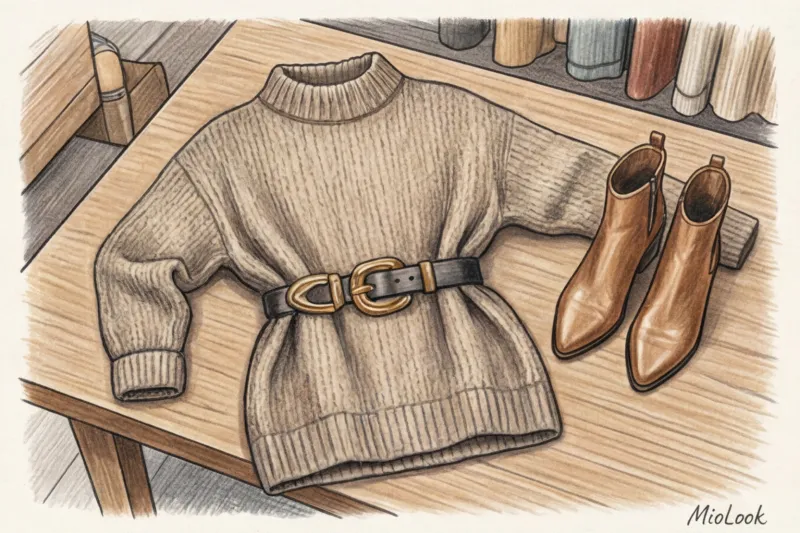
Create a new mini lookbook for social media. Take this sweater, layer it with a chunky statement belt (this season's trend), and add a trendy lace maxi skirt and pointed Cossack boots. Show how this "old" piece fits into the current season's ultra-fashionable context. Experience shows that a new visual context can sell off a stagnant stock item at full price.
If your items have completely lost their relevance, consider upcycling (repurposing uncommon items into something new) or charitable collaborations. This won't directly return the money, but it will provide a powerful PR effect and increase loyalty among a sustainable audience.
Ready to get started?
Try the MioLook free plan—no commitments. Optimize the visual presentation of your collections.
Get access — €0.99 onceChecklist: 5 Steps to Smart Inventory Optimization
To summarize, I want to give you a concrete action plan that a boutique owner or buyer can start implementing as early as Monday:
- Conduct a ruthless stock audit. Identify frozen items. If an item has been sitting for more than six months, it's considered a liability. Make a decision: restyling, cross-merchandising with new items, or donating to charity.
- Implement the capsule matrix. Stop buying isolated items. Set a rule: a new item will only be included in an order if it's compatible with at least three items from the current order.
- Test AI analytics on small batches. Don't order 1,000 units of a potential hit right away. Order 100 and see how it converts in the fitting rooms. Reordering is always more cost-effective than throwing away.
- Connect virtual styling. Give your online store customers tools to accurately understand fit (such as virtual try-on widgets) to reduce return rates.
- Review buyers' KPIs. Reward buyers not for "volume of goods delivered at a favorable factory price," but for the "percentage of collection sold at first (full) price." This fundamentally changes their approach to product assortment development.

Inventory optimization in the fashion business isn't about buying less. It's about buying only those items that your customers can easily mix and match with confidence. Start selling complete style solutions, not individual pieces of fabric, and you'll see your warehouses empty and your average order value increase.